
Our readers keep the lights on and the weekend projects moving. As an Amazon Associate, I earn from qualifying purchases.
A graphic design monitor you can trust isn’t measured by its bezel size or flashy gaming features—it lives or dies by its color accuracy and the consistency of its panel. When you’re tweaking a brand’s logo or grading a video, every shift in hue or brightness on screen can lead to a print or export that looks nothing like what you intended. That’s the real cost of a bad choice: wasted hours and deliverables you cannot stand behind.
I’m Rikta — the co-founder and writer behind FitlyFast. I’ve spent hundreds of hours analyzing panel specifications, factory calibration reports, and real-user color gamut measurements across dozens of models to separate the genuine workhorse monitors from the marketing-heavy alternatives.
Whether you are a freelance designer, a small studio owner, or a student building your first professional setup, finding the right affordable monitor for graphic design means knowing which specs actually protect your work—and which ones are just noise.
How To Choose The Best Affordable Monitor For Graphic Design
Choosing a design monitor on a budget forces you to prioritize the specs that have a direct impact on your work, while ignoring flashy features that won’t help your final output. Below are the three most critical factors to weigh before purchasing.
Color Accuracy: Delta E and Factory Calibration
The single most important metric in a design monitor is Delta E (dE), which measures the difference between the intended color and what the screen displays. A Delta E of less than 2 is the professional standard—anything above that introduces visible color drift. Monitors that come factory-calibrated with a printed report save you the cost and hassle of buying a separate calibration tool. Pay close attention to whether a monitor covers 100% sRGB (essential for web design) or DCI-P3 and Adobe RGB (required for print and video work).
Panel Technology: IPS vs. OLED vs. VA
IPS (In-Plane Switching) panels are the industry standard for graphic design because they offer consistent colors and brightness across wide viewing angles. OLED panels provide superior contrast and true blacks but carry a higher risk of burn-in and are often more expensive. VA panels can offer high contrast at a lower price, but typically suffer from color shift when viewed off-angle, which makes them less reliable for collaborative review or color-critical work. For a genuinely affordable design monitor, a high-quality IPS panel with a wide color gamut is usually the safest bet.
Connectivity and Ergonomics
A modern design monitor should include USB-C with Power Delivery (PD) so you can charge your laptop and send video over a single cable—keeping your desk clean and your workflow fast. Adjustable stands that allow for height, tilt, swivel, and pivot (rotation into portrait mode) are not just comfort features; they are essential for reviewing tall documents, coding, or editing photos in vertical orientation. Look for at least 60W of power delivery over USB-C if you use a MacBook Pro, as lower wattage will drain the battery slowly under load.
Quick Comparison
On smaller screens, swipe sideways to see the full table.
| Model | Category | Best For | Key Spec | Amazon |
|---|---|---|---|---|
| ViewSonic VP2756-4K | 4K IPS | Mac ecosystem | Delta E < 2 | Amazon |
| ASUS ProArt PA279CRV | 4K IPS | Adobe color gamut | 99% Adobe RGB | Amazon |
| ASUS ProArt PA279CV | 4K IPS | General value | Delta E < 2 | Amazon |
| BenQ PD2706U | 4K IPS | Mac compatibility | 90W USB-C PD | Amazon |
| ASUS ProArt PA329CV | 4K IPS | Large screen workspace | 32-inch panel | Amazon |
| Dell UltraSharp U2725QE | 4K IPS | High refresh & design | Delta E < 1.5 | Amazon |
| MSI MAG 321UPX | QD-OLED | Rich contrast | Delta E ≤ 2 | Amazon |
| Dell UltraSharp U3223QE | 4K IPS | Multi-device workflow | KVM switch | Amazon |
| BenQ PD3225U | IPS Black | MacBook designers | 2000:1 contrast | Amazon |
| LG 45GX900A-B | OLED Curved | Ultrawide immersion | 21:9 aspect ratio | Amazon |
| Samsung Odyssey G9 | VA Ultrawide | Super ultrawide workflow | 5120×1440 res | Amazon |
In‑Depth Reviews
1. ViewSonic VP2756-4K
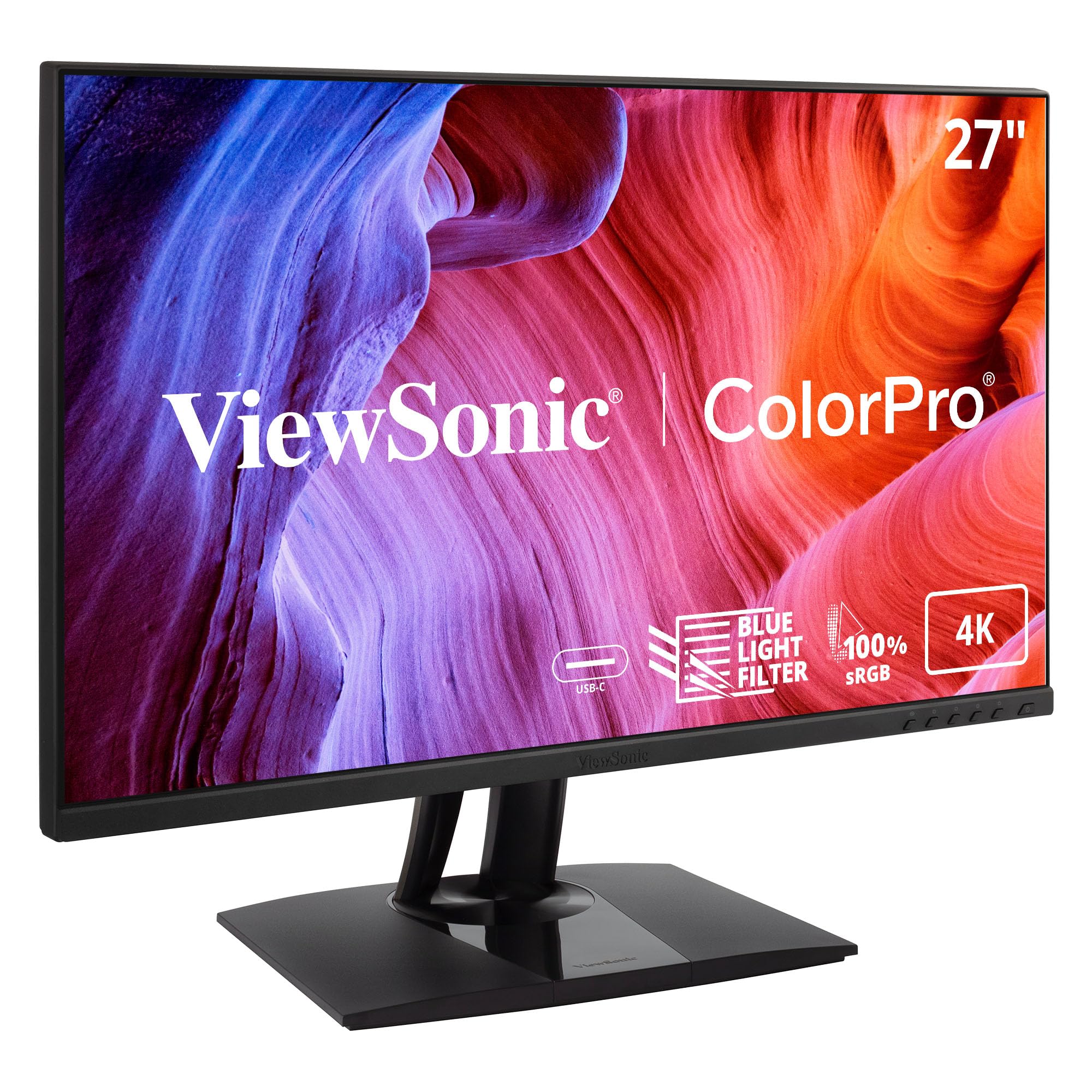
The ViewSonic VP2756-4K occupies a rare sweet spot: it delivers Pantone-validated color accuracy at a price that does not require a justification letter to your accountant. The 27-inch 4K IPS panel covers 100% sRGB and maintains a Delta E of less than 2 straight out of the box, meaning you can trust skin tones and gradients from the moment you plug it in. Its thin bezels and solid ergonomic stand—tilt, swivel, pivot, height—make it a natural fit for a Mac-centric studio.
Connectivity is where this monitor really demonstrates its value for the cost. The USB-C port provides 60W of power delivery, which is enough to keep a MacBook Air or a 13-inch Pro charged through a single cable. The built-in KVM switch lets you control two computers with a single keyboard and mouse, a feature typically reserved for much more expensive professional displays. Reviewers consistently note that it matches the color output of a MacBook screen with minimal adjustment required.
The only real trade-off is the 60Hz refresh rate, which is perfectly adequate for static design work but means you won’t want to use this as your primary gaming monitor. The on-screen display menu is a bit clunky, though the free software control largely compensates. For any designer working across macOS and Windows machines, this is the most balanced option at this price tier.
Why it’s great
- Pantone-validated factory calibration ensures reliable out-of-box color
- KVM switch and USB hub simplify multi-computer workflows
- Full ergonomic stand with rotation for portrait mode
Good to know
- 60Hz refresh rate limits gaming use
- On-screen display menu feels dated
2. ASUS ProArt PA279CRV

The ASUS ProArt PA279CRV is the updated version of the popular PA279CV, and the headline upgrade is a big one: 99% Adobe RGB and 99% DCI-P3 coverage. For print designers who need to match a proof to a screen, this color space coverage is non-negotiable, and finding it at this price point is uncommon. The factory calibration report confirms a Delta E of less than 2, and the Calman Verification gives you an independent check on that accuracy.
The 96-watt USB-C Power Delivery is the highest in this class, enough to charge a 16-inch MacBook Pro at full speed while driving the 4K display. The panel itself is a matte-finish IPS that reduces glare in brightly lit rooms without the graininess that sometimes plagues anti-glare coatings. The stand offers the full range of ergonomic adjustments, including 90-degree pivot for vertical content, and the built-in cable management keeps your desk tidy.
Some users mention a slight green tint on the default setting, which is easily corrected by adjusting the tint slider a few notches. The 60Hz refresh rate is standard for this segment, and the button-based controls are less convenient than a joystick. But for someone working across print, web, and video deliverables, the color space coverage alone justifies the upgrade over cheaper 100% sRGB monitors.
Why it’s great
- 99% Adobe RGB and DCI-P3 for print and video workflows
- 96W USB-C PD charges large laptops at full speed
- Factory pre-calibrated with Calman Verification
Good to know
- May need minor tint adjustment out of box
- Button controls feel less intuitive than a joystick
3. ASUS ProArt PA279CV

The ASUS ProArt PA279CV has been a staple recommendation in the design community for good reason: it offers a proven 4K IPS panel with factory-calibrated Delta E under 2 and 100% sRGB coverage at a price that regularly dips into budget-friendly territory. It is the entry point for the ProArt line and does not sacrifice the color accuracy that defines the series. The 65W USB-C Power Delivery is sufficient for most ultrabooks and a 13-inch MacBook Pro.
The 27-inch 4K resolution provides plenty of screen real estate for palettes, timelines, and reference images. The stand allows for full ergonomic adjustment, and the inclusion of a USB 3.1 hub makes it easy to plug in a Wacom tablet or external drive without reaching for your laptop. The matte anti-glare coating is well-regarded, and the split-screen feature for comparing two inputs side by side is genuinely useful when you are previewing a design against a reference image.
Some buyers report that the factory calibration is not perfectly neutral out of the box—a minor green or red cast can appear on gray backgrounds, requiring a touch of manual adjustment. But for a monitor that costs what it does, the overall value is hard to beat. It is an excellent entry point for a graphic designer who needs pro-level color without the pro-level price tag.
Why it’s great
- Excellent color accuracy for the price point
- Full ergonomic stand with height, tilt, swivel, and pivot
- USB-C with 65W power delivery simplifies connectivity
Good to know
- Minor color cast reported by some users on gray tones
- Occasional wake-from-sleep glitch with some Mac models
4. BenQ PD2706U

The BenQ PD2706U is built specifically for the Mac user who wants a seamless second display experience. The M-Book mode matches the color temperature and gamma of a MacBook screen, so your canvas looks the same across both displays—no more guessing how a color will appear when you switch windows. The 90W USB-C port provides plenty of power for even a 16-inch MacBook Pro, and the single-cable setup means you can walk into your desk and start working immediately.
The AQCOLOR technology delivers 99% sRGB and 95% P3 coverage with a Delta E of ≤3. While that Delta E tolerance is slightly higher than the ASUS ProArt monitors, BenQ includes Pantone and Pantone SkinTone Validation, which matters if you do portrait retouching or product photography where accurate skin tones are critical. The built-in KVM switch lets you toggle between a Mac and a PC using one keyboard and mouse, saving desk space and reducing cable clutter.
The brightness is capped at 250 nits, which is lower than many competitors and may feel dim in a very bright studio. A few users have reported defective units, though the customer support from the seller (not BenQ directly) tends to resolve these quickly. For a Mac-centric design workflow, the color matching and power delivery make this a strong contender.
Why it’s great
- M-Book mode matches MacBook color profile closely
- Pantone and SkinTone validated for portrait work
- 90W USB-C PD and KVM switch in one monitor
Good to know
- 250 nits brightness is lower than competitors
- Delta E ≤3 is higher than some pro-grade alternatives
5. ASUS ProArt PA329CV

The ASUS ProArt PA329CV takes the same color-engineered 4K IPS technology from the 27-inch models and scales it to 32 inches, giving you significantly more screen real estate for sprawling design canvases and video editing timelines. The brightness is rated at 400 nits, which is noticeably brighter than the 350-nit panels, making it more usable in rooms with windows or overhead lighting. The 100% sRGB and 100% Rec. 709 coverage with Delta E under 2 keeps color accuracy in line with the ProArt standard.
The 32-inch size changes your workflow: you can keep a full-resolution 4K canvas open alongside a reference image without feeling cramped. The stand supports full ergonomic adjustment including height, tilt, swivel, and 90-degree pivot, which is impressive for a screen this large. The included desk C-clamp is a nice touch for those who want to mount it on a standing desk or custom arm setup.
The 60Hz refresh rate is standard for this class, and the USB-C power delivery provides 65W—enough for most laptops but not for a 16-inch MacBook Pro under heavy load. The build quality is solid, though the base is heavy and takes up significant desk space. For a designer who needs more screen area without stepping up to a 5K or ultrawide panel, this is the logical next step.
Why it’s great
- 32-inch 4K reduces the need for a secondary monitor
- 400 nits brightness handles well-lit environments
- Full ergonomic stand with included C-clamp
Good to know
- 65W USB-C PD may not fully charge larger laptops under load
- Heavy base takes up substantial desk space
6. Dell UltraSharp U2725QE
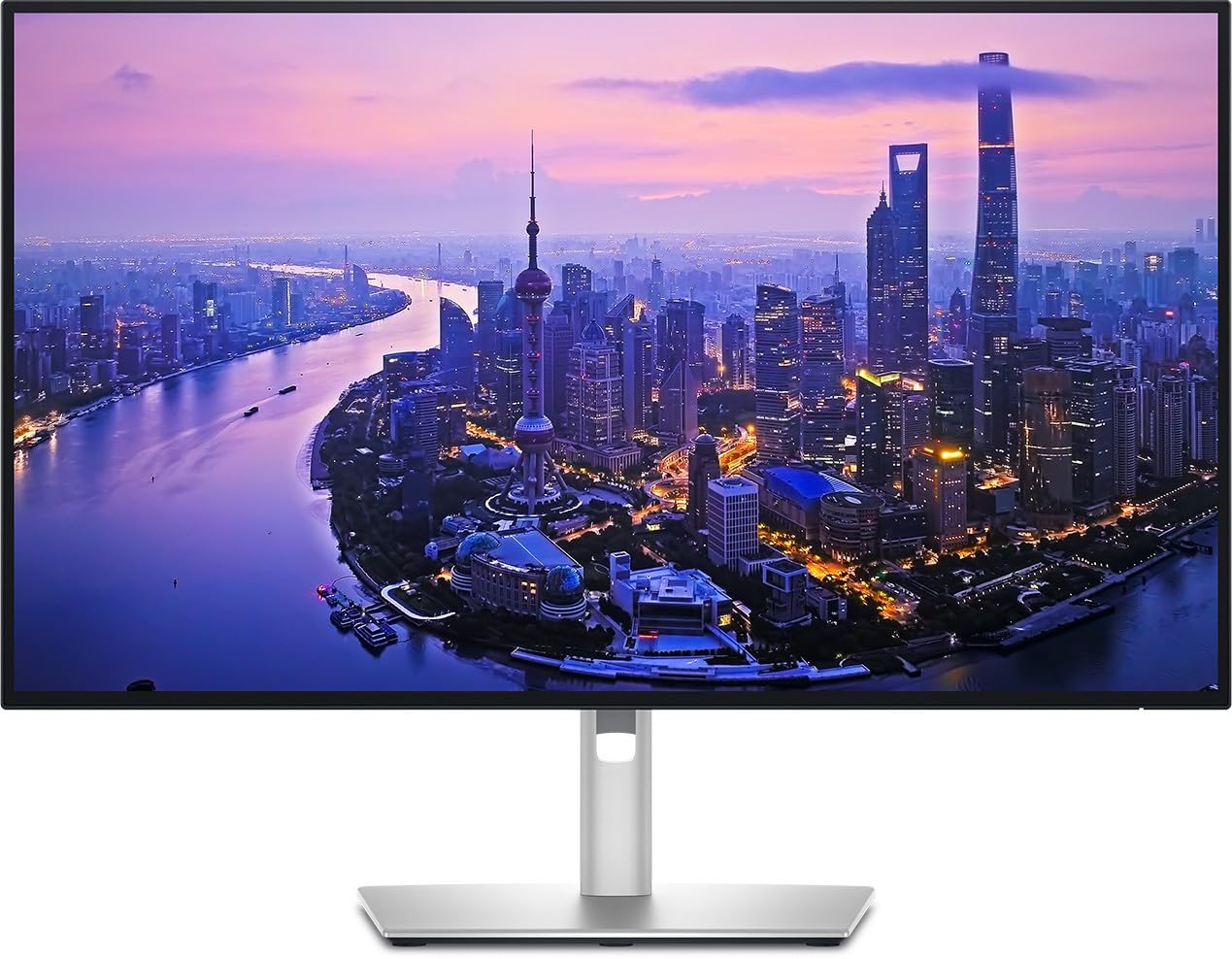
The Dell UltraSharp U2725QE is the monitor that finally answers the question: can I have both professional color accuracy and smooth motion? The 120Hz refresh rate is a genuine leap forward for design monitors, making cursor movement, scrolling through long documents, and scrubbing through video timelines feel dramatically more fluid than a standard 60Hz panel. The IPS Black technology delivers a 2000:1 contrast ratio, which means dark UI elements and shadow details look deeper without crushing detail.
Factory calibration to Delta E less than 1.5 is the tightest tolerance in this list, and the 99% DCI-P3 coverage ensures your video exports are color-matched to cinema standards. The Thunderbolt 4 port supports up to 140W power delivery and daisy-chaining to two additional 4K monitors, making it a true hub for a multi-monitor setup. The ComfortView Plus feature reduces blue light without the yellow tint that plagues software-based blue light filters, so you can work longer without eye fatigue.
There is a known compatibility quirk with certain Mac models that may throw an error on the Thunderbolt connection, though it works fine via USB-C. The price is a step up from the standard ProArt and BenQ options, but the combination of 120Hz, IPS Black contrast, and a Delta E under 1.5 makes this a worthwhile investment for designers who also do motion work or simply value a smoother desktop experience.
Why it’s great
- 120Hz refresh rate makes UI and video scrubbing feel fluid
- Delta E < 1.5 factory calibration is exceptional
- IPS Black panel provides true 2000:1 contrast ratio
Good to know
- Thunderbolt 4 may have compatibility issues with some Mac models
- Premium price reflects the advanced features
7. MSI MAG 321UPX

The MSI MAG 321UPX is a QD-OLED panel that brings the deepest blacks and most vibrant colors available in the monitor market today. For a graphic designer, the ability to see true blacks next to bright highlights is transformative when evaluating contrast in photographs, logos, or video frames. The Delta E ≤2 rating and 99% DCI-P3 coverage ensure that the saturation you see is accurate, not exaggerated.
The 240Hz refresh rate and 0.03ms response time are optimized for gaming, but they also mean zero perceptible motion blur when scrolling or dragging windows. The matte finish on the QD-OLED panel reduces reflections better than glossy OLEDs, making it more suitable for a design studio. The stand is fully adjustable, and the monitor includes a generous port selection including HDMI 2.1 and DisplayPort.
The main concern for design professionals is OLED burn-in. MSI includes OLED Care 2.0 with pixel cleaning routines, but any static UI elements—like the taskbar or Adobe toolbar—will be a risk over years of daily use. The text clarity is also slightly less sharp than a high-quality IPS LCD due to the OLED subpixel layout, which may bother you if you do a lot of typography work. This is a stunning display for visual work, but the long-term durability concerns keep it from being a universal recommendation for daily professional use.
Why it’s great
- QD-OLED provides unmatched color vibrancy and true black levels
- 240Hz refresh rate and instant response eliminate motion blur
- Excellent for evaluating contrast and HDR content
Good to know
- Burn-in risk from static UI elements over time
- Text clarity is slightly less sharp than IPS for typography work
8. Dell UltraSharp U3223QE

The Dell UltraSharp U3223QE is a 32-inch 4K IPS monitor that functions as a full-fledged docking station. The built-in Ethernet port, USB hub, and KVM switch mean you can connect your work laptop and personal desktop to the same monitor and switch between them using one keyboard and mouse. For a designer who juggles multiple machines, this eliminates a significant amount of desk clutter.
The 400 nits of brightness and wide color gamut (100% sRGB, 100% Rec. 709) provide a bright, consistent image for design work. The 16:9 aspect ratio at 32 inches gives you a massive canvas without the curve of an ultrawide, which is preferable for precise layout work. The stand is fully adjustable, and the build quality is excellent—Dell UltraSharp monitors are known for their solid feel and long-term reliability.
The 60Hz refresh rate is standard for this class, and the USB-C power delivery is limited to around 65W, which is enough for many laptops but not for the largest MacBook Pros under heavy load. There are no built-in speakers, which is a minor inconvenience for quick video reviews. For a professional who needs a reliable, large-screen hub that handles multiple devices gracefully, this is a proven workhorse.
Why it’s great
- Built-in Ethernet, USB hub, and KVM simplify multi-device setups
- 32-inch 4K provides ample space for design software palettes
- Excellent build quality with reliable long-term performance
Good to know
- No built-in speakers for quick audio reviews
- 65W USB-C PD may not fully power high-performance laptops
9. BenQ PD3225U

The BenQ PD3225U is designed explicitly for the MacBook professional who demands the highest standards of color accuracy. The IPS Black technology achieves a 2000:1 contrast ratio, which is double that of a standard IPS panel, making blacks look significantly deeper and reducing the “glow” effect on dark screens in a dim room. The 98% P3 and 100% sRGB coverage, combined with Delta E ≤2, provide a highly accurate canvas for photo editing and color grading.
The Thunderbolt 3 port delivers 40Gb/s bandwidth and 85W of power delivery, making it a true single-cable solution for a MacBook Pro. The daisy-chain capability means you can connect a second monitor without needing an additional dock. The included HotKey Puck is a physical controller that lets you adjust brightness and switch input sources without fumbling with on-screen menus, which is a small but meaningful convenience when you are in the flow of work.
The 32-inch size is ideal for a design-focused ultrawide alternative, though some users find that the color saturation on the desktop looks slightly different from their iMac Pro when used as a second display. The BenQ Display Pilot 2 software helps with color management but can be buggy on certain macOS versions. For a Mac user who wants the deepest contrast available in an LCD panel, this is a premium investment that pays off in color confidence.
Why it’s great
- IPS Black delivers 2000:1 contrast for deep, rich blacks
- Thunderbolt 3 daisy-chaining simplifies multi-monitor setups
- HotKey Puck offers convenient physical control over settings
Good to know
- Color may differ slightly from iMac Pro when used side by side
- Display Pilot software can have compatibility issues on macOS
10. LG 45GX900A-B
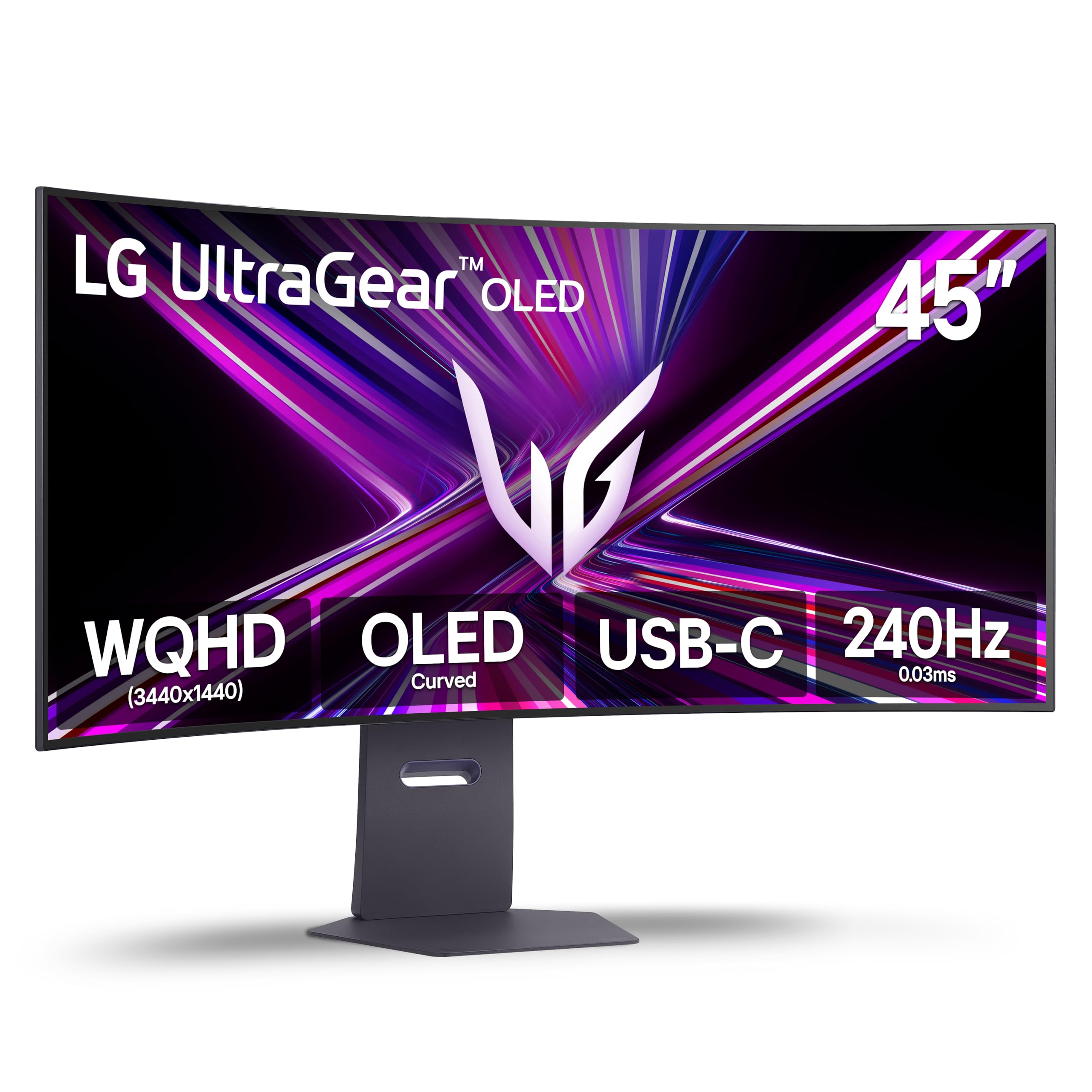
The LG 45GX900A-B is a 45-inch ultrawide OLED monitor with an aggressive 800R curve that wraps around your peripheral vision. For a designer working with long video timelines, wide panoramic images, or spreadsheet-heavy data visualization, the 21:9 aspect ratio provides a panoramic view that makes dual-monitor setups feel archaic. The OLED panel delivers a 1.5M:1 contrast ratio and 98.5% DCI-P3 coverage, creating an image that feels almost three-dimensional in depth.
The 240Hz refresh rate and 0.03ms response time are aimed squarely at gamers, but they make the desktop experience feel incredibly responsive. The USB-C port with 65W power delivery is sufficient for connecting a laptop, though not enough for high-power machines. The anti-glare coating and UL-verified flicker-free certification mean you can work long hours without eye strain, even in a bright studio.
The WQHD resolution (3440 x 1440) on a 45-inch panel results in a lower pixel density than a standard 27-inch 4K monitor. This means text and UI elements will look less sharp, which is a real drawback for detailed vector or typography work. Some users have reported intermittent issues with vertical lines on LG OLED panels, and the warranty support can be inconsistent. For immersive video editing and color grading in a dim room, this is a stunning display, but the lower resolution makes it a specialist choice rather than a general design monitor.
Why it’s great
- Immersive 800R curve and 21:9 aspect ratio for wide workflows
- OLED panel provides infinite contrast and vibrant colors
- 240Hz refresh rate feels incredibly fluid in daily use
Good to know
- Lower pixel density reduces text sharpness for UI design
- OLED burn-in and panel reliability are long-term concerns
11. Samsung Odyssey G9

The Samsung Odyssey G9 is a 49-inch super ultrawide monitor with a 32:9 aspect ratio that effectively replaces two 27-inch monitors side by side. The Dual QHD resolution (5120 x 1440) gives you a massive horizontal workspace without a bezel break in the middle—perfect for side-by-side comparisons of two designs, a video preview and a timeline, or a wide photo panorama. The 1000R curve matches the natural curvature of the human eye, reducing eye strain during long sessions.
The VA panel with 1000-nit peak brightness and VESA DisplayHDR 1000 certification provides impressive HDR performance for a non-OLED display. The 240Hz refresh rate and 1ms response time make this one of the fastest super ultrawide monitors available, and the AMD FreeSync Premium Pro ensures tear-free motion. The Auto Source Switch+ feature automatically detects when a connected device is turned on, which is a small but useful convenience in a multi-device setup.
For graphic design, the VA panel does have limitations: viewing angle consistency is not as good as IPS, so colors and contrast shift slightly when you are not sitting dead center. The aggressive curve can also make straight lines appear slightly curved, which can be disorienting for precise layout work. There have been significant complaints about reliability and after-sales support from Samsung, with some units failing within months. For a power user who prioritizes screen space over color-critical accuracy, the G9 delivers a unique and immersive desktop experience.
Why it’s great
- Massive 49-inch 32:9 screen replaces dual-monitor setups
- 1000-nit peak brightness and DisplayHDR 1000 for excellent HDR
- 240Hz refresh rate provides fluid desktop motion
Good to know
- VA panel viewing angles cause color shift off-center
- Aggressive curve can distort perception of straight lines
- Significant reliability and support concerns reported
FAQ
Is 60Hz enough for graphic design work?
Should I get a 27-inch or 32-inch monitor for design?
Can I use a gaming monitor for graphic design?
What is the difference between 8-bit and 10-bit color?
Do I need to calibrate a factory-calibrated monitor?
Final Thoughts: The Verdict
For most users, the affordable monitor for graphic design winner is the ViewSonic VP2756-4K because it combines Pantone-validated color accuracy, a versatile KVM switch, and a fully ergonomic stand at a price that does not force you to compromise. If you need the broader color gamut for print and video work, grab the ASUS ProArt PA279CRV with its 99% Adobe RGB coverage and 96W USB-C charging. And for a smoother desktop experience with professional-grade color, nothing beats the Dell UltraSharp U2725QE which adds a 120Hz refresh rate and IPS Black contrast to its exceptional Delta E under 1.5 calibration.