
Our readers keep the lights on and the weekend projects moving. As an Amazon Associate, I earn from qualifying purchases.
A home cinema projector is the centerpiece of a dedicated media room, and the leap to true 4K resolution—combined with HDR, high brightness, and accurate color—transforms movie nights into a theatrical event. The challenge today isn’t finding a 4K projector; it’s cutting through the noise of pixel-shifting claims, lumen wars, and laser engine types to select the one that actually delivers the contrast, black levels, and color volume that define a premium cinematic experience.
I’m Rikta — the co-founder and writer behind FitlyFast. I’ve spent hundreds of hours analyzing optical engines, comparing contrast ratios, and studying real-world HDR performance across dozens of laser and lamp-based models to build this guide around the specific specs that matter most for a dedicated home theater.
After weeks of deep-dive research into native versus pixel-shifted 4K, triple laser color gamuts, and dynamic tone mapping, I’ve curated the definitive list of the best 4k home cinema projector models that balance brightness, color accuracy, and contrast for a true theater-grade experience.
How To Choose The Best 4K Home Cinema Projector
Selecting a projector for a dedicated home theater is different from picking one for a bright living room or portable outdoor use. The priorities shift toward contrast, color accuracy, and HDR processing rather than raw brightness. Here are the three most critical factors to evaluate.
Laser Engine Type: Single, Dual, or Triple
The light source dictates the color volume and longevity of the projector. Single laser systems (blue laser + phosphor) are common in budget-friendly models and offer decent brightness but limited red saturation. Triple laser systems use separate red, green, and blue lasers to cover over 100% of the BT.2020 color gamut, producing richer reds, deeper greens, and more lifelike skin tones. For a dedicated cinema room where color accuracy is paramount, a triple laser engine is the gold standard.
Native Contrast vs. Dynamic Contrast
Native contrast ratio—measured without any dynamic iris manipulation—determines how deep the black level appears in a dark scene. A high native contrast (2000:1 or above) from a 3LCD or a well-engineered DLP with an iris delivers the inky blacks that define a theater experience. Dynamic contrast ratios (advertised in the millions) rely on the light source dimming for dark scenes, which can cause visible pumping artifacts. Look for models that publish native contrast numbers or include a precision iris.
HDR Tone Mapping and Dynamic Metadata
Projectors cannot match the peak brightness of a high-end OLED TV, so the ability to dynamically map HDR content to the projector’s brightness ceiling is critical. Models that support Dolby Vision or HDR10+ with dynamic tone mapping adjust brightness and contrast frame-by-frame, preserving highlight detail and shadow depth. Without this processing, HDR content can appear washed out or crush black details. Check if the projector has a dedicated HDR mode with user-adjustable tone mapping curves.
Quick Comparison
On smaller screens, swipe sideways to see the full table.
| Model | Category | Best For | Key Spec | Amazon |
|---|---|---|---|---|
| JMGO N1S Ultimate | Triple Laser | Daylight-Ready Color | 3300 ISO Lumens / 1600:1 Native Contrast | Amazon |
| ViewSonic LX700-4K | Laser DLP | High-Speed Gaming | 3500 Lumens / 240Hz / 4.2ms | Amazon |
| BenQ TK710 | Laser DLP | Living Room Movies & Games | 3200 ANSI Lumens / 4ms / Vertical Lens Shift | Amazon |
| NEBULA Cosmos 4K SE | HybridBeam LED/Laser | Portable 4K with Dolby Vision | 1800 ANSI Lumens / Dolby Vision / Google TV | Amazon |
| Hisense C1 | Triple Laser | Compact Cinema with JBL Sound | 1600 Lumens / 2000000:1 Dynamic Contrast | Amazon |
| AWOL VISION LTV-3000 Pro | Triple Laser UST | Ultra Short Throw 150″ Setup | 2000 Lumens / 2500:1 Native Contrast | Amazon |
| Hisense C2 Ultra | Triple Laser | Premium All-Rounder with Optical Zoom | 3000 ANSI Lumens / 1.67x Optical Zoom | Amazon |
| XGIMI Horizon 20 Max | Triple Laser DLP | Ultra-Bright High Contrast | 5700 ISO Lumens / 20000:1 Contrast | Amazon |
| NEBULA X1 | Triple Laser DLP | All-in-One with Satellite Speakers | 3500 ANSI Lumens / 56000:1 Contrast | Amazon |
| Epson Home Cinema 5050UB | 3LCD Pixel Shift | Deep Blacks & Natural Color | 2600 Lumens / 1000000:1 Dynamic Contrast | Amazon |
| Valerion VisionMaster Max | Triple Laser DLP | No-Rainbow Reference Grade | 3500 ISO Lumens / 50000:1 Dynamic Contrast | Amazon |
| Epson Home Cinema LS11000 | 3LCD Laser | Lens Shift & 120Hz 4K Gaming | 2500 Lumens / 1200000:1 Dynamic Contrast | Amazon |
| AWOL VISION Aetherion Max | Triple Laser UST | Ultra Short Throw Gaming & Movies | 3300 ISO Lumens / 6000:1 Native Contrast | Amazon |
In‑Depth Reviews
1. JMGO N1S Ultimate Triple Laser 4K Projector

The JMGO N1S Ultimate is the most complete package for a dedicated home cinema in the mid-range bracket. Its triple laser engine delivers a measured 110% BT.2020 color gamut with a ΔE<1 color accuracy, meaning reds, greens, and blues are both saturated and natural—no color wheel artifacts or rainbow effect. The 3300 ISO lumens of brightness make it usable even with ambient light, but the real story is the 1600:1 native contrast, which gives dark scenes genuine depth without the pumping artifacts of a dynamic iris.
The gimbal design is a genuine innovation: 360° horizontal and 135° vertical rotation means you can project onto a ceiling, a high wall, or a slanted surface without moving the base. The FlexiSmart 2.0 adaptive system uses a 3D-TOF sensor and CMOS camera for real-time autofocus and keystone correction that actually works the first time. The built-in 20W subwoofer and Dolby Digital+ support provide enough bass to skip an external soundbar for casual viewing, though purists will still want a dedicated audio system.
On the connectivity side, HDMI 2.1 support ensures 4K at 60Hz with low latency, making it suitable for console gaming. The Google TV 3.0 OS is snappy and includes certified Netflix, Disney+, and YouTube. The only notable omission is an optical zoom lens, so you must rely on digital zoom for size adjustments. For the price-to-performance ratio in a triple laser 4K home cinema projector, this model is the clear winner.
Why it’s great
- Exceptional 110% BT.2020 color gamut and ΔE<1 accuracy
- Gimbal mount offers effortless ceiling and wall projection
- High native contrast without dynamic iris pumping
- Google TV OS with certified Netflix built-in
Good to know
- No optical zoom—relies on digital zoom for screen size
- Built-in speakers lack deep bass for cinematic audio
2. ViewSonic LX700-4K Laser Projector

The ViewSonic LX700-4K is engineered for the gamer who also demands sharp 4K movies. With a 240Hz refresh rate and 4.2ms input lag at 1080p, it is certified for Xbox and handles fast-paced shooters and racing sims with no perceptible delay. The 3500 ANSI lumens of brightness ensure that even in a room with some ambient light, the image remains punchy, and the 1.36x optical zoom gives flexibility in placement without losing resolution.
The SuperColor technology and HDR/HLG support deliver a wide color gamut with good contrast, though the 3000000:1 dynamic contrast relies on a laser dimming mechanism. In dedicated Golf Mode, the projector works seamlessly with major golf simulators, projecting life-size courses at 100″ from only 7.7 feet. The 360-degree projection capability means you can mount it on the ceiling upside down or place it on a low table—the H/V keystone and four-corner adjustment handle the geometry.
For movie watching, the black levels are acceptable for a DLP laser, but the native contrast doesn’t match the deeper blacks of a 3LCD projector like the Epson 5050UB. The built-in mono speaker is basic, so external audio is strongly recommended. The lack of a smart OS means you’ll need a streaming stick, but for pure gaming performance and brightness, this model is hard to beat.
Why it’s great
- 240Hz refresh rate with 4.2ms input lag for competitive gaming
- Certified for Xbox with Golf Mode for simulators
- 1.36x optical zoom and 360-degree mounting flexibility
Good to know
- Black levels are greyish compared to 3LCD models
- No built-in smart TV OS
3. BenQ TK710 4K Laser Projector

The BenQ TK710 offers a rare combination of laser longevity and a 1.3x optical zoom combined with vertical lens shift—a feature usually found only on premium models. With 3200 ANSI lumens, it produces a bright, vivid image that handles afternoon viewing on a 120″ screen with blinds closed. The 16ms input lag at 4K/60Hz is decent for casual console gaming, and the 4ms response at 1080p/240Hz satisfies competitive players.
The HDR10 and HLG support includes a Dynamic Function that adjusts the laser light source in real-time to improve contrast during bright and dark scene transitions. While the 600000:1 dynamic contrast sounds impressive, the native contrast is more modest, meaning blacks appear dark grey rather than inky black. The 3D keystone and four-corner adjustment are generous for placement flexibility, though lens shift is the preferred method to avoid keystone artifacts.
The built-in audio is a single 5W speaker that is usable for casual content but insufficient for cinematic immersion. User reports note no rainbow effect issues, and the fan noise is quieter than many lamp-based projectors. For a living room that switches between sports, movies, and gaming, the TK710 is a solid, well-rounded choice.
Why it’s great
- Vertical lens shift plus 1.3x optical zoom for easy placement
- 240Hz/4ms gaming mode for competitive play
- Laser light source rated for long lifespan
Good to know
- Black levels are not cinema-grade
- Built-in speaker is underpowered
4. NEBULA Cosmos 4K SE Smart Projector

The NEBULA Cosmos 4K SE is the entry-level premium choice that brings Dolby Vision and a 200″ projection capability into a portable form factor. The HybridBeam technology mixes LED and laser light sources to deliver 1800 ANSI lumens, which is adequate for dark room viewing on a 100-120″ screen. The NebulaMaster Image Engine processes 1.07 billion colors and enhances contrast, though the 400:1 native contrast ratio is low by home theater standards, resulting in greyish black levels.
The standout feature is the IEA 4.0 intelligent setup: autofocus, automatic keystone correction, obstacle avoidance, and wall color adaptation all work together for a true plug-and-play experience. The Google TV OS includes Netflix in 4K without needing an external dongle, and the Anker-engineered sound system is surprisingly full-bodied for a portable unit. The form factor is lightweight at 4 kg, making it easy to move between rooms or take outdoors.
Connectivity includes Wi-Fi, Bluetooth, HDMI, and a 3.5mm jack, but there is only one HDMI port, which limits wired sources. The auto keystone can be unreliable when corners are adjusted inward, creating noticeable light bleed on dark scenes. It also has higher latency, making it less suitable for competitive gaming. For a casual cinema enthusiast who values portability and Dolby Vision support, the Cosmos 4K SE is a strong entry.
Why it’s great
- Dolby Vision and Google TV with Netflix built-in
- Intelligent auto setup with obstacle avoidance
- Portable and compact at 4 kg
Good to know
- Low native contrast leads to grey blacks
- Only one HDMI port and noticeable gaming lag
5. Hisense C1 4K UHD Triple Laser Portable Projector
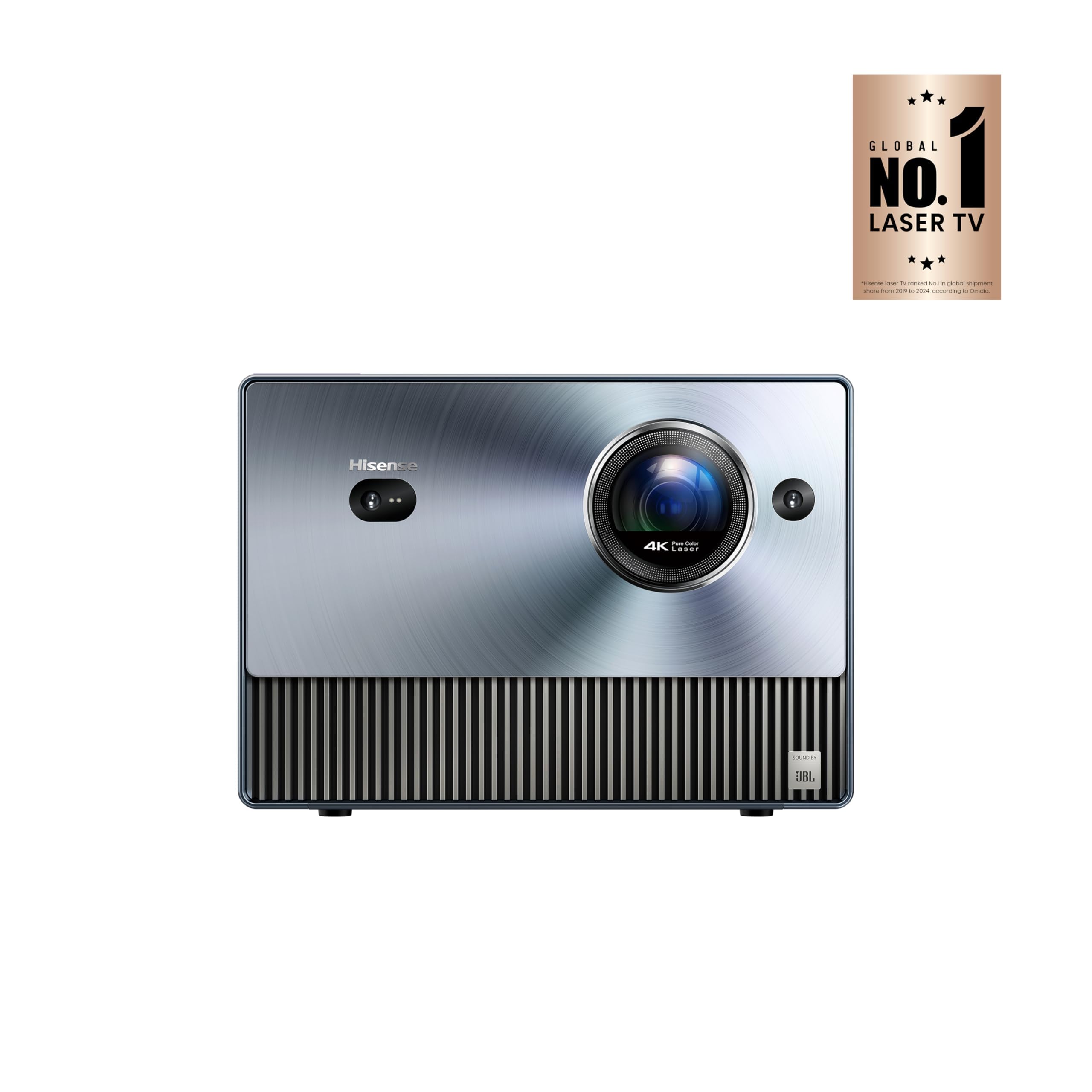
The Hisense C1 packs a triple laser light source into a compact, portable chassis that covers 110% of the BT.2020 color gamut with a Delta-E score of 0.9. This color accuracy rivals much larger, fixed-installation projectors, producing lifelike greens and natural skin tones. The 1600 lumens of brightness are modest, limiting ambient light performance, but in a dark room the 2000000:1 dynamic contrast ratio delivers deep blacks with minimal blooming.
The Dolby Vision and HDR10 support is paired with a 20W JBL sound system that has surprising bass presence for its size. The built-in VIDAA OS is responsive and includes native Netflix, Prime Video, and YouTube. The AutoMagic adjustment system handles autofocus, keystone, and obstacle detection quickly, and the Game Mode processor reduces motion blur for console gaming.
One significant limitation is the lack of optical zoom and lens shift, which requires very precise placement—the projector must be level with the screen’s bottom or top edge, and digital keystone introduces light spill. Some users report a phantom power-on issue that requires unplugging the unit. For a compact, color-accurate projector for a dedicated dark room, the C1 is excellent, but placement flexibility is compromised.
Why it’s great
- Triple laser delivers reference-grade color accuracy (ΔE<1)
- Compact design with Dolby Vision and JBL sound
- Excellent dynamic contrast for deep black levels
Good to know
- No optical zoom or lens shift limits placement
- Brightness tops out at 1600 lumens
6. AWOL VISION LTV-3000 Pro 4K UST Projector

The AWOL VISION LTV-3000 Pro is a ultra short throw (UST) projector that sits close to the wall and projects a 150″ image from just 12.8 inches away. The triple laser engine covers 107% BT.2020 and 147% DCI-P3 color gamuts, producing vibrant, cinema-grade color that rivals commercial cinemas. The 2000 lumens of brightness work best in a dark or moderately lit room, and pairing it with an ALR screen dramatically improves daytime viewing.
The built-in center channel speaker is a unique innovation—it maps dialogue directly to the screen, improving voice clarity without needing a separate center speaker. For a full surround setup, the ThunderBeat 4.2.2 system can be added to create a 5.2.2 configuration. The HDMI connectivity supports Dolby Vision and HDR10+, and the 3D capability with active shutter glasses adds another dimension to movie nights.
The low 60Hz refresh rate is a limitation for high-motion content and gaming: fast panning shots can show blur, and the 3D mode requires manual activation every time. The fan noise becomes noticeable after extended 4K viewing. Also, the UST throw ratio of 0.25:1 requires a cabinet of adequate depth, or you may need the motorized slider accessory. For a UST cinema setup focused on movies and TV, this is a top contender.
Why it’s great
- UST design projects 150″ from inches away
- World’s first integrated center channel speaker
- Excellent color gamut with Dolby Vision and HDR10+
Good to know
- 60Hz refresh rate limits gaming and fast motion
- Fan noise increases during 4K playback
7. Hisense C2 Ultra Triple Laser 4K Projector

The Hisense C2 Ultra is a triple laser projector that addresses the biggest pain points of its predecessor: it adds a 1.67x optical zoom and a 360° gimbal for effortless placement. At 3000 ANSI lumens, it is bright enough for daytime living rooms, and the 2000:1 native contrast ratio ensures deep blacks without relying solely on dynamic dimming. The 110% BT.2020 color coverage and ΔE≈0.9 accuracy produce reference-grade color volume.
The IMAX Enhanced and Dolby Vision certifications guarantee studio-level tone mapping, and the 240Hz refresh rate with 4ms response time makes it a serious gaming machine. The 4K AI Upscaler processes lower-resolution content effectively, reducing artifacts. The built-in JBL sound system is loud and clear, with enough bass for casual viewing without external speakers.
The VIDAA OS is snappy and includes Netflix, but some users report static banner ads on the home screen. The 135° vertical tilt and 360° horizontal rotation make ceiling or high-wall projection simple. The only minor downside is that the black level in daytime viewing with blinds closed is not as deep as the Epson LS11000. For a portable, premium home cinema projector that does everything well, the C2 Ultra is a standout.
Why it’s great
- True optical zoom (1.67x) maintains 4K resolution
- IMAX Enhanced and Dolby Vision certified
- 240Hz gaming with 4ms response time
- 360° gimbal for flexible projection angles
Good to know
- Black level is not as deep as premium 3LCD models
- Operating system includes some banner ads
8. XGIMI Horizon 20 Max Triple Laser 4K Projector
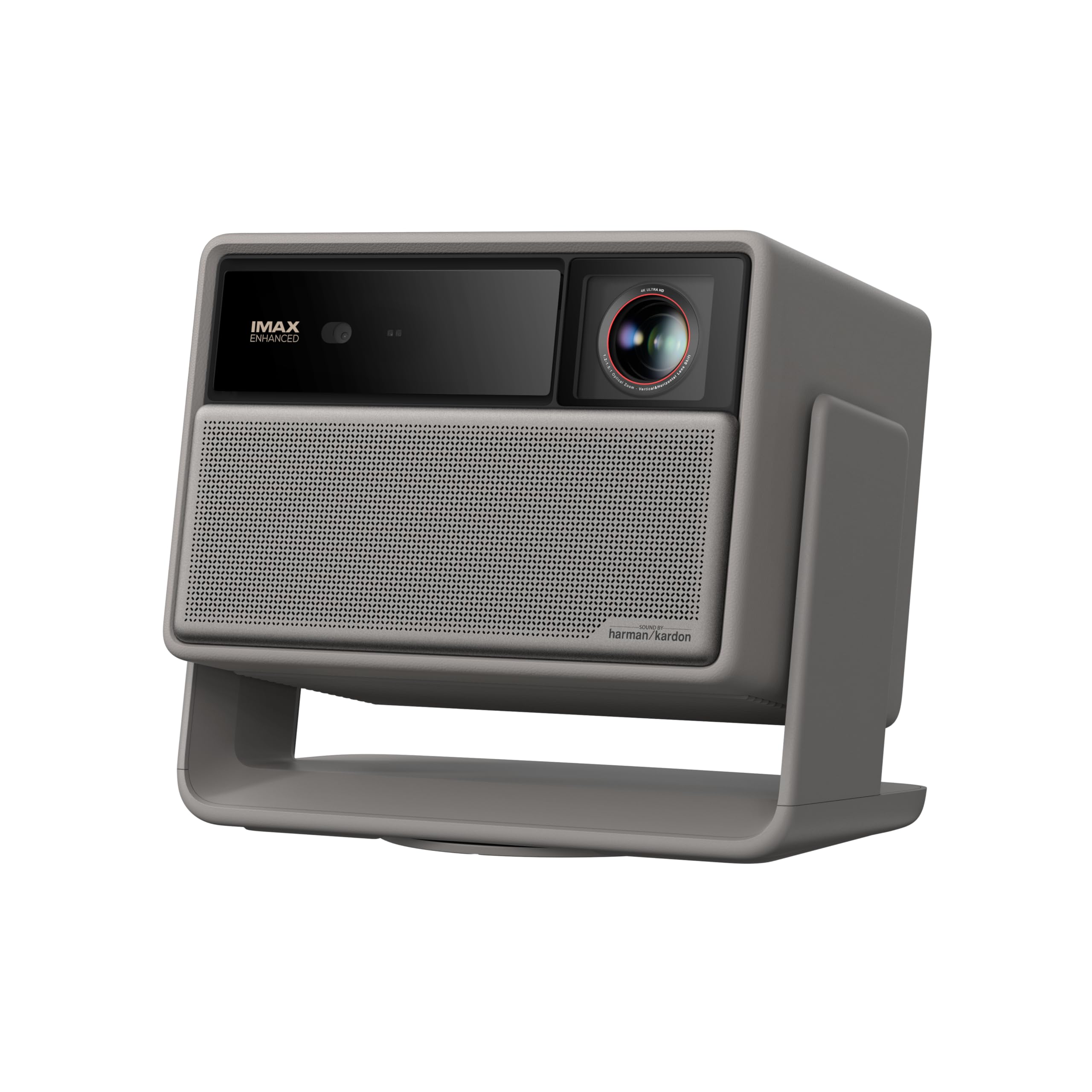
The XGIMI Horizon 20 Max is the brightest home cinema projector in this class, delivering 5700 ISO lumens from its X-Master RGB triple laser engine. This brightness allows it to replace a TV even in a room with overhead lighting, projecting a vivid 172″ image on a grey surface without washing out. The 20,000:1 native contrast ratio (not dynamic) gives it genuinely deep black levels, and the 110% BT.2020 color coverage ensures saturated, accurate colors.
Motorized lens shift and optical zoom provide lossless image adjustment, and the Harman Kardon speakers are the best built-in audio of any projector on this list—clear, neutral, and surprisingly wide soundstage. For gaming, the 1ms input lag at 240Hz is exceptional, and the built-in Google TV OS runs on a fast MediaTek chipset that handles streaming apps without lag.
The main concerns are laser speckle and rainbow effect (RBE): some viewers notice speckle in bright scenes and a faint rainbow effect on high-contrast text. The 3D mode is hard to enable and sync properly with active glasses. The fan is quiet but audible in a silent room. For buyers who prioritize brightness and lens flexibility above all else, the Horizon 20 Max is a powerhouse.
Why it’s great
- Industry-leading 5700 ISO lumens for daytime use
- Motorized lens shift and optical zoom for flexible setups
- Best-in-class native contrast for a triple laser DLP
- Exceptional gaming specs: 1ms lag, 240Hz
Good to know
- Noticeable laser speckle and potential rainbow effect
- 3D mode setup is finicky and unreliable
9. NEBULA X1 Triple Laser 4K Projector
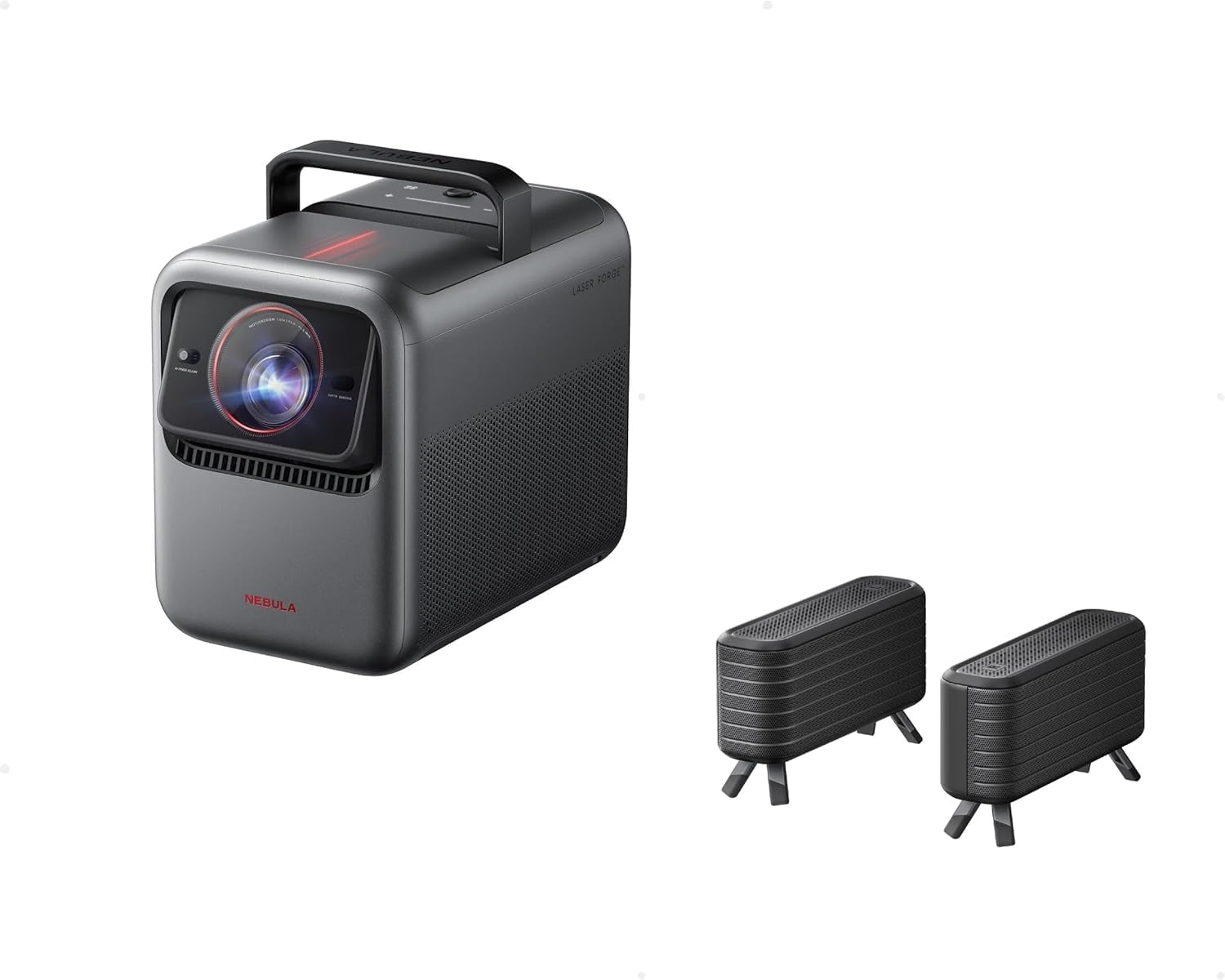
The NEBULA X1 is a triple laser projector that ships with two wireless satellite speakers to create a 200W 4.1.2 surround sound system with 25ms ultra-low latency. The projector itself delivers 3500 ANSI lumens and a 56,000:1 dynamic contrast ratio (via a 6-blade iris that gives a 5,000:1 native ratio). The patented triple laser engine covers 110% Rec.2020, producing vivid, accurate colors with no rainbow effect for most viewers.
The inclusion of a 25° motorized micro gimbal allows adjustment to different wall heights without moving the projector stand. The liquid cooling system keeps the fan noise under 26 dB—practically silent during movies. The built-in Google TV with Netflix is seamless, and the IEA 5.0 intelligent setup (autofocus, keystone, obstacle avoidance) works reliably.
The 60Hz input limit is the main bottleneck: it cannot accept 120Hz 4K signals, which limits its appeal for competitive gamers. Some units have quality control inconsistencies—users report needing to calibrate the color temperature manually. The rainbow effect may still be visible to highly sensitive viewers in high-contrast scenes. For a complete, all-in-one home cinema system with excellent sound, the X1 is unmatched.
Why it’s great
- Bundled 4.1.2 surround sound eliminates external audio
- Triple laser with high native contrast (5,000:1 via iris)
- Near-silent operation thanks to liquid cooling
- Motorized gimbal for effortless wall height adjustment
Good to know
- 60Hz input limit—no 120Hz 4K gaming
- Quality control may require manual color calibration
10. Epson Home Cinema 5050UB 4K PRO-UHD Projector

The Epson Home Cinema 5050UB is the benchmark for native black level performance in the sub- range. Its 3-chip 3LCD design with a pixel-shifting processor (4K PRO-UHD) eliminates the rainbow effect entirely and delivers a full 10-bit HDR color processing chain. The dynamic contrast ratio of 1,000,000:1, combined with an auto iris, produces near-OLED black levels in a dark room—darker than any DLP projector under .
The motorized lens with lens memory allows seamless switching between 16:9 and 2.35:1 aspect ratios for anamorphic setups. The 2600 lumens of brightness are sufficient for a light-controlled room, and the three-chip design ensures that color brightness equals white brightness, so HDR highlights are vibrant. The analog-to-digital 12-bit video processing eliminates banding and compression artifacts.
The downsides are size (25 lbs) and the lack of a laser light source—the lamp will need replacement after about 3500 hours in high brightness mode. The HDMI handshake can be finicky with some receivers, occasionally requiring a power cycle. The HDMI 2.0b ports limit 4K to 60Hz, but input lag is low enough for casual gaming. For pure, artifact-free cinematic black levels, the 5050UB remains the class leader.
Why it’s great
- Best black levels in its class—near-OLED quality
- 3LCD design eliminates rainbow effect entirely
- Motorized lens with memory for anamorphic setups
- Excellent HDR tone mapping with 10-bit processing
Good to know
- Large and heavy at 25 lbs
- Requires lamp replacement after ~3500 hours
11. Valerion VisionMaster Max 4K Laser Projector
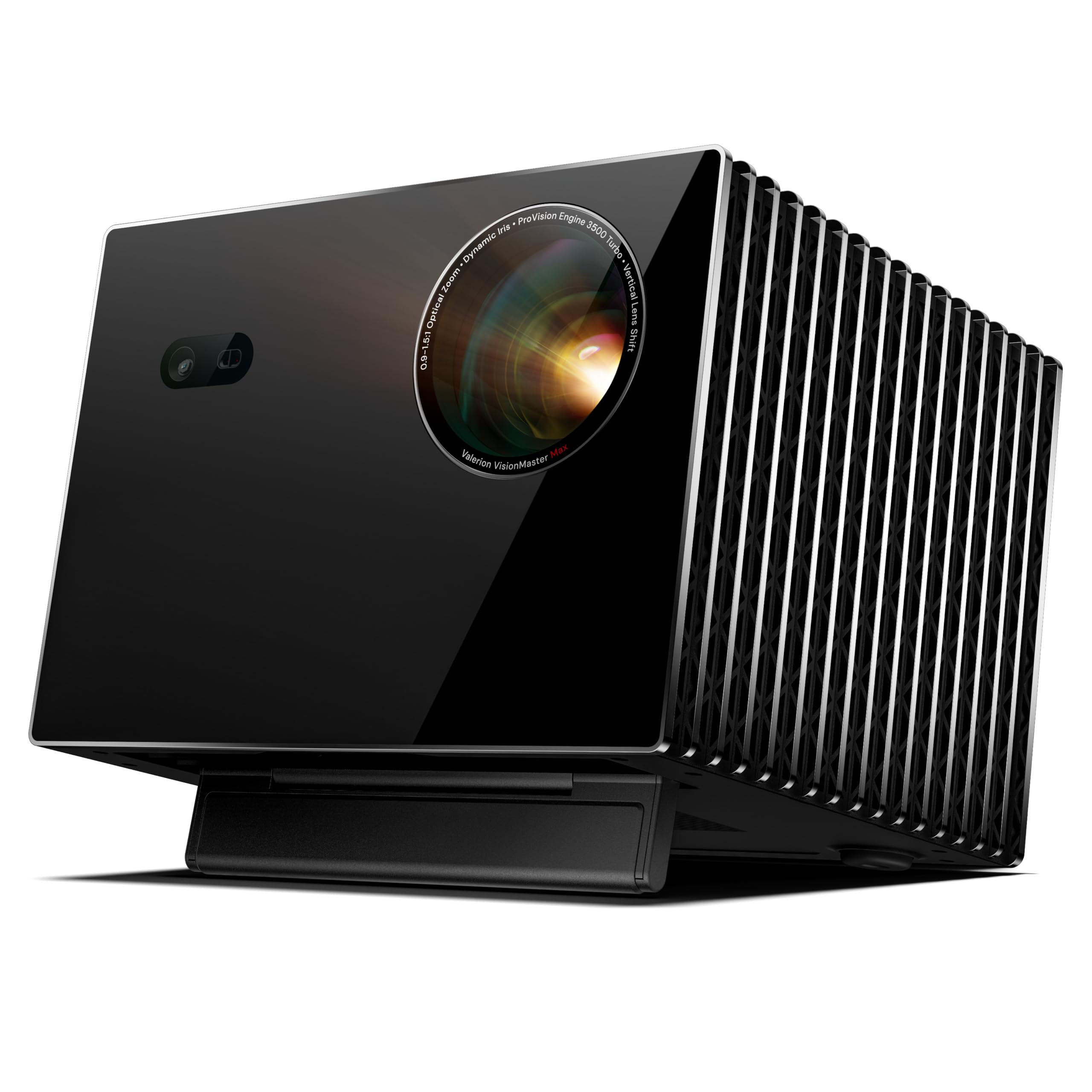
The Valerion VisionMaster Max is engineered for the most sensitive viewers: its Anti-Rainbow Effect (RBE) technology claims 99.99% reduction of color breakup, making DLP projection comfortable even for those who historically avoided it. The NoirScene Dark Field Engine combines an EBL black-level algorithm with a precision IRIS and stray light shield to achieve a viewing contrast of 50,000:1 with native contrast that exceeds typical DLP projectors.
The triple laser source delivers 3500 ISO lumens and covers 110% Rec.2020, and the ISF certification guarantees accurate calibration out of the box. The lens shift (±105% vertical), 0.9-1.5:1 optical zoom, and auto setup features (including obstacle avoidance) make installation straightforward. For gaming, the 4ms input lag at 240Hz with HDMI 2.1 support is elite-tier.
The built-in Google TV with Netflix, plus support for Dolby Vision, IMAX Enhanced, and HDR10+, covers the full HDR spectrum. The fan noise is audible in quiet scenes but quieter than many competitors. Some users note that optimal picture quality requires thorough physical alignment and manual picture tuning to reduce light spill. For the most rainbow-sensitive users who want a DLP’s sharpness without the artifacts, the VisionMaster Max is the definitive choice.
Why it’s great
- Anti-RBE technology virtually eliminates rainbow effect
- Excellent native contrast with precision IRIS
- Full HDR support: Dolby Vision, IMAX Enhanced, HDR10+
- Lens shift and optical zoom for flexible placement
Good to know
- Optimal picture requires careful physical alignment
- Fan noise is present, though not distracting
12. Epson Home Cinema LS11000 4K PRO-UHD Laser Projector

The Epson LS11000 marries the 3LCD’s rainb ow-free, color-accurate engine with a laser array light source for instant-on, consistent brightness over thousands of hours. The 2500 lumens of color and white brightness—identical thanks to the 3-chip design—produces genuine HDR highlights without the brightness penalty that DLP projectors suffer. The dynamic contrast ratio of 1,200,000:1 produces deep blacks with excellent shadow detail.
The motorized lens offers 4-way lens shift, zoom, and focus with memory presets, making it ideal for mixed-aspect-ratio viewing. The HDMI 2.1 ports support 4K at 120Hz with low latency, making it a serious gaming projector that also delivers cinematic color. The 16-step HDR curve adjustment allows fine-tuning of tone mapping for different content.
The primary drawback is the lack of 3D support, a feature still important to some home theater enthusiasts. The high price is also a barrier, though the laser lifespan and build quality justify the investment. The pixel-shifting 4K system is not native 4K, but on a 150″ screen viewed from 10-12 feet, the image is exceptionally sharp. For those who want laser reliability with 3LCD color fidelity, the LS11000 is the ultimate choice.
Why it’s great
- 3LCD laser delivers rainbow-free, accurate color
- 4K 120Hz gaming with low input lag
- Motorized 4-way lens shift with memory presets
- Excellent black level and shadow detail
Good to know
- No 3D capability
- Premium price point requires significant budget
13. AWOL VISION Aetherion Max 4K UST Projector
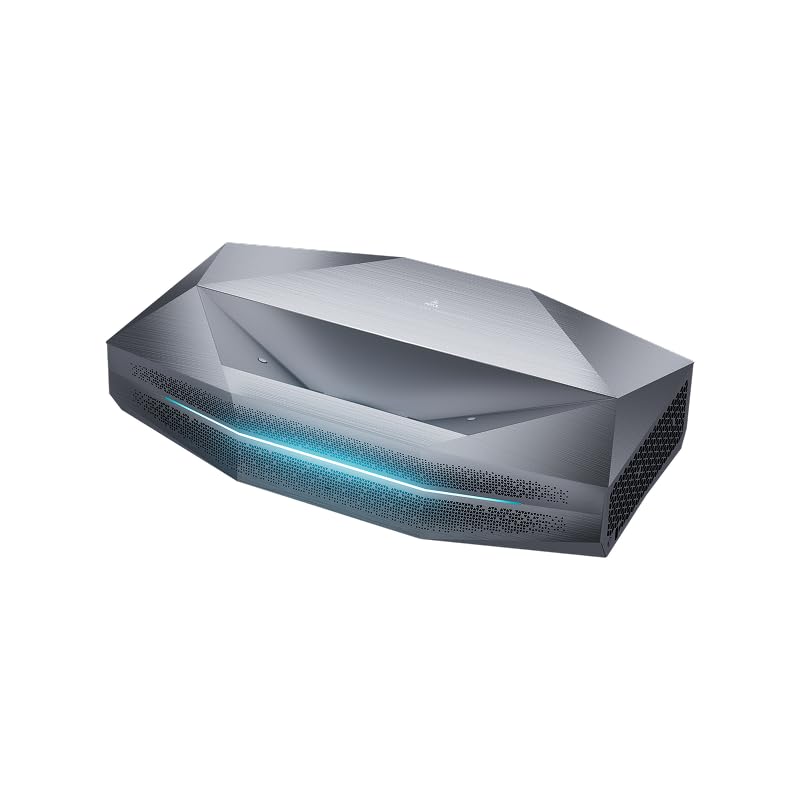
The AWOL VISION Aetherion Max is the most advanced ultra short throw projector on the market, combining a 6,000:1 native contrast ratio (via a 7-level IRIS and EBL algorithm) with a 3300 ISO lumen triple laser engine. The 0.2:1 throw ratio lets it sit inches from the wall and project up to 200″, and the Anti-RBE technology eliminates rainbow effect for both 2D and 3D content—a first for a UST projector.
Gaming performance is unprecedented for a UST: 1ms-class input lag at 240Hz with VRR and ALLM support over HDMI 2.1a. The three HDMI 2.1a ports plus DisplayPort 1.4a let you connect a PS5, Xbox Series X, and gaming PC simultaneously. The Dolby Vision Gaming certification ensures HDR tone mapping is optimized for low-latency play.
The Noirscene System II, with its 7-level IRIS, produces deep, layered blacks without crushing shadow detail. The built-in audio is basic, and users strongly recommend an external sound system or the AWOL ThunderBeat setup. The price is the highest on this list, but for a reference-grade UST that also handles competitive gaming, the Aetherion Max has no equal.
Why it’s great
- Industry-leading 6,000:1 native contrast for a UST
- 1ms input lag at 240Hz with HDMI 2.1a
- Anti-RBE and TÜV-certified eye comfort
- 200″ projection from inches away
Good to know
- Built-in speakers are underwhelming
- Premium price is the highest in this guide
FAQ
What is the difference between pixel-shifted 4K and native 4K in projectors?
Is Dolby Vision support important for a home cinema projector?
Can a 3LCD projector produce better colors than a DLP projector?
Final Thoughts: The Verdict
For most users building a dedicated home theater, the best 4k home cinema projector winner is the JMGO N1S Ultimate because it combines a true triple laser engine with high native contrast, a flexible gimbal mount, and excellent Google TV integration at a mid-range price. If you want the deepest black levels and a rainbow-free image, grab the Epson Home Cinema 5050UB. And for an ultra short throw setup that also delivers elite gaming performance, nothing beats the AWOL VISION Aetherion Max.