
Our readers keep the lights on and the weekend projects moving. As an Amazon Associate, I earn from qualifying purchases.
Forgetting your phone on a run or simply wanting to escape constant notifications shouldn’t mean losing track of your daily steps. A basic step tracker gives you the core metric that matters most—step count—without the noise of smartwatch features, Bluetooth pairing, or apps that demand your attention.
I’m Rikta — the co-founder and writer behind FitlyFast. I’ve spent hundreds of hours analyzing sensor accuracy, battery longevity, and interface simplicity across dozens of entry-level pedometers so you can find a device that actually supports a consistent walking habit.
Whether you are a senior looking for a large, readable display or a minimalist who wants nothing more than a reliable daily step total, this guide to the best basic step tracker breaks down the crucial specs that separate a frustrating purchase from a five-year companion.
How To Choose The Best Basic Step Tracker
Choosing the right basic step tracker comes down to three non-negotiable factors: how it detects motion, how it powers itself, and where you will wear it. A fitness watch with an AMOLED screen and heart rate sensor is not a basic tracker—it is a smartwatch in disguise. A true basic step tracker strips away everything except step counting, distance estimation, and maybe calorie tracking, all without requiring a smartphone.
Sensor Technology: Tri-Axis vs. Single-Axis
The most common complaint from first-time pedometer buyers is inaccurate counting. This is almost always a sensor issue. Single-axis sensors detect motion in only one plane, meaning they fail if the device tilts or shifts in your pocket. Tri-axis sensors measure movement along three planes simultaneously—X, Y, and Z—so the tracker stays accurate whether you clip it to your waistband, carry it in a bag, or strap it to your wrist. Every product in this guide uses a tri-axis or equivalent multi-directional sensor, but the quality of the algorithm that processes that sensor data varies by brand.
Battery Philosophy: Rechargeable vs. Replaceable
This decision defines your long-term relationship with the device. Rechargeable lithium batteries (found in watch-style trackers) offer the convenience of monthly charging cycles, but the battery degrades after two to three years and cannot be swapped without replacing the entire unit. Replaceable coin-cell batteries, like the CR2032, last between six and twelve months and can be changed in seconds with a small screwdriver. For many seniors and non-technical users, the freedom from cables and charging stands makes a coin-cell-powered tracker the true basic choice. The trade-off is that coin-cell devices rarely include advanced features like heart rate monitoring or color displays.
Display Readability and Physical Interface
A basic step tracker should be readable at a glance without squinting, especially during outdoor walks. Look for LCD screens with large, high-contrast digits and an EL backlight for low-light conditions. Avoid trackers that rely exclusively on touchscreen navigation for core functions like resetting the step count or switching between modes—physical buttons are more reliable when your fingers are sweaty or when you are wearing the device on a moving arm. For seniors, a watch-style display of at least 1.4 inches with a dedicated mode button is far more practical than a tiny clip-on device with a recessed screen.
Quick Comparison
On smaller screens, swipe sideways to see the full table.
| Model | Category | Best For | Key Spec | Amazon |
|---|---|---|---|---|
| Casio WS-B1000 | Watch | Bluetooth time sync & durability | 100M WR, 2-year battery | Amazon |
| Realalt 3DTriSport | Clip | Versatile wear positions | 30-day memory, 12-month battery | Amazon |
| ST-CARE C60 | Watch | AMOLED display & health metrics | 1.10″ AMOLED touchscreen | Amazon |
| DAVIKO Pedometer Watch | Watch | No-app simplicity with heart rate | IP68, magnetic charging | Amazon |
| TIMEURE-2308 | Watch | Rugged everyday wear | 50M WR, stainless steel ring | Amazon |
| Hearkent Pedometer Watch | Watch | Comfort & breathable band | 12-month battery, nylon strap | Amazon |
| Hearkent Pedometer (Senior) | Watch | Large LCD numbers for seniors | 30M WR, 40mm display | Amazon |
In‑Depth Reviews
1. Casio WS-B1000 Series

Casio brings its legendary durability to a step tracker that feels more like a proper watch than a fitness gadget. The WS-B1000 offers a 100-meter water resistance rating that handles swimming and snorkeling, a 100-second chronograph, and a two-year battery life that eliminates charging anxiety. The LED illuminator provides clear visibility in complete darkness, and the step counter is paired with a Bluetooth feature that connects to the Casio app—but only for time synchronization and settings, not for constant data syncing.
This model includes a daily alarm, an auto-calendar, and a 1/100-second stopwatch, making it equally functional as a daily timepiece and a step tracker. The digital display prioritizes readability over flash, with large digits that show both the time and step count simultaneously on the main face. Users report that the step tracking algorithm is accurate on flat terrain and during casual walks, though it may miscount during activities with excessive arm movement like cleaning or gardening.
For buyers who want a step tracker that does not need weekly charging and can survive a decade of daily wear, the WS-B1000 is the closest thing to a buy-it-for-life option. The main display optionally shows time/date or time/steps, and the amber backlight is gentle on the eyes at night. The aesthetic leans toward the classic 1990s Casio digital look, which appeals to those who value function over fashion.
Why it’s great
- Exceptional 100M water resistance for swimming
- Two-year battery life on a single coin cell
- Bluetooth for easy time sync without data overload
Good to know
- Step counter may overcount during vigorous arm motion
- Display aesthetics may feel dated to some users
2. Realalt 3DTriSport 3D Pedometer

The Realalt 3DTriSport represents the purest form of a basic step tracker: a clip-on device with zero smartphone dependency. Its tri-axis sensor tracks steps, distance in miles or kilometers, calories burned, and active time, storing up to 30 days of daily records so you can review your progress without an app. The 1.7-inch display is large enough to read while walking, and the included lanyard allows neck-wearing for those who dislike waist clips.
Setup is refreshingly straightforward—insert the CR2032 battery, set your stride length and weight using the simple button interface, and clip it on. The 12-month battery life means this device is essentially maintenance-free for a full year. Users report accurate step counts when the pedometer is clipped to a waistband or belt, with deviations as low as 0.02 miles on treadmill tests. The device survives accidental trips through the washing machine, a testament to its robust ABS plastic build.
The main drawback is that accuracy drops significantly when the device is worn on a lanyard or placed loosely in a bag, as the tri-axis algorithm relies on consistent hip movement for optimal calibration. Some users also report undercounting after several months of use, possibly due to battery voltage drop or sensor drift. The 18-month warranty from Realalt is a safety net that most budget pedometers lack.
Why it’s great
- Accurate tri-axis tracking when clipped to waist
- 30-day historical memory without app dependency
- 12-month battery life with included CR2032
Good to know
- Accuracy suffers on lanyard or in pocket
- Some units show degradation after several months
3. ST-CARE C60 Fitness Tracker

The ST-CARE C60 blurs the line between a basic step tracker and a full-featured smartwatch, but its step-tracking core remains refreshingly simple. The 1.10-inch AMOLED touchscreen is vibrant and responsive, making it easy to swipe through step count, calories, distance, and workout time. Unlike many budget smartwatches, this model includes a stainless steel frame and a skin-friendly strap that feels premium against the wrist.
Health monitoring extends beyond steps to include 24/7 heart rate, blood oxygen, blood pressure, and body temperature tracking—features that are rare at this tier. The watch offers 5 ATM water resistance (50 meters), meaning it is safe for swimming and showering. Battery life reaches 10 to 14 days on a single charge with typical use, and the magnetic charging cradle is convenient for quick top-ups. The companion app, Keep Health, syncs all data wirelessly for those who eventually want deeper analytics.
Some users note that the blood pressure and body temperature readings are not medically certified and should be treated as trend indicators rather than diagnostic tools. The touchscreen can also become unresponsive with wet fingers during exercise, a common limitation of capacitive screens at this price point. For users who want a color display and health metrics alongside their step counter, the C60 offers an attractive package.
Why it’s great
- Bright AMOLED display with multiple watch faces
- Comprehensive health sensors (HR, SpO2, temp)
- 5 ATM water resistance for swimming
Good to know
- Health metrics are for trend tracking, not diagnosis
- Touchscreen lags with wet or sweaty fingers
4. DAVIKO Pedometer Watch
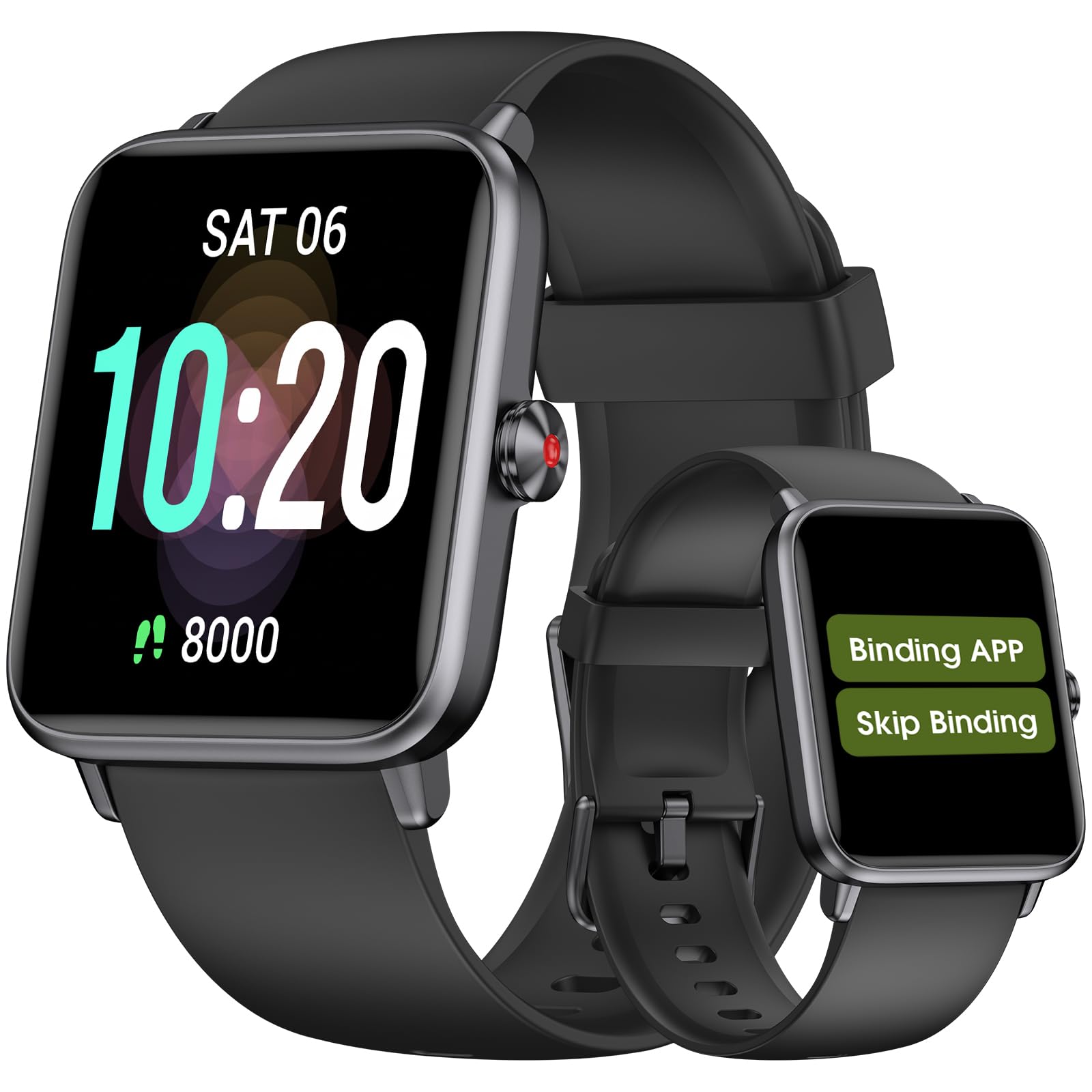
The DAVIKO pedometer watch is designed specifically for users who want heart rate and sleep tracking without ever touching a smartphone app. The 1.4-inch LCD color display shows steps, distance, calories, heart rate, and blood oxygen data directly on the watch face, with all settings controlled through the responsive touchscreen interface. No Bluetooth pairing, no app downloads, no account creation—just wear it and go.
Heart rate monitoring operates in real time, and the watch can manually measure blood oxygen saturation. Sleep tracking categorizes time into deep sleep, light sleep, and awake stages, helping users understand their rest patterns without needing to check a phone in the morning. The IP68 waterproof rating allows swimming and showering, and the magnetic charger delivers a full charge in 1.5 hours for up to seven days of use. The interface includes a sedentary reminder, drink water reminder, and alarm clock, all configurable directly on the watch.
The biggest caveat is that the heart rate sensor shows inconsistent accuracy during exercise—some users report readings that do not match perceived exertion, such as 61 bpm after a jog. The step counter appears more reliable, but a few customers report significant undercounting over longer distances.
Why it’s great
- Fully standalone with no app or phone needed
- Heart rate, SpO2, and sleep tracking on-device
- IP68 waterproof for swimming
Good to know
- Heart rate accuracy is inconsistent during exercise
- Band durability is questionable over the long term
5. TIMEURE-2308 Pedometer Watch

The TIMEURE-2308 is a straightforward pedometer watch built for durability, featuring a stainless steel ring around the bezel and a soft PU strap that fits wrists from 6.29 to 9.44 inches. The 50-meter water resistance rating makes it suitable for swimming, and the EL backlight ensures readability in any lighting condition. Core functions include step counting, calorie tracking, stopwatch, countdown timer, alarm, hourly chime, and standard time/date/week display.
This watch operates entirely without a smartphone—no app connection, no Bluetooth, no data syncing. The battery is a replaceable lithium cell, and users report consistent performance for over two years before needing a change. The step counting algorithm is slightly lenient, tending to overcount rather than undercount, which some users find motivating. The large dial shows all key information at once, making it accessible for those who do not want to navigate menus.
The primary weak point is the band, which some users describe as brittle and prone to breaking after a few months. The band is not easily replaceable because of the integrated lug design, meaning a broken band effectively ends the watch’s life. Additionally, changing the battery requires removing a small screw and specialized tools, which can be challenging for older users. Despite these issues, the watch’s overall reliability and simplicity make it a strong contender for users who want a put-it-on-and-forget-it step tracker.
Why it’s great
- 50M water resistance suitable for swimming
- Large dial with all data visible at once
- Multiple users report over 2 years of trouble-free use
Good to know
- Band is prone to breaking and not replaceable
- Battery change requires tools and dexterity
6. Hearkent Pedometer Watch (B0D5GHPDVP)
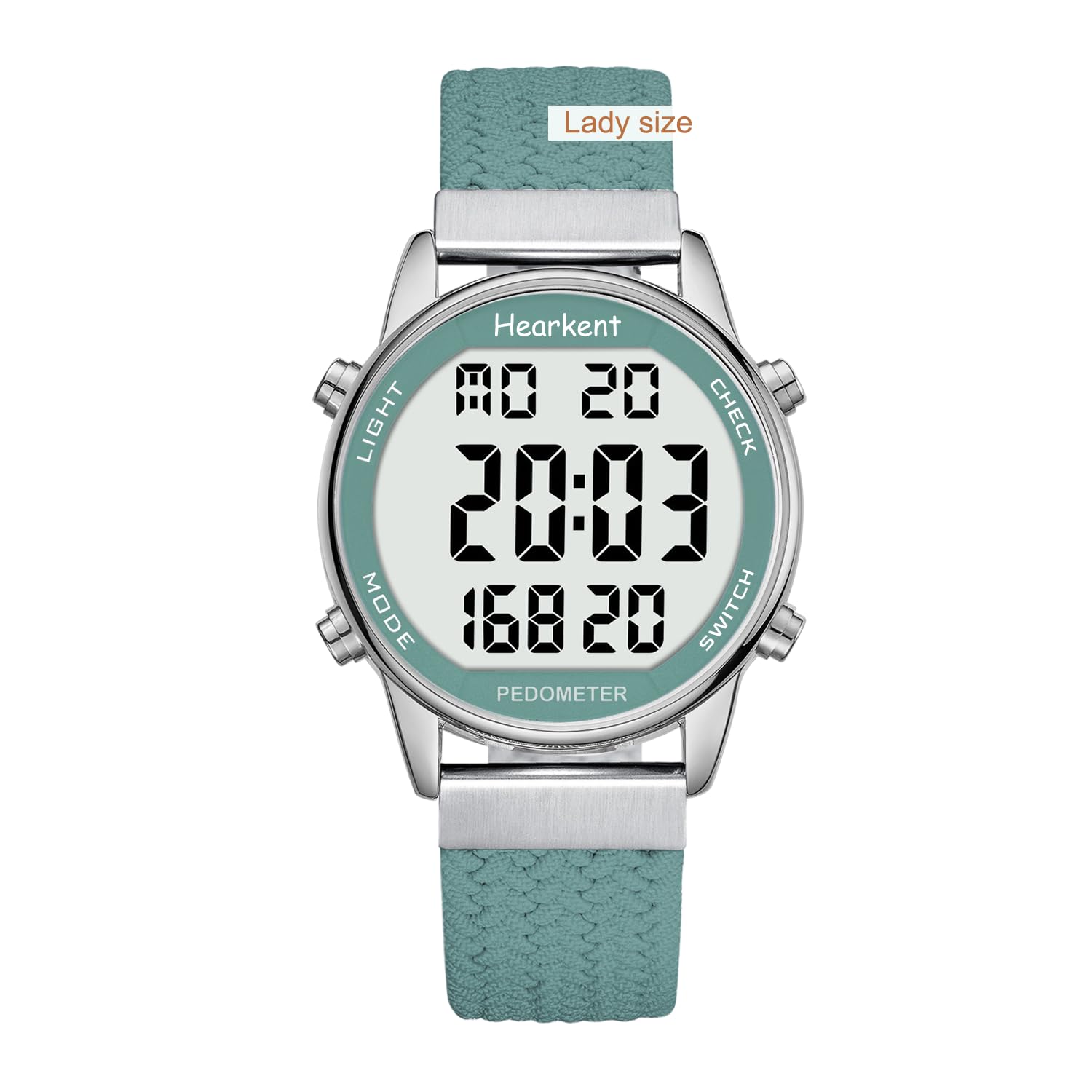
Hearkent’s pedometer watch addresses one of the most overlooked aspects of wrist-worn trackers: strap comfort. The 18mm nylon strap is breathable, elastic, and adjustable between 4.1 and 7.6 inches, reducing skin irritation during all-day wear. The 36mm dial features mineral glass crystal and large numbers with a 5-second EL backlight, making the step count, time, date, and week easily readable in any light.
Instead of a rechargeable battery, this model uses a large-capacity coin cell that lasts up to 12 months—one of the longest battery lifespans among watch-style pedometers. Features include an alarm, hourly chime, stopwatch, countdown timer, and calorie tracking. The 30-meter water resistance protects against rain, handwashing, and cold-water swimming, though hot baths are not recommended. The step counter uses a 10-second continuous-movement algorithm to filter out spurious steps from short, non-walking motions.
Users consistently praise the watch’s comfortable fit and classic look, noting that it blends well with both athletic and casual attire. The buckle clasp uses high-quality stainless steel. The main criticism is that the nylon strap can feel rough or scratchy against the skin for the first few days of wear, requiring a break-in period. The lack of heart rate or sleep tracking keeps this device squarely in the basic category, which is exactly what some buyers want.
Why it’s great
- Breathable, adjustable nylon strap for all-day comfort
- 12-month battery life with replaceable coin cell
- 10-second filtering algorithm reduces ghost steps
Good to know
- Nylon band may feel scratchy initially
- No heart rate or sleep tracking capabilities
7. Hearkent Pedometer Watch (B0CHVPMDW9)
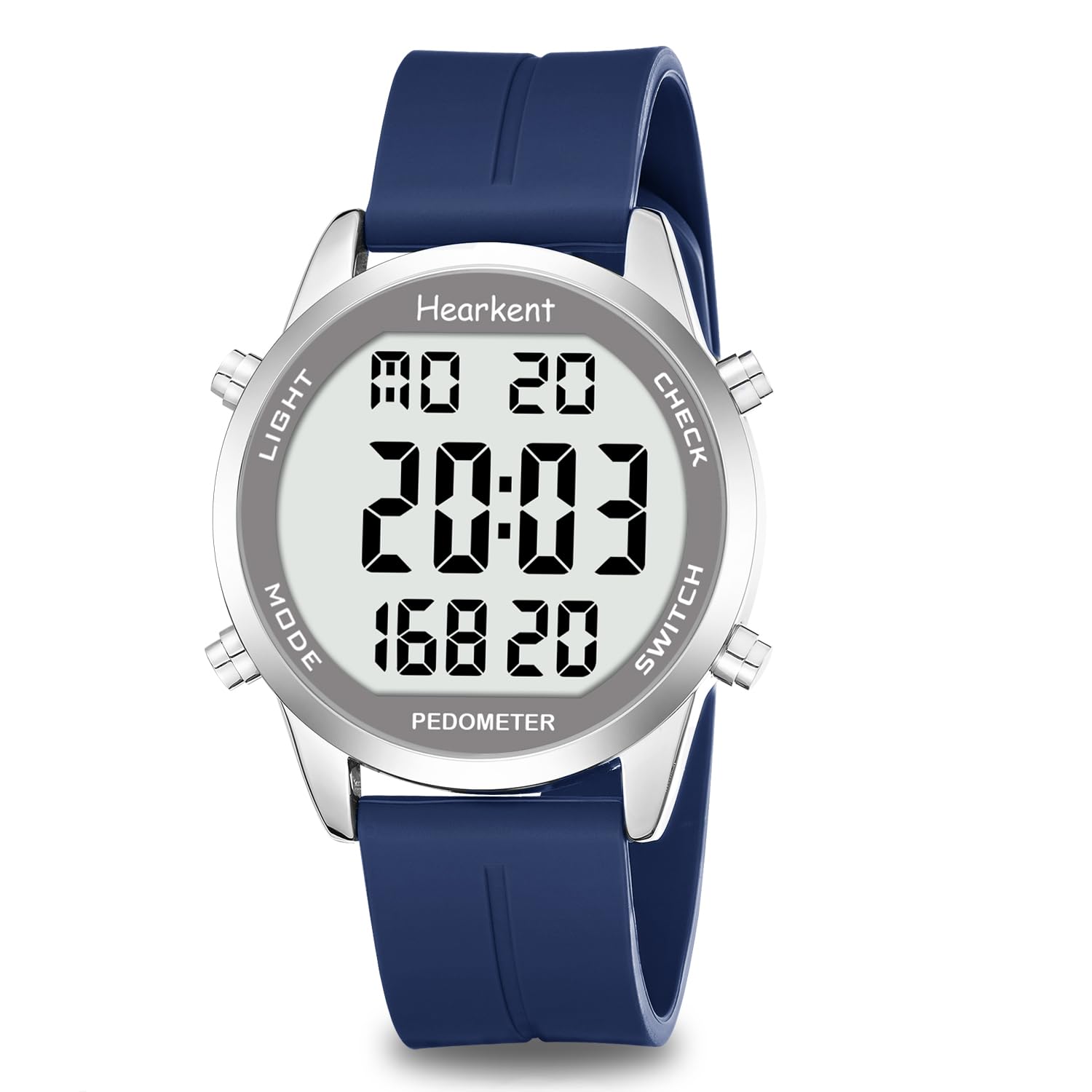
This Hearkent model is specifically engineered for seniors who want a no-compromise approach to readability. The 40-millimeter display (one of the largest in its class) shows steps, calories, time, date, and week in oversized digits that remain legible even through polarized sunglasses. The bright EL backlight ensures the display is readable at night without fumbling for a reading light. There is no Bluetooth, no app connection, and no menu-learning curve.
The metal case and soft silicone strap offer a balance of durability and comfort, with a folding clasp that simplifies putting the watch on and taking it off—a thoughtful design detail for users with reduced hand dexterity. The 30-meter water resistance covers everyday exposure like handwashing and swimming, but the manufacturer advises against hot baths to preserve the seal. The step counter uses a replaceable lithium-ion battery, though users report that the battery compartment uses tiny screws that can be difficult to access without a magnifying glass and fine-tipped screwdriver.
Step accuracy is generally good when the watch is worn consistently, though it does not allow manual stride length adjustment—it assumes a default 30-inch stride, which can skew distance readings for shorter or taller users. Despite this limitation, the combination of a large screen, simple controls, and no-app operation makes this the most accessible option for seniors or anyone who feels overwhelmed by technology.
Why it’s great
- 40mm display with extra-large, high-contrast digits
- Easy folding clasp for arthritic hands
- Completely standalone with no setup beyond battery
Good to know
- No stride length adjustment—assumes 30-inch step
- Battery replacement requires small screwdriver
FAQ
Can a basic step tracker work without a smartphone?
Why does my step tracker count steps when I am driving or typing?
How often do I need to recharge a basic step tracker?
Final Thoughts: The Verdict
For most users, the best basic step tracker winner is the Casio WS-B1000 because it combines the durability and battery life of a classic digital watch with a step counter that requires zero maintenance for two years. If you want a clip-on device you can wear in multiple positions without smartphone dependency, grab the Realalt 3DTriSport. And for a comfortable, no-app wrist tracker with a replaceable battery that lasts a full year, the Hearkent Pedometer Watch is an excellent value pick.