
Our readers keep the lights on and the weekend projects moving. As an Amazon Associate, I earn from qualifying purchases.
Standing at a desk for hours often leaves you with achy feet, locked-up knees, and a stiff lower back. A balance board turns that static stance into a dynamic, active experience that engages your core and keeps your joints loose.
I’m Rikta — the co-founder and writer behind FitlyFast. I’ve spent hundreds of hours researching the mechanics of balance training, from rocker radius and axis design to surface traction and weight capacity, specifically to find which boards actually deliver for the standing desk environment.
The right balance board can transform your work-from-home setup into a low-impact movement station, and this guide cuts through the noise to find the best balance board for standing desk for your pain points and workspace.
How To Choose The Best Balance Board For Standing Desk
Not all wobble boards are built for the desk environment. You need a balance between stimulating micro-movements and maintaining enough stability to type, talk, and think without distraction. Focus on these three factors to find your match.
Motion Type: Rocker vs. Wobble
Rocker boards move along one axis (front-to-back or side-to-side) and offer a predictable, low-distraction motion ideal for deep focus work. Wobble boards allow 360-degree tilt, providing a more dynamic core challenge but requiring slightly more attention to stay centered — better for users who want a light workout while working.
Surface Area and Grip
A platform that’s too small forces your feet to hang off the edges, creating pressure points. Look for a length close to 20 inches to accommodate natural stance width. Textured surfaces or non-slip materials keep you secure, especially if you wear socks or work on hardwood floors.
Board Height and Desk Clearance
Every inch of board height raises your standing position, which can alter your elbow-to-desk angle. Most boards sit around 2 to 3 inches off the floor. Measure your desk’s lowest standing height to ensure your arms stay at a 90-degree typing angle when you’re on the board.
Quick Comparison
On smaller screens, swipe sideways to see the full table.
| Model | Category | Best For | Key Spec | Amazon |
|---|---|---|---|---|
| FluidStance Plane | Premium Rocker | All-day focus & comfort | 24″ x 12″ surface, 250 lb capacity | Amazon |
| GoBalance Sport-Play | Smart Wobble | Gamified training & rehab | Bluetooth app, 450 lb capacity | Amazon |
| Gaiam Evolve | Rocker Board | Forward-backward motion | 27″ x 12″ platform, 250 lb capacity | Amazon |
| Mobo Board | Foot-Focused Rocker | Plantar fasciitis & ankle rehab | Bamboo, 300 lb capacity, 1.22″ low profile | Amazon |
| StrongTek Advanced 360° | Wobble Board | Multi-direction balance challenge | Cross-base, 350 lb capacity, 17.5″ length | Amazon |
| Seville Classics airLIFT | Wobble Board | Foot massage & subtle wobble | 20″ x 14″, 440 lb capacity, textured surface | Amazon |
| Yes4All Foam Pad | Anti-Fatigue Mat | Gentle cushioned standing | EVA foam, 20″ x 13.9″, 396 lb capacity | Amazon |
In‑Depth Reviews
1. FluidStance Plane

The FluidStance Plane uses a gentle rocker motion that allows subtle weight shifts in all directions without the instability of a traditional wobble board. Its wide 24-by-12-inch deck gives you plenty of room to move your feet, and the recycled tire tread top provides excellent grip even during long typing sessions.
Users consistently report increased standing time — jumping from 1-3 hours to 2-5 hours daily — because the micro-movements keep hips loose and lower back pain at bay. The rubber corner bumpers create natural stopping points, so you never feel like you’ll tip over, which is crucial when you’re in a focused workflow.
It’s a premium product assembled by hand in California, and the 30-day guarantee removes the risk of trying it out. The only compromise is that its gentle motion won’t satisfy someone seeking a hardcore balance workout; this is an ergonomic tool, not a gym device.
Why it’s great
- Generous platform allows natural foot placement
- Subtle motion reduces fatigue without distracting from work
- Sustainable materials and US assembly
Good to know
- Premium tier investment
- Best for gentle movement, not intense balance training
2. GoBalance Sport-Play

The GoBalance board bridges the gap between a standing desk accessory and a smart home gym tool. Its built-in Bluetooth sensor connects to a free app with 12 interactive games and 4 sports training modes, turning balance work into an engaging experience — ideal for families or anyone who finds traditional wobble boards boring.
The board itself is a sturdy wooden platform with an anti-slip surface and a removable TPE yoga mat topper, and it supports up to 450 pounds. Users love using it for planks, bridges, and boat poses, and the multiplayer mode lets up to 4 boards connect for friendly competition.
Some users note that the paint on the base can rub off on carpets, and certain workout programs require an extra subscription. It works best on carpet for grip, and the app is a core feature — if you just want a silent rocker for work, this may be more tech than you need.
Why it’s great
- Gamified experience keeps rehab and exercise fun
- Large weight capacity and versatile surface
- Designed by physiotherapists for real results
Good to know
- Premium tier, more than a simple desk board
- App connectivity required for full features
3. Gaiam Evolve
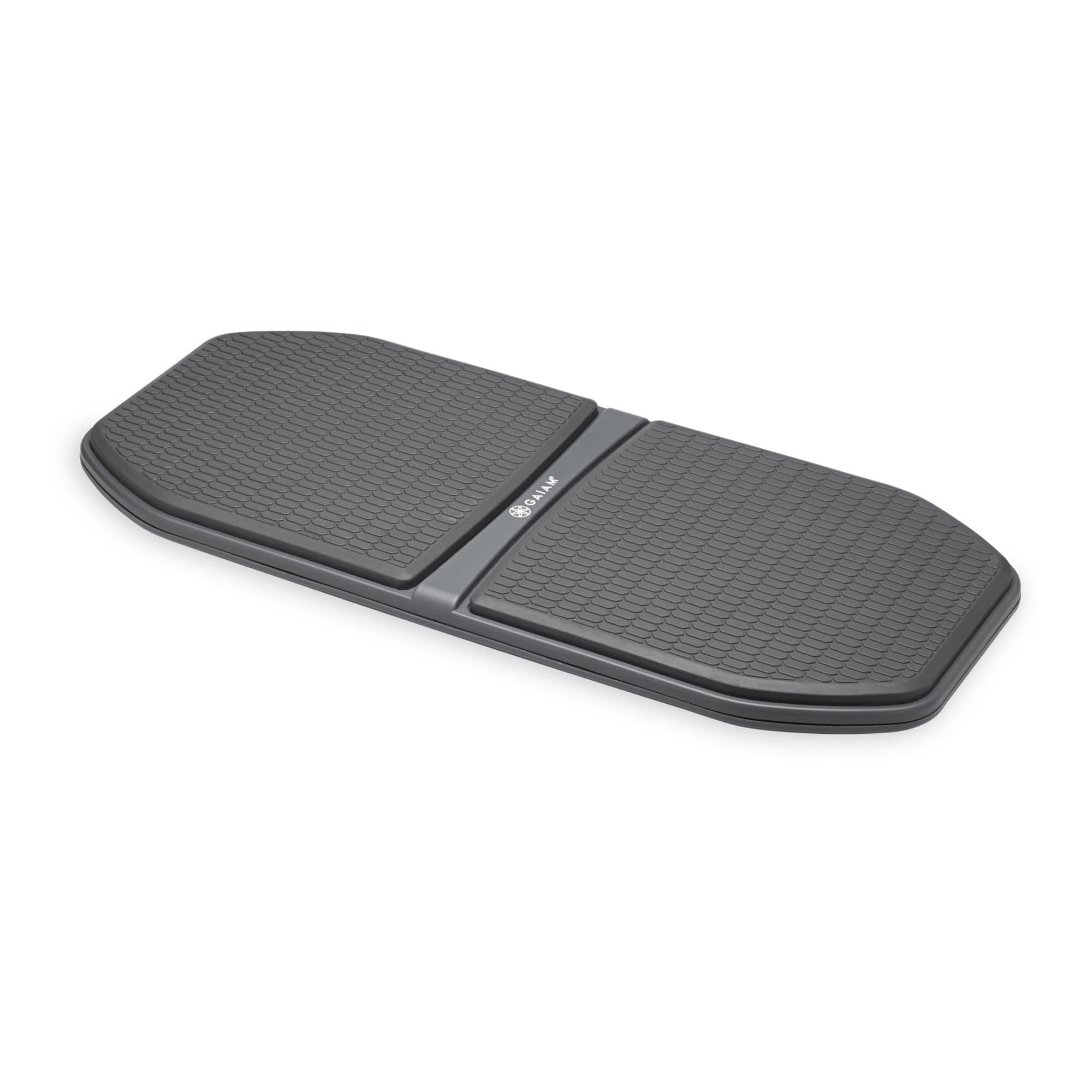
The Gaiam Evolve is a straightforward rocker board that moves primarily forward and backward, with some side-to-side flexibility. Its long 27-inch platform gives you space to shift your stance and even perform calf stretches while you work — a huge plus for anyone whose knees lock up after an hour of standing.
Reviewers consistently praise its lightweight design and grippy surface, which works well on both hardwood and carpet. Many say it encourages them to stand throughout the entire workday, and the ergonomic design promotes neutral ankle positioning. It’s a mid-range investment that delivers predictable, low-distraction motion.
Some users report that the top cushion layer can peel near the center after a few months, and the foam layer doesn’t provide cushioning for those with very sensitive feet. It’s best used with socks rather than barefoot for long sessions, and the weight limit is 250 pounds.
Why it’s great
- Long board allows foot repositioning and stretching
- Lightweight and easy to move between rooms
- Non-slip texture on multiple floor types
Good to know
- Some durability concerns with top layer over time
- No built-in cushion for hard floors
4. Mobo Board

The Mobo Board is a unique rocker board designed to target the arch of your foot and improve proprioception through its “Toe Box Technology.” It’s a low-profile board that sits just 1.22 inches off the floor, making it one of the least intrusive options for desk height clearance, while still providing a meaningful balance challenge.
Users with plantar fasciitis and ankle weakness report dramatic improvements — some can run longer distances and wear heels again after consistent use. The solid bamboo construction and precision-fit pieces make it feel premium, and it disassembles completely flat for travel.
The rocker pieces on the bottom lack grip, causing the board to slide on smooth floors unless you add rubber pads. It’s also a premium-tier investment, and the learning curve is steeper than a flat rocker board because the axis specifically targets foot strength rather than general core stability.
Why it’s great
- Highly effective for foot and ankle rehab
- Ultra-low profile preserves desk ergonomics
- Travel-friendly flat pack design
Good to know
- Rocker pieces slide on smooth floors
- Steep learning curve for new users
5. StrongTek Advanced 360°

The StrongTek Advanced 360° board uses a cross-shaped base that allows multi-directional wobble while providing more floor contact than a traditional round base. This makes it more approachable for beginners while still offering a genuine 360-degree balance challenge that engages your core, ankles, and hips.
It’s a mid-range option with a 350-pound weight capacity and a non-slip textured top that keeps your feet secure. Users find it perfect for standing desk use because it’s compact enough to store on its side, and the price point makes it a low-risk entry into wobble board training.
The four edge protectors on the bottom use weak adhesive — several customers report they fall off within days. The board can also feel somewhat narrow at 13.5 inches wide, which may be tight for users with wider feet or a broader stance.
Why it’s great
- Approachable 360-degree wobble for desk users
- Sturdy build with high weight capacity
- Compact design for easy storage
Good to know
- Edge pads fall off; require glue fix
- Board width may be narrow for some
6. Seville Classics airLIFT

The Seville Classics airLIFT combines a subtle 8.5-degree wobble with a textured surface designed to massage pressure points in your feet. It’s a budget-friendly, mid-range option that’s ideal for users who want relief from heel pain and fatigue while they work.
The rubberized non-slip bottom keeps the board stable on hard floors, and the platform measures a generous 20 by 14 inches, giving you enough room to shift your weight comfortably. Customers report that it eliminates heel pain, allows for longer standing sessions, and even makes rocking fun during phone calls.
Some users feel the wobble is too gentle and wish for a more pronounced challenge. The board’s height adds 2.2 inches to your standing profile, so check your desk clearance. It’s not intended for intense exercise — it’s an anti-fatigue tool with a massage element.
Why it’s great
- Textured surface provides foot massage and comfort
- Wide platform accommodates various stances
- Non-slip bottom on multiple floor types
Good to know
- Wobble is gentle, not a hard balance workout
- Board height may require desk adjustment
7. Yes4All Wobble Board
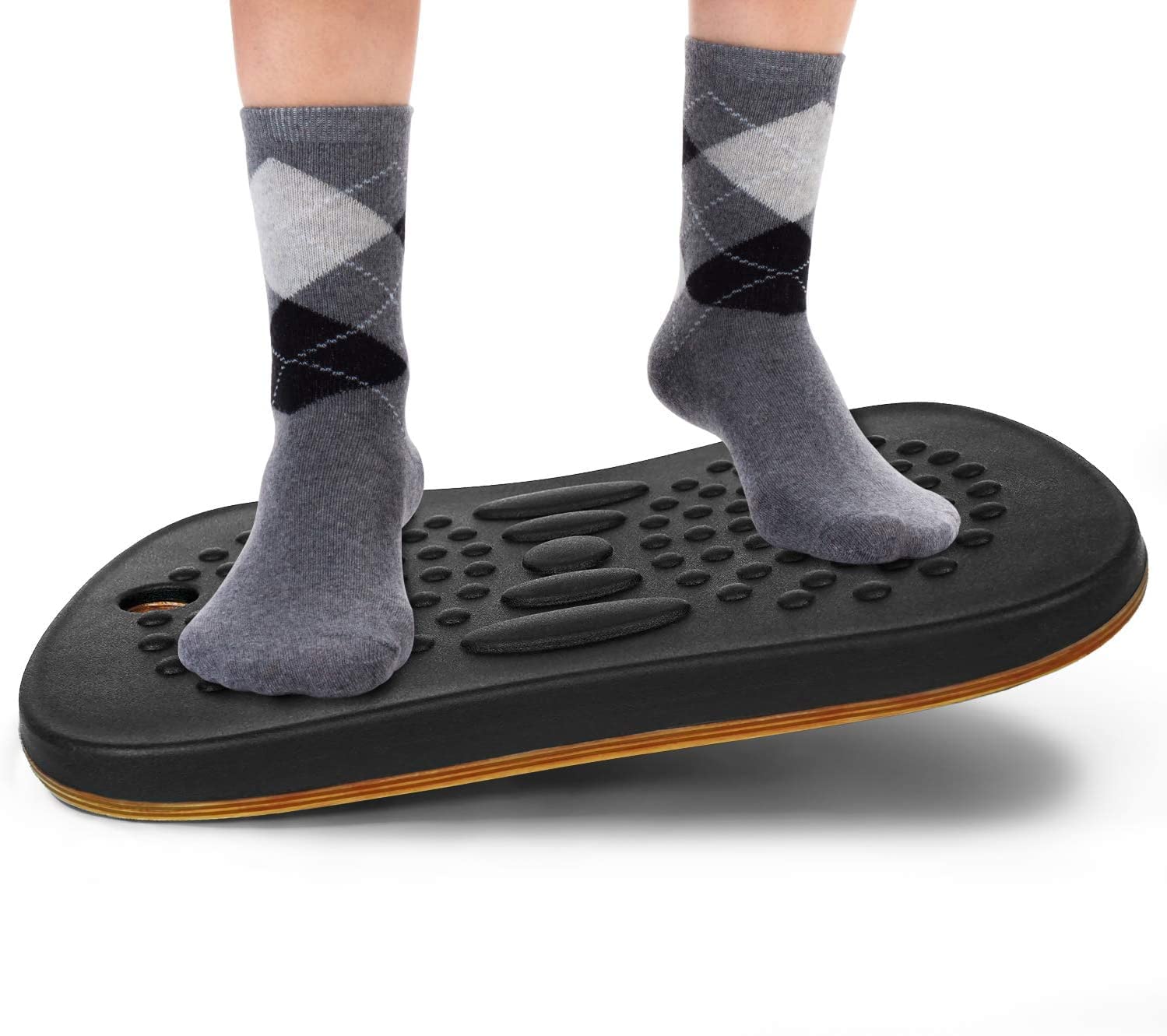
The Yes4All Wobble Board is not a traditional rocker board — it’s a dense EVA foam pad that provides a cushioned, low-stability surface. It acts more like an anti-fatigue mat with a wobble effect, making it an entry-level option for anyone curious about standing desk movement without committing to a wooden rocker.
Users love how comfortable the pebbled surface feels for hours of standing, especially in socks. The gentle wobble is very safe and non-distracting, and many use it for desk work, washing dishes, or even as a general anti-fatigue mat. It’s available in two sizes, with the larger 20-inch version being the best fit for desks.
This board is intentionally easy to balance on — some users who want a genuine balance challenge find it too simple. The foam construction also means it’s not as durable as wood over multiple years, and it can feel slightly narrow for those with larger feet.
Why it’s great
- Exceptionally comfortable for all-day wear
- Very safe and easy to use for beginners
- Closed cell foam is durable for its category
Good to know
- Minimal balance challenge for experienced users
- Not as long-lasting as wood boards
FAQ
Will a balance board add too much height for my standing desk?
Can I use a balance board if I have bad knees or ankles?
How long does it take to get used to a balance board at a standing desk?
Final Thoughts: The Verdict
For most users, the best balance board for standing desk winner is the FluidStance Plane because it offers the perfect balance of subtle motion, generous platform space, and focus-friendly ergonomics without the instability of a 360-degree wobble. If you want an interactive experience that doubles as a home gym tool, grab the GoBalance Sport-Play. And for targeted foot and ankle rehab with a low profile, nothing beats the Mobo Board.