
Our readers keep the lights on and the weekend projects moving. As an Amazon Associate, I earn from qualifying purchases.
The first bonsai you bring home is a leap of faith. You want the crisp calm of a miniature tree, but the fear of watching it brown and crisp within weeks is real. That tension between the dream and the daily care reality defines the beginner’s journey. The right living specimen bridges that gap instantly, giving you a thriving canopy from day one rather than a pot of soil waiting for a seed that may or may not wake up.
I’m Rikta — the co-founder and writer behind FitlyFast. I’ve sifted through hundreds of retailer pages and grower specifications to isolate exactly which species, pot sizes, and care requirements matter most for someone planting their first indoor bonsai.
Whether you want the instant presence of a pre-grown tree or the slow satisfaction of sprouting your own forest, the best bonsai tree for beginners depends on how much patience you can spare for the first few weeks of root establishment and leaf acclimation.
How To Choose The Best Bonsai Tree For Beginners
Walking into the world of miniature trees can feel overwhelming. You are juggling species names, pot sizes, soil types, and the fear of killing something that looks expensive. Narrow it down by asking yourself one question first: do you want a ready-to-display tree or a long-term germination project? The answer determines whether you look at pre-grown specimens or seed kits.
Species Hardiness and Indoor Light Tolerance
Not every tree species survives the indirect light of a typical living room. Hawaiian Umbrella (Schefflera arboricola) and Dwarf Jade (Portulacaria afra) are succulent-like and shrug off low light with minimal leaf drop. Ponytail Palm is another forgiving option that stores water in its bulbous trunk. Avoid traditional pine or juniper varieties if you lack a south-facing window or grow lights — they demand direct sun and outdoor winter dormancy.
Drainage and Pot Design
Root rot is the single biggest killer of indoor bonsai. The pot must have adequate drainage holes and a drip tray. Seed kits with grid-style drainage (large holes covering the entire base) outperform single-hole pots because they prevent water from pooling. Ceramic pots look beautiful but can trap moisture if the glaze blocks breathability. Always check that the included container has bottom openings and that the humidity tray fits beneath without sealing off airflow.
Age and Initial Canopy Development
Pre-grown trees are usually sold at 3 to 5 years old. At that age, the trunk has begun to thicken, and the canopy should show at least 4 to 6 branch layers. A tree with sparse leaves and bare stems may indicate recent pruning or transport stress. Look for descriptions that mention “dense canopy” and “new shoots” in customer feedback. A healthy arrival tree should lose no more than 15 to 20 leaves during its first week of acclimation.
Quick Comparison
On smaller screens, swipe sideways to see the full table.
| Model | Category | Best For | Key Spec | Amazon |
|---|---|---|---|---|
| Brussel’s Hawaiian Umbrella | Pre-grown | Instant indoor display | 3 years old, 4-7 in tall | Amazon |
| Brussel’s Dwarf Jade | Pre-grown | Hardy succulent bonsai | 5 years old, 8-12 in tall | Amazon |
| Costa Farms Ponytail Palm | Pre-grown | Neglect-tolerant houseplant | 12-22 in tall, self-watering trunk | Amazon |
| LUOJIBIE Kit | Seed Kit | Complete DIY starter set | 4 varieties, burlap grow bags | Amazon |
| Avergo Classic Kit | Seed Kit | Family project with extras | 5 varieties, extra seeds included | Amazon |
| Adawook Starter Kit | Seed Kit | Variety pack, 8 species | 8 varieties, grid drainage pots | Amazon |
| Brussel’s Umbrella (Alt) | Pre-grown | Budget pre-grown specimen | 3 years old, 5-8 in tall | Amazon |
In-Depth Reviews
1. Brussel’s Bonsai Live Hawaiian Umbrella Bonsai Tree – Small, 3 Year, 4 to 7 Inches Tall

The Hawaiian Umbrella is the gold standard for instant gratification in the bonsai world. This 3-year-old tree arrives with a glossy, dense canopy of miniature umbrella-shaped leaves that instantly transforms a desk or shelf into a calm focal point. At 4 to 7 inches tall, it fits comfortably in a ceramic pot included with the order, and the accompanying care guide directly addresses the leaf-drop panic that strikes new owners during the first week of acclimation.
Customer reports consistently describe the tree as “better looking in person” and note that the packaging protects the delicate foliage even when the outer box takes a beating. The species naturally tolerates partial shade, so a north or east window works fine, and the succulent-like leaves reduce watering frequency to roughly once a week. The tree is grown in Brussel’s Mississippi greenhouse, which means it arrives hardened to the indoor environment rather than fresh from a tropical import.
A small number of buyers received trees with blackened leaves or slow shipping during temperature extremes, but the majority report healthy arrivals with new shoots visible within the first month. For a beginner who wants a living tree today without waiting weeks for germination, this is the most direct path to a successful bonsai experience.
Why it’s great
- Immediate canopy — no waiting for seeds to sprout
- Partial shade tolerance fits most indoor light conditions
- Ceramic pot and drip tray included
Good to know
- Some trees may drop 15-20 leaves during first week of acclimation
- Shipping delays in extreme cold can damage foliage
2. Brussel’s Live Dwarf Jade Indoor Bonsai Tree – 5 Years Old; 8″ to 12″ Tall

The Dwarf Jade is the succulent lover’s entry into bonsai, and at 5 years old it already shows a thick woody trunk and plump, glossy leaves that look nothing like the spindly sticks you’d get from a seed. The 8 to 12 inch height gives it immediate presence on a coffee table or office shelf, and the included humidity tray protects surfaces while helping maintain moisture around the root ball during the first weeks.
Because Portulacaria afra stores water in its leaves and trunk, it forgives the occasional missed watering — a critical buffer for anyone still learning the rhythm of bonsai hydration. Multiple buyers reported that their tree arrived “larger than expected” and continued growing vigorously with nothing more than bright indirect light and weekly watering. The ceramic pots from Brussel’s vary in color and shape, which adds a small surprise element to each delivery.
A small percentage of trees arrived with thrips infestation, which caused leaf drop and required quarantine treatment. While this is uncommon, it’s worth inspecting the underside of leaves immediately after arrival. Overall, the Dwarf Jade offers the best structural foundation for a beginner who wants a living sculpture that can survive the learning curve.
Why it’s great
- Thick trunk and mature branching at 5 years old
- Succulent leaves store water — forgiving of missed watering
- Humidity tray and decorative rock included
Good to know
- Occasional reports of pest infestation (thrips) from greenhouse
- Container color and shape are randomized
3. Costa Farms Ponytail Palm Live Plant in Decorative Pot, 12-22 Inches Tall
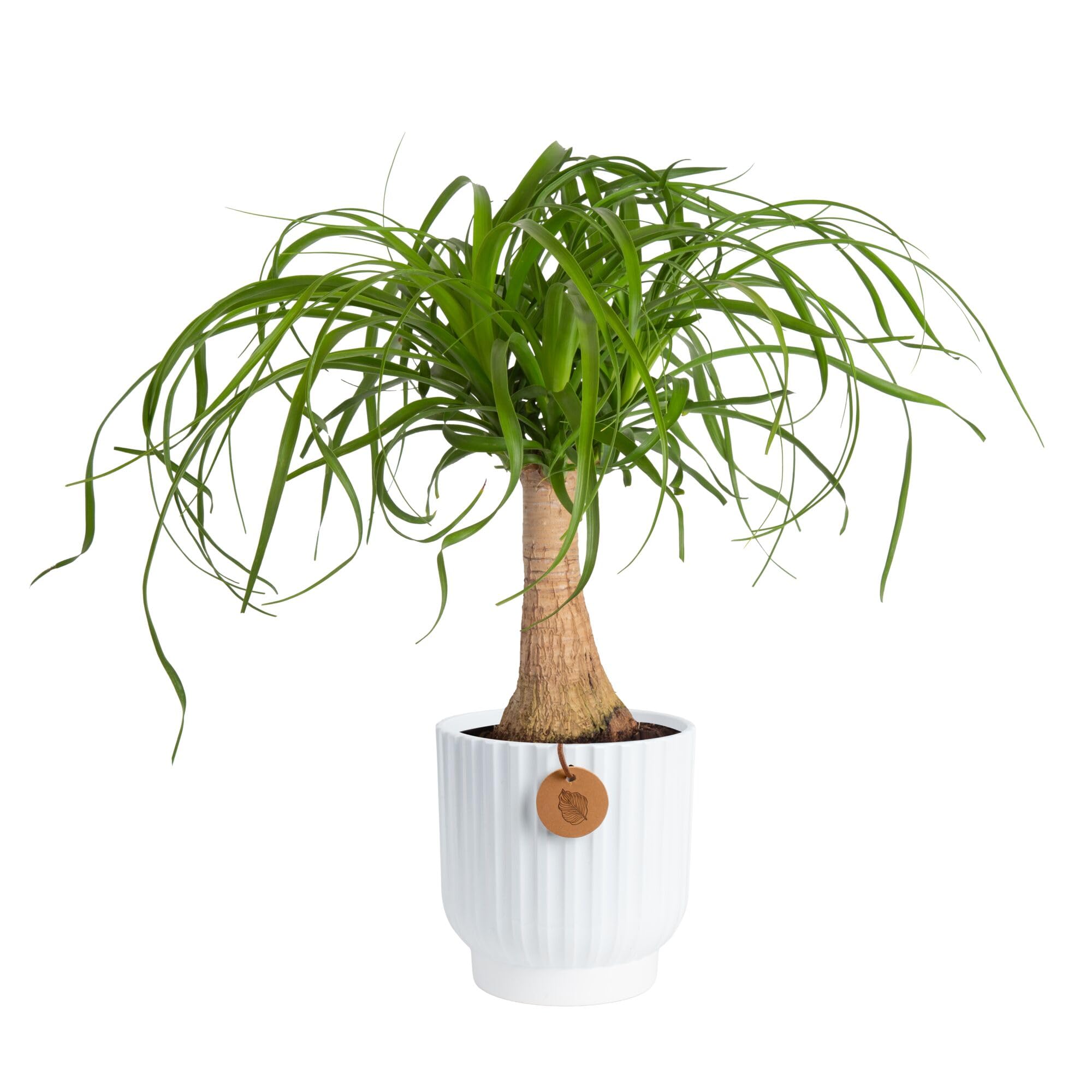
The Ponytail Palm is not a true palm, but its bulbous, water-storing trunk and cascading curly leaves make it the most forgiving houseplant that still carries the sculptural feel of a bonsai. This Costa Farms specimen arrives at 12 to 22 inches tall in a decorative plastic planter that mimics ceramic, making it ready for a corner table or windowsill without any repotting rush.
Customer reviews are remarkably consistent: the plant arrives healthy, with no broken or brown leaves, and looks “better in person” than the photographs. The large trunk base stores enough water to survive two to three weeks of neglect, which is hands-down the best safety net for a first-time indoor plant owner. The species thrives in bright, indirect light but adapts to moderate light levels without dropping leaves.
The only downsides are that the decorative pot is plastic rather than ceramic, and some shipments arrive with soil spilled during transit. A quick wipe-down and a few days of settling resolve both issues. For a beginner who wants a striking, low-stress plant that looks like a bonsai but behaves like a cactus, this is a solid choice.
Why it’s great
- Massive water storage in trunk — survives weeks without water
- Consistently healthy arrival with full green leaves
- Large size (12-22 in) gives immediate visual impact
Good to know
- Plastic planter, not ceramic
- Soil may shift during shipping
4. LUOJIBIE Bonsai Tree Kit, Complete Bonzai Tree Starter Kits
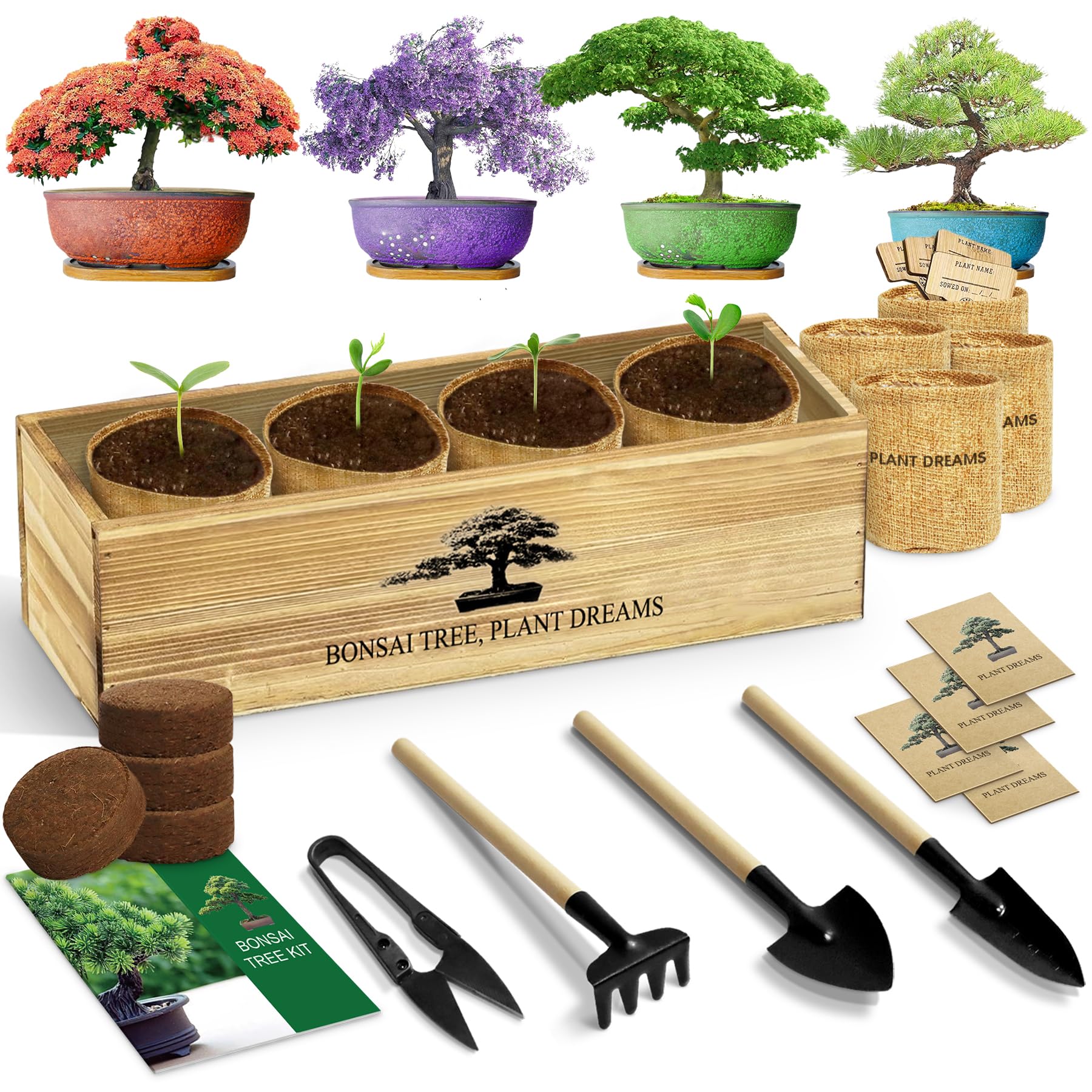
The LUOJIBIE kit takes the guesswork out of sourcing individual components by packaging four seed varieties — Jacaranda, Flame Tree, Japanese Black Pine, and Japanese Pagoda Tree — in a reusable wooden box that acts as its own display planter. The burlap grow bags included with each seed pack improve airflow to the root zone, a design detail that reduces the risk of damping-off disease during the fragile germination phase.
Customer feedback highlights that the kit is “perfect for a gift” and that the non-GMO, heirloom-quality seeds show strong germination when provided with a grow light and consistent moisture. The kit includes a bonsai clipper, plant markers, and soil coir bricks, so you don’t need to buy additional equipment for the first three to six months of growth. The step-by-step instruction guide covers basic watering and light requirements specific to each species.
Some buyers found the printed instructions insufficient for troubleshooting slow germination and had to supplement with online resources. The seeds also require stratification or soaking depending on the species, so expect an upfront time investment of 24 to 48 hours before planting. This kit is ideal for the beginner who enjoys the process of nurturing from seed and wants variety, but it rewards patience over convenience.
Why it’s great
- Burlap grow bags improve root aeration over plastic pots
- Wooden box doubles as display planter
- Non-GMO, heirloom seeds with good germination rates
Good to know
- Instructions may lack detail for troubleshooting low germination
- Requires pre-soaking and stratification for some species
5. Bonsai Tree Kit Classic – 5X Unique Japanese Bonzai Trees | Avergo
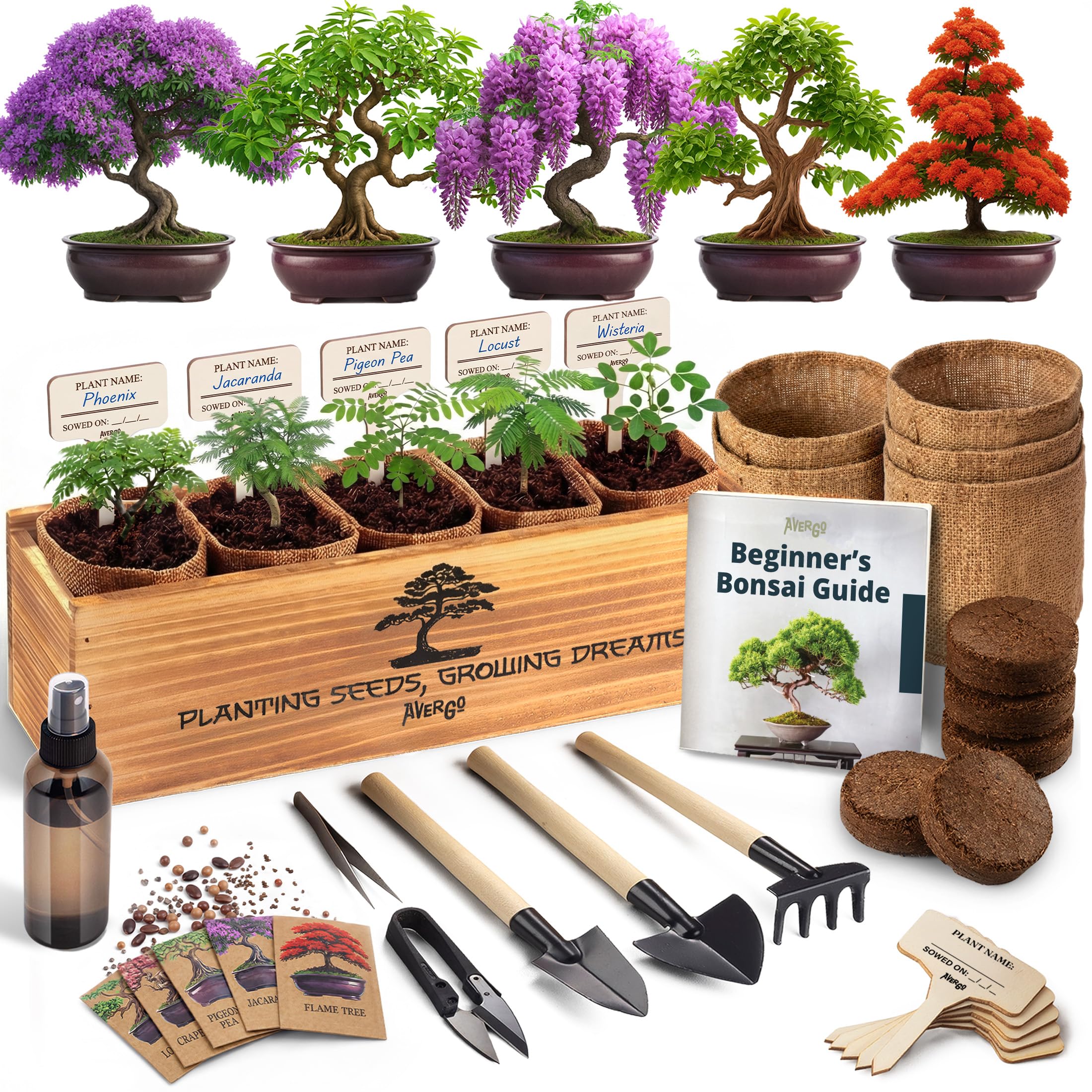
Avergo’s classic kit combines five species — Wisteria, Flame Tree, Blue Jacaranda, Pigeon Pea, and one bonus variety — in a premium-looking wooden planter that makes it feel like a complete workshop rather than a bag of seeds. The coconut coir soil provides excellent drainage and aeration out of the box, and extra seed packets are included to compensate for the reality that not every seed will sprout.
Reviews from families and beginners praise the “easy setup” and “simple instructions” that helped multiple generations plant together without confusion. The Flame Tree and Pigeon Pea seeds consistently show the fastest germination, with visible sprouts within 10 to 14 days under bright indirect light. The kit includes pruning tools and training wire for future shaping, so the set grows with the user rather than being outgrown after the first month.
Wisteria seeds in some kits molded rather than germinated, suggesting they may require cold stratification that the instructions do not fully detail. The wooden planter looks great but lacks drainage holes, meaning you must use the included pots inside it or drill your own. For a beginner who wants a shared activity with kids and doesn’t mind adjusting technique per species, this kit offers the best balance of presentation and potential.
Why it’s great
- Extra seed packets increase overall germination success rate
- Coconut coir soil prevents waterlogging during early growth
- Includes training wire and clippers for future shaping
Good to know
- Wisteria seeds may need cold stratification not in instructions
- Wooden planter lacks drainage holes
6. Adawook Bonsai Tree Starter Kit – 8 Varieties Indoor Bonsai Trees Plant Seeds
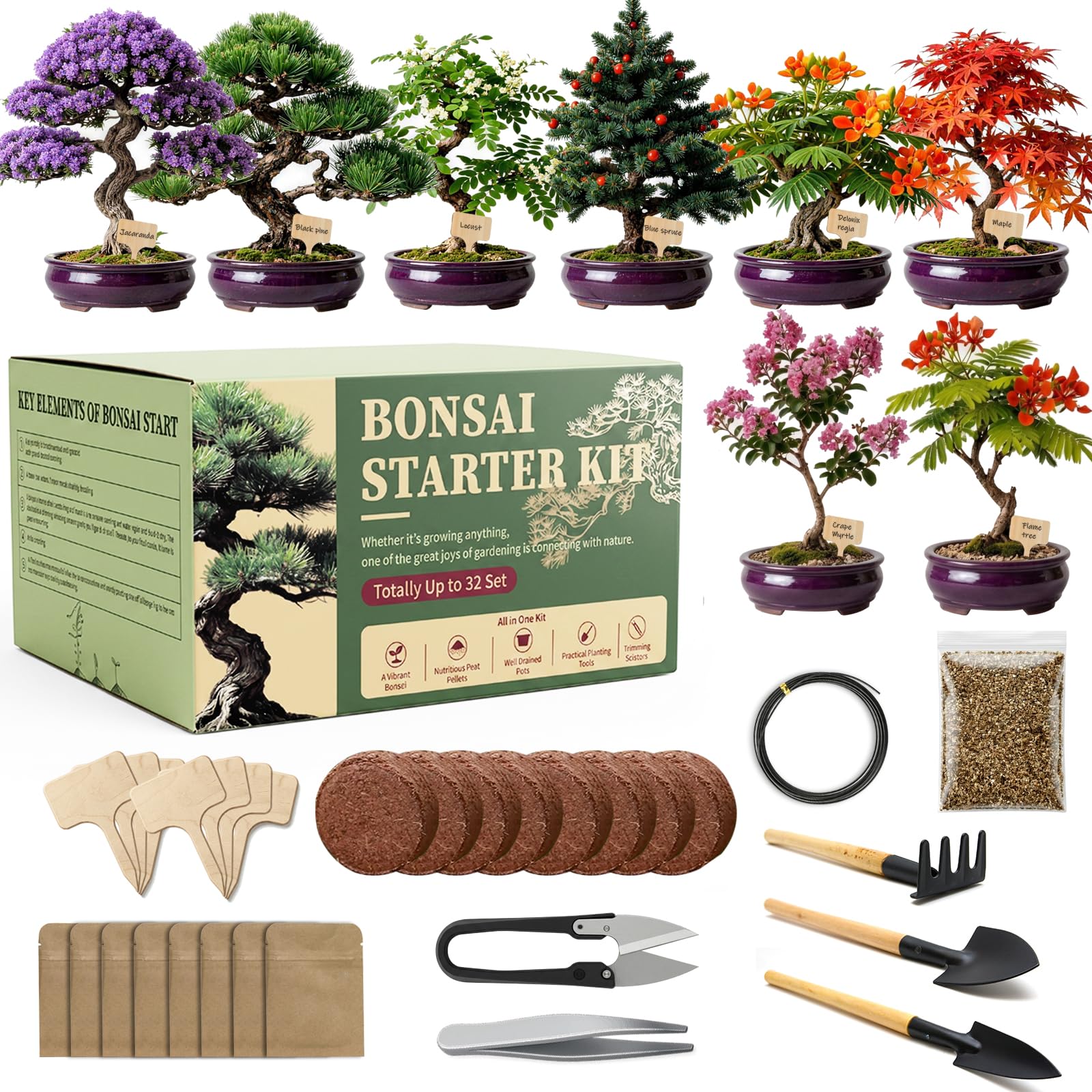
The Adawook kit stands out for its eight-seed variety and the grid-style drainage pots that prevent the soggy soil conditions that kill more seedlings than any other factor. The set includes Jacaranda, Black Pine, Locust, Delonix regia, Maple, Crape Myrtle, Flame Tree, and Blue Spruce, giving a beginner the rare chance to experiment with both deciduous and coniferous species in a single purchase.
Customer reports note that the Red Maple seeds germinated at roughly 3 out of 8, and the Juniper and Pine varieties showed decent sprouting after a few weeks. The kit includes vermiculite to improve drainage and aeration, pruning scissors that actually work, and training wire that can be used once the saplings reach about 4 inches. The pots with large grid holes allow excess water to drain freely, which is a significant advantage over pots with a single small hole that clogs easily.
The instructions are printed only on the outer box and may be too minimal for a complete beginner who has never soaked or stratified seeds. A few reviewers received kits with no growth after three weeks, likely due to insufficient soaking depth rather than dead seeds. For the beginner who wants maximum species variety and is willing to watch a few YouTube tutorials to supplement the box instructions, this kit provides the broadest genetic playground.
Why it’s great
- Eight species — the widest variety in any kit reviewed
- Grid-style drainage holes prevent root rot effectively
- Includes vermiculite, wire, and functional pruning scissors
Good to know
- Instructions are box-only and lack seed-specific soaking details
- Germination rates vary — some seeds need stratification
7. Brussel’s Bonsai Live Hawaiian Umbrella Bonsai Tree – Small, 3 Year, 4 to 7 Inches Tall with Ceramic Pot
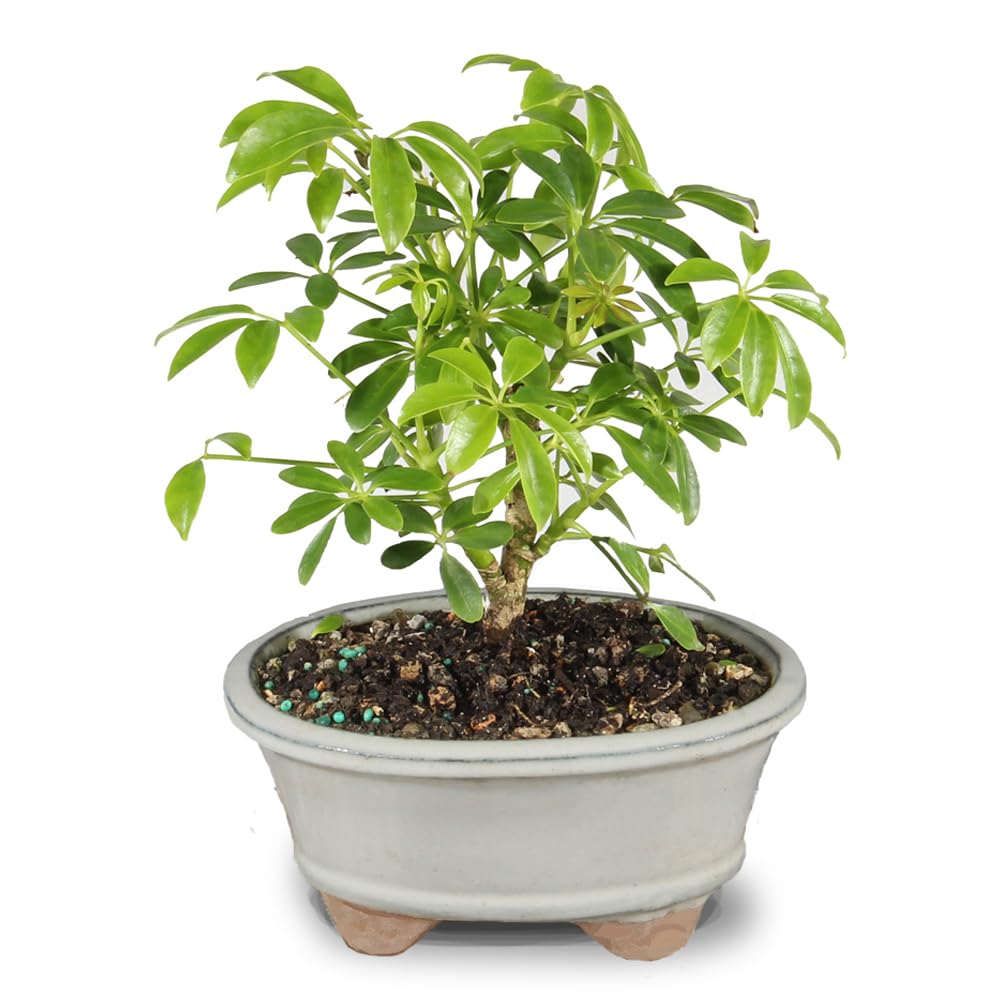
This second listing from Brussel’s offers the same Hawaiian Umbrella species at a slightly lower entry cost, with the tree arriving at 5 to 8 inches tall in a ceramic container. The tree is 3 years old and comes with full care instructions, making it a direct drop-in alternative for the main Brussel’s pick, especially for buyers who want to save a few dollars without sacrificing the species’ well-documented beginner-friendly reputation.
Buyers consistently describe the plant as “healthy, well-packaged, and bigger than expected,” with several noting that the tree already had new green shoots visible upon arrival. The glossy umbrella-shaped leaves form a dense canopy that reacts visibly to light — the leaves brighten under brighter indirect light and darken slightly in lower light, giving you clear visual feedback about placement. The pot colors vary and some buyers received a nice blueish teal pot that they considered a bonus.
A subset of shipments arrived with blackened leaves or trees in poor condition, and some customers received no care instructions due to wet packaging. The soil in these pots can become nutrient-depleted within the first month, so having a diluted liquid fertilizer ready or planning an early repot is wise. For the budget-conscious beginner who wants the same reliable species and pot quality as the top pick, this version works well if you’re prepared for potential soil management.
Why it’s great
- Same Hawaiian Umbrella species as the top pick at lower cost
- Most trees arrive with new shoots already visible
- Leaf color changes signal whether light placement is correct
Good to know
- Soil may deplete nutrients quickly — fertilize or repot within 4-6 weeks
- Care instructions can arrive wet and unreadable
FAQ
Will a pre-grown bonsai die if I miss watering for a week?
How many seeds should I expect to germinate from a starter kit?
Can I keep Dwarf Jade or Hawaiian Umbrella in a north-facing room?
How quickly can I expect to see growth from a bonsai seed kit?
Final Thoughts: The Verdict
For most users, the best bonsai tree for beginners winner is the Brussel’s Hawaiian Umbrella Bonsai because it delivers an immediate dense canopy, tolerates partial shade, and includes everything except a window. If you want a succulent trunk that forgives missed watering for two weeks, grab the Brussel’s Dwarf Jade. And for a seed-to-tree journey with the most species variety, nothing beats the Adawook 8-Variety Starter Kit.