
Our readers keep the lights on and the weekend projects moving. As an Amazon Associate, I earn from qualifying purchases.
The first family ride is a milestone, but picking the wrong baby bike seat turns it into a wobbling, knee-knocking frustration. Parents quickly learn that mounting style, weight limits, and child comfort are not spec sheet filler—they determine whether your toddler lasts ten minutes or an hour. The trade-offs between front-mounted bonding and rear-mounted stability are real, and a mismatch with your bike frame can mean a wasted purchase.
I’m Rikta — the co-founder and writer behind FitlyFast. I’ve spent hundreds of hours analyzing mounting bar designs, harness adjustability, and footrest systems to help parents make a confident, safe decision for this exact purchase.
After combing through dozens of specs and real-user feedback, the following products represent the top tier of safety, durability, and practical design on the market today. This comprehensive guide will walk you through the exact features that separate a good baby bike seat from a dangerous or uncomfortable one.
How To Choose The Best Baby Bike Seat
Selecting a child bike seat involves more than picking a color. The two main decisions—mounting style and security features—dictate how your ride feels and how safe your child remains. Look for a seat that matches your bike frame geometry and your child’s size, not just the most popular option online.
Front vs. Rear Mounting
Front-mounted seats allow easy conversation and eye contact but shift the bike’s center of gravity forward, which can make steering feel heavier and require a wider pedal stroke. Rear rack-mounted seats keep the bike’s handling more predictable but block your view of the child and require a sturdy rack rating of at least 25 kilograms. For smaller bikes with tight top tubes, front mounts often fail to fit.
Harness Quality and Foot Restraint
A 5-point harness provides superior crash protection compared to a 3-point version, preventing the child from leaning or slipping out during bumps. Equally important are the footrests—open foot cups risk entanglement in spokes unless paired with fixed straps or closed designs. Always check that the buckle is childproof and the straps adjust without tools.
Weight Limits and Material Durability
Most seats top out around 33 to 40 pounds, but heavy-duty metal models can reach 55 pounds. Plastic shells are lighter and easier to carry but can crack under repeated stress; aluminum or steel frames add durability at a weight penalty. Examine the padding—thick foam reduces road vibration, while water-repellent covers simplify cleaning after muddy rides.
Quick Comparison
On smaller screens, swipe sideways to see the full table.
| Model | Category | Best For | Key Spec | Amazon |
|---|---|---|---|---|
| Kids Ride Shotgun Pro Combo | Premium Front Mount | Mountain biking on trails | 22 kg / 48 lb capacity | Amazon |
| Thule Yepp 2 (Rear Maxi) | Premium Rear Rack | E-bikes & long commutes | 40 lb capacity / 10.6 lb seat | Amazon |
| Thule Yepp 2 (Rear Mini) | Premium Rear Rack | Compact cargo & daily rides | 33 lb capacity / foam padding | Amazon |
| Peg Perego Orion | Mid-Range Front Mount | Quick attach/detach daily use | 33 lb limit / 4.85 lb weight | Amazon |
| KaZAM Kangaroo (Current Model) | Mid-Range Front Mount | Bonding rides with small toddlers | 27–37 in height fit | Amazon |
| WeeRide Kangaroo Classic | Mid-Range Front Mount | Stable center-mount for 1+ year olds | 33 lb capacity / steel frame | Amazon |
| VSIOBTE Toddler Front Seat | Budget Front Mount | High capacity & full guardrail | 55 lb limit / metal construction | Amazon |
In‑Depth Reviews
1. Kids Ride Shotgun Pro Combo
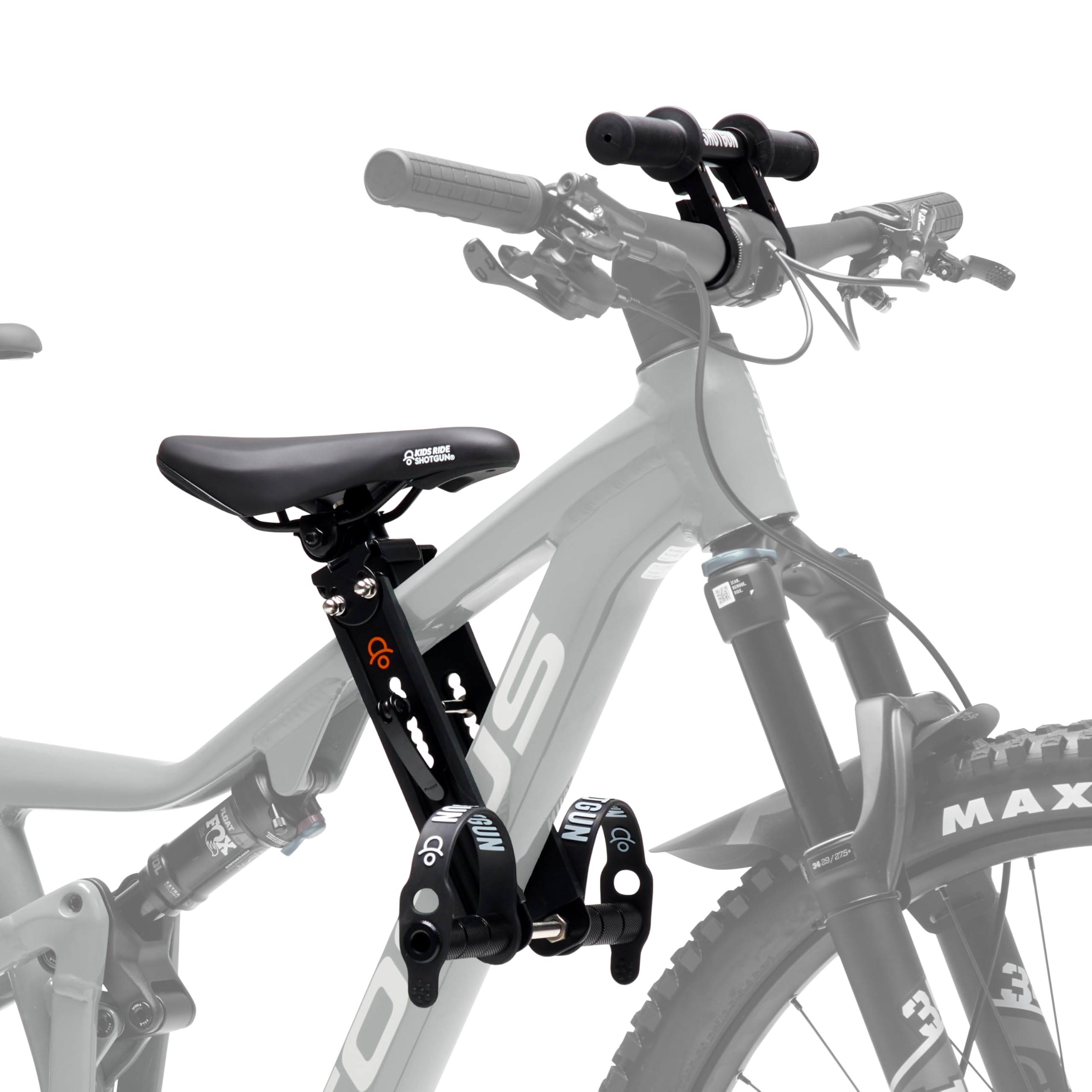
Built by mountain biking enthusiasts, the Shotgun Pro Combo is the only seat on this list that ships with child-specific handlebars and an integrated mudguard. The custom handlebar with rubber grips keeps small hands secure in a proper riding position, while the mudguard prevents little feet from straying into the front wheel—a non-negotiable safety feature for trail riding. The polyurethane and memory foam padding provides real shock absorption on uneven terrain, and the rubber footrest straps lock feet in place even during aggressive descents.
The mounting system uses full rubber protection to prevent scratches on your bike frame, and the design specifically fits modern mountain bike downtubes. Switching the seat between two bikes takes time due to the multi-step installation, but the stability payoff is enormous—zero wobble once torqued correctly. The 48-pound weight limit (about 22 kilograms) comfortably covers children from roughly age two up to five years old.
Real-world feedback confirms that toddlers adapt immediately to the upright seating position and the handlebar, often falling asleep mid-ride. The primary caveat is pricing; this is the most expensive option here, and the proprietary mounting bar may require shims for BMX-style frames. For daily off-road use and parents who want a purposeful, high-build-quality system, this is the definitive choice.
Why it’s great
- Integrated child handlebar with rubber grips prevents slipping
- Mudguard keeps feet out of the front wheel on rough terrain
- Memory foam padding absorbs trail vibration
Good to know
- Switching between bikes is time-consuming
- Handlebar may need shims for BMX-style frames
2. Thule Yepp 2 (Rear Maxi)

The Thule Yepp 2 Maxi is designed for longer-term use, accommodating children from 9 months up to 5 years old and 40 pounds. It attaches via a universal rack mount system that takes about three minutes to install, and the included metal lock deters theft when parked. The soft, shock-absorbing foam seat reduces road buzz, and the water-repellent fabric makes mud cleanup simple—a practical advantage for daily commutes or wet-weather riding.
The adjustable 5-point harness uses a childproof buckle that parents find secure but easy to operate. Footrests adjust without tools, and integrated footstraps prevent dangling legs. A built-in reflector and a dedicated safety light attachment point improve visibility at dusk. The aluminum frame keeps the total weight at 10.6 pounds, which is reasonable for a rear rack seat, though it may affect handling on lighter bikes.
Customer reviews highlight the simple install, durability after months of use, and compatibility with e-bikes like the Lectric XP. A minor common complaint is that the child’s head can fall forward when sleeping, a trade-off of the rear position. For parents who want the longest usable age range and a rack setup that works with cargo or electric bikes, the Yepp 2 Maxi is the clear premium winner.
Why it’s great
- Universal rack mount installs in about three minutes
- Water-repellent, easy-clean fabric with foam padding
- Anti-theft lock included with the seat
Good to know
- Child’s head may droop forward when sleeping
- Heavier at 10.6 pounds than front-mount seats
3. Thule Yepp 2 (Rear Mini)
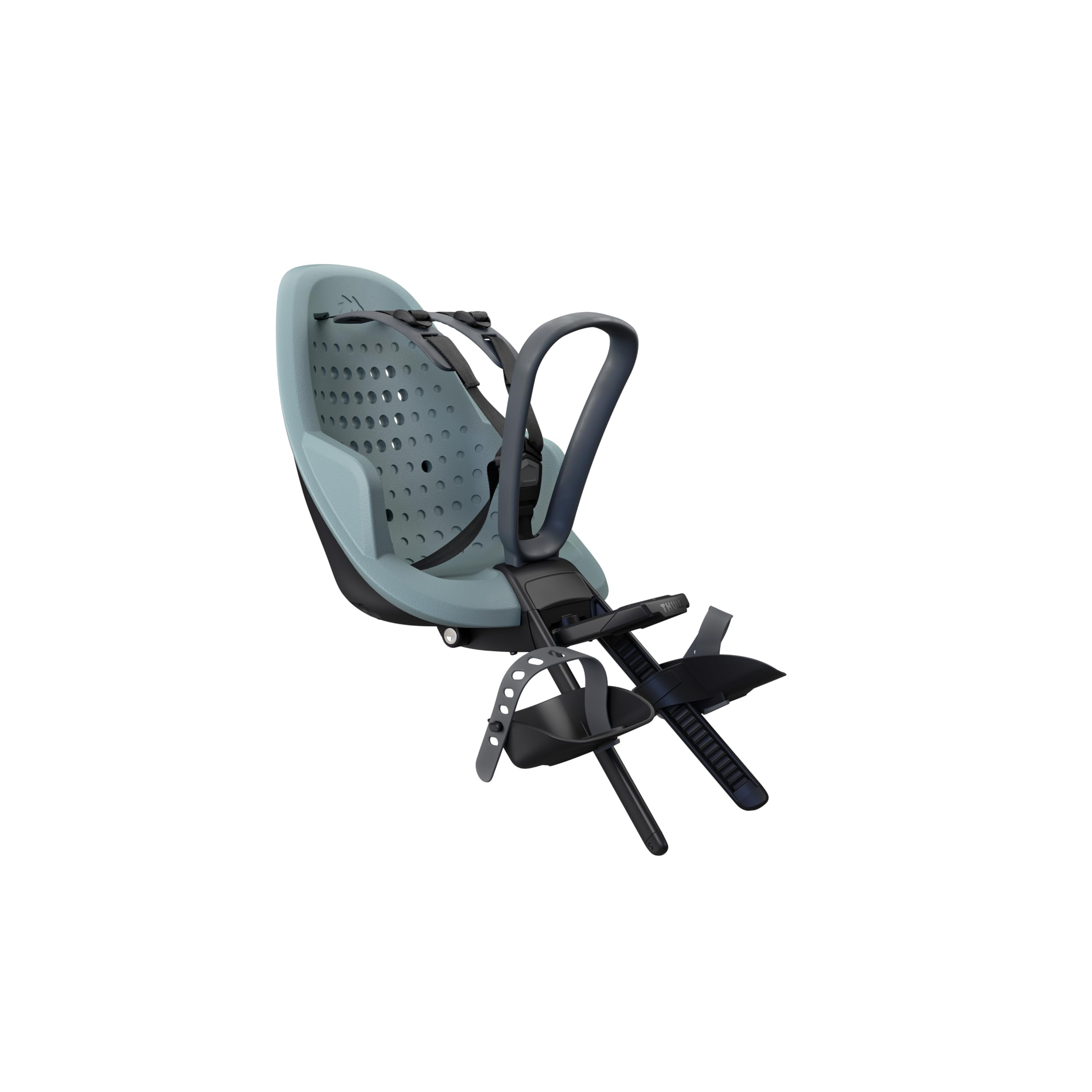
The Yeep 2 Mini is essentially the same platform as the Maxi but with a 33-pound weight limit and a slightly smaller footprint, making it a better fit for compact bikes and shorter daily trips. Like its bigger sibling, it mounts to a standard rear rack with minimal effort and includes the same adjustable 5-point harness, childproof buckle, and shock-absorbing foam padding. The handlebar for the child is a padded grip, and the materials are water-repellent for quick wipe-downs after a ride in light rain.
The key difference is that the Mini tops out at around three years old versus five for the Maxi, so families planning to use the seat across multiple children may find the Maxi more cost-effective over time. However, the Mini is slightly lighter, which matters on lightweight commuter bikes where every pound changes acceleration and hill-climbing feel. The metal lock and reflector are still standard, and the seat fits most racks with a 25-kilogram rating.
Reviews consistently praise the three-minute install time and the secure, rattle-free connection to the bike. One parent noted that the chest buckle can be wiggled open by an insistent toddler, recommending a car seat clip as a stop-gap. For focused daily use through the toddler years without overpaying for capacity you won’t use, the Mini delivers Thule’s premium build at a lower entry point.
Why it’s great
- Five-point harness with childproof buckle adjusts without tools
- Shock-absorbing foam padding minimizes road vibration
- Quick-rack mount works with e-bikes and standard bikes
Good to know
- 33-pound limit means outgrowing around age three
- Chest buckle may need a clip to prevent toddler escape
4. Peg Perego Orion

The Peg Perego Orion uses a one-click attachment system that leaves a compact clamp on your bike’s frame—the seat body snaps on or off in about ten seconds without tools. The clamp accepts frame tubes from 32mm to 52mm (1.3 to 2.0 inches), which covers most mountain, hybrid, and cruiser bikes. The seat itself weighs only 4.85 pounds, making it one of the lightest front mounts available, and the gel pad adds a layer of vibration damping that children appreciate on longer rides.
The 3-point harness is adjustable in length but uses a simpler buckle than the 5-point systems on premium competitors. Three-position footrests allow the seat to grow with the child up to the 33-pound limit (roughly age four). The plastic shell is thick and Italian-molded, holding up well to daily use without cracking. Assembly takes about 15 minutes with the included tools, but the instruction manual is sparse and the bracket can be tricky to align perfectly on some frames.
Rider height matters more with this seat than most. At 5’3”, some parents report that the child’s knees tap the handlebars during sharp turns. Taller riders generally have no clearance issues. The quick-release feature is a genuine time-saver for families who need to park the bike or swap the seat between two bikes rapidly. For structured daily trips where install speed and low weight are your top priorities, the Orion is a strong mid-range pick.
Why it’s great
- Ten-second click-on/off attachment is the fastest on this list
- Only 4.85 pounds—easiest to carry and store
- Gel pad and thick plastic shell dampen road buzz
Good to know
- Shorter riders may have knee clearance issues with handlebars
- Installation instructions are poorly detailed
5. KaZAM Kangaroo (Current Model)
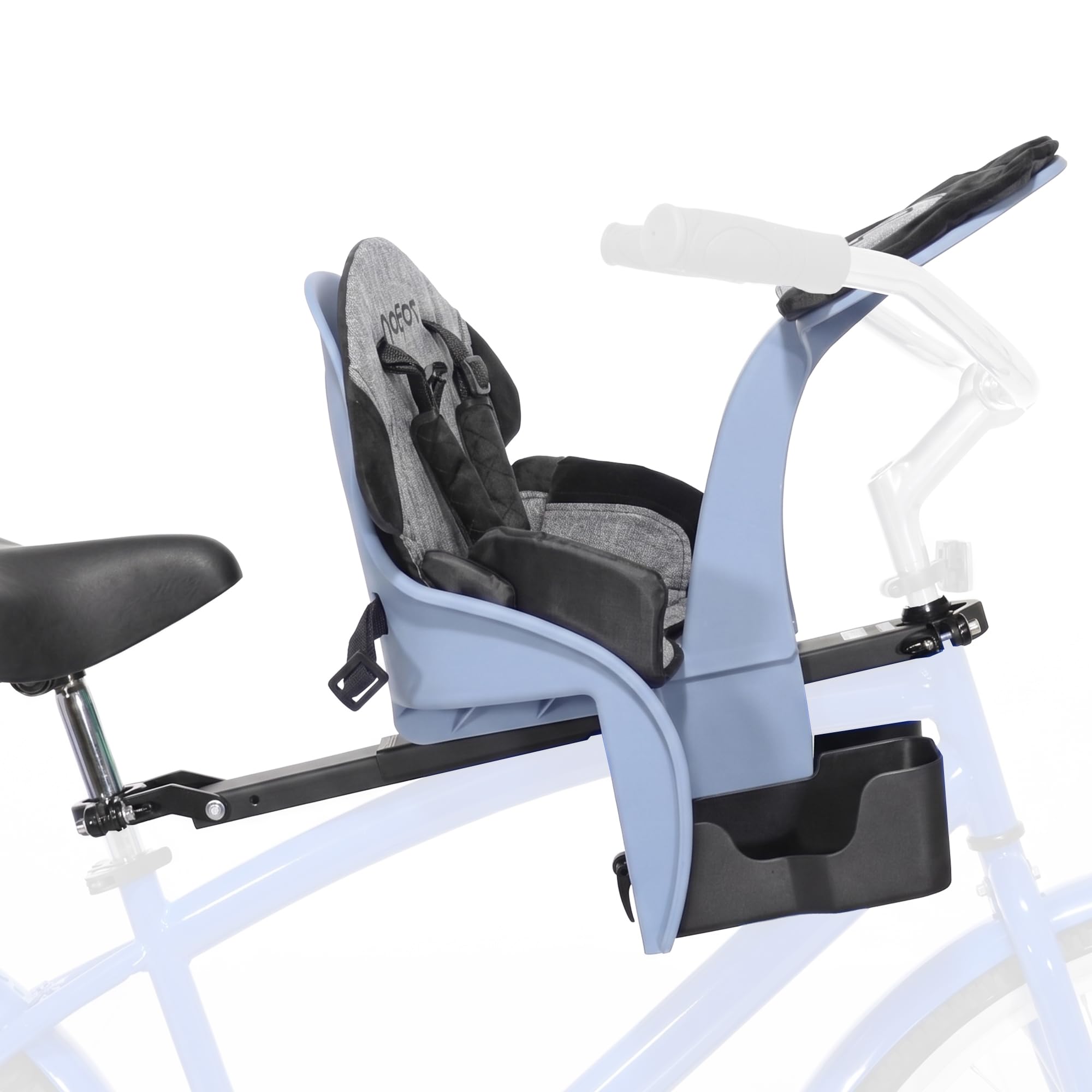
The KaZAM Kangaroo places your child directly in front of the handlebars, creating a natural conversation zone that parents repeatedly highlight as the seat’s greatest strength. The padded front dashboard serves as a hand rest and a head support when the child gets drowsy, and the deluxe padded seat is removable and washable—a practical feature for inevitable snack crumbs and spills. The shell is thick plastic that resists sun fading and rain, and the mounting bar secures to the seat post and head tube without interfering with brake cables.
The 5-point harness adjusts via sliding straps, and the foot cups are designed to support different leg lengths but lack fixed straps, allowing feet to slide out during energetic rides. The weight limit is not directly specified on the listing, but the recommended height range (27 to 37 inches) effectively limits use to children around age 1 to 3 years. The seat measures 13 x 12 x 20 inches, compact enough for tight bike frames but tight for a larger toddler in winter clothing.
Parents of 11-month-olds report a snug fit that inspires confidence, though larger children outgrow the seat quickly. Installation is straightforward, and the plastic shell holds up to daily outdoor storage. The main drawback is the lack of foot straps, which means feet can dangle into the spinning wheel area if the child kicks. For the youngest toddlers where head-to-head bonding is the priority, the Kangaroo delivers a safe, comfortable ride.
Why it’s great
- Center-mount keeps child between your arms for easy interaction
- Padded dashboard doubles as a headrest for naps
- Washable seat padding simplifies cleanup
Good to know
- Foot cups lack straps—feet can slip out onto the wheel
- Height range maxes out around age three
6. WeeRide Kangaroo Classic

The original WeeRide Kangaroo Classic has been a steady front-mount performer for years, and its design remains relevant because the steel/plastic housing mounts directly to the center of the bike without affecting handlebar movement. The steel support bar runs from the handlebar post to the seat post, keeping the seat stable even when the child shifts weight side to side. The 5-point safety harness and padded front bumper provide layered protection, while the height-adjustable foot cups have openings at the back to prevent heel pinching.
At 33 pounds maximum capacity, it targets the same age range as the Peg Perego Orion, but the WeeRide is heavier due to its steel frame. The installation is straightforward if you follow the included diagram, and the compact design keeps the child’s weight centered, making the bike feel more balanced than with a rear mount. Parents note that toddlers can nap in this seat because the padded headrest and bumper stabilize the head, and the seat does not rock even during active toddler fidgeting.
The main trade-off is that the steel mounting bar fits most adult bikes but may interfere with front suspension on some models. Additionally, the foot cups, while adjustable, lack fixed straps similar to the KaZAM, so feet can wander. For a proven, stable center-mount design that maintains bike handling and allows your child to see the road, the Classic Kangaroo is a reliable mid-range anchor.
Why it’s great
- Steel support bar keeps the seat stable even during child movement
- Padded headrest and front bumper support sleeping toddlers
- Center-mount does not affect handlebar steering
Good to know
- Steel frame adds weight and may conflict with suspension forks
- Foot cups lack straps to keep feet securely placed
7. VSIOBTE Toddler Front Seat
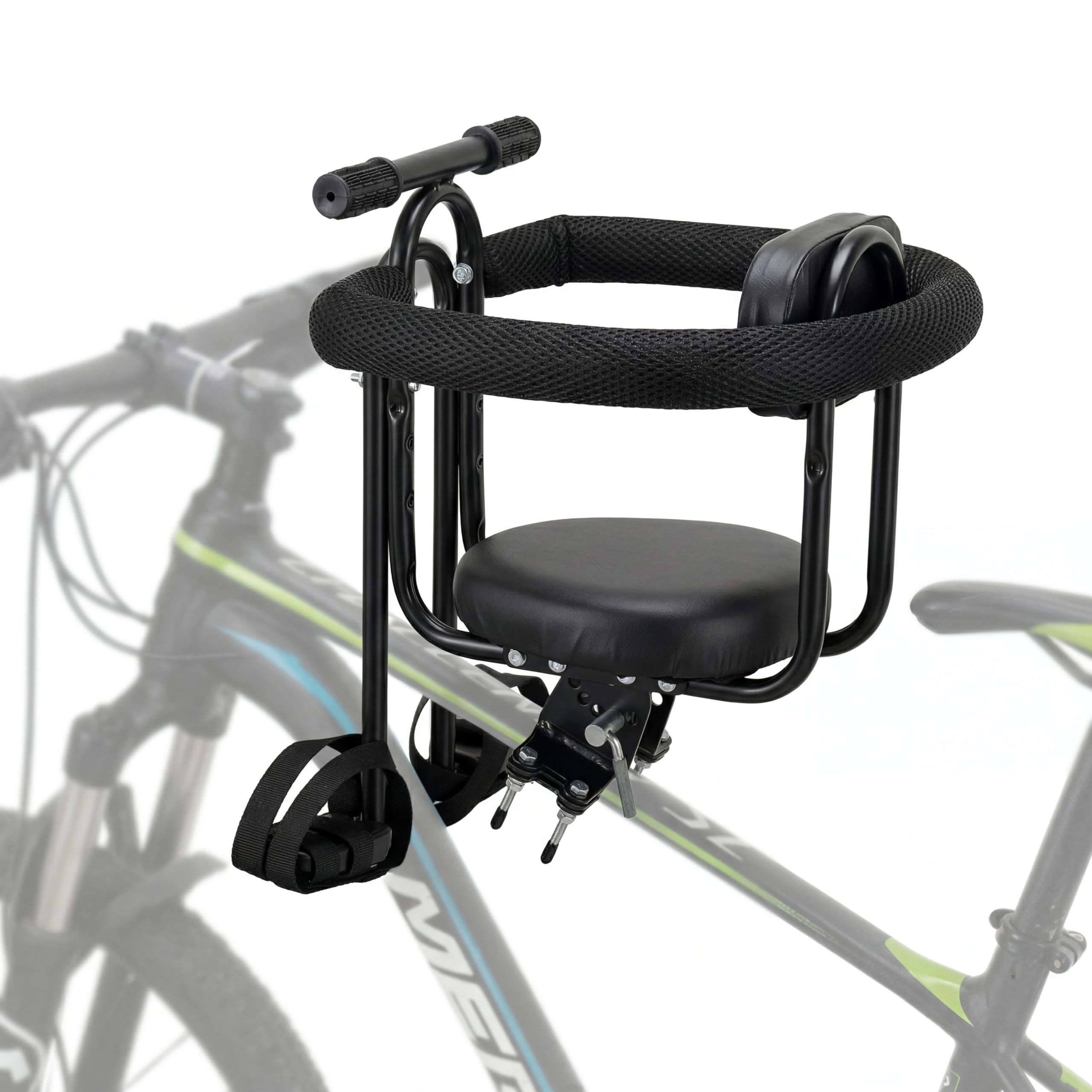
The VSIOBTE seat stands apart from every other option on this list with a 55-pound weight limit, accommodating children up to about age four or even five, depending on size. Its full enclosure guardrail wraps around the child’s sides, eliminating the risk of leaning or slipping out that open-sided designs allow. The foot straps are built into the pedals, securely holding little feet away from the spokes—a critical safety advantage over the KaZAM and WeeRide models.
Key components are all-metal rather than plastic, including a double-layer frame protection pad that prevents bike frame scratches. Lock nuts and screw protector caps keep the assembly tight under vibration, and the 4-level adjustable foot pedals let you raise the foot position as the child grows. The thickened foam cushion and supportive backrest provide all-day comfort, and the included picture guide and video tutorial make installation approachable for non-mechanically-inclined parents. The seat mounts to crossbars up to 2 inches in diameter.
Customer feedback rates it 4.7 out of 5 stars, with parents praising the ease of installation and the secure, wobble-free fit. The only recurring negative is that the seat only works with straight top tube frames—it will not fit step-through or sloping-top-tube bikes. For larger toddlers or families who want maximum usable weight capacity and the peace of mind of a full guardrail with foot straps, the VSIOBTE delivers category-beating value at a budget-friendly price point.
Why it’s great
- 55-pound weight limit far exceeds all other seats on this list
- Full enclosure guardrail with foot straps prevents slips and spoke injuries
- All-metal construction with anti-loosening lock nuts
Good to know
- Only fits bikes with a straight top tube (no step-through frames)
- Installation guide is picture-based, not a written manual
FAQ
At what age can I start using a front-mounted baby bike seat?
Will a front baby bike seat fit my mountain bike?
How do I prevent my child’s feet from getting caught in the spokes?
Final Thoughts: The Verdict
For most users, the baby bike seat winner is the Kids Ride Shotgun Pro Combo because it combines a child handlebar, mudguard, and memory foam padding into a trail-ready system that no other seat matches in safety and riding enjoyment. If you want maximum weight capacity and a full guardrail at a budget-friendly price, grab the VSIOBTE Toddler Front Seat. And for a rear rack solution that fits e-bikes and grows with your child from 9 months to 5 years, nothing beats the Thule Yepp 2 Rear Maxi.