
Our readers keep the lights on and the weekend projects moving. As an Amazon Associate, I earn from qualifying purchases.
Cutting fiberglass without the right blade is a fast track to frayed edges, airborne dust, and a frustratingly short tool life. The abrasive nature of the material demands a cutting edge that can handle silica and resin without dulling mid-job. Choosing the wrong geometry or tooth material guarantees chipping, delamination, and a finish that requires hours of sanding.
I’m Rikta — the co-founder and writer behind FitlyFast. After analyzing over 500 user reviews and cross-referencing the tooth counts, kerf widths, and material-specific coatings on seven of the most popular blades, I’ve mapped out exactly which designs handle fiberglass without fraying or burning.
This guide breaks down the core specs that separate a clean cut from a ruined panel, so you can confidently select the right best blade for cutting fiberglass for your saw and your project.
How To Choose The Best Blade For Cutting Fiberglass
Fiberglass and fiber cement boards are highly abrasive. Standard carbide-tipped blades dull rapidly on these materials, leading to burn marks and chipped edges. The right blade uses either diamond grit or polycrystalline diamond (PCD) tips to maintain sharpness and deliver a clean, delamination-free cut over many linear feet.
Tooth Material: PCD or Diamond Grit vs. Standard Carbide
The single most important decision is the cutting edge material. Standard tungsten carbide teeth will start rounding off after a few sheets of HardiePlank or fiberglass panel. Polycrystalline diamond (PCD) tipped blades, or diamond-grit coated blades, hold their geometry 10 to 50 times longer. If you plan to cut more than a couple of panels, opt for a PCD or diamond blade to avoid mid-project blade swaps.
Tooth Count and Grind Type
For fiberglass and fiber cement, a low tooth count (4 to 6 teeth) with a triple-chip grind (TCG) or a dedicated PCD tooth geometry clears abrasive dust efficiently and prevents the gullets from clogging. High-tooth-count blades, like 80-tooth models, can overheat and melt the resin binder in fiberglass, creating a gummy mess. Stick to blades designed specifically for abrasive non-ferrous materials.
Kerf Thickness and Coating
A thin kerf blade removes less material, reducing dust and strain on the saw. However, a blade that is too thin can deflect in dense material, causing a wavy cut. Look for a reinforced body or stabilizer vents to keep the blade true. An anti-stick or Perma-Shield coating prevents the resin in fiberglass from building up on the blade, which would otherwise increase friction and cause burning.
Quick Comparison
On smaller screens, swipe sideways to see the full table.
| Model | Category | Best For | Key Spec | Amazon |
|---|---|---|---|---|
| TWIN-TOWN 7-1/4″ PCD | Circular Saw Blade | Fiber cement siding | 6 PCD teeth, 1.8mm kerf | Amazon |
| TOMAX PCD 6-1/2″ | Circular Saw Blade | HardiePlank precise cuts | 4 PCD teeth, 5/8″ arbor | Amazon |
| Diablo 9″ Diamond Grit | Reciprocating Blade | Demolition & cast iron | Diamond grit, 9″ length | Amazon |
| FOXBC 8-1/4″ TCG | Table Saw Blade | Aluminum & fiberglass sheets | 80 TCG teeth, 0.087″ kerf | Amazon |
| Benchmark Abrasives TCT 7-1/4″ | Circular Saw Blade | Multimaterial non-ferrous | 80 TCT teeth, 7-1/4″ dia. | Amazon |
| Fein Starlock Plus Segmented | Oscillating Blade | CFRP & fiberglass corner cuts | Carbide, 1.2mm kerf | Amazon |
| Fein Starlock Plus Diamond | Oscillating Blade | Clean-edge fiberglass cutouts | Diamond coating, 2″ length | Amazon |
In‑Depth Reviews
1. TWIN-TOWN 7-1/4 Inch 6 Tooth PCD Fiber Cement Saw Blade

This is the benchmark circular blade for fiber cement and fiberglass panel work. The six polycrystalline diamond tips hold their edge drastically longer than any carbide equivalent, and the 1.8mm thin kerf removes less material, which means less silica dust in the air and less strain on a cordless circular saw. Users consistently report smooth, chip-free edges on HardiePlank, with the blade still feeling sharp after a full siding job.
The anti-stick coating on the body is a practical touch—fiberglass resin and cement fines won’t bake onto the steel, which keeps the cut cool and the blade spinning freely. The 5/8-inch arbor fits the vast majority of worm-drive and sidewinder circular saws. Rated up to 8,500 RPM, it is well within the range of most job-site saws, even when running at full throttle.
At this price point, the TWIN-TOWN delivers the longevity of a premium PCD blade without the premium markup typically seen at hardware store counters. For anyone ripping multiple sheets of cement board or fiberglass panel, this is the blade that pays for itself over the course of a single project by staying sharp and reducing downtime.
Why it’s great
- Six PCD teeth provide exceptional wear resistance on abrasive materials.
- Thin kerf design reduces dust and requires less saw power.
- Anti-stick coating prevents resin buildup and overheating.
Good to know
- Not intended for cutting ferrous metals or wood.
- The thin kerf can deflect if the saw is forced through dense curves.
2. TOMAX PCDM61204 6-1/2 Inch 4 Tooth PCD Fiber Cement Saw Blade
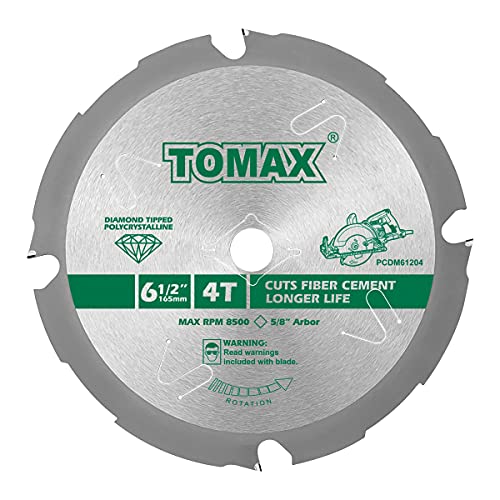
The TOMAX is purpose-built for cutting HardiePlank and Cemplank, using four polycrystalline diamond-tipped teeth that resist the abrasive wear fiber cement board dishes out. The 6-1/2 inch diameter makes it a natural fit for compact cordless circular saws, keeping the tool light and maneuverable when cutting siding on a ladder or scaffold.
An extra-large gullet between each tooth is what sets this blade apart. Those deep pockets eject the fine, gritty dust quickly so the teeth don’t pack and lose cutting efficiency. Users report slicing through six or more sheets of cement board with no visible wear on the tips, which is a strong real-world verification of the PCD claim. The 5/8-inch arbor is standard for small circular saws.
The compact size means a lower tip speed than a 7-1/4-inch blade, which actually helps reduce heat buildup on thin cement panels. If your primary use case is cutting siding or fiberglass sheets on the job site with a compact saw, this blade offers a compelling balance of durability and maneuverability at a very accessible price point.
Why it’s great
- Large gullets prevent dust packing and keep the cut efficient.
- PCD tips hold up well against abrasive cement and fiberglass.
- Compact size is ideal for lightweight cordless saws.
Good to know
- 4-tooth design can produce a slightly rougher finish on thicker panels.
- Not suitable for standard table saws due to the 6-1/2″ diameter.
3. Diablo 9″ Diamond Grit Reciprocating Saw Blade, DS0930DGX

When you need to cut through fiberglass panels that are backed with plywood, or demo a fiberglass shower enclosure, a reciprocating saw equipped with a diamond grit blade is the right tool for the job. The Diablo DS0930DGX uses a diamond-infused cutting edge rather than individual teeth, so it essentially grinds through the material rather than chipping it. This makes it exceptionally effective on embedded debris and multi-material stacks.
The 9-inch length provides plenty of reach for cutting through walls or pipe, and the thin kerf helps the blade track straight without wandering. The Perma-Shield coating resists the heat and gumming that happens when the blade binds in resinous material. Users note that this blade will cut through cast iron, fiber cement, and fiberglass—but the tool delivering the power matters. A heavy-duty saw makes the cut fast, while a compact saw will require patience.
This is not a blade for precision finish work. The diamond grit edge leaves a rough, abraded surface. But for demolition and rough cuts where speed and blade life are the priority, this Diablo is a workhorse that survives impacts that would snap a toothed bimetal blade.
Why it’s great
- Diamond grit edge lasts up to 6 times longer than standard recip blades.
- Reinforced body resists bending and deflection during heavy demolition.
- Perma-Shield coating prevents heat and resin buildup.
Good to know
- Leaves a rough surface that requires cleanup for finished edges.
- Performance is highly dependent on the power of the saw used.
4. FOXBC 8-1/4 Inch Metal Cutting Table Saw Blade, 80 Tooth TCG

The FOXBC blade brings a table-saw specific geometry to the fiberglass cutting conversation. Its 80-tooth triple-chip grind (TCG) configuration is designed for non-ferrous metal and plastics, and this translates directly to clean, burr-free cuts on fiberglass sheet stock. The high tooth count produces a smooth edge that requires minimal sanding—important when cutting finished fiberglass panels for marine or automotive applications.
Laser-cut stabilizer vents are integrated into the blade body to dampen vibration and dissipate heat, both of which are critical when cutting fiberglass for extended periods. The 0.087-inch kerf is moderate, offering a good balance between material removal speed and blade stiffness. The high-density tungsten carbide tips are ground to maintain sharpness over multiple sheets.
One trade-off with the 80-tooth count is that the gullets are smaller, so they can load up with fine fiberglass dust if you push the feed rate too fast. Keeping a steady, moderate pace prevents the resin from melting and clogging the teeth. For table saw users who prioritize a finished edge over raw speed, this is a strong contender.
Why it’s great
- High tooth count delivers a very smooth, clean cut on fiberglass sheets.
- Laser-cut stabilizer vents reduce noise and vibration.
- Triple-chip grind geometry is ideal for abrasive non-ferrous materials.
Good to know
- Smaller gullets can clog if the feed rate is too aggressive.
- Standard table saw arbor only; not intended for miter saws.
5. Benchmark Abrasives TCT 7-1/4 Inch Circular Saw Blade, 80 Teeth
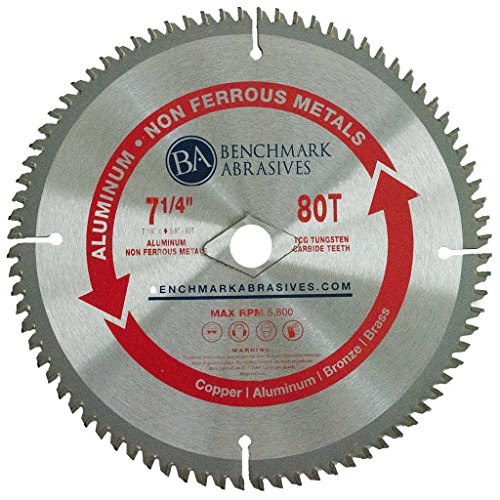
This Benchmark Abrasives blade is a general-purpose non-ferrous cutting tool that handles fiberglass alongside aluminum, PVC, and acrylic. With 80 tungsten-carbide-tipped (TCT) teeth, it delivers a finish quality that is well above what a standard combination blade would produce on fiberglass. The steel core is ground to run true at high RPM, and the fitment is compatible with virtually any 7-1/4-inch circular or miter saw.
On fiberglass panels, users report clean, melt-free edges when the blade is used with a steady feed rate. The high tooth count means each tooth takes a shallower bite, which reduces chip-out on thin-gauge material. It also works exceptionally well on acrylic and plexiglass without chipping or melting, making it a good choice for a workshop that cuts multiple non-ferrous materials regularly.
The primary difference between this and a dedicated PCD blade is lifespan. Tungsten carbide is still a premium material, but it will not hold its edge as long as polycrystalline diamond when cutting abrasive fiberglass day after day. For the home shop or occasional fiberglass project, this is a capable and cost-effective option. For a production environment, a PCD blade is a better investment.
Why it’s great
- Versatile across aluminum, PVC, acrylic, and fiberglass.
- 80 teeth provide a very smooth, polished edge.
- Compatible with most 7-1/4″ circular saws and miter saws.
Good to know
- Tungsten carbide tips will dull faster than PCD on heavy fiberglass use.
- Not designed for fiber cement board or masonry.
6. Fein Starlock Plus Carbide Segmented Saw Blade, 63502187210
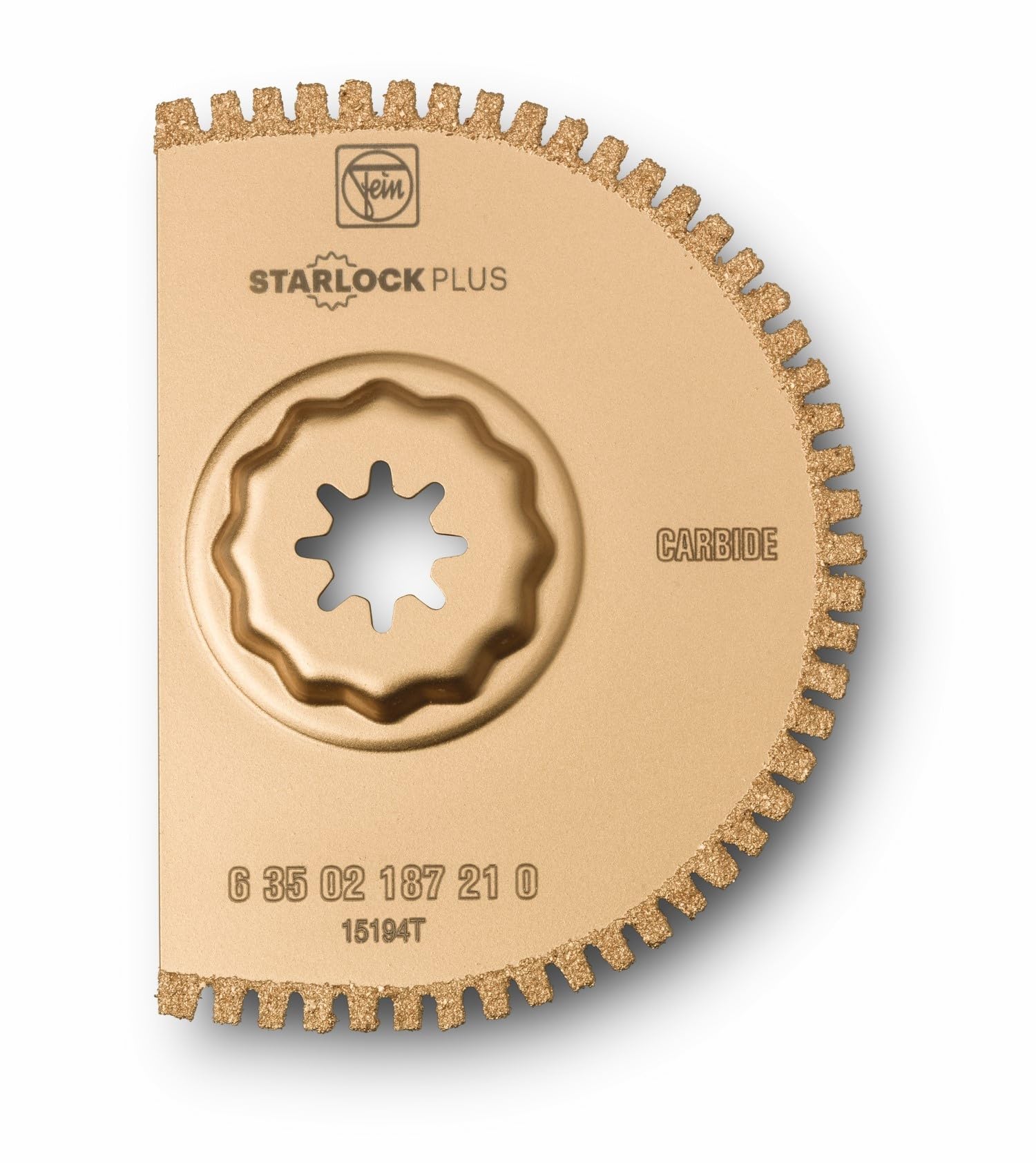
For flush cuts in tight corners and plunge cuts into fiberglass panels, an oscillating multi-tool blade is often the only solution. This Fein carbide segmented blade is engineered specifically for carbon fiber reinforced plastic and fiberglass, with an open-tooth design that clears debris and prevents the delamination that closed-tooth blades can cause. The Starlock Plus interface ensures a rock-solid attachment with no wobble.
The ultra-thin 1.2mm kerf removes very little material, which is critical when cutting fiberglass panels where minimal waste and clean edges are the goal. The carbide material holds up well to the abrasive fibers, though some users note that the cut speed is slower than a coarser blade. This is a trade-off for the clean edge—the blade prioritizes finish quality over raw speed.
Benchmarked against other oscillating blades, this Fein is noticeably more durable on cement board and heavy fiberglass. It is expensive relative to generic multi-tool blades, but for professionals who need a reliable cutout tool that won’t leave frayed edges, the longevity and precision justify the cost. It is not a good choice for metal or wood—stay in its wheelhouse.
Why it’s great
- Open teeth design prevents delamination on fiberglass and CFRP.
- Ultra-thin kerf minimizes material waste and dust.
- Starlock Plus mount locks securely with no play.
Good to know
- Slower cutting speed compared to coarser oscillating blades.
- High cost relative to generic multi-tool blades.
7. Fein Starlock Plus E-Cut Diamond Saw Blade, 63502193210

This Fein diamond-coated blade is the specialist’s choice for ultra-clean edges on fiberglass and carbon fiber. The diamond coating is bonded to a steel body and grinds through the material rather than cutting it with teeth. The result is an edge that requires almost no secondary finishing—important when cutting exposed fiberglass panels for marine or architectural installations.
The short, rectangular shape (2 inches long by 1.38 inches wide) makes it perfect for controlled cutouts, plunge cuts, and detail work where a large circular blade would be impractical. The Starlock Plus mount keeps the blade secure during the oscillating motion. Users report exceptional results on fiberglass shower enclosures and cement backer board, with the diamond coating lasting through multiple cutouts before showing wear.
The trade-off is significant: the diamond coating is brittle. If you accidentally hit a metal screw or nail, the coating can strip off in seconds. This blade is strictly for non-ferrous, non-metal materials. Used within its limits, it delivers a finish quality that no carbide-tipped oscillating blade can match. For precision fiberglass trim work, it is a professional-grade tool that earns its place in the kit.
Why it’s great
- Diamond coating produces an extremely clean, smooth edge on fiberglass.
- Compact shape is ideal for plunge cuts and detailed corner work.
- Holds up well on fiberglass and cement board when used correctly.
Good to know
- Diamond coating is easily damaged by contact with metal fasteners.
- Higher cost per blade, suited for professional finish work.
FAQ
Can I use a standard wood-cutting blade on fiberglass?
What does the tooth count on a fiberglass blade affect?
How do I prevent fiberglass dust when cutting?
Final Thoughts: The Verdict
For most users, the best blade for cutting fiberglass winner is the TWIN-TOWN 7-1/4 Inch PCD Blade because it delivers exceptional wear resistance and a clean cut on fiber cement and fiberglass sheets without the premium price of professional PCD blades. If you need a compact blade for siding work with a small circular saw, grab the TOMAX 6-1/2 Inch PCD Blade. And for precision cutouts and flush-trim finishing on fiberglass panels, nothing beats the edge quality of the Fein Starlock Plus Diamond Blade.