
Our readers keep the lights on and the weekend projects moving. As an Amazon Associate, I earn from qualifying purchases.
Stepping up to a 15×56 binocular means you are ready to see detail at distances where lower-power glass falls short. Whether you are scanning distant ridgelines for game, resolving the moons of Jupiter from your backyard, or spotting a bull elk at a mile, the combination of high magnification and a large 56mm objective lens delivers a bright, immersive view that smaller binoculars simply cannot provide. The trade-off is weight and the need for stable support, but the payoff in optical reach is unmatched.
I’m Rikta — the co-founder and writer behind FitlyFast. I’ve spent countless hours analyzing the optical specifications, coating technologies, and mechanical builds that separate a great 15×56 binocular from a frustrating one, so you can make a confident buying decision.
After researching the market’s top contenders, I’ve found a clear set of winners that balance brightness, resolution, and durability, and this guide will walk you through every critical spec to find the best 15×56 binoculars for your specific use case.
How To Choose The Best 15×56 Binoculars
Selecting a 15×56 binocular requires balancing optical purity, physical weight, and intended environment. The same magnification that reveals feather detail on a hawk at 500 yards will also amplify every hand tremor, so stabilization becomes a core consideration. Below are the three factors that separate excellent glass from common compromises.
Optical Quality: ED Glass & Coatings
Extra-Low Dispersion (ED) glass is the single biggest upgrade you can make in a 15×56 binocular. ED elements virtually eliminate chromatic aberration — the purple or green fringing around high-contrast edges — that plagues lower-tier glass. Pair ED glass with fully multi-coated optics and dielectric or phase-correcting prism coatings for maximum light transmission and contrast. Without these coatings, the large 56mm objective lens gathers plenty of light but delivers a muddy, low-contrast image.
Build & Ergonomics: Magnesium vs. Polycarbonate
A 15×56 binocular is inherently large and heavy. A magnesium chassis offers the best strength-to-weight ratio, keeping the unit manageable for extended glassing sessions while surviving drops in the field. Polycarbonate bodies are lighter on the wallet but less rigid and more prone to thermal expansion. Check for a robust tripod mount adapter thread — you will need a tripod or monopod for steady views at 15x, and a flimsy attachment point undermines the whole system.
Stabilization & Support: Tripod vs. Handheld
At 15x magnification, hand shake becomes a real problem. Even with excellent technique, a 15×56 binocular is best used with a tripod or a chest harness that provides stability. Optical image stabilization (OIS) is a game-changer, allowing true handheld use without a tripod, but it adds cost and electronic complexity. For pure optical performance without batteries, plan on a sturdy tripod — and look for a model with a rotating or locking diopter and a smooth center focus wheel.
Quick Comparison
On smaller screens, swipe sideways to see the full table.
| Model | Category | Best For | Key Spec | Amazon |
|---|---|---|---|---|
| Swarovski Optik SLC 15×56 | Premium | Uncompromised long-range wildlife | 93% light transmission, HD fluorite glass | Amazon |
| ZEISS Conquest HDX 15×56 | Premium | Edge-to-edge sharpness in all weather | LotuTec + T* coating, FieldFlattener | Amazon |
| LEICA Geovid R 15×56 | Premium | Rangefinding + glassing in one unit | HDC multi-layer coating, 2000 yd ranging | Amazon |
| SIG SAUER Zulu6 HDX 16×42 | Mid-Range | Handheld stabilization at high power | OIS two-mode stabilization, lightweight | Amazon |
| Bushnell Match Pro ED 15×56 | Mid-Range | Precision long-range shooting with MRAD reticle | ED Prime glass, rotating MRAD reticle | Amazon |
| Vortex Optics Razor HD 12×50 | Mid-Range | Versatile high-performance with lifetime warranty | Plasma tech coating, APO system | Amazon |
| Celestron SkyMaster Pro ED 15×70 | Mid-Range | Astronomy on a budget with ED glass | ED glass, XLT coatings, 70mm objective | Amazon |
| ZEISS SFL 8×50 | Mid-Range | Lightweight, compact high-transmission | 90% transmission, 19% lighter body | Amazon |
| Celestron SkyMaster Pro 15×70 | Budget | Entry-level night sky observation | BaK-4 prisms, XLT multi-coatings | Amazon |
In‑Depth Reviews
1. Swarovski Optik SLC 15×56 Binoculars

The Swarovski SLC 15×56 is the benchmark that other high-magnification binoculars are measured against. Its HD optical system uses fluorite-containing glass to achieve an extraordinary 93% light transmission, which translates to a bright, neutral-color image even in deep twilight. The 62-degree apparent field of view feels expansive, and the Swaroclean coating sheds water and dirt effortlessly.
The aluminum housing is durable but keeps weight manageable for its class. The center focus wheel is silky smooth with zero play, and the locking diopter holds its setting even during rough handling. Every aspect of the SLC exudes precision — from the crisp click of the eyecup detents to the perfect balance when tripod-mounted.
At this price point, there are no shortcuts. The SLC 15×56 delivers edge-to-edge sharpness with virtually no chromatic aberration, making it the definitive choice for anyone who demands the absolute best optical performance without needing a built-in rangefinder. It is a once-in-a-lifetime purchase that will not disappoint.
Why it’s great
- Unrivaled 93% light transmission for low-light performance
- Fluorite HD glass eliminates color fringing entirely
- Superb build quality with lifetime limited warranty
Good to know
- Premium price reflects top-tier optical engineering
- Requires tripod for steady views at 15x
- Slightly heavier than some magnesium competitors
2. ZEISS Conquest HDX 15×56 Binoculars

The ZEISS Conquest HDX 15×56 brings German optical engineering to a more accessible price tier without sacrificing core performance. It delivers 90% light transmission thanks to its ZEISS T* multi-coating, while the LotuTec outer coating actively repels water and finger oils, keeping your view clear in rain or fog. The FieldFlattener technology ensures stars and fence lines remain sharp all the way to the edge of the field.
The magnesium housing is fully rubber-armored and waterproof to IPX7 standards. The focus wheel requires only 1.3 rotations from close focus to infinity, making racking through distances fast and intuitive. The locking diopter with a numbered scale is a thoughtful touch for shooters who switch between users.
Chromatic aberration is well controlled, though not entirely absent under extreme contrast conditions. The included flip-down lens covers are practical and stay put. For the price, the Conquest HDX offers a remarkable balance of brightness, clarity, and ruggedness — a strong contender for hunters and birders who face variable weather.
Why it’s great
- LotuTec coating sheds water and smudges instantly
- FieldFlattener gives edge-to-edge sharpness
- Fast 1.3-turn focus wheel for quick acquisition
Good to know
- Some chromatic aberration visible in harsh light
- Package may arrive with loose padding
- Premium but below alpha-tier pricing
3. LEICA Geovid R 15×56 Gen 2022

The LEICA Geovid R 15×56 combines high-end glass with a built-in laser rangefinder and ballistics solver, making it an all-in-one tool for serious hunters. The HDC multi-layer coating and P40 phase-correction prisms deliver the legendary Leica color rendition and contrast, with a 248-foot field of view at 1000 yards that feels immersive for a 15x binocular.
The laser ranges out to 2000 yards on reflective targets, and the Applied Ballistics Ultralight engine provides a corrected aiming point for ethical shots. The large operating buttons are easy to use with gloves, and the contoured neoprene strap and Cordura case reflect Leica’s attention to field usability.
Integration of electronics does add bulk compared to pure glass, and the price reflects the premium for the rangefinder module. However, the optical quality is genuinely world-class — on par with pure observation binoculars at similar price points. For a hunter who wants one device for glassing and ranging, the Geovid R is an outstanding choice.
Why it’s great
- Superb Leica glass with natural color fidelity
- Integrated rangefinder with ballistics solver
- Ranges up to 2000 yards on reflective targets
Good to know
- Heavier and bulkier than pure observation bins
- Battery required for ranging functions
- Potential quality control issues with returns
4. SIG SAUER Zulu6 HDX 16×42

The SIG SAUER Zulu6 HDX 16×42 uses optical image stabilization (OIS) to deliver a steady view at 16x without a tripod — a true game-changer for glassing on the move. With two stabilization modes (Scan for general observation and Target for locked-on stability) at 4 degrees of correction, it cancels hand shake so effectively that the image appears tripod-stable in the viewfinder.
The HDX glass and SpectraCoat coatings provide excellent resolution and contrast, though the 42mm objective limits low-light performance compared to a 56mm optic. The unit is remarkably compact — roughly the size of a standard 8×42 — and weighs little enough to use one-handed for extended periods. The IPX-7 waterproof rating ensures durability in wet conditions.
Battery life is adequate for a full day of use, but there is no backup optical path if the battery dies — the view becomes non-stabilized but still usable. The narrow field of view at 16x is a trade-off for the magnification and stabilization. For anyone who glasses from a moving vehicle or boat, or simply hates carrying a tripod, this is a revolutionary tool.
Why it’s great
- OIS eliminates hand shake — no tripod needed
- Extremely compact and lightweight for 16x
- Two stabilization modes for different scenarios
Good to know
- 42mm objective limits low-light brightness
- Battery-dependent for stabilization
- Field of view narrower than 15×56 models
5. Bushnell Match Pro ED 15×56

The Bushnell Match Pro ED 15×56 is purpose-built for the precision rifle shooter. It features a rotating MRAD reticle with a 2/10-mil grid pattern inside 3 mils and .5-mil markings out to 20 mils, allowing accurate range estimation and wind holds without external tools. The reticle has its own focus adjustment to ensure it appears razor-sharp against the target.
The ED Prime glass and Ultrawideband coatings deliver excellent color and contrast, with resolution that holds up well against European glass at a fraction of the price. The BridgeSet IPD stabilizer locks your interpupillary distance in place, preventing accidental changes during a match. The magnesium chassis keeps weight reasonable at 42 ounces.
Dual diopters allow independent focus for each eye, a rare feature that ensures optimal sharpness for users with different prescriptions. The IPX5 water resistance and nitrogen purge handle field conditions well. For PRS, long-range hunting, or any application where a reticle adds value, the Match Pro ED is a standout performer.
Why it’s great
- Professionally useful rotating MRAD reticle system
- ED Prime glass rivals much pricier optics
- BridgeSet IPD stabilizer maintains zero
Good to know
- Reticle in right barrel only — not for left-eye dominant
- Needs tripod for precision reticle work
- Mid-range price but not budget-friendly
6. Vortex Optics Razor HD 12×50

Though offered in 12×50 rather than 15×56, the Vortex Razor HD earns its place here for users who want near-15x performance in a more manageable package. The APO (apochromatic) optical system uses hand-selected high-density glass and plasma-application anti-reflective coatings to deliver exceptional color fidelity and brightness, with minimal spherical or chromatic aberration.
The open-bridge magnesium chassis is both strong and lightweight, and the textured rubber armor provides a secure grip in wet conditions. The locking right-eye diopter and multi-position eyecups accommodate eyeglass wearers easily. Argon purging and O-ring seals guarantee lifetime waterproof and fogproof performance.
The VIP warranty — unlimited, unconditional, and transferable — is one of the best in the industry. The 12×50 delivers about 92% of the detail reach of a 15×56 while being significantly easier to hold steady. It is an ideal compromise for birders and hunters who need high power but want to avoid a tripod for every outing.
Why it’s great
- APO system virtually eliminates chromatic aberration
- Argon purged for lifetime fog-free performance
- VIP warranty is fully transferable and unconditional
Good to know
- 12×50 vs 15×56 — slightly less reach at long distances
- Some edge blur in extreme field positions
- Premium priced but under alpha-tier offerings
7. Celestron SkyMaster Pro ED 15×70

The Celestron SkyMaster Pro ED 15×70 brings ED glass to the astronomy community at an accessible price. The 70mm objective lenses gather massive amounts of light, and the XLT fully multi-coated optics — the same coatings used on Celestron’s observatory-class telescopes — maximize transmission for deep-sky viewing. The ED glass virtually eliminates chromatic aberration on bright planets and the Moon.
The polycarbonate body is rubber-armored, waterproof, and nitrogen-purged to prevent fogging. A unique feature is the 1.25-inch filter threads on each eyepiece, allowing you to screw in astronomical filters for enhanced contrast on nebulae and planets. The included case and neck strap are functional for transport.
Eyecup design has drawn criticism for being too large for some users, which can affect eye relief. Despite ergonomic quirks, the optical value for deep-sky astronomy is outstanding, revealing nebulae and star clusters that smaller glass cannot show.
Why it’s great
- ED glass eliminates chromatic aberration effectively
- 70mm objectives deliver massive light gathering
- Accepts 1.25-inch astronomical filters
Good to know
- Very heavy — tripod mandatory
- Oversized eyecups may not fit all facial profiles
- Porro prism design is bulkier than roof prism
8. ZEISS SFL 8×50
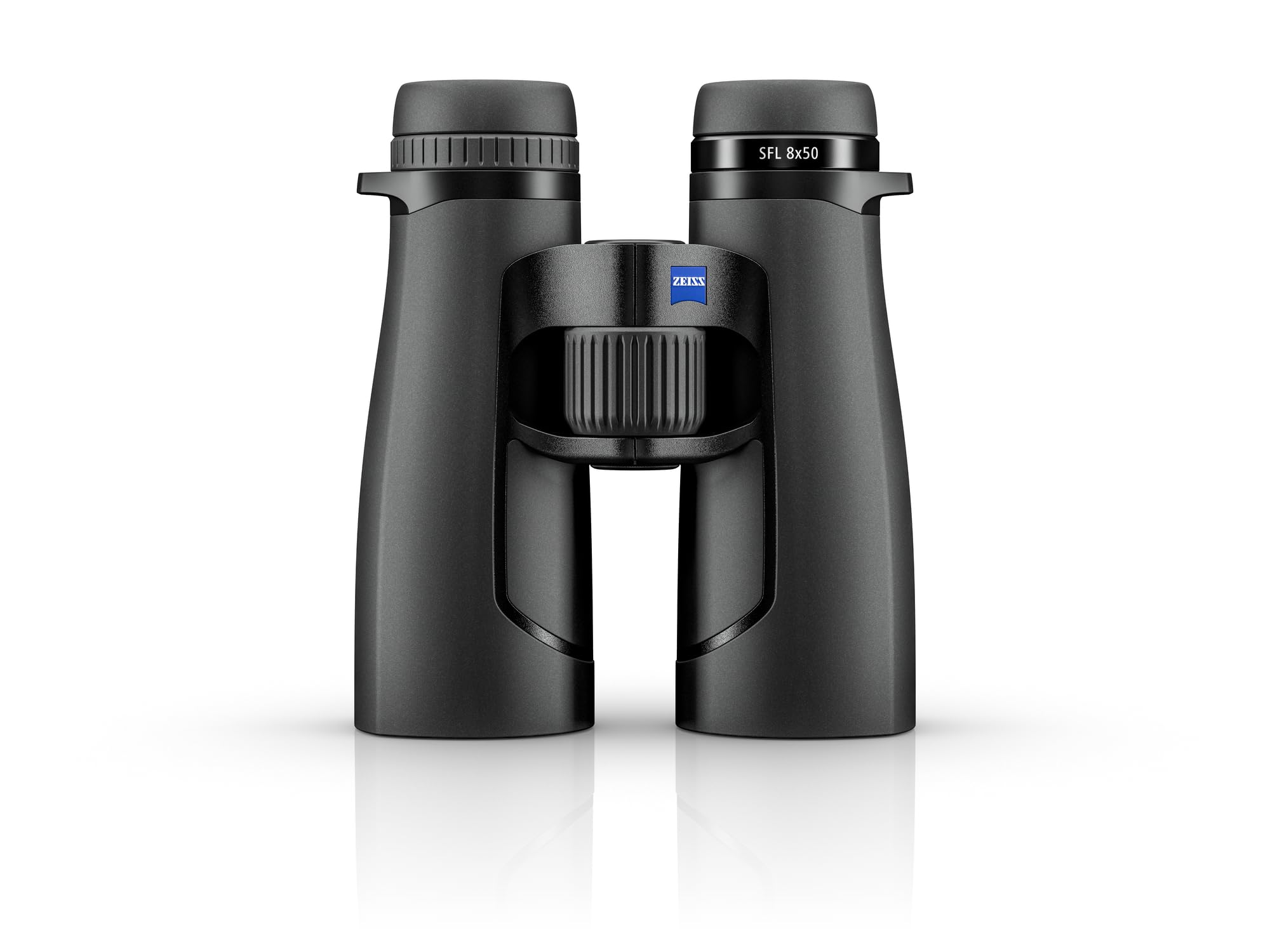
The ZEISS SFL 8×50 is not a 15×56, but it earns a mention for users who prioritize maximum brightness and a wide field of view over sheer magnification. The 50mm objective paired with 8x produces a 6.25mm exit pupil — larger than any 15×56 — which makes it exceptionally bright in deep twilight and dawn. The SFL is 19% lighter and 17% shorter than the Victory SF 42, thanks to a reduced-diameter lens design in a magnesium body.
The ZEISS T* coating delivers 90% light transmission with outstanding color fidelity. The SmartFocus system requires only a small hand movement to rack through the entire focus range, making it intuitive for tracking moving subjects. The FieldFlattener technology ensures edge-to-edge sharpness.
The 8×50 is a specialist tool for low-light observation where a steady handheld view and a bright image matter more than magnifying distant detail. It pairs well with a 15×56 for a two-binocular system — one for scanning, one for reach. At this price, the build quality is excellent, though the lack of included case is a minor oversight.
Why it’s great
- Exceptional 6.25mm exit pupil for low-light use
- Remarkably light and compact for 50mm
- Fast SmartFocus with wide focus range
Good to know
- 8x magnification — not for long-range detail
- Eyecups may cause blackouts for some users
- No case included in the package
9. Celestron SkyMaster Pro 15×70

The standard Celestron SkyMaster Pro 15×70 is an entry-level giant binocular that provides an affordable gateway to serious night-sky observation. With 70mm objectives, BaK-4 prisms, and Celestron’s XLT multi-coatings, it offers good light transmission and contrast for the price. It is bright enough to show the Orion Nebula, Jupiter’s moons, and many star clusters.
The rubber-armored polycarbonate body is waterproof and nitrogen-purged, a rare combination at this price point. The unique RSR (Reflex Sight Ready) rail allows attachment of a red dot finder, which simplifies pointing at astronomical objects. The locking tripod mount adapter is built into the body.
Quality control can be inconsistent — some units arrive with collimation issues or astigmatism. The eyecups and caps are not the most secure. Chromatic aberration is visible on bright objects. Still, for the budget-conscious observer who wants to explore deep-sky objects without a large investment, this binocular offers compelling value when you get a good unit.
Why it’s great
- Excellent price-to-aperture ratio for astronomy
- Waterproof and fog-proof with XLT coatings
- RSR rail allows red dot finder attachment
Good to know
- Quality control issues reported — check collimation
- Chromatic aberration visible on bright subjects
- Eyecups and caps feel less durable than premium bins
FAQ
Do I need a tripod for 15×56 binoculars?
What is the difference between 15×56 and 15×70 binoculars?
What does ED glass mean for a 15×56 binocular?
Final Thoughts: The Verdict
For most users, the best 15×56 binoculars winner is the ZEISS Conquest HDX 15×56 because it delivers near-alpha optical quality — ED glass, FieldFlattener, and 90% transmission — at a price that offers real value. If you want the absolute pinnacle of optical performance with no compromises, grab the Swarovski SLC 15×56. And for those who need a rangefinder integrated into their glass, nothing beats the LEICA Geovid R 15×56.