
Our readers keep the lights on and the weekend projects moving. As an Amazon Associate, I earn from qualifying purchases.
The 65-inch TV market has never been more competitive—or more confusing. With Mini-LED, QLED, native 144Hz, and Dolby Vision IQ all packed into models under a thousand dollars, the difference between a smart buy and a regretful one comes down to understanding which specs actually matter for your setup.
I’m Rikta — the co-founder and writer behind FitlyFast. I’ve spent hundreds of hours analyzing panel technology, local dimming zones, refresh rate implementations, and smart TV ecosystems to cut through the marketing noise and find the sets that deliver genuine performance per dollar.
Whether you need a gaming monster for a next-gen console, a bright living room centerpiece for sports, or a reliable daily driver for streaming, this guide isolates the models that justify their cost with real-world performance. These are the best bang for your buck 65 inch tv options available today.
How To Choose The Best Bang For Your Buck 65 Inch TV
With so many models crowding the 65-inch aisle, the difference between a great value and a dud lies in four key areas. Ignore marketing buzzwords and focus on these specs—they determine how your TV actually looks, sounds, and performs over years of use.
Panel Technology: LED vs QLED vs Mini-LED
Standard LED backlighting is the baseline—acceptable for dim rooms but struggles with contrast and brightness. QLED adds a quantum dot layer that boosts color volume to over a billion shades, making images pop. Mini-LED takes it further by packing thousands of tiny LEDs behind the screen, enabling precise local dimming zones for deep blacks without halos. If your room gets sunlight, Mini-LED or QLED is non-negotiable.
Refresh Rate and Gaming Features
A 60Hz panel handles movies and casual streaming fine, but if you game on a PS5, Xbox Series X, or PC, a native 120Hz or 144Hz panel with Variable Refresh Rate (VRR) and Auto Low Latency Mode (ALLM) transforms motion clarity. Look for HDMI 2.1 ports—they unlock 4K at high refresh rates without compression. Budget sets often cap at 60Hz, so know your gaming priority before buying.
Smart TV Ecosystem and Interface Speed
Roku remains the gold standard for simplicity and speed—no bloat, fast app launches. Google TV offers deeper customization and Google Assistant integration but can feel heavier. Fire TV integrates tightly with Alexa and Amazon services but pushes ads on the home screen. Tizen (Samsung) and webOS (LG) are polished but less open. Pick the interface your household will actually use daily.
Sound Quality and Audio Passthrough
TV speakers are universally thin—even premium sets benefit from a soundbar. That said, look for Dolby Atmos support and eARC on HDMI to pass lossless audio to external systems. Some mid-range sets now include built-in subwoofers (like the Roku Plus Series), which can suffice for bedrooms or secondary rooms. For a living room home theater, plan a separate audio budget.
Quick Comparison
On smaller screens, swipe sideways to see the full table.
| Model | Category | Best For | Key Spec | Amazon |
|---|---|---|---|---|
| Hisense 65″ U7 | Mini-LED ULED | Premium Gaming & Movies | Native 165Hz, 3000 nits | Amazon |
| Toshiba 65″ Z670R | Mini-LED QLED | Cinematic Viewing | Native 144Hz, REGZA Engine | Amazon |
| iFFALCON 65″ U85 | Mini-LED | Gaming & Hospitality | 144Hz VRR 288Hz, 4X HDMI 2.1 | Amazon |
| Amazon Ember 65″ QLED | QLED Fire TV | Alexa Smart Home | Full-array local dimming | Amazon |
| Sony BRAVIA 2 II 65″ | LED Smart TV | PS5 Gaming | 4K Processor X1, TRILUMINOS | Amazon |
| Westinghouse 65″ Mini-LED | Mini-LED Roku | Value & Ease of Use | Local dimming, Roku TV | Amazon |
| TCL 65″ T7 Series | QLED Google TV | High-FPS PC Gaming | 144Hz panel, 120Hz VRR | Amazon |
| Samsung 65″ M70H | Mini-LED | Sports & Bright Rooms | Pure Color Spectrum, DLG | Amazon |
| Roku 65″ Plus Series | Mini-LED QLED | All-Around Streaming | Dolby Vision, Subwoofer | Amazon |
| Samsung 65″ U8000H | Crystal UHD | Budget Reliable | Crystal Processor 4K | Amazon |
| Roku 65″ Select Series | QLED Roku TV | Entry-Level Big Screen | QLED, HDR10, Bluetooth | Amazon |
In‑Depth Reviews
1. Hisense 65″ U7 Mini-LED ULED 4K UHD (65U7SG)
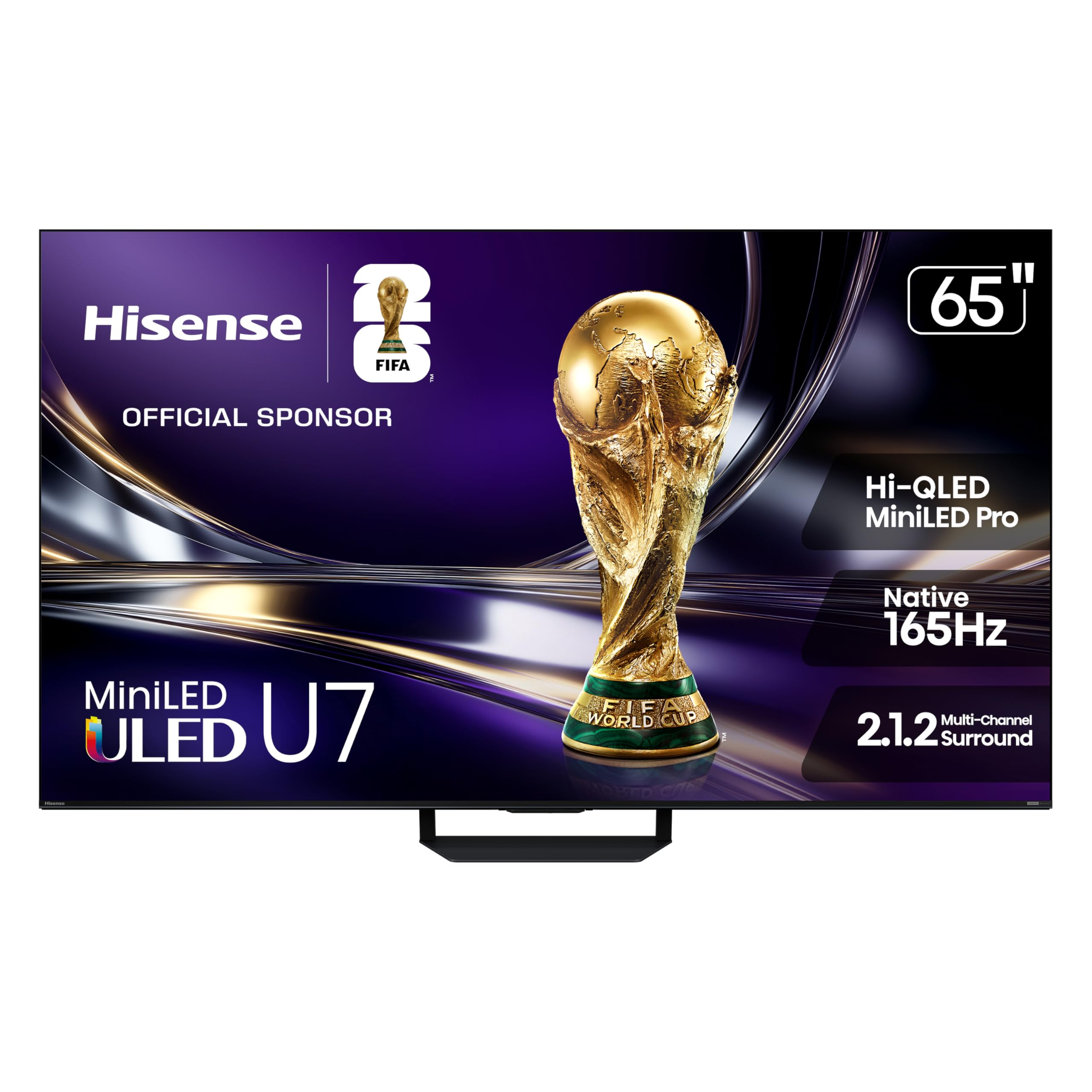
The Hisense U7 series has redefined what mid-range buyers can expect. This 2026 model packs a native 165Hz refresh rate—the highest in this roundup—paired with a Mini-LED backlight system that reaches up to 3000 nits of peak brightness. The Hi-QLED Pro panel delivers over a billion colors with Pantone validation, making HDR content look reference-grade. The anti-reflection coating is a standout feature for bright living rooms, maintaining contrast even with direct sunlight.
Gamers get VRR up to 330Hz, Auto Low Latency Mode, and four HDMI 2.1 ports, though two run at 4K 165Hz and two at 4K 60Hz. The 2.1.2 channel speaker system with Dolby Atmos fills a medium room without a soundbar—impressive but not a replacement for dedicated audio. The Google TV interface is snappy, with Filmmaker Mode for purists and tons of customization options.
At this price, the U7 competes directly with entry-level OLEDs in brightness but surpasses them in gaming fluidity and burn-in resistance. The local dimming algorithm handles fast-moving objects well, with minimal blooming. If you want the most future-proof specs at a price that still feels like a steal, this is the set to beat.
Why it’s great
- Industry-leading 165Hz native refresh rate with VRR up to 330Hz
- Exceptional 3000-nit peak brightness with anti-glare coating
- Google TV with Filmmaker Mode and Hi-View AI Engine Pro
Good to know
- Built-in sound is decent but benefits from an external soundbar
- Stand assembly requires two people due to weight
2. Toshiba 65″ Z670R Series Mini-LED 4K
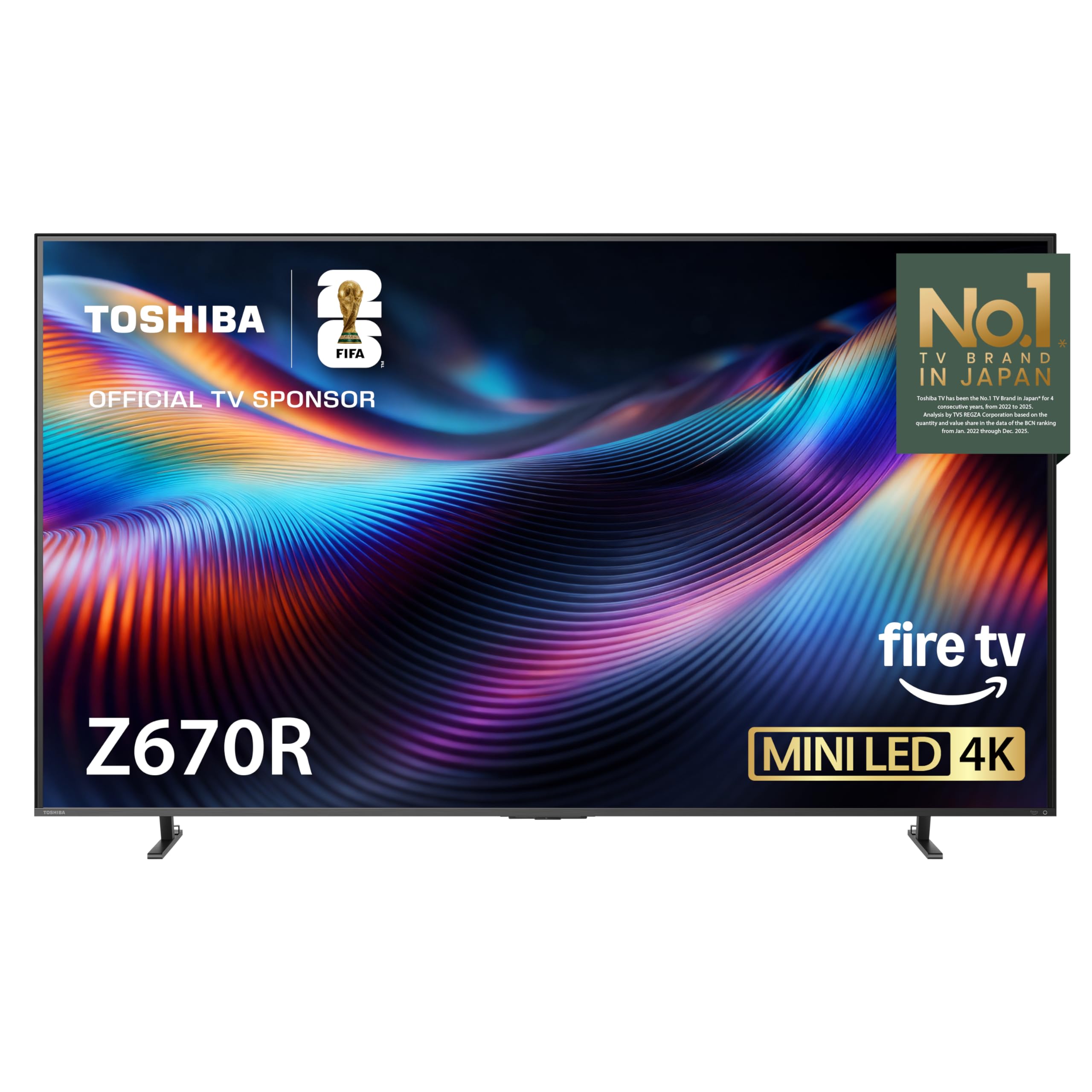
Toshiba’s resurgence in the premium segment is anchored by the Z670R, a Mini-LED QLED set tuned by Toshiba’s Japanese engineers. The REGZA Engine ZRi Gen3 processes every scene in real time, optimizing color, contrast, and audio for a natural, film-like presentation. Dolby Vision IQ and HDR10+ Adaptive adjust the picture based on ambient light—perfect for rooms with variable brightness throughout the day.
The native 144Hz panel supports AMD FreeSync Premium and VRR for tear-free gaming, and the Game Mode Pro keeps input lag low without crushing shadow detail. The REGZA Power Audio Pro system includes a dedicated bass woofer that delivers room-shaking low end—uncommon for built-in TV audio and genuinely usable for everyday watching without a soundbar.
Fire TV integration is seamless, though the interface pushes Amazon content more than Roku or Google TV. The AI Light Sensor Pro adjusts brightness smoothly, reducing eye strain during late-night sessions. For buyers who prioritize cinematic accuracy and audio depth over raw gaming refresh rates, the Z670R is a compelling premium choice that justifies every dollar.
Why it’s great
- REGZA Engine ZRi Gen3 delivers reference-grade picture processing
- Built-in bass woofer provides genuine depth without a soundbar
- Dolby Vision IQ and HDR10+ Adaptive for any lighting condition
Good to know
- Fire OS includes ads and promotions on the home screen
- Remote’s “Recents” button is small and easy to press accidentally
3. iFFALCON 65″ Mini-LED 4K Smart TV (65U85)
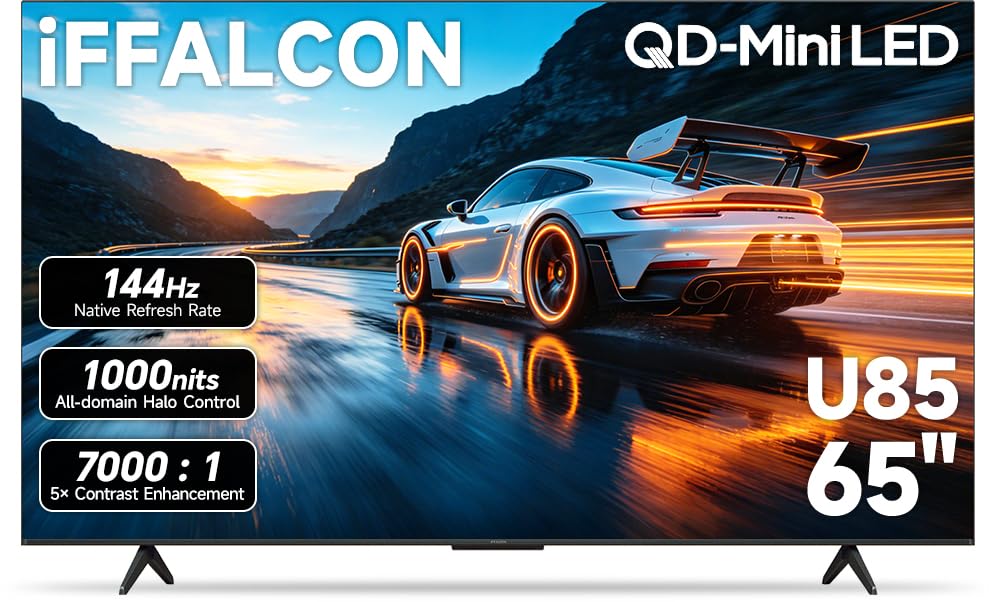
The iFFALCON U85 is a dark horse that punches well above its price tier. It features a native 144Hz Mini-LED panel with VRR up to 288Hz, certified FreeSync Premium Pro for reduced screen tearing, and a contrast ratio of 7000:1. All four HDMI ports are 2.1—two running at 4K 144Hz and two at 4K 60Hz—which is rare even on sets costing significantly more. The 1000-nit peak brightness ensures HDR highlights pop without crushing shadows.
Beyond gaming, the U85 includes hotel mode, IR blaster, and IP control—features usually reserved for commercial displays. This makes it an excellent choice for Airbnbs, offices, or multi-room setups where remote management matters. The 50W 2.1-channel audio system (2x15W tweeters + 20W woofer) delivers immersive Dolby Atmos sound with genuine bass presence.
Google TV runs smoothly with no noticeable bloat, and both Alexa and Google Assistant are built in. The only trade-off is the cabinet depth—it’s slightly thicker than ultra-slim competitors, but that’s a non-issue for most wall mounts or stands. For gamers and power users who want the most HDMI 2.1 bandwidth available, this is the value king.
Why it’s great
- Four HDMI 2.1 ports with 4K 144Hz on two inputs
- Hotel mode and IP control for commercial or rental use
- 50W 2.1-channel audio with dedicated woofer
Good to know
- Slightly thicker profile than ultra-slim LED alternatives
- Google TV interface can feel cluttered compared to Roku
4. Amazon Ember 65″ QLED Series with Fire TV
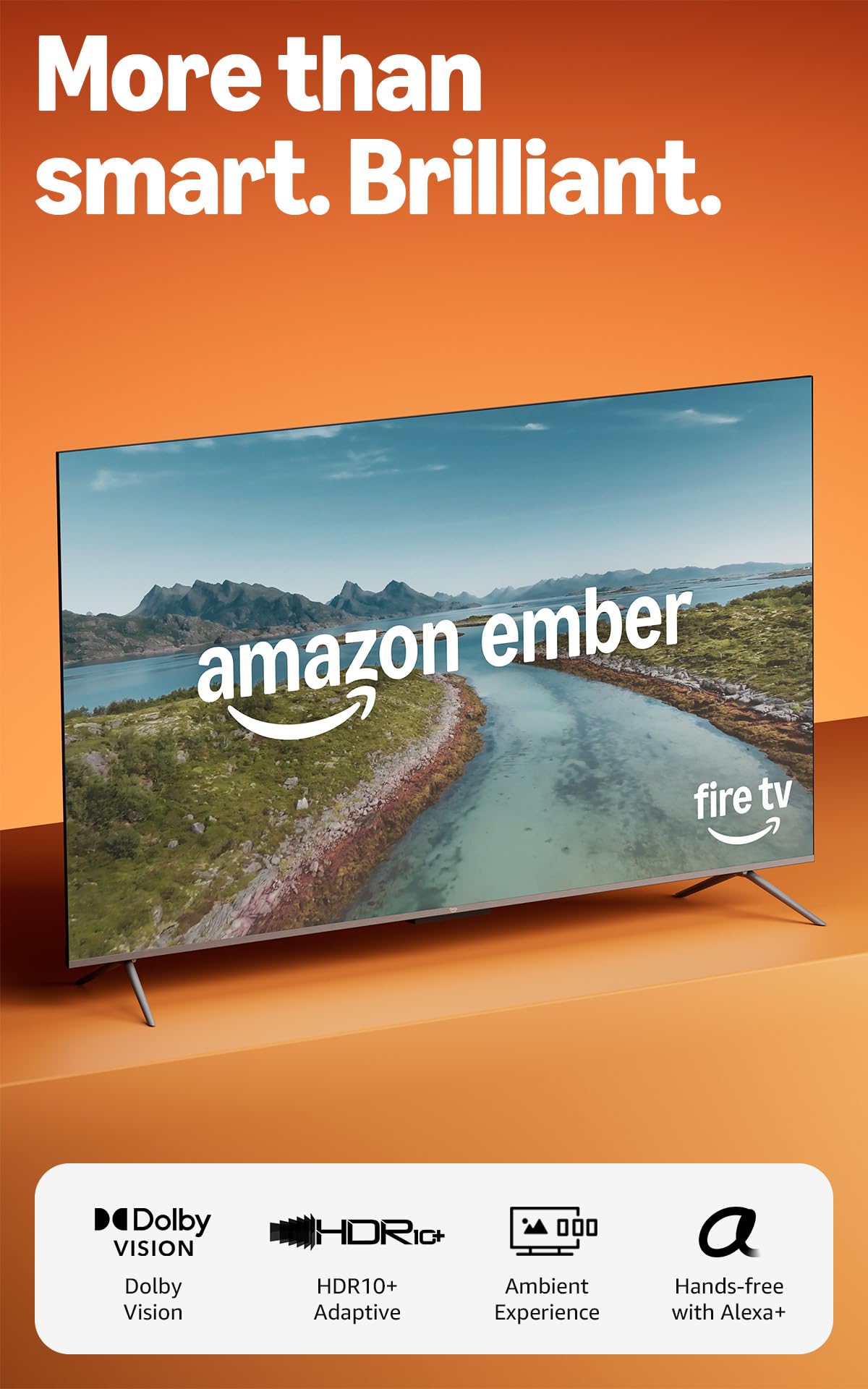
Amazon’s Ember QLED Series targets households already invested in the Alexa ecosystem. The 4K QLED panel with full-array local dimming delivers solid contrast and brightness for the price—deep blacks with minimal blooming, and HDR10+ Adaptive adjusts to room lighting automatically. Wi-Fi 6 and a quad-core processor make app loading and navigation feel instant, a step above older Fire TV hardware.
The standout feature is the new Alexa+ integration—you can speak naturally (“Alexa, find that action movie with the car chase”) and it works even when the screen is off. Omnisense technology wakes the display as you enter the room, showing artwork or your last watched content. For smart home control, this is the most deeply integrated TV in the roundup.
Gaming performance is adequate—low input lag and Amazon Luna support—but the 60Hz panel limits PC and console gaming at high frame rates. The built-in speakers are average; a soundbar is recommended for any serious use. If your priority is a seamless Alexa-first experience with solid picture quality, the Ember delivers. For raw gaming specs, look elsewhere in this list.
Why it’s great
- Deep Alexa+ integration with hands-free control and screen-off commands
- Wi-Fi 6 and quad-core processor for snappy interface response
- Full-array local dimming for solid contrast in mixed lighting
Good to know
- 60Hz refresh rate caps high-FPS gaming potential
- Built-in speakers are serviceable but lack low-end presence
5. Sony BRAVIA 2 II 65″ 4K LED Smart TV (K-65S20M2)

Sony’s BRAVIA 2 II is engineered for PlayStation 5 owners who want a plug-and-play experience. The 4K Processor X1 with TRILUMINOS Pro delivers natural, accurate colors and Motionflow XR keeps fast-paced action blur-free. Exclusive PS5 features—Auto HDR Tone Mapping and Auto Genre Picture Mode—automatically optimize the TV’s picture when it detects a PlayStation console, removing the need to fiddle with menus.
The panel is a standard LED backlight, meaning contrast is decent but not Mini-LED level. Black levels show some bloom in dark scenes, but Sony’s upscaling is class-leading—lower-resolution content like YouTube or cable looks cleaner than on most competitors. The Google TV interface is smooth, and Sony Pictures CORE gives you access to free movies with purchase.
Audio is acceptable for a secondary room, with Dolby Atmos passthrough via eARC for external systems. Build quality is excellent, with a sturdy stand and minimal bezels. For the non-gamer or casual viewer, the lack of high-refresh-rate HDMI 2.1 ports (it’s a standard 60Hz panel) makes it less future-proof than Mini-LED rivals. It’s a specialized pick for dedicated PlayStation households.
Why it’s great
- Auto HDR Tone Mapping and Auto Genre Mode for seamless PS5 use
- Best-in-class upscaling from Sony’s 4K Processor X1
- TRILUMINOS Pro color reproduction is natural and accurate
Good to know
- Standard LED backlight with blooming in dark HDR scenes
- 60Hz panel limits high-frame-rate gaming potential
6. Westinghouse 65″ Mini-LED 4K UHD Roku TV
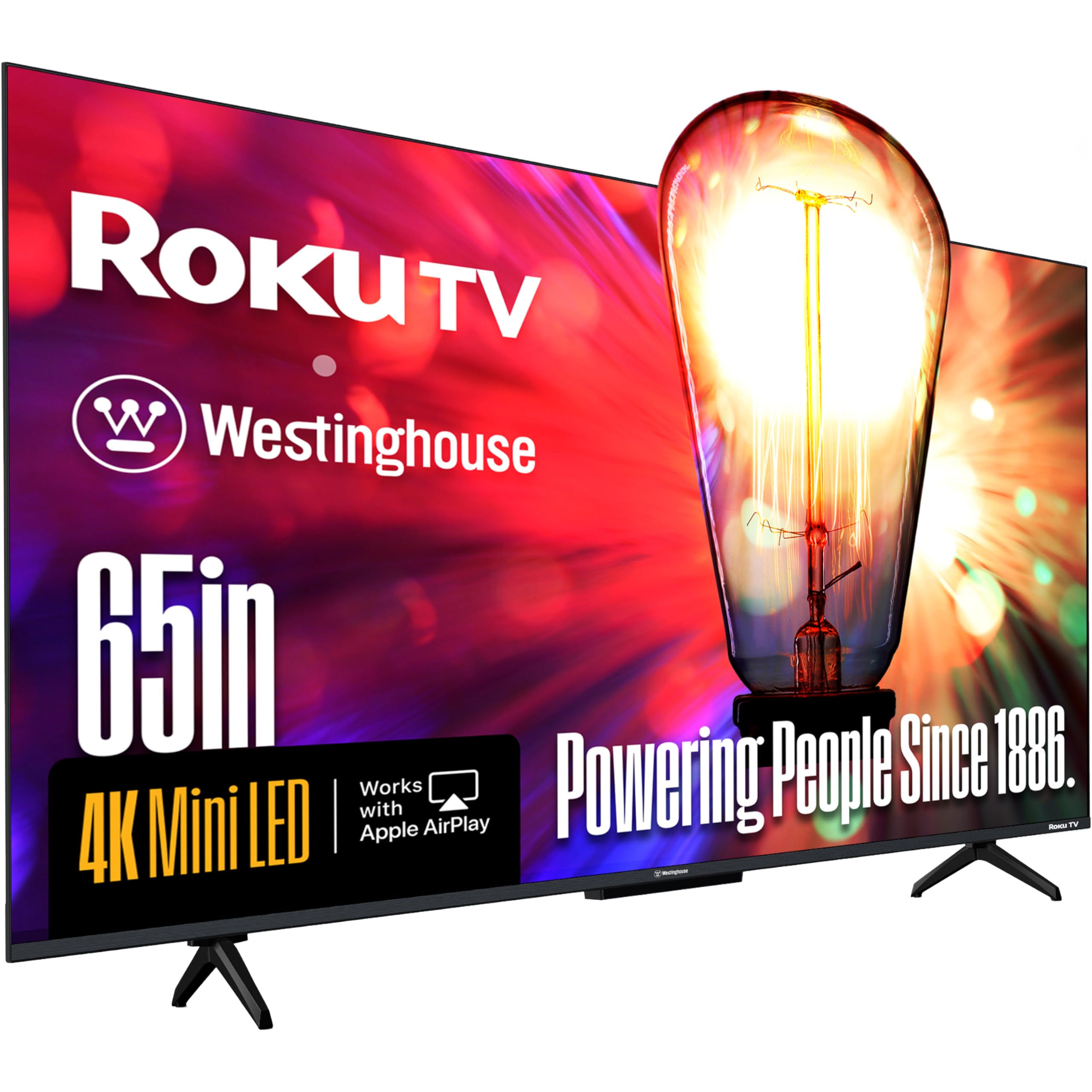
Westinghouse brings Mini-LED local dimming to a price point that undercuts most competitors, making it a standout for value-conscious buyers. The QLED Quantum Color panel covers up to 93% of the DCI-P3 color gamut—vibrant reds and greens that make nature documentaries and sports pop. The MEMC motion processing reduces blur in fast scenes, while Dolby Vision and HDR10 support optimize dynamic range.
The Roku platform is the star here: lightning-fast app launches, a clean interface with no bloat, and access to 350+ free live TV channels. Voice control via Apple HomeKit and AirPlay 2 adds flexibility for Apple households. The four HDMI 2.1 ports with eARC provide future-proof connectivity, though the panel tops out at 60Hz, which matters less for streaming and more for competitive gaming.
Audio is adequate—clear dialogue but lacking bass presence—so a soundbar is recommended. The build feels lightweight and easy to mount, and the packaging is robust enough to survive shipping. If Roku’s simplicity and Mini-LED contrast are your top priorities and you don’t need high refresh rates, this is the best value in the category.
Why it’s great
- Mini-LED local dimming at a budget-friendly price point
- 93% DCI-P3 QLED color coverage for vibrant images
- Fast, bloat-free Roku OS with 350+ free channels
Good to know
- 60Hz panel is not suited for high-FPS gaming
- Built-in speakers lack low-end; soundbar recommended
7. TCL 65″ T7 Series 4K QLED HDR Google TV (65T7)
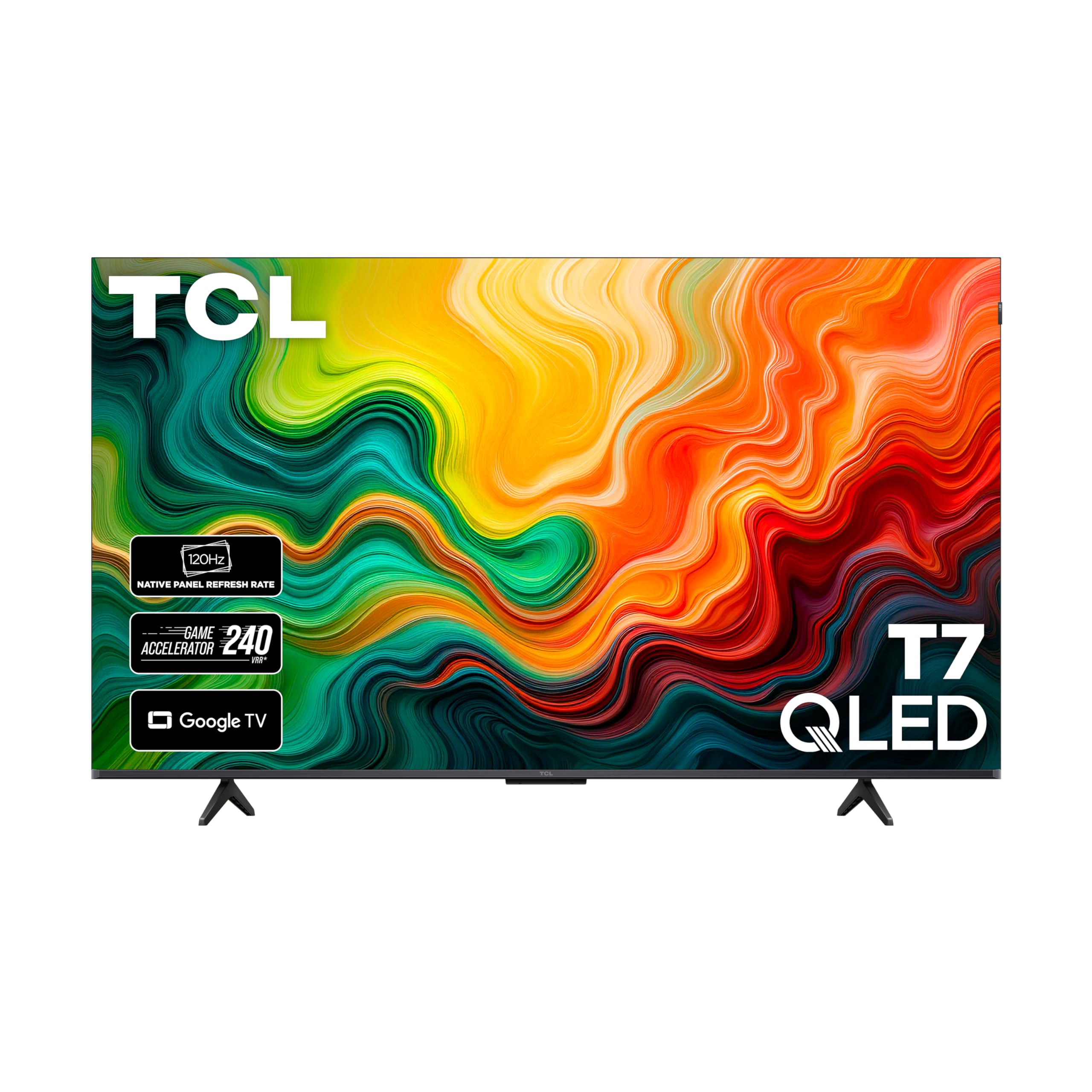
TCL’s T7 Series is an Amazon Exclusive that targets PC and console gamers who want a native 144Hz panel without paying flagship prices. The QLED panel covers nearly the entire DCI-P3 color space, and the TCL AIPQ Pro Processor intelligently optimizes color and contrast. Motion Rate 480 with MEMC frame insertion keeps fast-moving content silky smooth—ideal for racing games and action sports.
The 144Hz refresh rate combines with Variable Refresh Rate to minimize tearing, and the T7 supports up to 4K 120Hz on PC. The FullView 360 metal bezel-less design looks premium, and height-adjustable feet give flexibility for soundbar placement. Google TV is responsive, though initial setup requires an internet connection before you can access any HDMI input—a minor annoyance.
Built-in sound is decent for the price, but Dolby Atmos passthrough ensures compatibility with external systems. Some users report that the TV doesn’t wake from power save when used as a PC monitor, requiring an HDMI re-plug. For pure gaming fluidity and high refresh rates, the T7 is a strong mid-range contender that outperforms many higher-priced sets.
Why it’s great
- Native 144Hz panel with VRR for tear-free gaming
- Bezel-less design with adjustable feet for soundbar clearance
- Excellent color volume from QLED quantum dot technology
Good to know
- PC HDMI power save issue may require re-plugging cable
- Google TV setup requires internet before HDMI input use
8. Samsung 65″ Mini LED M70H Series Vision AI (65M70H)
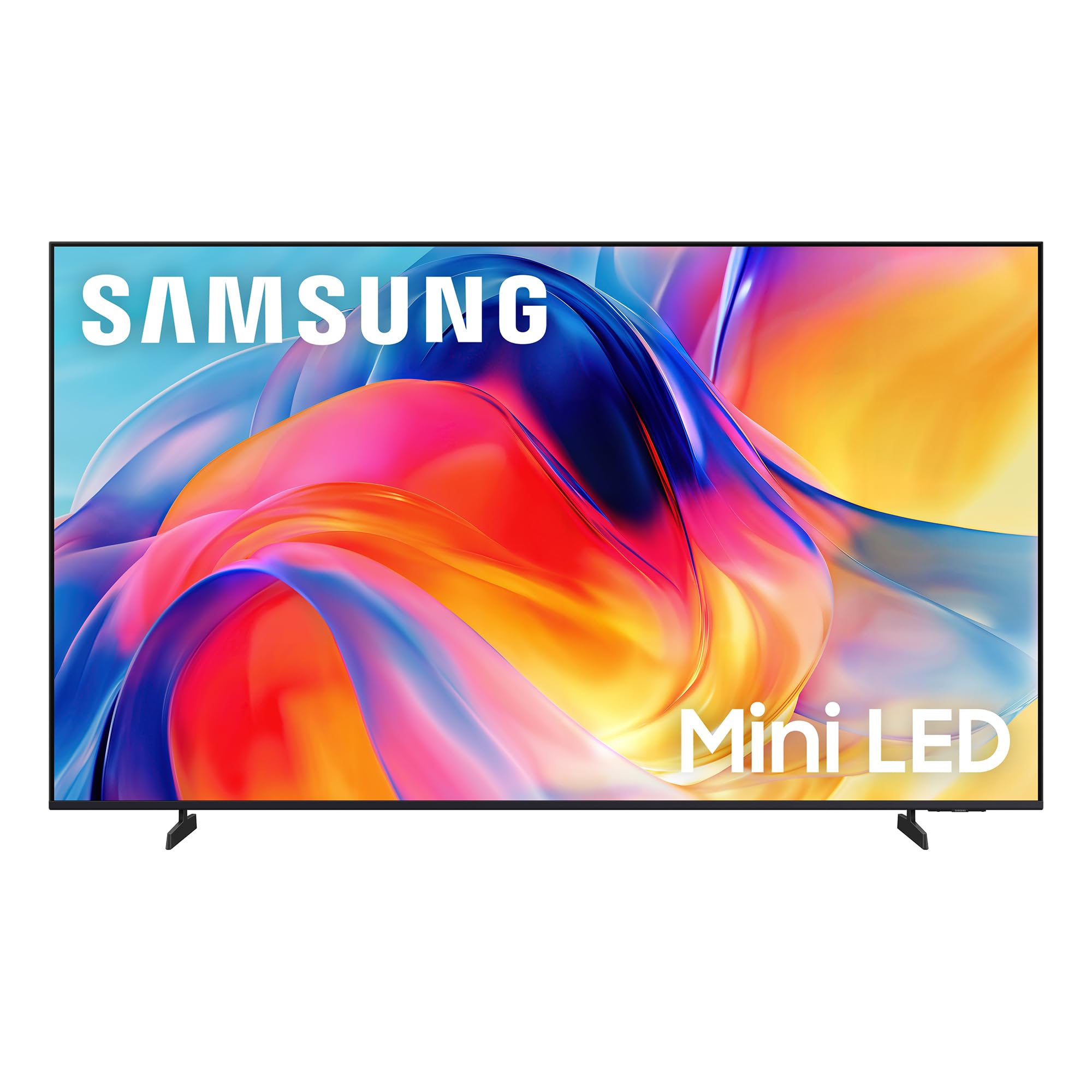
Samsung’s M70H brings Mini LED processing and Pure Color Spectrum technology—capable of rendering one billion true-to-life colors—to a competitive price point. The Supreme Mini LED Dimming delivers deep blacks and bright highlights, making HDR content look dynamic without the haloing seen on standard LED sets. Motion Xcelerator + DLG 120Hz provides smooth motion for sports and gaming, while Soccer Mode optimizes greens and motion clarity for match day.
The Samsung Vision AI integration includes adaptive picture adjustments and Samsung TV Plus with 2,700+ free channels. The Tizen interface is clean, but some users find the remote frustrating—no direct input button, and the TV defaults to Pluto TV on startup. The Gaming Hub consolidates cloud gaming services, but the panel’s 60Hz native refresh (with DLG to 120Hz) means it’s not a true high-refresh display.
For movie and sports enthusiasts who prioritize color accuracy and Samsung ecosystem integration over raw gaming speed, the M70H is a strong pick. The mini-LED backlighting elevates contrast noticeably above standard LED, and the One Billion Color claim holds up in real-world viewing. Just be prepared to spend time on initial setup to disable unwanted features.
Why it’s great
- Pure Color Spectrum delivers one billion accurate colors
- Supreme Mini LED Dimming for deep blacks and bright highlights
- Soccer Mode and Motion Xcelerator for sports optimization
Good to know
- Remote lacks direct input button; startup defaults to Pluto TV
- Native 60Hz panel with DLG to 120Hz, not true high refresh
9. Roku 65″ Plus Series Mini-LED QLED TV
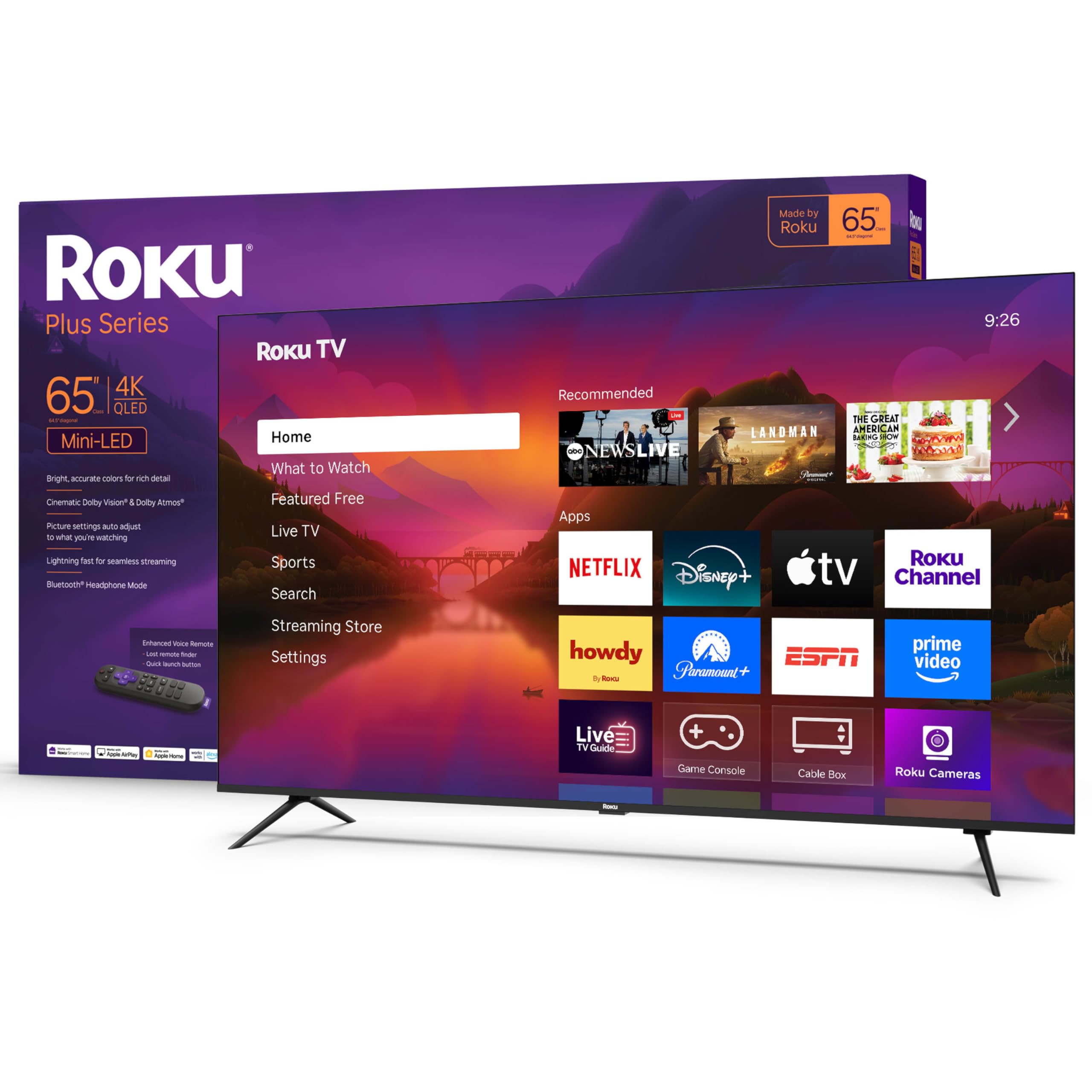
The Roku Plus Series is the sweet spot of this entire guide—it combines Mini-LED backlighting, QLED color, Dolby Vision, and a built-in subwoofer into a package that costs less than many standard LED TVs. The picture quality is outstanding for the price: deep blacks with minimal blooming, punchy colors that hold up in bright rooms, and Dolby Vision HDR that makes streaming movies look theatrical. The Roku Smart Picture Max AI engine cleans up incoming signals and optimizes settings automatically.
Audio is a genuine step up from the category—Dolby Atmos support and a built-in subwoofer give it bass presence that most TVs lack. Dialogue remains clear even at low volumes, and the Bluetooth Headphone Mode is a lifesaver for late-night viewing. The Roku OS remains the fastest and most intuitive smart platform, with automatic updates and a lost remote finder built into the Enhanced Voice Remote.
Gamers get Variable Refresh Rate and Game Mode, though the panel refresh rate is 60Hz. The USB-C connectivity is a nice modern touch, but the lack of a standard USB port may frustrate some users. For the vast majority of buyers who want the best combination of picture, sound, ease of use, and price, the Roku Plus Series is the undisputed champion.
Why it’s great
- Mini-LED + QLED with Dolby Vision delivers premium picture quality
- Built-in subwoofer provides genuine bass without a soundbar
- Fastest, simplest smart TV interface with automatic updates
Good to know
- 60Hz panel limits high-refresh-rate gaming
- No standard USB port—USB-C only
10. Samsung 65″ Crystal UHD U8000H Series (65U8000H)
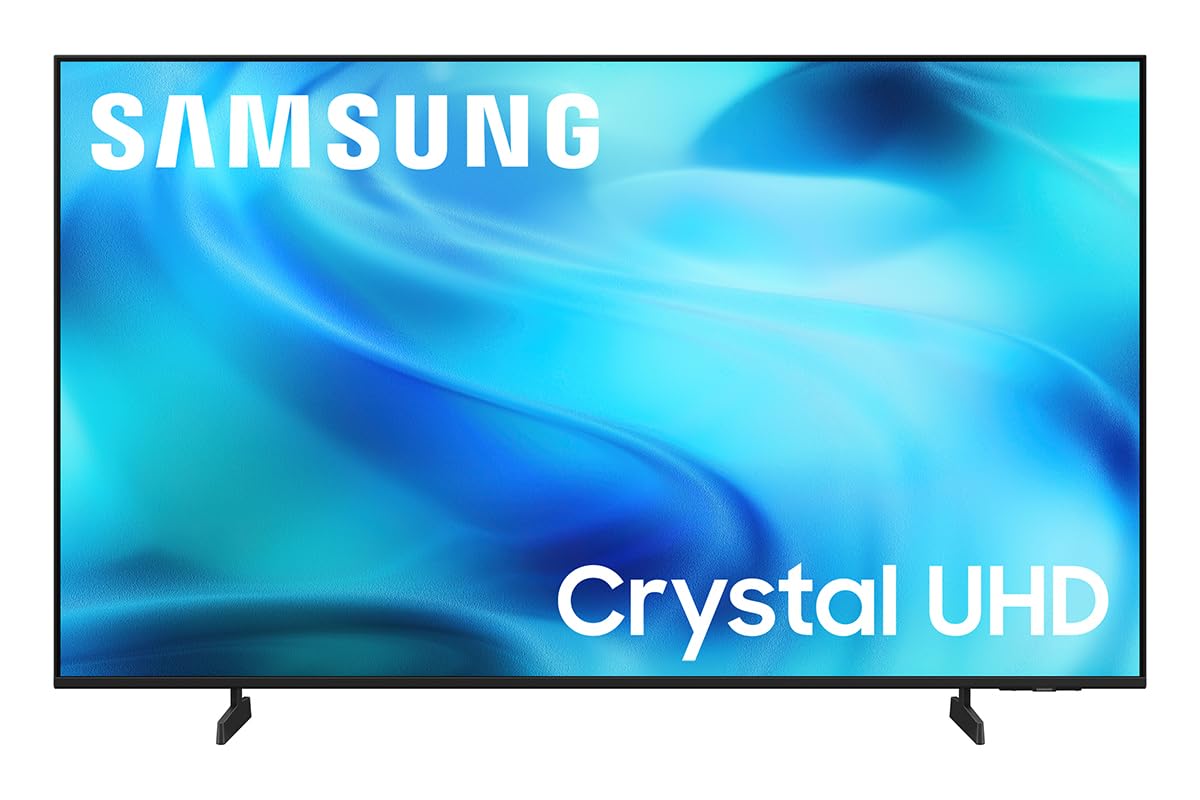
Samsung’s U8000H is a straightforward, no-nonsense 4K TV that focuses on doing the basics well. The Crystal Processor 4K upscales lower-resolution content to near-4K quality, and Color Booster enhances saturation for more vibrant images. Motion Xcelerator smooths fast-paced sports and games up to 4K 60Hz, while HDR10+ support ensures compatible content looks dynamic.
Tizen OS is reliable, though the setup process requires an internet connection and account creation—an annoyance for cord-cutters using over-the-air antennas. Samsung TV Plus offers 2,700+ free channels, which is generous, but the interface can feel cluttered compared to Roku. The minimalist remote is compact but lacks backlighting, which may frustrate older users or those watching in dim rooms.
The panel is standard LED, so contrast is decent but not Mini-LED level—blooming is visible in dark scenes. For the price, you’re getting a trusted brand with solid build quality and a clean design. It’s an ideal pick for a secondary room, guest bedroom, or for someone who wants a reliable 65-inch screen without premium-tier gaming or HDR demands.
Why it’s great
- Crystal Processor 4K upscaling improves lower-resolution content
- Color Booster enhances vibrancy for everyday viewing
- Reliable Samsung build quality with clean, modern design
Good to know
- Setup requires internet connection and account creation
- Remote is small and unlit, difficult to use in dark rooms
11. Roku 65″ Select Series 4K QLED TV
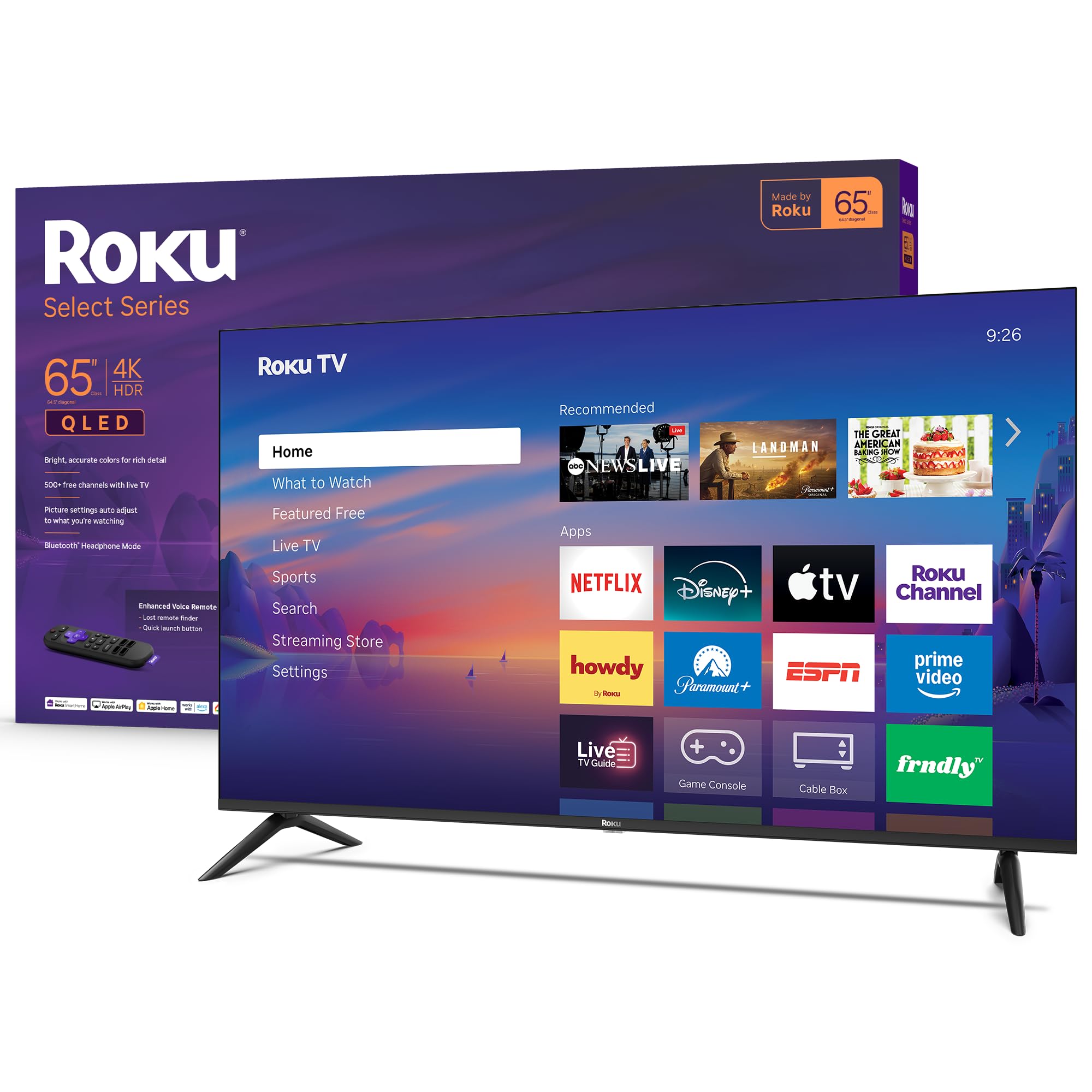
The Roku Select Series is the entry-level champion, proving you don’t need to spend a fortune to get a QLED panel with 4K resolution. The 65-inch version delivers sharp detail and bright, accurate colors thanks to the QLED screen and HDR10 support. Roku Smart Picture automatically cleans up TV signals and optimizes picture mode, so even standard cable looks better than expected.
The Roku platform is identical to the higher-end Plus Series—fast app launches, 500+ free TV channels, and a home screen that’s simple to customize. The Enhanced Voice Remote includes a lost remote finder, and Bluetooth Headphone Mode lets you listen privately without disturbing others. Setup is genuinely plug-and-play: connect power, follow on-screen prompts, and you’re streaming in minutes.
Limitations are expected at this level—the panel is 60Hz, sound is adequate but not immersive, and there’s no local dimming. The bezels are slightly thicker than premium models, though the overall design is clean. For a first big-screen TV, a secondary living room, or a budget-conscious upgrade, the Select Series offers the best entry point to 4K QLED viewing with a proven smart platform.
Why it’s great
- QLED panel at an entry-level price point
- Fast, user-friendly Roku OS with 500+ free channels
- Bluetooth Headphone Mode for private late-night viewing
Good to know
- 60Hz refresh rate, no local dimming for deep blacks
- Built-in speakers are adequate but lack bass and immersion
FAQ
What is the best panel technology for a bright living room?
Is a 144Hz refresh rate worth it if I only watch movies?
Do I need a soundbar for a 65-inch TV?
What is the difference between Roku, Fire TV, and Google TV?
Can I use a 65-inch TV as a computer monitor?
Final Thoughts: The Verdict
For most users, the bang for your buck 65 inch tv winner is the Roku 65″ Plus Series because it combines Mini-LED picture quality, Dolby Vision, and a built-in subwoofer with the best smart TV platform on the market—all at a price that undercuts the competition. If you want true gaming performance with a native 165Hz panel, grab the Hisense 65″ U7. And for the best entry-level big screen that still offers QLED color and a premium interface, nothing beats the Roku 65″ Select Series.