
Our readers keep the lights on and the weekend projects moving. As an Amazon Associate, I earn from qualifying purchases.
Finding a cream that actually stops the raw, painful cycle of bed sores without leaving a sticky, greasy mess on sheets and skin is the real battle. Most people grab a diaper rash standard only to find it fights the wrong fight—failing to protect already broken skin from moisture and friction. The right barrier cream or wound gel acts like a second skin, locking out irritants while delivering ingredients that calm redness and speed tissue repair.
I’m Rikta — the co-founder and writer behind FitlyFast. To build this guide, I dissected over 30 product formulations, filtering by active ingredients, barrier strength, and real-world wound care applications, then stacked customer feedback against clinical reviews to separate the true performers from the also-rans.
Whether you are caring for a loved one in hospice or managing your own skin sensitivity, finding an effective and non-greasy bed sore cream means understanding which protectants and healing agents actually hold up under pressure, moisture, and friction.
How To Choose The Best Bed Sore Cream
Bed sores, or pressure ulcers, develop when skin is compressed against a surface for too long, cutting off blood flow. The right cream doesn’t just sit on top—it actively protects raw tissue from moisture, friction, and bacteria while supporting the body’s natural repair cycle. The key specs to evaluate include the primary barrier agent, any added healing or pain-relieving actives, and the texture that determines how easily the product spreads and wipes away.
Evaluate the Primary Skin Protectant
The foundation of any good bed sore cream is its barrier ingredient. Dimethicone (a silicone-based polymer) creates a breathable, non-greasy film that is easy to apply and doesn’t stain fabric. Zinc oxide offers thick, opaque protection ideal for heavy moisture but can feel pasty and require more effort to remove. Petrolatum-based ointments seal aggressively but block air exchange and trap heat, which can worsen maceration. For raw or broken skin, a dimethicone-dominant formula is often the better choice because it allows the dermis to breathe while still shedding moisture.
Look for Active Healing Ingredients
Beyond the barrier, look for compounds that actively calm inflammation and support skin regeneration. Aloe vera and allantoin are common in barrier creams and help soothe redness without added sting. Manuka honey is a natural humectant and antibacterial agent, especially useful when sores show early signs of infection. Collagen (often marine-sourced) acts as a humectant and supports extracellular matrix repair. If pain is a major concern, a wound gel with 2% lidocaine hydrochloride provides localized numbing that allows for dressing changes with minimal discomfort.
Assess Texture and Residue
A thick, sticky ointment might seem protective, but it can cause problems. It smears on bed linens, makes wound assessment difficult, and interferes with the adhesion of secondary dressings like foam pads or non-stick gauze. A non-greasy formula spreads thinner, absorbs partially into the skin, and wipes clean without harsh scrubbing that further damages fragile tissue. The easiest cleanups tend to come from water-based dimethicone creams rather than petroleum-based pastes.
Quick Comparison
On smaller screens, swipe sideways to see the full table.
| Model | Category | Best For | Key Spec | Amazon |
|---|---|---|---|---|
| MPM Medical Regenecare Wound Gel | Pain-Relief Gel | Active wound healing with pain | 2% Lidocaine + Marine Collagen | Amazon |
| Chamosyn Moisture Barrier Ointment | Natural Barrier | Early-stage sores & skin irritation | Zinc Oxide + Menthol (Manuka Honey added) | Amazon |
| Puremedy The Original Ointment | Organic Salve | All-natural healing & first aid | 100% Organic / Wild-Harvested | Amazon |
| SilvrSTAT First Aid Kit Gel | Silver Gel | Infection prevention on open wounds | 32 PPM SilverSol Particles | Amazon |
| TriDerma Protect & Heal Barrier Cream | Non-Greasy Barrier | Fragile, sensitive skin | Dimethicone + AP4 Aloe Complex | Amazon |
| Critic-Aid Clear Moisture Barrier | Clear Ointment | Daily moisture protection | 6 oz Tube / Easy-Remove Formula | Amazon |
| Ca-Rezz NoRisc Antibacterial Cream | Antibacterial Cream | Budget-friendly general rash care | 9.7 oz Large Tube | Amazon |
In‑Depth Reviews
1. MPM Medical Regenecare Wound Gel

This gel stands apart for one critical reason—it combines 2% lidocaine hydrochloride with marine collagen, aloe vera, and sodium alginate in a single amorphous formula. According to the manufacturer’s listing, the lidocaine is intended to provide numbing relief during dressing changes on wounds such as pressure injuries, leg ulcers, cuts, burns, and abrasions, while the collagen and sodium alginate form a humectant barrier and help absorb light drainage. Any bleeding, open, or worsening bed sore should be evaluated by a doctor, nurse, or wound-care specialist before using any over-the-counter product—healing timelines vary enormously by individual and wound severity, and this product is not a substitute for professional wound care.
The sodium alginate component is what the manufacturer markets as dressing-grade—it is designed to absorb light drainage without turning into a sticky mess, which is a useful trait for a gel format. The 3 oz tube is compact; per the listing, a little goes a long way when applied to the wound bed itself rather than the surrounding healthy skin.
Be mindful that this is a wound gel, not a preventive barrier ointment. It is best applied directly to broken skin or early pressure ulcers, then covered with a non-stick dressing. It is not designed for daily incontinence protection over intact skin. If you are managing both prevention and active sores, pair this with a dimethicone-based barrier cream for surrounding areas.
Why it’s great
- Clinically significant pain relief with 2% lidocaine
- Hydrogel absorbs drainage via sodium alginate
- Marine collagen supports moist wound healing
Good to know
- Small 3 oz tube size for the price
- Not intended as a stand-alone barrier for incontinence
2. Chamosyn Moisture Barrier Ointment

According to the manufacturer’s product listing, Chamosyn’s two active ingredients are actually zinc oxide and menthol, not Manuka honey—the honey, along with aloe and chamomile, is listed as an added soothing ingredient rather than the primary active. The zinc oxide provides the barrier protection, while menthol accounts for the cooling sensation some users notice on application, which can be a welcome relief for irritated areas that have been rubbing against sheets or incontinence pads.
The tube format and pack-of-2 value make rotation easy for caregivers who need one tube at the bedside and another in a travel bag. As with any product used on broken or high-risk skin, check with a doctor or wound-care nurse before use, especially for anyone with a chronic condition or an existing wound that is not healing as expected.
This product is a barrier ointment, not a wound gel—it sits on the surface to protect and soothe. For open, weeping sores, you will still want a dressing-grade product underneath. But for red, irritated, intact skin that is at risk of breaking down, this is one of the most effective natural protectants available.
Why it’s great
- Hospice and wound care recommended formulation
- Manuka honey provides natural antibacterial action
- Cooling sensation soothes raw, inflamed skin
Good to know
- Thicker consistency may need a base balm to spread
- Not a pain-relief product—no lidocaine
3. Puremedy The Original Ointment
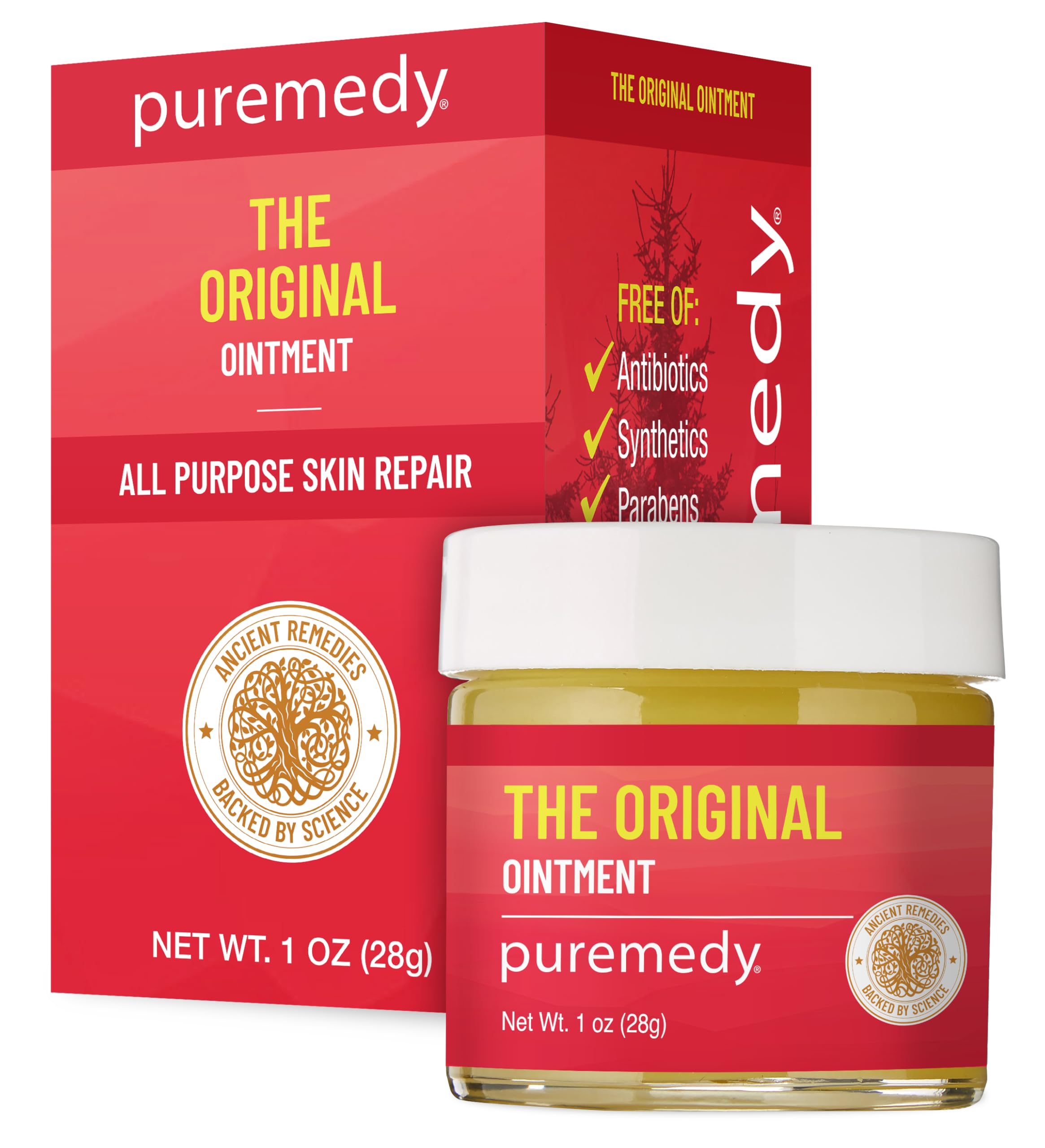
Puremedy’s Original Ointment is a 160-year-old Indigenous salve formulation that relies entirely on organic or wild-harvested plant ingredients. There are no synthetic preservatives, no petroleum derivatives, and no dimethicone or zinc oxide. Instead, it draws out impurities and stimulates blood circulation through a blend of herbs and resins. For bed sore care, this approach works best on unbroken, reddened skin (stage 1 pressure injuries) where increased microcirculation can halt progression before the tissue breaks open.
Per the manufacturer, the formula is intended to relieve symptoms of minor skin wounds, superficial burns, swelling, and itching—healing speed varies by person and wound, and no specific timeframe should be expected. The mechanism is not the same as a moisture barrier; this ointment is designed to penetrate rather than seal the surface. That makes it a poor choice for heavy incontinence situations where urine or stool needs to be physically blocked. But for early intervention and for people who want to avoid every synthetic ingredient on the shelf, this salve has a loyal following that spans a decade of use.
The main downside is packaging: the plastic lid on the tin is fragile and has cracked during shipping in multiple reports. The 1 oz size is small relative to the price, and the salve is thick, so application requires warming it between the fingers first. If you value ingredient purity above convenience, this is the cleanest option on the list.
Why it’s great
- 100% organic or wild-harvested ingredients
- Increases circulation to speed early-stage healing
- Safe for adults, children, and pets
Good to know
- Plastic lid is prone to cracking
- Not a strong moisture barrier for incontinence
4. SilvrSTAT First Aid Kit Gel

SilvrSTAT is a colloidal silver gel that delivers 32 PPM of SilverSol particles directly onto the wound bed. Each particle is engineered to kill multiple infectious cells on contact, making this a first-line choice when a bed sore shows signs of erythema, swelling, or light drainage. Silver-based dressings and gels have decades of clinical use in wound care for their broad-spectrum antimicrobial properties, and SilvrSTAT packages that power in a clear, non-greasy gel that doesn’t sting or irritate surrounding skin.
The texture is a major advantage for caregivers. It leaves no residue on fingers, wipes off with water, and does not interfere with adhesive dressings. The manufacturer recommends reapplying daily or with each bandage change, and because it is a gel rather than a cream, it can be applied to shallow wounds without trapping bacteria under a waxy film. According to the listing, it is intended for topical management of minor cuts, lacerations, abrasions, first- and second-degree burns, and skin irritations—not as a substitute for medical treatment of serious or infected wounds.
The trade-off is that SilvrSTAT is a treatment product, not a preventive barrier. If you use it on a bed sore, you still need to manage moisture and pressure separately. It is also a 1 oz tube, so it is best reserved for active sores rather than daily full-area application. For anyone managing a wound with a high infection risk, this gel adds a layer of defense that barrier creams alone cannot provide.
Why it’s great
- Powerful antimicrobial action with silver particles
- Non-staining, non-greasy gel texture
- Compatible with all dressing types
Good to know
- 1 oz tube is small for large-area use
- No barrier properties against moisture
5. TriDerma Protect & Heal Barrier Cream

TriDerma positions itself directly at the intersection of skin protection and comfort. Its primary protectant is dimethicone—the gold standard for breathable, non-greasy moisture barriers—layered with a proprietary AP4 Aloe Vera Gel Complex that contains over 200 naturally occurring healing compounds. The addition of allantoin, beeswax, shea butter, and oat extract creates a barrier that soothes as it protects, without the sticky residue that makes zinc oxide pastes so frustrating for caregivers.
Per the manufacturer, the cream is designed to seal out wetness, relieve redness, and soothe irritated or cracked skin, with two clinically tested skin protectants aimed at preventing skin breakdown, especially under adult diapers and incontinence pads. It is fragrance-free, paraben-free, and steroid-free, so it is less likely to sting open skin or trigger contact dermatitis than some alternatives. As with any product used on or near broken skin, consult a doctor or wound-care nurse first, since results and healing time vary by individual.
The one drawback is the tube size. At 4 oz, it runs through faster than the 6 oz or larger competitors, and frequent reapplication for heavy incontinence may deplete it quickly. But for anyone who prioritizes a clean-feeling, non-sticky formula that still provides real protection, TriDerma is a standout in the mid-range tier.
Why it’s great
- Non-greasy dimethicone-based barrier
- AP4 Aloe Complex with 200+ natural compounds
- FSA/HSA eligible
Good to know
- 4 oz tube may require frequent repurchasing
- No lidocaine for pain relief
6. Critic-Aid Clear Moisture Barrier Ointment

Critic-Aid is a workhorse clear barrier ointment from Coloplast Corporation, a major name in wound and skin care. It comes in a large 6 oz tube and is designed specifically to be easy to apply and even easier to remove—no heavy scrubbing required. This matters enormously for fragile skin at risk of tearing. The clear gel finish also allows caregivers to assess the skin underneath without wiping the product off, enabling faster spotting of emerging bed sores.
Per the manufacturer, the formula is designed for light-to-heavy skin irritation caused by incontinence and is labeled safe for neonatal use. It is important to note that Critic-Aid functions as a protectant, not a treatment. It will not heal an existing ulcer, but it is designed to create a barrier that helps stop urine and stool from making an existing rash worse. Always check with a doctor or wound-care nurse before using any barrier product on broken or high-risk skin.
The biggest asset here is the cost-per-ounce. This is one of the most affordable premium-brand barrier ointments on the market, and the 6 oz tube lasts significantly longer than the 4 oz competitors. If your primary need is daily moisture protection on intact or slightly irritated skin, this is the most economical high-quality option.
Why it’s great
- Clear formula allows skin inspection without removal
- Large 6 oz tube for extended use
- Trusted by hospital NICU staff for fragile skin
Good to know
- Not designed for open, weeping wounds
- No active healing ingredients like honey or collagen
7. Ca-Rezz NoRisc Antibacterial Cream

Ca-Rezz NoRisc Antibacterial Cream is a large-format, entry-level option that makes sense when you need coverage for a broad area without spending heavily per ounce. The 9.7 oz tube is the biggest on this list, and multiple users report coming back to it year after year for general rash and skin irritation management. It is marketed as antibacterial, which hints at a formulation that targets surface bacteria on intact or mildly irritated skin.
Reviews mention it works well for diaper rash in toddlers and general skin dryness and texture improvement. The texture is not greasy, and users specifically note that it smells pleasant—a small but meaningful detail for caregivers who apply cream multiple times daily. However, there is a notable absence of specific references to pressure ulcers or stage 2 bed sores in the feedback. This cream seems best suited for prevention and for very mild, superficial redness rather than established wounds.
The limitation is obvious: bed sore care requires a robust barrier against moisture and friction, and this product’s formulation is not specifically engineered for that use case. It is a general-purpose moisturizing and antibacterial cream, not a clinical-grade moisture barrier or wound gel. For someone on a tight budget who needs a basic protectant for unbroken skin, it is an acceptable starting point. But for anyone managing actual pressure injuries, a dedicated barrier product is worth the slight premium.
Why it’s great
- Very large 9.7 oz tube for the price
- Non-greasy texture with pleasant scent
- Works well for general skin irritation
Good to know
- Not a clinical-grade moisture barrier
- Limited evidence for pressure ulcer healing
FAQ
Can I use diaper rash cream for bed sores?
How often should I apply bed sore cream?
Should I use a cream or a gel for an open bed sore?
Final Thoughts: The Verdict
For most users managing active bed sores, the clear bed sore cream winner is the MPM Medical Regenecare Wound Gel because it combines 2% lidocaine for pain management with marine collagen and sodium alginate for genuine wound healing. If you need a non-greasy preventive barrier for sensitive, intact skin, grab the TriDerma Protect & Heal Barrier Cream. And for the most natural, chemical-free option for early-stage redness, nothing beats the Puremedy The Original Ointment.