
Our readers keep the lights on and the weekend projects moving. As an Amazon Associate, I earn from qualifying purchases.
The gap between “I need decent video” and “I need a second mortgage” is wider than most buyers realize. Too many affordable video cameras claim 4K but deliver grainy, stuttering footage that looks worse than a modern smartphone. The real trick is finding the one that packs a quality sensor, reliable stabilization, and usable audio into a body that won’t empty your wallet.
I’m Rikta — the co-founder and writer behind FitlyFast. I’ve spent hundreds of hours analyzing sensor sizes, stabilization systems, battery endurance claims, and real-world user feedback for this specific price-sensitive category.
Whether you’re vlogging, live-streaming, or capturing family memories, finding the right affordable video camera means filtering through spec-sheet hype and focusing on what actually matters for your shooting style.
How To Choose The Best Affordable Video Camera
Picking the right budget-friendly camera starts with understanding the three pillars that separate a real tool from a cheap toy: sensor size, stabilization technology, and workflow compatibility. Ignore gigapixel marketing and focus on what directly affects your final footage.
Sensor Size Determines Low-Light Performance
A 1-inch CMOS sensor captures dramatically more light than the tiny 1/2.3-inch sensors found in entry-level action cameras. This means cleaner footage at dusk, less digital noise in shadows, and a more professional-looking image overall. Cameras in the mid-range tier often pack this sensor, delivering smartphone-beating quality without the smartphone price.
Stabilization: Gimbal vs. Electronic
Mechanical 3-axis gimbal stabilization physically counteracts your hand movements, producing buttery-smooth footage even while walking or running. Electronic image stabilization (EIS) crops the sensor and can introduce jello-like artifacts. If you’re shooting handheld without a tripod, prioritize a gimbal-equipped model.
Connectivity and Workflow Fit
Think about where your footage ends up. USB plug-and-play cameras simplify live streaming and video calls. Models with HDMI output let you connect to external monitors or capture cards. And if you’re editing on the go, built-in storage or fast Wi-Fi file transfer saves precious time. Match the output ports to your existing gear.
Quick Comparison
On smaller screens, swipe sideways to see the full table.
| Model | Category | Best For | Key Spec | Amazon |
|---|---|---|---|---|
| DJI Osmo Pocket 3 | Premium Compact | Vlogging & Travel | 1″ CMOS, 3-Axis Gimbal, 4K/120fps | Amazon |
| Xtra Muse | Mid-Range Pocket | Vlogging & Content Creation | 1″ CMOS, 3-Axis Gimbal, 4K/120fps | Amazon |
| Canon PowerShot V10 | Compact Vlogger | Beginner Vlogging | 1″ CMOS, Built-in Stand, 4K/30fps | Amazon |
| DJI Osmo Nano | Premium Action | POV & Sports | 1/1.3″ Sensor, 4K/60fps, 143° FOV | Amazon |
| NearStream VM20 | Streaming Camera | Meetings & Live Events | 40X Hybrid Zoom, 8 Mics, 4K/30fps | Amazon |
| SJCAM C400 | All-Day Action | Extended Outdoor Recording | 7-Hour Battery, 4K, 6-Axis Stabilization | Amazon |
| GoPro Hero Black | Action Camera | Rugged Outdoor Adventures | HyperSmooth, Waterproof 33′, 4K/30fps | Amazon |
| OBSBOT Tail Air | Pro PTZ | Livestreaming & Events | AI Tracking, 4K, NDI Support | Amazon |
| Insta360 X5 | 360° Action | Immersive 360° Content | 8K/30fps, Dual 1/1.28″ Sensors | Amazon |
In‑Depth Reviews
1. DJI Osmo Pocket 3
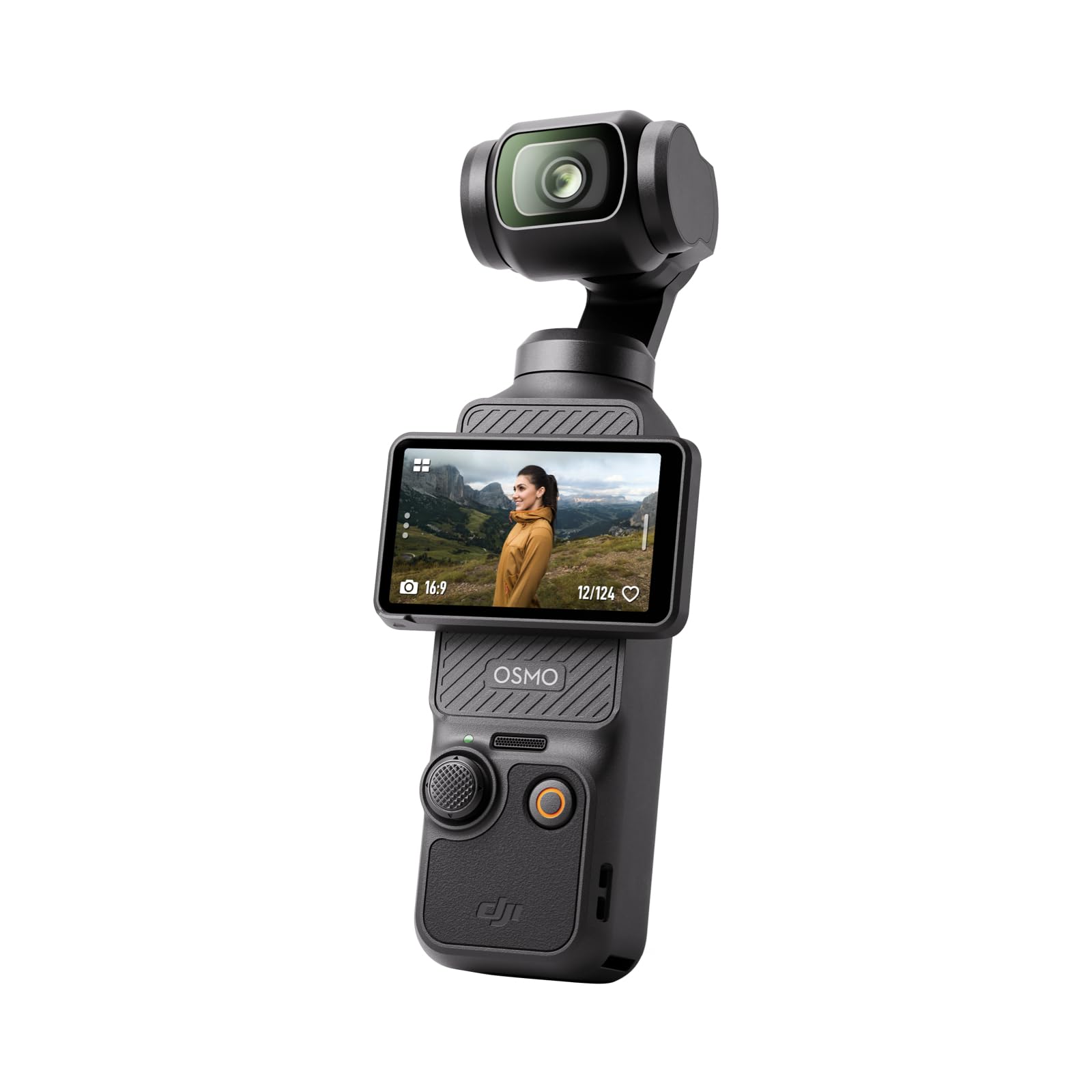
The Osmo Pocket 3 sets the benchmark for compact video cameras under premium-tier pricing. Its 1-inch CMOS sensor delivers 4K video at up to 120 frames per second, which means you can slow down fast action without losing detail. The 3-axis mechanical gimbal provides stabilization that electronic systems simply cannot match, keeping your footage smooth even during brisk walking or quick pans.
The 2-inch rotatable touchscreen makes switching between horizontal and vertical framing effortless, a major time-saver for creators publishing across YouTube and TikTok. ActiveTrack 6.0 locks onto subjects reliably, and the D-Log M 10-bit color profile lets you grade footage professionally in post. Stereo audio captures clean sound, and the ability to connect DJI Mic 2 transmitters directly elevates the audio game further.
Battery life reaches around 166 minutes under normal use, and fast charging via USB-C keeps downtime minimal. Its pocketable size, combined with the handle’s 1/4-inch thread for tripod mounting, makes it the most versatile option here for vloggers and travelers who refuse to compromise on quality.
Why it’s great
- Outstanding 3-axis mechanical gimbal stabilization
- 1-inch sensor with 4K/120fps for slow-motion flexibility
- Rotatable touchscreen for instant vertical/horizontal switch
- Professional 10-bit D-Log M color grading
Good to know
- Battery charger not included in the box
- Requires DJI Mimo app for full feature access
2. Xtra Muse With Mini Tripod Combo
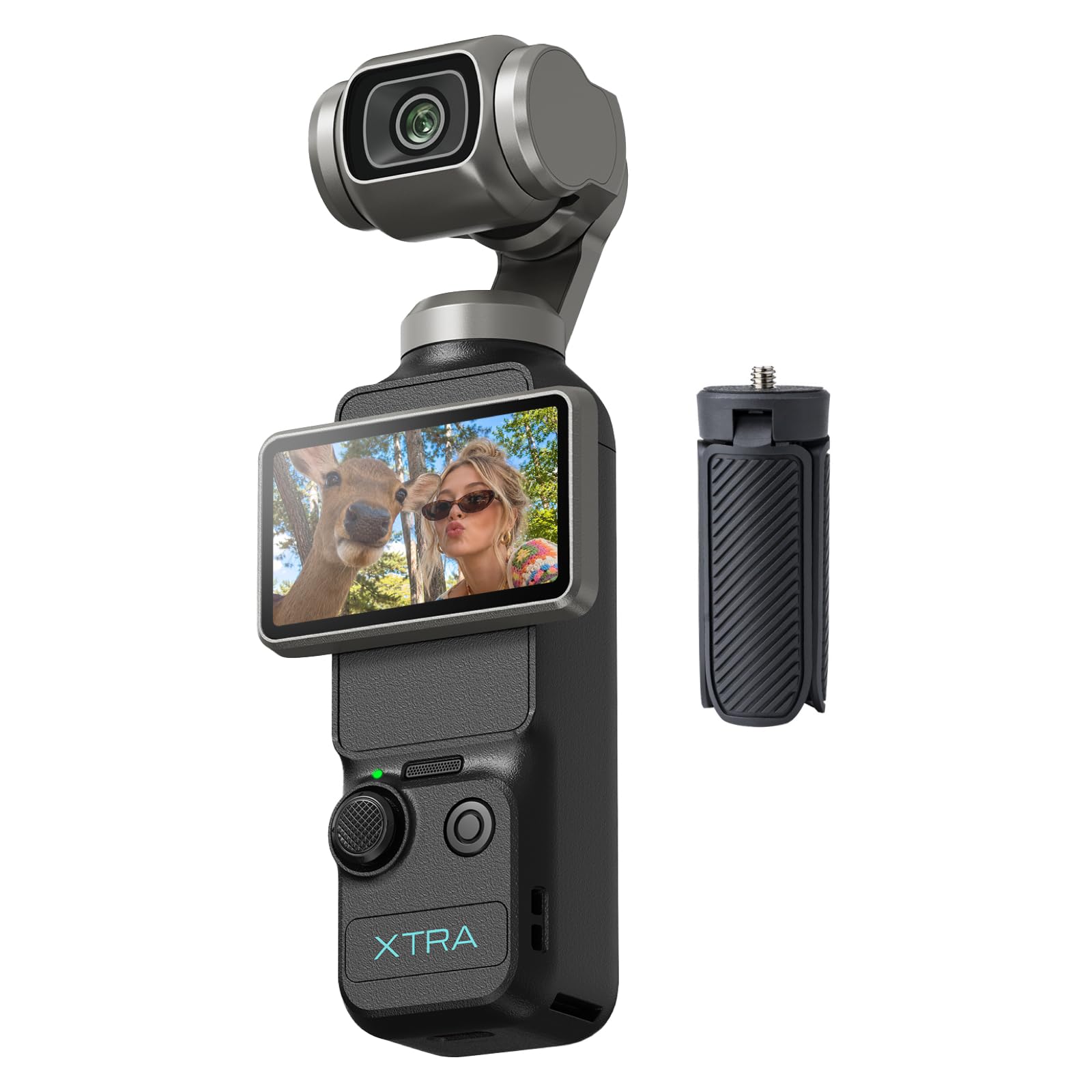
The Xtra Muse is a direct competitor to the Osmo Pocket 3 at a slightly lower entry point, offering the same critical combo of a 1-inch CMOS sensor and a 3-axis gimbal stabilizer. It records 4K video at 120fps, giving you real slow-motion capability. The Master Follow feature keeps the subject centered automatically, useful for hands-free vlogging when the camera is mounted on the included mini tripod.
The 2-inch touchscreen is responsive and supports horizontal or vertical shooting. X-Log 10-bit color mode unlocks grading flexibility similar to DJI’s D-Log M. Battery life sits just over two hours, extendable via an external USB power bank — a practical workaround for longer shoots. The built-in handle includes a standard 1/4-inch thread, making tripod attachment simple.
User feedback highlights its sharp video and effective stabilization as clear wins. Some users note that the gimbal’s response feels slightly slower than the DJI, but for the price difference, it delivers close to the same image quality. The included tripod and carrying bag add tangible value, making it a strong mid-range contender for budget-conscious creators.
Why it’s great
- 1-inch CMOS sensor with 4K/120fps capture
- 3-axis gimbal stabilization for handheld smoothness
- 10-bit X-Log color profile for post-production
- Includes mini tripod and carrying bag
Good to know
- Gimbal response slightly less snappy than premium rivals
- Battery life around 2 hours without external power bank
3. Canon PowerShot V10

The Canon PowerShot V10 breaks the traditional camera mold with its purpose-built vertical form and integrated flip-out stand. It houses a 15.2-megapixel 1-inch back-illuminated CMOS sensor that captures 4K video at 30fps. The fixed 19mm wide-angle lens (35mm equivalent) is ideal for selfie-style vlogging and tight interior shots.
Image stabilization comes via firmware updates (version 1.2.0 or later), offering three modes including enhanced stabilization for walking shots. The built-in stereo microphone array with a third center mic helps cancel wind noise, a practical feature for outdoor use. A micro-HDMI port and external mic auxiliary input allow you to expand the setup without breaking the bank.
Battery life is adequate but not class-leading — expect around an hour of continuous 4K recording. The lack of optical zoom is a trade-off for the compact design, and some users wish for a lens cover. However, the pocketable size, excellent low-light performance, and genuine Canon color science make it a compelling entry-level vlog camera that prioritizes simplicity over complexity.
Why it’s great
- 1-inch BSI CMOS sensor for great low-light
- Innovative built-in foldable stand for hands-free use
- Stereo mic with center channel for wind reduction
- Pocket-friendly and beginner-focused
Good to know
- No optical zoom — fixed 19mm lens only
- Battery life limited for extended shooting days
4. DJI Osmo Nano Standard Combo (128GB)
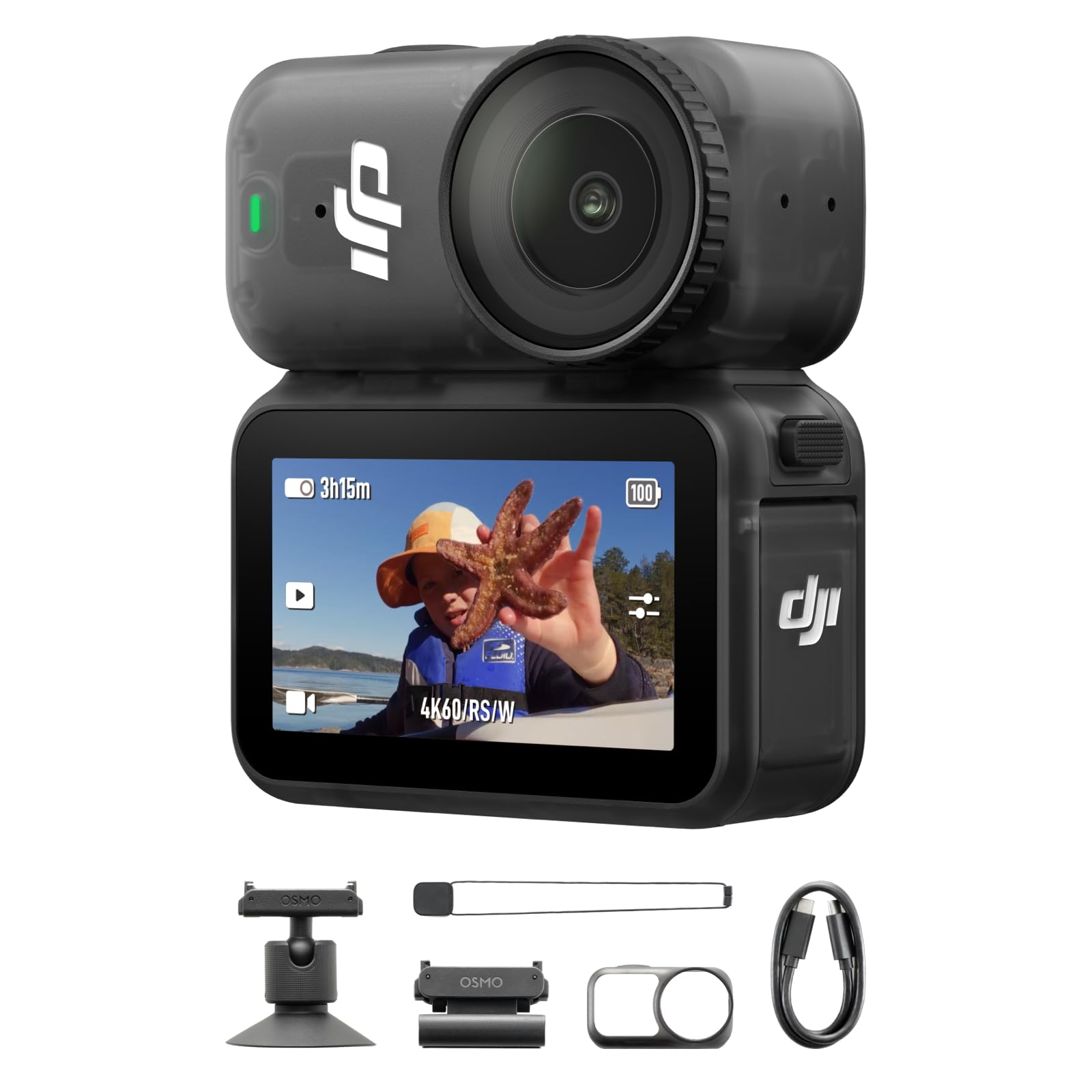
The DJI Osmo Nano shrinks high-quality video into a magnetic, clip-on body that weighs almost nothing. Its 1/1.3-inch sensor captures 4K video at 60fps with a 143-degree ultra-wide field of view — significantly wider than most action cameras. The combination of 10-bit color and D-Log M gives editors room to grade footage without losing shadow or highlight detail.
Built-in 128GB storage means you can start recording immediately. The magnetic mounting system works with a hat clip, lanyard, and ball-joint adapter, making hands-free POV shots simple. The Camera is waterproof down to 10 meters without a housing, and the Vision Dock provides IPX4 splash resistance when used with Wi-Fi streaming.
Battery life reaches up to 200 minutes in endurance mode, though 4K recording cuts that closer to 60 minutes standalone. The dock extends life but can drain the battery when idle, a quirk noted by users. Direct microphone support via OsmoAudio is a pro-level touch, and the included carrying case keeps everything organized. For creators who need extreme portability without sacrificing image quality, this is a top contender.
Why it’s great
- Ultra-compact magnetic body with versatile mounts
- 4K/60fps with 143° ultra-wide FOV
- 128GB built-in storage included
- 10-bit D-Log M color and waterproof to 10m
Good to know
- Standalone battery life limited at 4K settings
- Vision Dock may drain battery when not in use
5. NearStream VM20 4K USB Streaming Camera
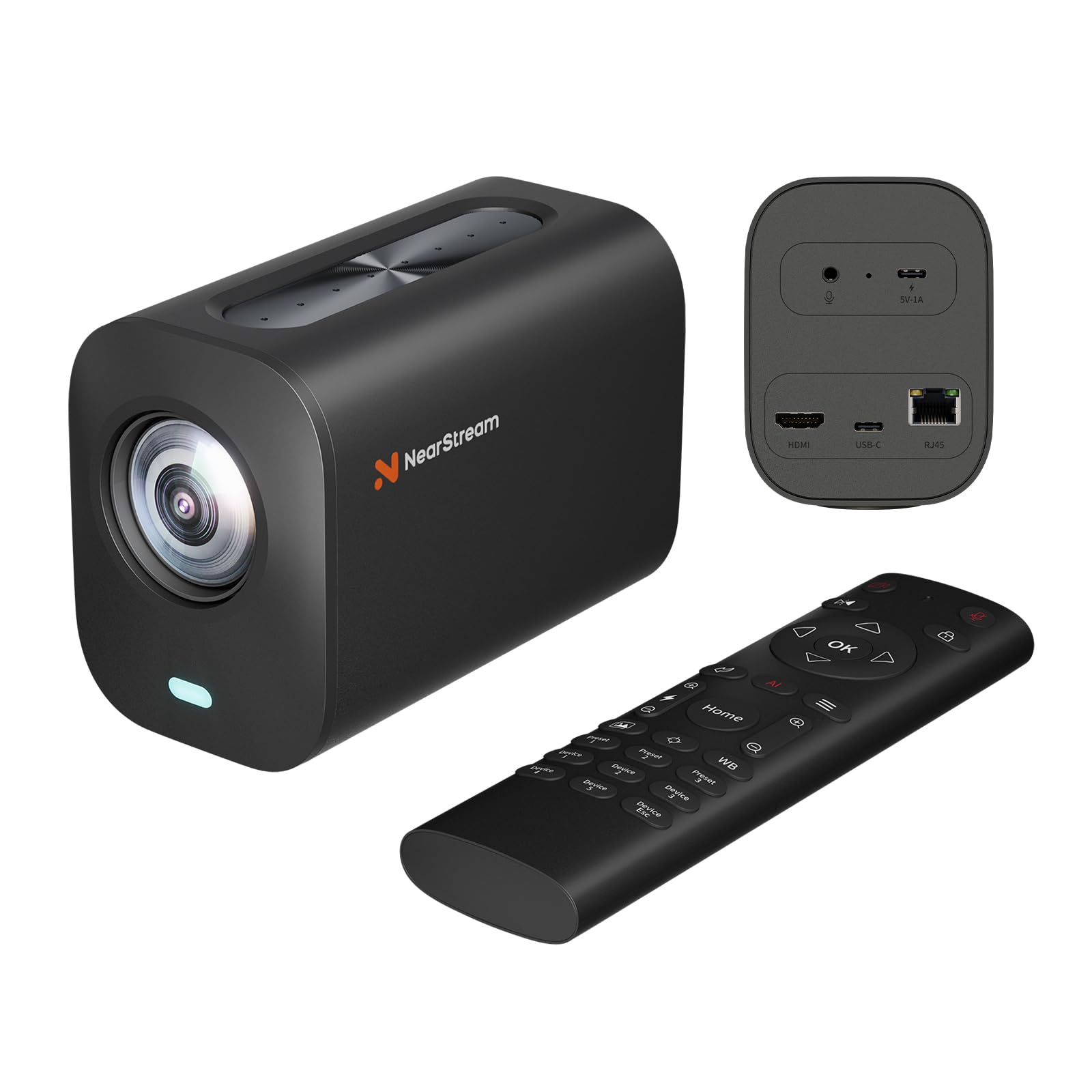
The NearStream VM20 is built for a different workflow: live streaming, video conferencing, and classroom recording. It offers multiple video outputs — USB, HDMI, and RJ45 Ethernet — so you can route 4K video to a computer for streaming while monitoring 1080p via HDMI. The 40X hybrid zoom (8x optical, 5x digital) lets you frame speakers across a large room without moving the camera.
The 8-MEMS microphone array captures 360-degree audio within a 16-foot radius, and the AI noise cancellation filters out background chatter effectively. A 3.5mm audio input also allows you to bypass the built-in mics for a lapel or shotgun mic. The included remote control can manage multiple VM20 units independently, simplifying multi-camera setups.
Setup is straightforward for software-driven production environments — it integrates with OBS, Zoom, and Teams smoothly. The camera is not designed for quick consumer use; its firmware settings can reset after the device sleeps, a known issue. However, for its price, the VM20 delivers professional-grade connectivity and zoom range that dedicated PTZ cameras often cost multiples more to match.
Why it’s great
- Triple output: USB, HDMI, and RJ45 Ethernet
- 40X hybrid zoom for large-room framing
- 360° 8-mic array with AI noise cancellation
- Multi-camera control with single remote
Good to know
- Firmware/settings may reset after sleep
- Requires software-based workflow — not plug-and-play
6. SJCAM C400 4K Travel Vlogging Camera
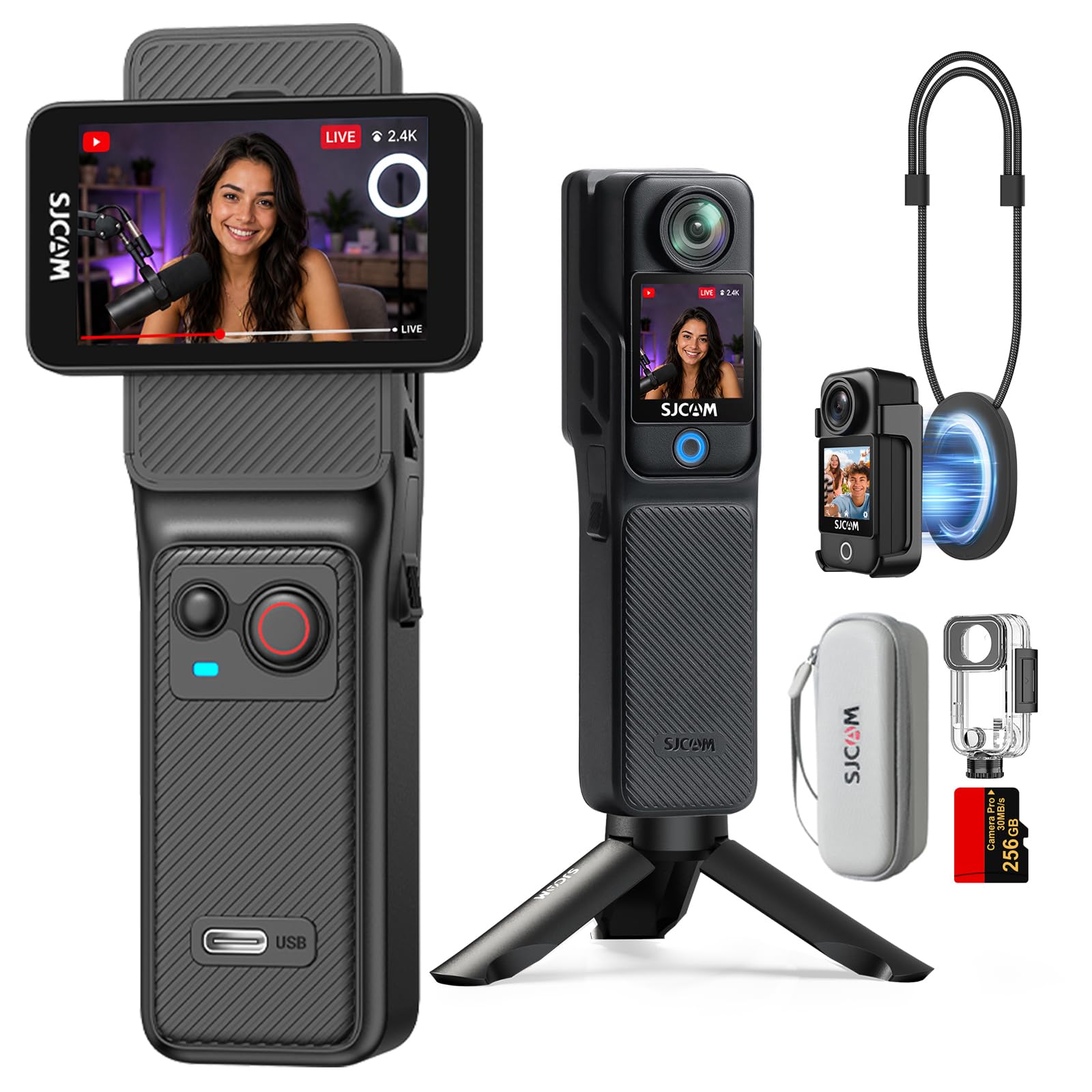
The SJCAM C400 is built for one thing: long days of recording without a recharge. Its claim of 7 hours of continuous 4K shooting is backed by user reports of all-day use, making it the endurance champion in this list. The 6-axis electronic image stabilization and horizon correction keep handheld footage watchable, even during action-heavy scenes.
A 154-degree distortion-free wide-angle lens gives an expansive view, while the f/2.0 aperture helps in lower light. The 2.29-inch touch screen simplifies menu navigation, and the 5G Wi-Fi module allows quick file transfers to your phone. It’s waterproof to 30 meters with the included housing, adding underwater recording to its capabilities.
Some users point out that the 4K 30fps video doesn’t match the sharpness of more expensive brand-name models — the image processing is a step below DJI or GoPro. The included 256GB card is a generous bonus that saves you an immediate accessory purchase. For budget-conscious travelers who prioritize battery longevity above absolute image quality, the C400 is a standout.
Why it’s great
- Remarkable 7-hour continuous recording battery
- 6-axis EIS with horizon correction
- Comes with 256GB memory card included
- 30m waterproof housing and 5G Wi-Fi
Good to know
- 4K image quality not as sharp as top-tier brands
- Touch screen can be sluggish in menus
7. GoPro Hero Black Compact

The GoPro Hero Black is the standard-bearer for rugged action cameras. It records 4K video at 30fps and 2.7K slow-motion at 60fps. Its HyperSmooth stabilization is among the best digital systems available, smoothing out bumps from mountain biking, running, or skiing. It’s waterproof to 33 feet without a housing, ready for snorkeling and surf shots straight out of the box.
The camera weighs only 3 ounces and fits into a pocket easily. Voice control supports 8 commands in 11 languages, so you can start/stop recording hands-free. The included 50-in-1 accessory kit and 64GB microSD card add immediate versatility — helmet mounts, chest straps, and selfie stick attachments are all covered.
Battery life is limited to roughly 1 hour at 4K, and the non-removable battery means you cannot swap packs on long shoots. The Quik app compatibility can be an issue on older phones, as some users experienced. Still, for classic action-camera needs — durable, stable, and backed by a massive accessory ecosystem — the GoPro Hero Black remains a solid choice for active users.
Why it’s great
- Industry-standard HyperSmooth stabilization
- Waterproof to 33 feet without extra housing
- Lightweight 3-oz body with voice control
- Includes accessory kit and 64GB card
Good to know
- Non-removable battery with short 4K runtime
- Quik app may face compatibility issues
8. OBSBOT Tail Air NDI Streaming Camera 4K

The OBSBOT Tail Air is a mini PTZ camera designed for live streaming and event production. It captures 4K video at 30fps and 1080p at 60fps, with a 23mm f/1.8 lens for decent light intake. The AI tracking system supports human, animal, and object tracking — a rare feature at this price. Gesture control and the accompanying Obsbot Start app give you artistic control over pan, tilt, and zoom.
Connectivity is its strong suit: Micro HDMI, USB-C, Ethernet, and wireless options mean you can plug into almost any setup. NDI support (license key sold separately) allows network-based streaming. The battery provides around 2.5 hours of runtime, and the camera can also run on USB-C power for permanent installations. The remote control includes a laser pointer, handy for presenters.
Long-term reliability is a concern: a few users report battery failure after the one-year mark, and the camera becomes unusable when the battery dies, even if plugged in. The AI tracking generally works well, though it can lose subjects briefly in cluttered environments. For streamers who need remote PTZ control and AI framing without jumping to costly broadcast gear, the Tail Air packs impressive features into a cola-can-sized body.
Why it’s great
- AI tracking for humans, animals, and objects
- Multiple connections: HDMI, USB-C, Ethernet, Wi-Fi
- NDI network streaming support
- Gesture control and remote with laser pointer
Good to know
- Battery is not easily replaceable; unit may fail after warranty
- NDI license key purchased separately
9. Insta360 X5

The Insta360 X5 is the most advanced camera in this group, offering true 8K 360-degree video via dual 1/1.28-inch sensors. The footage is reframable in post-production, letting you choose your angle after recording — a powerful feature for action sports and creative content. The Invisible Selfie Stick effect creates third-person perspectives that look impossible.
The triple AI chip design provides real-time noise reduction and image processing, improving low-light performance significantly. FlowState stabilization and 360° Horizon Lock keep the horizon level regardless of camera rotation. The new Wind Guard system with a 4-mic array captures clearer audio in windy conditions. Replaceable lenses address a major longevity concern that plagued earlier 360 cameras.
Battery life reaches around 208 minutes, a solid improvement over its predecessor. The steep learning curve for 360 editing and high file sizes are barriers, but the free mobile app automates much of the process. At this budget-stretching price, the X5 is for users who specifically need 360 capture — it justifies its cost through unique capabilities rather than traditional camera specs.
Why it’s great
- True 8K 360° video from dual sensors
- Replaceable lenses for long-term durability
- FlowState stabilization with full Horizon Lock
- Exceptional low-light performance with triple AI chip
Good to know
- Requires fast microSD cards and significant storage
- Editing 360 footage has a learning curve
FAQ
What is the main advantage of a 1-inch sensor over a smaller sensor in a video camera?
Is digital stabilization good enough for handheld vlogging, or do I need a gimbal camera?
What does an NDI license key do for a streaming camera like the OBSBOT Tail Air?
How important is frame rate (fps) when choosing an affordable video camera?
Final Thoughts: The Verdict
For most users, the affordable video camera winner is the DJI Osmo Pocket 3 because it combines a 1-inch sensor, mechanical gimbal stabilization, and professional color science in a truly pocketable body. If you want the same core specs at a lower entry price, grab the Xtra Muse. And for all-day recording sessions or tough outdoor conditions, nothing beats the battery stamina of the SJCAM C400.