
Our readers keep the lights on and the weekend projects moving. As an Amazon Associate, I earn from qualifying purchases.
A pair of binoculars can make or break a wildlife viewing trip. A dim, shaky image turns an eagle sighting into a frustrating blur, while crystal-clear optics let you count the feathers on a distant hawk. The difference isn’t just about price—it’s about understanding the specific specs that matter for spotting animals in the field.
I’m Rikta — the co-founder and writer behind FitlyFast. I have spent hundreds of hours breaking down the optical science, build quality, and real-world performance of binoculars so you don’t have to dig through the marketing noise yourself.
After combing through thousands of user reports and technical specifications, I have assembled the definitive guide to the best binoculars for wildlife viewing to help you pick a pair that delivers bright, sharp images every time you head outdoors.
How To Choose The Best Binoculars For Wildlife Viewing
Wildlife viewing demands binoculars that can handle low-light dawn conditions, provide a wide enough field to track moving animals, and survive a bump in the field. The technical specs—magnification, objective lens size, prism type, and lens coatings—directly determine whether your view is crisp or disappointing. Here is what to check before you buy.
Magnification vs. Objective Lens Size (The 8×42 Sweet Spot)
The first number is magnification: 8x makes subjects appear eight times closer, while 10x or 12x offers more reach. The second number is the objective lens diameter in millimeters. A 42mm objective gathers significantly more light than a 25mm lens, making it far better for early morning or late evening wildlife activity. The 8×42 combination strikes the best balance for most users—steady enough to hold by hand, bright enough for dim light, and wide enough to track birds in flight. Higher magnifications like 12x and 18x demand a tripod for stable viewing.
Prism Type: Bak-4 vs. BK-7 and Coatings Matter
The prism material inside the binoculars shapes image quality. Bak-4 prisms deliver a round, bright exit pupil with sharper edge-to-edge clarity, while BK-7 prisms are cheaper and produce a clipped, dimmer image. Phase-correction coatings on roof prisms eliminate color fringing, and dielectric coatings maximize light reflection inside the prism for brighter views. For serious wildlife viewing, look for Bak-4 prisms with fully multi-coated lenses—this combination provides the brightest, most accurate color reproduction across the entire field.
Field of View and Eye Relief for Comfort
Field of view (measured in feet at 1,000 yards) determines how much of the landscape you see at once. A wider field makes it easier to locate and follow fast-moving wildlife. Eye relief—the distance you can hold the binoculars from your eyes while still seeing the full image—is critical for eyeglass wearers. Look for at least 15mm of eye relief if you wear glasses. Twist-up eyecups help you adjust the eye relief for a perfect fit, whether you are wearing glasses or not.
Quick Comparison
On smaller screens, swipe sideways to see the full table.
| Model | Category | Best For | Key Spec | Amazon |
|---|---|---|---|---|
| Nikon Monarch M5 8×42 | Premium Mid-Range | Best Overall Wildlife Glass | ED Glass, Dielectric Coating | Amazon |
| Canon 12×36 IS III | Premium Image Stabilized | Shake-Free High Power Viewing | Image Stabilization | Amazon |
| Vortex Razor HD 12×50 | High-End Roof Prism | Expert-Level Resolution | Plasma Tech Coatings, HD Glass | Amazon |
| Vortex Razor UHD 18×56 | Ultra Premium | Long-Distance Detail & Low Light | 18x Mag, Abbe-Koenig Prisms | Amazon |
| Celestron Nature DX ED 8×42 | Mid-Range ED Glass | Value ED Glass Performance | Extra-Low Dispersion Glass | Amazon |
| Bushnell H2O Xtreme 10×42 | Rugged Mid-Range | Waterproof Field Use | IPX7 Waterproof, FMC | Amazon |
| Nikon TRAVELITE EX 8×25 | Compact Travel | Ultra-Portable Hiking Companion | Waterproof, 25mm Objective | Amazon |
| Nocs Provisions Standard Issue 10×25 | Compact Lifestyle | Everyday Pocket Carry | 10×25, Fully Multi-Coated | Amazon |
| Sogries 10-30×50 Zoom | Budget Zoom | Versatile Zoom on a Budget | 10-30x Zoom, 50mm Objective | Amazon |
In‑Depth Reviews
1. Nikon Monarch M5 8×42
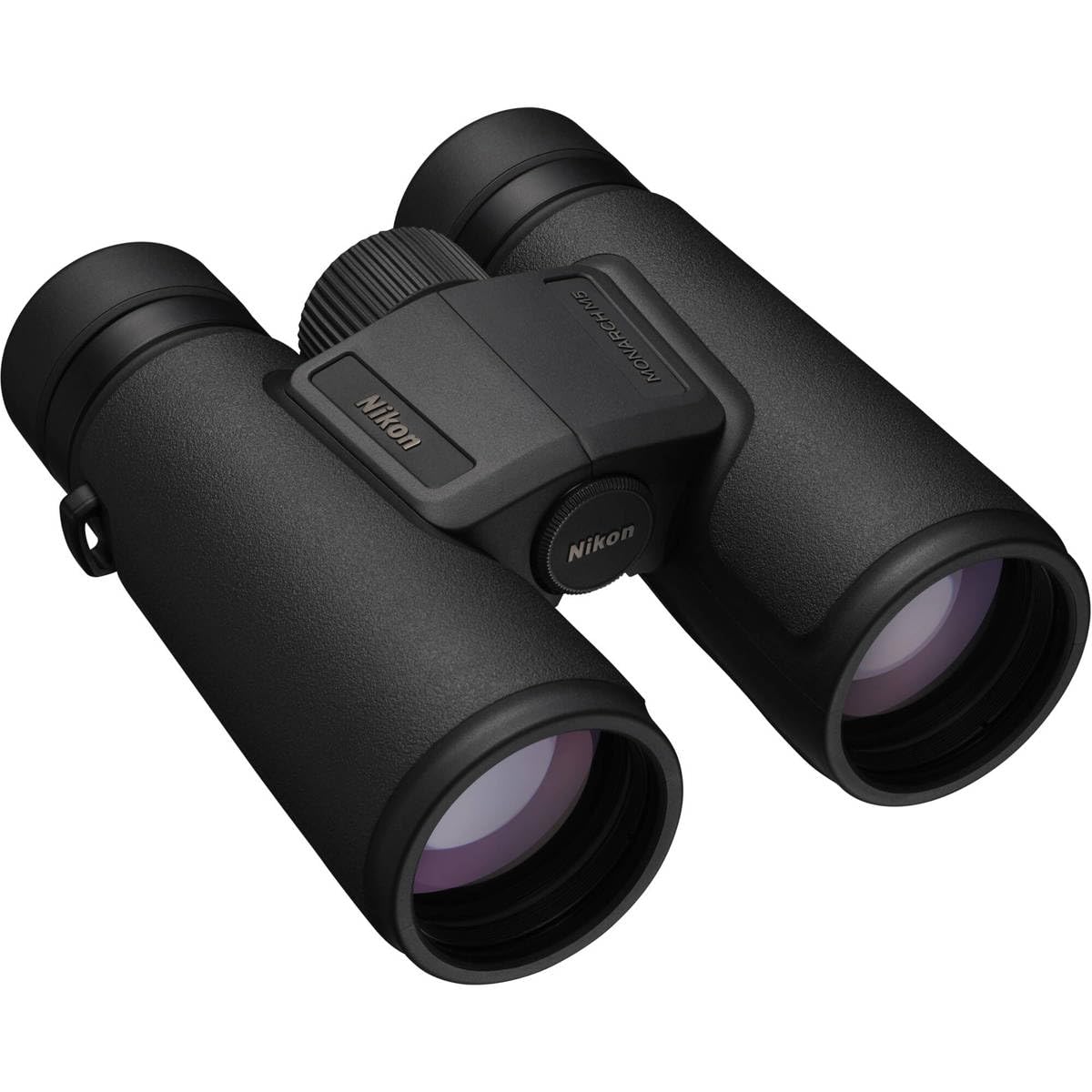
The Nikon Monarch M5 8×42 is the benchmark for serious wildlife enthusiasts who want premium optical performance without climbing into the four-figure price bracket. Extra-low Dispersion (ED) glass eliminates chromatic aberration, so you see sharp, true-to-life colors without purple or green fringing along high-contrast edges like a bird’s wing against a bright sky. Dielectric high-reflective multilayer prism coatings push light transmission high enough to deliver vivid detail in the low-light conditions of dawn and dusk—exactly when most animals are most active.
The field of view is a generous 335 feet at 1,000 yards, giving you a broad window to scan treelines and track moving subjects. Smooth central focus knob allows precise adjustments, and the close-focus capability of 8.2 feet lets you examine butterflies or flowers between wildlife sightings. Nitrogen-purged and O-ring sealed, the Monarch M5 is completely waterproof and fogproof, so rain or humidity won’t ruin your outing. The rubber-armored body provides a secure grip even with wet hands.
Eyeglass wearers will appreciate the 19.5mm of eye relief and the adjustable turn-and-slide eyecups that lock into place. At 21.5 ounces, it is light enough for long hiking days yet substantial enough to feel stable in hand. Users consistently report that these binoculars rival optics costing far more, and the build quality inspires confidence in the field. For a dedicated wildlife observer, this is the pair to beat.
Why it’s great
- ED glass virtually eliminates color fringing for crisp, accurate colors
- Dielectric coatings provide excellent brightness in low-light conditions
- Generous 19.5mm eye relief works well with eyeglasses
- Waterproof and fogproof nitrogen-purged housing
Good to know
- Not the smallest or lightest option for ultralight backpacking
- Narrower field of view than some competitors at the same price
2. Canon 12×36 IS III

Canon’s 12×36 IS III brings image stabilization technology to wildlife binoculars, solving the hand-shake problem that makes high-magnification viewing frustrating. At 12x magnification, every tiny hand tremor is amplified into a bouncing image, but the Vari-Angle Prism Image Stabilization system smooths the view almost to tripod-level steadiness. This makes it possible to pick out fine details—the pattern on a distant hawk’s feathers or the subtle ear movement of a deer—without a mount.
The Super Spectra multicoated optics and doublet field-flattener lenses produce sharp, virtually distortion-free images from edge to edge. The 36mm objective lens is smaller than a full-sized 42mm, but the stabilizer more than compensates by allowing you to hold the binoculars steady for extended viewing. Weighing just 23 ounces, it is surprisingly portable for a stabilized unit, and the Porro II prism design ensures excellent resolution and bright images.
The main trade-off is the stabilizer button, which must be held continuously to engage the system—there is no lock-on feature. Battery life is solid, but users should remove batteries during storage to avoid corrosion. The eye relief of 14.5mm is adequate for most glasses wearers, though not as generous as some roof-prism models. For anyone who struggles with shaky hands or wants to push magnification to 12x without a tripod, this binocular is a game-changer for wildlife watching.
Why it’s great
- Image stabilization turns 12x into a hand-holdable magnification
- Doublet field-flattener lenses deliver sharp edge-to-edge images
- Lightweight and portable compared to other stabilized binoculars
- Excellent image resolution and color accuracy
Good to know
- Stabilizer button must be held continuously during use
- No lens caps are tethered to the body
3. Vortex Optics Razor HD 12×50

The Vortex Razor HD 12×50 represents a serious step into high-end optics for the dedicated wildlife observer who demands the finest resolution. Premium high-density glass and state-of-the-art anti-reflective coatings applied via cutting-edge plasma technology deliver outstanding brightness and clarity, even during the critical low-light periods of dawn and dusk. The 50mm objective lenses gather ample light, while the fully multi-coated lenses and dielectric prism coatings ensure maximum light transmission for vivid, high-definition images.
The true open hinge magnesium chassis is both strong and lightweight, reducing overall bulk while maintaining durability. Strategically placed indentations in the rugged rubber armor provide a comfortable, non-slip grip in wet or cold conditions. The 12x magnification offers exceptional reach for scanning open meadows or distant ridgelines, though the 285-foot field of view at 1,000 yards is narrower than lower-power options, making it harder to track fast-moving birds in dense cover.
Argon purging and O-ring seals guarantee a lifetime of waterproof and fogproof performance. The ArmorTek coating protects exterior lenses from scratches, oil, and dirt. Multi-position eyecups and a locking right-eye diopter allow precise customization for comfort, and the unlimited, unconditional VIP warranty is fully transferable—a strong vote of confidence in long-term reliability. For an expert-level binocular that competes with European glass at a fraction of the cost, this is a top contender.
Why it’s great
- Premium HD glass with plasma anti-reflective coatings for outstanding clarity
- Argon purged for lifetime waterproof and fogproof performance
- Lifetime unconditional VIP warranty is fully transferable
- Lightweight magnesium chassis with ergonomic grip design
Good to know
- 12x magnification narrows field of view compared to 8x or 10x models
- High magnification amplifies hand shake; a tripod is recommended
4. Vortex Optics Razor UHD 18×56

The Vortex Razor UHD 18×56 is the ultimate optic for the serious wildlife observer who needs to resolve fine details at extreme distances. An Abbe-Koenig prism design combined with index-matched lenses delivers ultra-high-definition images with unparalleled resolution, sharpness, and color accuracy across the entire visual spectrum. The 18x magnification brings distant animals into strikingly close view, while the 56mm objective lenses gather immense amounts of light to keep images bright even in deep twilight.
The magnesium chassis keeps weight manageable for a 56mm binocular, and the true open hinge design improves ergonomics. The rubber armor provides a secure grip in all conditions. Ultimate anti-reflective coatings on every air-to-glass surface maximize light transmission, making this one of the brightest binoculars available in its class. The included GlassPak Pro harness and rangefinder pouch add value for serious field use.
You will need a tripod or solid support for steady viewing at 18x, as hand shake is inevitable with this magnification. The field of view is narrow at 194 feet per 1,000 yards, which is typical for high-power optics. The focus wheel is deliberately stiff and requires multiple turns from near to far, which some users find slow for tracking moving wildlife. Argon purging and O-ring seals provide lifetime waterproof and fogproof performance, and the unlimited VIP warranty provides peace of mind. This is a specialized tool for long-distance observation in open terrain.
Why it’s great
- Exceptional 18x magnification with ultra-high-definition resolution
- 56mm objective lenses provide outstanding low-light performance
- Index-matched lenses for accurate color across the full spectrum
- Includes premium GlassPak Pro harness and rangefinder pouch
Good to know
- Must be used on a tripod; hand holding is impractical at 18x
- Focus wheel is stiff and requires multiple turns for quick adjustments
- Narrow field of view makes tracking fast-moving subjects difficult
5. Celestron Nature DX ED 8×42

The Celestron Nature DX ED 8×42 proves that premium optical features like Extra-Low Dispersion (ED) glass are accessible without a premium price tag. ED objective lenses virtually eliminate chromatic aberration—the purple or green fringing that degrades image quality—giving you razor-sharp, true-to-life colors even when looking at high-contrast edges like a heron against a bright sky. Phase-coated BaK-4 prisms with dielectric coatings maximize light transmission, delivering bright, vivid images that rival binoculars costing significantly more.
The 8x magnification provides a stable, easy-to-hold view with a generous field of view that makes tracking birds in flight simple. The 42mm objective lens gathers plenty of light for dawn and dusk observation, and the 17.8mm of eye relief is comfortable for eyeglass wearers. The rubber-armored polycarbonate housing is rugged and weatherproof, with nitrogen purging to prevent internal fogging in humid conditions. Built-in tripod adapter threads allow stable viewing during long sessions.
On the downside, the ergonomics feel slightly less refined than more expensive competitors—the grip is functional but not as sculpted as premium models. The close focus distance of around 6.5 feet is good but not class-leading. That said, the optical quality per dollar is exceptional, and the limited lifetime warranty from a California-based company adds real value. For the budget-conscious birder or naturalist who wants ED glass performance, this is the smart pick.
Why it’s great
- Extra-Low Dispersion glass virtually eliminates chromatic aberration
- Phase-coated BaK-4 prisms deliver bright, accurate colors
- Nitrogen-purged, waterproof, and fogproof construction
- Excellent value for ED glass performance
Good to know
- Ergonomics are functional but less refined than premium brands
- Close focus distance is decent but not the best in class
6. Bushnell H2O Xtreme 10×42

The Bushnell H2O Xtreme 10×42 is built for the wettest, roughest wildlife viewing conditions you can throw at it. Rated IPX7, it can be submerged in up to three feet of water for 30 minutes without compromising performance. The O-ring sealed, nitrogen-purged optical design completely prevents internal fogging, making it a reliable companion for coastal birding, kayaking, or rainy forest hikes. Fully multi-coated glass surfaces and BaK-4 prisms deliver a bright, clear image that punches above its price point.
The rubber armor with soft grip panels provides a secure hold even when your hands are wet, and the compact roof-prism design fits easily into a jacket pocket or daypack. The 10x magnification gives you extra reach for scanning across lakes or open fields, while the 17mm of eye relief accommodates most eyeglass wearers. Users consistently praise the optical clarity and brightness, noting it is a significant upgrade from older or cheaper binoculars.
A notable limitation is the lack of a tripod adapter socket on this model, so you cannot mount it for extended shake-free viewing. The included neck strap is on the thin side and some users replace it for comfort. The lens covers are attached, but the fit is basic. For a mid-range price, you get the waterproofing of a premium unit with good, but not exceptional, optical refinement. It is the go-to choice for anyone who regularly views wildlife in rain, mist, or near water.
Why it’s great
- IPX7 waterproof rating allows submersion without damage
- Fully multi-coated glass and BaK-4 prisms provide excellent brightness
- Compact roof-prism design is easy to pack and carry
- Non-slip rubber armor is secure in wet conditions
Good to know
- No tripod adapter socket for shake-free mounting
- Neck strap is basic and may need replacement for comfort
7. Nikon TRAVELITE EX 8×25

The Nikon TRAVELITE EX 8×25 proves that compact binoculars can still deliver reliable wildlife viewing performance when weight and packability are the top priorities. With an 8x magnification and a 25mm objective lens, this binocular is ideal for hikers, travelers, and casual birdwatchers who want a pair that slips into a jacket pocket without adding noticeable bulk. The multilayer-coated optics and aspherical eyepiece lenses produce sharp, bright images with minimal distortion, outperforming most pocket-sized competitors in its class.
The die-cast aluminum body is wrapped in protective rubber armoring for shock resistance and a secure grip. Nitrogen-purged and O-ring sealed, the TRAVELITE EX is fully waterproof to two meters for five minutes and completely fogproof, making it a reliable companion in unpredictable weather. The high-eyepoint construction and turn-and-slide eyecups provide decent comfort for eyeglass wearers, with 11.1mm of eye relief.
The trade-off is the small 25mm objective lens, which limits light gathering—views will be noticeably dimmer in low-light conditions like dawn, dusk, or deep forest shade compared to a 42mm model. The field of view is also narrower than full-sized binoculars, making it harder to track fast-moving birds. For daytime wildlife viewing on a hike or as a lightweight backup pair, this Nikon delivers excellent quality in a truly portable package.
Why it’s great
- Extremely compact and lightweight for easy packing
- Waterproof and fogproof nitrogen-purged construction
- Sharp optics with aspherical eyepiece lenses minimize distortion
- Reliable build quality from a trusted optics brand
Good to know
- 25mm objective lens limits low-light performance significantly
- Narrow field of view compared to full-sized binoculars
8. Nocs Provisions Standard Issue 10×25

The Nocs Provisions Standard Issue 10×25 is a compact, design-forward binocular that prioritizes portability and style without sacrificing essential optical quality for casual wildlife viewing. At just 11.85 ounces, it is one of the lightest 10x binoculars you can carry, and its small footprint means it disappears into a purse, daypack, or even a large jacket pocket. The fully multi-coated optics and Swiss-designed Bak4 prisms produce a surprisingly bright and crisp image for such a small objective lens.
The IPX7 waterproof rating means it can survive a drop in a puddle or a rainstorm, and the nitrogen-injected housing prevents fogging. The patented Rugged Wave Grip design fits the hand securely, even in wet conditions, and the three-position twist-up eyecups accommodate both naked eyes and eyeglass wearers. Nocs also backs the unit with a “No-Matter-What” Lifetime Warranty, which is rare at this price tier and adds real peace of mind.
With a 10x magnification on a 25mm objective, the exit pupil is small at 2.4mm, meaning the image will be dim in low light and the view can be tricky to align with your eyes. The 10mm of eye relief is adequate for quick looks but not comfortable for extended viewing with glasses. The neck strap installation is finicky due to narrow barrel slots. This is a perfect secondary, grab-and-go binocular for daytime adventures, but dedicated wildlife observers will want a full-sized primary pair.
Why it’s great
- Ultra-light and compact for effortless portability
- IPX7 waterproof and fogproof construction
- Lifetime “No-Matter-What” warranty included
- Stylish, ergonomic design with secure grip texture
Good to know
- Small 2.4mm exit pupil limits brightness in low-light conditions
- Short 10mm eye relief reduces comfort for eyeglass wearers
- Strap installation is more difficult than most models
9. Sogries 10-30×50 Zoom Binoculars
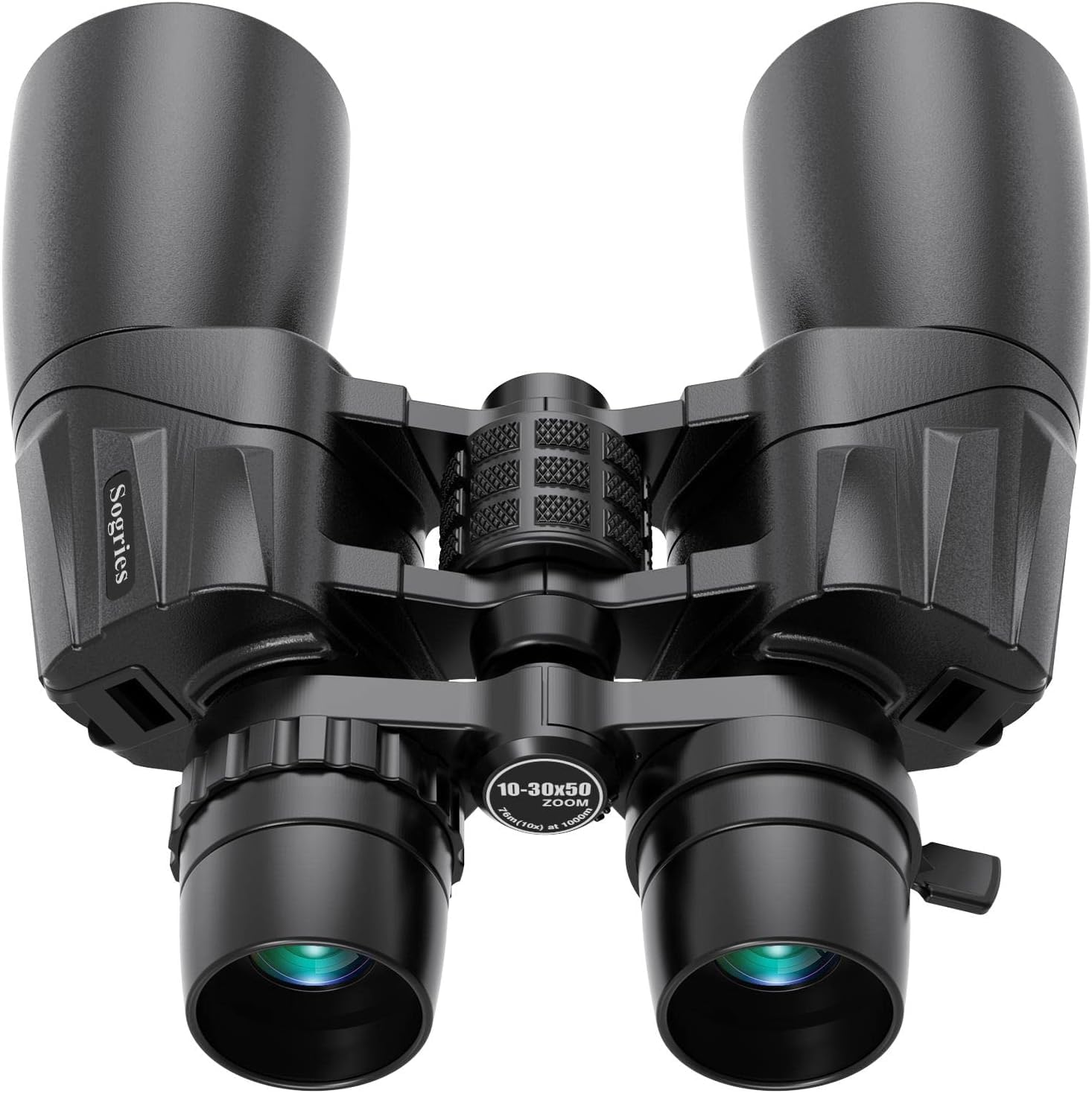
The Sogries 10-30×50 Zoom Binoculars offer a versatile zoom range that is rare at this price point, making it an attractive entry-level option for wildlife viewers who want flexible magnification. The 10x to 30x power lets you scan wide areas at the low end and then zoom in to inspect distant details, all without swapping binoculars. BaK-4 prisms and fully multi-coated FMC lenses produce images that are clear and bright for the price, with decent low-light performance thanks to the 50mm objective lens.
The rubber-armored body features an O-ring sealed, waterproof design with anti-fog coating on the lenses, adding durability for unpredictable weather. The high 22mm of eye relief is excellent for eyeglass wearers, and the adjustable eyecups provide comfortable viewing. The package includes a carrying case, neck strap, and lens covers, and the 10-year warranty adds a layer of confidence for a budget purchase.
The major limitation is the zoom mechanism—at any power above 10x, the image quality degrades noticeably, and at 30x, you will need a tripod to keep the view steady. The binocular is also heavy and bulky compared to fixed-power models. The included zoom lever works smoothly, but the overall optical clarity at high zoom does not match a fixed-power 10x or 12x binocular. This is best viewed as a versatile, budget-friendly tool for casual daytime use where you want the zoom flexibility, but serious wildlife observers should prioritize a fixed-power model with better glass.
Why it’s great
- Versatile 10-30x zoom range for flexible viewing
- Large 50mm objective lens provides decent light gathering
- Waterproof and fogproof rubber-armored construction
- Excellent 22mm eye relief for eyeglass wearers
Good to know
- Image quality degrades significantly at higher zoom powers
- Heavy and bulky; a tripod is necessary above 10x
- Optical clarity does not match similarly priced fixed-power models
FAQ
Is 10x or 8x magnification better for wildlife viewing?
What is the difference between roof prism and Porro prism binoculars?
How important is waterproofing for wildlife binoculars?
Does extra-low dispersion glass make a visible difference?
Can I use a tripod adapter with any binocular?
Final Thoughts: The Verdict
For most users, the binoculars for wildlife viewing winner is the Nikon Monarch M5 8×42 because ED glass, dielectric coatings, and a bright, wide field of view combine to deliver outstanding optical performance at a mid-range price that serious wildlife observers can justify. If you need shake-free viewing at high magnification, grab the Canon 12×36 IS III. And for absolute long-distance detail in open terrain with a tripod, nothing beats the Vortex Razor UHD 18×56.