
Our readers keep the lights on and the weekend projects moving. As an Amazon Associate, I earn from qualifying purchases.
Your feet carry every mile of the trail, and the wrong sock turns a summit push into a blistering nightmare. Thin cotton pairs bunch up when wet, lose their shape after one wash, and leave your toes cold the moment you stop moving. A proper hiking boot sock is the difference between finishing strong and cutting your day short — it manages moisture, cushions every step against rocks and roots, and stays put inside your boot without sliding down into your heel.
I’m Rikta — the co-founder and writer behind FitlyFast. I’ve spent hundreds of hours cross-referencing outdoor gear specs, analyzing yarn blends, cushion densities, and seam constructions to separate durable trail performers from fast-fashion socks that fall apart after a few miles.
A good pair of hiking socks uses merino wool for natural temperature regulation, reinforced heels and toes for durability, and targeted cushion zones that absorb shock without making your boots feel tight. This guide covers the best boot socks for hiking — spanning multipacks for budget-minded thru-hikers and premium single pairs for those who demand absolute performance on rugged terrain.
How To Choose The Best Boot Socks For Hiking
Most hikers grab the thickest sock on the shelf thinking more padding means more comfort. That logic only works if your boots have room to accommodate the extra volume. A sock that is too thick squeezes your foot, restricts blood flow, and creates hot spots that turn into blisters. The real equation balances cushion weight, fiber content, boot volume, and fit height — all specific to the terrain and weather you actually hike in.
Fiber Content: Merino Wool vs. Synthetic vs. Cotton
Merino wool is the gold standard because it absorbs moisture vapor (not just liquid sweat) and releases it into the air, keeping your skin dry even when you are working hard. It also regulates temperature naturally — warm when you are stationary at a ridge, cool when you are climbing. Synthetic blends (polyester, nylon, spandex) dry faster and cost less but trap odor after repeated wear. Cotton should never touch a trail — it holds moisture against your skin, softens your foot tissue, and accelerates blister formation within the first mile of wet conditions.
Cushion Weight: Light, Medium, Full
Light cushion socks are slim with padding only on the sole, best for fast-paced day hikes where you want maximum boot feel and minimal bulk. Medium (or moderate) cushion adds a uniform layer of padding around the foot, ideal for overnight trips with a loaded pack. Full cushion wraps the entire sock in thick terry loops, providing maximum shock absorption for heavy packs and rocky terrain. The catch: full cushion requires a boot with a roomy toe box, or your toes will compress against the front on descents.
Sock Height: Crew vs. Over-the-Calf vs. No-Show
Crew height (mid-calf) is the standard for hiking boots — it prevents the boot collar from rubbing your Achilles and stops debris from entering the top. Over-the-calf socks add warmth and protection for deep snow or heavy brush, but can feel restrictive for hikers with larger calves. No-show or ankle socks work only for trail runners or low-cut hiking shoes — they offer zero protection against boot bite and debris, so skip them for true hiking boots.
Reinforced Zones: Heel, Toe, and Arch
The heel and toe areas take the most abuse from boot friction and downhill braking. Socks with reinforced knitting in these zones last significantly longer than uniformly knit pairs, which tend to blow out at the heel after 50-100 miles. Arch compression is a debated feature — gentle support can reduce foot fatigue on long days, but aggressive elastic bands can restrict circulation for hikers with wide feet or high arches. Look for moderate arch support that holds the sock in place without digging in.
Quick Comparison
On smaller screens, swipe sideways to see the full table.
| Model | Category | Best For | Key Spec | Amazon |
|---|---|---|---|---|
| Smartwool Women’s Hike Full Cushion Crew | Premium | Heavy pack, rugged terrain | 62% Merino, full cushion | Amazon |
| WANDER Merino Wool Ankle Running Hiking Socks | Premium | Warm weather, trail runners | 54% Merino, lightweight | Amazon |
| FEIDEER Women’s Hiking Walking Running Socks | Mid-Range | Hot weather, cotton preference | 75% Cotton, mesh venting | Amazon |
| Anlisim Merino Wool Warm Boot Hiking Socks | Mid-Range | Cold weather, maximum warmth | 70% Merino, extra thick | Amazon |
| EBMORE Womens Merino Wool Hiking Socks | Mid-Range | Value 5-pack, moderate cushion | 70% Merino, crew height | Amazon |
| Timberland PRO Sorbtek Moisture Control Socks | Budget | Work/hiking hybrid, arch support | Sorbtek moisture control | Amazon |
| Heatuff Mens Moisture Wicking Heavy Cushion Crew Socks | Budget | All-day standing, firm support | Reinforced heel & toe | Amazon |
In‑Depth Reviews
1. Smartwool Women’s Hike Full Cushion Crew Socks
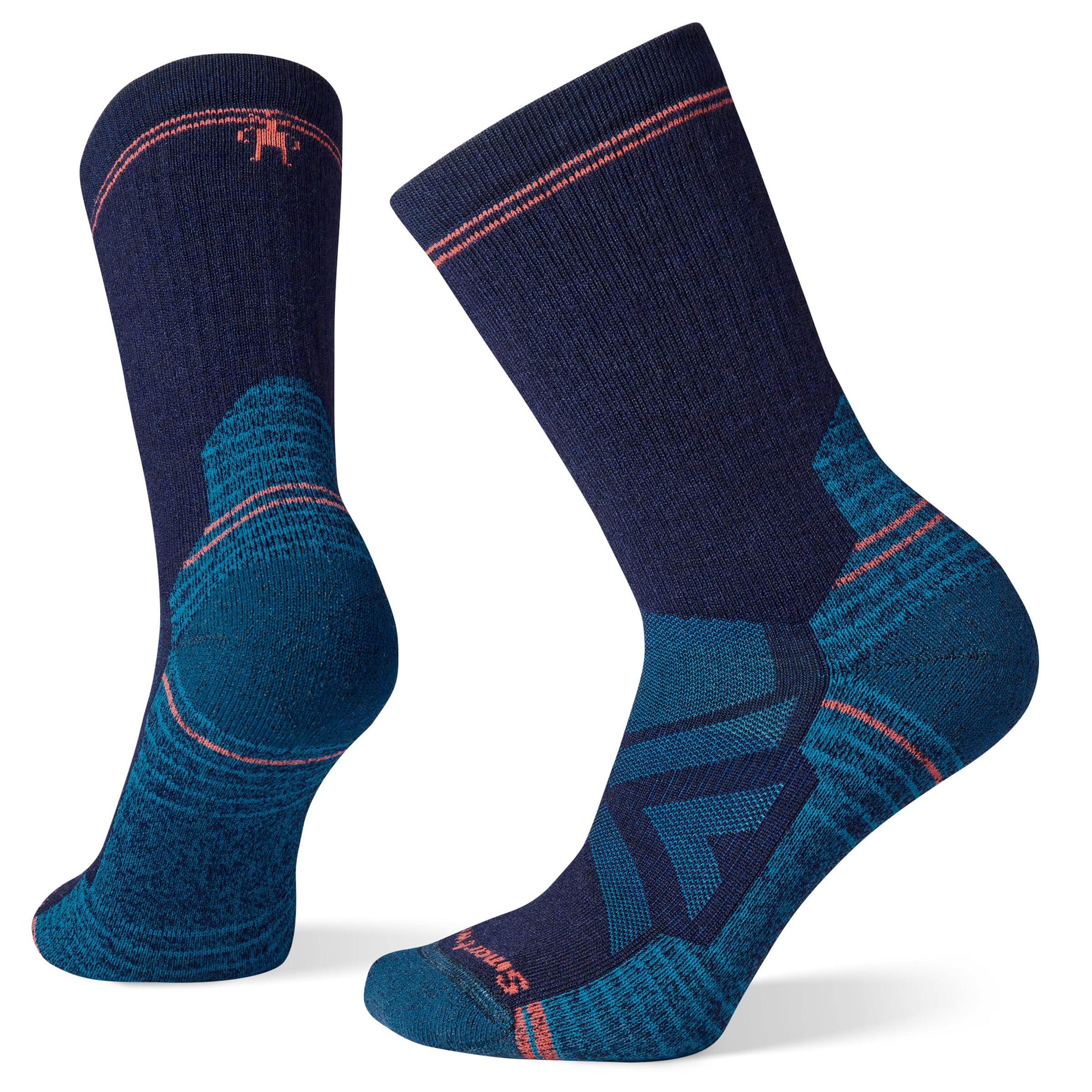
Smartwool earns its reputation with this crew-height workhorse — 62% merino wool wrapped in a full-cushion knit that absorbs shock without feeling like a pillow case. The seamless toe construction eliminates the ridge that causes blisters on long descents, and the Indestructawool technology in the heel and toe zones extends the life of the sock well beyond 200 miles. Hikers report wearing these for 25,000-step days in rain and snow with zero hot spots.
The meriolin yarn (Smartwool’s natural odor-control treatment) keeps the fabric fresh even after multi-day trips where washing is impossible. The arch support is firm enough to prevent bunching but gentle enough that it does not restrict circulation during 10-hour hikes. The full cushion demands a boot with a generous toe box — pairing these with tight-fitting footwear will compress your toes and cause numbness on technical terrain.
At the premium end of the market, these socks justify their cost through longevity. Regular users report five to seven years of heavy use before the cushion flattens. They are machine-washable and dryer-safe, though air drying extends the merino fibers’ lifespan. For hikers who prioritize blister-free miles above everything else, this is the benchmark against which all other socks are measured.
Why it’s great
- Full cushion absorbs shock on rocky descents with heavy packs
- Seamless toe prevents blister-causing friction
- Indestructawool reinforcement extends heel and toe lifespan beyond five years
Good to know
- Full cushion volume requires a boot with a roomy toe box
- Premium pricing per pair compared to multi-pack alternatives
2. WANDER Merino Wool Ankle Running Hiking Socks 3 Pairs

The WANDER socks are engineered for the opposite end of the spectrum — warm-weather hiking and trail running where every gram of insulation matters. With 54% merino wool and a lightweight build, they provide just enough moisture management to keep your feet dry in the 70-90°F range without overheating. The sole is fully cushioned, delivering shock absorption at the strike zone while the upper remains thin and breathable.
The low-cut design works best with trail runners and low-top hiking shoes — it sits below the ankle bone, so there is zero protection against boot collar friction or trail debris. The heel tab is textured to grip the back of your shoe and prevent slipping, a detail that matters when you are moving fast on uneven ground. Users consistently praise the odor resistance, which holds up for multiple wears between washes without the funk that develops in synthetic blends.
Where these socks compromise is durability in the heel pocket — the lightweight knit is thinner there than the heavy-cushion alternatives, so hikers logging big mileage on rocky terrain may see wear faster. They hold their shape well after washing, with no shrinkage reported across ten-plus cycles. This three-pack is a smart choice for day hikers and runners who want merino performance without the crew-height bulk.
Why it’s great
- Lightweight merino blend ideal for warm-weather trail running and day hikes
- Full sole cushioning provides impact protection without upper bulk
- Strong odor resistance that lasts multiple wears between washes
Good to know
- Low-cut design offers zero ankle or boot collar protection
- Heel pocket is thinner and may wear faster on rough terrain
3. FEIDEER Women’s Hiking Walking Running Socks, Multi-Pack

The FEIDEER socks take a different approach — 75% cotton with mesh ventilation channels and a cushioned footbed designed for hot-weather hiking where merino might feel too warm. The mesh zones along the top of the foot actively pull heat away, and the moisture-wicking finish keeps sweat from pooling against the skin. Multiple reviewers note these are the coolest socks they have worn on 90°F days, with no swampy feeling even after hours of continuous movement.
The midweight cushion hits a sweet spot between protection and bulk — thick enough to absorb shock from rocky trails but slim enough to fit into standard hiking boots without crowding the toes. The arch compression is moderate, providing gentle support that helps the sock stay in place without digging into the arch. The precision heel cup prevents the sagging that some cheaper socks develop after a few hours of walking.
The main trade-off is the cotton content. While the mesh venting compensates in dry heat, these socks saturate faster than merino in wet conditions or river crossings, which increases blister risk if you cannot change out. They wash well with no shrinking, but the cushion flattens noticeably after thirty to forty wash cycles compared to merino-heavy alternatives. For day hikers in arid climates, this four-pack delivers consistent comfort at a reasonable per-pair cost.
Why it’s great
- Mesh ventilation channels keep feet cool in high heat conditions
- Midweight cushion absorbs shock without adding bulk inside boots
- Precision heel cup prevents slippage and bunching during long walks
Good to know
- Cotton content saturates faster than merino in wet trail conditions
- Cushion flattens faster than wool-heavy alternatives after many washes
4. Anlisim Merino Wool Warm Boot Hiking Socks 4 Pairs
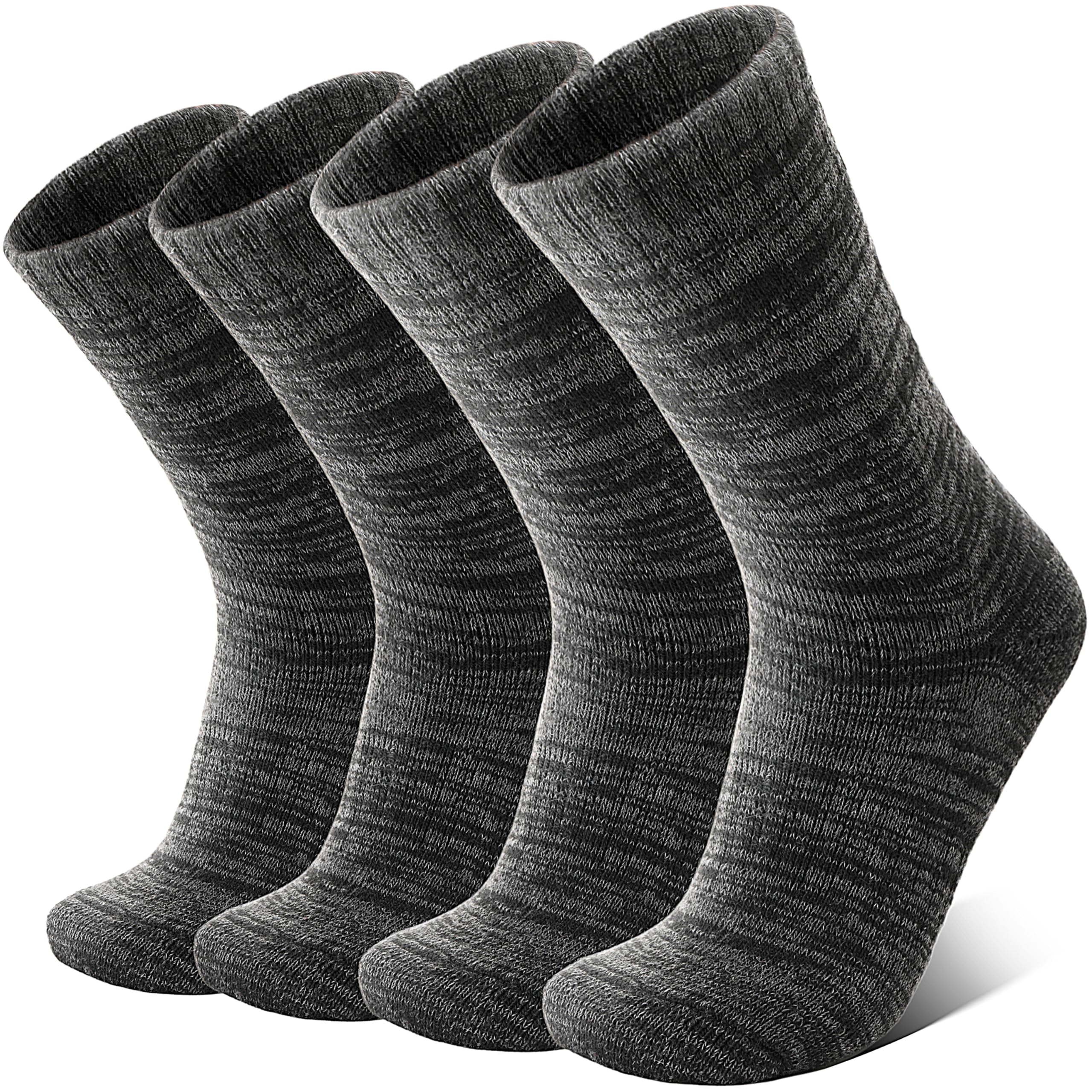
The Anlisim socks go where few multi-pack options dare — extra thick cushioning with 70% merino wool content that rivals premium single-pair brands. The terry loops run the full length of the foot, creating a plush barrier between your skin and the boot that excels in sub-freezing temperatures. Reviewers report staying warm in conditions below 20°F while wearing insulated winter boots, with no moisture buildup during high-output climbs.
The compression support is noticeable the moment you pull them on — the knit hugs the arch and ankle without being restrictive, reducing foot fatigue during long days of carrying a heavy pack. The crew height hits mid-calf, which provides ample protection against snow and debris entry. The construction holds up well to washing with no pilling or flattening of the cushion loop after multiple cycles, outperforming cheaper merino blends that go fuzzy after a few hot washes.
Because these are extra thick, they demand a boot with generous internal volume. Squeezing them into tight or lightweight hiking shoes compresses the cushion, defeating its purpose and potentially restricting circulation. They are also warm — too warm for summer hikes above 60°F or for hikers who run hot. This four-pack is a strong cold-weather value proposition, delivering premium merino thickness at a fraction of the price of specialty mountaineering socks.
Why it’s great
- Extra-thick merino cushion provides excellent warmth below freezing
- Compression support reduces foot fatigue during heavy pack carries
- Durable knit resists pilling and flattening through repeated washes
Good to know
- Too thick and warm for summer hiking or tight-fitting footwear
- Requires a boot with a roomy toe box to avoid toe compression
5. EBMORE Womens Merino Wool Hiking Socks 5 Pairs

The EBMORE five-pack delivers a compelling value proposition: 70% merino wool content at a per-pair cost that undercuts most single-pair merino socks. The midweight cushion is calibrated for hikers who want warmth and moisture management without the bulk of extra-thick socks — they fit comfortably in standard hiking boots and even in sneakers for everyday wear. The wool is fine-woven and soft against the skin, with multiple reviewers noting zero itch, which is unusual for anyone sensitive to wool.
The moisture-wicking performance holds up well during sustained output. Reviewers who logged over 50 trail miles in these socks report dry feet and no bunching or slipping inside their boots. The colors are vibrant and do not fade after washing, and there is no shrinkage when dried on low heat. The arch support is mild compared to dedicated support socks, providing enough grip to keep the sock stable without compressing the arch.
The main downside is that the 70% merino content does not include the reinforced heel and toe knitting found in premium single-pair socks. Users who push these on rocky, off-camber terrain may see wear at the heel faster than they would with a Smartwool or Darn Tough pair. For the hiker who wants a full week’s worth of merino socks at a reasonable price and sticks to well-maintained trails, this is a strong budget-friendly option.
Why it’s great
- High merino wool content at an excellent per-pair value in a 5-pack
- Soft fine weave is comfortable for those sensitive to wool itch
- Holds shape and resists shrinkage after multiple machine washes
Good to know
- Lacks reinforced heel and toe knitting for rocky terrain durability
- Midweight cushion may not provide enough warmth for deep winter hiking
6. Timberland PRO Mens Sorbtek Moisture Control Socks 6-Pack
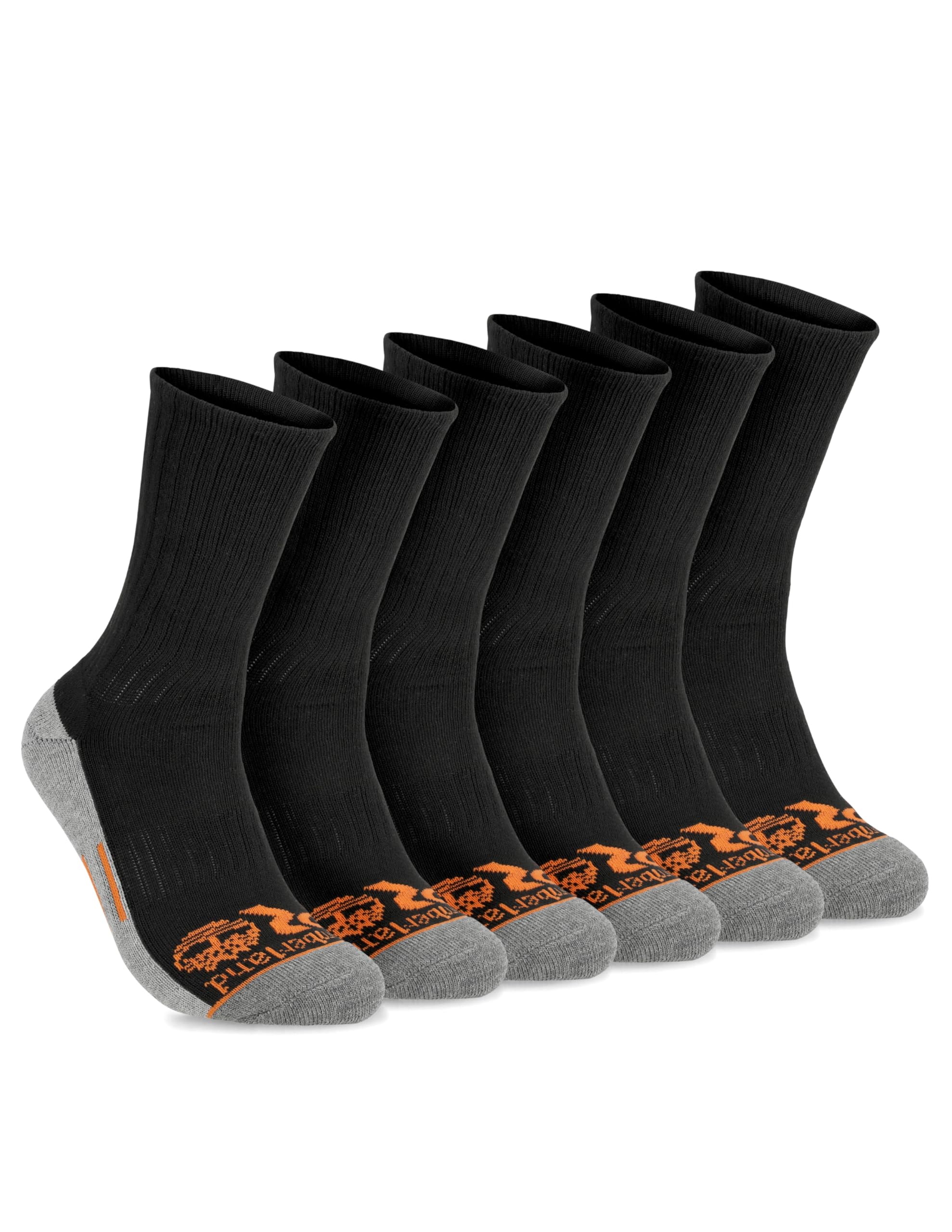
The Timberland PRO socks sit at the intersection of work boots and hiking boots — the Sorbtek moisture-control yarn is designed for all-day standing and walking on concrete, which translates well to groomed trails and moderate terrain. The cushioned footbed runs the full length of the sock, providing consistent padding for the heel and forefoot where impact is highest. The arch support is more pronounced than most hiking-specific socks, giving a secure hug that prevents the sock from shifting inside the boot.
The crew height is generous, rising well above the top of a standard hiking boot collar and staying up without elastic bands digging into the calf. The 6-pack bulk makes this an excellent foundation for hikers who need to stock a full week’s worth of socks at a low per-pair cost. Multiple reviewers highlight how the Sorbtek material keeps feet noticeably drier than the cotton work socks they replaced, even during long shifts in warm conditions.
Where these fall short for dedicated hiking is the synthetic-heavy composition (87% polyester, 10% Sorbtek, 3% spandex). Without merino wool’s natural temperature regulation, feet can feel clammy in extreme cold or during high-output hikes. Some users report ankle seam separation after a few washes, suggesting the knitting tension may be inconsistent across pairs. For the day hiker who also needs a durable work sock for the job site, this multi-pack offers good crossover versatility.
Why it’s great
- Generous 6-pack provides a full weekly rotation at a low per-pair cost
- Strong arch support prevents bunching and keeps the sock secure
- Sorbtek moisture control keeps feet drier than standard cotton work socks
Good to know
- Synthetic-heavy blend lacks merino’s natural temperature regulation for cold hikes
- Some users report ankle seam separation after limited washes
7. Heatuff Mens Moisture Wicking Heavy Cushion Crew Socks

The Heatuff crew socks are built around a heavy cushion that targets the entire foot, with reinforced knitting at the heel and toe specifically designed to survive the grinding motion of steel-toe work boots and heavy hiking footwear. The moisture-wicking fabric pulls sweat away from the skin, and the padding is thick enough to reduce foot fatigue during eight-hour shifts that involve 12,000 steps or more on hard surfaces. Users consistently mention the durability — these hold up after months of weekly wear and drying without the cushion going flat.
The fit is intentionally snug, with enough elasticity to keep the sock from sliding without needing constant adjustment. However, this snugness is a double-edged sword — multiple reviewers with larger calves or circulation issues report severe leg discoloration and discomfort from the band compression. The sock is not designed for wide calf circumferences, and the product description does not flag this restriction, which has led to returns from taller or heavier hikers.
For the hiker with slim to average calves who wants a heavy-duty cushion sock that can double as a work sock, the Heatuff delivers reliable performance at a budget-friendly price. The lack of merino wool means less natural odor control and temperature regulation, so cold-weather hikers may need to layer them over a thin liner sock. They wash well with no shrinkage and maintain their shape, making them a functional entry-level option for high-mileage days on moderate terrain.
Why it’s great
- Reinforced heel and toe knitting provides exceptional durability for heavy use
- Heavy cushion effectively reduces foot fatigue during long standing or walking days
- Retains shape and cushion density after repeated machine washing and drying
Good to know
- Snug fit and elastic band are restrictive for larger calves and can impede circulation
- Synthetic blend lacks merino’s natural odor resistance and temperature regulation
FAQ
Can I wear cotton socks for a short day hike?
How often should I replace my hiking socks?
Should I wear liner socks under my hiking socks?
Why do my merino wool socks smell after one day of hiking?
Final Thoughts: The Verdict
For most hikers, the winner among the boot socks for hiking is the Smartwool Women’s Hike Full Cushion Crew Socks because it combines proven merino wool content with full-cushion shock absorption and the reinforced construction that makes it last for years of heavy use. If you want a lightweight option for warm-weather trail running and day hikes, grab the WANDER Merino Wool Ankle Running Hiking Socks 3 Pairs. And for cold-weather hiking where maximum warmth and thickness are non-negotiable, nothing beats the Anlisim Merino Wool Warm Boot Hiking Socks 4 Pairs for its value-packed 70% merino construction.