
Our readers keep the lights on and the weekend projects moving. As an Amazon Associate, I earn from qualifying purchases.
The “AI wearable” label has become a magnet for marketing hype, attaching itself to everything from basic step counters to experimental earbuds. But beneath the noise, a handful of genuinely intelligent devices are reshaping how we interact with health data, meetings, and our environment—using on-device machine learning and adaptive algorithms that learn from you, not just track you.
I’m Rikta — the co-founder and writer behind FitlyFast. I’ve spent the past several months dissecting the hardware specs, on-board AI capabilities, and real-world app ecosystems of the most promising AI wearables on the market to separate the truly smart from the merely connected.
This guide breaks down the top performers across three distinct tiers—smart rings with clinical-grade sleep apnea detection, screenless trackers with adaptive coaching, and AI-powered glasses that offer hands-free contextual assistance—so you can confidently choose your next ai wearables investment.
How To Choose The Best AI Wearables
The defining question for any AI wearable is whether the intelligence lives on the device itself or requires a constant tether to your phone’s processor. Truly useful AI wearables perform at least some inference at the edge—analyzing your heart rate variability patterns or transcribing a conversation without needing to upload every second of data to the cloud.
Sensor Quality and Sampling Rate
A wearable’s AI is only as good as its sensor input. Look for devices with photoplethysmography (PPG) sensors that sample continuously rather than every few minutes. For health rings, a high-frequency infrared LED array translates to more reliable SpO2 and apnea detection. For audio recorders, a multi-mic beamforming array with a minimum 16-bit/48kHz sampling ensures the AI has clean data to transcribe.
On-Device Storage and Processing
When your wearable stores and processes data locally, you get faster insights and better privacy. Devices with at least 8GB of onboard memory can hold hours of high-res audio or days of raw biometric data before syncing. This matters most for AI note-takers, where continuous transcription works best when the heavy lifting happens on the device itself, not after uploading to a server.
Battery Life Realities of Active AI
Always-on AI features—like real-time translation or continuous apnea monitoring—consume significantly more power than passive step counting. A device advertising seven days of battery may drop to three or four if you use its smartest features around the clock. Decide which AI functions you need running 24/7 and which you can trigger on demand before selecting a wearable.
Quick Comparison
On smaller screens, swipe sideways to see the full table.
| Model | Category | Best For | Key Spec | Amazon |
|---|---|---|---|---|
| RingConn Gen 2 | Health Ring | Sleep apnea & continuous health monitoring | 12-day battery, 2g weight, apnea AHI tracking | Amazon |
| Ray-Ban Meta (Gen 2) Skyler | AI Glasses | Hands-free media & translation | 8h battery, 3K video, 12 MP camera | Amazon |
| WITHINGS Scanwatch Nova Brilliant | Hybrid Watch | Long battery & medical-grade tracking | 30-day battery, ECG, SpO2, TempTech24/7 | Amazon |
| Meta Oakley Vanguard | AI Glasses | Sports & outdoor POV capture | 8h battery, 3K video, Prizm lenses | Amazon |
| Ray-Ban Meta (Gen 1) Skyler | AI Glasses | Entry-level AI glasses with Meta AI | 32GB storage, 12 MP camera, 5-mic array | Amazon |
| soundcore Work by Anker | Voice Recorder | Meeting & lecture transcription | 8GB storage, 97% accuracy, 150+ languages | Amazon |
| Google Fitbit Air | Screenless Tracker | Coach-driven wellness & sleep | 7-day battery, HR/SpO2, 50m water resistant | Amazon |
In‑Depth Reviews
1. RingConn Gen 2

The RingConn Gen 2 is the first smart ring to put clinical-grade sleep apnea monitoring into a 2-gram form factor. Its AI analyzes AHI (Apnea-Hypopnea Index) in real-time using a high-frequency PPG sensor, developed alongside university researchers, and presents actionable trends in the companion app—no subscription required.
Battery life reaches up to 12 days on larger sizes with moderate use, though continuous apnea tracking drops it to around 7 days. The titanium case with silicone inner lining is comfortable enough for 24/7 wear, and the charging case extends total runtime beyond 150 days for travel. It also tracks HRV, stress, blood oxygen, and women’s health metrics without requiring a monthly fee.
Some users note the matte black finish scratches during manual work, and the sizing kit is essential since RingConn uses its own measurement standard. For those specifically monitoring sleep-disordered breathing or wanting a truly zero-subscription health ring with on-device AI inference, this is the most capable option available.
Why it’s great
- World-first sleep apnea AHI tracking in a ring
- Truly no subscription for all health features
- Ultra-light 2g design with 12-day battery
Good to know
- Black finish shows scratches easily
- Requires separate sizing kit for accurate fit
- Stress tracking accuracy questioned by some users
2. Ray-Ban Meta (Gen 2) Skyler
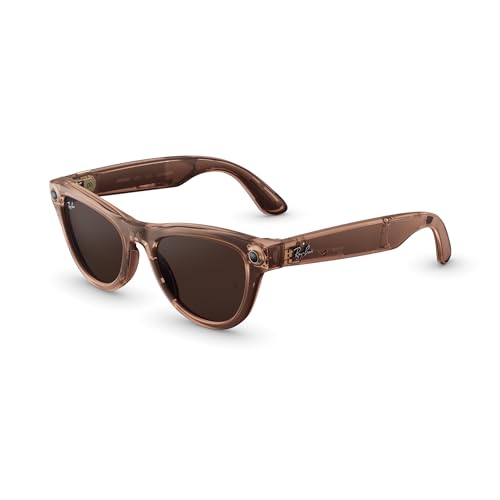
The second-generation Ray-Ban Meta glasses double the battery life to a full 8 hours while upgrading video capture to 3K Ultra HD resolution. The open-ear speakers deliver surprisingly rich audio for music and calls without isolating you from your surroundings, and the five-microphone array with 90% wind noise blocking makes hands-free calling viable even outdoors.
The real draw is Meta AI integration: you can ask the glasses to identify landmarks, translate French or Spanish in real-time without Wi-Fi, or send hands-free texts. The 12 MP ultra-wide camera captures a natural POV perspective, and the included charging case provides an additional 48 hours of charge for on-the-go top-ups. The Transition brown lenses adapt automatically to changing light.
A few compromises remain: the frames are noticeably heavier than standard Ray-Bans and can slide down during active use. The touchpad on the arm is sensitive enough to trigger accidentally, and the live translation feature is currently region-locked to the US, Canada, and Australia. But for a stylish all-day wearable that combines AI assistance with premium optics, the Gen 2 Skyler sets the benchmark.
Why it’s great
- 8-hour battery with 48-hour charging case
- 3K video and 12 MP camera with POV framing
- Real-time translation across 5+ languages
Good to know
- Heavy frames cause sliding during activity
- Touchpad can be overly sensitive
- Translation features limited to select regions
3. WITHINGS Scanwatch Nova Brilliant
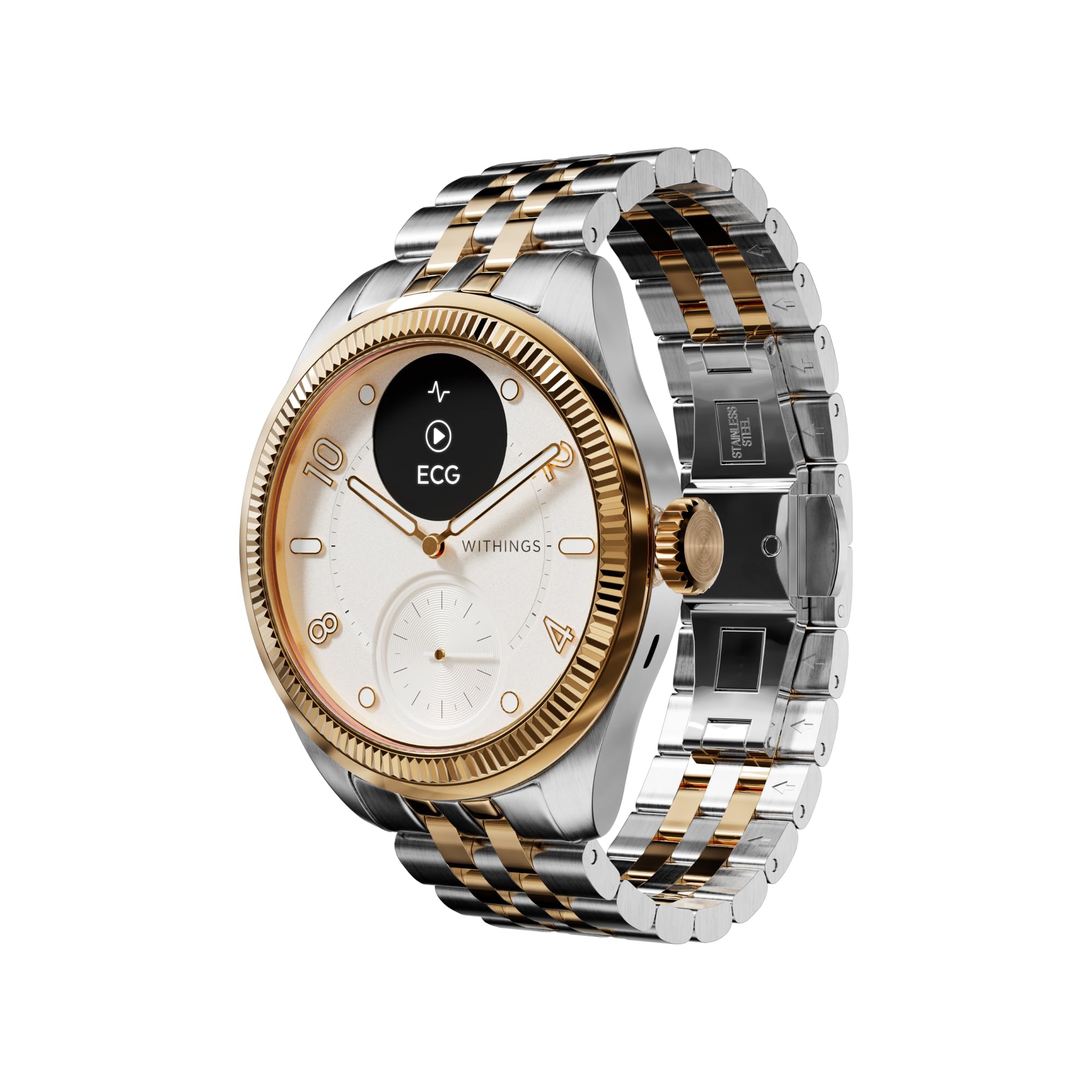
The Scanwatch Nova Brilliant merges Swiss-inspired analog aesthetics with a dense sensor array that includes ECG, SpO2, 24/7 temperature monitoring via the TempTech24/7 module, and overnight heart rate variability analysis. The AI here works quietly in the background: it learns your baseline body temperature and flags deviations that may signal the onset of illness, and it issues heart rate alerts when your resting rate moves outside your personal norm.
Battery life stretches to a genuine 30 days on a single charge—transformative compared to the daily charging cadence of full-screen smartwatches. It auto-recognizes over 40 activities, estimates VO2 max through heart rate zones, and uses connected GPS to map outdoor workouts. The hybrid display combines traditional hands with a small PMOLED screen for notifications without killing the classic look.
The trade-offs include a companion app that some users find less polished than Garmin or Apple Health, and the inability to set on-watch alarms. The battery is non-replaceable, and sleep tracking occasionally misattributes time spent reading in bed as sleep. But if you want a luxury timepiece that also monitors your HRV, SpO2, and temperature trends for a full month without a charger, this is the standout choice.
Why it’s great
- 30-day battery life with continuous HR/SpO2
- FDA-cleared ECG and TempTech24/7 module
- Luxury analog design with discreet smart features
Good to know
- Sleep start time can be inaccurate
- Non-replaceable battery limits lifespan
- App interface feels less intuitive than competition
4. Meta Oakley Vanguard
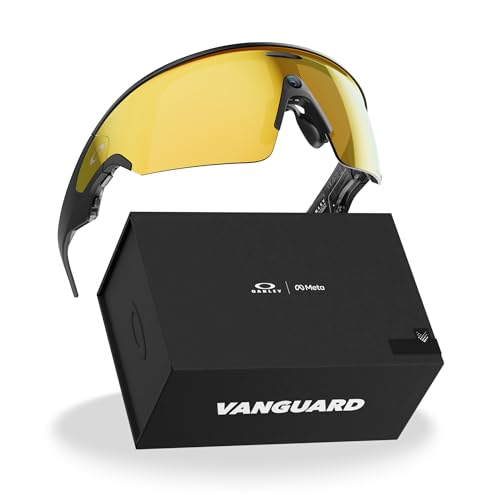
Built specifically for active use, the Meta Oakley Vanguard pairs the same AI-powered capture and open-ear audio system as the Ray-Ban Meta line with Oakley’s high-performance Prizm lens technology, which enhances contrast for outdoor sports. The rectangular frame and resin construction keep weight at a reasonable 65 grams, though the fit can feel tight after extended wear.
The hands-free 12 MP camera and 3K video recording are tailored for POV content during golf, cycling, or paintball, and the Meta AI integration provides real-time answers like wind conditions or surf reports. Activity sharing lets you overlay Garmin or Strava performance metrics onto captured video, creating shareable highlight reels without touching your phone.
Bluetooth routing can be quirky—incoming calls sometimes shunt music away from your car’s system back to the glasses. The privacy requirement of the Meta app (full permissions including photos and telemetry) is a genuine concern for those who want local-only operation. But for athletes who want AI-assisted capture and audio without holding a device, the Oakley Vanguard delivers a genuinely hands-free experience that standard sunglasses can’t match.
Why it’s great
- Oakley Prizm lenses optimized for outdoor sports
- Garmin/Strava activity overlay on captured video
- Lightweight resin frame at 65 grams
Good to know
- Requires full-permission Meta app—no offline mode
- Bluetooth routing conflicts with car systems
- Fit feels tight during extended wear sessions
5. Ray-Ban Meta (Gen 1) Skyler
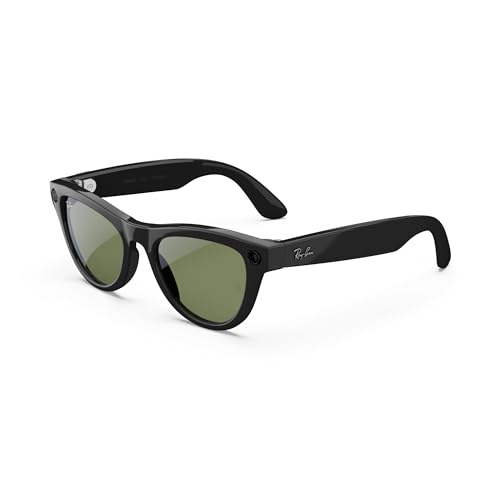
The first-generation Ray-Ban Meta glasses established the category, offering hands-free 12 MP photo capture, open-ear speakers, and the same five-microphone array found in the Gen 2 model. The 32GB of onboard storage can hold thousands of photos or hours of video, and the Meta AI assistant handles on-the-go queries, translations, and hands-free calling without needing to pull out your phone.
Battery life is the main differentiator from the newer model—you get roughly half the runtime, with typical users reporting three to four hours of mixed use before needing the charging case. The green lenses on the Shiny Black frame look like standard sunglasses, and the audio quality is impressive for open-ear design, with clear calls and punchy music playback.
The lack of water resistance, absence of zoom, and audible speaker leakage at higher volumes are notable drawbacks. Translation features are region-locked to the US, Canada, and Australia, limiting its utility for international travelers. For budget-conscious buyers who still want the core Ray-Ban Meta experience—AI querying, hands-free capture, and classic style—the Gen 1 remains a compelling entry point.
Why it’s great
- Classic Ray-Ban styling with AI assistant built in
- 32GB storage for extensive offline capture
- Hands-free calling with excellent mic clarity
Good to know
- Battery life noticeably shorter than Gen 2
- No water resistance rating
- Speaker audio audible to others at high volume
6. soundcore Work by Anker
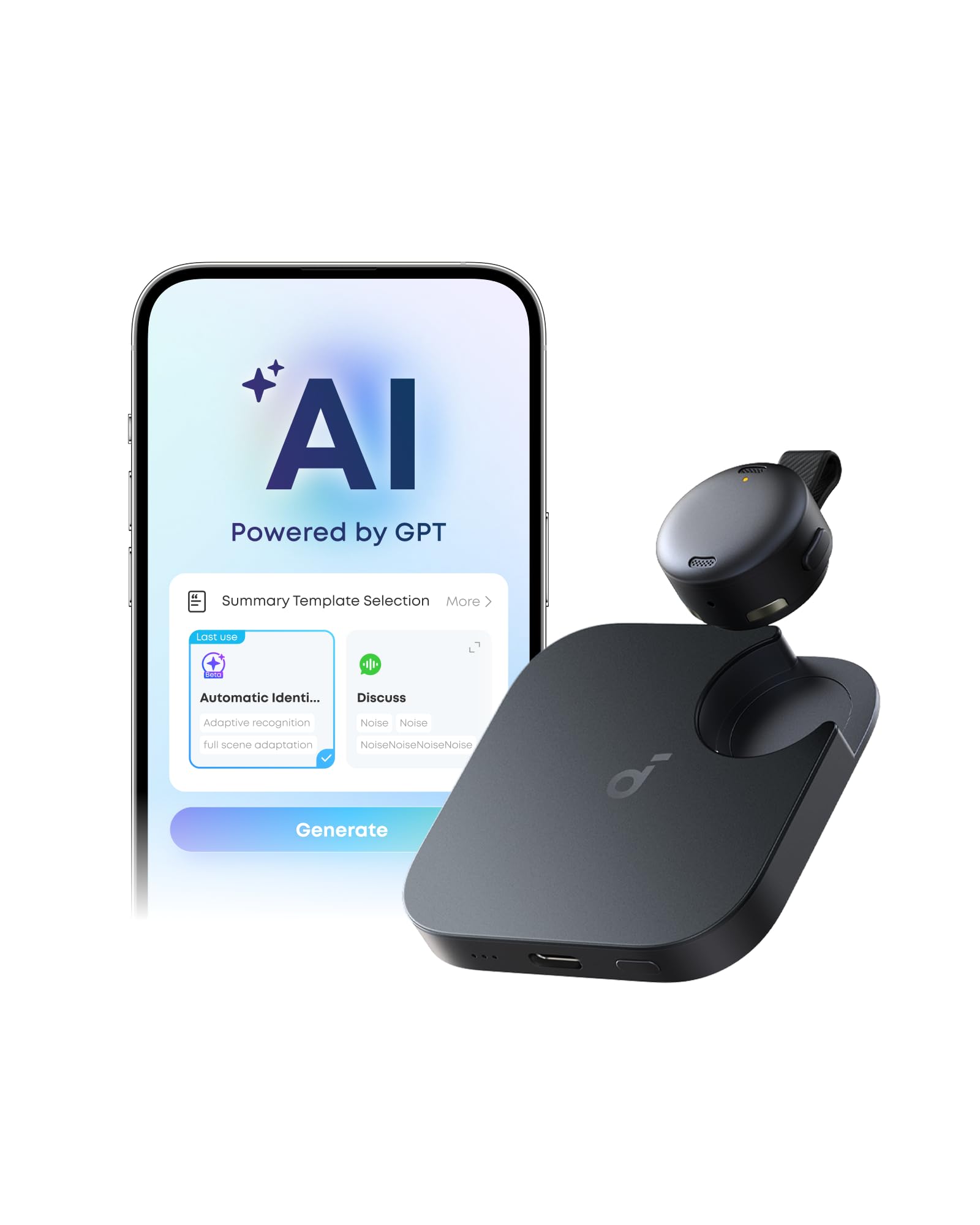
The soundcore Work is a coin-sized AI voice recorder that prioritizes transcription accuracy above all else. Its on-device AI enhancement and beamforming microphone array capture speech with up to 97% accuracy across 150+ languages, and the 8GB of internal storage holds up to 8 hours of WAV recordings. The device is MFi-certified for seamless iPhone integration, with a magnetic clip and necklace chain included for all-day wear.
Post-meeting AI features are the real value: the app generates structured summaries with key points, decisions, and action items, plus a searchable Ask AI function that retrieves specific information from past recordings. AES-256 encryption keeps audio and transcripts protected, and SOC 2 Type I certification adds enterprise-grade data assurance.
Some users report Bluetooth connectivity issues across multiple units, and the export process requires manually moving each recording rather than syncing automatically to cloud services like Google Drive. The app’s interface could use refinement, and the pro subscription adds ongoing cost for advanced features. Still, for anyone who needs a dedicated, pocketable transcription device with strong privacy compliance, the soundcore Work delivers where phone-based recorders fall short.
Why it’s great
- 97% transcription accuracy across 150+ languages
- AES-256 encryption with SOC 2 Type I certification
- Coin-sized form factor with magnetic clip
Good to know
- Bluetooth pairing failures reported across multiple units
- No automatic cloud sync for transcripts
- Pro subscription required for advanced AI summaries
7. Google Fitbit Air
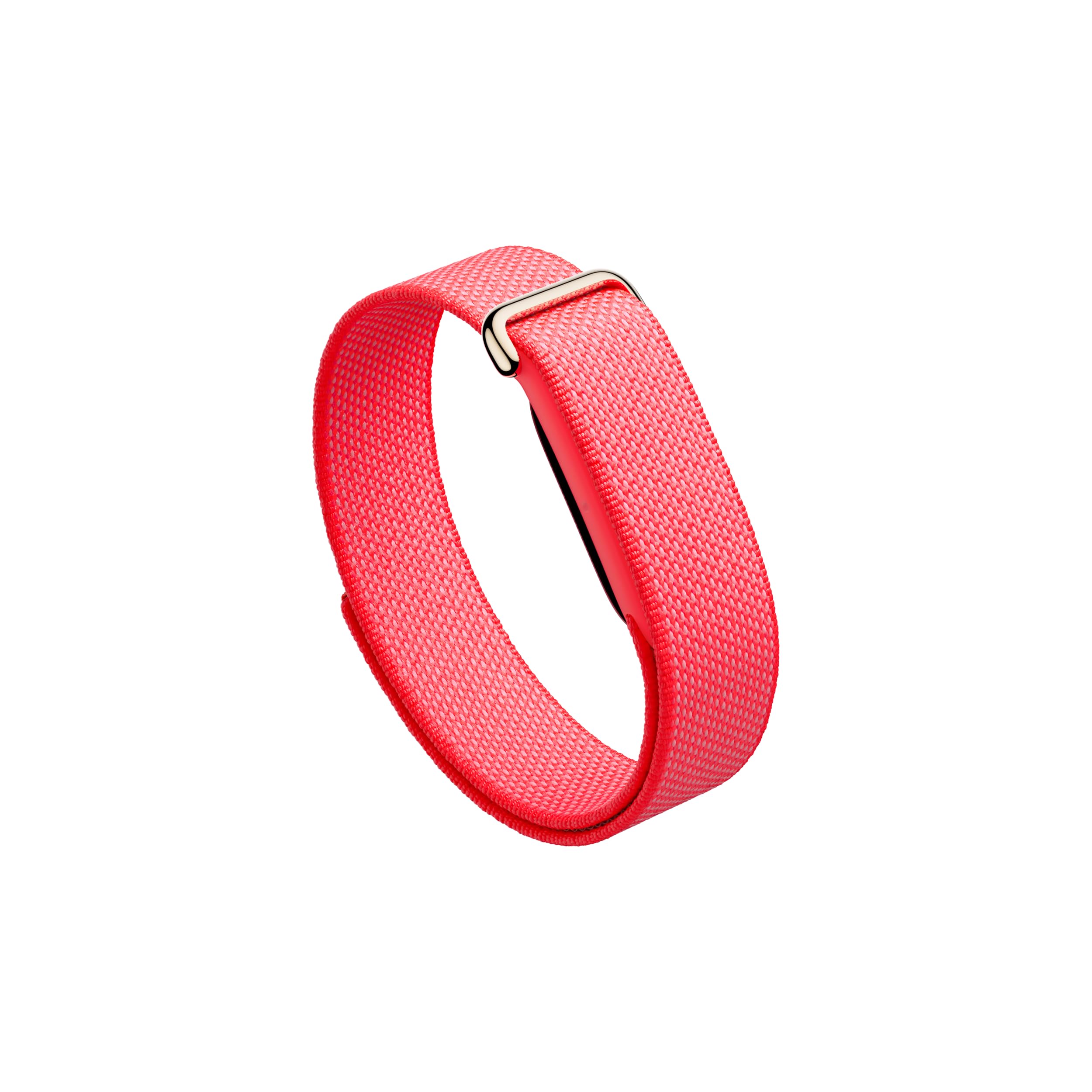
The Google Fitbit Air strips away the screen entirely to deliver a pure AI coaching experience powered by Google Health’s algorithms. Its advanced PPG sensor array tracks heart rate, SpO2, HRV, and sleep stages with improved accuracy, and the Google Health Coach (subscription-required) uses Gemini AI to adapt fitness plans, recovery recommendations, and sleep guidance to your real-time data rather than generic templates.
The micro-adjustable performance loop band fits wrists from 130 to 210 mm and weighs almost nothing, making it easy to forget you’re wearing it. Battery life hits a full 7 days, and fast charging provides a day of runtime in just 5 minutes—perfect for forgetful users. The screenless design means no distractions during workouts or sleep, and the 50-meter water resistance makes it pool-ready.
The AI coaching features require an ongoing subscription after the 3-month trial, and the device’s distance tracking for outdoor runs can be inaccurate without phone GPS. Some users find the initial setup process slow, and the AI feature itself has been described as underwhelming for those expecting more advanced interactions. For fitness-focused individuals who want algorithmic coaching without the distraction of a screen, the Fitbit Air is a thoughtful, minimalist approach.
Why it’s great
- 7-day battery with 5-minute fast charge
- Gemini AI coaching adapts plans to real-time data
- Ultra-light, screenless design for undistracted wear
Good to know
- AI coaching requires ongoing subscription
- Distance tracking accuracy poor without phone
- AI feature feels limited compared to marketing
FAQ
Can AI wearables detect sleep apnea without a doctor’s prescription?
How does open-ear audio on AI glasses differ from bone conduction headphones?
Final Thoughts: The Verdict
For most users, the ai wearables winner is the Ray-Ban Meta (Gen 2) Skyler because it delivers the most complete fusion of style, hands-free AI assistance, and practical daily capture without sacrificing battery life. If you want clinical-grade sleep and health monitoring with zero subscription fees, grab the RingConn Gen 2. And for long-term health tracking that looks like a luxury watch, nothing beats the WITHINGS Scanwatch Nova Brilliant.