
Our readers keep the lights on and the weekend projects moving. As an Amazon Associate, I earn from qualifying purchases.
The jump from a toy drone to a serious sub- investment is where most buyers get stuck—spending on a model with a shaky Wi-Fi camera that drifts in a light breeze, or missing out on a gimbal-stabilized powerhouse that outflies its price tag. In the $300 drone bracket, the difference between a frustrating, grainy flight and a smooth, cinematic experience comes down to three core specs: gimbal type, camera sensor quality, and transmission system reliability. Ignore these, and you are gambling on a glorified paperweight.
I’m Rikta — the co-founder and writer behind FitlyFast. For this guide, I’ve spent countless hours combing through detailed flight logs, customer reviews, and side-by-side spec comparisons of every sub- drone that serious pilots and beginners alike are actually buying, ensuring this breakdown reflects real-world performance, not just marketing copy.
After analyzing more than a dozen contenders, I’ve filtered the list down to the nine models that genuinely deliver on their promises, making this the definitive resource to find your ideal $300 drone.
How To Choose The Best $300 Drone
Choosing a drone at this price level requires filtering past the noise of inflated specs. Marketers often tout “4K” and “10,000ft range,” but the actual performance depends on the hardware behind those claims. Focus on the three pillars below to avoid a disappointing purchase.
Gimbal or EIS: The Stability Difference
The biggest differentiator in the sub- range is stabilization. Many budget drones rely solely on Electronic Image Stabilization (EIS), which crops the video and can introduce a jelly-like wobble. A 3-axis mechanical gimbal physically isolates the camera from the drone’s vibrations and movements, producing true cinematic, smooth footage. At this budget, if a drone has a 3-axis gimbal, it is almost always the better buy over one that only offers EIS.
Camera Sensor and True Resolution
Not all “4K” cameras are created equal. Look for the sensor size and the actual lens quality listed in the technical specs. A larger sensor, like the 1/1.3-inch CMOS found in premium options, captures more light, resulting in better dynamic range and less noise in low-light conditions. Don’t be fooled by interpolated 6K or 8K photo claims—true 4K video at a stable 30fps is the standard to aim for at this price point. Also, note that some drones require you to buy an SD card separately, while others include one in the box.
Transmission System: Digital vs. Wi-Fi
Wi-Fi transmission is a technology of the past for serious flying. It is prone to interference, lag, and short range. A dedicated digital transmission system, such as DJI’s Ocusync or Potensic’s PixSync, provides a clear, low-latency feed at distances over 3 miles. Check the transmission type; if the listing says “Wi-Fi,” expect the drone to lose connection well before its advertised range.
Quick Comparison
On smaller screens, swipe sideways to see the full table.
| Model | Category | Best For | Key Spec | Amazon |
|---|---|---|---|---|
| Ruko F13 | Premium | Long range & high-res | 48MP sensor & 3-axis gimbal | Amazon |
| DJI Flip (2-Battery) | Premium | Beginner-friendly pro quality | 1/1.3-inch CMOS sensor | Amazon |
| DJI Mini 4K | Premium | Entry-level DJI experience | 3-axis gimbal & Ocusync | Amazon |
| Gleesfun G11PRO | Premium | Gimbal stability on a budget | 3-axis brushless gimbal | Amazon |
| Potensic ATOM LT | Mid-Range | Long flight time & GPS | 40-min battery per cell | Amazon |
| PLEGBLE RC Drone | Mid-Range | Built-in controller screen | 5-inch HD controller display | Amazon |
| Punieayi GPS Drone | Entry-Level | All-in-one starter kit | 5-inch screen & 2 batteries | Amazon |
| Ameta S50 Lite | Entry-Level | Feature-packed toy drone | Sony IMX258 sensor | Amazon |
| CHUBORY G9 | Entry-Level | Extended flight time value | 3 batteries for 90 min | Amazon |
In‑Depth Reviews
1. Ruko F13 (3-Battery Combo)

The Ruko F13 is the rare sub-250g drone that packs a true 3-axis brushless gimbal alongside a high-performance 1/2-inch CMOS 48MP sensor. In this bracket, that combination is what separates wobbly Wi-Fi footage from genuinely smooth, cinematic 4K video at 30fps. The gimbal holds the horizon steady even during quick turns or moderate gusts, making it the clear benchmark for image stabilization at this price.
Its R2 digital transmission system offers a reliable 20,000ft feed without the interference that plagues Wi-Fi drones, giving you confidence to explore long distances. The inclusion of three intelligent batteries pushes total flight time to an impressive 96 minutes, meaning fewer mid-adventure charging stops. Additionally, the built-in beeper and quadruple positioning (GPS, barometric, TOF, and optical flow) ensure safe landings and easy retrieval.
Customer feedback consistently praises its easy setup and the responsive 24/7 support from Ruko, with many noting that the company quickly replaced defective batteries or even issued refurbished replacements after crashes. For the pilot who wants the absolute best blend of gimbal stabilization, range, and battery endurance without stepping up to the next price tier, the F13 is the top pick.
Why it’s great
- True 3-axis gimbal delivers exceptionally smooth 4K footage
- 96-minute total flight time from three included batteries
- Reliable 20,000ft digital transmission with no Wi-Fi interference
Good to know
- Joysticks are very sensitive and require a gentle touch
- Camera lacks good low-light performance compared to 1/1.3-inch sensors
2. DJI Flip (Two Battery Combo)
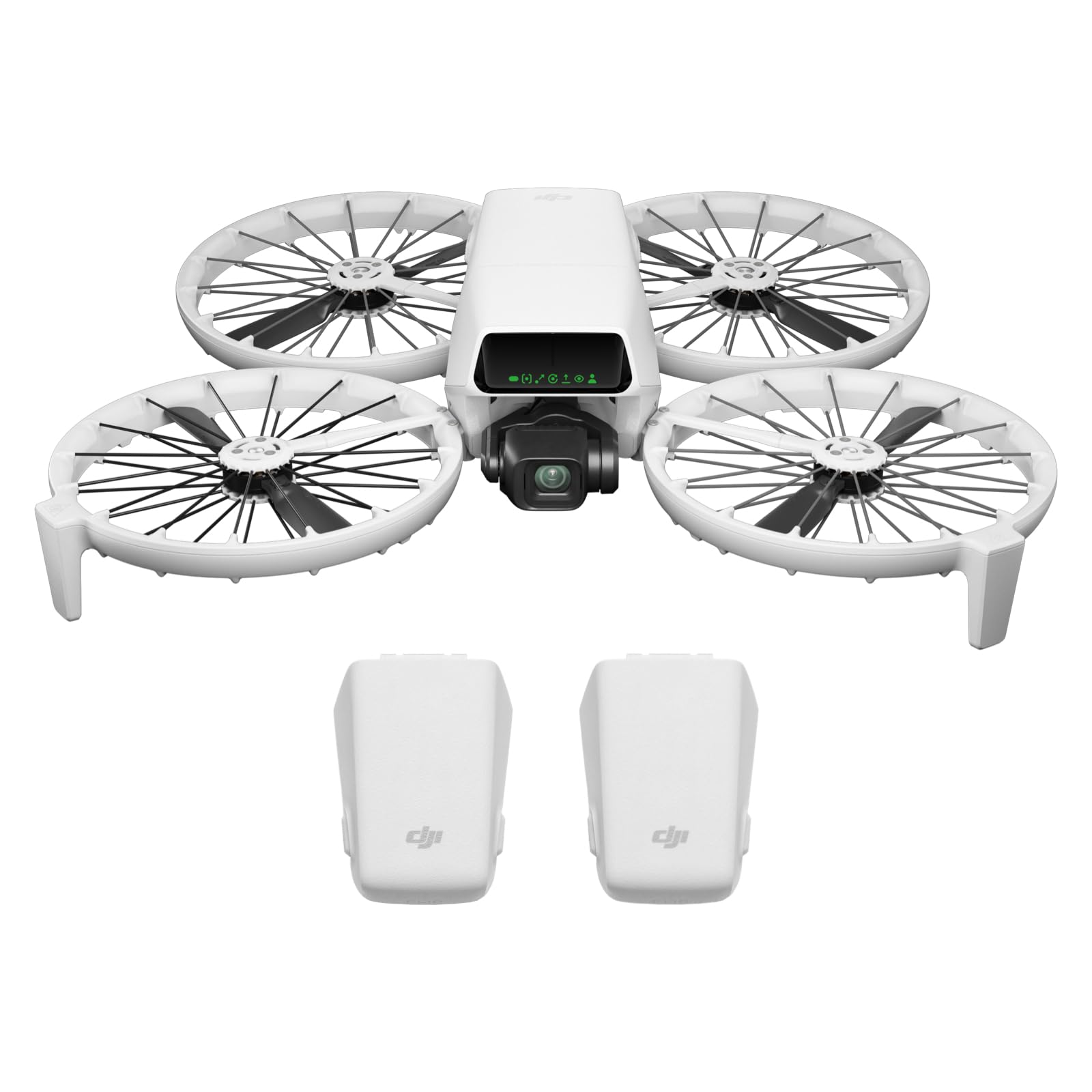
The DJI Flip redefines the entry point to premium imaging with its full-coverage propeller guards and a 1/1.3-inch CMOS sensor that captures 4K video at a smooth 60fps with HDR. This sensor has significantly better dynamic range than the 1/2.3-inch and 1/3.2-inch sensors found on most competitors, meaning your sunrise and sunset shots retain detail in the highlights and shadows without clipping.
Its subject tracking is genuinely intelligent, keeping a person or object centered in the frame during hiking or parties without requiring manual intervention. The palm takeoff feature and robust auto-return functions make it incredibly beginner-friendly, while the carbon fiber guards provide peace of mind against bumps and scrapes. It’s designed as a self-contained content creation tool rather than just a toy.
Reviews highlight its durable build and impressive 25-minute per-battery flight time, though the combo version does not include a screen controller, meaning you’ll need your phone to fly. For the traveler or content creator who wants the best possible image quality and tracking from a drone that is still under 249g, the Flip’s larger sensor makes it the standout choice.
Why it’s great
- 1/1.3-inch sensor provides excellent low-light and HDR video
- Intelligent subject tracking works seamlessly for hands-free shooting
- Full-coverage propeller guards offer excellent crash protection
Good to know
- Does not include a remote controller; must be flown via phone app
- Range is shorter than the DJI Mini 4K or Ruko F13
3. DJI Mini 4K (Single Battery)

The DJI Mini 4K remains the gold standard for brand reliability at the $300 budget. Its 3-axis gimbal is the same stabilizing technology found in DJI’s higher-end models, ensuring your 4K footage is rock-steady regardless of how windy it gets. The Ocusync transmission system delivers a solid 10km video feed with minimal latency, a feature that still outpaces many drones in a higher price bracket.
At 246g, it is exempt from FAA registration for recreational use, and its Level 5 wind resistance (38kph) means you can fly it confidently in conditions where lighter toy drones would be grounded. The DJI Fly app offers easy-to-use in-app tutorials, Quickshot modes like Helix and Rocket, and a straightforward flight interface that is ideal for complete beginners.
The single-battery version, however, is its main weakness—31 minutes on paper, but closer to 20-25 minutes in real-world conditions including wind and filming. Most users quickly find the 2-battery set is the actual minimum for a satisfying session. For the buyer who prioritizes a proven brand, flawless app integration, and reliable gimbal stabilization over battery count, the Mini 4K is the safe, proven bet.
Why it’s great
- Industry-leading 3-axis gimbal for incredibly smooth video
- Reliable Ocusync 2.0 transmission with excellent range
- Trusted brand with a mature, well-updated app ecosystem
Good to know
- Single battery gives limited real-world flight time
- No built-in controller screen; requires phone connection
4. Gleesfun G11PRO

The Gleesfun G11PRO is the budget entry to a 3-axis brushless gimbal, a feature typically reserved for drones costing significantly more. It uses a 1/3.2-inch CMOS sensor to capture 6K photos and 4K video at 30fps, and while the video is not as sharp as the DJI Mini 4K due to the smaller sensor, the gimbal ensures the footage is smooth and free from the jelly wobble that plagues EIS-only drones.
Its GQ2.0 digital transmission system provides a stable 10,000ft range, and the GL2.0 Smart Battery Management system supports fast charging in about 2.5 hours. The kit is comprehensive, including 40 pieces such as four spiral casings, multiple cables, and a proper carrying case. The cruise control feature is a nice touch, automatically maintaining altitude and yaw for steady aerial shots.
Customer reports confirm the drone handles 20-30 mph winds surprisingly well, and the follow-me mode works reliably for a package at this price. The FAA compliance (Remote ID ready) is a welcome bonus. For the budget-conscious pilot who absolutely must have a 3-axis gimbal for stabilization, the G11PRO is the most affordable way to get that feature.
Why it’s great
- True 3-axis brushless gimbal for smooth footage at a low price
- Excellent wind resistance, stable in 20-30 mph gusts
- Comprehensive 40-piece kit with fast-charging batteries
Good to know
- Smaller 1/3.2-inch sensor limits low-light performance
- Some users report firmware or connection issues initially
5. Potensic ATOM LT

The Potensic ATOM LT stands out for its industry-leading flight time. Each of its two 3000mAh intelligent batteries provides a genuine 40 minutes of hover time, totaling 80 minutes of air time. This is a critical advantage for beginners who need time to practice without the anxiety of a dead battery, or for users wanting to cover large areas on a single outing.
It features the PixSync 2.0 digital transmission system, reaching up to 4km (13,123ft) with a stable HD feed. The 2.5K camera uses a Sony sensor with ShakeVanish 2.0 stabilization for smoother footage than typical EIS solutions. Weighing under 249g, it is also FAA registration-free, and its foldable design fits easily into a pocket. It supports 4 GNSS systems for high-precision GPS locking.
User feedback notes the camera is good but not true 4K, and the drone can struggle with satellite acquisition under tree cover. Some also report stability issues in low light due to the lack of a TOF chip. However, Potensic’s customer service is frequently praised for being prompt and helpful. For someone whose primary concern is longer-than-average flight time and digital range, the ATOM LT is a strong, practical value pick.
Why it’s great
- Exceptional 40-minute single battery flight time
- Reliable PixSync 2.0 transmission at 4km range
- Lightweight and compact, fits in a pocket when folded
Good to know
- Camera is 2.5K, not true 4K resolution
- GPS satellite lock can be slow in challenging environments
6. PLEGBLE GPS Drone with Screen
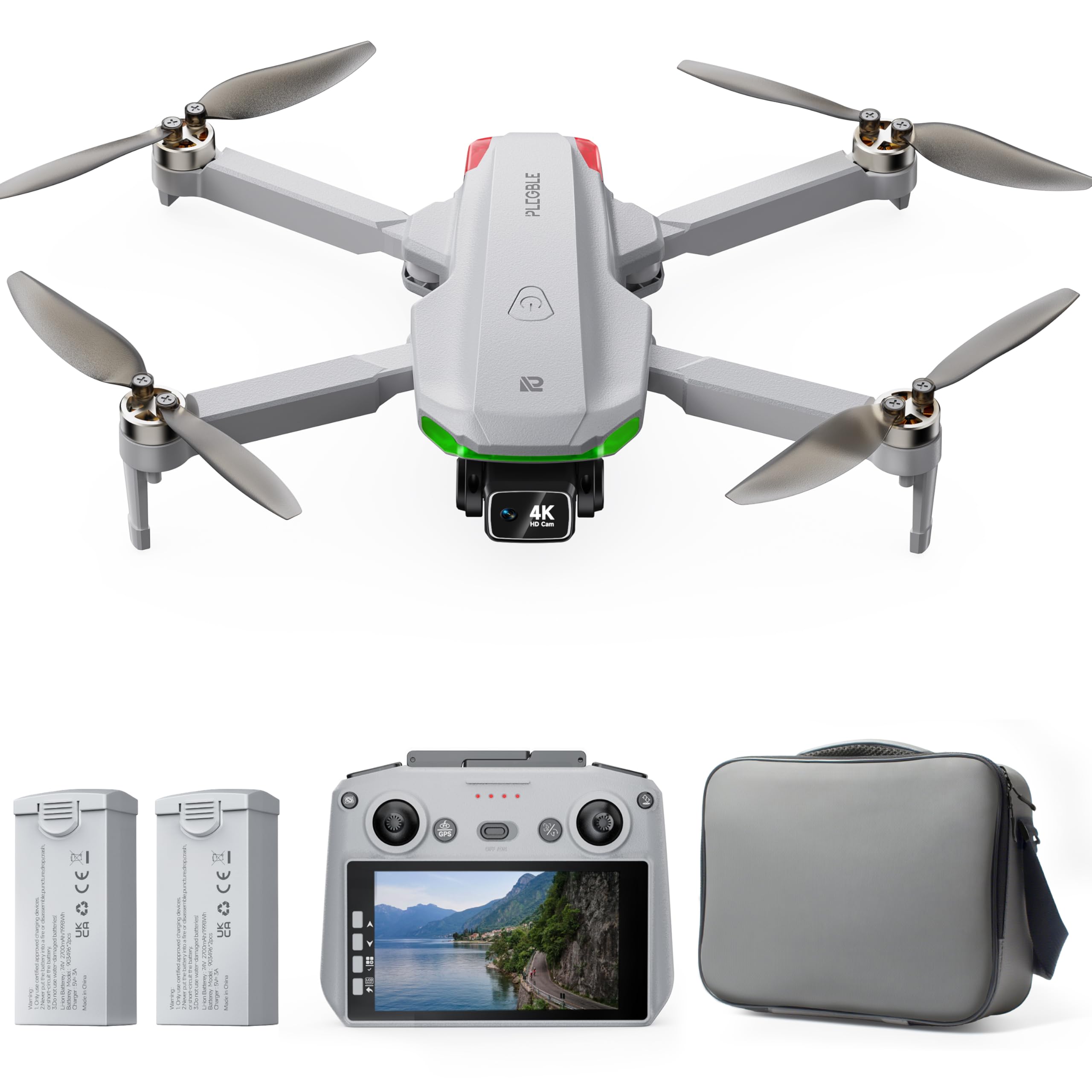
The PLEGBLE drone’s killer feature is its built-in 5-inch HD screen on the controller. This eliminates the need for a smartphone connection entirely, meaning no app downloads, no phone battery drain, and no compatibility issues. You simply turn on the remote, and the live FPV feed appears instantly with zero latency, making it one of the most user-friendly and plug-and-play options available.
It records 4K video at 30fps with EIS stabilization and a 130° wide-angle lens that can be tilted 90° for different angles. The dual 2700mAh lithium polymer batteries provide a total of 70 minutes of flight time, and the GPS features—including auto return on signal loss, low battery, and manual press—work reliably. The drone is lightweight at 8.4 ounces and is under 249g, making it travel-friendly.
Reviewers consistently praise its stability and how easy it is to operate, even for children and absolute beginners. The low battery return and position lock are cited as must-have safety features. While the dedicated screen is a major convenience, the controller’s range is stated at 600m, which is shorter than some digital transmission models. For the buyer who values simplicity and hates fumbling with phone mounts, the PLEGBLE is a fantastic choice.
Why it’s great
- Built-in 5-inch controller screen eliminates need for a phone
- Easy, beginner-friendly controls with reliable GPS auto-return
- Solid 70-minute total flight time from two batteries
Good to know
- Rated range of 600m is shorter than digital transmission models
- EIS stabilization is not as smooth as a 3-axis gimbal
7. Punieayi GPS Drone with 5-Inch Screen
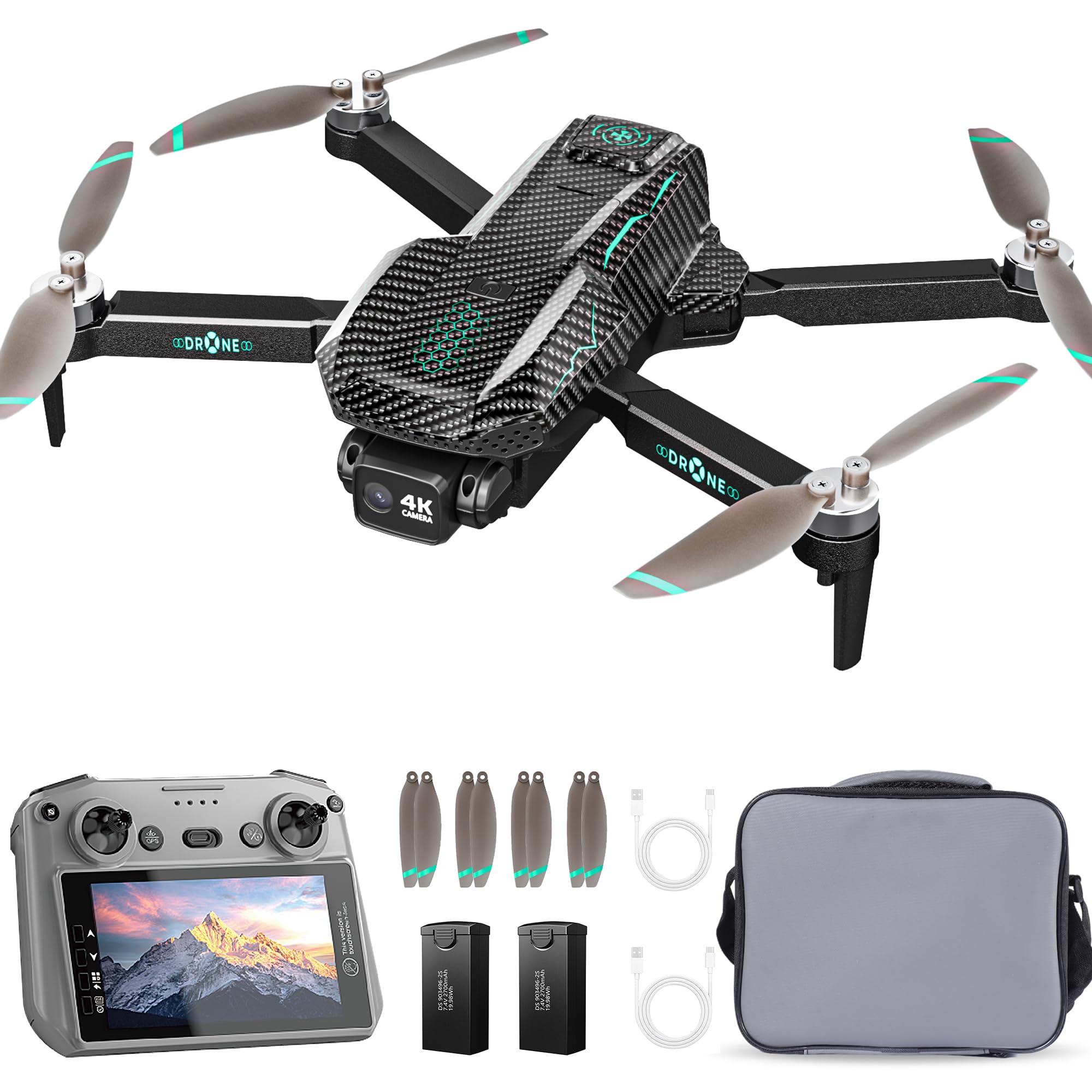
The Punieayi offers an impressive value proposition for beginners: a 5-inch built-in HD screen on the remote, two high-capacity 2700mAh batteries for 60 minutes of flight, and a GPS system with auto-return, Circle Fly, and Follow Me functions. For a sub- price point, it provides almost everything a first-time pilot could want without needing to buy a single accessory.
Its 4K camera with a 90° adjustable angle captures clear photos and video, and the brushless motor provides stable, low-noise operation even in Level 4 wind conditions. The compact, 238g foldable design includes a protective carrying case and an 8GB microSD card, so you can start recording immediately. The controller’s screen gives you a real-time FPV feed at up to 5,000ft, though connectivity is Wi-Fi based.
Customers highlight its easy setup, intuitive controls, and durability—surviving crashes that would destroy cheaper toy drones. The auto-return and low-battery return work well, giving peace of mind. The main downsides are the Wi-Fi transmission, which can experience lag, and the EIS-only stabilization which isn’t as smooth as a gimbal. If you’re looking for the most complete, ready-to-fly starter kit with a screen, this is the best budget-friendly pick.
Why it’s great
- Complete kit includes screen, case, battery, and SD card
- Excellent 60-minute total flight time with two batteries
- Very durable build, surviving crashes well
Good to know
- Wi-Fi transmission is prone to lag and interference
- Camera stabilization is EIS, not a 3-axis gimbal
8. Ameta S50 Lite
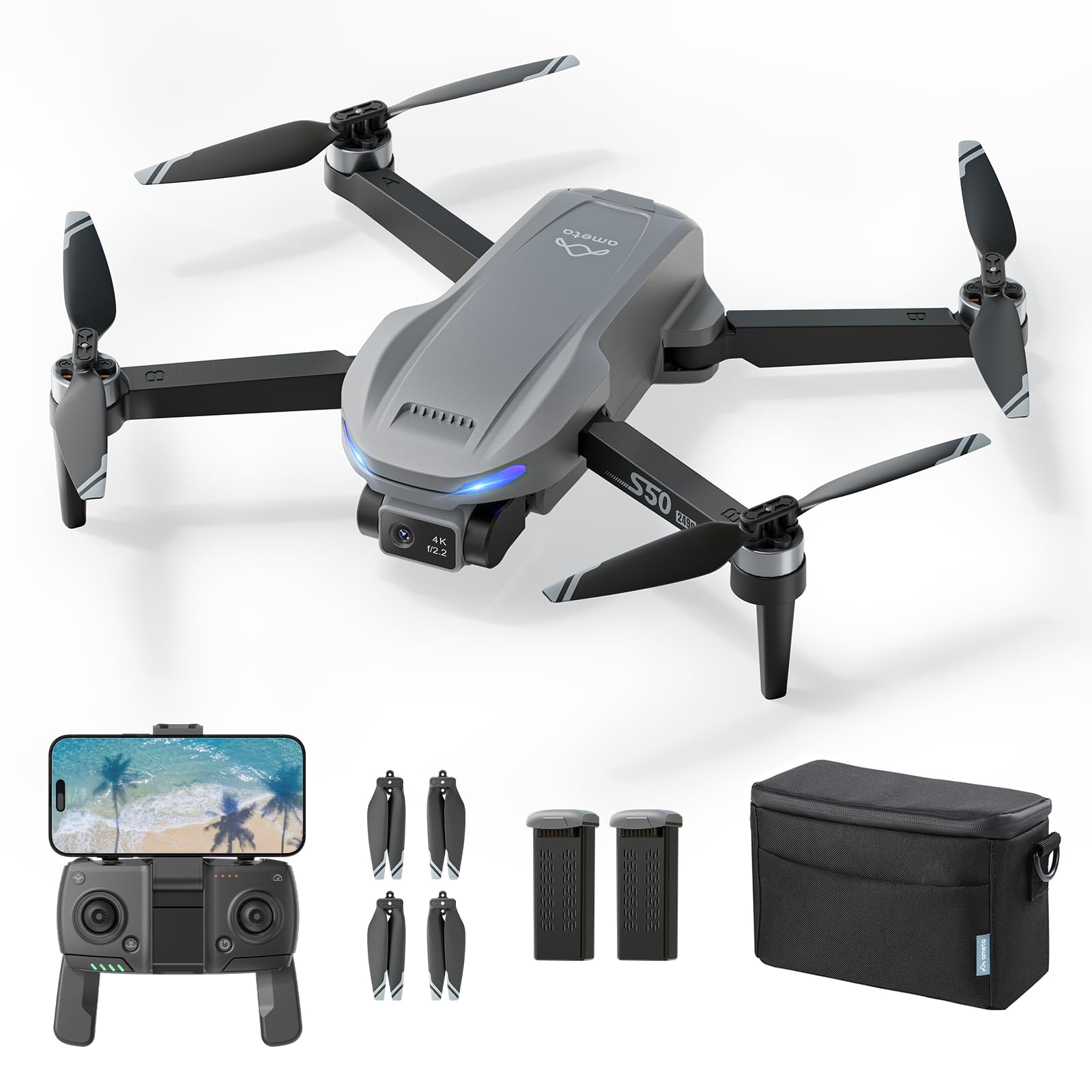
The Ameta S50 Lite is a feature-rich drone that uses a Sony IMX258 sensor for its camera, which is a step up in image quality from many budget 4K cameras. It records 4K video and 13MP photos with a 90° adjustable lens, and it supports 5G Wi-Fi transmission for real-time FPV. It includes a broad suite of intelligent modes like Rocket, Circle Fly, Far Away, Panorama, Time-lapse, and Gesture Selfie.
Its GPS positioning is highly accurate, offering one-key return, low battery return, and lost signal return. The drone is under 249g, making it FAA exempt, and comes with two 2000mAh batteries for 50 minutes of total flight time. It also features optical flow and GPS altitude hold for stable hovering, making it accessible for beginners.
Customer reviews are mixed; while many find it fun and easy to use for casual play, a detailed review notes a major lack of a gimbal, resulting in shaky video. Its 5G Wi-Fi range is limited to about 500m, and some users report the drone feels more like a toy than a serious aerial camera platform. For the casual user who wants a lot of gimmicky but fun flight modes, the Ameta is a decent pick, but serious photographers should look elsewhere.
Why it’s great
- Includes fun intelligent shooting modes like Rocket and Panorama
- Sony sensor provides decent image quality for the price
- Lightweight and FAA exemption, easy to fly
Good to know
- No gimbal; footage is shaky and lacks stabilization
- Wi-Fi transmission limits range and introduces lag
9. CHUBORY G9 (3-Battery Combo)
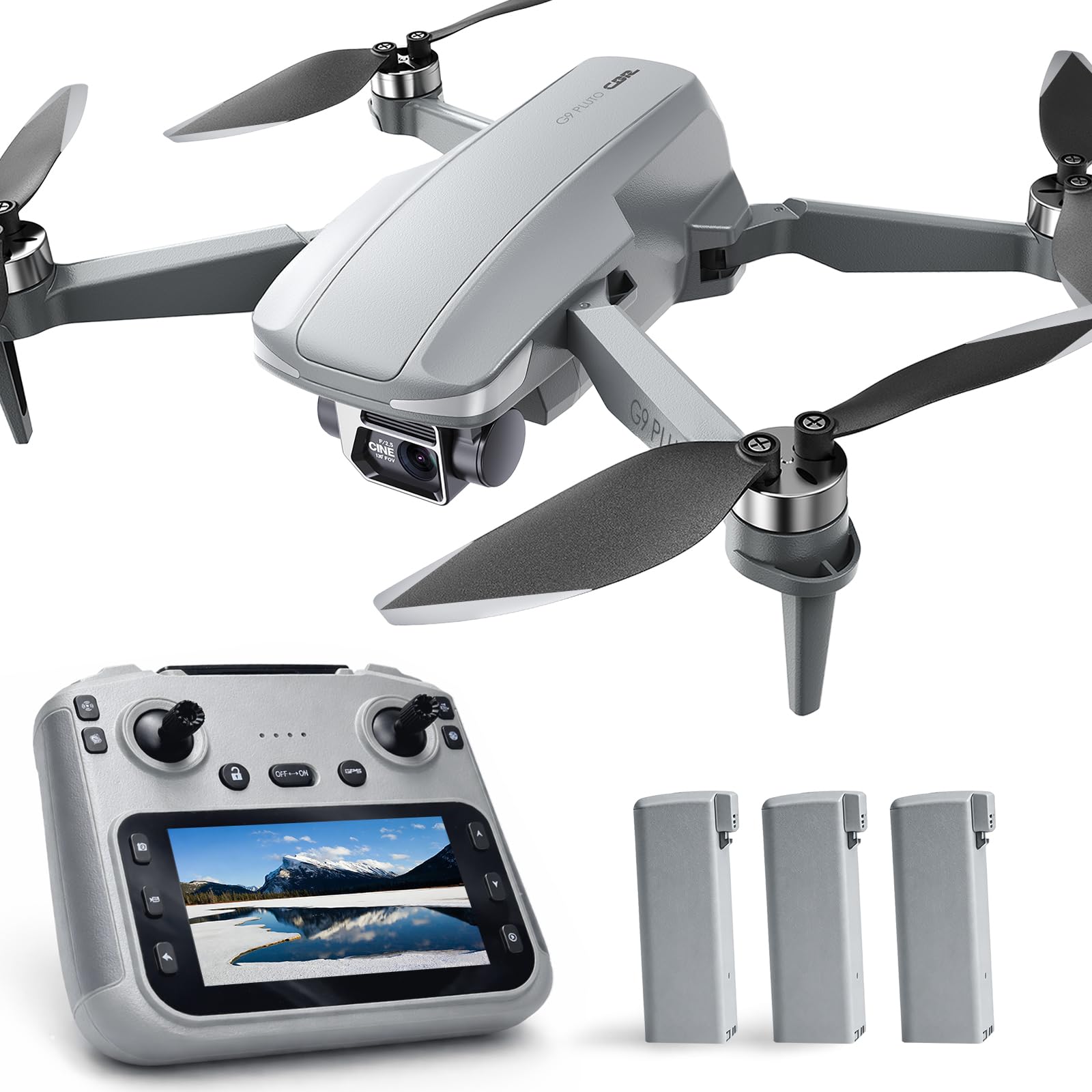
The CHUBORY G9 is a budget-focused drone that targets maximum flight time, offering three high-capacity batteries for a total of 90 minutes of flight. It also features a 4.5-inch built-in HD display on the controller for direct FPV viewing, plus a free 32GB SD card for storage. This makes it a very strong value proposition for the pilot who wants to spend more time in the air than on the ground.
Its 4K UHD camera with a 90° adjustable angle captures decent footage, and the GPS functions—including auto return on low battery or signal loss, Circle Fly, and Follow Me modes—provide safety and creativity. At under 250g, it fits into the no-FAA-registration category. The brushless motors provide stable, quiet operation, but the transmission is Wi-Fi based.
Reviews note that the drone is very small and easy to control, especially for beginners. The return-to-home button works well, and the extra propellers are welcome. However, some users mention that no charger is included in the box, and the Wi-Fi range is limited. It’s best suited as a travel-friendly, long-flying toy for casual fun rather than a serious aerial photography tool.
Why it’s great
- Excellent 90-minute total flight time from three batteries
- Built-in 4.5-inch controller screen for easy FPV
- Includes a 32GB SD card for out-of-the-box readiness
Good to know
- No charger included in the box; requires separate purchase
- Wi-Fi transmission is prone to interference at longer ranges
FAQ
What does “under 249g” mean for FAA regulations?
Is a built-in controller screen better than a phone mount?
How important is wind resistance for a sub-250g drone?
Final Thoughts: The Verdict
For most users, the best $300 drone winner is the Ruko F13 because it provides a true 3-axis gimbal, a 48MP sensor, and 96 minutes of flight time, offering the most complete professional-grade feature set in this price bracket. If you want the absolute best image quality from a larger 1/1.3-inch sensor and excellent subject tracking, grab the DJI Flip. And for the entry-level pilot who needs a reliable 3-axis gimbal and a trusted brand name at a more accessible price, nothing beats the DJI Mini 4K.