
Our readers keep the lights on and the weekend projects moving. As an Amazon Associate, I earn from qualifying purchases.
The fear of SIDS keeps countless parents awake, turning every rustle of the crib into a reason to check. You want to stay vigilant but you also need to sleep. A baby sock monitor offers a specialized solution, blending wearable sensor technology with real-time tracking so you can rest without the constant urge to run to the crib. This guide breaks down the top options, focusing on the metrics that actually matter for infant safety.
I’m Rikta — the co-founder and writer behind FitlyFast. My research focuses on parsing the clinical specs of baby safety technology, analyzing hundreds of hours of user feedback on wearable sensors and contactless monitoring systems to find what provides genuine peace of mind without false alarms.
From the medical-grade pulse oximetry of the Owlet to the vibration-based breathing detection of the Snuza, this guide covers the essential specs and real-world performance of the best baby sock monitor systems available today.
How To Choose The Best Baby Sock Monitor
The market splits into wearable sensors (socks or clips) and contactless camera-only systems. The right choice depends on whether you want direct physiological data like pulse rate or prefer a less intrusive setup that tracks breathing through motion. Understanding this split is the first step.
Sensor Type: Pulse Oximetry vs Movement Detection
Wearable sock monitors like the Owlet use photoplethysmography (PPG) to measure heart rate and blood oxygen saturation (SpO2) directly through the skin. Clip-on monitors like the Snuza Sense-U detect abdominal movement or breathing motion via a pressure sensor. Pulse oximetry provides more specific health data, while movement monitors offer simplicity and no need for a tight fit.
Battery Life and Charging Convenience
A unit that dies mid-night defeats its purpose. Sock sensors with PPG often last one to two nights per charge. Clip-on monitors with simple movement sensors can last weeks or months. Look for battery life that fits your routine — daily charging is manageable for some, while others prefer a device that needs attention only monthly.
False Alarm Frequency and Customization
False alarms are the most common complaint in this category. Sock monitors can trigger alerts if the sensor loses contact with the foot, while clip-ons can alarm if the diaper shifts. Look for adjustable thresholds and sensitivity settings. Devices with on-device vibration or progressive alarms are less disruptive than those that blast a full alert for every minor disconnection.
Quick Comparison
On smaller screens, swipe sideways to see the full table.
| Model | Category | Best For | Key Spec | Amazon |
|---|---|---|---|---|
| Owlet Dream Duo | Bundle System | Full room + vitals monitoring | Medical-grade pulse oximetry + 2K camera | Amazon |
| Owlet Dream Sock | Sock Only | FDA-cleared heart rate & oxygen alerts | Real-time pulse rate + SpO2 tracking | Amazon |
| Miku Pro | Contactless Camera | Wearable-free breathing tracking | SensorFusion contactless breathing | Amazon |
| Philips Avent Premium Connected | Camera + Parent Unit | Cry translation & sleep diary | SenseIQ breathing motion + 1080p camera | Amazon |
| Sense-U Smart Sock Shoe 2 | Sock Monitor | Affordable transmissive PPG monitoring | Transmissive PPG heart rate tracking | Amazon |
| Sense-U Pro | Clip-On | Breathing + rollover + temp tracking | 15-second vibration arousal + audible alert | Amazon |
| iBaby i7 | Contactless Camera | No-subscription sleep analysis | Yobi-PPG contactless breathing | Amazon |
| Snuza Hero | Clip-On | Simple breathing movement detection | 6-month battery + patented direct-touch sensor | Amazon |
| Continuous Pulse Oximeter Fingertip | Handheld | Family monitoring with continuous mode | 500-set data storage + 9-level brightness | Amazon |
In‑Depth Reviews
1. Owlet Dream Duo (Gen 3)
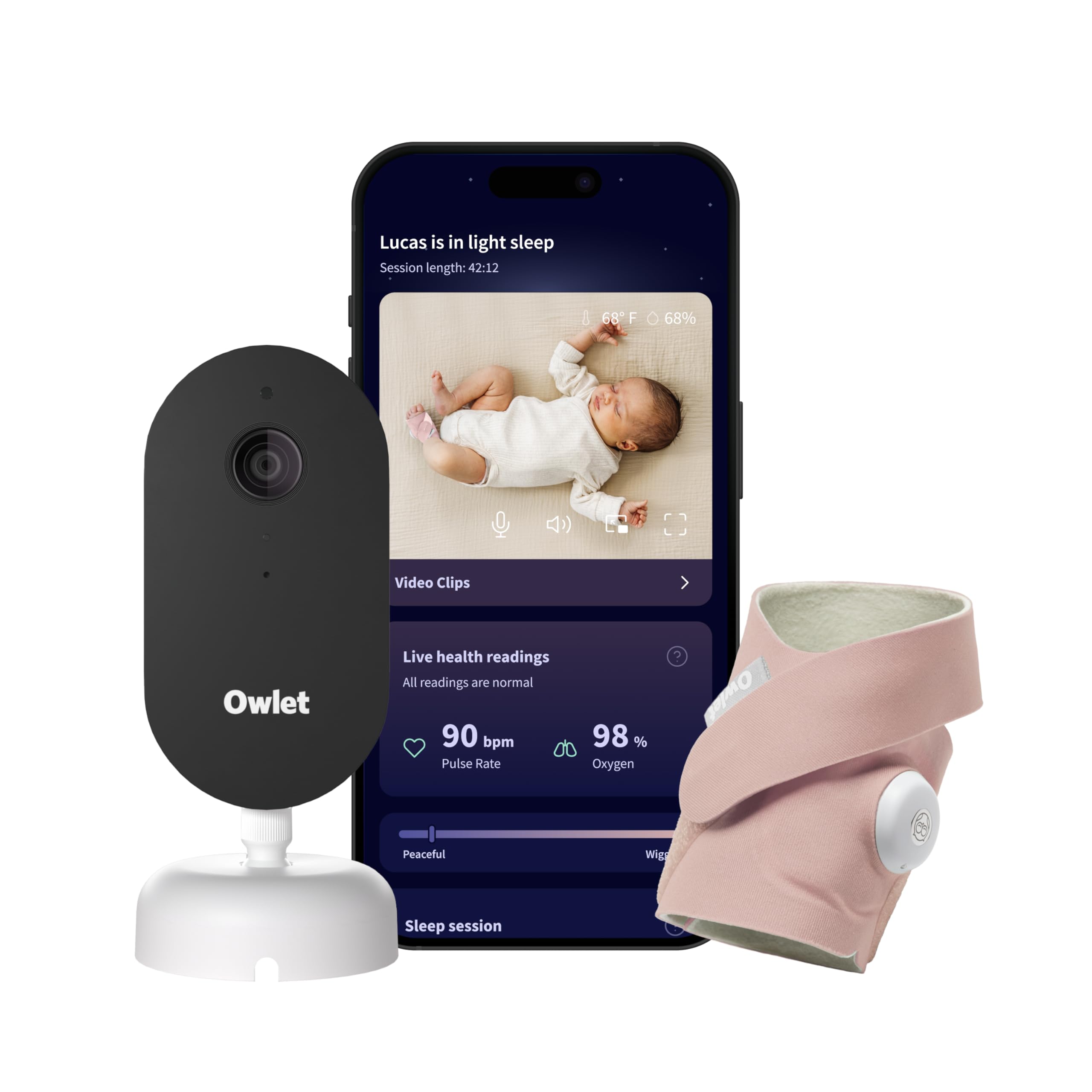
The Owlet Dream Duo is the most comprehensive monitoring system in this category, pairing the FDA-cleared Dream Sock with a 2K HD camera. The sock uses medical-grade pulse oximetry to track pulse rate and blood oxygen levels in real time, alerting you if readings leave preset zones. The base station provides audible and visual alerts independently of your phone, which is a crucial reliability feature.
Users report that after the initial setup on 2.4 GHz Wi-Fi, the system remains stable. The sock fabric comes in four sizes to fit from 6 to 30 pounds. The Predictive Sleep Technology analyzes wake windows to help schedule naps, and the camera includes a 130-degree wide-angle lens with 4x zoom for crisp night vision.
The main drawback is the cost, and some units experience connectivity issues if the base station is placed too far from the nursery. A few parents also note the sock can cause irritation if wrapped too tightly, though the fit is generally comfortable for healthy infants up to 18 months. The 16-hour battery life requires daily charging.
Why it’s great
- Medical-grade pulse oximetry provides accurate SpO2 readings
- Includes a dedicated base station for alerts without phone dependency
- 2K HD camera with 4x zoom offers sharper detail than standard monitors
Good to know
- Premium investment with high upfront cost
- Sock must be hand-washed and the sensor requires daily charging
2. Owlet Dream Sock (Mint)

The standalone Owlet Dream Sock focuses entirely on the wearable monitoring experience without the camera bundle. It tracks pulse rate and oxygen saturation via the same FDA-cleared sensor, sending real-time alerts to both the base station and your phone. The connected app includes Predictive Sleep Technology that suggests optimal wake windows based on your baby’s sleep patterns.
The fabric sock is made from a nylon and spandex blend that wraps gently around the foot. Parents consistently report better sleep knowing they will be alerted if readings leave the preset zones. The 16-hour battery life means you charge it daily alongside your other night-time routines. The sock connects via Bluetooth and 2.4 GHz Wi-Fi, and users note it stays connected reliably within a typical home range.
False alarms are the primary concern, especially for newborns who scrunch their feet and break sensor contact. However, users who follow the fit guidelines closely find false alerts decrease significantly after the first few weeks. The sock is hand-wash only, and the sensor itself must be kept dry.
Why it’s great
- FDA-cleared for accurate heart rate and oxygen monitoring
- Dedicated base station provides alerts without phone dependency
- Sleep tracking app helps establish healthy wake windows
Good to know
- Frequent false alarms from poor sensor contact in early months
- Daily charging required; sock must be hand-washed to avoid damage
3. Miku Pro Smart Baby Monitor
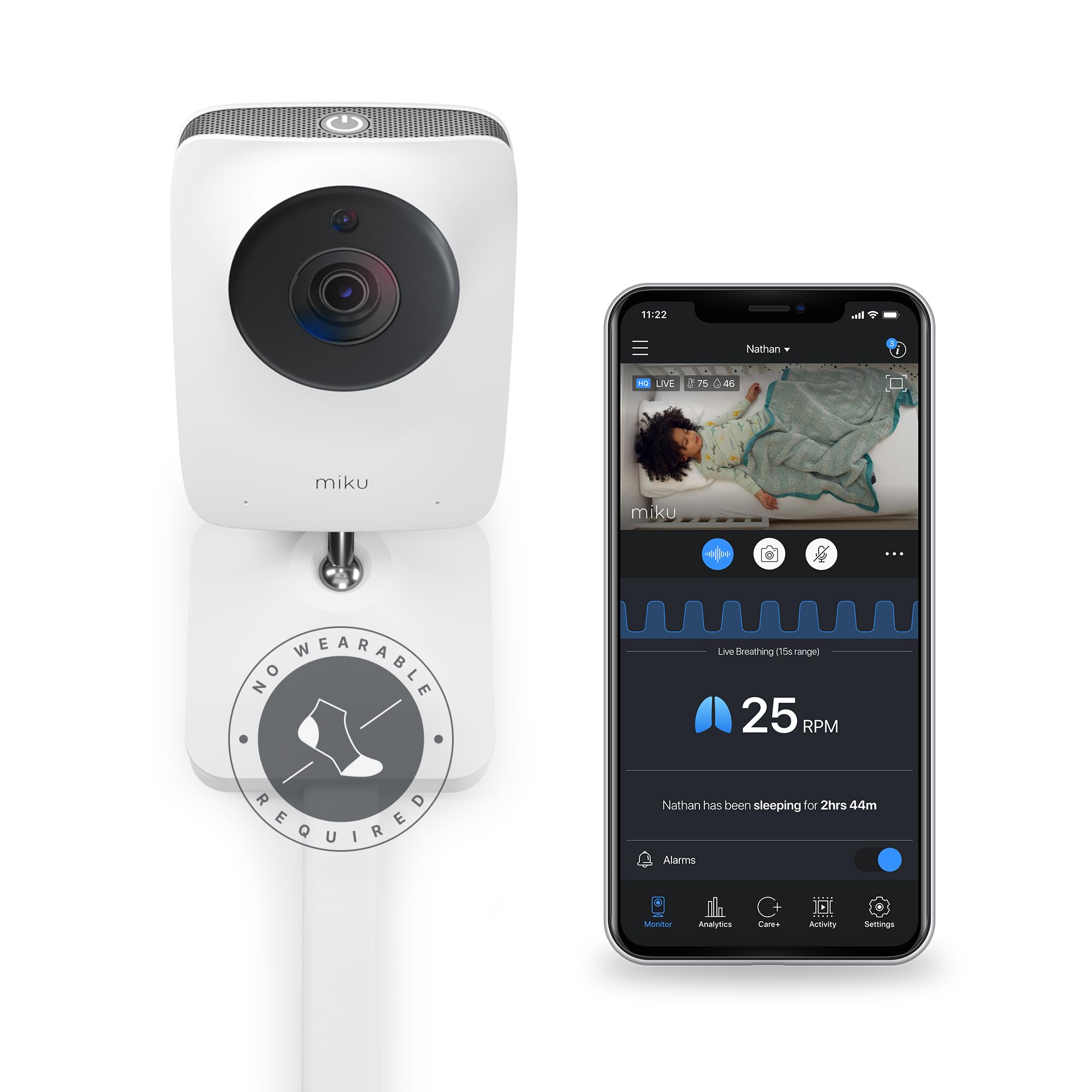
The Miku Pro takes a completely different approach by using SensorFusion technology to track breathing without any wearable device. This contactless monitoring works through blankets, stuffed animals, and in any sleep position, using radio waves rather than camera-based image processing. It is a strong alternative for parents who worry about sock irritation or forget to charge a wearable.
The camera records at 1080p and includes night vision, two-way audio, and a wall mount in the box. The app provides live breathing waveforms and sleep analytics. The hardware includes a Qualcomm chipset for dual-band Wi-Fi and Bluetooth 4.1/BLE. Setup is straightforward, and the included hardware kit has everything for a secure wall installation.
The main limitation is the optional subscription costing around per month, which unlocks advanced sleep trends and expanded video clip storage. Without it, the monitor still tracks breathing and sends alerts, but the data is less detailed. Some users also report the motion recording feature can miss events if the baby is not in the exact camera view.
Why it’s great
- Wearable-free breathing tracking works through blankets and in any position
- Complete hardware kit with wall mount, cable guides, and tools included
- Tamper-proof Crypto Chip with dual-layer encryption for privacy
Good to know
- Subscription needed for advanced sleep analytics and expanded clip storage
- Some users experience WiFi connectivity drops that require app restarts
4. Philips Avent Premium Connected (SCD973/37)

The Philips Avent Premium Connected stands out because it includes both a dedicated parent unit with a 5-inch HD screen and a camera that uses SenseIQ technology for breathing motion tracking. This hybrid setup means you are not fully dependent on a smartphone app. The monitor analyzes millions of pixels per second to detect tiny movements, tracking sleep and breathing rate without any wearable on your baby.
The system also features a cry analyzer that claims to translate five distinct cries using a scientifically backed algorithm. In practice, many parents find the cry translation gimmicky, but the core breathing tracking and the 1080p video with night vision are excellent. The 2-in-1 wall and crib mount makes positioning flexible. The Secure Connect System ensures the private connection between the parent unit and camera is encrypted.
The camera offers up to a 1300-foot range in open air, which covers most homes. The breathing tracking is contactless but can be less accurate if the baby is swaddled tightly or sleeping in a Snoo, where external motion confuses the pixel analysis. Parents looking for pure vital sign data may prefer the direct PPG of a sock-based system.
Why it’s great
- Dedicated parent unit with 5-inch screen eliminates total phone dependency
- Contactless breathing tracking via SenseIQ pixel analysis
- Secure closed-loop connection with encrypted transport
Good to know
- Cry translation feature is often inaccurate and feels like a novelty
- Breathing detection can be unreliable with swaddled or Snoo-sleeping babies
5. Sense-U Smart Sock Shoe 2
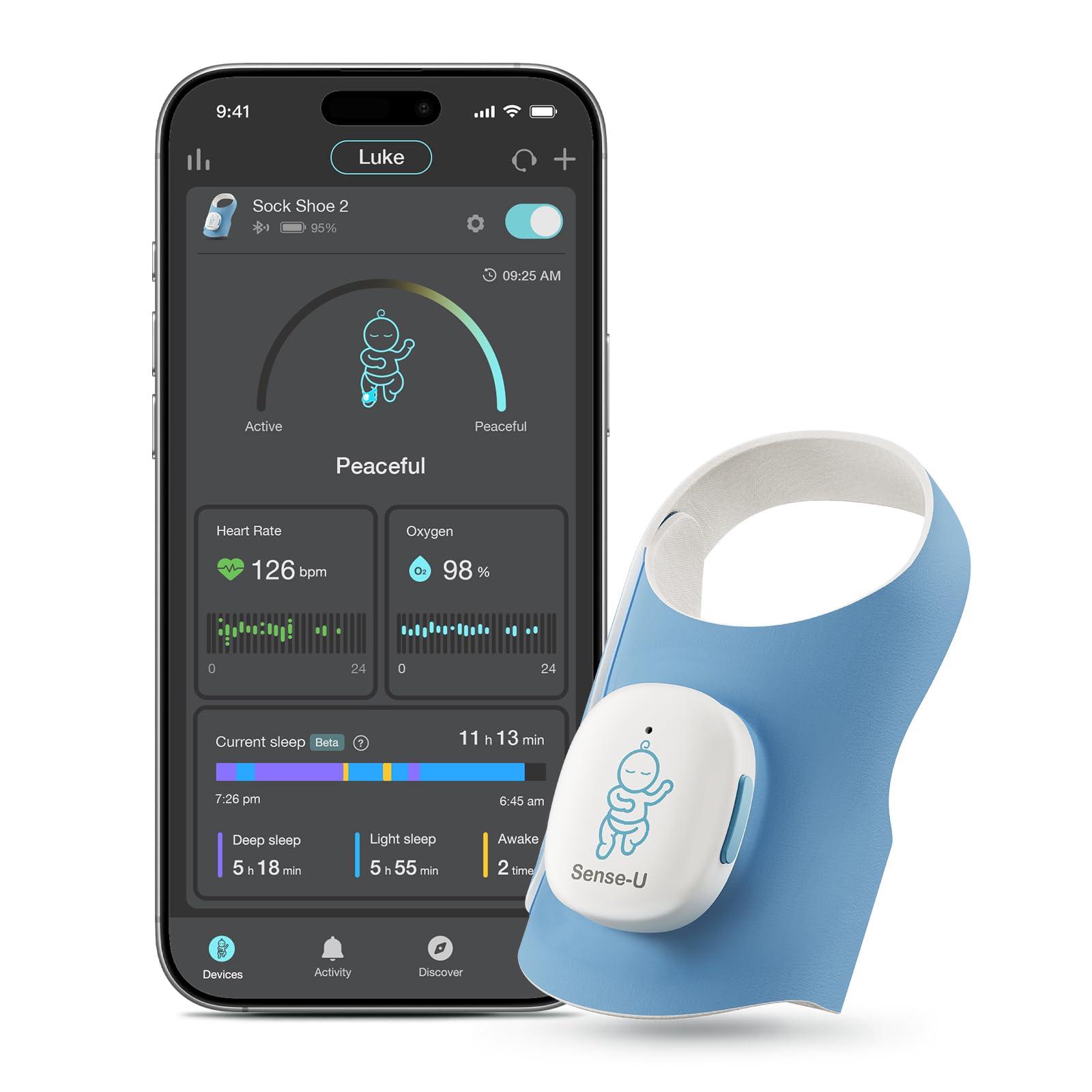
The Sense-U Smart Sock Shoe 2 uses transmissive PPG sensing technology for heart rate tracking, similar in principle to the Owlet but at a more accessible price point. The shoe-style design is made from soft, breathable fabric that fits babies 1–12 months, with a secure closure that stays on even during active kicking. It tracks deep and light sleep stages, nap efficiency, and awake times.
On-device light indicators provide instant awareness without pulling out your phone, while built-in audible alerts sound if readings are concerning. The app adds detailed sleep insights and notification customization. Battery life stretches to around two nights per charge, and users report the magnetic charger is easy to connect.
Some users note the sock runs slightly large for newborns, and the magnetic charging cable can pop off easily. Unlike the Owlet, this monitor does not have FDA clearance, so it is best considered a wellness tracker rather than a medical device. It works as a standalone unit, meaning you can use it without the app if you prefer simple alerts.
Why it’s great
- Transmissive PPG provides improved heart rate tracking accuracy
- On-device lights and audible alerts work without the phone
- Secure shoe-style fit with soft fabric stays on active babies
Good to know
- No FDA clearance — is a wellness tracker, not a medical device
- Magnetic charging cable disconnects easily with bumping
6. Sense-U Pro Baby Monitor
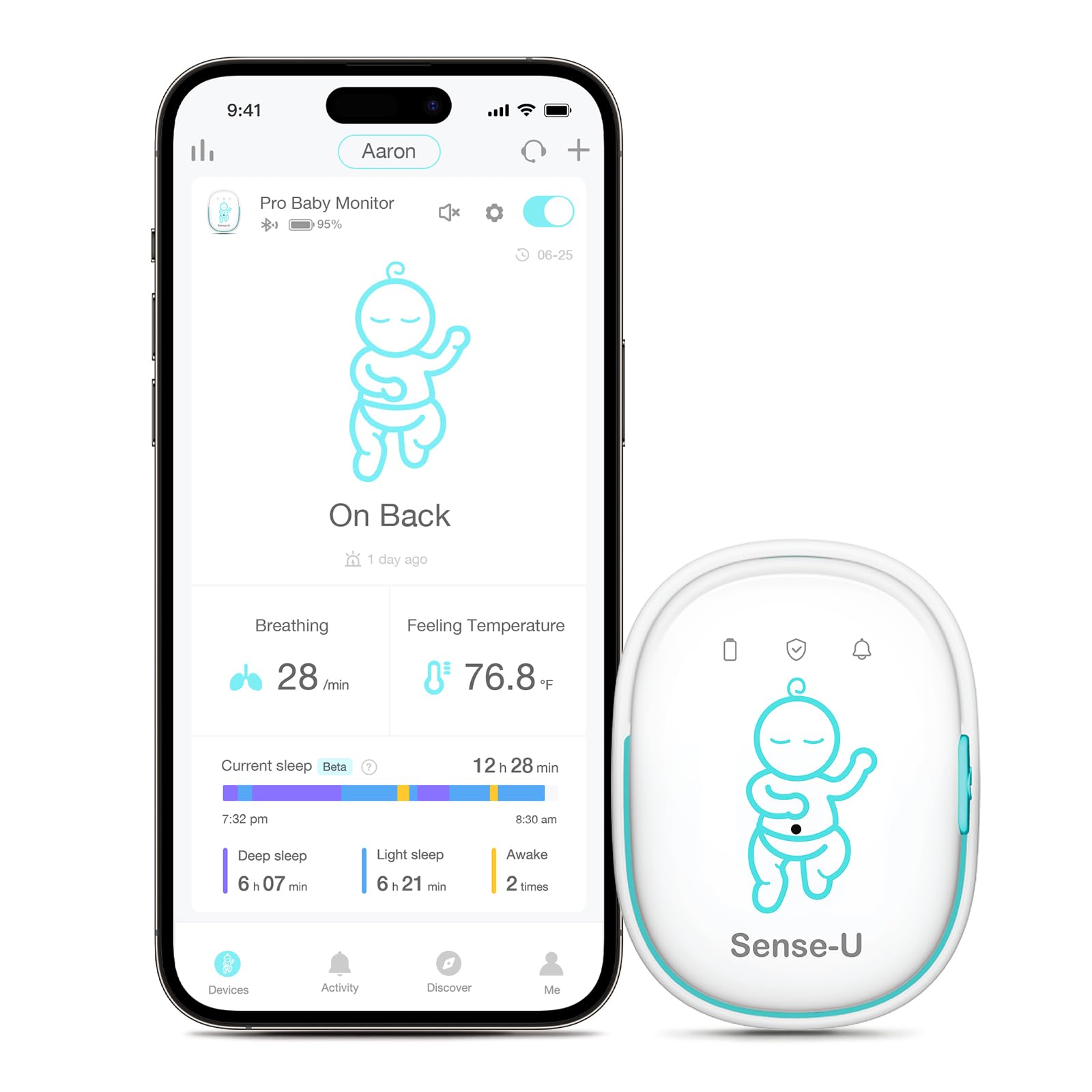
The Sense-U Pro takes a different route by clipping onto the diaper to detect abdominal movement, rollover position, and temperature. It monitors the cause of potential discomfort rather than just the effect. If no movement is detected for 15 seconds, it emits a gentle vibration to stimulate the baby, and if movement still does not resume, an audible alert sounds.
The Bluetooth Low Energy (4.0+) connection reaches about 50 feet in open space. The battery lasts over seven days per charge, which is far longer than any sock-based PPG monitor. The app provides free in-depth sleep analysis with reports on deep and light sleep stages. The device is FSA/HSA eligible, making it easier to purchase with pre-tax healthcare dollars.
This monitor is explicitly not a medical device and is intended for healthy children up to 12 months. The clip-on nature means false alerts can occur if the diaper shifts or the sensor loses contact. Some parents also note the Bluetooth range is insufficient if the nursery is on a different floor from where the phone is kept.
Why it’s great
- Tracks breathing movement, rollover detection, and overheating in one clip
- On-device vibration arousal helps re-stimulate breathing without a loud alarm
- 7+ day battery life, far longer than PPG-based sock monitors
Good to know
- Not a medical device — for wellness tracking only
- Bluetooth range is limited to about 50 feet; loses connection across floors
7. iBaby i7 Contactless Breathing Monitor
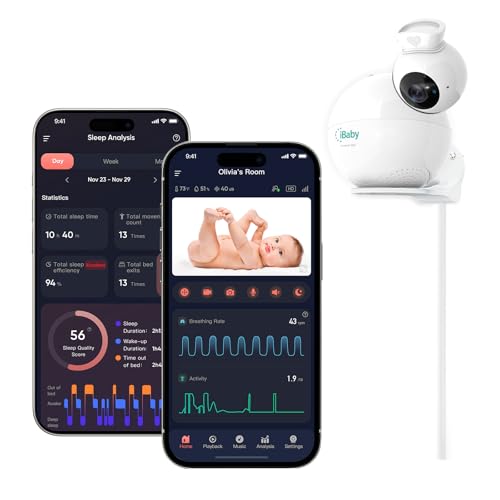
The iBaby i7 uses Yobi-PPG technology to track breathing contactlessly through the camera, without any wearable required. It monitors breathing frequency, sleep duration, and quality, delivering weekly and monthly reports. The 1080p camera features 360-degree horizontal rotation and 110-degree vertical tilt, plus night vision. The two-way audio system includes a library of built-in lullabies.
Smart alerts include cry detection, face-covered notifications, and temperature/humidity monitoring. The most significant selling point is the absence of any subscription — all features are permanently free through the app. Local playback is available via a TF card (not included). The build quality is solid, and the wall mount provides flexible positioning.
The breathing and sleep data requires a clear view of the baby’s face. If the baby rolls over or turns away, the monitor displays dashes until the face is visible again. This is a critical limitation for deep sleep tracking. Some users also note the lack of a dedicated parent unit means you must rely entirely on the app for viewing, which can be inconvenient.
Why it’s great
- Completely free service with no subscription required for any feature
- Yobi-PPG technology provides contactless breathing tracking via camera
- 360-degree pan and 110-degree tilt for comprehensive nursery view
Good to know
- Breathing data stops if baby’s face is not visible to the camera
- No dedicated parent unit — relies solely on the smartphone app
8. Snuza Hero SE Baby Movement Monitor

The Snuza Hero SE is the simplest device on this list, designed purely for detecting movement and providing an alert if none is sensed. It clips directly to the diaper and uses a patented direct-touch sensor that is ultra-sensitive to the rise and fall of the abdomen. It requires no WiFi, no app, and no cords — just a single replaceable battery that lasts up to six months.
When movement stops for 15 seconds, the device vibrates first. If movement does not resume after another 5 seconds, an audible alarm sounds. An optional ticking sound can be activated so you hear a reassuring click with each breath. The green indicator light is visible through light swaddle fabric, providing constant visual confirmation.
The unit is made from medical-grade plastic and silicone. It is completely portable and comes with a protective carry case. The main limitation is the lack of any heart rate or oxygen data — it only tracks movement. False alarms occur if the sensor shifts due to diaper changes or vigorous kicking. It works best with an elastic waistband to keep the clip secure.
Why it’s great
- Six-month battery life eliminates constant charging
- Medical-grade plastic and silicone are safe for sensitive skin
- Totally portable with no WiFi, app, or cords required
Good to know
- Only tracks movement — no heart rate or oxygen monitoring
- False alarms can occur if the sensor slips from the diaper position
9. Continuous Pulse Oximeter Fingertip (Manhero)
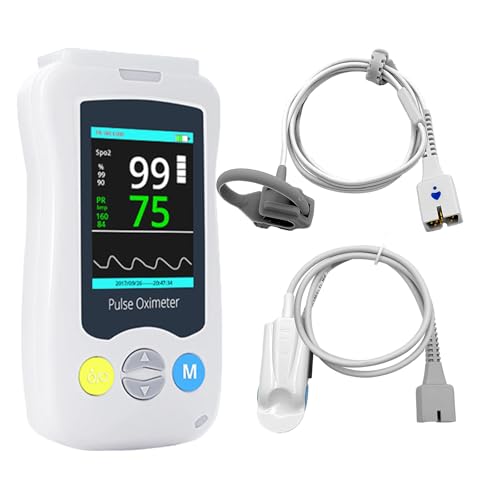
The Manhero Continuous Pulse Oximeter is an entry-level device designed for whole family use, including infants from 0 to 18 months. It measures SpO2 with a range of 70–99% and heart rate from 30–240 bpm, both with ±1% accuracy. The 2.4-inch high-definition screen has nine-level adjustable brightness for viewing in any lighting condition.
The device supports continuous detection and includes an intelligent alarm system. If SpO2 drops below 90% or heart rate falls below 50 bpm, an audible alarm sounds. Users can customize the thresholds for personalized alerts. It stores up to 500 sets of data for trend analysis, which is useful for tracking changes over time.
The biggest drawback is the probe system. The included finger sensor is designed for adults, and the infant monitoring sensor must be positioned carefully on the foot or hand. Customers report batteries drain quickly, often within 24 hours, and the USB cord is shorter than expected. The unit requires 3 AAA batteries that are not included. It is a functional option for budget-conscious families who understand its limitations.
Why it’s great
- Offers SpO2 and heart rate monitoring for the entire family, including infants
- 500-set data storage allows tracking of health trends over time
- High-brightness screen with 9-level adjustment works in varying light
Good to know
- Battery life is poor — often drains within 24 hours of use
- Probe connection is finicky and can fall out easily during movement
FAQ
Can a baby sock monitor prevent SIDS?
Why does my sock monitor keep giving false alarms?
What is the difference between a sock monitor and a clip-on monitor?
Can I use a contactless monitor instead of a wearable one?
How long should a baby wear a sock monitor each night?
Final Thoughts: The Verdict
For most users, the best baby sock monitor winner is the Owlet Dream Duo because it bundles the medical-grade pulse oximetry of the Dream Sock with a 2K HD camera for a complete safety and surveillance system. If you want a simpler, wearable-only solution with the same FDA-cleared core tech, grab the Owlet Dream Sock. And for a contactless approach that requires no sock or clip, nothing beats the Miku Pro and its SensorFusion breathing tracking.