
Our readers keep the lights on and the weekend projects moving. As an Amazon Associate, I earn from qualifying purchases.
Baseboard caulk is the unsung hero of a polished interior, bridging the ugly gap between your trim and the wall. Whether you are fighting a century-old floor gap or sealing a new bathroom vanity, the material choice dictates whether you get a clean line or a cracking mess.
I’m Rikta — the co-founder and writer behind FitlyFast. This guide is built from hours of cross-referencing polymer chemistry, cure times, adhesion specs, and user-reported longevity across the leading acrylic latex and silicone-based baseboard sealants.
After breaking down the specs of peel-and-stick strips, acrylic caulk bundles, and premium painter’s formulas, I have found the options that truly deliver a lasting, paintable finish. Here is my curated list of the best baseboard caulk for your next trim project.
How To Choose The Best Baseboard Caulk
Selecting the wrong caulk for baseboards leads to cracking, yellowing, or adhesion failure within months. The right choice depends on the substrate (wood, drywall, tile), the gap width, and whether you will paint over it. Here are the three factors that determine success.
Acrylic Latex vs. Silicone
Acrylic latex caulk is the go-to for baseboards because it is paintable, cleans up with soap and water, and has low odor. Pure silicone is waterproof and flexible but cannot be painted — a dealbreaker for white trim. Many premium options are “siliconized” acrylic, blending paintability with improved elasticity.
Shrinkage and Crack Resistance
Cheap acrylic caulks shrink as they cure, often requiring a second pass on gaps wider than a quarter inch. Look for formulas that advertise “non-shrink” or “non-crack” properties. A caulk that stretches over 600% (like the GE Max Shield) handles seasonal wood movement without splitting.
Application Method: Gun vs. Peel-and-Stick
Traditional cartridge caulk gives you full control over bead size and is necessary for uneven gaps. Peel-and-stick silicone strips offer a mess-free alternative for straight, clean edges, but they do not fill deep voids. For a professional look on most baseboard jobs, acrylic latex in a standard caulk gun remains the benchmark.
Quick Comparison
On smaller screens, swipe sideways to see the full table.
| Model | Category | Best For | Key Spec | Amazon |
|---|---|---|---|---|
| GE Max Shield Painter’s | Acrylic | High-flex trim sealing | 600% stretch / 60yr durability | Amazon |
| Akfix AS606 | Siliconized Acrylic | Professional painter results | 15% movement / 24hr cure | Amazon |
| Kraken Bond Premium | Acrylic Latex | Bulk value / DIY projects | Screw-on caps / 12-pack | Amazon |
| Stanley Premium Siliconized | Siliconized Acrylic | Eco-friendly / low odor | LEED EQc4.1 / solvent-free | Amazon |
| DAP Alex Painter’s | Acrylic Latex | Budget contractor pack | Paint-ready in 2hrs | Amazon |
| ESUFEIR Silicone Strip | Peel-and-Stick | No-mess / quick install | U-shape / 118 inches long | Amazon |
| Kikerike Vinyl Molding | PVC Molding | Covering large floor gaps | 4″x40ft roll / 0.08″ thick | Amazon |
In‑Depth Reviews
1. GE Max Shield Painter’s
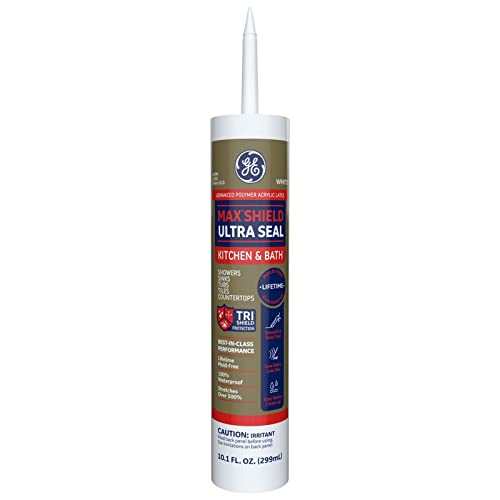
GE’s Max Shield formula is the gold standard for baseboard work that must not crack. The acrylic blend stretches over 600% — critical for rooms where wood expands and contracts with humidity — and still seals gaps up to 3 inches wide. Backed by a 60-year limited durability claim, this is a “buy once, forget it” proposition.
Paintability is excellent. Users report that it is ready for latex or oil-based paint in as little as 30 minutes, and it smooths easily with a wet finger or baby wipe. The lifetime mold-free protection is a meaningful bonus for bathrooms or kitchens where moisture seeps behind trim.
The only trade-off is the initial hardening speed: it dries quickly, so you must tool the bead within minutes. But experienced DIYers prefer this fast skinning because it prevents sagging on vertical baseboard surfaces.
Why it’s great
- Extreme flexibility (600% stretch) prevents cracking from seasonal movement
- Paintable in 30 minutes with mold/mildew resistance
- Seals gaps up to 3 inches without shrinking
Good to know
- Forms a skin quickly — you have a short window to tool the bead
- Single 10.1 oz tube; not a bulk pack
2. Akfix AS606
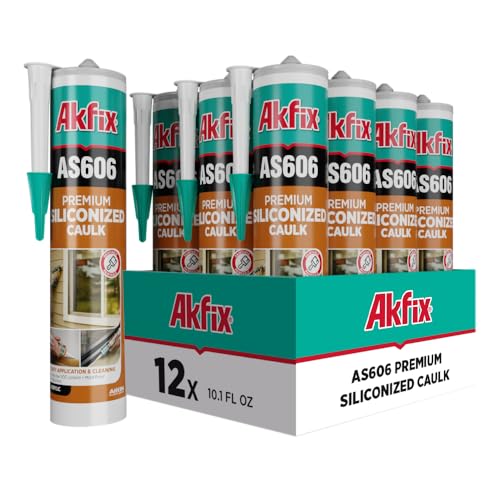
The Akfix AS606 is a siliconized acrylic latex that professional painters frequently recommend. It handles 15% joint movement — enough for standard trim flex — and cures to a waterproof seal within 24 hours. The 12-pack format makes it the go-to choice for whole-house baseboard, window, and door projects.
Users consistently praise its “no-drip” flow control. Unlike cheaper tubes, the Akfix stops flowing the instant you release pressure on the gun, reducing clean-up and wasted material. The removable screw-on cap allows you to store a partially used tube for weeks without the tip clogging.
It is low-odor and water-based, so you can work indoors without ventilation concerns. For a mid-range price that competes with big-box store brands, the AS606 delivers superior tooling consistency and less post-cure shrinkage.
Why it’s great
- Excellent nozzle flow control — stops flowing when you stop squeezing
- Reusable screw-cap keeps tubes fresh for weeks
- Low odor and easy water cleanup for interior use
Good to know
- 24-hour full cure time is slower than some instant-skin formulas
- Nozzle is not attached to the tube — requires assembly
3. Kraken Bond Premium
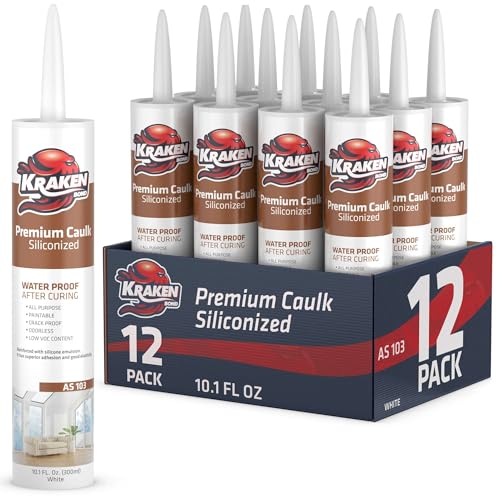
Kraken Bond delivers a 12-pack of siliconized acrylic latex that competes directly with the big names at a more accessible per-tube cost. The formula is waterproof, low-odor, and designed to bond to wood, drywall, tile, and aluminum — covering all the surfaces a baseboard job touches.
The standout feature is the screw-on cap. Users consistently highlight this as a major advantage because it prevents the caulk from drying out between uses. You can use half a tube for baseboards, cap it, and come back weeks later to find the remaining product fresh — no wasted material.
Application is smooth and paintable within a couple of hours. If you have multiple rooms to seal, this pack covers the entire job.
Why it’s great
- Refillable screw-on cap allows long-term storage without drying
- Strong initial adhesion on wood, tile, and painted surfaces
- Great per-tube cost for whole-house projects
Good to know
- Noticeable shrinkage on gaps wider than 0.5 inches
- Softer consistency than premium painter’s formulas
4. Stanley Premium Siliconized

Stanley’s siliconized acrylic formula is built for the environmentally-conscious DIYer. It exceeds LEED credit EQc4.1 for low-emitting materials, meaning it has minimal VOCs and negligible odor. This makes it safe to use in occupied homes, nurseries, or bedrooms without off-gassing concerns.
The silicone reinforcement prevents the cracking and shrinking typical of standard acrylic caulks. Users report smooth application on wood, concrete, and drywall, with easy water clean-up. It is paintable with all paint types, giving a professional finish on trim and baseboards.
The 12-pack is a solid value for those who prioritize indoor air quality. The only catch is the slower 24-hour cure time, so plan your painting schedule accordingly. For a low-toxicity seal that performs, this is a top-tier choice.
Why it’s great
- LEED-compliant low-VOC formula for safe indoor use
- Silicone-reinforced to resist shrinking and cracking
- Smooth application and easy water clean-up
Good to know
- 24-hour cure time before painting is recommended
- Not as flexible as the GE Max Shield for extreme movement
5. DAP Alex Painter’s
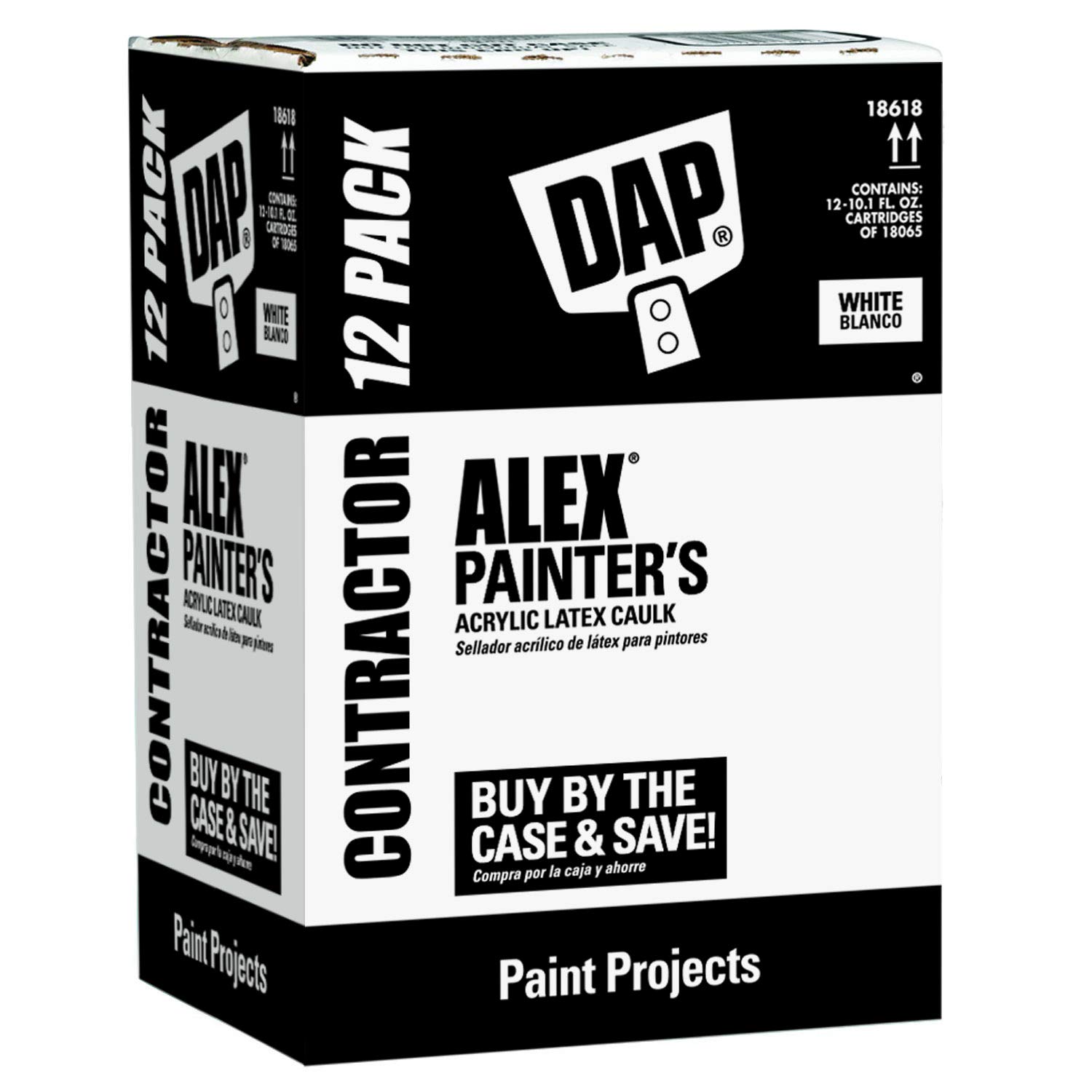
The DAP Alex painter’s caulk is a household name for a reason. It is a reliable acrylic latex formula that is paintable in just 2 hours and cleans up with water. The 12-pack contractor pack is the most cost-effective entry point if you are sealing trim in several rooms or tackling a flip property.
Experienced users note that this caulk shrinks more noticeably than siliconized alternatives, especially on gaps beyond a quarter inch. A second coat is often required for thicker cracks to look flush. However, once painted, the finish is smooth and crack-free under normal conditions.
It bonds well to wood, drywall, and plaster. For the price, it does the job. Just do not expect it to bridge wide gaps or handle extreme wood movement without some follow-up touch-up work.
Why it’s great
- Industry-standard low price for a 12-pack contractor bundle
- Paintable in 2 hours with water clean-up
- Reliable adhesion on wood, plaster, and drywall
Good to know
- Shrinks more than premium acrylic — second coat often needed
- Not recommended for wet areas or large gaps
6. ESUFEIR Silicone Caulk Strip

If you dread handling a caulking gun, the ESUFEIR peel-and-stick silicone strip offers a neat alternative. The U-shaped design fits snugly over right-angle corners on baseboards, window sills, and bathtub edges. It is 118 inches long, hydrophobic, and features a 7/16-inch adhesive backing for strong bonding.
Installation is fast: clean the surface, apply the included adhesion promoter, peel, and press. Users report that it seals effectively against water and dust, and it eliminates the mess of squeezing and tooling wet caulk. The silicone material is flexible and stretchy without deforming.
The downside is that it works best on smooth, straight surfaces. It cannot fill irregular or deep gaps — those require traditional caulk. Also, adhesion can fail in cold conditions unless you pre-warm the strip with a hairdryer. It is a niche solution for the right job, not a universal replacement for caulk.
Why it’s great
- Zero mess — no gun, no tooling, no cleanup
- Waterproof silicone with excellent flexibility
- 118 inches covers multiple rooms from one roll
Good to know
- Not suitable for filling deep or uneven gaps
- Adhesion weakens in cold temperatures without pre-heating
7. Kikerike Vinyl Baseboard Molding
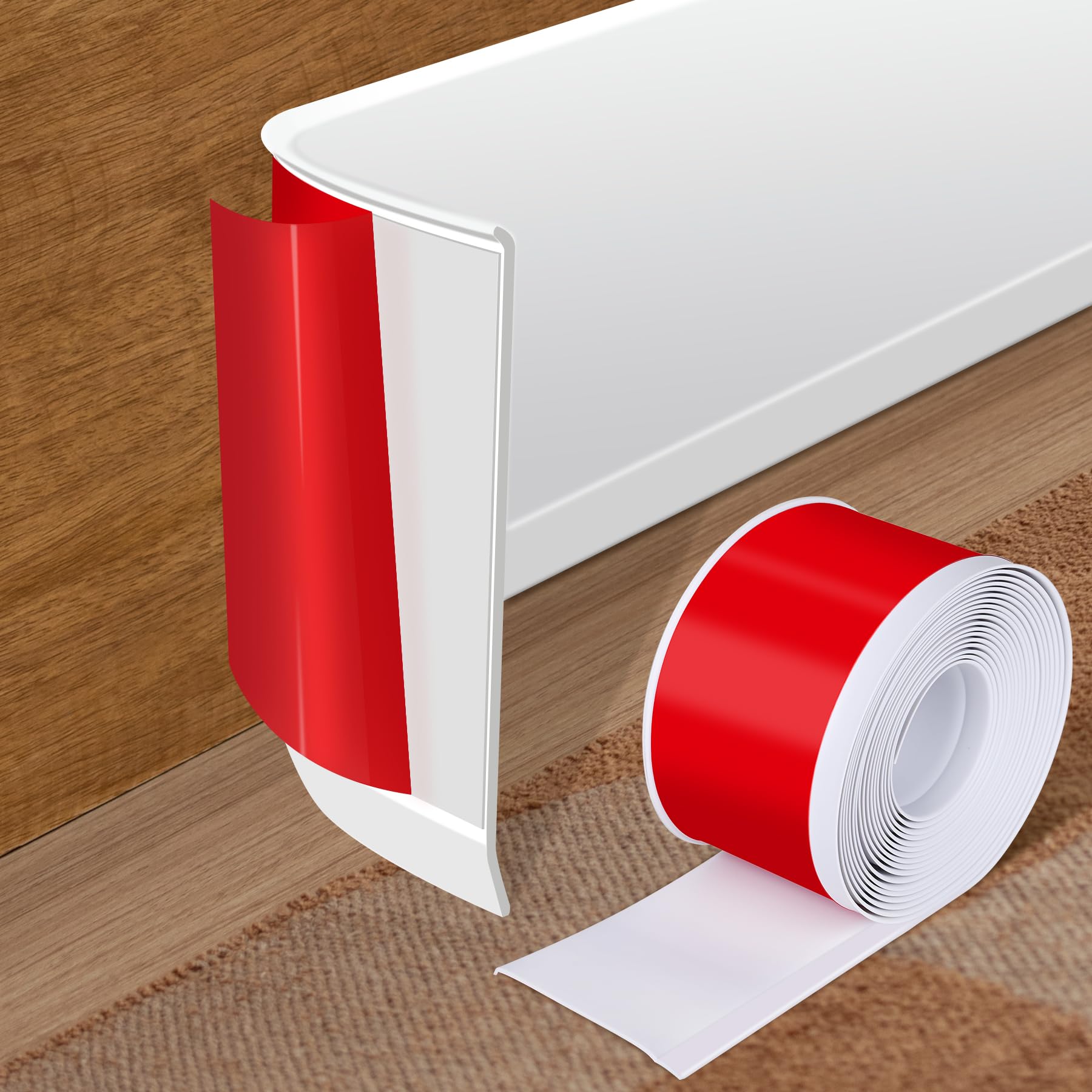
This Kikerike product is not a caulk but a 4-inch tall, 40-foot long vinyl cove base molding that covers large gaps between the wall and floor. It uses a pre-installed adhesive backing for a peel-and-stick installation. This is the solution for bridging a half-inch gap where caulk would simply drip through.
The PVC material is waterproof and moisture-resistant, making it ideal for garages, basements, and bathrooms. The “toe” design hugs the floor and prevents dust accumulation in the gap. Users report strong initial adhesion, even on beat-up drywall, and flexibility to wrap around posts without puckering.
It is a completely different tool than tube caulk — think of it as a permanent trim cover for ugly gaps. It does not replace the need for a fine bead of caulk along the top edge to seal to the wall. For quick, large-gap coverage, it is a practical, budget-friendly alternative.
Why it’s great
- Bridges massive gaps (up to 4 inches) that caulk cannot fill
- Waterproof PVC with easy peel-and-stick install
- Flexible enough to wrap around posts and corners
Good to know
- Not a substitute for caulk — still need to seal the top edge
- 8mm thick flat molding, not a traditional caulk bead
FAQ
Can I use pure silicone caulk on baseboards?
How do I prevent baseboard caulk from cracking after a few months?
Is peel-and-stick caulk strip as durable as tube caulk?
How long should I wait before painting over new baseboard caulk?
Final Thoughts: The Verdict
For most users, the best baseboard caulk winner is the GE Max Shield Painter’s because its extreme flexibility and 60-year durability guarantee you will never recaulk. If you want a low-odor, bulk option for a whole-house project, grab the Akfix AS606 for its superior flow control and cap design. And for a completely mess-free, quick fix on straight edges, nothing beats the ESUFEIR Silicone Strip.