
Our readers keep the lights on and the weekend projects moving. As an Amazon Associate, I earn from qualifying purchases.
You round the corner expecting a squirrel, and there’s a fox fixing the latch on your shed door. The difference between a memory and a guess is whether your camera caught it. For the backyard naturalist, a wildlife camera is less about trophy shots and more about understanding the creatures sharing your space — which requires a camera that sees clearly day and night, triggers fast, and doesn’t need weekly maintenance.
I’m Rikta — the co-founder and writer behind FitlyFast. I’ve spent hundreds of hours dissecting specifications from cellular connectivity protocols to no-glow LED wavelengths and battery chemistry trade-offs across this category to help you navigate the options with confidence.
Whether you need a cellular model that sends photos directly to your phone or a non-cellular budget-friendly option for the trail, finding the right fit depends on matching features to your specific use case. This guide breaks down the best backyard wildlife camera options available today.
How To Choose The Best Backyard Wildlife Camera
Selecting a backyard wildlife camera isn’t just about megapixels. The best camera for your yard depends on where you place it, how often you visit it, and whether you want real-time updates. Here are the key factors to weigh before buying.
Connectivity: Cellular, WiFi, or Standalone
Cellular cameras send images directly to your phone via 4G LTE — perfect for remote areas without home WiFi. WiFi cameras connect to your home network for instant downloads when you’re nearby, but most require you to be within Bluetooth range to wake the camera. Standalone (non-connected) cameras store images on an SD card, which you retrieve manually. For a backyard within WiFi range, a connected camera saves trips; for a property miles away, cellular is the only hands-free choice.
Night Vision: No-Glow vs. Low-Glow
No-glow infrared LEDs emit no visible light, making the camera invisible to animals and humans — ideal for skittish wildlife or security monitoring. Low-glow LEDs produce a faint red glow visible up to 50 feet but typically offer better illumination range. If you want to capture coyotes, foxes, and wary bucks without spooking them, choose no-glow. For maximum night visibility in open areas, low-glow may be the better trade-off.
Trigger Speed and Detection Range
Trigger speed determines how fast the camera captures after sensing motion. A 0.1-second to 0.5-second trigger is essential for fast-moving animals like rabbits, foxes, and birds. Detection range — typically 65 to 100 feet — defines how far the camera can sense movement. A wider detection area and faster trigger speed mean fewer missed shots and more complete behavioral data.
Power and Battery Life
Battery strategy varies widely. Standard AA-powered cameras require periodic changes. Solar-powered models with built-in rechargeable packs can run for months without intervention. Premium cellular cameras with lithium battery cartridges can last six months or longer. For a set-it-and-forget-it backyard setup, solar or long-life cellular cameras reduce maintenance dramatically.
Quick Comparison
On smaller screens, swipe sideways to see the full table.
| Model | Category | Best For | Key Spec | Amazon |
|---|---|---|---|---|
| Tactacam Reveal X 3.0 | Cellular | Hands-off property monitoring | 6+ month battery life | Amazon |
| SPYPOINT Flex-S-Dark | Solar Cellular | Eco-friendly extended use | Built-in solar panel | Amazon |
| Moultrie Edge 2 Pro | Cellular | AI false trigger elimination | 40MP photos + 1440p video | Amazon |
| Cuddeback CuddeLink IR (4-Pack) | Cellular Mesh | Large property coverage | Links up to 23 cameras | Amazon |
| TT Nature Bird Feeder with Camera | WiFi Bird Feeder | Watching birds up close | AI identifies 10,000+ species | Amazon |
| MAXDONE Solar Trail Camera 2 Pack | WiFi Solar | Budget-conscious backyard setup | 64MP photos + 4K video | Amazon |
| Meidase P70 2 Pack | Non-Connected | Simple SD card operation | 0.1s trigger speed | Amazon |
In‑Depth Reviews
1. Tactacam Reveal X 3.0 Cellular Trail Camera
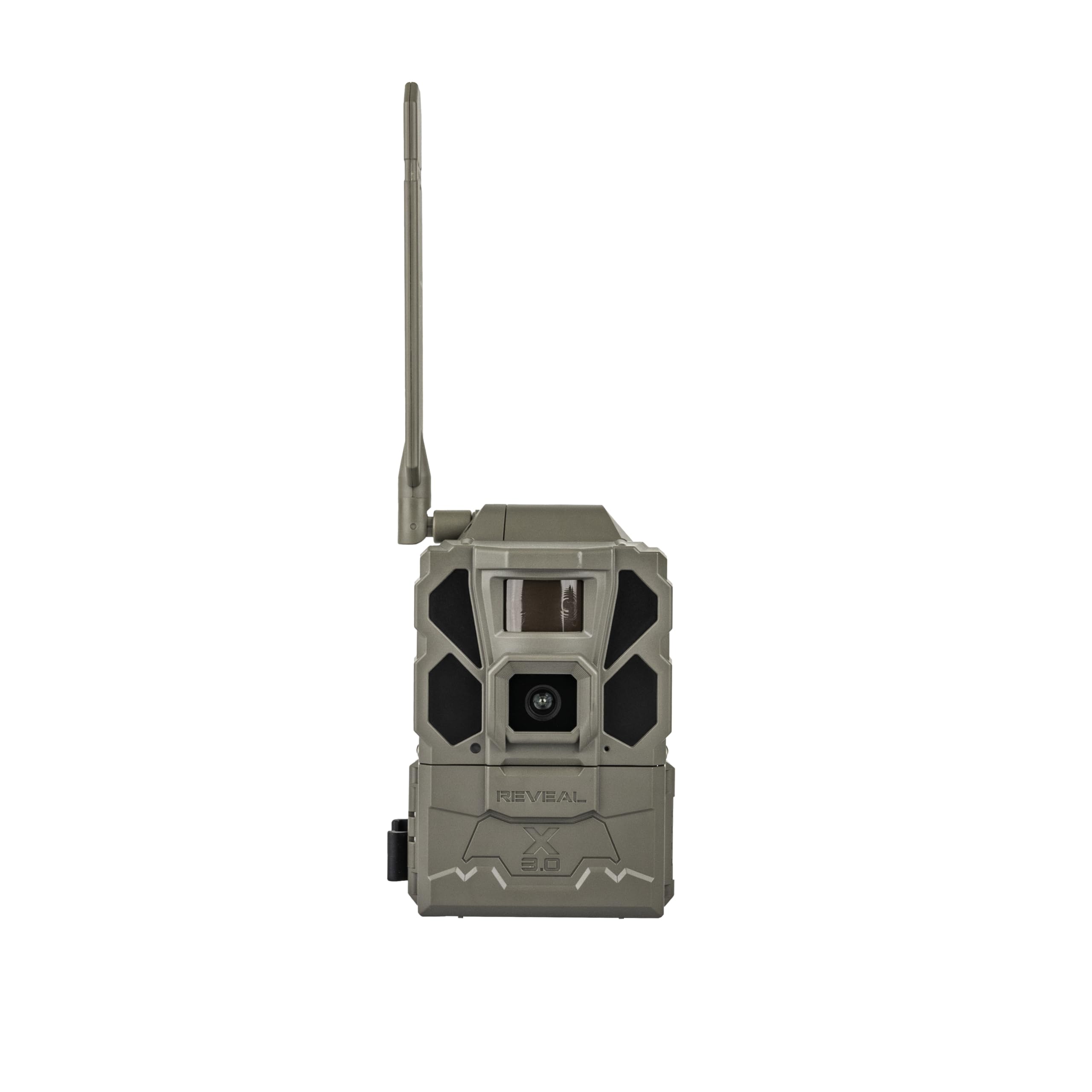
The Tactacam Reveal X 3.0 sits at the top for a reason: it combines true set-it-and-forget-it reliability with outstanding image quality and battery life. Independent testing confirms this model runs six months or more on a single set of batteries when paired with the lithium cartridge, which means you’re not hiking back into the woods every few weeks. The auto-connect LTE system swaps between AT&T and Verizon automatically, so dead zones from a single carrier are a non-issue.
Setup takes under ten minutes — the SIM card and antenna come pre-installed, so you just scan the QR code and follow the app prompts. The sub-half-second trigger pairs with a 3-shot burst mode, giving you three consecutive photos per motion event. This is critical for catching fast-moving animals before they leave the frame. Built-in GPS tracks camera location in the app, and no SD card is required since photos are stored on the device and sent directly to your phone.
Rural landowners and hunters alike use this camera for property monitoring, gate security, and wildlife scouting. The image quality — 4K photos and 1080p video — is crisp both day and night, and the low-glow IR flash provides excellent illumination without giving away the camera’s position. For anyone who wants a premium, low-maintenance solution, this is the benchmark.
Why it’s great
- Battery life up to six months reduces maintenance visits
- Auto-connect LTE works with AT&T and Verizon for better coverage
- Pre-installed SIM and QR code setup get you running fast
Good to know
- Cellular subscription required for photo transmission
- Low-glow IR may be visible to extremely wary wildlife
2. SPYPOINT Flex-S-Dark Solar Cellular Trail Camera
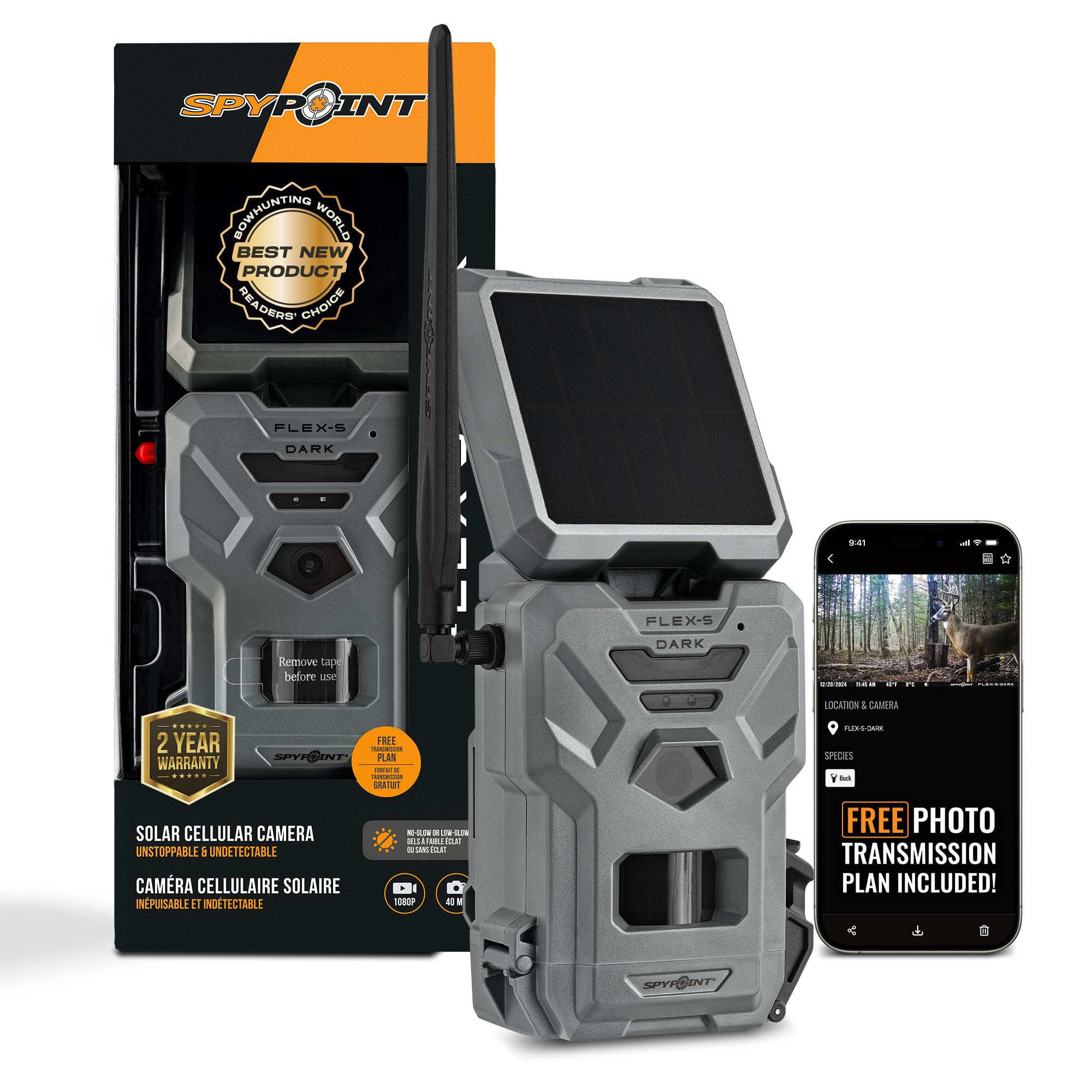
The SPYPOINT Flex-S-Dark takes a different approach: it builds the solar panel directly into the camera housing, eliminating the need for separate panels or frequent battery swaps. The internal battery can replace up to 1,000 standard AA batteries over its lifespan, and in good sunlight, users report the camera running for months without any power intervention. This makes it a strong choice for locations where you want to minimize physical visits.
It shoots 40MP photos and 1080p video with sound, and the no-glow IR LEDs ensure the camera remains invisible to animals at night. The free photo plan includes 100 images per month with no commitment — enough for casual backyard monitoring. If you need more, plans start at a modest monthly fee for unlimited transmission. The app supports live streaming video and remote viewing, letting you check real-time conditions from anywhere with cellular coverage.
The build quality is heavy-duty with a reinforced ghost grey casing and a semi-flexible antenna that resists damage. The upgraded latch is designed for gloved use in cold weather, a thoughtful touch for hunters. Some users note that the unlimited premium plan does not include video transmission without an additional fee, so review the plan details before subscribing. For eco-conscious buyers who want total hands-off operation, this is a standout.
Why it’s great
- Built-in solar panel and rechargeable battery reduce waste
- No-glow night vision keeps animals undisturbed
- Free 100-photo monthly plan with no contract
Good to know
- Unlimited plan requires separate fee for video transmission
- Signal-dependent; camera may lag in very remote areas
3. Moultrie Edge 2 Pro Cellular Trail Camera

The Moultrie Edge 2 Pro stands apart for its intelligent AI false trigger elimination. Instead of sending you hundreds of images of waving grass or swaying branches, the camera’s onboard AI identifies bucks, does, turkeys, humans, and other animals, sending only the captures you actually care about. This is a game-changer for anyone who has ever had to scroll through thousands of irrelevant images to find the few that matter.
Image quality is top-tier at 40MP photos and 1440p video with HD audio. The “Live Aim” feature lets you see the camera’s field of view from your phone before finalizing placement, eliminating guesswork. Its 100-foot detection range with no-glow flash keeps your setup discreet. The 8GB of built-in memory plus unlimited cloud backup means you never need an SD card — your images are safe even if the camera is lost or stolen.
Moultrie data plans start at a modest monthly fee with no contract, and the camera integrates with the onX Hunt app for mapping. The 2-year warranty from activation provides added peace of mind. The main consideration is that the camera requires 16 AA batteries or an optional solar pack, and heavy cellular transmission can drain batteries faster than some competitors. For those who value intelligent filtering above all else, this camera is a superb fit.
Why it’s great
- AI false trigger elimination saves hours of image sorting
- Built-in 8GB memory plus unlimited cloud backup
- Live Aim preview ensures perfect camera placement
Good to know
- Requires 16 AA batteries or optional solar pack
- Cellular plan needed for remote image transmission
4. Cuddeback CuddeLink IR (4-Pack)
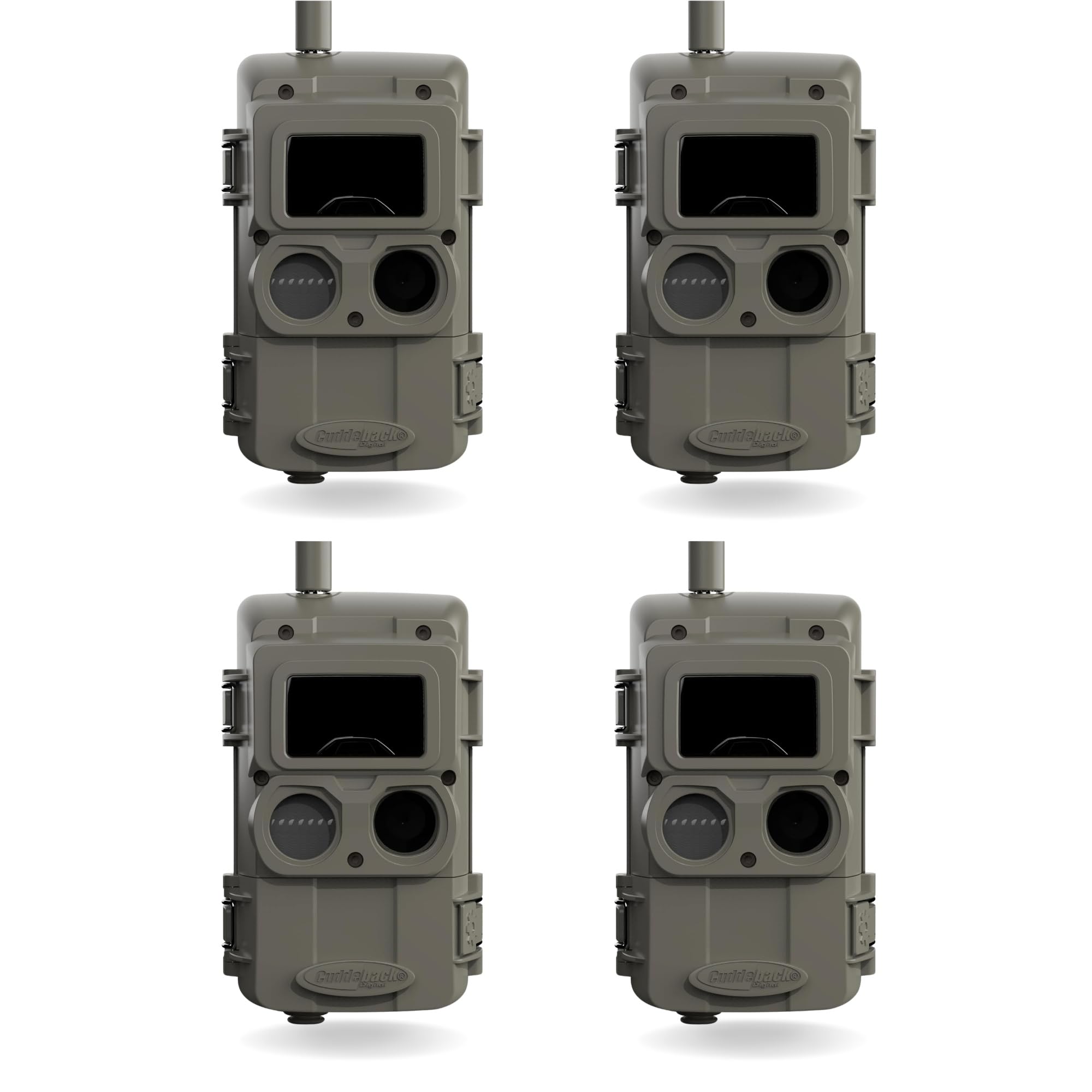
The Cuddeback CuddeLink IR system solves a unique problem: covering large properties without paying for multiple cellular plans. The 4-pack allows you to link up to 23 cameras in a wireless mesh network, with all images relayed to a single cellular gateway camera. You only pay for one cellular plan, yet you can monitor cameras spread across hundreds of acres. This is the definitive solution for landowners with extensive property.
The 850nm low-glow IR LEDs provide excellent night illumination beyond 100 feet, and the quarter-second trigger speed is fast enough to capture most wildlife. The 7 sensitivity settings let you fine-tune motion detection to avoid false triggers from small animals or blowing leaves. Each camera runs on 4 D-cell batteries, and with the optional solar panel, users report battery life exceeding two years. The cameras support SD cards up to 256GB for local backup.
Setup involves pairing the cameras through the app, and firmware updates occur over the air. The system is particularly valuable for properties with limited cell service at each camera location — only the gateway needs a good signal. The initial investment is significant, but for those deploying multiple cameras, the long-term savings on cellular plans are substantial. Cuddeback’s reputation for durability over 15 years of product iterations adds confidence.
Why it’s great
- Link up to 23 cameras through a single cellular plan
- D-cell batteries with solar yield multi-year runtime
- 850nm low-glow IR provides excellent night illumination
Good to know
- Higher initial cost for the multi-camera system
- Low-glow IR may be visible to very alert animals
5. TT Nature Bird Feeder with Camera
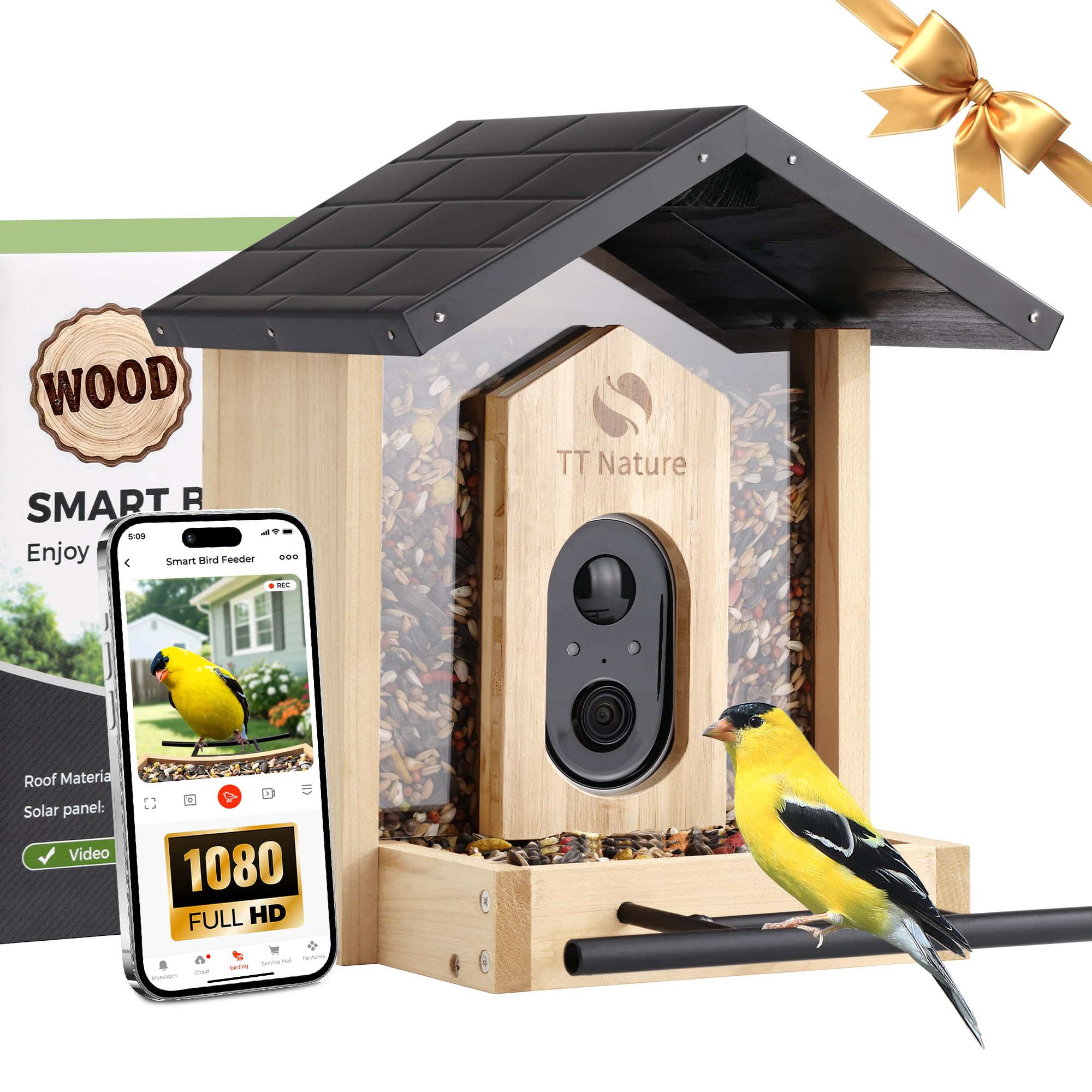
For those more interested in cardinals and chickadees than coyotes and deer, the TT Nature Bird Feeder with Camera offers a specialized experience. It’s not a traditional trail camera — it’s a bird feeder with an integrated 1080p camera, AI that identifies over 10,000 bird species, and instant notifications sent to your phone. The ultra-wide angle lens and 0.5-second detection time ensure you capture every visitor, even the quick ones.
The AI identification system requires a subscription for full access, but even without it, the camera delivers clear photos and video of your feathered guests. The built-in microphone records bird songs, adding an auditory layer to the experience. The unit is powered by a solar panel, which keeps the camera running without battery changes. Multi-device sharing allows family members to view the same feeder simultaneously on their phones.
The construction uses premium wood and metal, giving it a natural look that blends into a garden setting. Squirrel deterrent features include customizable alarms that trigger when unwanted animals approach. Some users report that the wood can suffer damage from persistent squirrels, but the manufacturer offers responsive replacement service. For bird enthusiasts who want to identify species without a field guide, this is an engaging tool.
Why it’s great
- AI identifies over 10,000 bird species automatically
- Solar-powered for sustainable, low-maintenance operation
- Recorded bird songs add context to visual captures
Good to know
- Full AI bird identification requires a subscription
- Wood construction may be chewed by persistent squirrels
6. MAXDONE Solar Trail Camera 2 Pack
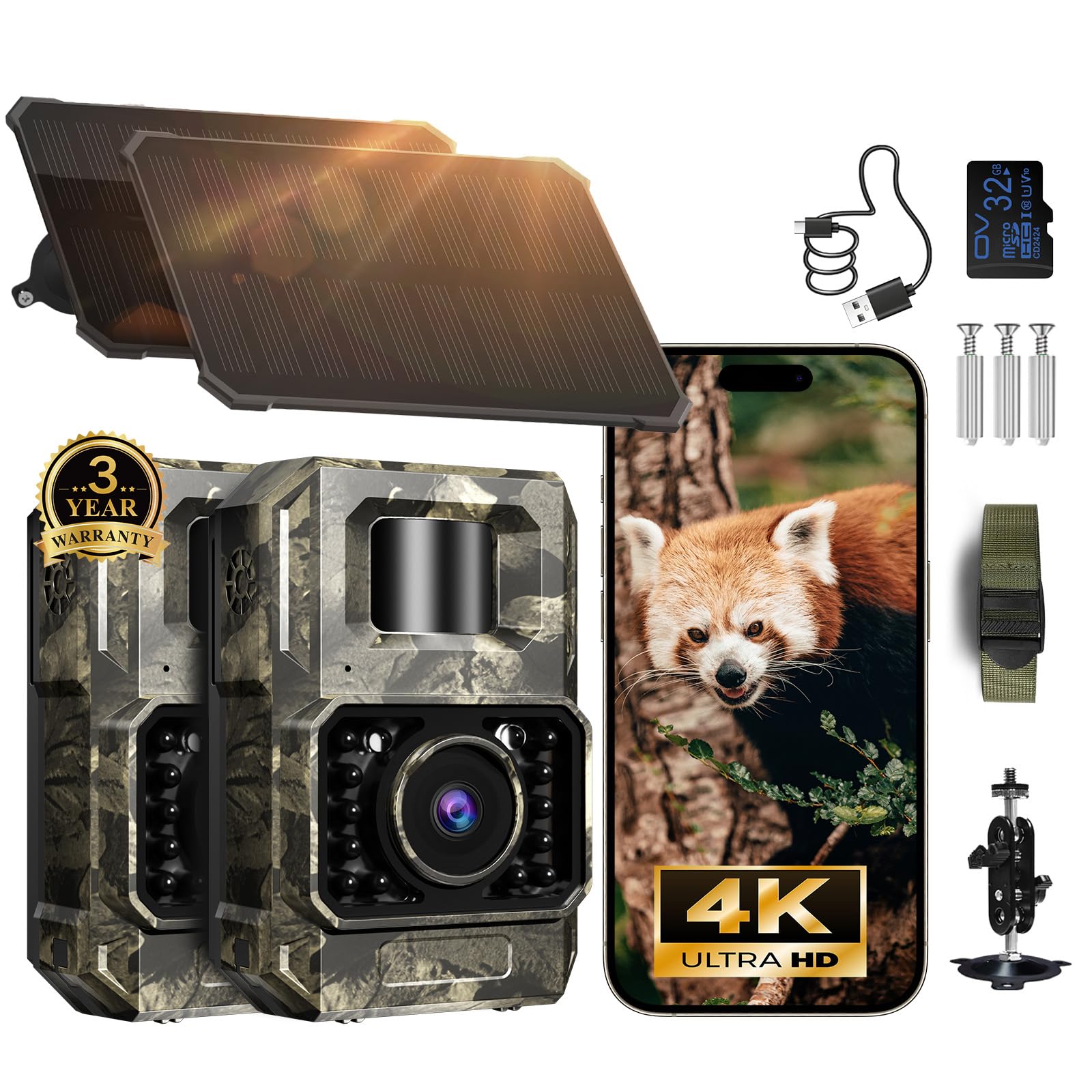
The MAXDONE Solar Trail Camera 2 Pack offers an impressive feature set at an entry-level price point. It captures 64MP photos and 4K video at 30fps, and includes a 32GB SD card right in the box — no extra purchases needed. The WiFi and Bluetooth connectivity allows you to preview and download images to your phone within about 55 feet of the camera, using the TrailCam GO app. However, it does not support home WiFi networks, so remote viewing is not possible.
The built-in rechargeable battery paired with a detachable solar panel keeps the camera running for extended periods. Users report over a month of operation even in cloudy conditions. The IP66 waterproof rating ensures reliable performance in rain and snow. The low-glow 850nm IR LEDs provide night vision up to 65 feet, and motion activation is fast enough to capture raccoons, coyotes, and deer reliably.
Timelapse mode, loop recording, and password protection add flexibility. The 2-year warranty and included mounting straps, bracket, and manual make it a complete kit. The main trade-off is that the camera requires Bluetooth proximity to wake the WiFi connection, preventing remote access. For a backyard within 55 feet of your house, this is a capable budget-friendly option that delivers solid image quality.
Why it’s great
- Two cameras plus solar panels and 32GB SD card included
- 64MP photos and 4K video deliver detailed captures
- Built-in rechargeable battery with solar extends runtime
Good to know
- No remote viewing — must be within Bluetooth range to connect
- Actual effective resolution may be lower than advertised megapixels
7. Meidase P70 2 Pack Trail Camera
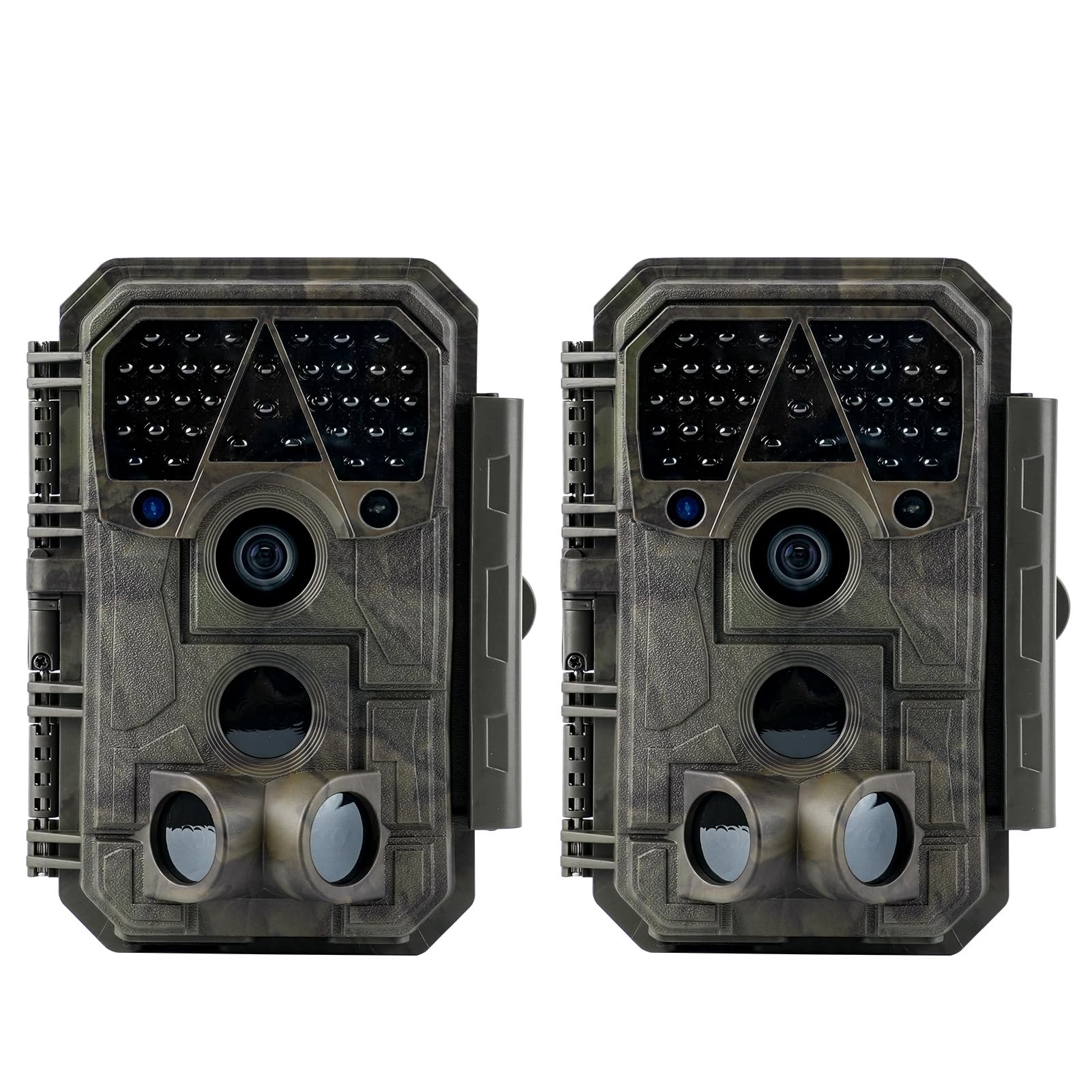
The Meidase P70 2 Pack is a straightforward, non-connected trail camera that excels at the basics: it captures 64MP still images and 1296p HD video with a no-glow 940nm IR night vision system that reaches 100 feet. The 0.1-second trigger speed is among the fastest in this class, using two additional side sensors to catch animals moving from the periphery. This makes it an excellent choice for monitoring active game trails or garden perimeters.
The camera uses H.264 video technology to reduce file sizes, outputting in .mp4 or .mov format for universal compatibility. The 2.4-inch color display and intuitive menu system make setup straightforward without requiring an app. It’s IP66 waterproof and operates reliably in all weather conditions, including Florida heat and storms, according to user reports. The package includes two cameras, mounting straps, USB cables, and manuals.
The main limitations: this is a non-connected camera, meaning you must retrieve the SD card to view images. It does not support WiFi or cellular connectivity. Battery life is good for photos but drains faster with video, especially in high-wind conditions that cause many false triggers. Users recommend Energizer Lithium AA batteries for best reliability. For those who want a simple, fast-triggering camera without subscription fees, this 2-pack offers strong value.
Why it’s great
- 0.1-second trigger speed captures fast-moving animals
- Two cameras in one package for multi-location coverage
- No-glow 940nm IR night vision reaches 100 feet
Good to know
- No cellular or WiFi connectivity; requires manual SD card retrieval
- Video mode drains batteries faster than photo mode
FAQ
How often do I need to change batteries on a backyard wildlife camera?
Do I need a WiFi connection for my backyard wildlife camera to work?
What is the difference between no-glow and low-glow night vision?
How many megapixels do I really need for identifying backyard wildlife?
Final Thoughts: The Verdict
For most users, the best backyard wildlife camera winner is the Tactacam Reveal X 3.0 because it balances premium features, outstanding battery life, and reliable cellular connectivity in a package that requires minimal maintenance. If you want a solar-powered eco-friendly solution, grab the SPYPOINT Flex-S-Dark for its built-in solar panel and no-glow night vision. And for covering a large property with a single cellular plan, nothing beats the Cuddeback CuddeLink IR 4-Pack mesh network system.