
Our readers keep the lights on and the weekend projects moving. As an Amazon Associate, I earn from qualifying purchases.
Keeping an aquatic turtle healthy means getting their diet right—pellets that cloud the water, lack essential calcium for shell growth, or get ignored by picky eaters can turn daily feeding into a chore. The difference between a thriving turtle and one that merely survives often comes down to the protein-to-calcium ratio in every floating pellet.
I’m Rikta — the co-founder and writer behind FitlyFast. I’ve spent hundreds of hours combing through ingredient panels, customer experiences, and nutritional specs to separate the genuinely effective formulas from the ones that just make the water dirtier.
Whether you have a red-eared slider, a musk turtle, or a map turtle, the best aquatic turtle food balances complete nutrition with minimal water fouling and high palatability across all life stages.
How To Choose The Best Aquatic Turtle Food
Aquatic turtles have specific nutritional needs that differ from land tortoises. The right food supports shell development, immune function, and clear water. Here are the three most critical factors to evaluate before buying.
Protein Content and Source
Young turtles require higher protein levels around 40–50% for growth, while adults thrive on 25–35% protein to prevent obesity and shell pyramiding. Look for fish meal, shrimp, or insect-based proteins listed as the first ingredient rather than unspecified by-products.
Calcium-to-Phosphorus Ratio
A ratio of at least 2:1 calcium to phosphorus is essential for healthy shell and bone development. Many budget foods skimp on calcium, forcing owners to add separate supplements. Check the guaranteed analysis on the label for these numbers.
Floating vs. Sinking Pellets
Floating pellets mimic natural surface feeding and let you monitor how much your turtle eats, reducing leftover food that fouls the water. Sinking pellets work for bottom-feeders but often get missed, leading to decay and ammonia spikes.
Quick Comparison
On smaller screens, swipe sideways to see the full table.
| Model | Category | Best For | Key Spec | Amazon |
|---|---|---|---|---|
| Hikari Saki-Turtle Sticks | Premium Floating Stick | Picky eaters & clean water | Blend with Hikari Germ; reduces tank cleaning cycles | Amazon |
| Mazuri Aquatic Turtle Food (25 lb) | High-Protein Floating Pellet | Large or multiple turtles | 25 lbs; high fish/animal protein; no supplements needed | Amazon |
| Zoo Med ReptiSticks | Floating Pellet Mix | Simulated natural diet | Fish, shrimp, and kale ingredients | Amazon |
| Fluker’s Aquatic Turtle Diet | Complete Meal Pellet | Value & long-term supply | 3.5 lbs; floating pellets with added calcium | Amazon |
| Tetra ReptoMin Floating Sticks | Multi-Species Floating Stick | Newts, frogs & turtles | 10.59 oz; high-quality protein & Vitamin C | Amazon |
| Rep-Cal Box Turtle Food | Veterinary Formulated | Box turtles & picky species | 12 oz; natural fruit & plant ingredients | Amazon |
| Mazuri Tortoise Diet (25 lb) | Tortoise & Omnivore Formula | Box turtles & forest tortoises | 25 lbs; large particle; moderate protein | Amazon |
In‑Depth Reviews
1. Hikari Saki-Turtle Sticks
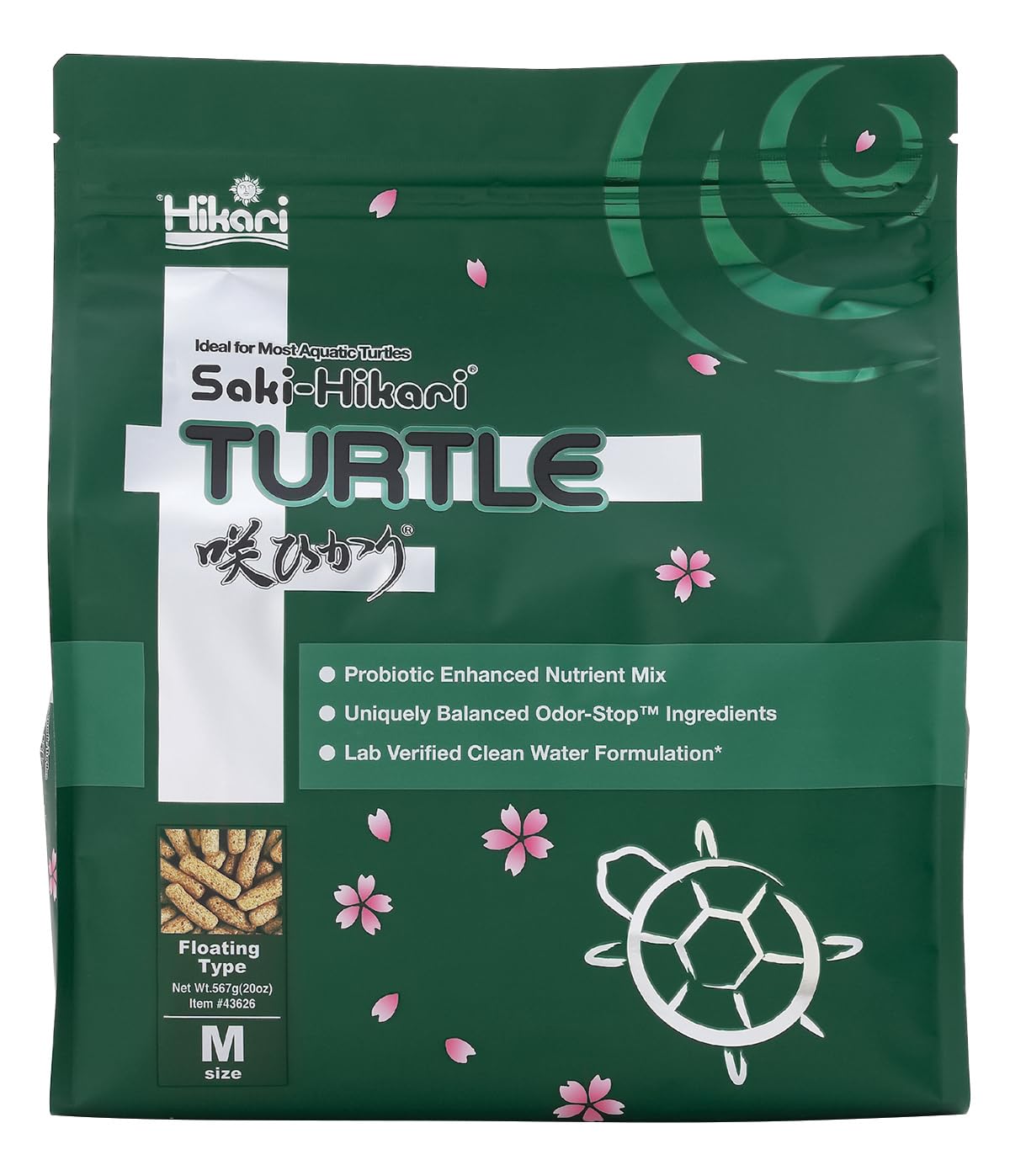
Hikari’s Saki-Turtle Sticks are engineered with a proprietary germ called Hikari Germ that enhances digestibility, which directly translates to less waste in the water. Owners of picky red-eared sliders report a dramatic shift in feeding enthusiasm, with some turtles refusing other brands after switching. The 20-ounce bag offers concentrated nutrition that keeps tank cleanings down to two cycles instead of five.
These sticks float well at the surface, encouraging natural feeding behavior while letting you gauge exactly how much is consumed. The formula avoids artificial colors and flavors, relying on fish-based proteins that match what aquatic turtles would hunt in the wild. European and Japanese manufacturing standards add an extra layer of quality assurance.
Long-term users with turtles over 19 years old note improved shell condition and more vibrant skin coloration after adopting this diet. The pellets maintain structural integrity in water for several minutes without disintegrating into a cloud, a common complaint with cheaper mash-style foods.
Why it’s great
- Exceptional digestibility reduces tank ammonia buildup
- Highly palatable even for notoriously picky turtles
- No artificial dyes or preservatives
Good to know
- Premium-tier pricing per ounce compared to basic pellets
- Bag is resealable but storing in an airtight container extends freshness
2. Mazuri Aquatic Turtle Food (25 lb)

Mazuri’s Freshwater Formula is the gold standard for keepers with multiple turtles or large species like Chinese golden thread turtles. The 25-pound bag delivers a floating pellet that’s nutritionally complete, meaning no extra vitamin or mineral supplements are needed. The formula is loaded with fish and animal protein to match the carnivorous nature of most aquatic turtles.
Customers who feed pond turtles or community tanks report that even goldfish and koi will steal these pellets, underscoring their palatability. The small pellet size works for both juveniles and adults, and the floating design minimizes waste that would otherwise settle and decay. A 4-year user feeding three musk turtles and a 10-pound golden thread turtle confirms the diet supports consistent health when used as the bulk of the ration.
Natural vitamin E is included to support immune function, and the lack of artificial flavors keeps the ingredient profile clean. The bag’s size makes it ideal for serious hobbyists who want to reduce per-feeding costs without sacrificing nutritional density.
Why it’s great
- Giant 25-pound bag offers the lowest cost per serving in this list
- Complete nutrition eliminates need for separate calcium or vitamin powders
- Floating pellets suit surface-feeding species perfectly
Good to know
- Large bag requires adequate storage space to maintain freshness
- High protein level may be excessive for herbivorous turtle species
3. Zoo Med ReptiSticks
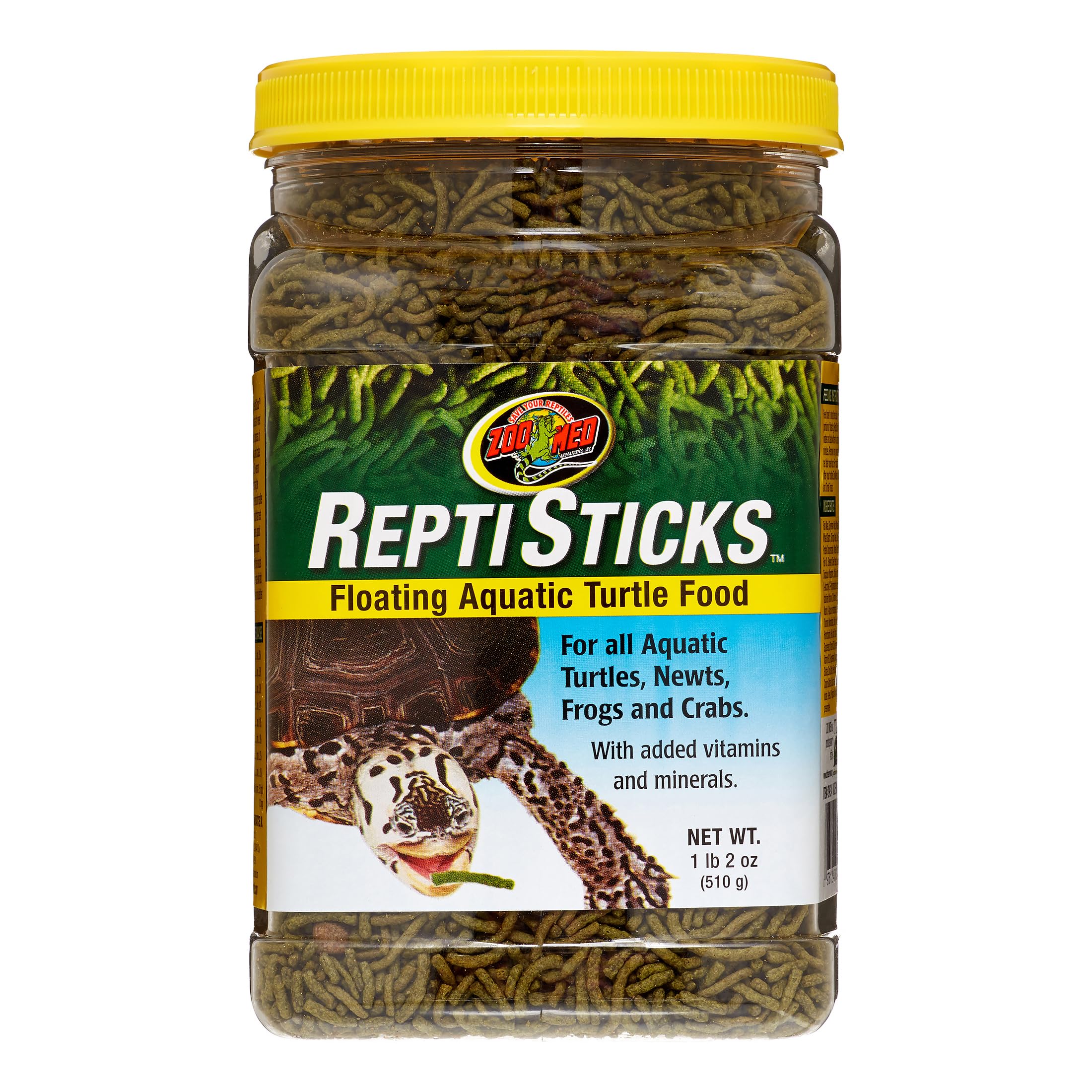
Zoo Med formulates these floating sticks with real fish, shrimp, and kale to replicate what aquatic turtles would encounter in nature. The 18-ounce tub provides a varied protein profile that keeps feeding interesting for species prone to food boredom. The sticks hold their shape well in water, reducing the cloudiness that plagues lower-quality pellet foods.
Keepers of turtles that prefer “floaters” over “sinkers” find this product particularly reliable. The inclusion of kale adds plant-based fiber that supports digestive regularity, a detail often overlooked in pure-protein formulations. Multiple customers note that water changes became less frequent after switching to ReptiSticks.
Made in the USA, this food is suitable for turtles, newts, frogs, and even aquatic crabs. The texture is slightly softer than some competing sticks, which makes it easier for younger turtles to bite and chew without struggling.
Why it’s great
- Kale and shrimp ingredients mimic a foraged wild diet
- Tub container is resealable and stackable for storage
- Soft texture is gentle on juvenile turtle jaws
Good to know
- May contain shrimp allergen for sensitive keepers
- Some finicky turtles may still reject it if accustomed to stickier pellets
4. Fluker’s Aquatic Turtle Diet (3.5 lb)
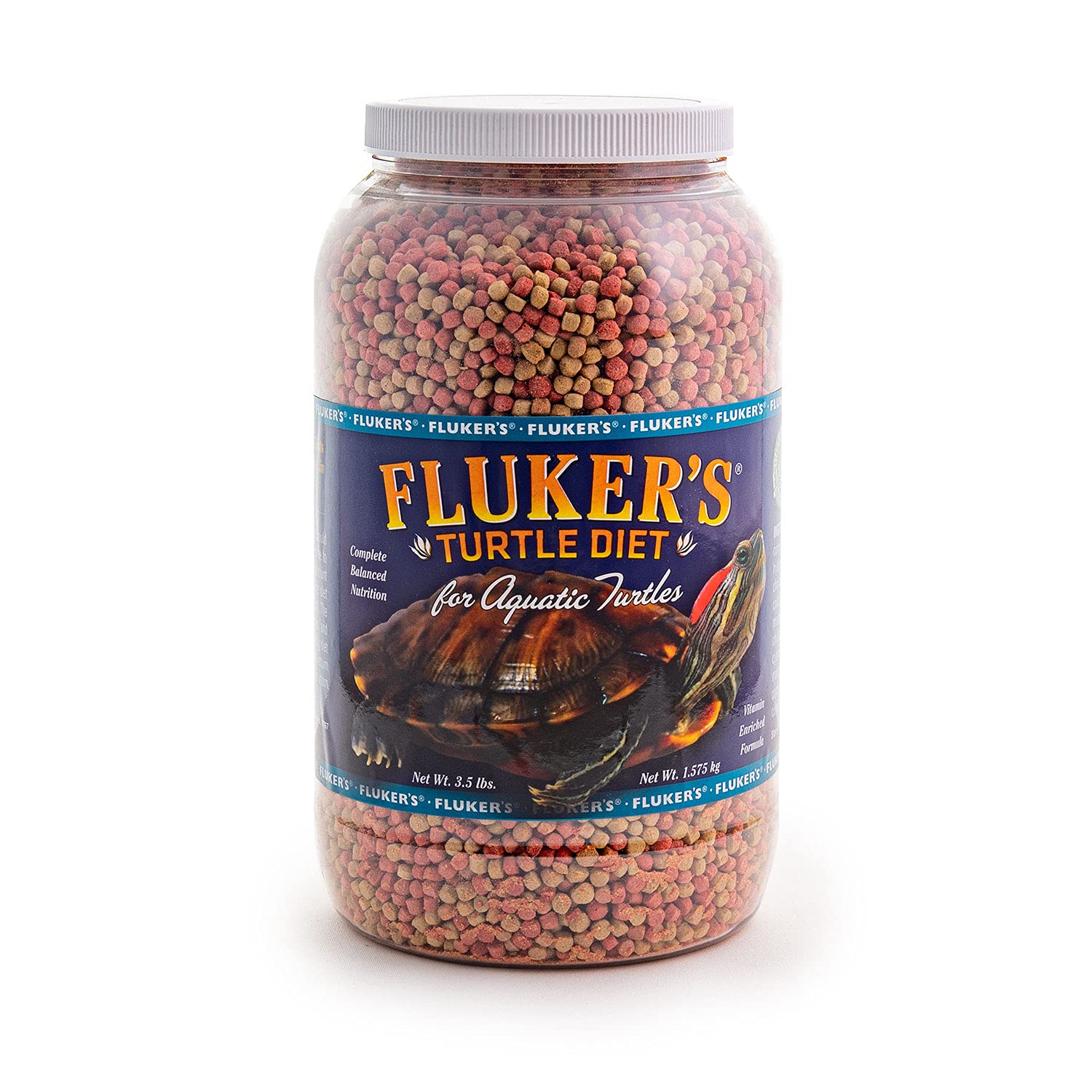
Fluker’s packs 3.5 pounds of floating pellets into a single bag, making it a strong option for owners who want a multi-month supply without committing to a 25-pound bulk bag. The formula is complete and balanced, featuring added calcium to support shell strength in rapidly growing juveniles. The pellets stay on the surface long enough for turtles to grab them before they soften and sink.
Owners of African side-neck turtles and musk turtles report consistent acceptance, with many using this as their primary daily diet. The pellet size suits both small and large mouths, breaking apart cleanly without forming a pasty residue that fouls filters. Several pond keepers note that the food does not dirty their outdoor turtle ponds even when fed daily.
The high-protein content appeals to carnivorous species, but the bag also works well when mixed with dried shrimp or mealworms for variety. Customers appreciate that the floating design lets them watch their turtles feed, adding enrichment to the daily routine.
Why it’s great
- Large 3.5-pound bag provides extended supply at a mid-range cost
- Added calcium promotes healthy shell development
- Does not cloud water when fed in proper amounts
Good to know
- Bag seal is not airtight; transfer to a container for longer storage
- Some turtles may need a brief adjustment period from stick to pellet shape
5. Tetra ReptoMin Floating Sticks (10.59 oz)

Tetra ReptoMin Floating Sticks are arguably the most recognized name in aquatic turtle nutrition, and for good reason. These sticks are formulated to work for turtles, newts, and frogs, making them a versatile choice for mixed-species tanks. The precise blend of nutrients includes calcium and Vitamin C, which support both shell integrity and immune defense against common aquatic illnesses.
The sticks float on the surface without immediately dissolving, which keeps the tank cleaner by reducing uneaten particles. Owners of large red-eared sliders about 12 inches in diameter praise the 10.59-ounce container as a surprisingly generous amount that lasts weeks with daily feedings. Multiple customers note that their turtles actively prefer these sticks over frozen shrimp or other treats.
The balanced protein profile suits all life stages, from hatchlings to mature adults. Tetra has decades of research behind this formula, and the high palatability means even newly acquired turtles tend to accept it without a stressful transition period.
Why it’s great
- Trusted brand with decades of herpetological nutrition research
- Floating sticks minimize water fouling from uneaten food
- Formulated for multiple aquatic species in one tank
Good to know
- Container size may feel small for keepers with multiple large turtles
- Contains fish meal which may not suit vegan-conscious owners
6. Rep-Cal Box Turtle Food (12 oz)

Rep-Cal’s Box Turtle Food is developed by a reptile nutritionist and veterinarian, so the ingredient profile is tuned specifically for the dietary needs of box turtles. It includes natural plant and fruit ingredients that release a sweet, apple-like scent, which seems to trigger feeding response in even the most hesitant eaters. The 12-ounce carton is compact but dense, providing enough food to gauge whether a picky turtle will accept it.
Owners report that their box turtles eat this mix readily, unlike fresh greens that often get ignored. The pellets must be moistened with warm water before feeding, which softens them and makes the fruit aroma more pronounced. One long-term user describes this as the only packaged food both of their box turtles consistently eat after years of trying different brands.
The veterinary formulation includes targeted vitamins and minerals to support shell and eye health. Keepers of rescues or stressed turtles may find this food especially useful during rehabilitation because its palatability encourages regular feeding.
Why it’s great
- Vet and reptile nutritionist formulated for box turtles
- Fruity scent and taste appeals to notoriously picky box turtles
- Small carton allows trial without large financial commitment
Good to know
- Requires moistening with warm water before each feeding
- Freshness declines after about 6 months in the carton
7. Mazuri Tortoise Diet (25 lb)

Mazuri’s Tortoise Diet is designed for tropical and forest tortoises, adult box turtles, and wood turtles—species that need moderate protein and higher fiber than pure aquatic formulas provide. The large particle size encourages chewing and reduces the risk of gulping air, which can cause floating issues in some reptiles. The 25-pound bag is a bulk option for keepers with multiple tortoises or large outdoor enclosures.
Vitamin A and E are included to support eye health and immune function, two areas where captive tortoises often show deficiencies. Owners of sulcata tortoises weighing 70 pounds confirm the pellets are well-received, and the moderate protein level prevents the rapid growth that can lead to shell deformities. The formula contains no artificial colors or flavors, keeping the ingredient list straightforward.
Many keepers mix this diet with fresh grasses or vegetables to add moisture and variety. The pellets hold up well in humid environments without molding quickly, a practical consideration for outdoor feeding stations.
Why it’s great
- Large particle size promotes natural chewing behavior
- Moderate protein content suits forest tortoises and adult box turtles
- Massive 25-pound bag offers months of food for multiple animals
Good to know
- Not nutritionally complete for fully aquatic turtles like sliders
- Particles are large and may need breaking for tiny juveniles
FAQ
Can I feed my aquatic turtle only pellets every day?
How do I stop turtle pellets from clouding the water?
What is the ideal pellet size for a baby turtle?
Should I choose floating or sinking food for my aquatic turtle?
Final Thoughts: The Verdict
For most users, the best aquatic turtle food winner is the Hikari Saki-Turtle Sticks because their superior digestibility keeps the tank noticeably cleaner while satisfying even the pickiest turtles. If you want bulk quantities for multiple reptiles, grab the Mazuri Aquatic Turtle Food 25 lb bag. And for keepers of box turtles or tortoises who need a moderate-protein option, nothing beats the Mazuri Tortoise Diet.