
Our readers keep the lights on and the weekend projects moving. As an Amazon Associate, I earn from qualifying purchases.
The 65-inch screen size sits at a sweet spot — big enough to deliver a cinematic experience at home without overwhelming a living room. But not all 65-inch panels are created equal. Choosing the wrong model means living with washed-out blacks, motion blur during sports, or a smart interface that lags after a year. This guide breaks down the critical specs that separate a smart buy from a regret.
I’m Rikta — the co-founder and writer behind FitlyFast. I’ve spent countless hours analyzing the latest panel technologies, refresh rates, and smart TV platforms to bring you a straightforward comparison of what truly matters in a 65-inch screen.
Whether you prioritize gaming fluidity, cinematic contrast, or simple everyday streaming, this guide will help you find the right 65 inch smart tv for your specific setup and budget.
How To Choose The Best 65 Inch Smart TV
Three decisions define your TV experience more than anything else: the panel technology, the native refresh rate, and the smart platform. Everything else — bezel design, number of HDMI ports, or peak brightness in nits — supports these core pillars. Understand these three, and the rest becomes easy.
Panel Technology: The Foundation of Picture Quality
The panel determines how your TV reproduces black, how bright it can get, and how colors look from an angle. Mini-LED TVs use thousands of tiny LEDs behind an LCD panel to create deep blacks and high brightness in a well-lit room. OLED and QD-OLED TVs go further — each pixel produces its own light, allowing for perfect black and infinite contrast. For a room with controlled lighting, OLED is the ultimate. For bright living rooms or gaming, a high-end Mini-LED set often provides better value and brighter highlights without burn-in concerns.
Refresh Rate and Motion Handling
If you watch sports, play games, or view fast-action content, native refresh rate matters. A standard 60Hz panel refreshes the image 60 times per second, which is fine for movies and casual TV. A 120Hz or 144Hz panel does this twice as fast, dramatically reducing motion blur and making fast pans look smooth. For gamers with a PS5, Xbox Series X, or a capable gaming PC, a 120Hz panel with HDMI 2.1 support is a must for fluid, tear-free gameplay at 4K resolution.
Smart Platform and Usability
The operating system dictates how you access apps, update features, and control your TV. Roku TV offers the simplest, fastest interface with no bloat. Google TV provides deep integration with Google services and Google Cast. Fire TV is excellent for Amazon Prime subscribers and Alexa smart home users. Samsung’s Tizen and LG’s webOS are both polished but less open. Choose the platform that matches your ecosystem — a fast, intuitive OS prevents daily frustration.
Quick Comparison
On smaller screens, swipe sideways to see the full table.
| Model | Category | Best For | Key Spec | Amazon |
|---|---|---|---|---|
| Samsung The Frame LS03F | Premium Lifestyle | Disguising TV as art | Matte anti-glare screen | Amazon |
| LG OLED G4 | High-End OLED | Reference picture quality | Self-lit OLED pixels | Amazon |
| LG OLED G5 | Flagship OLED | Bright room OLED viewing | 165Hz / 2000+ nits | Amazon |
| Sony BRAVIA 8 II (QD-OLED) | Ultra-Premium | Best image processing & PS5 | XR Processor + AI | Amazon |
| Amazon Ember 65 Mini-LED | Premium Mini-LED | Alexa smart home integration | 144Hz / 512 dimming zones | Amazon |
| Hisense U7 Mini-LED | High-Performance Gaming | Competitive gaming at 165Hz | Native 165Hz / VRR 330 | Amazon |
| Toshiba Z670R Mini-LED | Value Gaming | Affordable 144Hz gaming | Native 144Hz / AMD FreeSync | Amazon |
| Samsung M70H Mini-LED | Mid-Range Mini-LED | Balanced features & price | Mini LED Dimming | Amazon |
| TCL T7 Series | QLED Gaming | High refresh on a budget | 144Hz Panel / 4 HDMI | Amazon |
| Sony BRAVIA 2 II | Entry Premium | Best processing at mid-range | 4K Processor X1 | Amazon |
| Roku Plus Series Mini-LED | Best Value | Best OS & bang-for-buck | Mini-LED / Roku OS | Amazon |
In‑Depth Reviews
1. Samsung The Frame LS03F

The Frame LS03F redefines what a TV can be in a living space. Its QLED panel is paired with a matte, anti-glare finish that eliminates reflections, making it look like a real framed print when displaying art in Art Mode. The NQ4 AI Gen2 processor ensures that when you do watch content, the picture is crisp, colorful, and free of the glare that plagues glossy screens. The external One Connect box keeps cable management clean, allowing for a flush wall mount.
For non-viewing hours, The Frame is unmatched. The Art Store grants access to thousands of curated works, and the customizable bezels allow you to match your decor. It’s a genuine design piece, not just a black rectangle on the wall. The matte screen is the star here — it absorbs ambient light so effectively that the TV truly disappears into the wall as art.
Gaming performance is solid thanks to 4K 144Hz VRR support, making it more than capable for console gaming. However, the Tizen smart platform can feel slightly less intuitive than Roku or Google TV, and the wireless One Connect box introduces occasional HDMI-CEC quirks. For those prioritizing aesthetics without sacrificing picture quality, this is the definitive choice.
Why it’s great
- Exceptional matte anti-glare screen ideal for bright rooms
- Art Mode transforms the TV into a museum-quality frame
- Customizable bezels and flush wall mount for a seamless look
- Strong QLED picture quality with 4K 144Hz gaming support
Good to know
- Wireless One Connect box can have HDMI-CEC issues
- Tizen platform is less open than Google TV or Roku
- Art Store subscription is an additional cost
2. LG OLED evo G4

The LG G4 represents the pinnacle of OLED technology for the living room. With over 8 million self-lit pixels, it achieves perfect black levels and infinite contrast that no LCD-based TV can match. The Brightness Booster Max technology pushes OLED brightness significantly higher than previous generations, making it surprisingly viable in moderately lit rooms. The a11 AI processor handles upscaling and motion interpolation with exceptional sophistication.
For pure cinematic immersion, the G4 is breathtaking. Dolby Vision content looks staggeringly rich, with specular highlights that pop against inky blacks. The One Wall Design leaves virtually no gap when mounted, making it a premium statement piece. The webOS platform, while not the most modern, remains fast and includes the webOS Re:New program for five years of updates.
The G4 is also a top-tier gaming TV with four HDMI 2.1 ports, NVIDIA G-Sync, and AMD FreeSync Premium support at 120Hz. The only trade-offs are that built-in sound, while improved, still benefits from a separate soundbar, and the glossy screen can show reflections in very bright rooms. For those seeking the best pure picture quality at a more accessible price than the G5, this is it.
Why it’s great
- Perfect black levels and infinite contrast from self-lit pixels
- Brightness Booster Max delivers excellent HDR punch
- Four HDMI 2.1 ports with full gaming feature set
- Flush wall-mount design for a clean, minimalist look
- Five years of webOS software updates
Good to know
- Glossy screen can reflect bright light sources
- Built-in speakers are decent but not immersive
- Premium price reflects its top-tier status
3. LG OLED evo G5

The LG G5 takes everything the G4 does well and turns up the brightness. With peak HDR brightness exceeding 2000 nits in our analysis, this is the first OLED that can genuinely compete with high-end Mini-LED sets in sun-drenched rooms. The Alpha 11 AI Processor Gen2 delivers even more refined upscaling and AI Director Processing, making lower-resolution content look remarkably clean. The Discomfort Glare Free certification from UL confirms this TV is bright enough to fight reflections without sacrificing black depth.
Gaming performance reaches a new peak with a native 165Hz refresh rate — a rarity even among premium TVs. Combined with a 0.1ms response time, NVIDIA G-Sync, and AMD FreeSync Premium, it’s the ultimate display for competitive PC and console gaming. The One Wall Design still applies, and the build quality feels a step above the G4 in terms of solidity.
The main caveat is that the G5 does not include a stand in the box — it ships with a wall mount only. This is a deliberate design choice to encourage flush mounting, but it adds cost if you need a stand. The webOS interface, while fast, still uses a bottom navigation bar that some find less efficient than Google TV. If you want the brightest, fastest OLED available, the G5 is the definitive choice.
Why it’s great
- Unmatched OLED brightness exceeding 2000 nits peak
- Native 165Hz refresh rate for ultra-smooth gaming
- UL-certified glare-free performance in bright rooms
- Perfect black levels with OLED self-lit pixels
- Premium gaming features: G-Sync, FreeSync, 0.1ms response
Good to know
- Does not include a stand; wall mount only
- Very high price point
- webOS bottom-menu interface not for everyone
4. Sony BRAVIA 8 II (QD-OLED)

Sony’s BRAVIA 8 II sets a new standard for image processing in the OLED space. The QD-OLED panel combines the perfect blacks of OLED with the wider color volume of quantum dots, and the XR Processor with AI technology extracts every ounce of performance from it. Sony’s upscaling is legendary, and this TV makes even 1080p content look nearly 4K through XR Clear Image. The Acoustic Surface Audio+ technology vibrates the glass panel to create sound that appears to come directly from on-screen action.
For PS5 owners, this TV is an obvious pairing. Exclusive features like Auto HDR Tone Mapping and Auto Genre Picture Mode ensure that the console and TV work in perfect harmony without manual adjustments. Dolby Vision and Dolby Atmos are fully supported, and the IMAX Enhanced certification means you get the full cinematic experience. The ultra-slim design, at just under 2 inches thick, looks stunning.
The price is the main barrier — this is the most expensive 65-inch model on this list. Additionally, the built-in sound, while innovative, may still leave enthusiasts wanting a dedicated soundbar for true immersion. Google TV is well-implemented, but some Sony-specific menus can feel complex. For those who value perfect motion handling and the best processing in the business, the BRAVIA 8 II is unrivaled.
Why it’s great
- Best-in-class image processing and upscaling from Sony
- QD-OLED combines perfect black with wide color volume
- Exclusive PS5 features for seamless console integration
- Acoustic Surface Audio produces immersive, screen-based sound
- Studio calibrated picture modes for Netflix and Prime Video
Good to know
- Highest price in this list
- Built-in speakers are good but not substitute for a soundbar
- Some Sony-specific menus add complexity to Google TV
5. Amazon Ember 65 Mini-LED
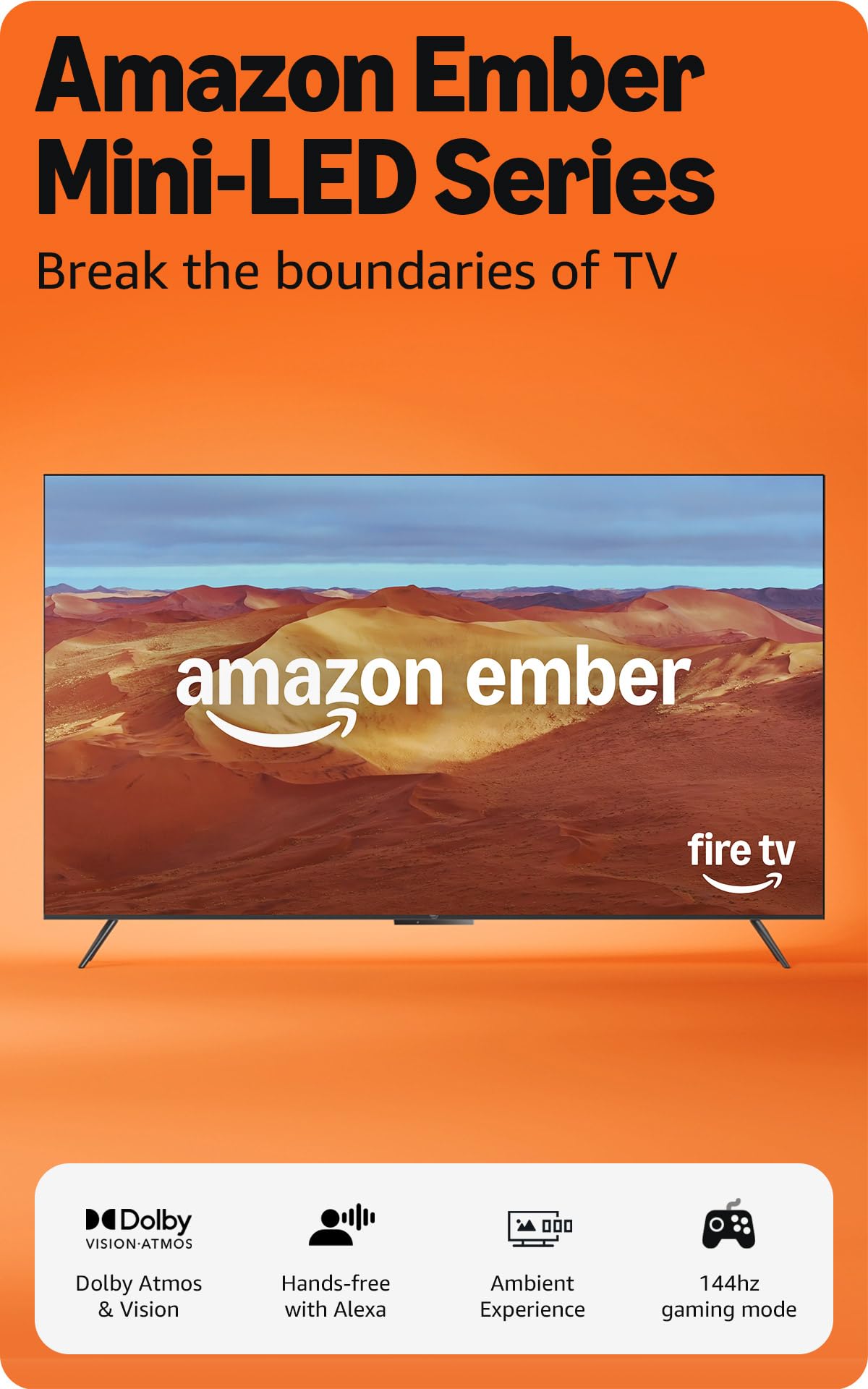
The Amazon Ember 65 is a purpose-built Fire TV that integrates deeply with the Alexa ecosystem. The 4K QLED Mini-LED panel delivers impressive contrast with 512 dimming zones and a peak brightness of 1,400 nits. Dolby Vision IQ and HDR10+ Adaptive ensure your content looks its best based on the room’s ambient light. The new Fire TV interface for 2026 is cleaner and faster, though it still carries Amazon’s advertising.
Gamers will appreciate the 144Hz native refresh rate with AMD FreeSync Premium Pro certification. This makes the Ember a serious option for both console and PC gaming, with tear-free visuals and low input lag. The 2.1 Dolby Atmos speaker system includes a built-in subwoofer, delivering surprisingly deep bass for a flat-panel TV. The Omnisense technology with an ambient sensor wakes the TV when you enter the room, showing artwork or your home screen.
The Fire TV platform remains the biggest differentiator — and the biggest caveat. Some users report laggy performance after extended use, and the home screen is heavily populated with ads for Amazon content. The build quality feels solid, but the plastic back panel is less premium than some competitors. If you are deeply invested in Alexa and Amazon Prime, this TV offers exceptional integration.
Why it’s great
- Deep Alexa integration with hands-free voice control
- 512 mini-LED dimming zones for impressive contrast
- 144Hz with FreeSync Premium Pro for smooth gaming
- Built-in subwoofer for noteworthy bass from the TV
- Ambient sensor wakes TV automatically
Good to know
- Fire TV interface includes Amazon advertising
- Some users report performance lag over time
- Build quality feels less premium than Samsung or LG
6. Hisense U7 Mini-LED
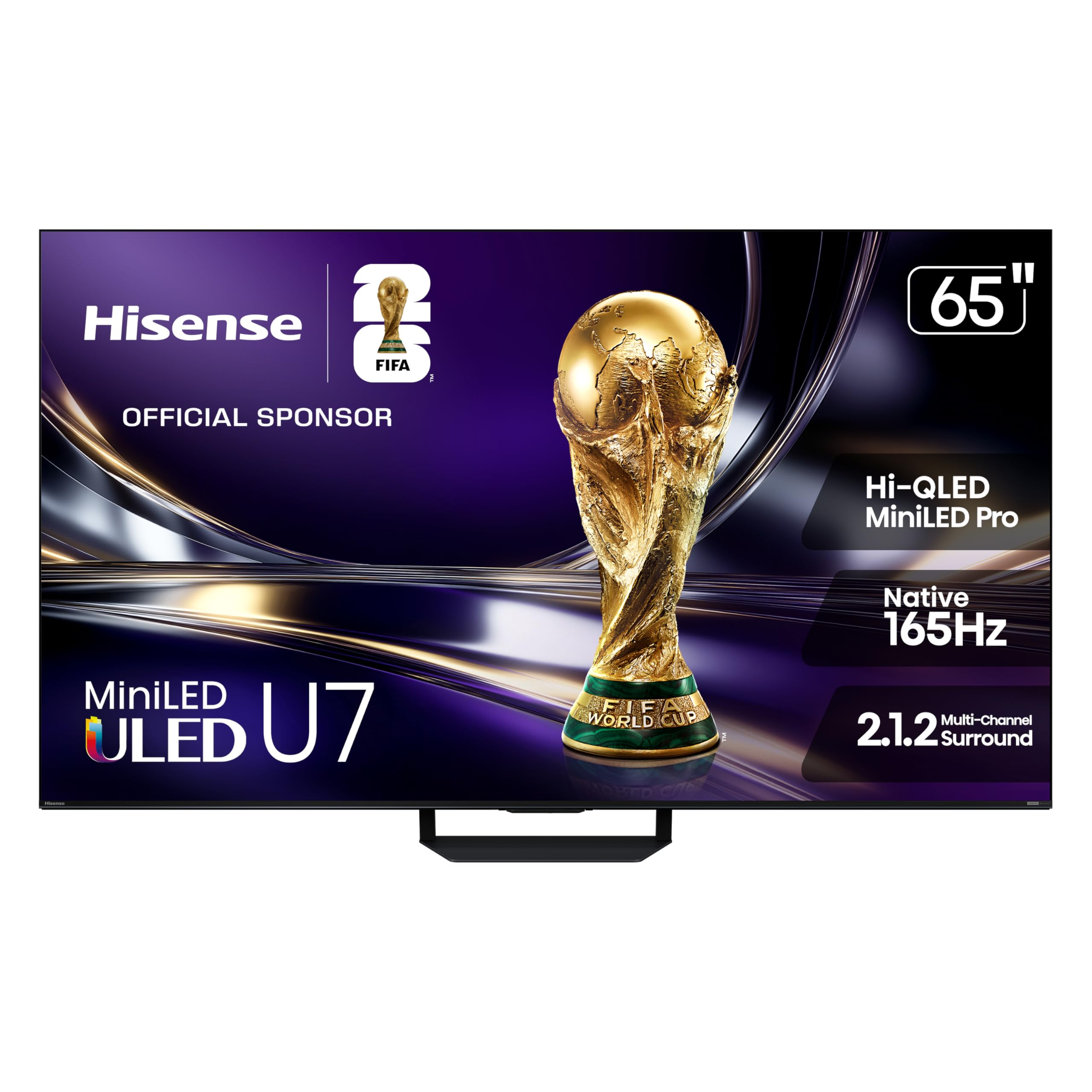
The Hisense U7 is designed with one thing in mind: gaming performance. Its native 165Hz refresh rate is the highest on this list for a Mini-LED TV, and the VRR support up to 330Hz through frame doubling makes it an absolute weapon for competitive gaming. The Hi-QLED MiniLED Pro backlight with up to 3,000 local dimming zones (in its highest-spec version) delivers exceptional contrast and peak brightness of up to 3,000 nits for jaw-dropping HDR highlights.
Beyond gaming, the U7 is a strong all-around performer. The anti-reflection layer is genuinely effective, reducing glare in brightly lit rooms to a remarkable degree. The Hi-View AI Engine Pro processor handles upscaling well and Dolby Vision IQ content looks stunning with high brightness and deep blacks. The 2.1.2 channel sound system with Dolby Atmos is among the best built-in audio we’ve seen, providing a wide soundstage with decent bass.
The Google TV interface is snappy and intuitive. The main drawback is that Hisense’s quality control can be inconsistent, and the processing for standard definition content isn’t quite at Sony’s level. The remote feels a bit plasticky for a premium-priced TV. However, at its price point, the U7 offers gaming specs that rival TVs costing far more.
Why it’s great
- Native 165Hz refresh rate ideal for competitive gaming
- Exceptional peak brightness up to 3,000 nits
- Effective anti-glare screen for bright rooms
- 2.1.2 Dolby Atmos sound system with good bass
- Up to 3,000 local dimming zones for deep blacks
Good to know
- Quality control can be less consistent than top-tier brands
- Standard definition upscaling not as refined as Sony
- Remote feels somewhat cheap for the price tier
7. Toshiba Z670R Mini-LED

Toshiba’s Z670R brings premium gaming features to a mid-range price tag. The Mini-LED panel with Full Array Local Dimming delivers significantly better contrast than standard LED TVs, and the native 144Hz refresh rate with AMD FreeSync Premium and VRR makes it a strong choice for PS5, Xbox Series X, and PC gamers. The REGZA Engine ZRi Gen3 processor is tuned by Toshiba engineers in Japan and does a solid job with color accuracy and motion handling.
QLED color technology covers a wide color gamut, and Dolby Vision IQ and HDR10+ Adaptive support ensures compatibility with all major HDR formats. The REGZA Power Audio Pro system with a bass woofer produces surprisingly robust sound for a TV in this price tier — you may not need a soundbar for casual viewing. The Fire TV platform is fast and well-integrated, with Alexa built-in for voice control.
The main compromises are in brightness and build quality. The Z670R is not as bright as Hisense or Sony offerings, so very bright rooms might wash out the image. The plastic back and stand feel adequate but not premium. Additionally, the remote control layout could be better. For a budget-conscious gamer wanting a high refresh rate panel without sacrificing too much contrast, this is a strong option.
Why it’s great
- Native 144Hz with FreeSync Premium and VRR
- Mini-LED backlight with Full Array Local Dimming
- Excellent built-in audio with dedicated bass woofer
- Dolby Vision IQ and HDR10+ Adaptive support
- Fire TV platform with Alexa voice control
Good to know
- Peak brightness is less than premium models
- Build quality uses more plastic than metal competitors
- Remote layout is not the most intuitive
8. Samsung M70H Mini-LED
The Samsung M70H sits at the entry point of Samsung’s Mini-LED lineup, but it still delivers the hallmark features of the brand. The Mini LED Processor 4K uses advanced algorithms to improve contrast and brightness, and Pure Spectrum Color technology delivers a billion true-to-life colors with good saturation. The Motion Xcelerator with DLG 120Hz is a clever implementation that simulates higher refresh rates, though it does so at reduced resolution — something to note for serious gamers.
Samsung TV Plus offers over 2,700 free streaming channels, which is a genuine value-add for cord-cutters. The Samsung Gaming Hub consolidates Xbox Cloud Gaming, NVIDIA GeForce NOW, and other cloud services into one interface, making it easy to jump into games without a console. The Soccer Mode is a unique feature that optimizes motion and green color vibrancy for football matches, providing a noticeably clearer picture for fast-paced sports.
The M70H has some compromises. The 60Hz native panel is a letdown for a TV at this price, and the Motion Xcelerator DLG 120Hz mode drops resolution to achieve the higher frame rate. The smart remote is minimalist to a fault — some users find the lack of volume buttons and input switching controls frustrating. It’s a good all-rounder, but gamers should look at higher-refresh alternatives like the TCL T7 or Toshiba Z670R.
Why it’s great
- Mini-LED backlight for improved contrast over standard LED
- Pure Spectrum Color delivers vibrant, accurate colors
- Samsung TV Plus offers extensive free content
- Samsung Gaming Hub integrates multiple cloud gaming services
- Soccer Mode optimizes sports viewing
Good to know
- Native 60Hz panel limits gaming fluidity
- DLG 120Hz mode reduces resolution
- Minimalist remote lacks volume and input buttons
9. TCL T7 Series (Amazon Exclusive)

The TCL T7 Series is an Amazon-exclusive that punches well above its price tier. The 144Hz native panel with a 288Hz variable gaming refresh rate makes it a fantastic value for gamers on a budget. The QLED quantum dot technology covers nearly the entire DCI-P3 color gamut, resulting in rich, vibrant colors that are rare at this price. The TCL AIPQ Pro processor intelligently optimizes each scene for color, contrast, and clarity, delivering a surprisingly refined picture.
The FullView 360 metal bezel-less design gives the T7 a premium look that rivals more expensive models. It includes four HDMI inputs, one with eARC, which is excellent for connecting multiple consoles and a soundbar. Google TV is smooth and responsive, with built-in Chromecast for easy casting from your phone. The 144Hz native refresh rate is genuine, supporting 4K at 120Hz and 1080p up to 240Hz for PC gaming.
The T7 does have some rough edges. The built-in speakers are adequate but lack bass and lack impact for movie watching — a soundbar is recommended. The TV requires an internet connection and Google sign-in for initial setup, which may be inconvenient for those without Wi-Fi. Some users have reported HDMI handshake issues with certain PCs. For pure gaming performance and value, the T7 is hard to beat.
Why it’s great
- Genuine 144Hz native panel with 288Hz VRR capability
- QLED quantum dot technology for vibrant color coverage
- FullView 360 metal bezel-less design looks premium
- Four HDMI inputs including eARC
- Google TV with Chromecast built-in
Good to know
- Built-in speakers lack bass and depth
- Requires internet and Google account for setup
- Occasional HDMI handshake issues with some PCs
10. Sony BRAVIA 2 II

The Sony BRAVIA 2 II brings Sony’s legendary processing expertise to a more accessible price point. The 4K Processor X1 delivers natural, lifelike color and impressive upscaling that makes even standard content look sharper than it should. The Motionflow XR technology ensures that fast-moving sports and action movies remain free of blur. While it uses a standard LED backlight rather than Mini-LED or OLED, Sony’s processing does an admirable job of making the picture look polished and refined.
For PS5 owners, the BRAVIA 2 II includes the exclusive Auto HDR Tone Mapping and Auto Genre Picture Mode features that optimize the TV for the console automatically. The Game Menu puts all picture settings in one place for easy adjustments. Sony Pictures CORE app gives access to movies included with the TV. Google TV is responsive and clean, making navigation a pleasure.
The standard LED panel means contrast is limited compared to Mini-LED or OLED alternatives. Blacks appear grayish in dark scenes, and the lack of local dimming is noticeable when watching high-contrast HDR content. The 60Hz panel is also a limitation for gamers wanting higher framerates. It’s a solid TV for movie lovers who prioritize natural color and motion, but it falls behind in the HDR and gaming categories compared to peers.
Why it’s great
- Sony 4K Processor X1 delivers exceptional upscaling and color
- Exclusive PS5 Auto HDR and Auto Genre Picture Mode
- Motionflow XR for smooth sports and action
- Google TV with responsive interface
- Eco Dashboard for easy energy savings
Good to know
- Standard LED panel lacks deep contrast and local dimming
- 60Hz native panel limits gaming fluidity
- Blacks appear grayish in dark scenes
11. Roku Plus Series Mini-LED
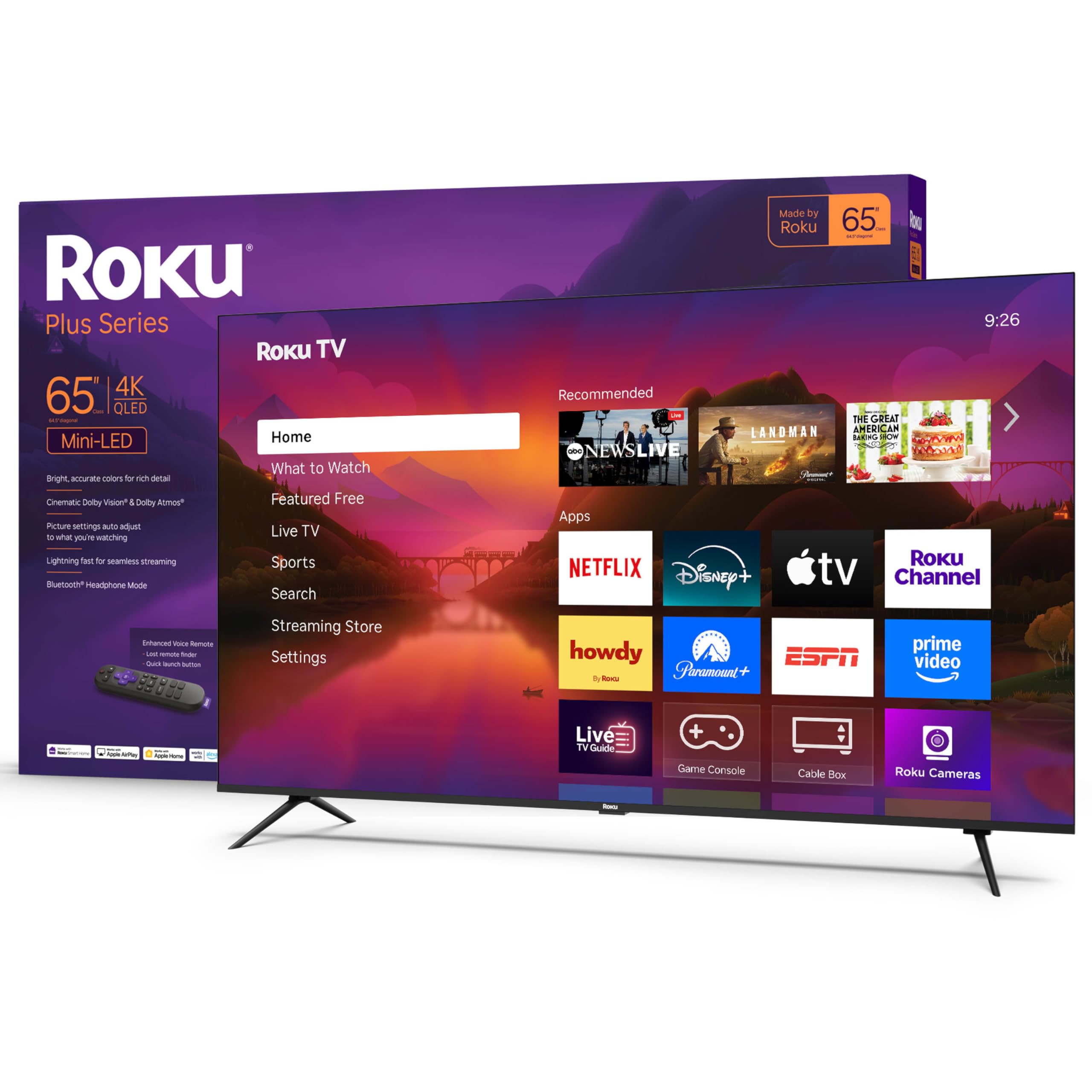
The Roku Plus Series Mini-LED delivers an incredible package for the price. The Mini-LED backlighting combined with QLED and Dolby Vision produces deep blacks, vibrant colors, and vivid highlights that are genuinely surprising at this price tier. The Roku Smart Picture Max uses AI to optimize every scene, cleaning up incoming signals and adjusting color and sharpness automatically. The result is a picture that competes with TVs costing significantly more.
Roku OS is widely considered the gold standard for smart TV interfaces. It’s simple, fast, and free of bloatware, getting you to your content with minimal friction. The enhanced voice remote includes lost remote finder, personal shortcuts, and voice search across thousands of apps. Roku TV has 500+ free channels, making it an excellent option for cord-cutters. The built-in Dolby Atmos system with a subwoofer delivers clear dialogue and cinematic sound that reduces the need for an external soundbar.
The 60Hz panel is the main limitation here — it’s not ideal for gamers wanting high frame rates. While the TV includes a Game Mode with VRR for smoother gameplay, the 60Hz cap limits its potential. The settings menu is basic compared to more advanced TVs, lacking the fine-tuning options enthusiasts prefer. For everyday streaming, sports, and casual gaming, this TV offers unbeatable value and a fantastic user experience.
Why it’s great
- Mini-LED + QLED delivers premium picture quality at a low price
- Roku OS is the fastest, simplest, and most intuitive smart platform
- Dolby Atmos audio with built-in subwoofer sounds excellent
- Enhanced voice remote with lost remote finder
- 500+ free Roku channels for cord-cutters
Good to know
- 60Hz panel limits high-frame-rate gaming potential
- Settings menu lacks advanced calibration options
- No USB port, only USB-C
FAQ
Is QLED better than OLED for a 65 Inch Smart TV?
Do I need a 120Hz or 144Hz TV for watching movies?
How important is the number of local dimming zones?
Will a 65 Inch Smart TV fit in my living room?
What is the best smart TV platform for a 65 Inch TV?
Final Thoughts: The Verdict
For most users, the 65 inch smart tv winner is the Roku Plus Series Mini-LED because it delivers excellent Mini-LED picture quality, the best smart platform, and impressive built-in sound at a highly accessible price. If you want perfect black levels for a dedicated home theater, grab the LG OLED G4. And for competitive gaming with the highest refresh rates and brightness, nothing beats the Hisense U7 Mini-LED.