
Our readers keep the lights on and the weekend projects moving. As an Amazon Associate, I earn from qualifying purchases.
A band saw is only as good as the blade it carries, and a dull or mismatched blade turns even the finest saw into a frustrating machine that burns wood, wanders off the line, and leaves a ragged finish. Choosing the correct tooth count, width, and material for your specific cut — whether ripping thick hardwood, scrolling tight curves, or resawing veneers — makes the difference between a clean, fast pass and a ruined workpiece.
I’m Rikta — the co-founder and writer behind FitlyFast. For this guide, I analyzed over 200 verified customer experiences on seven of the most popular band saw blade models, comparing tooth geometry, steel composition, weld quality, and real-world durability across a range of saws and budgets.
Whether you own a compact 9-inch benchtop saw or a full-size 14-inch floor model, the right band saw blade for wood will cut cleaner, track straighter, and stay sharp longer than anything you can grab off a big-box store rack.
How To Choose The Best Band Saw Blade For Wood
Selecting a band saw blade is a balancing act between tooth count, blade width, and material type. Get any one wrong, and you will fight the saw on every cut. Here are the three specs that matter most.
Blade Width and Resaw Capacity
Wider blades — typically 1/2-inch to 3/4-inch — resist deflection and track straighter, making them ideal for resawing thick boards. Narrow blades down to 1/8-inch excel at cutting tight radii but flex under heavy feed pressure. Match the width to your saw’s wheel diameter and the smallest radius you plan to cut.
Teeth Per Inch
TPI determines cut speed versus surface finish. Blades with 3 to 6 TPI clear chips fast and rip through thick stock but leave a rougher edge. Blades with 14 to 18 TPI produce smooth, slow cuts suited for thin materials and intricate scroll work. For general woodworking, a 6 to 10 TPI blade offers the best all-around compromise.
Steel Type and Tooth Hardening
Standard carbon steel blades are affordable and sharp enough for softwoods and plywood. Bi-metal blades add a high-speed steel tooth edge for cutting hardwoods and occasional non-ferrous metal. Silicone-alloy blades like Timber Wolf’s design run under low tension, run cooler, and hold their edge significantly longer than traditional carbon steel.
Quick Comparison
On smaller screens, swipe sideways to see the full table.
| Model | Category | Best For | Key Spec | Amazon |
|---|---|---|---|---|
| Timber Wolf 1/2″ 4 TPI | Resaw | Thick hardwood resawing | 1/2″ x 93-1/2″, 4 TPI, silicone-alloy steel | Amazon |
| Timber Wolf 3/4″ 9 TPI | Resaw | Wide resaw in hardwoods | 3/4″ x 93-1/2″, 9 TPI, milled & induction-hardened | Amazon |
| POWERTEC 59-1/2″ Assortment | Variety Pack | Multi-purpose small saw use | Three blades: 1/8″ 14 TPI, 1/4″ 6 TPI, 3/8″ 6 TPI | Amazon |
| AYAO 3-Pack 80″ 14 TPI | Multipack | Value-packed general cutting | 80″ x 1/4″ x 14 TPI, high-carbon steel, 3-pack | Amazon |
| AYAO Hardened Teeth 80″ 4 TPI | Rip/Resaw | Resawing on 12″ Craftsman saws | 80″ x 1/2″ x 4 TPI, hardened teeth, 2-pack | Amazon |
| POWERTEC 93-1/2″ 18 TPI | Fine Finish | Smooth cuts in thin stock | 93-1/2″ x 3/8″ x 18 TPI, carbon steel, 2-pack | Amazon |
| Imachinist S933414 M42 | Bi-Metal | Metal cutting with wood capability | 93″ x 3/4″ x 10/14 TPI, M42 bi-metal | Amazon |
In‑Depth Reviews
1. Timber Wolf 1/2″ x 93-1/2″, 4 TPI Band Saw Blade

The Timber Wolf 1/2-inch 4 TPI blade is a class leader for resawing thick hardwood stock. Its silicone-alloy steel formulation runs under significantly lower tension than standard carbon steel blades, which reduces strain on the saw’s bearings and wheels while still producing a straight, drift-free cut. Users consistently report cutting 3-inch hard maple and walnut into thin veneers with no wander and a surface finish smooth enough to reduce sanding.
The 4 TPI raker-set tooth pattern clears chips rapidly, preventing binding in deep resaw cuts. The thin kerf design removes less material, which means less waste and less horsepower required. Customers on Delta and Ridgid 14-inch saws describe the blade as transforming their machine from a frustrating tool into a precision resaw center, with several noting the included tuning and tension instructions helped them dial in their saw for the first time.
This blade is not ideal for tight scroll work — the 4 TPI count leaves a rougher edge on thin stock, and the 1/2-inch width cannot cut radii smaller than about 1-1/2 inches. But for anyone who resaws lumber regularly, this is the blade that makes the job effortless.
Why it’s great
- Silicone-alloy steel stays sharp longer than high-carbon alternatives
- Runs cooler and with less tension, extending saw life
- Thin kerf minimizes waste and requires less feed pressure
Good to know
- Not suited for tight-radius scroll cutting
- Requires careful tension setup using included guidelines
2. Timber Wolf 3/4″ x 93-1/2″, 9 TPI Silicone Steel Resaw Blade

Timber Wolf’s 3/4-inch silicone steel blade brings the same low-tension advantage as the 1/2-inch model but adds a wider profile and a 9 TPI count for faster, straighter cuts on extra-wide boards. The milled teeth are ground — not stamped — producing a tooth profile that stays sharper longer. Precision induction hardening along the entire tooth edge, rather than only at the tip, gives this blade a wear resistance that outperforms standard carbon steel by a wide margin.
Users report cutting 6-inch cherry and 8-inch walnut into 1/4-inch veneers with no wander, even on Delta 14-inch saws that previously struggled with cheaper blades. The 9 TPI arrangement provides a noticeably smoother finish than coarser 3 or 4 TPI blades while still clearing chips efficiently. The included tuning guide is the same detailed document that has earned Timber Wolf a loyal following among serious woodworkers.
The 3/4-inch width demands that your saw can accept that dimension — some benchtop models cannot. The silicone steel is more ductile than high-carbon steel, so the blade flexes rather than cracks under stress, but it still requires a properly tensioned saw to perform.
Why it’s great
- Milled teeth cut sharper and stay keen longer than stamped blades
- Induction hardening delivers 20% harder tooth edge than carbon steel
- Wider 3/4-inch profile resists drift on deep resaw passes
Good to know
- Not compatible with saws that max out at 1/2-inch blade width
- Premium tier priced above most multipack options
3. POWERTEC 59-1/2 Inch Bandsaw Blades Assortment, 3-Pack

The POWERTEC 59-1/2-inch assortment pack is a smart starting point for owners of small benchtop saws like the Craftsman 9-inch, Ryobi, or Skil BW9501. The set includes three blades: a 1/8-inch by 14 TPI for tight scroll work, a 1/4-inch by 6 TPI for general curve cutting, and a 3/8-inch by 6 TPI for ripping and resawing. Each blade is made from premium high-carbon steel with a precision welded seam that users report tracks straight with no vibration.
The 1/8-inch blade is particularly useful for cutting radii under 1/4-inch in thin plywood or hardboard, while the 3/8-inch blade handles 2-inch thick hardwood with reasonable speed. The carbon steel edges arrive sharp and hold up well for hobbyist-level use. Several customers noted that the blades run cool and require no special tuning beyond standard tension setup.
The 0.38-inch blade thickness is noticeably thicker than some other 59-1/2-inch blades, which may cause tensioning issues on saws designed for a thinner gauge. Confirm your saw’s blade clearance before purchasing. This assortment is best for light-duty woodworkers who need versatility across multiple cut types.
Why it’s great
- Three tooth configurations cover scroll, curve, and rip cuts
- Welds are smooth and cause no tracking vibration
- Affordable entry point for benchtop saw owners
Good to know
- Thicker steel may not tension properly on all 59-1/2-inch saw models
- Carbon steel dulls faster than bi-metal or silicone alternatives
4. AYAO 3-Pack 80″ x 1/4″ x 14 TPI Band Saw Blades

The AYAO 3-pack delivers remarkable value for Craftsman 12-inch band saw owners. At 80 inches long with a 1/4-inch width and 14 TPI raker set, these high-carbon steel blades handle general wood cutting, PVC, and thin aluminum with consistent results. The welded joint uses a strong, smooth technique that customers report causes no tracking problems or vibration during operation.
A long-term user reported the first set purchased in 2018 remained sharp through years of regular woodworking, and the second order performed identically. The 14 TPI count makes these blades best suited for thinner stock up to 1 inch thick, where they produce a clean, minimally ragged edge. For the cost of a single blade at many retailers, you get three functional replacements.
The 1/4-inch width limits resaw capacity and stability on deep cuts. Users attempting to resaw thick hardwoods will experience deflection. These blades are ideal for general-purpose cutting, scroll work, and hobbyist projects where budget matters more than maximum performance.
Why it’s great
- Three blades at a price that beats single-blade competitors
- Smooth welded seam with no tracking issues
- Consistent sharpness reported across multiple years of use
Good to know
- 1/4-inch width not suited for heavy resaw work
- 14 TPI is slow for thick stock ripping
5. AYAO Hardened Teeth 80″ x 1/2″ x 4 TPI Band Saw Blades, 2-Pack
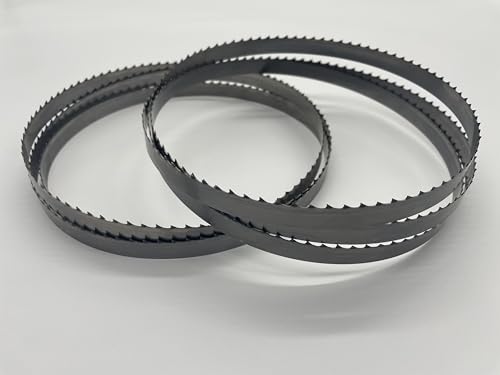
AYAO’s hardened-teeth 80-inch blade brings resaw capability to Craftsman 12-inch band saw owners. With a 1/2-inch width and 4 TPI raker set, this blade clears chips aggressively and cuts straight through thick hardwood without the deflection common in narrower blades. The hardened tooth edge stays sharp significantly longer than standard carbon steel, and the 0.02-inch thickness keeps kerf waste minimal.
One customer reported using the first blade for about six years of regular weekend work with no real complaints — a testament to the durability of the heat-treated teeth. The 2-pack gives you a backup ready to install when the first blade eventually dulls. The welding point is smooth and causes no tracking inconsistencies.
The 4 TPI pattern produces a rougher cut surface on thin stock, so you will need to sand or plane for a finished appearance. These blades are engineered for speed and longevity on ripping and resaw tasks, not for intricate scroll patterns. Confirm your saw accepts 1/2-inch blades before purchasing.
Why it’s great
- Hardened teeth deliver extremely long service life
- 1/2-inch width provides stability for resaw work on 12-inch saws
- Cost-effective 2-pack with consistent quality
Good to know
- 4 TPI leaves a rough edge on thin workpieces
- Limited to saws with 1/2-inch blade capacity
6. POWERTEC 93-1/2″ x 3/8″ x 18 TPI Band Saw Blades, 2-Pack

The POWERTEC 93-1/2-inch 18 TPI blade is built for smooth, precise cuts in thin wood, plastic, and non-ferrous metals. Designed to fit Delta, Grizzly, Rikon, Jet, and Shop Fox 14-inch saws, this 3/8-inch wide blade uses premium high-carbon steel with a precision ground tooth geometry that produces a nearly sanding-free finish. The raker set tooth arrangement clears fine dust efficiently, preventing heat buildup during extended cuts.
Users consistently praise the exceptional sharpness right out of the package, with several noting it cuts hardwoods like oak and maple with minimal effort and leaves a smooth edge. The 2-pack means you have a spare ready, and the 0.025-inch thickness provides enough rigidity for straight cuts without excessive kerf loss. Customers report the weld quality is consistent and causes no vibration.
At 18 TPI, this blade is not designed for thick stock or fast ripping. Feed rate must be slow to avoid stripping teeth. The 3/8-inch width limits resaw capacity to about 4 inches before deflection becomes noticeable. This is a specialist blade for fine joinery and thin material work.
Why it’s great
- 18 TPI produces exceptionally smooth edges on thin stock
- Precision tooth geometry cuts hardwoods with minimal resistance
- Two-blade pack extends value for frequent users
Good to know
- Slow feed required on thick or dense material
- Narrow width limits deep resaw capability
7. Imachinist S933414 M42 93″ x 3/4″ x 10/14 TPI Bi-Metal Blade
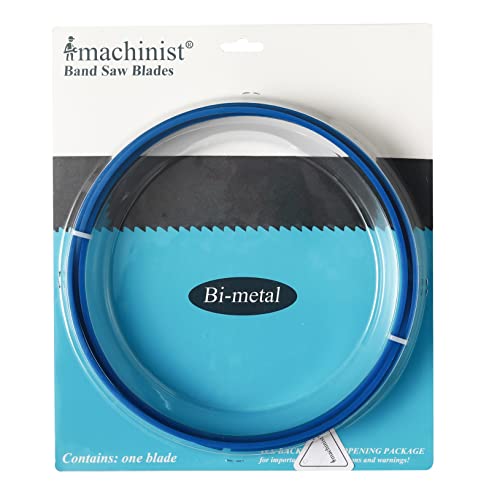
The Imachinist S933414 is an M42 bi-metal blade that bridges the gap between wood and metal cutting. The variable 10/14 TPI pattern transitions between coarser and finer teeth, allowing it to cut wood aggressively while still handling thin-wall steel tubing and stainless profiles without stripping. The 0.035-inch thickness and 3/4-inch width provide rigidity for straight, accurate cuts on a 7×12 bandsaw or any saw accepting 93-inch blades.
A professional welder and fabricator reported using this blade for five to six years on the same saw, stating it outperforms high-dollar brands in consistency and longevity, with each blade lasting over a year under daily use. Another user logged over 400 cuts on 2-inch DOM .250-wall tubing without coolant, and the blade remained accurate and straight. The M42 high-speed steel edge handles ferrous metals that would quickly dull a carbon steel blade.
Bi-metal blades are more brittle than carbon steel, and some users experienced premature snapping under aggressive feed or inadequate tension. The manufacturer recommends proper tension and suggests upgrading to Matrix II or Lenox for extremely heavy production use. This is an excellent choice for mixed-material shops that cut wood and metal on the same machine.
Why it’s great
- M42 bi-metal edge cuts wood, metal, and stainless with one blade
- Reported service life of years under heavy daily use
- Variable TPI design clears chips effectively in both materials
Good to know
- Bi-metal construction is more prone to snapping under excessive tension
- Heavy production metal cutting may require premium-grade alternatives
FAQ
What TPI should I use for resawing thick hardwood?
Can I use a metal-cutting band saw blade on wood?
How do I know if a blade will fit my band saw?
Why does my new band saw blade wander off the cut line?
Final Thoughts: The Verdict
For most users, the band saw blade for wood winner is the Timber Wolf 1/2-inch 4 TPI because it transforms a standard 14-inch saw into a precision resaw machine with low tension, cool running, and exceptional edge life. If you need a wider 3/4-inch blade for thick veneer work, grab the Timber Wolf 3/4-inch 9 TPI. And for mixed-material shops cutting wood and metal on the same saw, nothing beats the versatility of the Imachinist M42 bi-metal blade.