
Our readers keep the lights on and the weekend projects moving. As an Amazon Associate, I earn from qualifying purchases.
African cichlids demand hard, alkaline water to thrive, and the substrate you choose is the single most effective tool for delivering that chemistry without daily chemical dosing. The wrong sand crashes pH, traps debris, or clouds your tank for weeks, while a proper aragonite-based or buffered mix keeps your Mbuna, Peacock, or Haps healthy and digging naturally.
I’m Rikta — the co-founder and writer behind FitlyFast. I’ve spent hundreds of hours analyzing substrate composition, grain size distribution, buffering capacity, and real owner feedback to compile the data you need for a confident, no-regret purchase.
The ideal african cichlid substrate must stabilize pH at 8.2, resist downward drift under heavy bioloads, and feature a grain size that allows digging without compaction or detritus buildup.
How To Choose The Best African Cichlid Substrate
Not all sand is suitable for Rift Lake setups. The wrong substrate will let pH slide downward over weeks, trap food waste that fuels algae, or compact into a layer that suffocates beneficial bacteria. Here are the three critical factors that separate a great substrate from a problematic one.
Buffering Material: Aragonite vs. Inert Sand
Aragonite, a form of calcium carbonate, slowly dissolves in aquarium water to release carbonate and calcium ions. This natural process maintains pH in the 8.0–8.4 range without chemical buffers. Inert silica sand does nothing for pH and will slowly drift downward in a stocked cichlid tank. Check if the substrate is oolitic aragonite or crushed coral — both provide the buffering African cichlids need.
Grain Size: Fine Sand Versus Coarse Grit
Grains smaller than 0.5 mm tend to compact over time, creating anaerobic pockets and making cleaning difficult. Coarser grains around 1–3 mm allow water flow through the bed, reduce detritus buildup, and stay loose enough for cichlids to dig and sift. Very coarse crushed coral (over 3 mm) may trap uneaten food but is excellent for canister filter media if you prefer a bare-bottom tank.
Rinsing and Initial Cloudiness
Nearly every natural aragonite sand comes with fine dust. Expect 4–7 rinses or a slow fill method to avoid turning your tank opaque white. Many premium brands claim “no rinse needed,” but owner reports consistently show aggressive rinsing is still required. Plan for a cloudy first 24–48 hours and use filter floss or a polishing pad to speed clearing.
Quick Comparison
On smaller screens, swipe sideways to see the full table.
| Model | Category | Best For | Key Spec | Amazon |
|---|---|---|---|---|
| CaribSea Eco-Complete African Cichlid Zack Sand | Premium Gravel Mix | Large tanks with heavy diggers | 1–3 mm mixed gravel; pH 8.2 stable | Amazon |
| CaribSea African Cichlid Mix Rift Lake Authentic | Premium Sand | Mbuna biotope authenticity | Coarse sand; resists pH drift | Amazon |
| CaribSea African Cichlid Mix Sahara Sand | Premium Sand | Clean visual appeal with digging | Coarse sand; buffers pH naturally | Amazon |
| AquaNatural African Cichlid Aragonite 20LB | Mid-Range Sand | Budget-conscious pH control | Oolitic aragonite; 98% CaCO3 | Amazon |
| Carib Sea ACS00120 Crushed Coral 15-Pound | Mid-Range Crushed Coral | Filter media or thin top layer | Crushed aragonite; grain size 2–5 mm | Amazon |
| Aqua Natural Oolitic Aragonite 20lb | Mid-Range Sand | Saltwater or freshwater alkaline tanks | Fine oolitic aragonite; pH 8.2 | Amazon |
| Hermit Crab Aragonite 10LB | Budget Sand | Small tanks or top-dressing | Fine oolitic aragonite; phosphate-free | Amazon |
In‑Depth Reviews
1. CaribSea Eco-Complete African Cichlid Zack Sand, 20-Pound, Black

This CaribSea mix combines black, reddish-brown, and white grains in a 1–3 mm gravel range that resists compaction — exactly what aggressive diggers like Mbuna need. Owner reports confirm crystal-clear water the day after setup and stable pH at 8.0–8.2 within five days, even in densely stocked 75-gallon tanks.
The grain size is notably coarser than standard play sand, which prevents the substrate from being sucked into canister intakes or kicked into a cloudy mess during water changes. Several reviewers noted that the included water clarifier sample helps speed initial clearing, but thorough rinsing is still recommended.
Aesthetically, the mix is not pure black — it has natural variation that mimics African lake beds. Over six months of use, the gravel holds its color and does not compact, allowing cichlids to constantly rearrange without creating dead zones.
Why it’s great
- Stays loose for digging and sifting
- Water clears overnight with minimal rinsing
- Buffers pH naturally without chemical additives
Good to know
- Not pure black — contains multicolored grains
- Heavier than sand; may need more bags for deep beds
2. CaribSea African Cichlid Mix Sand, 20-Pound, Rift Lake Authentic
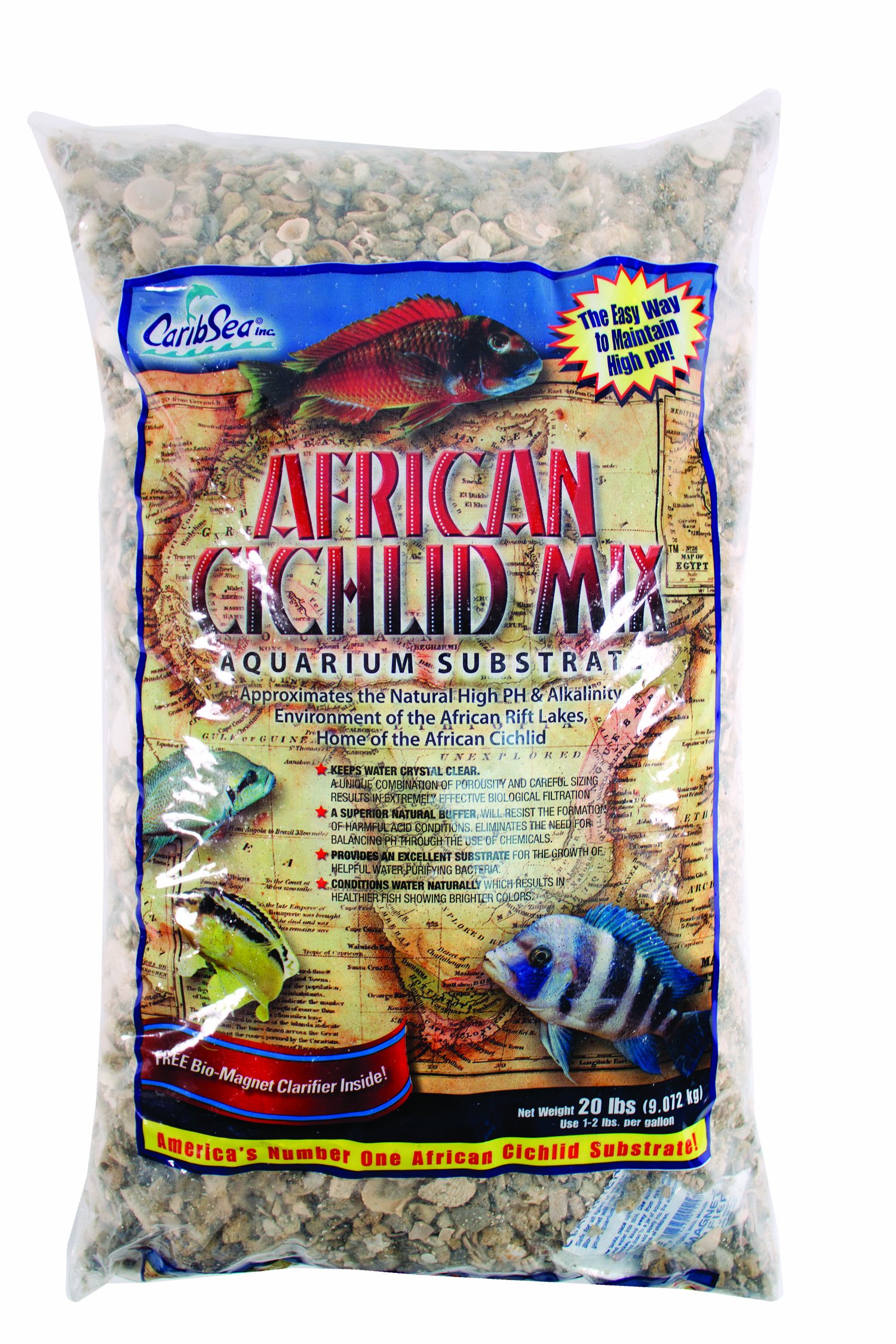
Designed specifically for Rift Lake biotopes, this CaribSea blend features a heavy, coarse sand texture that stays loose without compaction — ideal for fish that constantly sift and dig. Multiple verified owners in 125-gallon setups report the water ran crystal clear after the initial cloudiness settled, and pH remained stable without intervention.
The grain size is noticeably heavier than play sand, which prevents the substrate from being churned into suspension by filter outflow or active diggers. Reviewers consistently note that thorough rinsing (6–7 cycles) is mandatory despite any “no rinse” claims on packaging — skipping this step leads to milky-white water that takes days to clear.
Bag-to-bag variation in black gravel content is normal for a natural product, but the overall brown-and-tan palette closely resembles Lake Malawi and Lake Tanganyika shorelines. The heft of the grains also prevents cichlids from launching substrate onto decorations or glass.
Why it’s great
- Heavy grain resists suspension and compaction
- Authentic Rift Lake coloration
- pH drift resistance in heavily stocked tanks
Good to know
- Requires aggressive rinsing before use
- Natural variation between bags
3. Carib Sea African Cichlid Mix Sahara Sand, 20 lb
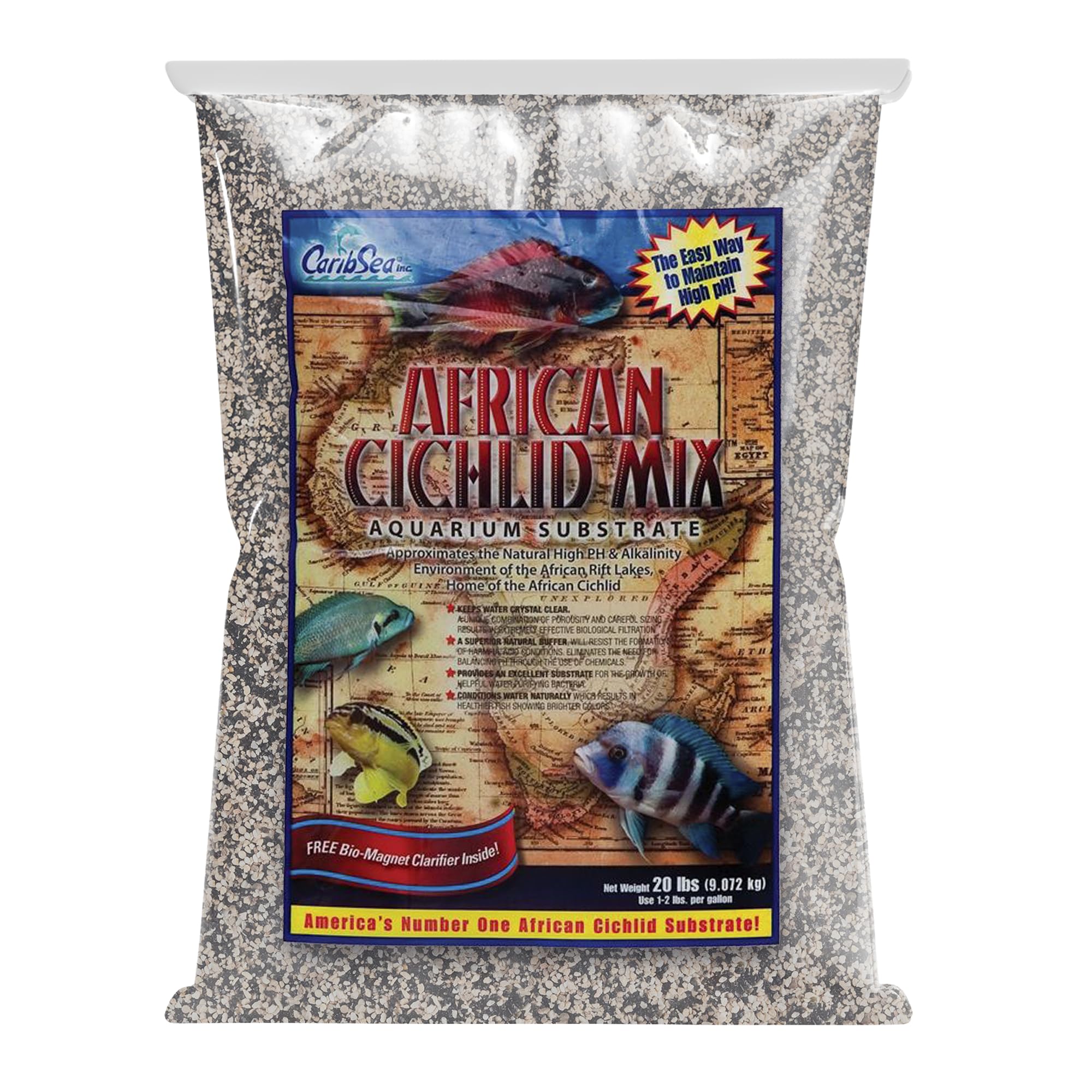
The Sahara Sand variant offers a uniform, cleaner visual compared to the multicolored mixes, with a tan-to-beige tone that brightens the tank. Its coarse grain size prevents waste from settling deep into the bed, making it a strong pick for aquarists who prioritize easy maintenance alongside natural digging behavior.
Owner feedback highlights the significant rinsing required — expect 6–7 wash cycles before the water runs nearly clear. Once settled, the sand maintains its clean appearance and does not compact even under heavy current. Reviewers using it in 125-gallon tanks with large colonies of Peacocks and Haps report zero pH crashes over months of operation.
One trade-off is the bag-to-bag consistency: some bags contain noticeably more black gravel flecks, while others are more uniformly tan. This is typical for a natural product, but worth noting if you are ordering multiple bags for a single tank.
Why it’s great
- Bright, natural color enhances fish colors
- Coarse grains prevent detritus buildup
- Stable pH for large colonies
Good to know
- Packaging claims “no rinse” — ignore and rinse anyway
- Visual consistency varies between bags
4. AquaNatural African Cichlid Aragonite 20LB
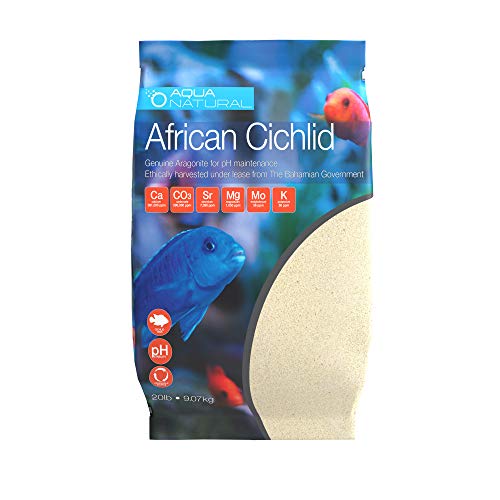
This bag is sold as an African cichlid-specific aragonite sand that promises to lock pH at 8.2. At 98% pure calcium carbonate, it delivers solid buffering — several owners of Oscar and cichlid tanks confirm stable water chemistry after the initial settling period.
The sand is very fine, which creates a smooth, natural-looking bed that cichlids love to dig through. However, the fine particle size introduces two practical challenges: the sand is difficult to clean without disturbing the entire bed, and it can remain cloudy even after multiple bucket rinses. One verified buyer reported severe clumping during rinsing and had to discard the product.
For aquarists who value cost per pound and do not mind a finer texture, this is an effective pH buffer. The fine grain works best in tanks with gentle filtration or when used as a thin layer over a coarser base.
Why it’s great
- High aragonite purity for reliable pH buffering
- Cichlids enjoy the soft, diggable texture
- Competitive cost per pound
Good to know
- Very fine sand clouds easily and retains cloudiness
- Some units clump during rinsing
5. Carib Sea ACS00120 Crushed Coral for Aquarium, 15-Pound

Crushed coral is not a typical sand substrate — its 2–5 mm grain size is too large for comfortable digging but ideal for raising pH in tanks that use inert gravel. Many African cichlid keepers use this product in mesh bags inside their canister filter, where it slowly dissolves to buffer water without occupying the tank floor.
Owner reports confirm dramatic pH shifts: one user saw a rise from 6.0 to 7.5 over three weeks in a 37-gallon tank by adding just a thin layer. Another keeper uses it as a top-dressing over gravel in a cichlid tank and maintains pH at 6.5–7.0. The product contains small seashell fragments alongside the crushed coral, so it is not 100% uniform coral pieces.
Initial dust is significant — sifting out the fine particles can yield roughly one-third usable weight by volume. This makes it less convenient than pre-washed sands, but the buffering power per gram is higher than any fine aragonite sand.
Why it’s great
- Raises pH effectively and sustainably
- Works as filter media or thin top layer
- Long-lasting aragonite source
Good to know
- Large grain not ideal as primary diggable substrate
- Dusty — requires sifting or thorough rinsing
6. Aqua Natural Oolitic Aragonite 20lb Aquarium Sand

This general aragonite sand is marketed for reef and marine tanks, but its chemistry — 98% pure calcium carbonate sourced from the Bahamas — makes it equally effective for African cichlid setups. The fine, beach-like consistency creates a natural white sand bed that keeps pH stable at 8.2 without chemical buffers.
The critical drawback is the extreme cloudiness during setup. The sand is so fine that even careful filling methods can leave visibility at 3–4 inches for days. Multiple owners advise using filter floss and a polishing pad, and note the tank should not contain fish during the initial settling period.
Once settled, the sand performs well — it adds calcium, does not contain impurities, and requires minimal ongoing maintenance. The fine particle size means it can be drawn into filter intakes if placed too close, so position intakes a few inches above the bed.
Why it’s great
- Reliable pH buffering to 8.2
- Soft, natural beach-like texture
- High purity with no phosphate or silicate leach
Good to know
- Severe initial cloudiness — plan for 2+ days settling
- Not suitable for established tanks with fish
7. Hermit Crab Aragonite 10LB, Sand for Habitat

Although labeled for hermit crabs, this bag is pure oolitic aragonite — the same mineral composition found in dedicated aquarium substrates at a lower cost per pound. Hermit crab owners consistently rate it highly for heat retention and burrowing behavior, qualities that translate well to cichlid tanks.
The 10-pound size is best suited for tanks under 20 gallons or as a top-dressing over a coarser base layer in larger setups. The fine aragonite grains do provide pH buffering, though the bag does not specify the calcium carbonate percentage as clearly as the Aqua Natural or Carib Sea options.
Buyers report it as clean sand with minimal dust — one verified owner has kept a crab healthy for seven years using this product mixed with coconut fiber. For African cichlid keepers on a tight budget with a small tank, it offers a functional entry point into aragonite buffering without the premium price tag.
Why it’s great
- Low cost entry into aragonite buffering
- Clean, soft sand with minimal dust
- Sustainably sourced and phosphate-free
Good to know
- 10 lb bag is too small for tanks over 20 gallons
- Not specifically formulated for aquarium pH stabilization
FAQ
How much substrate do I need for an African cichlid tank?
Can I use regular play sand for African cichlids?
How do I clean aragonite sand without losing it?
Final Thoughts: The Verdict
For most users, the african cichlid substrate winner is the CaribSea Eco-Complete African Cichlid Zack Sand because it combines a diggable 1–3 mm grain size with reliable pH buffering and clears quickly after setup. If you want a pure biotope look with coarse sand that resists compaction, grab the CaribSea Rift Lake Authentic. And for budget-conscious keepers with smaller tanks, nothing beats the value of the Hermit Crab Aragonite 10LB.