
Our readers keep the lights on and the weekend projects moving. As an Amazon Associate, I earn from qualifying purchases.
A premium 75-inch television under a strict budget no longer means settling for washed-out blacks or motion blur. The 2025-2026 panel generation delivers MiniLED backlighting, native 144Hz refresh rates, and AI-powered processors that rival last-gen OLEDs at a fraction of the cost — provided you know exactly which dimming zones and chipset matter.
I’m Rikta — the co-founder and writer behind FitlyFast. I’ve spent hundreds of hours dissecting detailed spec sheets, CRM reviews, and owner feedback to isolate the MiniLED, QLED, and HDR performance that truly justifies a four-figure investment in this size class.
This guide cuts through the noise to identify the best 75 inch tv under $2000 for bright-room HDR, competitive console gaming, and cinematic film watching in 2026.
How To Choose The Best 75 Inch TV Under $2000
A 75-inch screen is a statement piece, but within a capped budget, every dollar must land on a spec that actually changes your viewing experience. Prioritize the backlight system first, then validate the gaming feature set, and check that the smart platform won’t frustrate you daily.
Backlight Technology: MiniLED vs. Standard LED vs. QLED
MiniLED backlighting is the defining upgrade in this price tier. It uses thousands of tiny LEDs behind the LCD layer, controlled in dimming zones that can switch on and off independently. This gives you deep, near-OLED blacks without the burn-in risk. Standard full-array LED is cheaper but produces visible halos around bright objects on dark backgrounds — “blooming.” QLED is a color-enhancing quantum dot film that works on top of any backlight; MiniLED with QLED delivers the highest contrast and color volume in this segment.
Refresh Rate and VRR for Gaming
A native 120Hz panel is the baseline for smooth console gaming. The premium picks here offer a native 144Hz panel, which unlocks 4K@144Hz via HDMI 2.1 and gives PC gamers a competitive edge. Variable Refresh Rate (VRR) — ideally certified through AMD FreeSync Premium Pro — eliminates screen tearing during fast camera pans. Auto Low Latency Mode (ALLM) is non-negotiable for a seamless console boot-up experience; it switches the TV to game mode the moment a console is detected.
HDR Format Support and Peak Brightness
Dolby Vision IQ and HDR10+ Adaptive are dynamic HDR formats that adjust brightness and color scene-by-scene based on your room’s ambient light. A TV with at least 600 nits of peak brightness will make HDR highlights pop; models with 1200+ nits approach reference-grade luminance. If you watch a lot of streaming content (Netflix, Disney+, Prime Video), ensure the TV supports both Dolby Vision and HDR10+ to avoid missing out on metadata-enhanced picture profiles.
Quick Comparison
On smaller screens, swipe sideways to see the full table.
| Model | Category | Best For | Key Spec | Amazon |
|---|---|---|---|---|
| Sony BRAVIA 5 (K-75XR50) | Premium MiniLED | Filmmaker Mode & PS5 | XR Processor w/ AI | Amazon |
| TCL QM8L Series (75QM8L) | Flagship MiniLED | Ultimate Brightness & HDR | 6,000 Nits Peak / 4000+ Zones | Amazon |
| Samsung Neo QLED QN90D | Neo QLED Mini | Bright Room & Object Tracking Sound | NQ4 AI Gen2 Processor | Amazon |
| Hisense U7 (75U7SG) | Gaming MiniLED | 165Hz PC Gaming | Native 165Hz / 330 VRR | Amazon |
| Sony BRAVIA 7 (K-75XR70) | MiniLED QLED | Upscaling & Movie Accuracy | XR Triluminos Pro | Amazon |
| TCL QM8K Series (75QM8K) | QD-Mini LED | Halo-Free Gaming | Halo Control System / 288 VRR | Amazon |
| Amazon Ember Mini-LED Series | Fire TV MiniLED | Alexa+ Ecosystem & Simplicity | 512 Dimming Zones / 1400 Nits | Amazon |
| LG QNED evo QNED92A | MiniLED evo | LG WebOS & 4x HDMI 2.1 | Alpha 8 AI Gen2 Processor | Amazon |
| Samsung Neo QLED QN90C | Neo QLED | Anti-Glare & Wide Viewing Angle | Neural Quantum Processor 4K | Amazon |
| LG QNED85T Series | QNED Contrast | Value & Magic Remote | a8 AI Processor / 120Hz | Amazon |
| Amazon Ember QLED Series | Entry QLED | Budget QLED & Alexa+ | Full-Array Local Dimming | Amazon |
| Toshiba Z670 Series | MiniLED Fire TV | Value MiniLED & Bass Woofer | REGZA Engine ZRi Gen3 / 144Hz | Amazon |
| iFFALCON 75U85 | Entry MiniLED | Budget MiniLED & Hotel Mode | 7000:1 Contrast / 50W Audio | Amazon |
In‑Depth Reviews
1. Sony BRAVIA 5 (K-75XR50)

The Sony BRAVIA 5 is the most processor-intelligent MiniLED TV in this price range. The XR Backlight Master Drive controls thousands of Mini LEDs with AI precision, delivering contrast that feels organic rather than artificially pushed. Studio-calibrated picture modes for Netflix and Prime Video ensure you see exactly what the colorist intended, which is rare at this price point.
Exclusive PlayStation 5 features — Auto HDR Tone Mapping and Auto Genre Picture Mode — make this the definitive companion for a PS5 Pro. The XR Motion Clarity handles fast camera pans without the soap-opera effect, preserving filmic motion. On the audio side, the built-in speakers are decent, but the TV’s real strength is its upscaling engine, which sharpens 1080p content convincingly on a 75-inch canvas.
Only two of the four HDMI ports support HDMI 2.1 bandwidth, so cable management requires some thought. The Google TV interface is fluid and ad-light compared to some rivals, and the included remote (though not backlit) is intuitive.
Why it’s great
- XR Processor with AI delivers the best upscaling in class from HD to 4K
- Perfect PS5 integration with Auto HDR Tone Mapping
- Studio-calibrated modes for Netflix and Prime Video ensure creator-accurate color
Good to know
- Only 2 of 4 HDMI ports are HDMI 2.1
- Peak brightness is around 1000 nits, lower than the TCL QM8L
2. TCL QM8L Series (75QM8L)
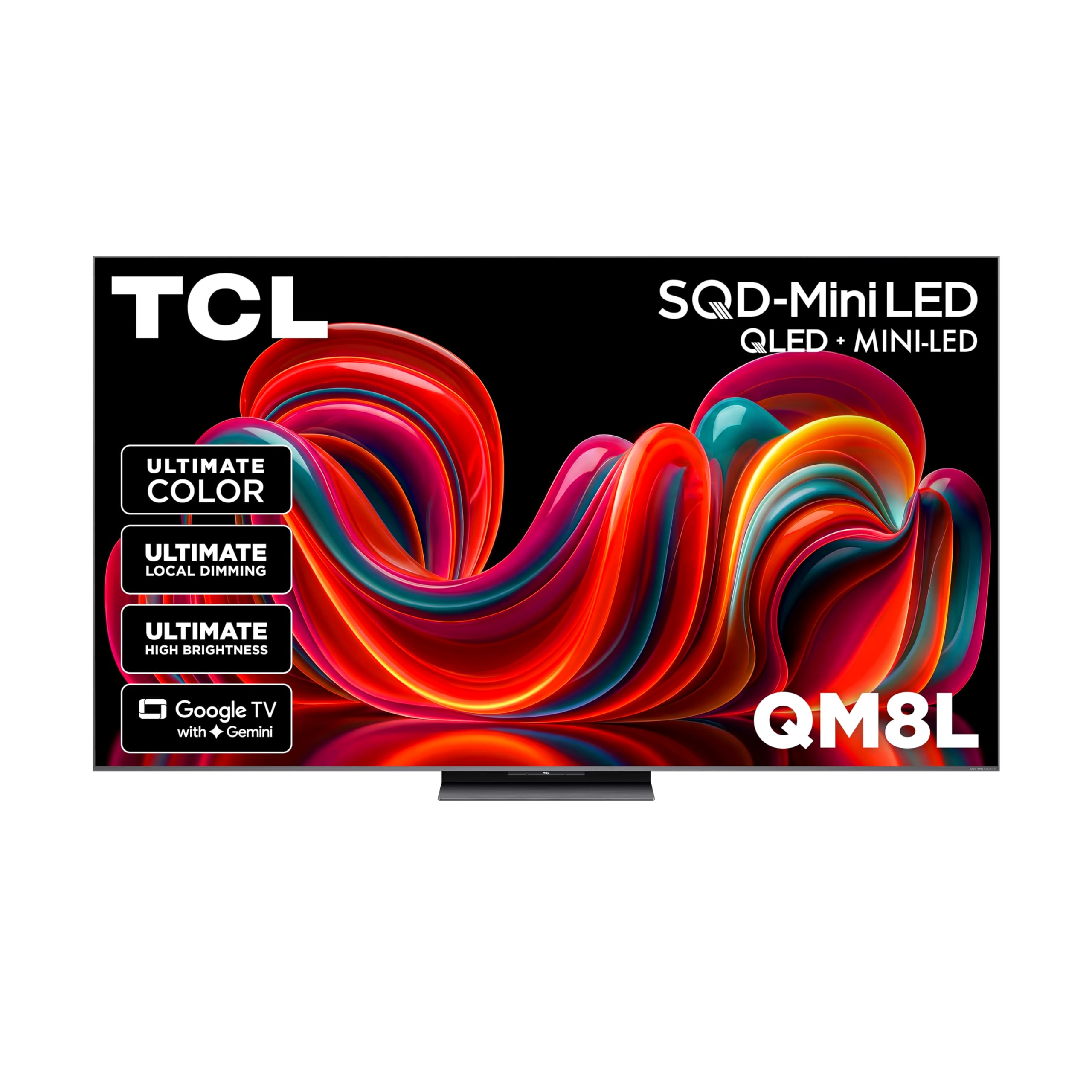
The TCL QM8L is a brightness monster. With a staggering 6,000 nits peak and over 4,000 discrete dimming zones, it produces highlights that feel tactile — sunlight glinting off metal in a HDR movie looks genuinely intense. The SQD-Mini LED architecture uses a 26-bit dynamic dimming system to suppress the blooming that plagues lesser MiniLED implementations.
The TCL Ultra Color Filter uses 5-nanometer quantum dot particles (versus the standard 60nm) for pin-point color purity. Combined with the Bang & Olufsen audio partnership, this TV delivers both reference-level light output and a built-in soundstage that can fill a large living room without an external soundbar. Google Gemini Interactive AI handles voice commands with natural language understanding, a step ahead of basic command trees.
The backlit remote feels premium, and the Game Accelerator 288 VRR is overkill for current consoles but future-proofs your setup for the next generation. The main trade-off is a slight motion blur compared to Sony’s XR processor; fast-scrolling text isn’t quite as crisp. If you prioritize blinding HDR impact and near-zero blooming above all else, the QM8L is your TV.
Why it’s great
- 6,000 peak nits delivers the most impactful HDR highlights in this category
- 4000+ dimming zones virtually eliminate blooming in dark scenes
- Bang & Olufsen audio provides excellent built-in sound depth
Good to know
- Motion processing is slightly less refined than Sony’s XR algorithm
- Extreme brightness may require bias lighting to reduce eye strain in dark rooms
3. Samsung Neo QLED QN90D (QN75QN90D)

Samsung’s Neo QLED technology in the QN90D pairs Quantum Matrix Mini LEDs with the NQ4 AI Gen2 Processor, which uses 20 neural networks to optimize contrast in real time. The Real Depth Enhancer Pro isolates the focal point of a scene and boosts its perceived depth, giving 2D content a three-dimensional feel particularly noticeable in nature documentaries and sports.
Object Tracking Sound+ places audio cues precisely where the action is on screen. When a car races from left to right, the sound follows it convincingly. This is the best built-in directional audio among the TVs in this list. The anti-glare coating is also top-tier, maintaining black depth even with a south-facing window behind you. Motion Xcelerator 144Hz handles PC gaming fluidly with FreeSync Premium Pro certification.
The Tizen OS is fast but litters the home screen with promoted content. The Samsung account requirement and ad-supported interface frustrate some owners. Additionally, the solar-powered remote (USB-C rechargeable) is a thoughtful touch, though it lacks a number pad. For a bright, sun-drenched living room, the QN90D maintains black integrity better than almost any competitor.
Why it’s great
- Outstanding anti-glare layer keeps blacks deep in bright rooms
- Object Tracking Sound+ provides directional audio without a soundbar
- Real Depth Enhancer Pro adds convincing depth to 2D content
Good to know
- Tizen OS home screen includes promoted ads and Samsung account requirement
- Solar remote lacks a number pad and dedicated input button
4. Hisense U7 Mini-LED ULED (75U7SG)
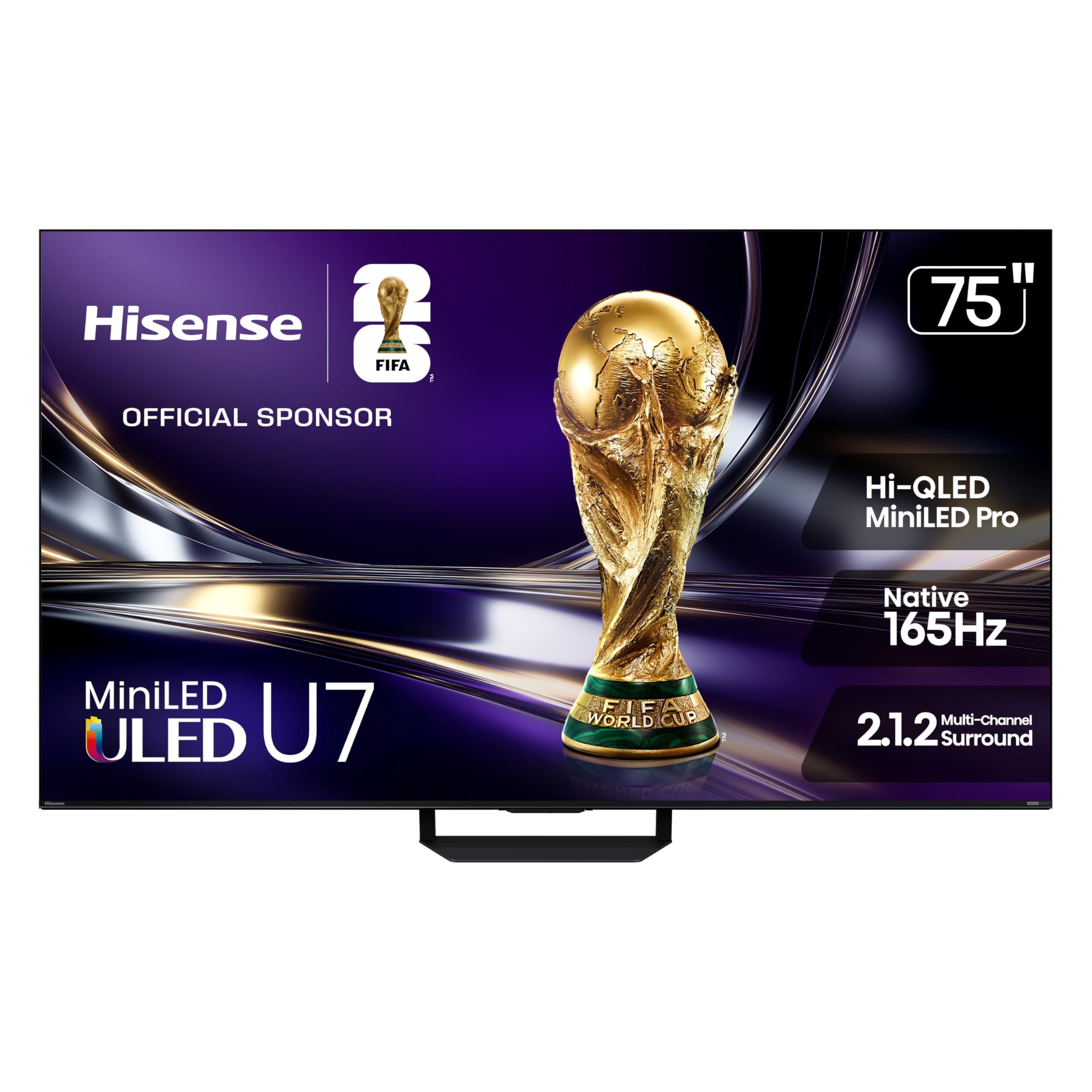
The Hisense U7 is the only TV in this roundup with a native 165Hz refresh rate panel and a 330Hz VRR ceiling. For competitive PC gamers running a high-end GPU, this extra headroom translates to visibly smoother frame pacing in fast-paced shooters. The Hi-QLED MiniLED Pro backlight with up to 3,000 dimming zones provides enough precision to avoid distracting halos around HUD elements.
The anti-reflection and glare-free screen treatment goes beyond a basic matte coating. Hisense applies a dual-layer screen treatment that minimizes reflections from overhead lights and direct sunlight while preserving image sharpness. This makes the U7 a strong candidate for a living room with ambient light. The Hi-View AI Engine Pro handles real-time scene detection, boosting color and contrast without making skin tones look waxy.
Google TV integration is clean and responsive, and the Filmmaker Mode preserves the intended aspect ratio and frame rate for movie purists. Owners report that the built-in 2.1.2 channel sound is serviceable, though a dedicated soundbar is recommended for full Dolby Atmos immersion. The primary consideration is that peak brightness in standard dynamic range is slightly lower than the TCL QM8L; daytime sports watching in a very bright room may require curtains.
Why it’s great
- Native 165Hz panel with 330Hz VRR is unmatched for PC gaming
- Dual-layer anti-glare coating handles bright rooms and reflections effectively
- Excellent local dimming density for MiniLED precision
Good to know
- SDR peak brightness is lower than competing MiniLED flagships
- Built-in audio is decent but benefits from an external soundbar
5. Sony BRAVIA 7 (K-75XR70)

The Sony BRAVIA 7 is the step-up from the BRAVIA 5, adding QLED color via XR Triluminos Pro for billions of accurate real-world shades. This makes a visible difference in skin tones and natural landscapes — a late afternoon sunset looks nuanced rather than cartoonishly saturated. The XR Clear Image upscaling is phenomenal; even 720p cable broadcasts look passable on a 75-inch screen, which is a borderline magical feat.
IMAX Enhanced and DTS:X support mean this TV is ready for physical media collectors who still purchase Blu-rays. The Acoustic Multi-Audio system uses actuators behind the screen to vibrate the panel itself, creating sound that seems to come from the exact location of the on-screen action rather than from the bottom bezel. For a TV-only sound system, it creates a surprising sense of vertical soundstage.
The viewing angle is narrow — colors wash out past about 30 degrees off-center. If you have a wide sectional sofa, the outer seats will see a dimmer, less saturated image. Also, some owners report a few random restarts during the first week of use, though these usually resolve after software updates. If you value cinematic color accuracy and upscaling from low-resolution sources, the BRAVIA 7 is the best choice in this budget range.
Why it’s great
- XR Triluminos Pro delivers the most natural QLED color accuracy
- Exceptional upscaling makes low-resolution content watchable on a 75-inch screen
- IMAX Enhanced and DTS:X support for physical media enthusiasts
Good to know
- Narrow viewing angle (approx. 30 degrees) limits off-axis picture quality
- Occasional random restarts reported during initial software tuning
6. TCL QM8K Series (75QM8K)
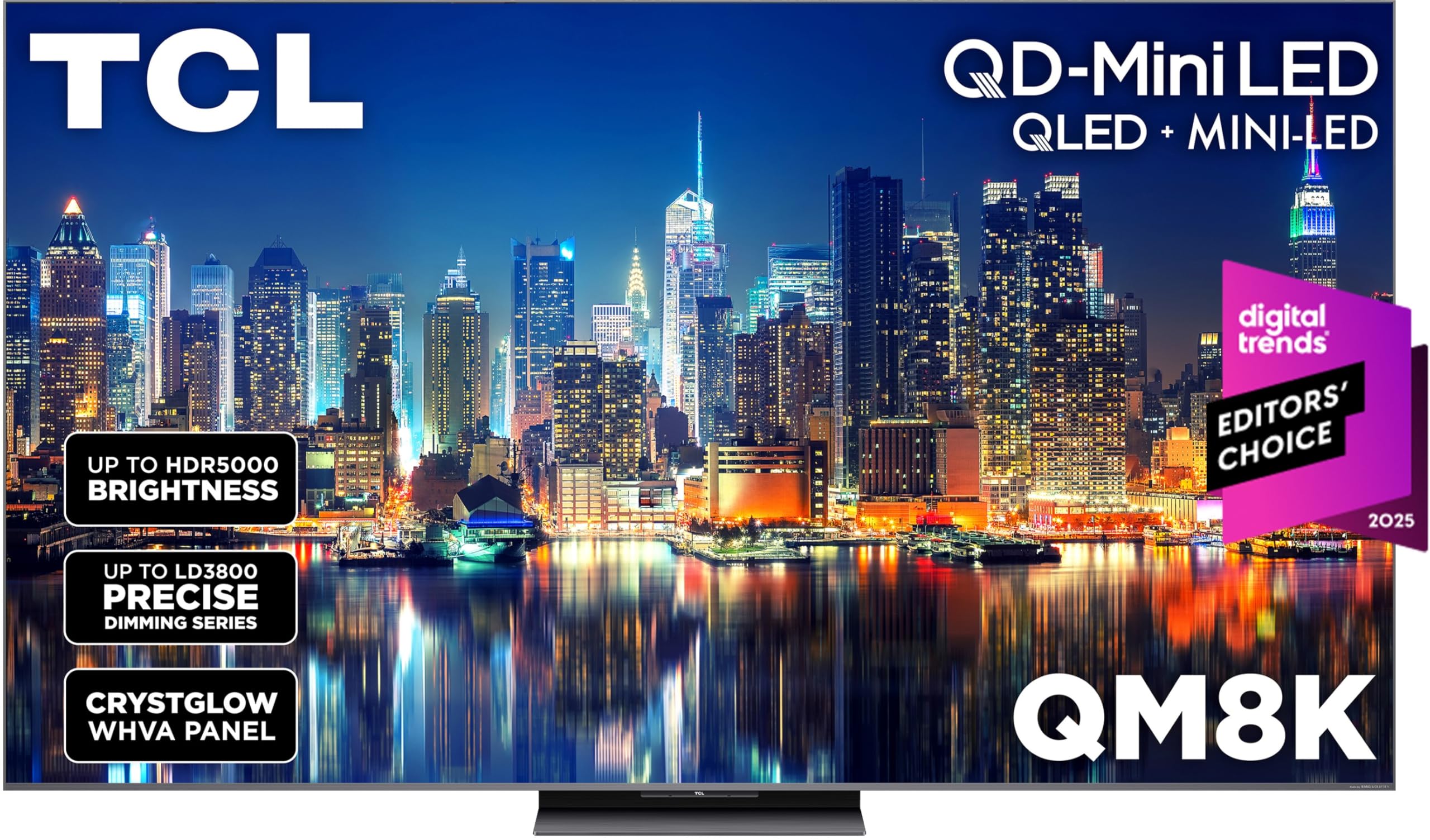
The TCL QM8K represents the previous generation (2025 model) relative to the QM8L, but it remains a potent MiniLED contender. The TCL Halo Control System — a comprehensive technology suite including a Super High Energy LED Microchip and Zero Delay Transient Response — virtually eliminates the blooming halo effect that plagues lesser MiniLEDs. Combined with the CrystGlow WHVA panel, off-angle viewing retains contrast better than many IPS-based competitors.
Game Accelerator 288 VRR is a marketing term that covers 144Hz native plus up to 288Hz VRR at reduced resolution, but in practice, it provides tear-free 4K@144Hz for PC gaming. The Google TV implementation is fast, and the backlit premium voice remote is a nice touch that many brands skip. Owners note that the Bang & Olufsen audio is punchy with clear dialogue, though bass extension is limited without a subwoofer.
The main drawback is that the QM8K is being superseded by the QM8L; stock may run low, and the QM8L offers significantly higher brightness and zone count. At the right price, however, the QM8K offers 95% of the experience for less. The HDR performance is already excellent, with deep blacks that make OLED owners double-take.
Why it’s great
- Halo Control System delivers near-zero blooming in high-contrast scenes
- CrystGlow WHVA panel maintains contrast from wider viewing angles
- Backlit premium voice remote is a thoughtful inclusion
Good to know
- Being replaced by the brighter QM8L; stock availability may vary
- Built-in bass is adequate but lacks deep subwoofer extension
7. Amazon Ember Mini-LED Series
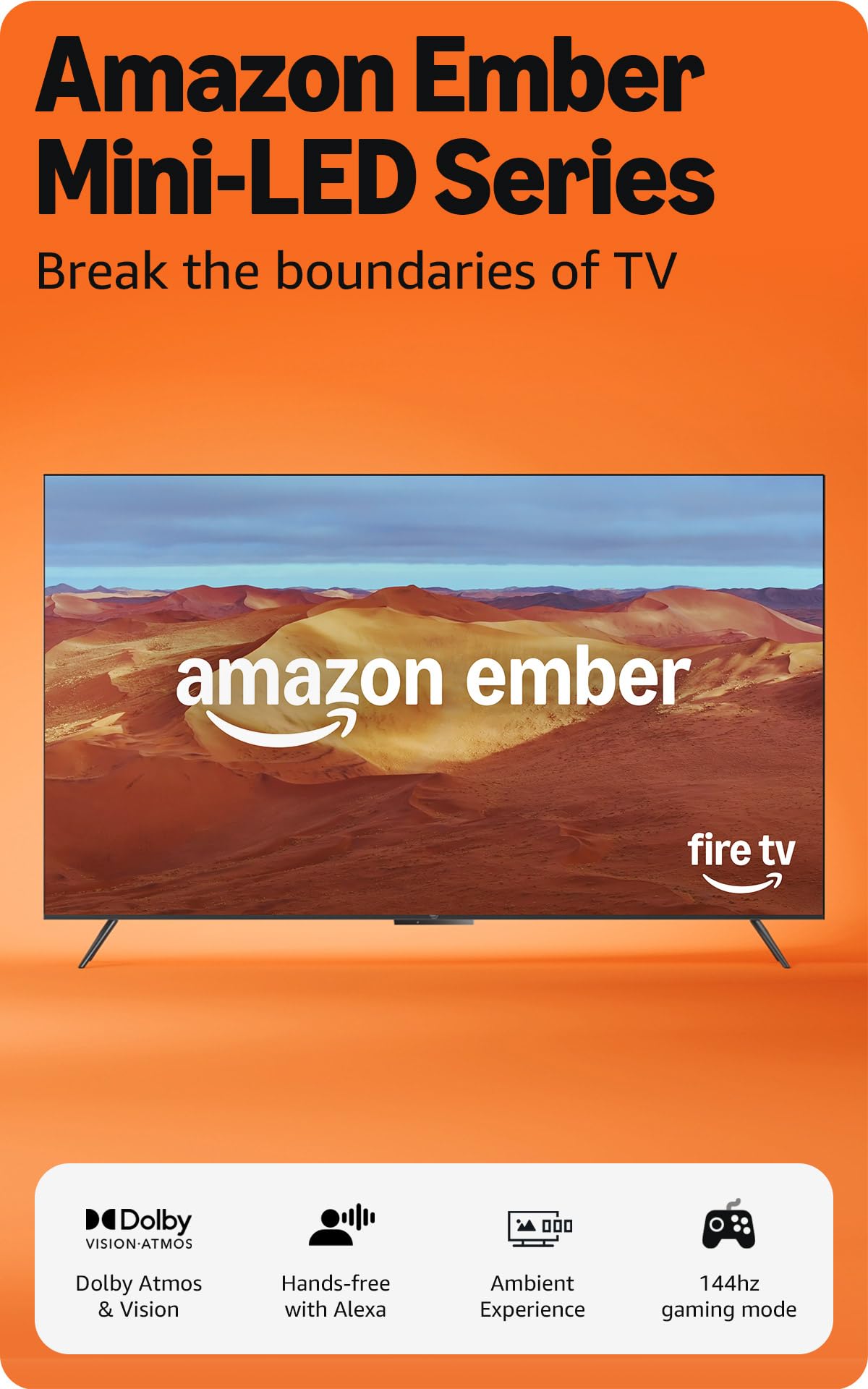
The Amazon Ember Mini-LED Series is the first real challenger from the retail giant in the premium TV space. With 512 dimming zones and a peak brightness of 1,400 nits, it undercuts traditional brands while delivering a genuinely impressive HDR picture. The Fire TV Intelligent Picture processor fine-tunes scene-by-scene, and the Omnisense sensor technology wakes the display automatically when you enter the room, showing artwork or the home screen.
AMD FreeSync Premium Pro certification ensures tear-free gaming at 144Hz, and the 2.1 Dolby Atmos audio with a dedicated woofer produces room-filling sound that competes with entry-level soundbars. The hands-free Alexa+ integration is the deepest voice control available — you can search across streaming services, control smart home devices, and even ask about sports scores without touching a remote.
The trade-off is that the Fire TV interface, while fast, is heavily promotional. Amazon pushes its own content and services aggressively on the home screen, which some owners find intrusive. The panel quality is strong for MiniLED at this price, but it doesn’t match the zone count or brightness of the TCL QM8L or Samsung QN90D. If you are deeply integrated into the Amazon ecosystem, the seamless experience outweighs these limitations.
Why it’s great
- Deepest Alexa+ voice integration for hands-free control and content search
- 512 dimming zones and 1,400 nits deliver strong MiniLED HDR performance
- Omnisense sensor wakes the TV automatically when you enter the room
Good to know
- Fire TV home screen heavily promotes Amazon content and ads
- Zone count and brightness are lower than flagship MiniLED competitors
8. LG QNED evo QNED92A (75QNED92AUA)
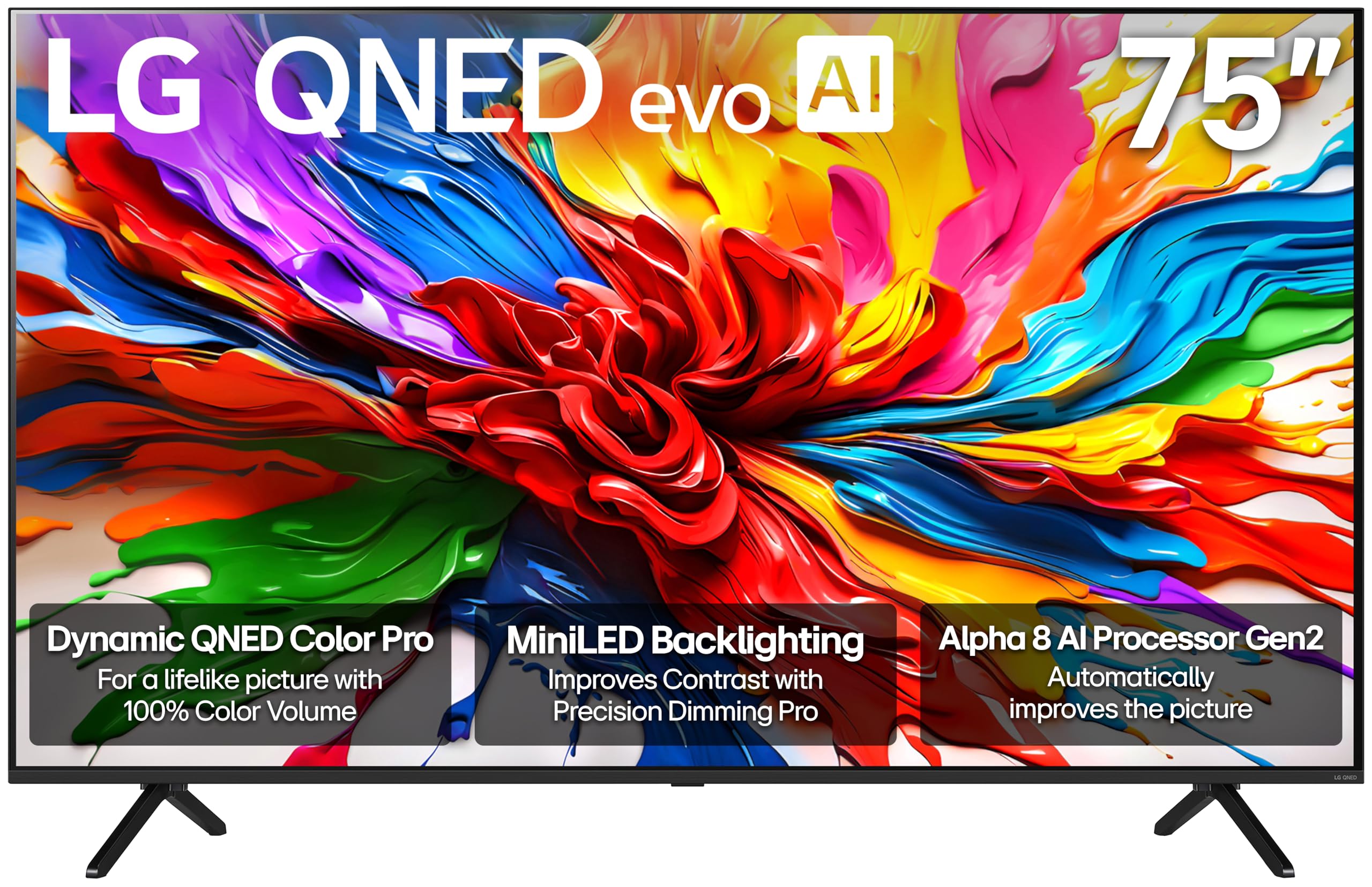
The LG QNED evo QNED92A represents LG’s most balanced MiniLED offering, leveraging Precision Dimming Pro to control hundreds of individually managed dimming zones. The Alpha 8 AI Gen2 Processor analyzes both picture and sound to adapt them to your content automatically. Dynamic QNED Color Pro achieves 100% Color Volume, meaning color saturation remains consistent even at peak brightness, avoiding the washed-out look that cheaper LEDs can produce.
Four HDMI 2.1 ports are a standout feature — you can connect a PS5, Xbox Series X, a gaming PC, and a soundbar simultaneously without swapping cables. WOW Orchestra lets the TV speakers sync with a compatible LG soundbar for a unified soundstage. The webOS platform remains the smoothest smart TV experience, with a customizable launcher that hides promoted content effectively compared to Fire TV or Tizen.
The primary complaint from owners is the “magic remote,” which uses a gyroscopic pointer that can be disorienting. Some users report significant glare in bright rooms, as the panel doesn’t have the same level of anti-reflective coating as Samsung’s QN90D. Halo effects around white subtitles on a black background are also occasionally noted. For a polished, multi-HDMI 2.1 smart TV, the QNED92A is a strong choice if you can tolerate the pointer remote.
Why it’s great
- Four full-bandwidth HDMI 2.1 ports for multi-console setups
- Alpha 8 AI Gen2 delivers excellent automatic picture and sound optimization
- WOW Orchestra syncs TV speakers with compatible LG soundbars for unified audio
Good to know
- Magic remote’s gyroscopic pointer takes time to get used to
- Glare in bright rooms is more noticeable than on Samsung Neo QLED
9. Samsung Neo QLED QN90C (QN75QN90C)

The Samsung QN90C, while a 2023 model, remains a formidable entry in the Neo QLED lineup thanks to its identical Quantum Matrix Mini LED hardware to newer models. The Neural Quantum Processor 4K delivers sharp upscaling, and the Quantum HDR+ handles bright highlights with authority. This TV was the benchmark for anti-glare performance in its era, and it still handles a bright bay window better than most 2025 competitors.
The ultra-wide viewing angle is the key differentiator here. Samsung’s proprietary panel architecture ensures color and contrast remain stable even from extreme side angles, making it ideal for large family rooms with seating spread across a wide area. The Q-Symphony 3.0 feature pairs with Samsung soundbars to use the TV speakers as an additional center channel, improving dialogue clarity without buying extra hardware.
At 120Hz native (not the 144Hz of the QN90D), it still handles console gaming smoothly. The Tizen OS is the same ad-heavy interface as newer models, and the solar remote is appreciated. The main reason to choose this over the QN90D is the lower price point — you give up the 144Hz panel and NQ4 AI processor but retain the same stellar anti-glare screen and wide viewing angle. For a bright, multi-seat living room, it’s a smart value play.
Why it’s great
- Ultra-wide viewing angle maintains color and contrast from any seat
- Anti-glare screen is class-leading for bright room performance
- Neural Quantum Processor upscales HD content effectively to 4K
Good to know
- Limited to 120Hz native rather than the 144Hz of the QN90D
- Tizen OS includes advertising on the home screen
10. LG QNED85T Series (75QNED85TUA)

The LG QNED85T is a Quantum Dot Nanocell TV with an a8 AI Processor 4K, offering rich, accurate color reproduction that outshines basic LED panels. While it uses edge-lit IPS technology rather than MiniLED, the deep-learning algorithms analyze the content to improve perceived contrast and brightness. For mixed-use viewing in a moderately lit room, the picture is vibrant and satisfying.
The Magic Remote is included here as well, with its pointer-based navigation that some owners love and others find finicky. The webOS Re:New Program guarantees five years of software updates, which is a meaningful commitment to longevity. The 120Hz refresh rate and FreeSync support handle console gaming capably, though black levels are not as deep as the MiniLED or OLED alternatives in this list.
Owners note that the built-in audio is bass-heavy with slightly flat treble, requiring EQ adjustments out of the box. The dual stand positions allow it to fit on narrower entertainment centers, a practical consideration. For a well-priced, reliable 75-inch TV with excellent color accuracy and a proven smart platform, the QNED85T delivers a solid experience without the MiniLED premium.
Why it’s great
- Quantum Dot Nanocell color provides rich, accurate hues out of the box
- webOS Re:New Program guarantees 5 years of software updates
- Dual stand positions fit narrower furniture setups
Good to know
- Edge-lit IPS panel produces less deep blacks than MiniLED competitors
- Factory audio EQ leans bass-heavy; manual adjustment recommended
11. Amazon Ember QLED Series
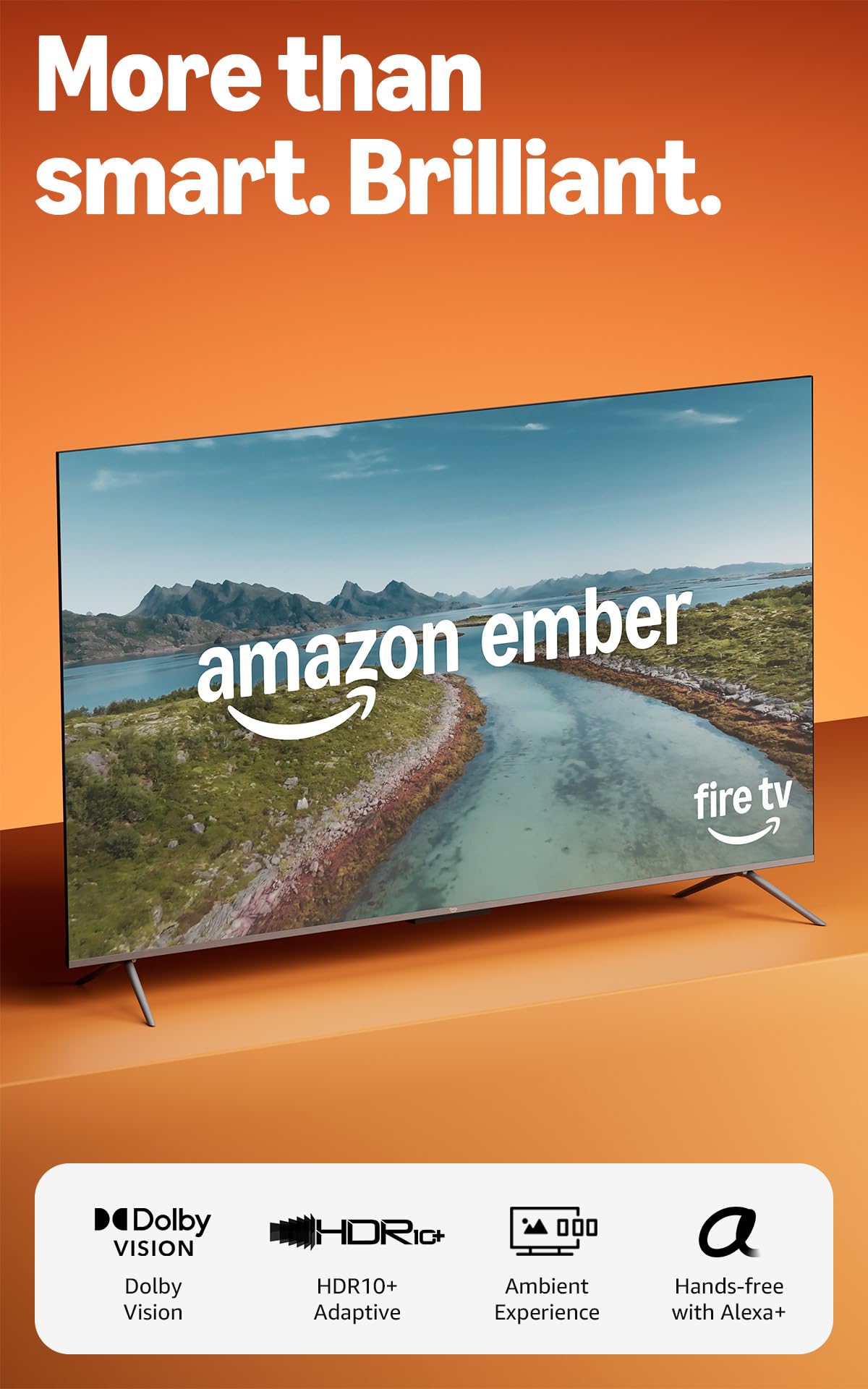
The standard Amazon Ember QLED Series is the entry point into the Ember lineup, offering a 4K QLED display with full-array local dimming and Dolby Vision IQ support. It is a capable everyday TV that benefits from the Fire TV ecosystem and Alexa+ voice control. The quad-core processor and Wi-Fi 6 support ensure apps load quickly and streaming stays smooth.
The full-array local dimming helps with black levels, but it is not in the same league as the MiniLED Ember variant. Zone counts are significantly lower, so blooming is visible in dark scenes with bright subtitles. The picture quality is solid for the price point, with good color saturation and sufficient brightness for typical living room lighting. The Omnisense wake feature is present, automatically turning on the display when motion is detected.
Audio is the weakest link — the built-in speakers lack clarity and bass compared to the MiniLED Ember, making a soundbar almost a necessity. The Fire TV interface remains ad-heavy but responsive. If your budget is strict and you prioritize the Fire TV integration and QLED color over absolute black levels, this is a functional choice. It represents the baseline for what a 75-inch TV should be at a moderate price point.
Why it’s great
- Fire TV with Alexa+ provides deep ecosystem integration and hands-free control
- QLED display with full-array local dimming offers good color and contrast
- Omnisense sensor wakes the TV on motion for instant access
Good to know
- Built-in speakers lack clarity and bass; a soundbar is highly recommended
- Blooming on dark scenes is more visible than on MiniLED models
12. Toshiba Z670 Series (75Z670R)
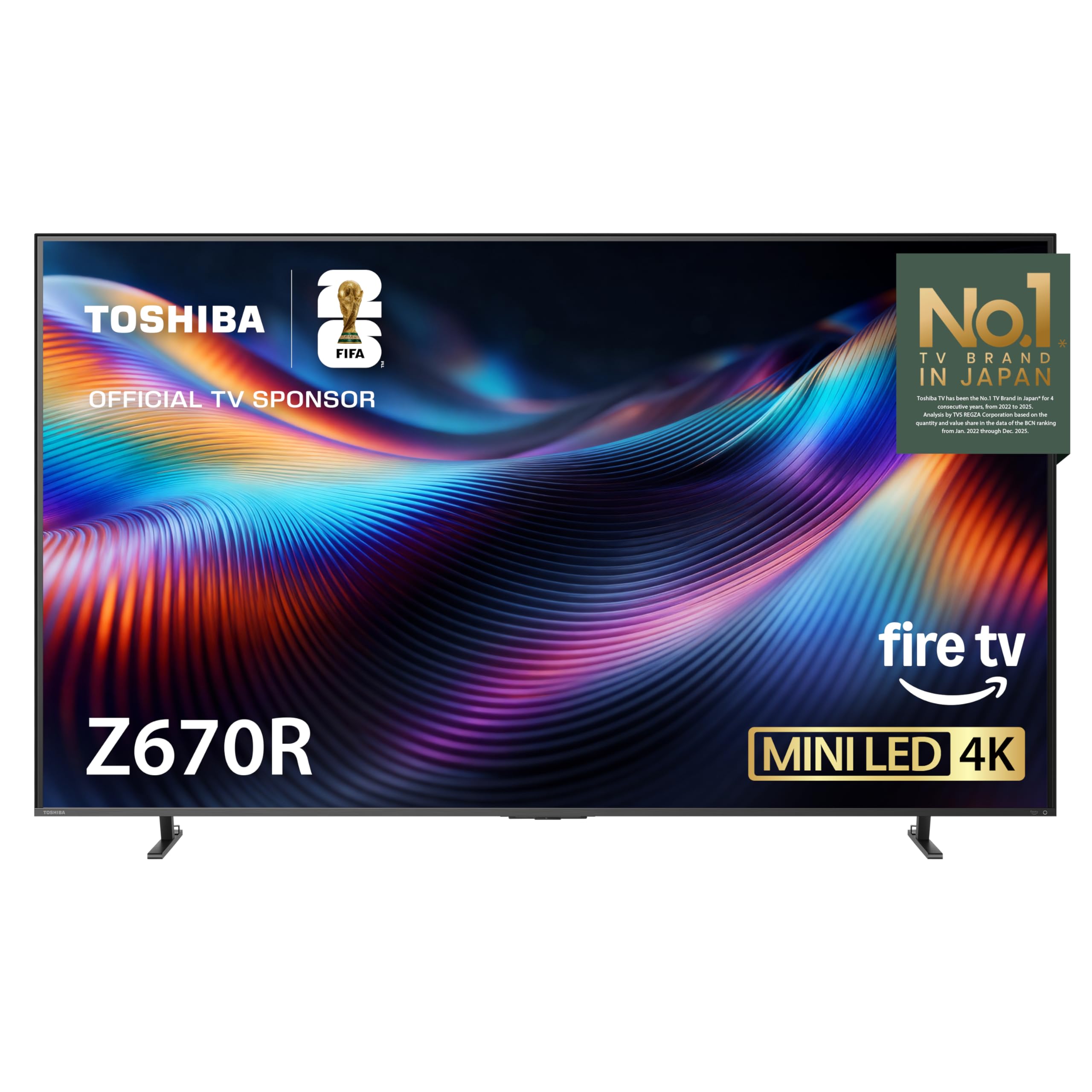
The Toshiba Z670 is a 2026 model that packs Mini LED with Full Array Local Dimming and the REGZA Engine ZRi Gen3, a processor designed and fine-tuned by Toshiba engineers in Japan. The picture is impressively bright with good contrast, and the Mini LED backlight minimizes blooming in most real-world content. The QLED color adds vibrancy without oversaturation.
The standout feature is the REGZA Power Audio Pro with a dedicated Bass Woofer. This is one of the few TVs in this price bracket that can produce genuinely deep, room-shaking bass without an external subwoofer. For action movie fans who want to skip a soundbar, this is a compelling reason to choose the Toshiba. Fire TV integration is smooth, and the native 144Hz panel with FreeSync Premium ensures fluid gaming.
The main limitation is that the REGZA Engine, while good, doesn’t quite match Sony’s XR processor for upscaling low-resolution content. 720p cable broadcasts look softer on the Toshiba. The design is also notably thick — it won’t sit flush against the wall like the ultra-slim Samsung Neo QLEDs. For buyers who prioritize built-in audio bass response and value-oriented MiniLED performance, the Z670 is a strong dark horse pick.
Why it’s great
- Dedicated bass woofer produces deep, room-shaking sound without a soundbar
- REGZA Engine ZRi Gen3 delivers solid MiniLED picture quality with good contrast
- Native 144Hz panel with FreeSync Premium ensures fluid gaming performance
Good to know
- Upscaling of low-resolution content is not as refined as Sony’s XR processor
- Cabinet depth is thicker than many competitors for wall mounting
13. iFFALCON 75U85
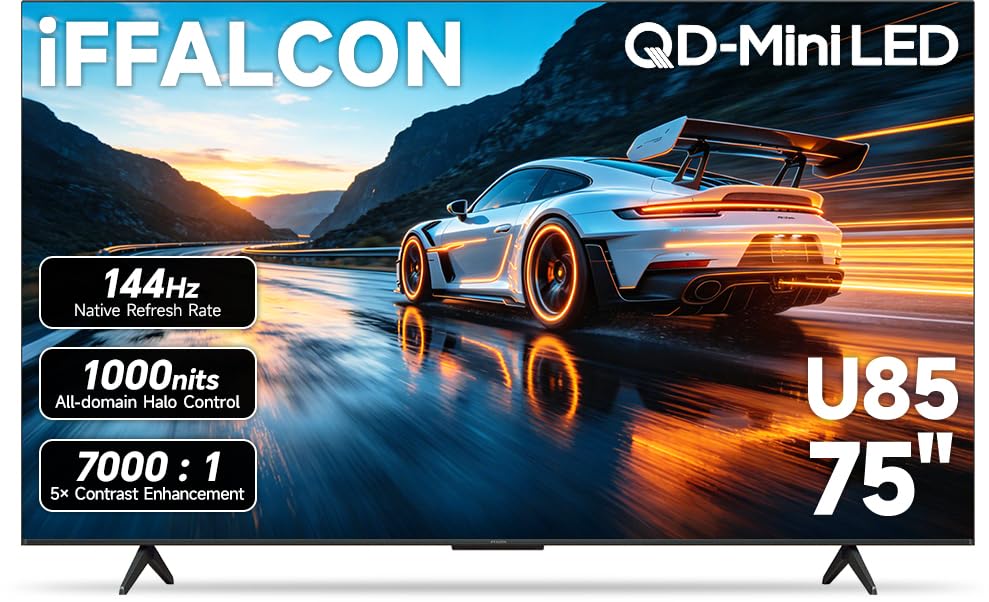
The iFFALCON 75U85 is the most aggressively priced MiniLED TV in this guide, offering a native 144Hz panel with VRR up to 288Hz, Dolby Vision Gaming, and a 7,000:1 contrast ratio. For pure gaming specs per dollar, it is unmatched. The 50W 2.1-channel audio system (with a dedicated 20W woofer) delivers more bass than most ultra-budget TVs, making it a viable option for a bedroom or small apartment.
The four HDMI 2.1 ports are a surprise at this price point, allowing simultaneous connection of a PS5, Xbox, PC, and soundbar. The Google TV interface is clean and responsive. A unique feature is the built-in hotel mode with IP/IR control, which allows commercial or Airbnb installations to lock menus and manage displays remotely — a capability almost unheard of at this price tier in a consumer-like form factor.
The picture quality is good but not great. The 7,000:1 contrast ratio is excellent on paper, but the local dimming implementation is less sophisticated than the TCL or Hisense offerings; blooming is more apparent in letterbox bars. Peak brightness is sufficient for SDR content but doesn’t deliver the punch needed for high-impact HDR highlights. For a budget-focused buyer who wants 144Hz gaming on a 75-inch MiniLED panel, this is a capable entry point with clear compromises in HDR finesse.
Why it’s great
- Unbeatable price for a 75-inch MiniLED with native 144Hz gaming
- Four HDMI 2.1 ports for multi-console setups without a switcher
- Built-in hotel mode with IP/IR control for commercial and Airbnb use
Good to know
- Local dimming implementation is basic; blooming is visible on letterbox bars
- HDR peak brightness is lower than premium MiniLED competitors
FAQ
Is MiniLED better than OLED in the $2000 price range for a 75-inch TV?
How many HDMI 2.1 ports do I need for a multi-console gaming setup?
What is Auto Low Latency Mode (ALLM) and why does it matter for gaming?
Will a 75-inch TV fit in my living room with a standard 60-inch entertainment center?
What is the ideal viewing distance for a 75-inch 4K TV?
Final Thoughts: The Verdict
For most users, the best 75 inch tv under $2000 winner is the Sony BRAVIA 5 (K-75XR50) because its XR AI processor delivers the most natural upscaling, color, and motion processing of any TV in this price bracket, especially when paired with a PS5. If you want jaw-dropping HDR brightness and near-zero blooming, grab the TCL QM8L (75QM8L). And for the best bright-room performance and directional audio without a soundbar, nothing beats the Samsung Neo QLED QN90D (QN75QN90D).