
Our readers keep the lights on and the weekend projects moving. As an Amazon Associate, I earn from qualifying purchases.
Choosing a purifier when you or a family member has asthma isn’t about dust control — it’s about preventing the overnight wheeze that robs you of sleep. A machine that misses fine particles or recirculates VOCs can leave your lungs working harder all night.
I’m Rikta — the co-founder and writer behind FitlyFast. I’ve sifted through hundreds of engineering specs, CADR certifications, and real-world owner complaints to isolate the models that actually reduce asthma triggers in a bedroom or living space.
This guide breaks down the filtration strength, room coverage, and quietness that matter most so you can confidently choose the best asthma air purifier for your home.
How To Choose The Best Asthma Air Purifier
Not every purifier marketed for allergies is strong enough to handle asthma triggers. The real difference lies in three measurable areas: filtration standard, air turnover rate, and the machine’s ability to sense and respond to pollution spikes without keeping you awake.
Filtration Standard — True HEPA vs. UltraHEPA vs. HEPA-Type
True HEPA filters capture 99.97% of particles at 0.3 microns, which includes most pollen, dust mite debris, and mold spores. For asthma, this is the baseline you can trust. HEPA-type or HEPA-grade filters lack third-party certification and may allow smaller particles to pass. UltraHEPA filtration, found on high-end units like the AirDoctor AD3500, captures particles down to 0.003 microns — valuable for people whose symptoms are triggered by ultrafine smoke or bacteria.
Clean Air Delivery Rate (CADR) and Room Coverage
CADR tells you how many cubic feet of air per minute the unit cleans of smoke, dust, and pollen. For asthma, smoke CADR is the most relevant number because smoke particles are the smallest and hardest to catch. A smoke CADR below 100 may struggle in a standard bedroom. Match the CADR to your room size — the rule of thumb is that the CADR number should be at least two-thirds of the room’s square footage.
Carbon Filter Quality for Gas and Odor Removal
Asthma can be triggered by VOCs from cooking, cleaning products, and fragrances. A thin, fiber-based carbon sheet does little to absorb these gasses. Look for a carbon filter made with pelletized activated carbon or a carbon/zeolite blend. The heavier the carbon layer, the more surface area for trapping chemical vapors and odors.
Noise Level and Nighttime Use
A purifier is only helpful if it runs while you sleep. Sleep Mode should stay below 30 dB — about the sound of a whisper. Models with a light-off feature and an automatic sensor that dims the display prevent light pollution from disturbing rest. A machine that forces you to choose between clean air and quiet operation fails the asthma test.
Quick Comparison
On smaller screens, swipe sideways to see the full table.
| Model | Category | Best For | Key Spec | Amazon |
|---|---|---|---|---|
| Coway Airmega AP-1512HH | Mid-Range | Best Overall Balance | Smoke CADR 233 CFM | Amazon |
| Winix 5520 | Mid-Range | Smart Auto Control | 23.5 dB Sleep Mode | Amazon |
| Coway Airmega 250 | Premium | Large Rooms & VOC Control | 1,860 sq ft coverage | Amazon |
| Levoit EverestAir-P | Premium | Smart Features & Adjustable Airflow | CADR 354 CFM | Amazon |
| Luftrum C3500 | Mid-Range | Rapid Odor Elimination | 20 dB Sleep Mode | Amazon |
| AirDoctor AD3500 | Premium | Ultrafine Particle Capture | 0.003 micron filter | Amazon |
| Nuwave Forever | Premium | Zero Replacement Costs | Washable 7-stage filter | Amazon |
| Levoit Core 300-P | Budget | Small Bedrooms | Smoke CADR 143 CFM | Amazon |
| GermGuardian AC4825E | Budget | Value HEPA Filtration | UV-C light included | Amazon |
In‑Depth Reviews
1. Coway Airmega AP-1512HH
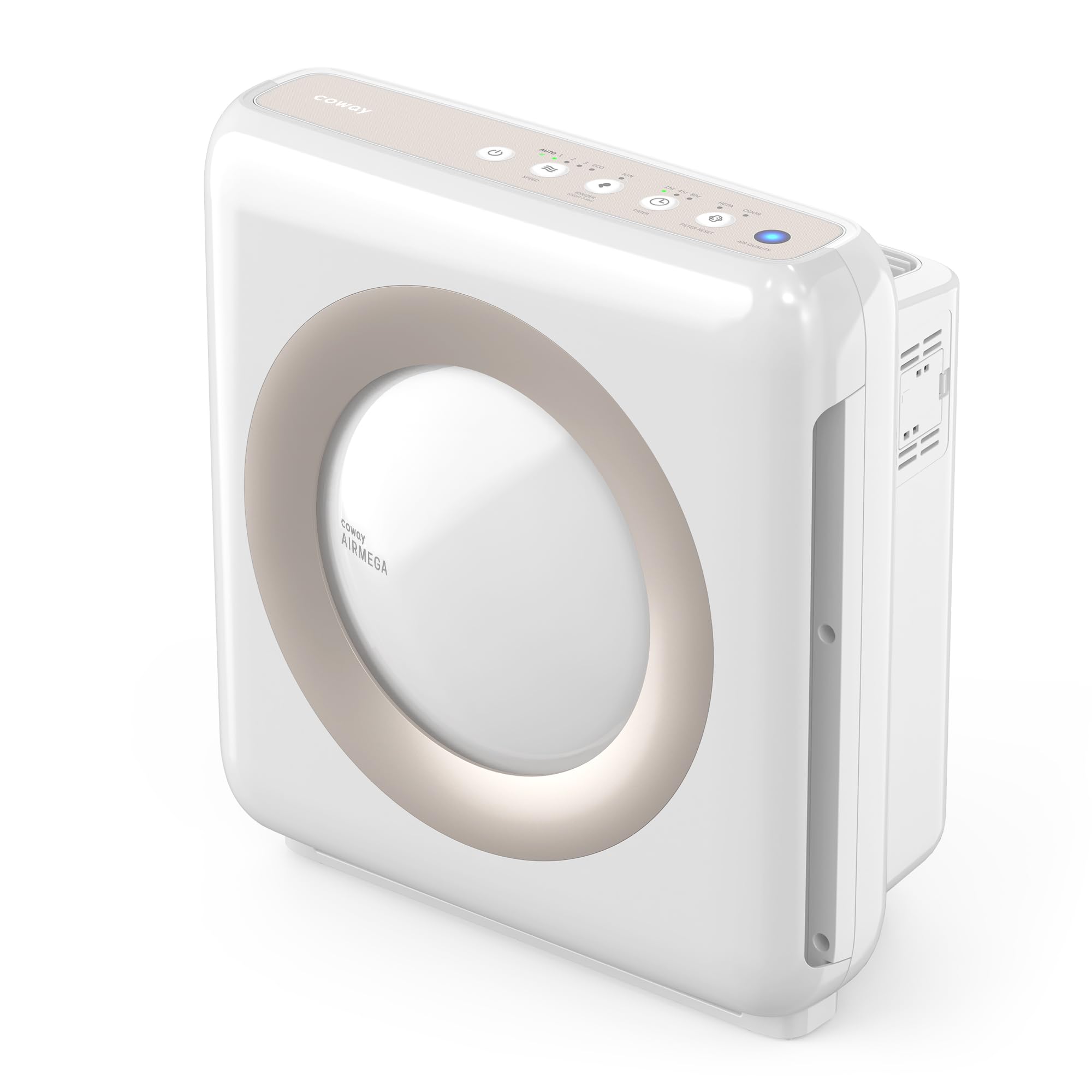
The Coway Airmega AP-1512HH has earned its status as a Wirecutter top pick for good reason. Its four-stage filtration — pre-filter, deodorization carbon filter, True HEPA, and Vital Ion — delivers a smoke CADR of 233 CFM, enough to cycle a 361 sq ft room over four times per hour. The pollution sensor communicates air quality in real time via bright LED, and the auto mode adjusts fan speed from a near-silent 24.4 dB to a powerful 53.8 dB automatically.
Asthma sufferers benefit from the washable pre-filter that extends HEPA life to roughly twelve months, keeping long-term costs manageable. The timer offers 1/4/8-hour settings, and the Eco mode shuts the fan off when no pollution is detected for 30 minutes, saving energy without sacrificing air quality. Owner reports consistently highlight how quickly the unit cleared heavy wildfire smoke, often turning the indicator from red to blue within minutes.
The main trade-off is noise at the highest fan speed — level 3 is loud enough to compete with conversation. Some users also wish the auto mode defaulted to medium speed rather than low. Still, for a mid-range unit that combines proven CADR numbers with a well-designed auto sensor, this remains the gold standard for asthma-focused home purification.
Why it’s great
- Industry-leading smoke CADR for its class
- Real-time air quality display with auto fan adjustment
- Washable pre-filter keeps HEPA costs low
Good to know
- High fan speed is loud
- Auto mode locks to low speed in clean air
2. Winix 5520
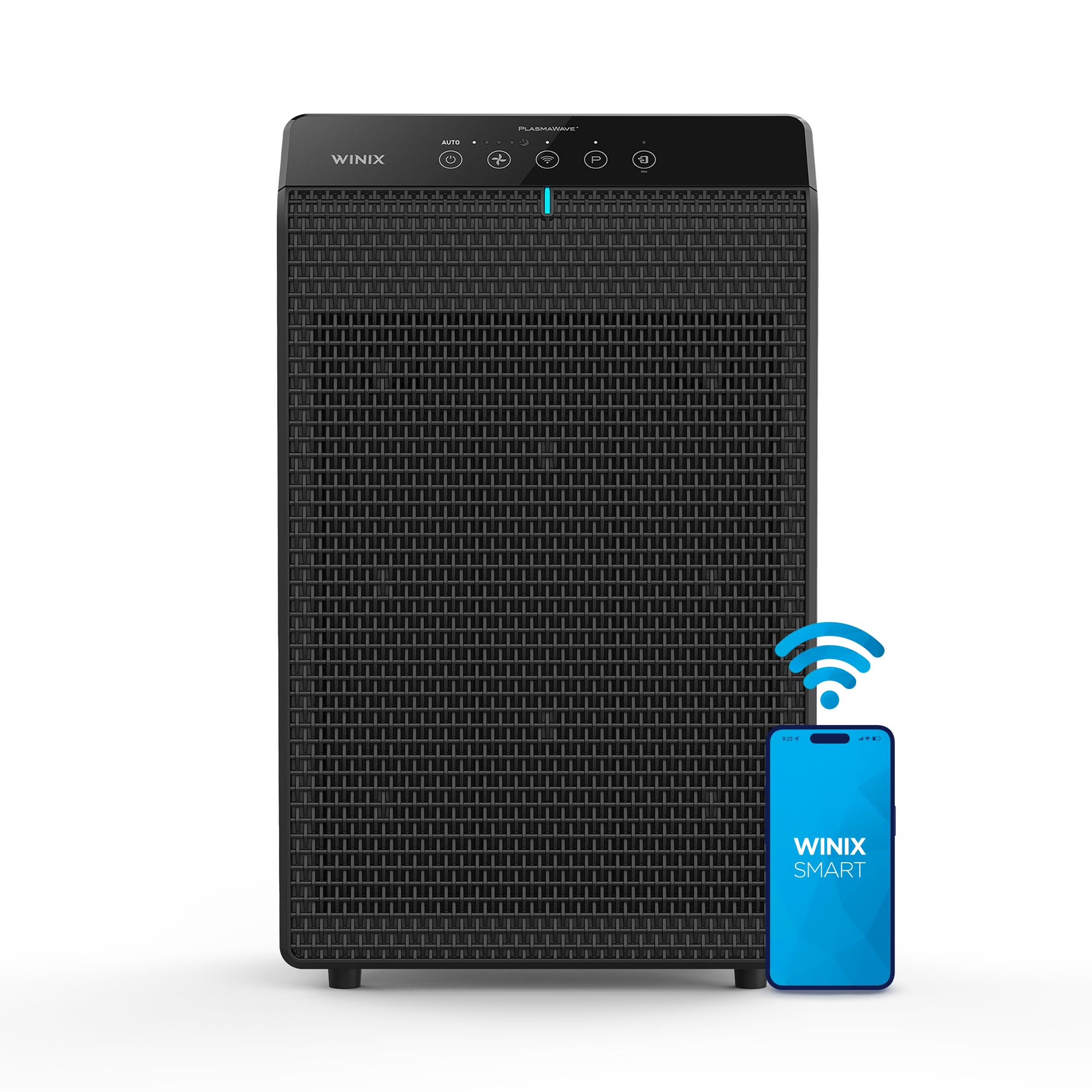
The Winix 5520 offers a compelling mix of advanced auto-mode technology and customizable filtration. It features a washable fine mesh pre-filter, an advanced odor control carbon filter (AOC), and a True HEPA filter that captures 99.99% of airborne allergens down to 0.01 microns. The built-in air quality sensor drives an auto mode that adjusts fan speed in real time, and the unit is AHAM Verifide at 392 sq ft with coverage up to 1,882 sq ft in one hour.
What sets this model apart for asthma management is the Light Automated Sleep Mode — when the room darkens, the unit automatically switches to quiet, energy-efficient operation at 23.5 dB with a dimmed display. The Winix Smart App and Alexa compatibility allow remote monitoring and control, which is useful for adjusting settings from bed or while away. Owners report that the auto mode reliably detects cooking odors, air freshener, and even flatulence, ramping up speed as needed and returning to quiet operation once the air clears.
The main drawback is that the Alexa integration is not fully native — it requires the Winix app and QR code pairing, and some users raise minor concerns about app security. Replacement filters are reasonably priced, with a full set costing roughly the same as a mid-range model from other brands. For those who want a quiet, sensor-driven unit that works without manual intervention, the Winix 5520 is a strong contender.
Why it’s great
- True 23.5 dB sleep mode is genuinely silent
- Light sensor automatically triggers night mode
- Smart app and Alexa for remote control
Good to know
- Alexa integration buggy for some users
- PlasmaWave ionizer may be a concern for some
3. Coway Airmega 250

The Coway Airmega 250 is built for larger spaces where asthma triggers can accumulate quickly. It covers 930 sq ft in 30 minutes and up to 1,860 sq ft in 60 minutes, using a HyperCaptive filtration system that combines a washable pre-filter, activated carbon filter, and True HEPA filter. The air quality indicator runs 24/7, and the Smart Mode adjusts fan speed automatically based on real-time readings.
What makes this unit especially valuable for asthma is the Rapid Mode — when pollution spikes, the fan kicks to maximum power until the air is clean again, then settles back to an energy-saving level. The carbon filter is larger than those found on smaller Coway models, providing better VOC and odor reduction. Owners with severe respiratory conditions, including emphysema, report that the Airmega 250 effectively hauls air through the multi-stage filter and clears cooking fumes and wildfire smoke within minutes.
The biggest consideration is size and weight — at 20.5 pounds and dimensions of 18.5 inches wide, this unit takes up significant floor space. It also lacks WiFi or app control, which some users prefer for simplicity. Filter replacement costs are low — about the same as a mid-range unit per year. For a large living room or open-concept home, this is the most effective asthma purifier for handling both particles and gasses.
Why it’s great
- Exceptional coverage for open-concept homes
- Rapid Mode handles pollution spikes instantly
- Thick carbon filter reduces VOCs effectively
Good to know
- Bulky footprint requires dedicated floor space
- No WiFi or smart app integration
4. Levoit EverestAir-P

The Levoit EverestAir-P is Levoit’s flagship model, designed to handle large spaces up to 2,655 sq ft with a CADR of 354 CFM. Its 3-channel laser sensor scans particles in three size categories (PM10, PM2.5, and PM1.0), giving you detailed insight into what’s in your air. The adjustable air outlet directs airflow anywhere from a 45-degree to a 90-degree angle, a feature unique to this model.
The washable pre-filter simplifies maintenance, and the wheels make it easy to move between rooms. In Auto Mode, the HEPA Sleep Mode maintains filtration quality while keeping noise low. The VeSync app allows scheduling, remote control, and voice commands via Alexa.
The main downside is the cost of genuine replacement filters, which run higher than those for the Core 300 series. Some users also note that the unit is not a “True HEPA” in the strictest sense — it uses a HEPA-grade filter that performs to standard while in Sleep Mode. Third-party filters often fail to fit correctly. For a tech-forward home where fine particle monitoring matters, the EverestAir-P is a premium choice.
Why it’s great
- 3-channel laser sensor for precise particle analysis
- Adjustable air outlet directs flow where needed
- High CADR with excellent VOC reduction
Good to know
- Replacement filters are expensive
- Not certified as True HEPA
5. Luftrum C3500
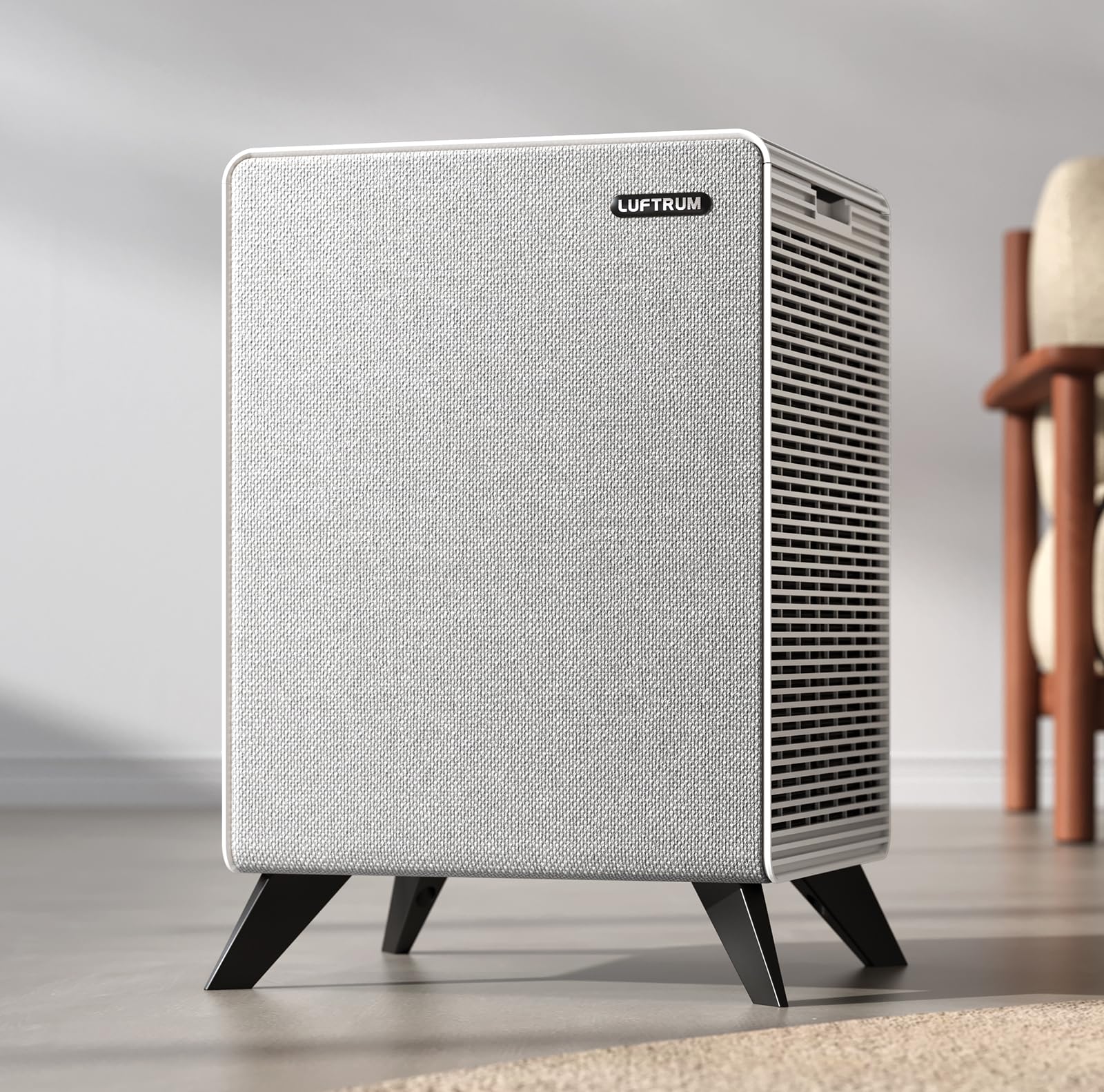
The Luftrum C3500 delivers strong performance at a mid-range price point, using dual True H13 HEPA filters that double the surface area and capture 99.95% of particles down to 0.1 microns. Its 1.5x high-speed turbo centrifugal fan with 48 blades achieves a CADR of 300 CFM, cleaning 350 sq ft in 10 minutes and up to 2,250 sq ft in an hour. The real-time PM2.5 sensor feeds data to the control panel, and Auto Mode adjusts fan speed based on air quality.
Asthma sufferers will appreciate the 20 dB Sleep Mode, which is genuinely quieter than breathing. The double carbon pellet content absorbs pet odors and VOCs more aggressively than single-layer carbon filters. Owners report that the dust removal is immediate and that family members with allergies noticed easier breathing within hours. The washable pre-filter extends the life of the HEPA filters, and the unit is CARB and ETL certified.
One minor issue is that the filter replacement indicator can be tricky to reset after changing filters. Some users also note that the unit is slightly bulkier than expected at 12 pounds. For the price, the combination of dual HEPA, real-time monitoring, and ultra-quiet sleep mode makes this an excellent value for asthma-focused households.
Why it’s great
- Dual H13 HEPA filters for extended life
- 20 dB Sleep Mode is ultra-quiet
- Real-time PM2.5 sensor with auto mode
Good to know
- Filter indicator reset can be finicky
- Unit is bulkier than average
6. AirDoctor AD3500
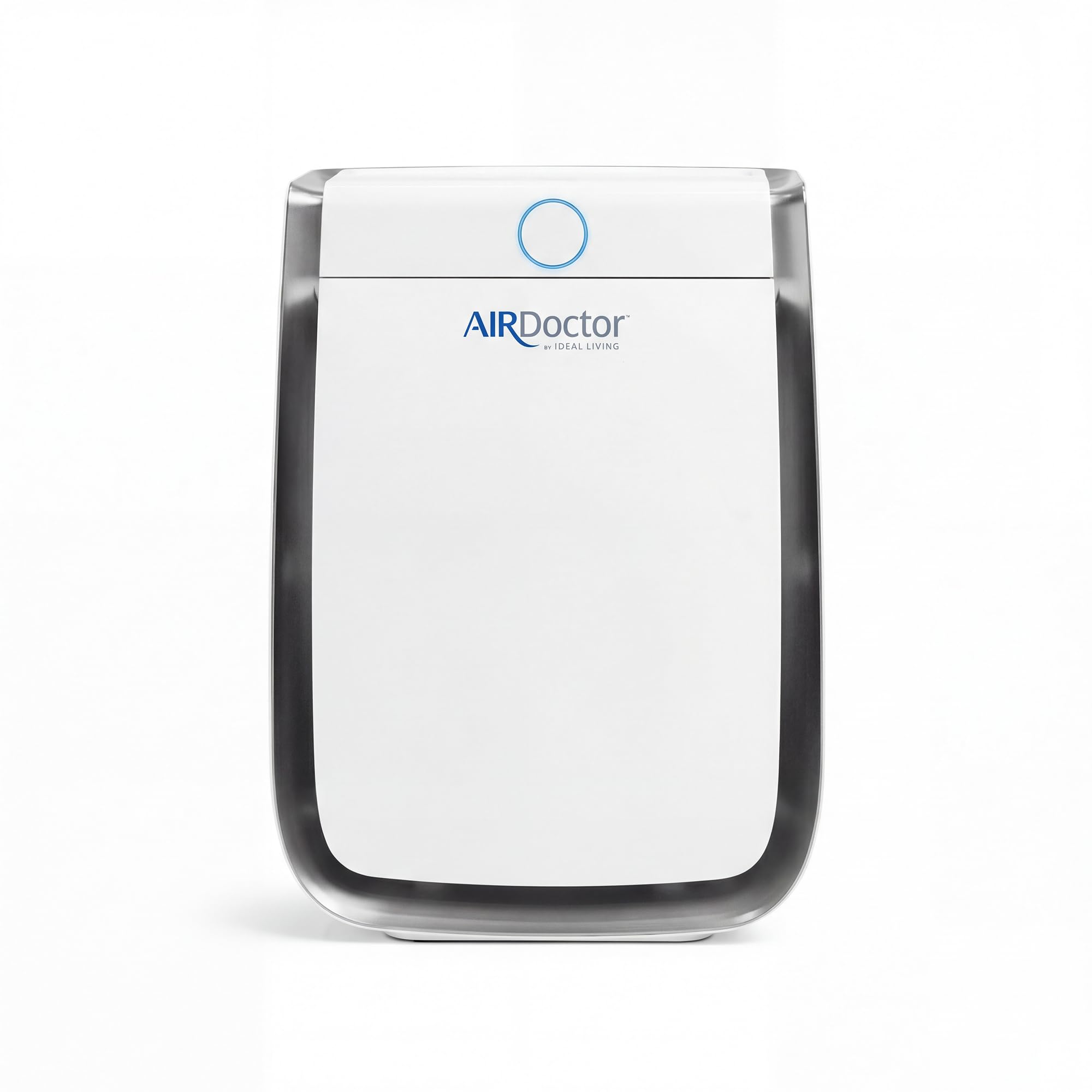
The AirDoctor AD3500 uses hospital-grade UltraHEPA filtration to capture 99.99% of airborne particles at 0.003 microns — 100 times smaller than the HEPA standard. This level of filtration is relevant for asthma triggered by ultrafine particles from smoke, bacteria, or viral aerosols. The unit covers 630 sq ft in 15 minutes and up to 2,520 sq ft in an hour, making it one of the most powerful home purifiers available.
The three-stage system includes a pre-filter, a premium activated carbon filter infused with potassium permanganate, and the UltraHEPA filter. The carbon layer is thick enough to break down pet smells, cooking fumes, and wildfire smoke gasses. The Auto Mode uses PM2.5 sensors to display color-coded air quality on the Halo and adjusts fan speed, including a Boost mode for pollution spikes. Owners with asthma report waking up without stuffiness or dry throat after using this unit overnight.
The primary trade-off is the upfront investment and the cost of genuine replacement filters, which are more expensive than mainstream brands. Some users find the unit large and heavy at 24 pounds. The FSA/HSA eligibility helps offset the cost for those with flexible spending accounts. For households where asthma is severe and ultrafine particles are a concern, the AD3500 is the most scientifically rigorous option.
Why it’s great
- UltraHEPA captures 0.003 micron particles
- Thick carbon with potassium permanganate for gasses
- FSA/HSA eligible for pre-tax spending
Good to know
- High initial cost and filter replacement cost
- Large and heavy unit
7. Nuwave Forever

The Nuwave Forever Smart Air Purifier is built around a unique value proposition — you never have to replace the filter. Its patented 7-stage system uses washable and reusable components, including stainless-steel prefilters, Bio-Guard filters, and an ozone removal filter. The unit is Intertek Lab certified to capture 100% of particles down to 0.1 microns and reduces ozone levels to 1 ppb.
For asthma management, the elimination of ongoing filter costs is a major advantage. The washable filters catch fine dust and pet dander effectively, and the auto mode with WiFi app control allows for remote monitoring. Owners with multiple pets report that the unit eliminated wet dog smell and reduced allergy symptoms noticeably. The fan offers four speeds, with the lowest being very quiet, though higher speeds produce noise comparable to a stove vent.
The main downside is that the washable filters require thorough drying — typically 24 hours — before reinsertion, which can be inconvenient. The unit is also heavy at nearly 22 pounds. The initial investment is higher than mid-range models, but the elimination of replacement filter costs makes it economical over several years. For environmentally conscious buyers who dislike the recurring expense of disposable filters, this is a smart long-term choice.
Why it’s great
- No filter replacement costs ever
- Captures 100% of particles down to 0.1 microns
- WiFi app for remote control
Good to know
- Washable filters need 24-hour drying time
- Higher speeds produce noticeable noise
8. Levoit Core 300-P

The Levoit Core 300-P is a compact, budget-friendly purifier that still delivers meaningful relief for asthma sufferers in smaller rooms. It is AHAM Verifide with a smoke CADR of 143 CFM, a dust CADR of 153 CFM, and a pollen CADR of 167 CFM. The 56W high-torque motor can refresh a 222 sq ft room 4.8 times per hour, and the 3-in-1 filter captures 99.97% of particles from 0.1 to 0.3 microns.
What makes this unit stand out for asthma in a budget category is the QuietKEAP Technology, which reduces noise to a near-silent 24 dB in Sleep Mode. The display lights can be turned off completely, and the timer offers 2/4/6/8-hour settings. Multiple filter options are available — including the Toxin Absorber for VOCs and the Smoke Remover for wildfire smoke — allowing you to customize filtration to your specific triggers.
Replacement filters are reasonably priced, though using genuine Levoit filters is essential for proper fit and performance. Some owners note that the highest fan speed is loud, but the lower speeds are genuinely quiet. For a small bedroom or office where space is tight, the Core 300-P provides solid asthma protection without breaking the bank.
Why it’s great
- Very quiet Sleep Mode at 24 dB
- AHAM Verifide with solid CADR numbers
- Multiple specialty filter options available
Good to know
- Best suited for rooms under 250 sq ft
- High fan speed is noticeably loud
9. GermGuardian AC4825E

The GermGuardian AC4825E is a long-established budget option that has earned a following among asthma households for its straightforward True HEPA filtration and optional UV-C light. It circulates air in a 153 sq ft room every 12.5 minutes and can handle larger spaces up to 743 sq ft per hour. The activated carbon filter reduces cooking and pet scents, while the UV-C light helps reduce airborne bacteria and viruses.
Asthma sufferers appreciate the simplicity — a three-speed dial with a UV button, no complicated apps or sensors. Owners report that the unit effectively removes cooking fumes, nail polish odors, and cat dander. The washable first filter captures large particles, extending the life of the HEPA element. Noise on low speed is quiet enough for a bedroom, though high speed is louder and better suited for daytime use in larger rooms.
The main consideration is that this model has been on the market since 2011, so it lacks modern features like auto mode, real-time air quality display, or WiFi control. Replacement filters are widely available and affordable. For a no-frills, proven performer that focuses on the basics of HEPA filtration, the GermGuardian AC4825E remains a solid entry-level choice.
Why it’s great
- True HEPA with reliable filtration
- Optional UV-C light for additional germ reduction
- Simple, intuitive controls
Good to know
- No auto mode or air quality sensor
- High speed is loud for bedroom use
FAQ
Does a higher CADR always mean better asthma relief?
Should I choose a purifier with UV-C light for asthma?
How often should I replace the filter in an asthma-focused purifier?
Final Thoughts: The Verdict
For most users, the best asthma air purifier winner is the Coway Airmega AP-1512HH because it combines proven smoke CADR, responsive auto mode, and quiet sleep operation at a mid-range price. If you want the strongest ultrafine particle capture available, grab the AirDoctor AD3500. And for a large open-concept home where VOC and odor removal matter most, nothing beats the Coway Airmega 250.