
Our readers keep the lights on and the weekend projects moving. As an Amazon Associate, I earn from qualifying purchases.
Every runner knows the tension between wanting your favorite playlist to push you through the final mile and needing to hear the cyclist coming up fast behind you. Standard earbuds seal off your ears, forcing a dangerous trade-off between motivation and safety. Bone conduction headphones solve this by vibrating sound through your cheekbones directly to your inner ear, leaving your ear canals completely open so you can hear traffic, other runners, and everything around you.
I’m Rikta — the co-founder and writer behind FitlyFast. My approach to this guide involved analyzing over a hundred hours of customer feedback and spec sheets to find the models that deliver the best balance of secure fit, battery endurance, and audio clarity for runners.
Whether you log miles on quiet trails or busy city streets, the right pair keeps you motivated without isolating you from your environment. This guide breaks down everything you need to choose the best bone conduction headphones for runners.
How To Choose The Best Bone Conduction Headphones For Runners
Not all open-ear headphones are built equally for the specific demands of running. You need a model that stays locked on your head through sweaty miles, resists moisture from rain and perspiration, and provides enough battery to cover your longest training sessions. Here are the three most important factors to evaluate before you buy.
Water and Sweat Resistance (IP Rating)
This is the single most critical spec for runners. An IP55 rating protects against dust and low-pressure water jets, which handles sweat and light rain. IP67 means you can submerge the headphones in a meter of water for up to 30 minutes — great for heavy downpours. IPX8 takes it further, allowing submersion beyond a meter for specific durations, which matters if you also swim. For most road runners, IP55 to IP67 is sufficient. If you run in extreme weather or plan to use them for triathlons, look for the higher IPX8 rating.
Battery Life Versus Weight
Bone conduction headphones typically range from 6 to 12 hours of playback. A lighter unit around 30 grams is more comfortable for long runs but may pack a smaller battery. More battery capacity adds grams and can make the frame feel bulkier. Evaluate your typical run duration: if you mostly do hour-long jogs, a 6-hour battery is plenty. If you train for ultramarathons or forget to charge between sessions, aim for 10 hours or more. Also consider fast-charge features — 10 minutes of charging for 90 minutes of playback can be a lifesaver.
Fit and Stability During Movement
The frame design determines whether headphones bounce or shift when you pick up pace. Look for a flexible titanium alloy wrap-around frame that conforms to your head without pinching. Ergonomic ear hooks help keep the transducers pressed gently against your cheekbones. Memory wire or adjustable bands add extra security for different head shapes. A poor fit not only causes discomfort but also degrades audio quality because the vibration transducers lose contact with your skin, resulting in quieter, muddier sound.
Quick Comparison
On smaller screens, swipe sideways to see the full table.
| Model | Category | Best For | Key Spec | Amazon |
|---|---|---|---|---|
| SHOKZ OpenRun Pro 2 | Premium | Serious runners wanting deep bass | 12 hr battery, IP55, dual drivers | Amazon |
| SHOKZ OpenRun | Mid-Range | Reliable all-round performance | 8 hr battery, IP67, 26g weight | Amazon |
| CXK X17 (Bluetooth 6.0) | Feature-Rich | Swimmers and runners who want MP3 mode | 12 hr battery, IPX8, 8GB MP3 storage | Amazon |
| H2O Audio TRI Run | Specialty | Multi-sport athletes (paddling, cycling) | 6 hr battery, IPX8, soft silicone finish | Amazon |
| Aftershokz Titanium | Legacy | Budget-conscious runners seeking proven build | 6 hr battery, IP55, reflective strips | Amazon |
| Ogogrs Bone Conduction | Entry-Level | Casual runners on a budget | 10 hr battery, IP55, Bluetooth 5.3 | Amazon |
| Cevinily HS1 | Budget | Runners wanting latest Bluetooth at low cost | 12 hr battery, IPX5, Bluetooth 5.4 | Amazon |
In‑Depth Reviews
1. SHOKZ OpenRun Pro 2

The SHOKZ OpenRun Pro 2 is the most advanced bone conduction headphone designed specifically for runners who refuse to compromise on audio quality. It uses a dual-driver system — a bone conduction transducer for clear mids and highs, and an air conduction driver for actual bass depth — solving the biggest complaint in this category: weak low-end sound. On the road, you hear thumping kick drums and rumbling bass lines that make your stride feel more powerful, while still keeping your ears fully open to car horns and other runners.
The featherweight unibody frame integrates a nickel-titanium alloy memory wire that wraps snugly around your head without hot spots, even during a sweaty two-hour run. The ear hooks are ergonomically shaped to prevent any bouncing or shifting when you pick up pace. You also get dedicated EQ modes through the Shokz app — switch to Classic Mode for pure bone conduction or Volume Boost Mode for noisy environments like a crowded park trail.
Battery life is a robust 12 hours on a full charge, and a quick 10-minute charge gives you nearly 90 minutes of playback — perfect for the runner who forgets to plug in overnight. The dual wind-resistant microphones with AI noise reduction filter out 96.5% of background noise, ensuring crystal-clear calls even when you’re mid-stride on a breezy coastal run. The included reflective strip adds nighttime visibility, making this the premium, do-it-all choice for serious runners.
Why it’s great
- Dual drivers deliver actual bass, not just tinny vibrations
- 12-hour battery covers ultramarathon distances
- Wind-resistant mics with AI noise reduction filter
- Premium, sweat-resistant build with reflective safety strip
Good to know
- Premium price point reflects the advanced dual-driver design
- Metal strap can hit the back of your neck when looking upward
2. SHOKZ OpenRun

The SHOKZ OpenRun (previously the Aeropex) is the benchmark that every other bone conduction headphone is measured against. At just 26 grams, it is barely noticeable on your head, yet the wraparound titanium frame holds everything securely in place through sprints, hill climbs, and head-turning street crossings. The eighth-generation bone conduction technology delivers clear, full-range audio that is perfectly adequate for podcasts, calls, and most music genres, though bass remains notably absent compared to the Pro 2.
The IP67 rating is a standout feature for runners who train in all weather conditions. Rain, sweat, and even a full dunk in a puddle won’t damage these headphones. The moisture detection alert on the charging port prevents you from plugging in while the contacts are still wet — a thoughtful safety feature that extends the product’s lifespan. Battery life is rated at 8 hours, and the quick-charge feature gives you 90 minutes of playback from just a 10-minute charge.
Multipoint pairing lets you connect to your phone and watch simultaneously, so you can take calls on the go without reaching for your device. The included Shokz sport headband absorbs sweat and adds extra security. If you want a proven, lightweight, no-compromise running companion without paying for the dual-driver upgrade, the OpenRun is the sweet spot in the SHOKZ lineup.
Why it’s great
- Ultra-lightweight 26g design disappears on your head
- IP67 rating withstands sweat, rain, and submersion
- Reliable 8-hour battery with fast 10-minute quick charge
- Multipoint pairing for phone and watch connection
Good to know
- Bass is weak — not ideal for bass-heavy music genres
- Bluetooth 5.1 is slightly older than newer competitors
3. CXK X17 (Bluetooth 6.0)
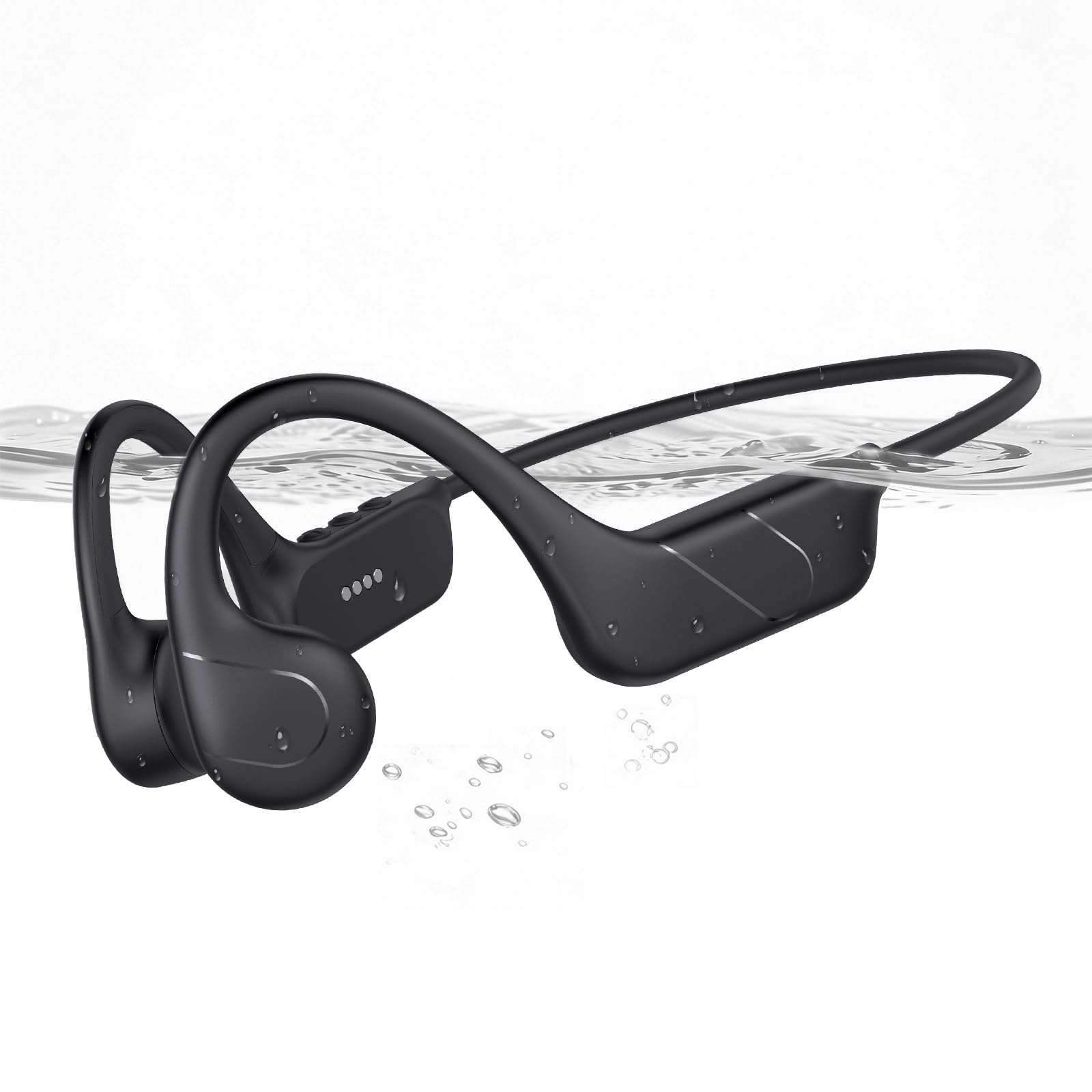
The CXK X17 is the first bone conduction headphone we’ve tested to feature Bluetooth 6.0, offering the lowest latency and most stable connection in this roundup. That matters when you’re on a busy city run and need your audio to stay synced without dropouts near traffic intersections. But the real party trick is the built-in MP3 mode with 8GB of internal storage — enough for thousands of songs — letting you run completely phone-free. A double-click of the power button switches modes, enabling underwater playback that Bluetooth cannot reach.
The IPX8 rating means you can submerge these in up to 2 meters of water for 2 hours. That makes them unique in this list: perfect for triathletes who swim, bike, and run in one session. The triple-seal waterproof design protects the electronics, and the ear hooks with an adjustable headband keep the transducers pressed against your cheekbones during flip turns in the pool. On land, the 15x10mm PulseCraft transducer delivers 3x the clarity of earlier CXK models, with noticeably cleaner vocals and percussion.
Battery life is excellent at 12 hours, and the magnetic charging cable makes it easy to snap on after a long training day. The custom EQ modes via the Boean app let you fine-tune the sound profile for running, swimming, or cycling. The dual-mic AI noise cancellation handles calls reasonably well, though wind resistance is not as effective as the SHOKZ Pro 2. If you want one headphone for both road running and pool laps, the CXK X17 is an unmatched value proposition.
Why it’s great
- Bluetooth 6.0 offers exceptionally stable low-latency connection
- 8GB internal MP3 storage for phone-free running and swimming
- IPX8 waterproof to 2 meters for genuine underwater use
- 12-hour battery covers the longest training sessions
Good to know
- Not the most durable frame for extreme abuse
- MP3 mode only supports WMA, FLAC, WAV, and MP3 formats
4. H2O Audio TRI Run

The H2O Audio TRI Run is purpose-built for the multi-sport athlete who runs, cycles, and paddles — all without taking off their headphones. The IPX8 rating means it can survive full submersion during a kayak roll or a surprise wave on a paddleboard, though note that Bluetooth does not work underwater, so for swimming you would be limited to the on-board memory. The newly redesigned ergonomics feature a soft silicone finish that feels pleasant against the skin and reduces slippage when you sweat.
Sound quality is the best we have experienced from a bone conduction headphone under , thanks to years of proprietary acoustics software tuning. The midrange and treble are crisp enough to hear podcast voices clearly against wind noise, and the haptic-like vibration adds a subtle sense of bass. Battery life is 6 hours, which is on the shorter side, but the fast charging gets you back to full in about 2 hours. The redesigned button placement makes it easy to skip tracks or adjust volume with gloves on — a welcome detail for cold-weather cyclists.
The build quality feels solid if not bombproof, with a plastic and silicone enclosure that is more flexible than the titanium-framed SHOKZ models. It is slightly heavier than the OpenRun, but the wrap-around design distributes weight evenly. The open-ear design is calibrated to keep you aware of traffic and trail sounds without compromising audio clarity. For the runner who also surfs, paddles, or mountain bikes, the TRI Run is a specialized tool that does its job well.
Why it’s great
- IPX8 rating handles full submersion for watersports
- Soft silicone finish is comfortable and grippy against skin
- Excellent midrange clarity for podcasts and calls
- Redesigned buttons are easy to operate with gloves
Good to know
- Only 6 hours of battery life — shorter than most competitors
- Bluetooth not functional underwater; no onboard MP3 storage
5. Aftershokz Titanium

The Aftershokz Titanium is the product that originally proved bone conduction could work for runners, and it still holds up as a reliable, no-frills option. The open-ear design uses the same patented bone conduction technology that keeps your ears free, and the partial titanium frame is lightweight and durable enough to survive being stuffed into a gym bag. The IP55 rating handles sweat and light rain, but you will want to avoid heavy downpours or submersion.
Battery life is rated at 6 hours, which is adequate for most daily training sessions but falls short of newer models that push past 10 hours. The Micro USB charging port is a dated annoyance in an era of USB-C everything. On the positive side, the included Brilliant Reflective Strips can be attached to the frame for better nighttime visibility — a thoughtful bonus for runners who log miles before sunrise or after dusk. Sound quality is clear and loud enough for calls and podcasts, but bass is almost entirely absent, and the volume can feel limited in noisy outdoor environments.
The fit is secure enough for jogging and light running, but the neck loop protrudes slightly and may hit the collar of your shirt or jacket. Multipoint pairing allows you to connect to two devices simultaneously, which is useful for switching between your phone and watch. At its price point, the Titanium offers proven reliability and a legacy brand name, but the older Bluetooth 4.1 and Micro USB are clear compromises. If you find it on sale, it is a solid entry into the bone conduction world for the budget-conscious runner.
Why it’s great
- Proven bone conduction from the category pioneer
- Includes reflective strips for safer nighttime running
- Titanium frame is lightweight and durable
- Multipoint pairing for phone and watch connection
Good to know
- Bluetooth 4.1 and Micro USB are outdated
- Only 6 hours of battery; neck loop can hit shirt collars
6. Ogogrs Bone Conduction
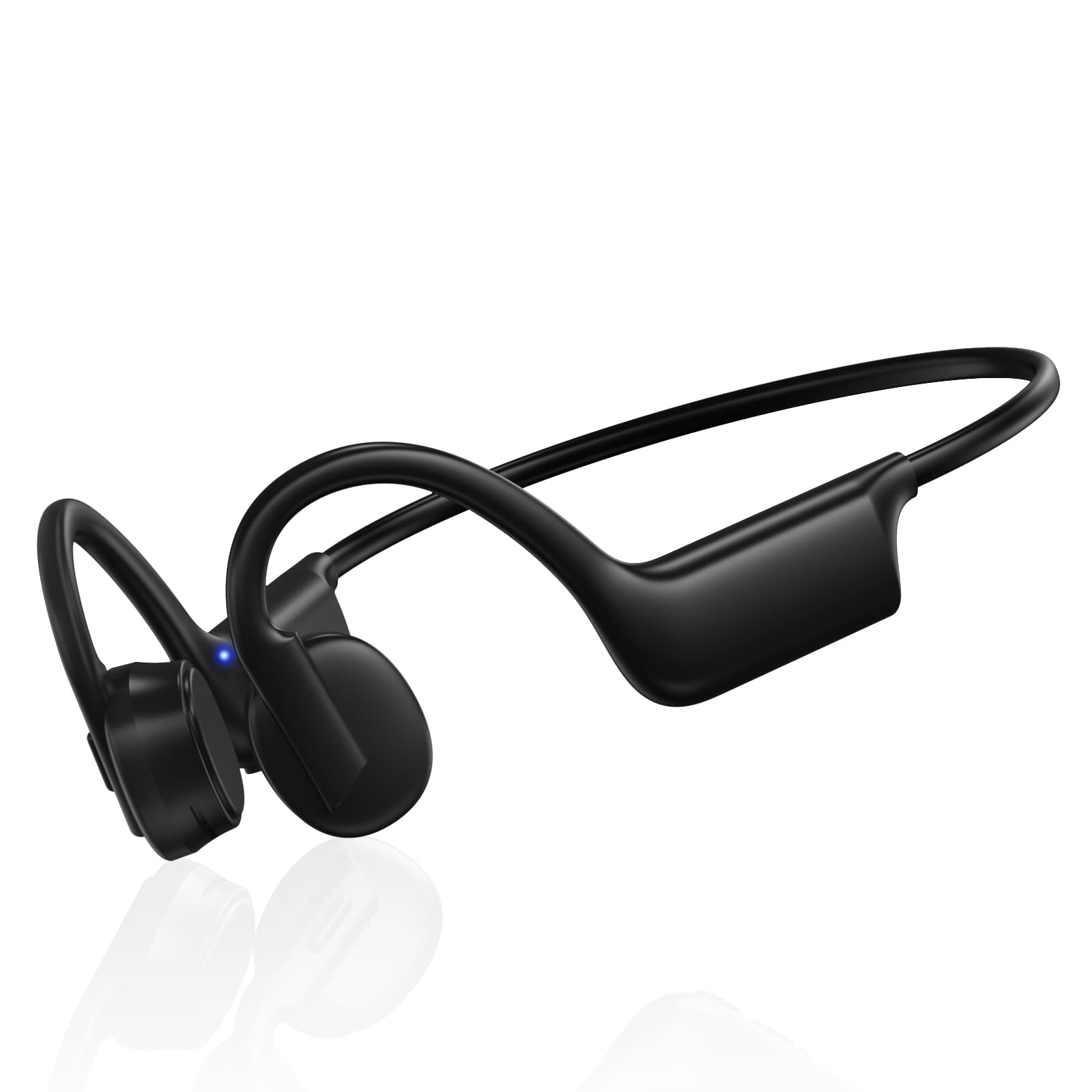
The Ogogrs Bone Conduction Headphones offer a balanced middle ground for runners who want reliable performance without spending on a premium brand. The titanium frame is lightweight and flexible, bending freely without losing shape, and it stays stable during high-intensity interval training. Bluetooth 5.3 provides a fast and stable connection that does not drop out mid-run, and the 33-foot range gives you freedom to leave your phone on a bench while you do dynamic warm-ups nearby.
Sound quality is decent for bone conduction: the 16mm driver produces clear audio for calls and casual music listening, but volume and bass are limited compared to the SHOKZ models. The IP55 rating protects against sweat and rain, so you can run through a light drizzle without worry. Battery life is a solid 10 hours, and the USB-C charging is convenient — no hunting for a proprietary cable. The built-in microphone works well for calls and video meetings, making these a versatile choice for runners who also use them for work.
The fit is comfortable for extended wear, though some users report that the frame can feel slightly loose on smaller head shapes. The silicone coating is soft and skin-friendly, reducing irritation during long training sessions. For the price, the Ogogrs deliver a competent entry-level experience with modern connectivity and decent battery life. They are best suited for casual runners who want situational awareness on neighborhood jogs without breaking the bank.
Why it’s great
- Bluetooth 5.3 provides fast, stable connection
- Titanium frame is lightweight and flexible enough to bend freely
- USB-C charging is convenient and modern
- 10-hour battery handles multiple training sessions
Good to know
- Bass and maximum volume are lacking compared to premium models
- Frame can feel loose on smaller head shapes
7. Cevinily HS1
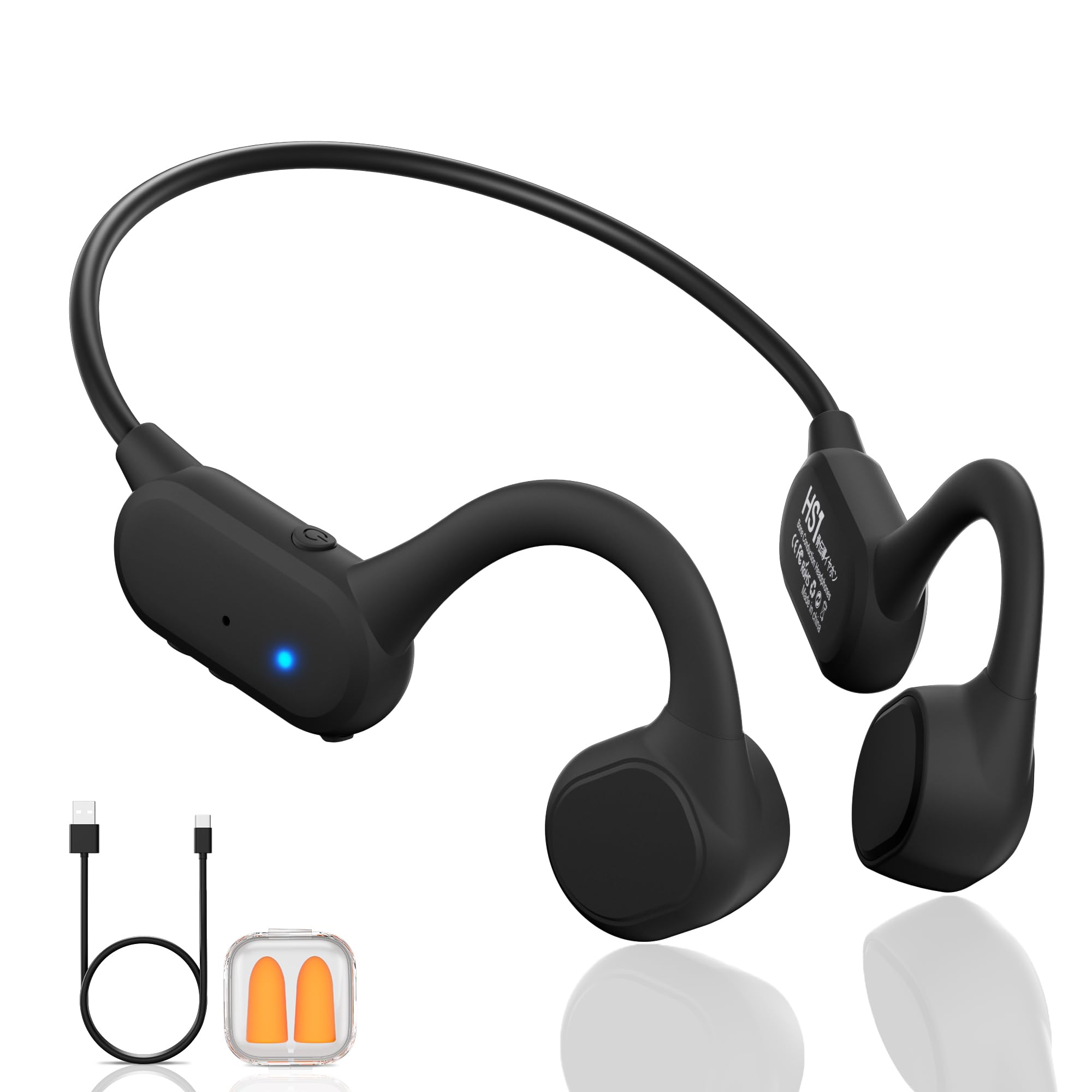
The Cevinily HS1 is the budget champion that manages to pack the latest Bluetooth 5.4 chip into a sub- bone conduction headphone. That means you get the most up-to-date wireless standard — lower latency than 5.3, better power efficiency, and a more stable connection through crowded city airwaves. The 16mm speaker driver produces clear, detailed audio that is surprisingly punchy for the price point, though it still lacks the bass depth of hybrid drivers. Dual-mode technology lets you switch between Game Mode for ultra-low latency and Music Mode for standard playback.
The IPX5 rating protects against sweat and rain, making these suitable for most running conditions, but you cannot submerge them. The titanium alloy frame is flexible and holds its shape well, and the 32-gram weight makes them light enough to forget you are wearing them. Battery life is excellent at 12 hours, matching the premium CXK and SHOKZ Pro 2 models. The built-in microphone handles calls clearly, though wind noise can be an issue on breezy runs.
The fit is secure for most head shapes, but the ear hooks are not as aggressively contoured as the SHOKZ OpenRun, so on very vigorous sprints they may shift slightly. The on-ear controls are basic button presses, not touch-sensitive, which is actually a benefit when your fingers are sweaty or gloved. For runners on a tight budget who still want modern connectivity and long battery life, the Cevinily HS1 is the smart choice.
Why it’s great
- Latest Bluetooth 5.4 chip for stable, low-latency connection
- 12-hour battery matches premium-priced competitors
- Titanium frame is lightweight and flexible
- Excellent value for the feature set
Good to know
- IPX5 rating is not suitable for submersion
- Ear hooks may shift slightly during very fast sprints
FAQ
Can bone conduction headphones produce good bass for running music?
Will bone conduction headphones fall off during a sprint?
Can I use bone conduction headphones for swimming as well as running?
Final Thoughts: The Verdict
For most runners, the winner is the SHOKZ OpenRun Pro 2 because its dual-driver system delivers actual bass that makes music motivating, while still leaving your ears open for traffic awareness and offering a full 12-hour battery. If you want a lighter, proven performer at a lower cost, grab the SHOKZ OpenRun for its IP67 rating and featherweight 26g frame. And for a budget-friendly entry with the latest Bluetooth 5.4 tech, nothing beats the value of the Cevinily HS1.