
Our readers keep the lights on and the weekend projects moving. As an Amazon Associate, I earn from qualifying purchases.
That sharp, burning sensation under the ball of your foot with every step isn’t something to push through. Metatarsalgia turns a simple walk across a warehouse floor or a short hike into a measured, painful decision. The right boot doesn’t just lace up — it offloads pressure from the metatarsal heads, providing a structured platform that redistributes your weight and absorbs shock before it reaches those sensitive bones.
I’m Rikta — the co-founder and writer behind FitlyFast. Over many hours, I’ve dissected the sole constructions, metatarsal guard designs, insole systems, and outsole compounds of dozens of boots to identify which ones genuinely support the metatarsal region and which are just marketing fluff.
This guide breaks down the specific cushioning technologies, guard types, and fit characteristics that matter most for this condition, all to help you find the absolute boots for metatarsalgia that will keep you moving without that familiar ache.
How To Choose The Best Boots For Metatarsalgia
Metatarsalgia isn’t a generic foot ache. It’s a specific inflammation of the metatarsal heads, often caused by repetitive high impact, tight footwear, or poor biomechanics. Choosing a boot requires you to look beyond style and focus on the features that actively unload that pressure point.
Prioritize a Supportive, Rocker-Style Sole
Flat, flexible soles force your forefoot to bend and absorb direct impact with every step. A boot with a built-in rocker profile — a curved sole that rolls your foot forward from heel to toe — reduces the need for the metatarsal joint to flex. This mechanical action shifts the ground reaction force away from the ball of your foot, providing measurable relief. Look for boots with a pronounced heel-to-toe offset and a stiff shank.
Metatarsal Guard Design: External vs. Internal
For work environments requiring impact protection, a met guard is standard. An external guard, like the hinged version on many Timberland PRO boots, sits on top of the vamp and flexes with your foot, reducing direct pressure on the metatarsal area. An internal guard sits under the leather and can sometimes create its own pressure point if the boot isn’t built with enough depth. For metatarsalgia, external guards and generous toe-box volume are critical to avoid aggravating the condition.
Removable, Supportive Footbeds and Extra Depth
Almost no off-the-shelf boot offers the exact arch profile you need. A boot with a removable insole and a deep interior volume allows you to drop in a custom orthotic or a specialized metatarsal pad. This is non-negotiable for managing severe cases. Brands like Orthofeet and DR. COMFORT build extra depth into the design, giving you room for the customized support that your specific foot shape requires.
Quick Comparison
On smaller screens, swipe sideways to see the full table.
| Model | Category | Best For | Key Spec | Amazon |
|---|---|---|---|---|
| Timberland PRO Endurance Steel Toe Met-Guard | Work Boot | Heavy industrial protection | Puncture-resistant plate + Anti-Fatigue Technology | Amazon |
| KEEN Utility Vista Energy | Work Boot | All-day comfort on concrete | KEEN.ReGEN midsole: 50% energy return | Amazon |
| Ariat Groundbreaker Metguard | Western Work Boot | Extended durability in rugged conditions | 4LR Technology + 90-degree heel | Amazon |
| Orthofeet Highline | Orthopedic Boot | Custom orthotic compatibility | Removable insole + extra depth design | Amazon |
| Orthofeet Ryder | Orthopedic Boot | Easy on/off with AFO brace | Dual-zip closure + Arch Booster | Amazon |
| Timberland PRO External Met Guard | Work Boot | Active jobs requiring squatting | Hinged external met guard + Shock absorber | Amazon |
| DR. COMFORT Vigor | Hiking Boot | Extra-wide feet and AFO fitting | No-tie elastic lace + extra depth | Amazon |
| ABEO MXV Shift | Walking Shoe | Forefoot-specific pain relief | Removable metatarsal footbed | Amazon |
| Oboz Bridger Insulated | Hiking Boot | Cold-weather hiking support | B-DRY waterproof liner + TPU chassis | Amazon |
In‑Depth Reviews
1. Timberland PRO Men’s Endurance Steel Toe Met-Guard
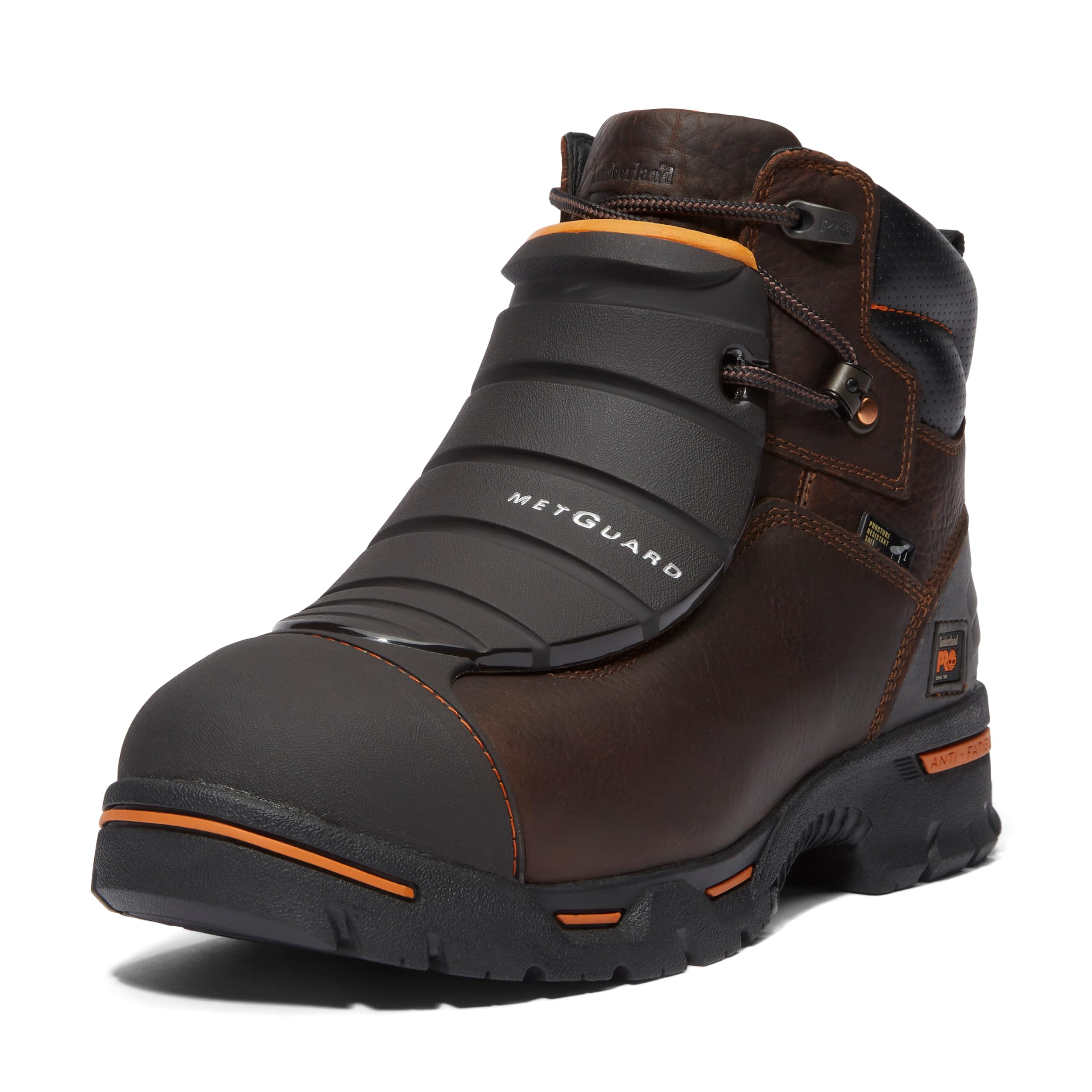
The Timberland PRO Endurance is built for the toughest environments, and its layered protection system works perfectly for metatarsalgia. The hinged external met guard offers comfortable protection even when squatting, avoiding the pinching that internal guards can cause. Underfoot, the Anti-Fatigue Technology footbed and midsole work together to absorb shock and return energy, which directly reduces the repetitive impact on your metatarsal heads.
Full-grain leather uppers and a puncture-resistant plate provide top-tier safety without sacrificing flexibility in the right places. The Ladder Lock outsole grips well on industrial surfaces. Reviewers consistently note the external met guard is more comfortable than internal versions, although the boot is heavier, which may be a factor if you’re on ladders or walking long distances on flat ground.
The moisture-wicking ReBOTL lining keeps feet dry, and the overall build feels durable enough for welding, fabrication, or warehouse work. Replacement laces are included, which is helpful because the guard can wear them faster. If you need heavy-duty protection and the metatarsal unloading a quality external guard provides, this is the top choice.
Why it’s great
- Hinged external met guard avoids direct pressure on the met heads
- Anti-Fatigue Technology footbed offers high shock absorption and energy return
- Puncture-resistant plate for comprehensive safety
Good to know
- Heavier than standard work boots; may not suit extended climbing
- Exterior met guard can speed up lace wear
2. KEEN Utility Men’s Vista Energy Composite Toe

The KEEN Utility Vista Energy is designed for those who need lightweight comfort without compromising safety. The internal metatarsal guard and composite toe are ASTM/CSA certified, but the real star for metatarsalgia is the KEEN.ReGEN midsole. It offers a high rate of energy return, which actively reduces the force transmitted to your forefoot with each step. The boot weighs just over 1.1 pounds per boot, making it one of the lightest options in this guide.
The breathable mesh and water-resistant leather upper keeps the boot feeling airy, and the moisture-wicking lining helps manage sweat during long shifts. Many reviewers noted zero break-in time, which is a significant advantage when your feet are already sensitive. The KonnectFit heel capture system locks your foot in place, preventing slippage that can aggravate metatarsal pain.
One durability review mentioned sole separation after a few months, which is a concern for heavy industrial use. However, for light-duty work, assembly lines, or warehousing, the Vista Energy offers excellent cushioning that directly targets the impact issue of metatarsalgia. It’s a premium-feeling boot at a mid-range price point.
Why it’s great
- KEEN.ReGEN midsole provides high energy return, offloading forefoot pressure
- Extremely lightweight design reduces fatigue
- No break-in period required
Good to know
- Internal met guard may feel restrictive for some foot shapes
- Reported durability concerns for heavy daily use
3. Ariat Work Men’s Groundbreaker Metguard Steel Toe

The Ariat Groundbreaker is a Western-style work boot that doesn’t compromise on metatarsal protection. The steel toe and external met guard are ASTM-rated, and the 4LR Technology provides a stable support and cushioning platform that helps absorb shock before it reaches the ball of your foot. The 90-degree heel and reinforced shank offer a stiff platform, reducing the forefoot flexion that can aggravate metatarsalgia.
Built with a four-row stitch pattern and Duratread outsole, this boot is designed to survive steel mills, farms, and construction sites. Reviewers report lasting three years of heavy use. The EE width option accommodates wider feet well, which is important for allowing toe splay and preventing pressure on the metatarsal heads. The removable insole allows for custom orthotics.
The break-in period for the met guard area can take a few weeks as the leather conforms to your instep. The lack of lining in the shaft can make thick socks feel tight initially. If you need a boot that holds up to extreme conditions and offers genuine met loading relief, this is a rugged, proven option.
Why it’s great
- 4LR Technology provides stable cushioning and arch support
- Highly durable, lasting years in harsh work conditions
- Available in EE wide for roomy toe box
Good to know
- Met guard area requires a significant break-in period
- Shaft lacks lining, which can feel tight with thick socks
4. Orthofeet Men’s Orthopedic Highline Boot

The Orthofeet Highline is purpose-built for people with foot pain, not just general safety. The Ortho-Cushion system includes a premium orthotic insole, a shock-absorbing sole, and a pressure-free fit that’s extra deep. This extra depth is a key feature for metatarsalgia sufferers because it allows you to insert a custom metatarsal pad or orthotic without crowding your toes. The wide toe box prevents pinching of the forefoot.
The full-grain leather upper is durable but flexible, and the boot is slip-resistant. Users with flat feet and those who walk high daily step counts report the Highline eliminates foot pain from the first wear. The boot runs slightly large, which is beneficial for accommodating swollen feet or thick orthotics. The stepped heel provides stability without creating a rigid feeling.
One concern is the smooth non-slip sole can feel less aggressive on loose terrain, and some users note it lacks extra padding on the left boot if used for motorcycle shifting. For work, daily walking, or standing all day, the Highline’s focus on orthotic compatibility and shock absorption makes it a practical, comfortable choice for metatarsalgia.
Why it’s great
- Extra depth design accommodates custom orthotics and met pads
- Ortho-Cushion system provides targeted shock absorption
- Wide toe box prevents forefoot compression
Good to know
- Runs a half size large; consider sizing down
- Sole is smooth and less suited for rugged terrain
5. Orthofeet Men’s Orthopedic Ryder Dual-Zip Boot

The Orthofeet Ryder simplifies the daily struggle of putting on boots when your feet are swollen or painful. The rear zip closure and wide opening make entry easy, while the laces allow fine-tuning of fit. The Ortho-Cushion system and Arch Booster provide excellent underfoot support, and the removable insole lets you replace the footbed with a metatarsal-specific orthotic.
The leather build feels premium, and the boot is roomy enough for custom orthotics and AFO braces. Reviewers with neuropathy and post-surgery recovery find the Ryder comfortable and supportive. The slip-resistant sole improves stability for those concerned about balance. The included fitting spacers give you control over arch support levels.
The zippers have been reported to wear out over time, though warranty support is good. The boot may feel slightly big out of the box for some, but this roominess is a feature, not a bug. For those needing easy access and the ability to drop in a metatarsal pad, the Ryder is a functional and stylish choice.
Why it’s great
- Dual-zip closure makes putting on boots effortless
- Arch Booster and Ortho-Cushion system provide strong support
- Roomy design fits AFO braces and custom orthotics
Good to know
- Zippers may wear out over time
- Runs slightly big, which may require sizing down
6. Timberland PRO Men’s 6″ External Met Guard

This Timberland PRO model focuses on a hinged external metatarsal guard that is less bulky than traditional leather guards. For metatarsalgia, the key advantage is that the guard sits above the vamp and flexes, preventing the crushing sensation an internal guard can cause when you squat or kneel. The 24/7 Comfort System technology supports your arch and cushions the entire foot, reducing fatigue and impact force.
The Ever-Guard leather upper is highly abrasion-resistant, and the outsole is oil-, slip-, and heat-resistant. The steel shank provides torsional rigidity that helps maintain a stable rocker-like gait. Reviewers claim the boot lasts years in heavy welding and fabrication roles, and the protection from falling objects is excellent.
Some early reviews indicate a quality control issue with the met guard detaching in isolated pairs, though this is not widespread. The boot is lighter than many steel-toe boots with internal guards. If your job requires frequent kneeling and you need external met protection without the forefoot pressure, this is a solid choice.
Why it’s great
- Hinged external met guard allows comfortable squatting
- 24/7 Comfort System reduces foot fatigue and impact
- Highly durable Ever-Guard leather upper
Good to know
- Quality control issue with guard detachment in some pairs
- Heavier than non-met guard boots
7. DR. COMFORT Vigor Women’s Therapeutic Hiking Boot

The DR. COMFORT Vigor is a therapeutic hiking boot that emphasizes volume and depth. The extra-depth design prevents the top of the boot from compressing your foot, which is a common complaint in standard hiking boots when the metatarsals swell. The full-grain leather and no-tie elastic lace system make it easy to get a snug fit without pressure on the instep.
The removable footbeds allow for custom orthotics, and the protective toe box provides ample room for toe splay. The boot offers extra medial and lateral support, which helps stabilize the foot during a hike and reduces the side-to-side stress on the metatarsal heads. Reviewers with severe foot issues, including hammer toes and bunions, report high comfort levels and no breaking-in period.
The boot runs slightly small, so sizing up is recommended. The style is functional rather than flashy, but the build quality and focus on problematic feet are excellent. For women needing a hiking-ready boot that accommodates orthotics and provides space for sensitive metatarsals, the Vigor is a specialized solution.
Why it’s great
- Extra-depth design prevents top-of-foot compression
- No-tie lace system allows easy, customizable fit
- Removable footbeds for orthotic insertion
Good to know
- Runs small; consider ordering a half to full size up
- Style is more functional than fashionable
8. ABEO MXV Shift Women’s Metatarsal Footbed Shoe
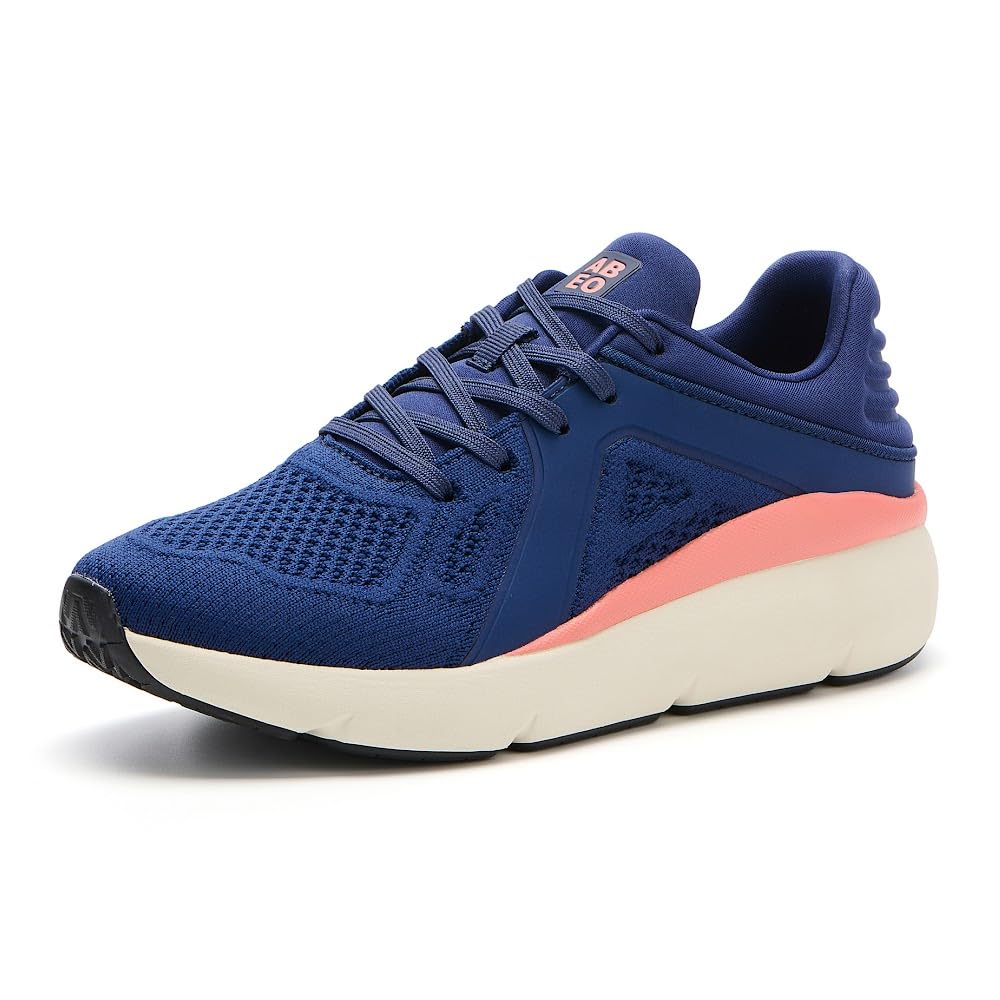
The ABEO MXV Shift is a walking shoe that directly addresses ball-of-foot pain with its metatarsal footbed. The removable orthotic includes metatarsal support, which lifts and pads the area behind the met heads, reducing direct pressure. The knit and TPU upper is flexible yet supportive, and the rubber outsole provides good traction for daily walks or casual wear.
The roomy toe box allows natural toe splay, and the spacer mesh midsole wicks moisture effectively. Users transitioning from standard running shoes report a significant reduction in burning forefoot pain after just a few days. The shoe is lightweight and breathable, making it ideal for exercise or all-day wear on hard surfaces.
One review noted that the shoe began rubbing on bunions after a month of use, so those with severe bunions should consider sizing up or trying a wide. It’s also not a work boot, so it lacks the protection of a met guard. For pure comfort and targeted metatarsal relief during walking or exercise, this shoe delivers
Why it’s great
- Metatarsal footbed provides targeted forefoot cushioning
- Removable orthotic allows for custom support
- Roomy toe box prevents pinching
Good to know
- May irritate bunions after extended wear
- Not suitable for industrial or work environments
9. Oboz Women’s Bridger 9″ Insulated Hiking Boot
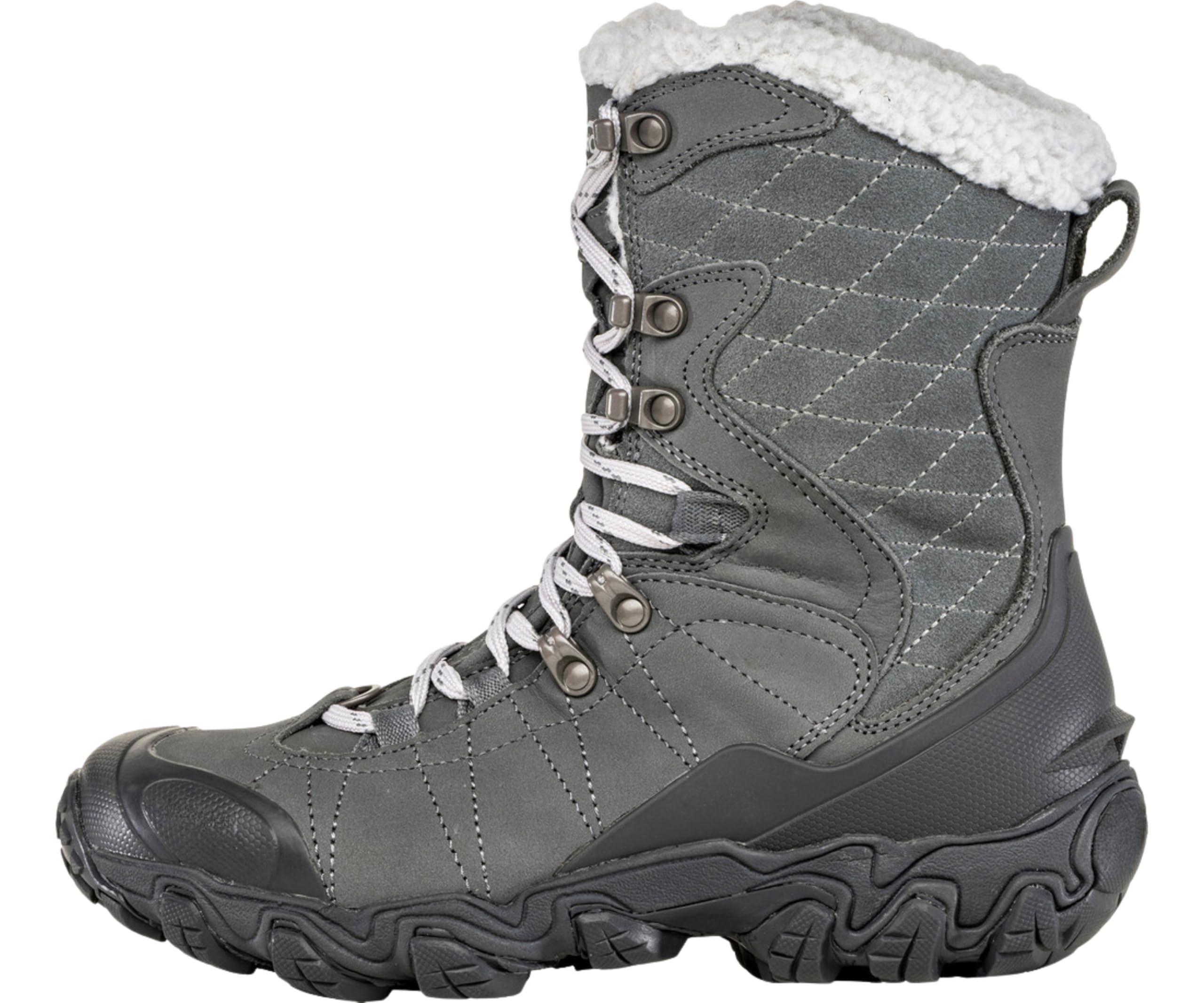
The Oboz Bridger is a high-quality winter hiking boot that offers a stable platform for managing metatarsalgia in cold conditions. The TPU chassis and EVA midsole provide excellent rigidity and shock absorption, reducing the forefoot flexion that aggravates pain. The B-DRY waterproof liner and 400g insulation keep feet warm and dry, which is important because cold can increase foot stiffness.
The O FIT Insole is designed for support, and the insole is thermal to trap heat. The roomy toe box accommodates wide feet and thick winter socks without compressing the metatarsal area. The outsole has excellent snow and ice traction. Users with hammer toes and bunions find the Wide version very accommodating, with no need for an upgraded insole.
These boots are tall and heavy, which may not suit everyone. The laces are reported to be short, so replacements are often needed. The boot is not designed for metatarsal guard industrial use. For winter hiking or outdoor work where warmth and forefoot comfort are priorities, the Bridger provides a very supportive experience.
Why it’s great
- TPU chassis and EVA midsole provide excellent forefoot rigidity
- Wide toe box allows for toe splay and thick socks
- Waterproof and insulated for cold weather use
Good to know
- Tall and heavy; not for light-duty wear
- Stock laces are too short; need replacement
FAQ
Should I get an external or internal met guard for metatarsalgia?
Can I put custom orthotics in boots for metatarsalgia?
What shoe modifications help metatarsalgia besides the boot itself?
Is a higher heel drop better for metatarsalgia?
Final Thoughts: The Verdict
For most users, the boots for metatarsalgia winner is the Timberland PRO Endurance because its external met guard and Anti-Fatigue footbed provide both protection and shock absorption without adding direct pressure to the forefoot. If you want a lightweight option with high energy return, grab the KEEN Utility Vista Energy. And for a work boot that lasts through extreme conditions, nothing beats the Ariat Groundbreaker.