
Our readers keep the lights on and the weekend projects moving. As an Amazon Associate, I earn from qualifying purchases.
The search for high-protein, plant-based staples often ends in the same aisle: beans. Yet not all beans deliver the same protein density, and sorting through dozens of bags and cans for the ones that truly pack a punch can be a chore. This guide cuts through the noise, focusing on the raw data that matters — grams of protein per serving, fiber content, organic credentials, and cooking consistency — so you can fill your pantry with the best options for your diet.
I’m Rikta — the co-founder and writer behind FitlyFast. I’ve spent countless hours analyzing nutritional labels, customer feedback, and sourcing standards across the dried bean and legume category to build this practical, no-fluff guide.
Whether you need a quick no-soak meal or a bulk buy for weekly meal prep, this roundup of the best beans for protein covers every budget and cooking style.
How To Choose The Best Beans For Protein
Not all beans are created equal when protein is your priority. Soybeans lead the pack with roughly 31 grams per cooked cup, while lentils, black beans, and chickpeas hover around 15–18 grams. But protein count is only part of the equation — cooking method, sodium levels, and fiber content all affect how that protein fits into your daily diet. Here’s what to look for when shopping.
Protein Density Per Cooked Cup
The most reliable metric is grams of protein per 100 grams of cooked beans. Soybeans sit at the top with about 17 grams, followed by lentils at 9 grams, and black beans at 8.5 grams. If you’re optimizing for pure protein output per bite, organic soybeans are the clear winner. For a more versatile everyday option, lentils and black beans offer a strong protein-to-fiber ratio without the longer cook times of larger beans.
Dried vs. Canned: Sodium and Texture
Canned beans offer convenience — no soaking, 90-second microwave heat-ups — but they often come with added sodium and a softer, sometimes mushy texture. Dried beans let you control the salt, achieve a firmer bite, and typically cost less per ounce. However, dried beans require planning: an overnight soak and a 1–2 hour simmer. If your weeknights are tight, a premium canned option with low sodium can still serve as a decent protein source without the prep time.
Organic and Non-GMO Sourcing
Beans are a low-pesticide crop generally, but soybeans are a notable exception — conventionally grown soy is often genetically modified and sprayed with glyphosate as a desiccant. For regular soy consumption, USDA Organic certification is a meaningful safeguard. For other beans like black, lima, or Great Northern, Non-GMO verification offers solid assurance without the premium price of full organic certification.
Quick Comparison
On smaller screens, swipe sideways to see the full table.
| Model | Category | Best For | Key Spec | Amazon |
|---|---|---|---|---|
| Be Still Farms Organic Soybeans | Dried | Highest protein per serving | 17g protein per 100g cooked | Amazon |
| Clear Creek Washington Black Beans | Dried | Bulk eco-friendly pantry staple | 4 lb bag, Non-GMO verified | Amazon |
| Yupik Organic Black Beluga Lentils | Dried | Quick-cooking protein boost | 15 min cook time, 9g protein/100g | Amazon |
| BUSH’S BEST Large Butter Beans (12-pack) | Canned | Convenient no-prep protein | 7g protein per 1/2 cup serving | Amazon |
| Camellia Brand Baby Lima Beans (2-pack) | Dried | Southern-style creamy protein | Buttery texture, 32 oz total | Amazon |
| Camellia Brand Great Northern Beans (2-pack) | Dried | 30-minute pressure cooker option | Non-GMO, 32 oz total | Amazon |
| Yupik Organic Black Turtle Beans | Dried | Budget-friendly organic protein | USDA Organic, 2.2 lb bag | Amazon |
In‑Depth Reviews
1. Be Still Farms Organic Soybeans
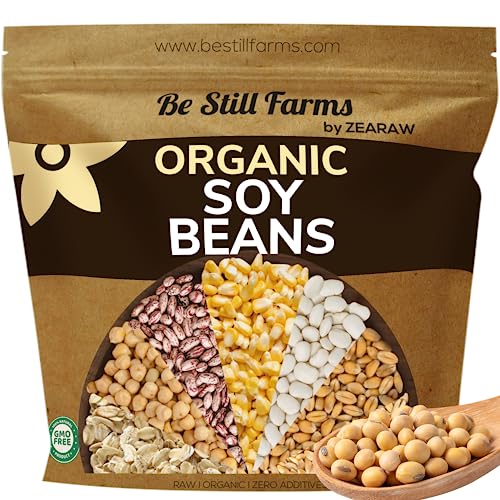
If raw protein density is your primary metric, these organic soybeans from a family-owned North Carolina business are the top choice in this lineup. With roughly 17 grams of protein per 100 grams of cooked beans, they outpace every other legume here by a significant margin. The 2.8-pound bag offers enough volume for multiple batches of soy milk, tofu, tempeh, or simply roasted edamame snacks.
Customer feedback consistently highlights the freshness and clean appearance of the beans, with very few split or wrinkled kernels relative to other brands. The resealable bag is a practical touch for long-term pantry storage, and the USDA Organic certification provides peace of mind for those avoiding glyphosate-sprayed soy. Some users noted that the beans didn’t sprout as uniformly as other brands, but for cooked applications — which is the primary use case — the performance is excellent.
These beans require an overnight soak and a good simmer, but the protein payoff is unmatched. For anyone serious about maximizing plant-based protein from a whole-food source, these organic soybeans are the clear front-runner.
Why it’s great
- Highest protein density of any bean in this guide
- USDA Organic and Non-GMO verified
- Family-owned US supplier with consistent quality
Good to know
- Requires soaking and longer cooking times
- Not ideal for sprouting according to some reviews
2. Clear Creek Washington State Black Beans
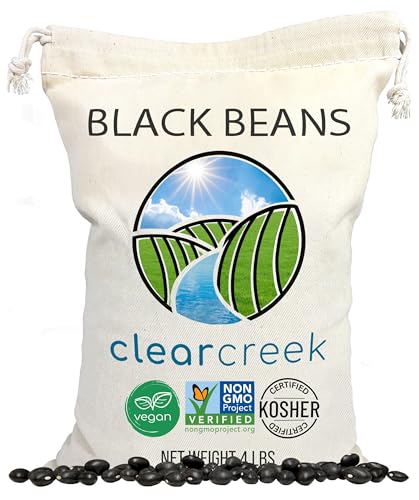
These black beans are a smart pick for anyone looking to buy in bulk without sacrificing quality. The 4-pound bag is the largest volume option here, and the durable cotton canvas bag adds an eco-conscious touch that doubles as a storage pouch after the beans are used. The beans are sourced from North American farms and are Project Non-GMO Verified, Kosher, and non-irradiated.
Customer reviews emphasize the nutty flavor and firm texture after cooking — especially when prepared in an Instant Pot with just a bay leaf and no added salt. The beans are consistently clean, with very few stones or debris reported. Some users found the cloth bag inconvenient for long-term storage, preferring to decant into plastic containers, but the packaging is undeniably more sustainable than plastic or mylar.
With a shelf life of 3 years (and reportedly decades longer in airtight conditions), these black beans are a reliable foundational pantry item. They deliver solid protein — roughly 8.5 grams per 100 grams cooked — at an excellent per-pound value.
Why it’s great
- 4 lb bulk bag offers exceptional per-pound value
- Eco-friendly cotton canvas packaging
- Clean, consistent quality with minimal debris
Good to know
- Cloth bag may not reseal as well as plastic
- Requires pressure cooker or traditional soak-and-simmer method
3. Yupik Organic Black Beluga Lentils

Beluga lentils are a standout in the legume world because they cook in roughly 15 minutes — no soaking required — while still delivering roughly 9 grams of protein per 100 grams. That protein density is competitive with black beans and chickpeas, but the cooking speed is in a different league. These Yupik organic beluga lentils are uniform in size, debris-free, and retain a firm, caviar-like texture after cooking.
Multiple reviews praise how they hold their shape in salads and soups without turning mushy, and the earthy, nutty flavor pairs well with broths and spices. A few users noted the bag lacks explicit cooking instructions, but 15 minutes in simmering water or a pressure cooker is the standard method. The USDA Organic and Kosher certifications add appeal for those with dietary restrictions.
For anyone who wants a high-protein legume that fits into a busy schedule — lunch prep in the morning, dinner side in the evening — these lentils are the most practical option in this guide.
Why it’s great
- 15-minute cook time with no soaking needed
- Firm, caviar-like texture perfect for salads
- USDA Organic and Kosher certified
Good to know
- No cooking directions printed on the bag
- Smaller than typical lentils — requires careful rinsing
4. BUSH’S BEST Large Butter Beans (12-pack)
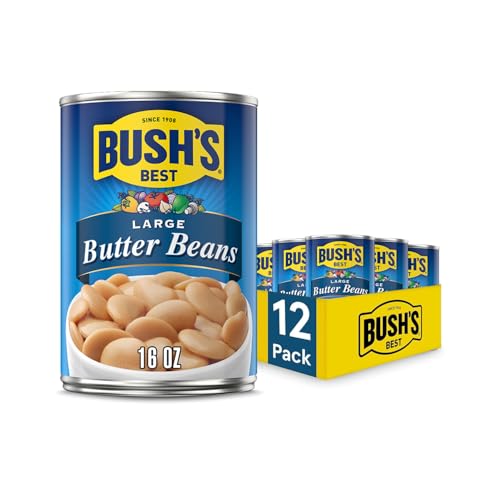
When you need a protein fix without the planning, these canned butter beans are the answer. Each half-cup serving delivers 7 grams of plant-based protein and 6 grams of fiber, all from a can that requires zero soaking, rinsing, or simmering — just open and heat. The 12-pack provides a solid pantry reserve, and the large beans maintain a firm, creamy texture that holds up well in soups, succotash, and pasta salads.
Customer reviews consistently note that these beans are less salty than many other canned options, and the beans remain intact without turning mushy during stirring. A few users mentioned the price can fluctuate, but at its lowest point, this 12-pack offers a competitive per-can cost that rivals dried beans once you factor in energy and time.
These are not the highest-protein beans per gram (dried soybeans and lentils beat them handily), but for pure convenience — microwave-ready in 90 seconds — they are the best no-excuse protein source in the list.
Why it’s great
- Zero prep — open, heat, and eat in under 2 minutes
- Firm texture that doesn’t turn mushy
- Gluten-free, dairy-free, and casein-free
Good to know
- Lower protein density than dried options
- Contains added sodium compared to dried beans
5. Camellia Brand Baby Lima Beans (2-pack)
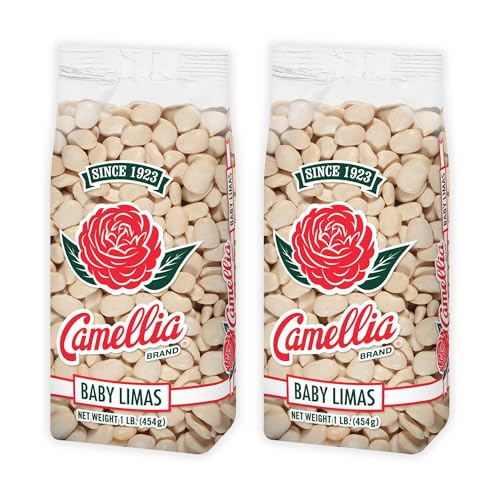
Baby lima beans — also called small butter beans — are a Southern pantry staple with a creamy, buttery texture that works beautifully in soups, stews, and classic succotash. Camellia Brand has been producing these beans since 1923, and their quality control is evident: customers consistently report very few broken beans or debris, and the beans cook up tender without turning to paste.
Protein-wise, baby limas deliver roughly 7 grams per half-cup cooked, which is solid for a white bean. The 2-pound pack (two 1-pound bags) is a practical size for weekly meal prep. Several long-time subscribers noted these beans are their go-to for both savory dishes and even a unique dessert dip — a testament to their versatility and mild flavor profile.
These do require an overnight soak and about 1–2 hours of simmering, but the texture reward is noticeable compared to canned alternatives. If you value a silky, buttery bean for hearty soups, this is the pick.
Why it’s great
- Buttery, creamy texture that holds shape well
- Family-owned brand with consistent quality since 1923
- Non-GMO and gluten-free
Good to know
- Requires soaking and 1–2 hour simmer
- Lower protein density than soybeans or lentils
6. Camellia Brand Great Northern Beans (2-pack)
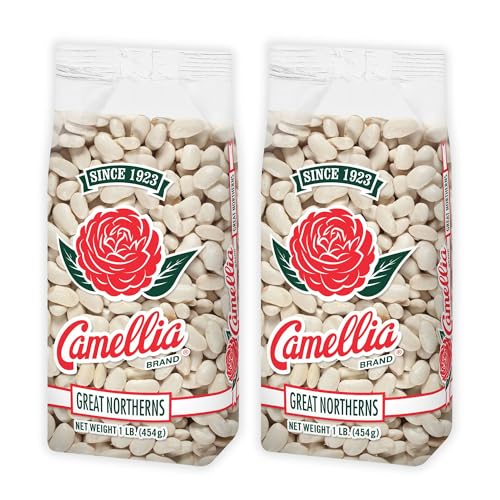
Great Northern beans are the workhorse white bean — milder than cannellini, creamier than navy, and versatile enough for soups, casseroles, or baked bean dishes. Camellia’s version has a strong reputation for cooking quickly in a pressure cooker: multiple customers report tender beans in 30 minutes with no soaking required. The 2-pack gives you 32 ounces total, enough for multiple large batches.
Protein content lands around 7 grams per half-cup cooked, similar to baby limas, but the texture is slightly firmer and less starchy. A few reviews noted that occasional cleaning is needed (rinsing for debris), but the overall quality is rated highly across hundreds of purchases.
For anyone with a pressure cooker who wants a fuss-free white bean with good protein content, these Great Northern beans are the most time-efficient dried option in this tier.
Why it’s great
- 30-minute pressure cooker option — no soaking
- Mild, creamy flavor works in countless recipes
- Family-owned brand with strong quality control
Good to know
- Still requires rinsing and debris check
- Lower protein than lentils or soybeans
7. Yupik Organic Black Turtle Beans

Black turtle beans are a classic protein source — roughly 8.5 grams per 100 grams cooked — and this Yupik offering brings USDA Organic certification and Kosher verification at an entry-level price point. The 2.2-pound bag is a reasonable starting volume for singles or small households, and the beans are consistently described as clean, uniform, and free of debris and dust.
Customer feedback highlights the predictable cooking behavior: these beans hold their shape after soaking and simmering, with an earthy flavor that works well in soups, stews, and rice bowls. A few reviewers noted the beans were slightly smaller than some premium brands, but nobody called out quality or texture issues. The organic certification is the standout feature here — most budget black bean options are conventional.
If you’re new to cooking dried beans from scratch and want an affordable organic entry point, these black turtle beans are a reliable, low-risk choice. They won’t blow you away with protein numbers, but they offer honest nutrition at a fair price.
Why it’s great
- Affordable USDA Organic black beans
- Clean, uniform beans with minimal debris
- Kosher and Non-GMO verified
Good to know
- Beans are slightly smaller than some premium brands
- Requires soaking and simmering — not a quick option
FAQ
Which bean has the highest protein per serving?
Are canned beans lower in protein than dried beans?
How much protein do I get from a typical serving of beans?
Final Thoughts: The Verdict
For most users, the best beans for protein winner is the Be Still Farms Organic Soybeans because they deliver the highest protein density of any legume in this guide, backed by USDA Organic certification and a trusted US-based supplier. If you want a quick-cooking protein boost without the long soak, grab the Yupik Organic Black Beluga Lentils. And for zero-prep convenience that still offers solid protein numbers, nothing beats the BUSH’S BEST Large Butter Beans 12-pack.