
Our readers keep the lights on and the weekend projects moving. As an Amazon Associate, I earn from qualifying purchases.
Bonding fabric to plastic is one of the trickiest repairs in DIY because porous textiles and slick polymer surfaces have nothing in common. The wrong adhesive peels right off or leaves a stiff mess that ruins the feel of your project.
I’m Rikta — the co-founder and writer behind FitlyFast. I’ve spent hundreds of hours analyzing adhesive chemistries, cure times, and real-world bond failures so you can make a confident choice without wasting money on products that claim “all-purpose” but fail on the plastic-fabric interface.
Whether you’re fixing a torn car seat, re-attaching a vinyl boat cushion, or crafting upholstery, the right adhesive for fabric to plastic must balance flexibility, water resistance, and a bond that won’t snap under daily use.
How To Choose The Best Adhesive For Fabric To Plastic
The trickiest part of this category is that no single glue handles every plastic type equally. Polypropylene and polyethylene resist bonding entirely. You need a contact cement or spray adhesive designed for low-surface-energy plastics while remaining flexible enough to move with the fabric.
Check the Plastic Compatibility First
Before buying, identify your plastic. Hard plastics like ABS and PVC bond well with solvent-based adhesives. Flexible plastics like vinyl require a rubber-toughened formula that stretches. If your plastic is recyclable code #5 (PP) or #2 (HDPE), look for a spray contact cement labeled for “hard-to-bond” plastics — water-based glues won’t grab.
Prioritize Flexibility and Water Resistance
Fabric moves, bends, and gets wet. An adhesive that cures rigid will crack the first time you sit on the repaired seat or wash the item. Neoprene-based contact adhesives and polyurethane formulas retain flexibility. For outdoor or marine use, check that the product explicitly says “waterproof” and not just “water-resistant.”
Consider Application Method and Open Time
Spray adhesives cover large areas evenly and prevent the pooling that ruins fabric aesthetics. Liquid glues offer precision for small patches and seams. Open time — the window you have to align parts before the adhesive grabs — matters. Contact cements often need a 10-30 minute wait before pressing. Liquid glues set faster, so plan your layout.
Quick Comparison
On smaller screens, swipe sideways to see the full table.
| Model | Category | Best For | Key Spec | Amazon |
|---|---|---|---|---|
| 3M Max Strength 90 | Spray Contact | Large panels, marine, heavy fabric | 10-min cure, heat & water resistant | Amazon |
| 3M Hi-Strength 94 ET | Spray Contact | Large laminations, car interiors | 60-min open time, low VOC | Amazon |
| Beacon Fabri-Tac | Liquid Glue | Small patches, lace, appliques | 4 oz, washable, flexible | Amazon |
| Loctite Vinyl, Plastic & Fabric | Paste Tube | Vinyl repairs, padded seats | Clear paste, 24-hr cure | Amazon |
| Cerca de Mighty Mend | Liquid Glue | Clothing seams, soft repairs | 2 oz, waterproof, clear cure | Amazon |
| FITTDYHE 3-Pack Fabric Glue | Liquid Glue Kit | Fabric-to-fabric, diy clothing | 60 ml per bottle, washable | Amazon |
| S-18 All-Purpose Adhesive | Contact Cement | Rubber to plastic, marine use | 4 oz, waterproof, heat resistant | Amazon |
In‑Depth Reviews
1. 3M Max Strength 90 Multi-Surface Contact Adhesive
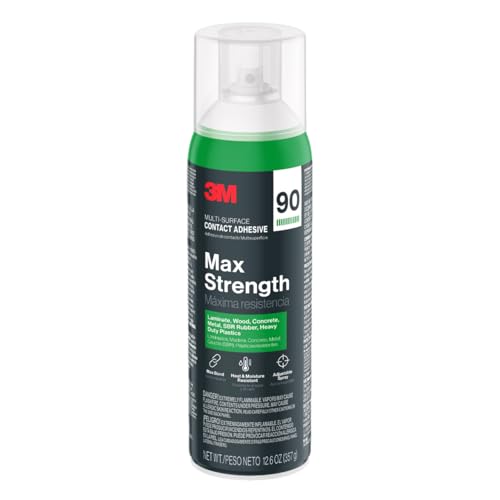
3M Max Strength 90 is a spray contact adhesive engineered for heavy-duty fabric-to-plastic bonds. Its aerosol delivers a wide, even web that prevents the pooling and stiff spots liquid glues often leave on fabric. The formula bonds aggressively within ten minutes and holds through heat, moisture, and vibration — critical for marine upholstery, car seat repairs, or outdoor cushions.
The adjustable nozzle gives you control over spray width, so larger panels get coverage fast without waste. Users report it bonds denim to ABS plastic and heavy upholstery fabric to fiberglass with equal reliability. The low-VOC formulation also meets California CARB requirements, making it safer for indoor use than older contact cements.
The main trade-off is that spray adhesives require careful masking to avoid overspray on surrounding surfaces. Working time is short — about two minutes before the tack peaks — so align your materials quickly. For any large-scale fabric-to-plastic project where strength and weather resistance are non-negotiable, this is the benchmark.
Why it’s great
- Sets in 10 minutes with a permanent, flexible bond
- Heat and moisture resistant — ideal for marine and automotive use
- Adjustable nozzle for controlled coverage on large surfaces
Good to know
- Requires masking to control overspray
- Strong fumes — use ventilation and a respirator
2. 3M Hi-Strength 94 ET Spray Adhesive
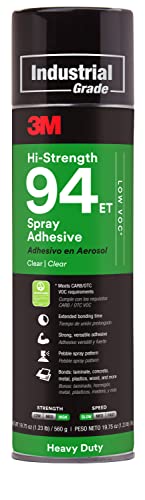
3M Hi-Strength 94 ET is the industrial cousin of the Max Strength 90, built for laminating large panels where repositioning time matters. Its standout feature is a 60-minute open window — you can spray both surfaces, wait, and still have time to shift the fabric into perfect alignment before the bond locks. This makes it the top choice for upholstery work and interior paneling.
Hi-Strength 94 ET bonds aggressively to metals, rubber, carpet, and many plastics. The spray pattern is fine and consistent, and the low-VOC, GREENGUARD-certified formulation contributes to LEED credits. Users specifically praise its performance in cold environments — one reviewer used it to glue foam soundproofing to plastic in freezing temperatures and the bond held.
The 19.75 oz can is larger than most, so expect a higher upfront cost. The adhesive has a strong solvent smell similar to airplane glue, so good ventilation is mandatory. If your project involves large-surface fabric-to-plastic lamination or you need time to fine-tune placement, this is the strongest tool available.
Why it’s great
- Up to 60-minute open time for precise alignment
- Low VOC and GREENGUARD certified for indoor safety
- Aggressive tack that holds in cold and humid conditions
Good to know
- Strong solvent odor requires ventilation
- Larger can size means a higher initial investment
3. Beacon Fabri-Tac Premium Fabric Glue
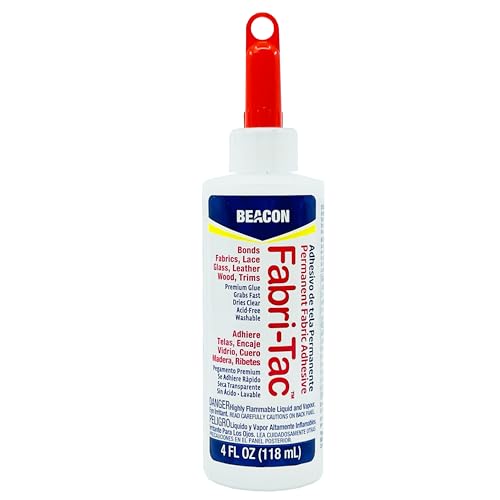
Beacon Fabri-Tac is a thick liquid glue often called “glue gun in a bottle” because of its instant grab and permanent bond. It flows as a gel that dries crystal clear and stays flexible through repeated washing. This makes it a go-to for repairing tent tears, soft shoe soles, and appliques where sewing is impractical.
The formula bonds fabric to plastic effectively, though it works best on smaller contact areas. Users have confirmed it holds on clear plastic display panels without haze and keeps ribbon decorations intact through Texas summer heat. The 4-ounce bottle with a spray nozzle offers decent control for detail work, though the gel can produce fine “glue webs” on narrow surfaces if you pull away too fast.
Fabri-Tac is waterproof and washable, so it survives machine washing cycles. The main limitation is that it dries quickly — you have limited time to position your materials before the bond sets. For precise small repairs where you want a clear, flexible, permanent hold, this is the best liquid option.
Why it’s great
- Dries crystal clear with no haze on plastic
- Washable and waterproof — survives machine washing
- Strong permanent bond on small fabric-to-plastic areas
Good to know
- Quick drying — little repositioning time
- Gel can string if nozzle is lifted too quickly
4. Loctite Vinyl, Plastic, and Fabric Adhesive

Loctite’s dedicated vinyl and fabric adhesive comes in a paste form that stays put without dripping or pooling. It’s specifically formulated for the vinyl-plastic-fabric interface — exactly the tricky zone where general-purpose glues slide off. The clear paste dries flexible, so padded seats and soft trim components retain their give.
Users have used it to reattach padding to lawn mower seats and repair vinyl bar stools, noting that proper surface prep (cleaning and light sanding) is essential for the bond to last a full mowing season. The tube applicator gives you precision control, though the paste does produce thin strings if you pull away slowly.
The 24-hour full cure time requires patience. Clamp or tape the materials in place while the bond develops. Because it’s a two-pack, you get backup capacity. If your primary need is restoring fabric-backed vinyl on furniture, vehicle interiors, or marine seating, this adhesive is tuned exactly for that job.
Why it’s great
- Paste formula won’t drip or pool on vertical surfaces
- Dries flexible — perfect for padded or flexible assemblies
- Specifically designed for vinyl-to-fabric and vinyl-to-plastic bonds
Good to know
- 24-hour full cure requires clamping
- Can string slightly during application
5. Cerca de Mighty Mend Liquid Stitch Fabric Adhesive

Cerca de Mighty Mend is a clear, waterproof fabric glue packaged in a squeeze tube with a tiny metal nozzle that prevents clogs and allows pinpoint application. The adhesive cures into a flexible film that can stretch without snapping, making it suitable for clothing seams, hems, and soft fabric-to-plastic repairs like gym bag straps.
The kit includes brushes, disposable gloves, and sanding sticks — useful extras that reduce prep friction. Users have successfully repaired torn seams on sweatpants, applied appliques on jackets that survived machine washing, and fixed pulls in rug fibers. The bond dries translucent and nearly invisible, preserving the fabric’s appearance.
Some users noted that the advertised tool kit was missing from their package, so verify contents on delivery. The cure time is 24 hours, and the glue has a mild solvent smell. For anyone who needs a soft, flexible bond on fabric and light plastic repairs without the complexity of spray adhesives, this delivers solid value.
Why it’s great
- Dries clear and flexible — invisible on finished repairs
- Waterproof and washable for durable clothing fixes
- Includes prep tools for immediate application
Good to know
- Accessories sometimes missing from package
- 24-hour full cure requires planning
6. S-18 All-Purpose Adhesive by RH Adhesives
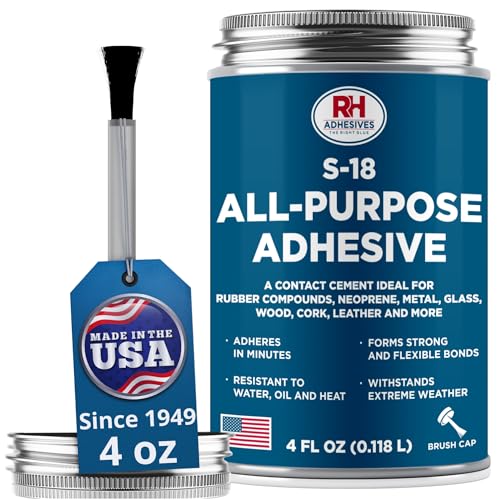
S-18 is a neoprene-based contact cement made in America since 1949. It bonds porous and non-porous materials including rubber, metal, felt, leather, and many plastics. The off-white liquid dries into a strong, flexible film that resists water and heat — a reliable choice for shoe repairs, neoprene patches, and fabric-to-plastic attachments.
Users report it works exceptionally well for gluing leather to boot soles and attaching rubber foam to metal bed legs. The adhesive holds firm in summer heat when applied correctly, though some found it failed outdoors in combined heat and rain, making it better suited for indoor or protected use. Surface prep (clean, dry, sand) is mandatory for best results.
The 4-ounce can is small — frequent users recommend buying the larger size since the bond’s strength can degrade if the can sits unused for months. The solvent smell is present but lower than many contact cements. For mid-range indoor repairs where you need a classic contact cement that grabs fast, S-18 is a trusted workhorse.
Why it’s great
- Excellent peel strength and heat resistance
- Works on many material combos including rubber to plastic
- Made in the USA with a long track record
Good to know
- May fail in prolonged outdoor wet conditions
- Small can size — store tightly or bond strength drops
7. FITTDYHE 3-Pack Permanent Fabric Glue

FITTDYHE’s 3-pack offers the lowest per-bottle cost in the lineup, making it a practical entry point for small projects and DIYers who need multiple glue applicators. Each 60 ml bottle has a precision needle tip that resists clogging and a cap that doubles as a cleaning pin. The glue dries clear and remains flexible after washing.
The kit includes glue spreaders and clips, turning it into a mini repair station. Users have used it to hem shirts, attach elastic to waistbands, and glue patches onto crocheted beanies — all of which survived washing. The bond is stiff yet flexible once cured, adding sturdiness without discomfort. Some users note slight bleed-through when applied wet, but it dries translucent.
The 48-hour full cure is longer than most — you need patience and the included clips to hold seams tight. It’s not ideal for heavy plastic bonding; the formula targets fabric-to-fabric primarily. But for fabric-to-fabric repairs with occasional light plastic attachment, this is the most budget-friendly route.
Why it’s great
- Three bottles with anti-clog needle tips for precision
- Includes spreaders and clips for hands-free curing
- Washes well — holds through multiple laundry cycles
Good to know
- 48-hour full cure is longer than most alternatives
- Best for fabric-to-fabric; limited heavy plastic bonding
FAQ
Will any of these adhesives bond fabric to polypropylene plastic?
Can I machine wash fabric repaired with fabric-to-plastic adhesive?
What prep work is needed before applying adhesive to fabric and plastic?
Why does my fabric-to-plastic glue keep peeling off?
Final Thoughts: The Verdict
For most users, the adhesive for fabric to plastic winner is the 3M Max Strength 90 because it combines a fast 10-minute cure, heat and water resistance, and an adjustable spray that handles everything from marine vinyl to car upholstery without pooling. If you need maximum repositioning time for large panel lamination, grab the 3M Hi-Strength 94 ET. And for precise small repairs where you want a clear, washable bond, the Beacon Fabri-Tac is your reliable detail tool.