
Our readers keep the lights on and the weekend projects moving. As an Amazon Associate, I earn from qualifying purchases.
When grass pollen counts spike, every breath can feel like a fight against sneezing, itchy eyes, and a relentless runny nose. The right antihistamine or allergy drop doesn’t just mask symptoms — it targets the specific histamine response triggered by grass allergens, letting you reclaim the outdoors without the fog. This guide cuts through the drugstore clutter to compare the most effective oral antihistamines, eye drops, and homeopathic options built for grass pollen season.
I’m Rikta — the co-founder and writer behind FitlyFast. I’ve spent hundreds of hours analyzing active ingredient profiles, customer symptom patterns, and clinical data on antihistamine onset times to build this comparison of the best grass pollen relief options available.
After combing through lab reports and real user feedback, we’ve broken down the best choices for tackling that specific grass-pollen assault. Whether you’re dealing with ocular itching, nasal congestion, or full-body hay fever, this guide covers the allergy medicine for grass pollen that actually fits your symptom profile and daily routine.
How To Choose The Best Allergy Medicine For Grass Pollen
Not all antihistamines treat grass pollen the same way. The key difference lies in the active ingredient’s affinity for peripheral H1 receptors versus its ability to cross the blood-brain barrier, which dictates how drowsy you’ll feel. For grass pollen, you also need to decide whether you want a systemic pill that covers multiple symptoms or a targeted drop for eye irritation — a choice that depends entirely on whether your primary symptom is ocular itching, nasal congestion, or both.
Active ingredient and drowsiness profile
Second-generation antihistamines like fexofenadine (Allegra) and loratadine (Claritin) are non-drowsy because they don’t easily cross the blood-brain barrier. Cetirizine (Zyrtec) and levocetirizine (XYZAL) offer broader symptom control but produce a sedative effect in roughly 10-15% of users, especially at higher doses. If you’re sensitive to drowsiness or need to operate heavy equipment, fexofenadine 180 mg is the safest bet. For severe grass pollen symptoms that keep you up at night, cetirizine or levocetirizine taken before bed can double as a sleep aid while controlling histamine release.
Targeted delivery: oral vs. ocular
Grass pollen particles are large enough to trigger a powerful ocular histamine response — think red, watery, itchy eyes. Oral antihistamines reduce eye symptoms systemically but may take 1-2 hours to reach therapeutic concentration in tear fluid. Olopatadine 0.2% eye drops deliver active antihistamine directly to the ocular surface within minutes, making them the superior choice if eye itching is your dominant symptom. For those requiring whole-body relief, a 24-hour oral tablet paired with an antihistamine eye drop offers the most complete grass pollen defense.
Regional grass pollen formulations
Homeopathic allergy drops like TexaClear use micro-doses of specific grass extracts native to a geographic region. Rather than blocking histamine receptors, these drops aim to desensitize the immune system to the particular grass species in your area — such as Johnson grass, Bermuda grass, or Timothy grass. This approach works best when started 4-6 weeks before pollen season peaks. For acute symptom relief during a spike, antihistamine tablets or drops remain the faster, more reliable option.
Quick Comparison
On smaller screens, swipe sideways to see the full table.
| Model | Category | Best For | Key Spec | Amazon |
|---|---|---|---|---|
| Allegra 24-Hour 90ct + Travel Pack | Oral Antihistamine | Non-drowsy all-day grass pollen relief | Fexofenadine HCl 180 mg | Amazon |
| XYZAL Allergy 24 Hour 55ct (2-Pack) | Oral Antihistamine | Powerful symptom control for severe grass allergies | Levocetirizine 5 mg | Amazon |
| Zyrtec 24 Hour 75ct Tablets | Oral Antihistamine | Fast-acting grass pollen and indoor allergy relief | Cetirizine HCl 10 mg | Amazon |
| Claritin 24 Hour 70ct Tablets | Oral Antihistamine | Non-drowsy budget-friendly daily maintenance | Loratadine 10 mg | Amazon |
| Glenmark Olopatadine Eye Drops (Twin-Pack) | Ocular Antihistamine | Immediate eye itch relief from grass pollen | Olopatadine HCl 0.2% | Amazon |
| TexaClear Natural Allergy Relief Drops | Homeopathic Drops | Regional grass allergy desensitization | 100+ tree/weed/grass extracts | Amazon |
| Zyrtec 24 Hour Liquid Gels 25ct | Oral Antihistamine | Fast-absorbing liquid gel for quick symptom start | Cetirizine HCl 10 mg (liquid gel) | Amazon |
In‑Depth Reviews
1. Allegra Adult 24-Hour 90ct + Travel Pack
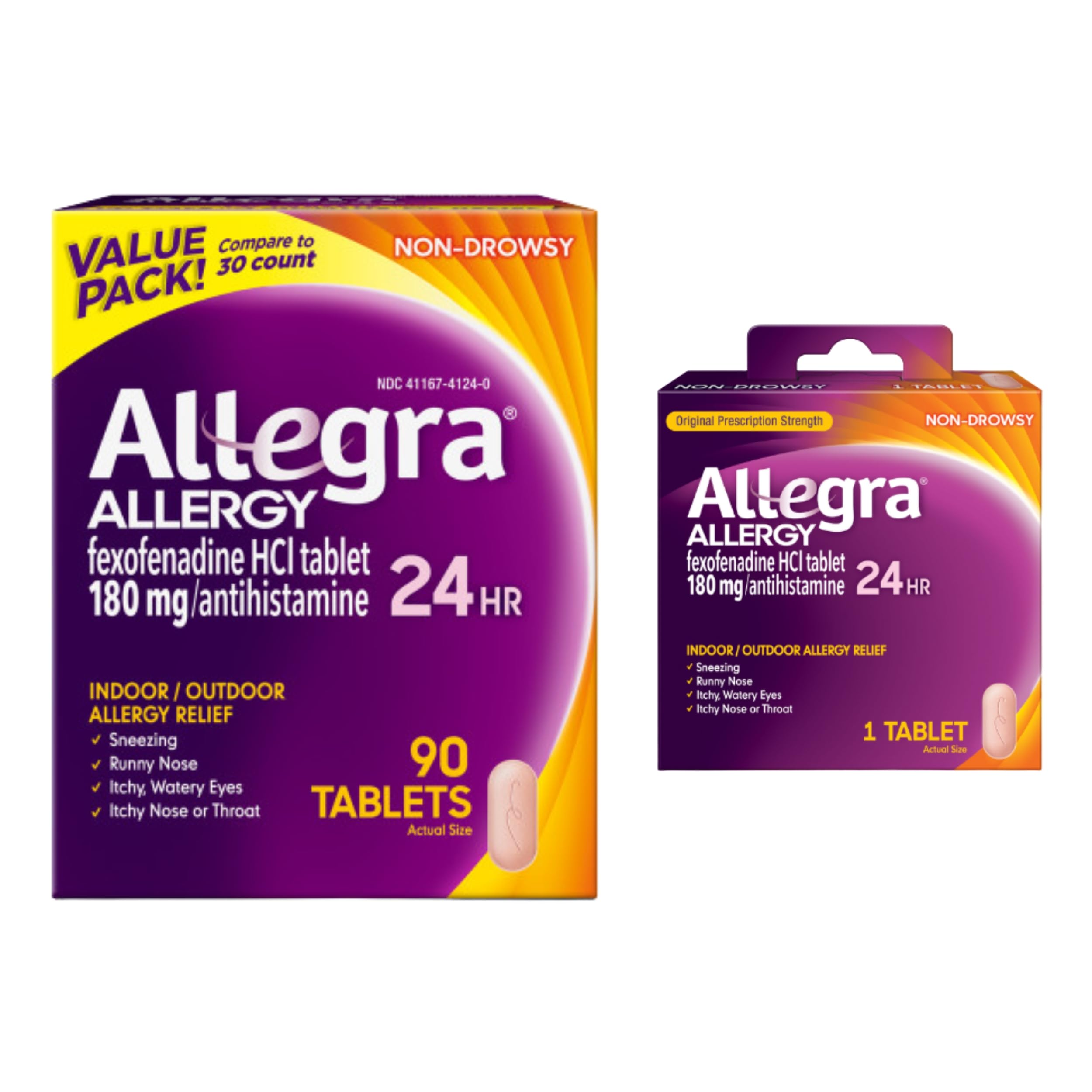
Allegra’s active ingredient, fexofenadine HCl 180 mg, is the least sedating second-generation antihistamine on the market because it’s a substrate of P-glycoprotein, which actively pumps it out of the central nervous system. For grass pollen sufferers who need to stay sharp at work or school, this is the gold standard — no brain fog, no drowsiness, just 24 hours of histamine receptor blockade.
The 90-count bottle plus a bonus single-dose travel pack makes this a strong candidate for the entire grass pollen season. Users consistently report that Allegra starts working within one hour and controls sneezing, runny nose, and itchy eyes without the sedation they experienced with cetirizine. The fexofenadine molecule is also less likely to cause dry mouth compared to loratadine.
One downside: fexofenadine’s absorption is significantly reduced when taken with fruit juices like apple, grapefruit, or orange juice — it must be taken with water on an empty stomach for full efficacy. Some users with severe grass pollen symptoms find they need a double dose (two 180 mg tablets) during peak season, though this should be discussed with a doctor.
Why it’s great
- Zero drowsiness for most users — the safest bet for daytime activity
- Starts working in one hour with consistent 24-hour coverage
- Large bottle plus travel pack covers the full grass season
Good to know
- Cannot be taken with fruit juices — water only for proper absorption
- May require a higher dose for severe peak-season grass pollen symptoms
2. XYZAL Allergy 24 Hour 55ct (2-Pack)

XYZAL’s active ingredient, levocetirizine, is the purified R-enantiomer of cetirizine — meaning it binds more selectively to H1 receptors while using half the dose of the racemic mixture. At 5 mg, it provides broader symptom control than fexofenadine for grass pollen, including suppression of nasal congestion and ocular itching, with a slightly longer half-life that some users report as 22-23 hours of effective relief.
The 110-tablet value pack (two 55-count bottles) is a strong option for households with multiple allergy sufferers or for single users covering the entire spring-to-fall grass pollen window. Customer reviews consistently mention that XYZAL outperforms Zyrtec and Claritin for severe grass and ragweed allergies, with particular praise for its ability to control hives and severe nasal congestion that other antihistamines miss.
The packaging is notoriously difficult to open, and the small pill size can be hard to handle for those with dexterity issues.
Why it’s great
- More potent symptom control than Zyrtec or Claritin for severe grass pollen reactions
- 110-tablet value pack eliminates constant repurchasing during pollen season
- Smaller pill size than Zyrtec — easier to swallow
Good to know
- May cause drowsiness in sensitive users, best taken in the evening
- Packaging is extremely difficult to open, especially for seniors
3. Zyrtec 24 Hour 75ct Tablets
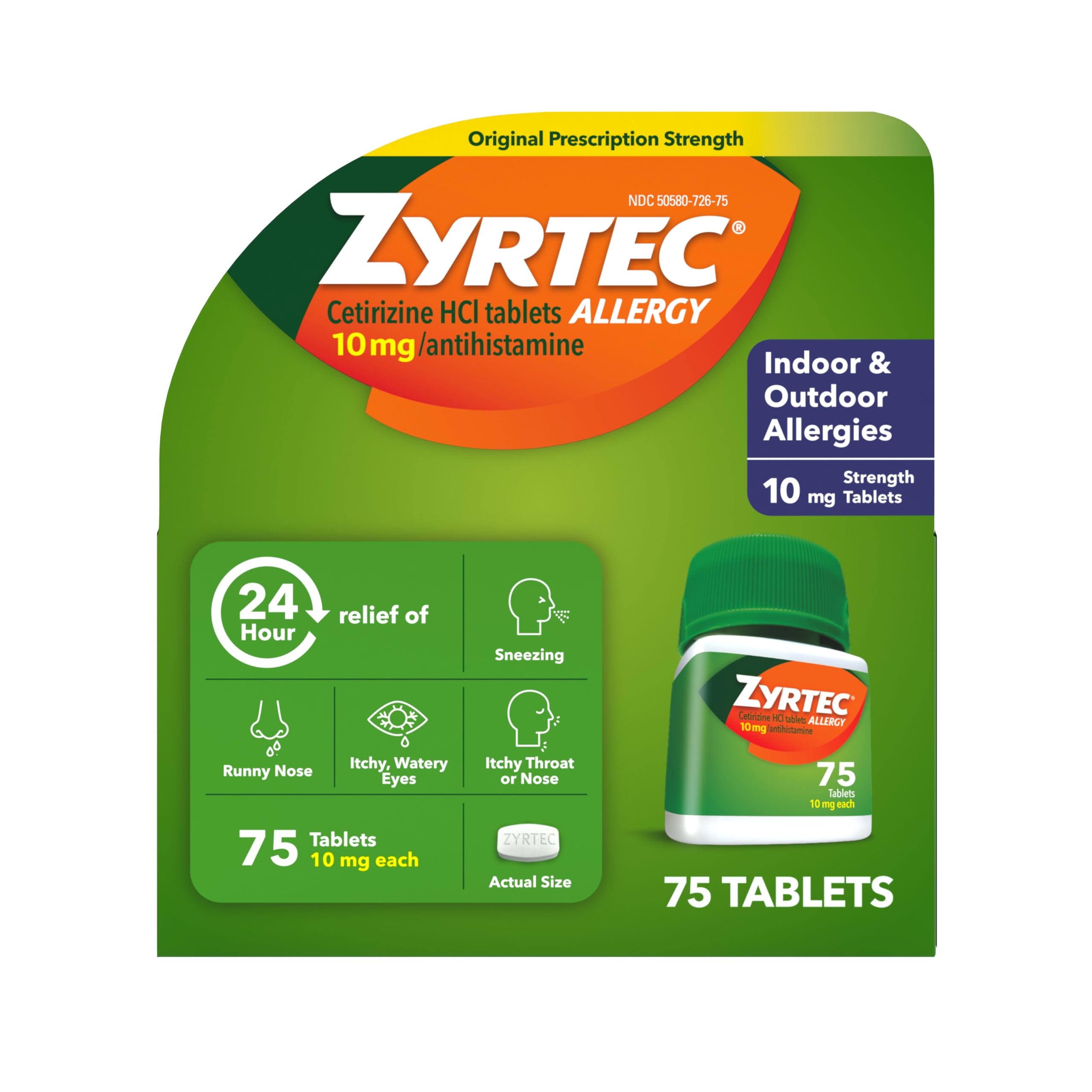
Zyrtec’s cetirizine HCl has one of the fastest onset times among oral antihistamines — measurable symptom reduction within 60 minutes and peak plasma concentration at about one hour. For grass pollen exposure that hits suddenly during a morning walk or afternoon gardening, Zyrtec offers the quickest systemic response outside of liquid gel formulations.
The 75-count bottle provides roughly 2.5 months of daily coverage, making it a solid mid-cycle purchase between filling prescriptions. Users consistently note that Zyrtec effectively controls the full suite of grass pollen symptoms: sneezing, runny nose, itchy eyes, and itchy throat. The tablets are small and easy to swallow, with no aftertaste.
The main drawback is the drowsiness — cetirizine is the most sedating second-generation antihistamine, with roughly 10-14% of users reporting noticeable sleepiness. Taking it at bedtime can turn this into an advantage by improving sleep quality disrupted by nighttime histamine release. Some users also report dry mouth.
Why it’s great
- Fastest onset among standard oral antihistamines — works in under an hour
- Broad symptom control covering eyes, nose, and throat from grass pollen
- Small easy-to-swallow tablets with no taste or smell
Good to know
- More likely to cause drowsiness than Allegra or Claritin
- Dry mouth is a common side effect, especially in higher doses
4. Claritin 24 Hour 70ct Tablets

Claritin’s loratadine 10 mg has the longest track record among OTC non-drowsy antihistamines. While its receptor-binding affinity is lower than cetirizine or levocetirizine, it’s perfectly adequate for mild-to-moderate grass pollen symptoms — the kind where you feel a tickle in your throat and occasional sneezing rather than debilitating sinus pressure.
The 70-count bottle is a budget-friendly entry point for daily allergy management. Users who don’t need heavy artillery find Claritin effective without any of the sedation or dry mouth associated with Zyrtec or XYZAL. The tiny white tablets are easy to swallow and can be taken with or without food.
The caveat: for severe grass pollen peaks, loratadine may feel underwhelming. Some users report breakthrough symptoms 18-20 hours after dosing, shorter than the advertised 24-hour window. It also doesn’t work as well on ocular symptoms compared to fexofenadine or cetirizine.
Why it’s great
- True non-drowsy formula — no sedation for the vast majority of users
- Budget-friendly option for daily grass pollen maintenance
- Tiny, easy-to-swallow pills that can be taken with or without food
Good to know
- May lose effectiveness before the 24-hour mark in severe pollen conditions
- Less effective for eye itching and severe nasal congestion
5. Glenmark Olopatadine Eye Drops (Twin-Pack)
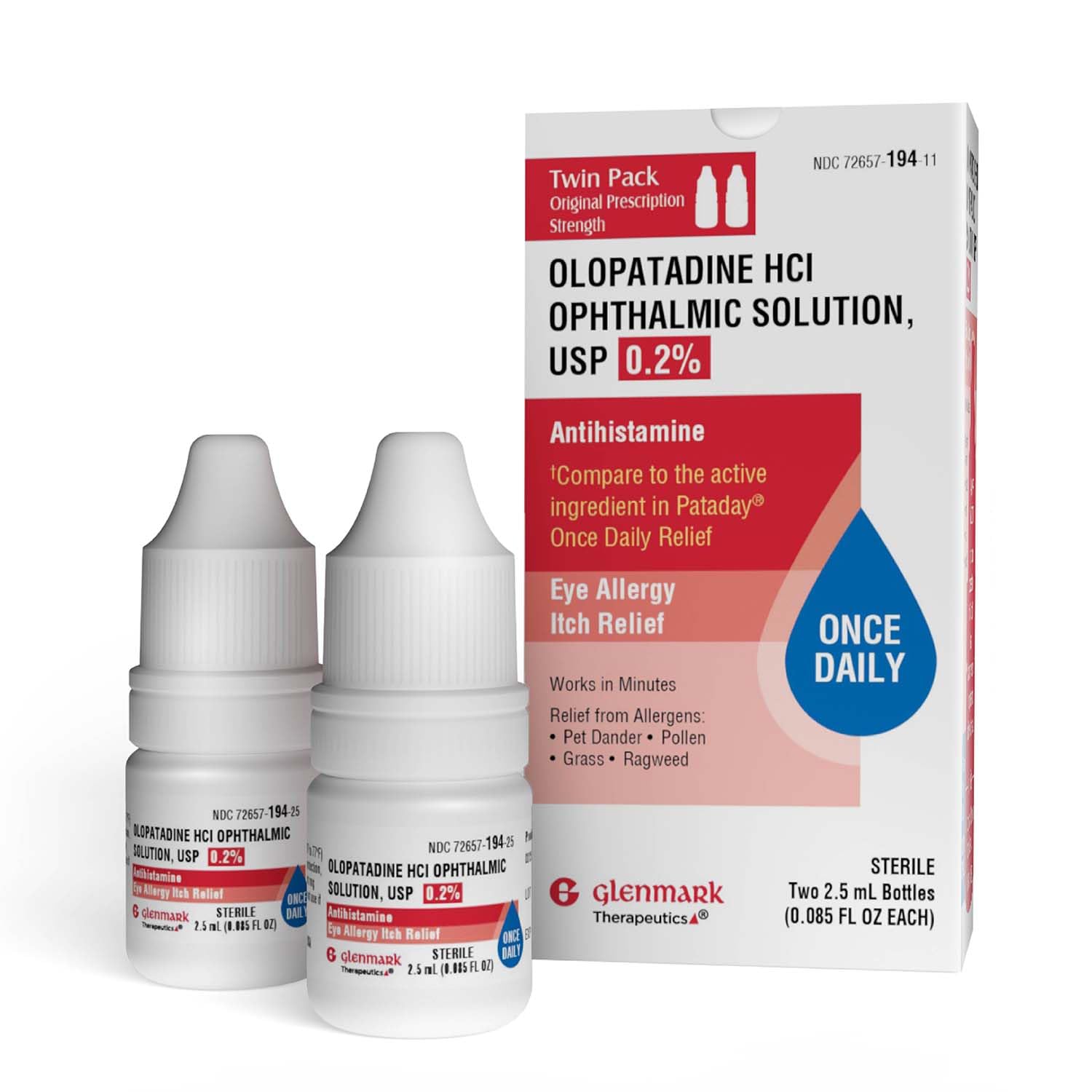
Olopatadine 0.2% is a dual-action mast cell stabilizer and antihistamine, meaning it not only blocks histamine receptors on the ocular surface but also prevents mast cells from releasing histamine in the first place. This makes it significantly more effective for grass pollen-induced eye itching than any oral antihistamine alone, especially during peak exposure when pollen loads are high enough to overwhelm systemic protection.
Each bottle provides a 30-day supply with one drop per affected eye once daily. Users report symptom relief within minutes of application, with noticeable reduction in both itching and redness. The twin-pack covers two months of daily usage or can be shared between two household members. The drops do not burn or sting on application, a common complaint with older antihistamine eye drops.
One limitation: the small bottle design makes handling difficult for those with larger fingers or reduced fine motor control. Also, olopatadine 0.2% is preservative-free, so the multi-dose bottle requires careful handling to avoid contamination. It’s best used as an adjunct to an oral antihistamine, not a replacement for systemic grass pollen control.
Why it’s great
- Dual-action mast cell stabilizer plus antihistamine for superior eye itch relief
- Works within minutes — faster than any oral antihistamine for ocular symptoms
- No burning, stinging, or bitter taste upon application
Good to know
- Small bottle design can be hard to grip and squeeze
- Best paired with an oral antihistamine for full-body grass pollen coverage
6. TexaClear Natural Allergy Relief Drops

TexaClear takes a fundamentally different approach: instead of blocking histamine after the fact, it exposes the immune system to micro-doses of over 100 regional trees, weeds, and grasses to build tolerance. This includes the specific grass species common to Texas and southern growing zones 2, 5, and 6 — Johnson grass, Bermuda grass, and Timothy grass among them.
The sublingual drops are taken daily, ideally starting 4-6 weeks before grass pollen season begins. Users who stick with the regimen report significant reduction in sneezing, itchy eyes, and runny nose without any of the drowsiness or dry mouth associated with antihistamines. The formula also includes drainage remedies to support lymphatic clearance of nasal mucus.
The homeopathic mechanism means results are not immediate — acute symptom sufferers will still need a fast-acting antihistamine for the first few weeks of use. The absence of an expiration date (as noted by the manufacturer) is unusual for a liquid formulation and raises questions about potency over time. Additionally, users outside the targeted Texas and zone 2/5/6 areas may not get the same benefit due to different grass pollen profiles.
Why it’s great
- Addresses the root cause by building tolerance to regional grass pollen
- Non-drowsy, non-sedating — safe for daily use year-round
- Includes lymphatic drainage support for comprehensive symptom relief
Good to know
- No immediate relief — requires 4-6 weeks of consistent use before benefits appear
- Formulated specifically for Texas and zones 2/5/6 — not ideal for other regions
7. Zyrtec 24 Hour Liquid Gels 25ct
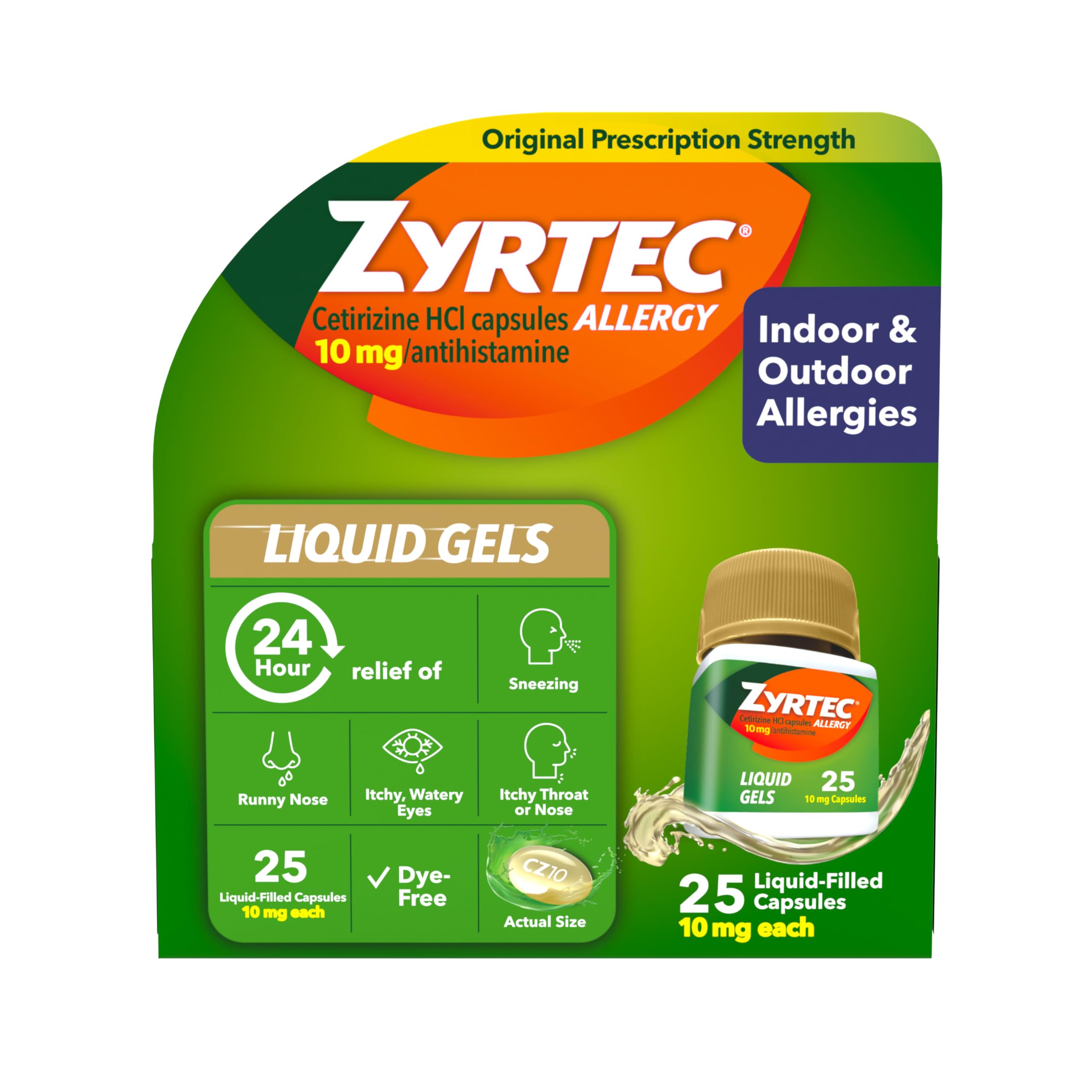
The liquid gel format of Zyrtec delivers 10 mg of cetirizine in a pre-dissolved state, which bypasses the tablet disintegration step and enters systemic circulation faster than the standard tablet. For grass pollen sufferers who need the fastest possible oral relief, this liquid gel formulation shaves 15-20 minutes off the onset time compared to the tablet version.
Users who have trouble swallowing tablets find the soft gel capsules easier to manage. The 25-count bottle is a good starter size for those trying cetirizine for the first time or as a travel companion. Customer reviews emphasize that the liquid gels provide significantly better symptom control than generic cetirizine tablets, suggesting the delivery mechanism may improve bioavailability.
The bottle is small and the price per dose is higher than the standard 75-count tablet bottle. The drowsiness profile is identical to standard Zyrtec tablets — about 10-14% of users will feel sedated. Some users report occasional upset stomach from the gelatin capsule.
Why it’s great
- Faster absorption than tablets — noticeable relief in under an hour
- Easier to swallow than tablets, ideal for those with pill anxiety
- Liquid gel provides more consistent symptom control than generic cetirizine tablets
Good to know
- More expensive per dose than the standard tablet variant
- Same drowsiness risk as regular Zyrtec — best taken in the evening
FAQ
How does fexofenadine differ from cetirizine for grass pollen?
Should I take an antihistamine before or after grass pollen exposure?
Can I use olopatadine eye drops with an oral antihistamine?
Why does grass pollen cause worse eye symptoms than tree pollen?
Final Thoughts: The Verdict
For most users, the allergy medicine for grass pollen winner is the Allegra 24-Hour 90ct because fexofenadine 180 mg provides the best balance of non-drowsy coverage, reliable 24-hour duration, and broad symptom control for grass pollen. If you need the most potent symptom suppression available, grab the XYZAL 2-Pack but plan to take it in the evening to sidestep any sedation. And for ocular-dominant grass pollen symptoms where your eyes feel like the primary battlefield, nothing beats the targeted relief of the Glenmark Olopatadine Eye Drops — just pair it with an oral antihistamine for complete coverage.