
Our readers keep the lights on and the weekend projects moving. As an Amazon Associate, I earn from qualifying purchases.
Basements trap moisture, dust, and stale air by design, making them the most challenging indoor space to keep fresh. A dedicated air cleaning unit must combat not just particulate matter but also the constant threat of mold spores and volatile organic compounds that accumulate below grade.
I’m Rikta — the co-founder and writer behind FitlyFast. I’ve spent weeks analyzing real-world performance data, filter specifications, and customer feedback specifically for below-grade spaces to identify which units actually solve the unique air quality problems of basements.
This guide breaks down the core specs that matter for subterranean spaces—from square footage coverage and filter media type to noise output and smart sensor accuracy—so you can confidently choose the best basement air purifier for your home.
How To Choose The Best Basement Air Purifier
Selecting an air purifier for a basement is different from picking one for a living room. Basements have lower ceilings, less natural ventilation, and higher humidity potential. Prioritizing the right set of features will save you both money and maintenance headaches.
HEPA Grade and Filter Stages
For basements, a True HEPA filter rated to capture 99.97% of particles at 0.3 microns is a baseline requirement. Upgrading to an H13 or H14-grade HEPA, which traps particles down to 0.1 micron, gives better protection against mold spores and bacteria. A multi-stage system with a washable pre-filter extends main filter life significantly—crucial in dusty basements where pet hair and construction debris accumulate.
Square Footage Coverage and CADR
Basements are often one large open area. You need a unit that can cycle the air at least four times per hour. Look at the Clean Air Delivery Rate (CADR) for smoke, dust, and pollen—higher numbers mean faster cleaning. A unit covering 1,500 square feet will struggle in a 3,000-square-foot finished basement. Over-spec by 20% to account for obstructions like support pillars and furniture.
Auto Mode and Air Quality Sensors
Basement air quality fluctuates wildly—a sudden spike in humidity can trigger mold growth, or a furnace startup can kick dust into the air. A purifier with a real-time PM2.5 sensor and auto-adjusting fan speed responds without you needing to touch a dial. Units that also detect TVOCs (total volatile organic compounds) are particularly valuable for basements where paint, solvents, or stored chemicals off-gas.
Quick Comparison
On smaller screens, swipe sideways to see the full table.
| Model | Category | Best For | Key Spec | Amazon |
|---|---|---|---|---|
| COWAY Airmega Mighty2 | Premium | Auto-adjusting all-around basement air | HEPA + Activated Carbon / 1,800 sq ft | Amazon |
| Nuwave Forever | Premium | Zero replacement filter cost long-term | 7-Stage Washable / 2,002 sq ft | Amazon |
| AIRDOCTOR AD4000 | Premium | Hospital-grade filtration for allergy sufferers | UltraHEPA 0.003 micron / 2,776 sq ft | Amazon |
| SIESEAN AP-400 | Mid-Range | Large basement coverage on a budget | Dual Inlet H13 HEPA / 3,500 sq ft | Amazon |
| WINIX 5510 | Mid-Range | Smart app integration with proven filtration | True HEPA + Carbon / 1,881 sq ft | Amazon |
| Dhyala KJ03 | Mid-Range | Pet owners needing odor + dander control | Dual Intake HEPA / 3,000 sq ft | Amazon |
| DAYETTE AP308 | Mid-Range | Pet mode with dual H14 filters | Dual H14 HEPA / 3,400 sq ft | Amazon |
| LEVOIT Core 300-P | Budget | Small finished basements on a tight budget | HEPA-grade / 1,073 sq ft | Amazon |
| AIRPLUS AP2103 | Budget | Dehumidification + basic air cleaning | Dehumidifier 70 pint / 4,500 sq ft | Amazon |
In‑Depth Reviews
1. COWAY Airmega Mighty2
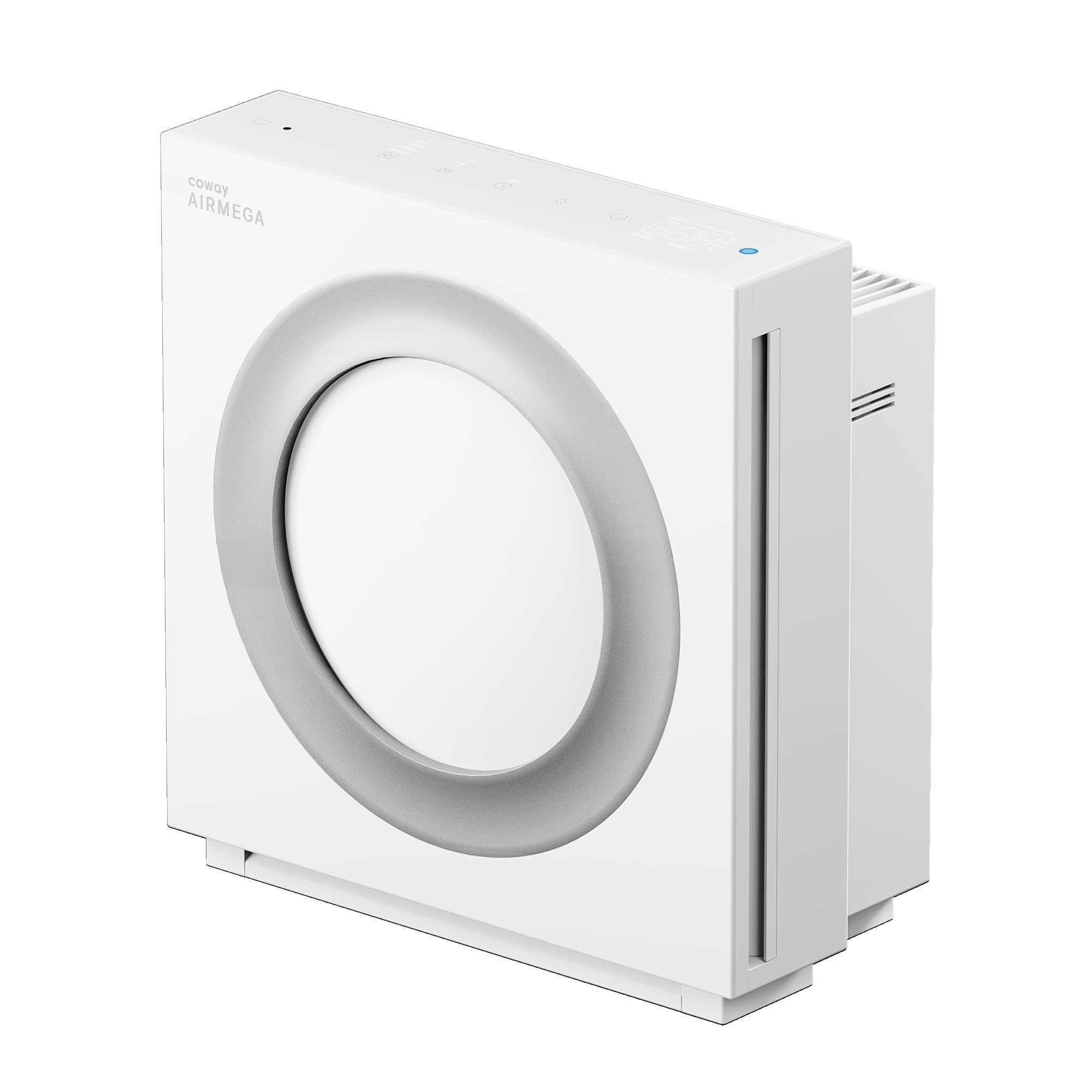
The COWAY Airmega Mighty2 is the successor to a Wirecutter top pick, and it improves on nearly everything. Its IEST-RP-CC007 certified HEPA filter captures 99.97% of particles down to 0.3 microns, while the active carbon layer reduces VOCs and odors that accumulate in basements. The CADR ratings—242 dust, 240 smoke, 249 pollen—are class-leading for its price tier.
The MegaScan laser sensor reads PM1.0, PM2.5, and PM10 in real time, displaying numerical values on a clean LED panel. In Smart Mode, the unit automatically adjusts airflow based on detected particle levels, and a light sensor triggers whisper-quiet Sleep Mode at 19 dB when the room darkens. The pre-filter slides out without removing the front cover, making monthly cleaning effortless.
At 15.2 pounds, it’s easy to move between rooms, and the top-mounted exhaust prevents drafts on nearby furniture. The precise filter life indicator counts down from 100% to 0%, removing guesswork from maintenance. Customer reviews highlight rapid smoke clearance from cooking and wildfire events, with many users reporting the unit stays on low speed for most of the day in normal conditions.
Why it’s great
- Real-time PM1/2.5/10 numeric display is rare at this price.
- Eco-Mode automatically reduces power consumption when air is clean.
- 3-year warranty provides peace of mind for a major appliance.
Good to know
- No Wi-Fi or app connectivity for remote monitoring.
- Medium speed cannot be locked as the default in Auto Mode.
2. Nuwave Forever Smart Air Purifier

The Nuwave Forever eliminates the single largest recurring cost of air purification: replacement filters. Its patented 7-stage system uses stainless-steel pre-filters and Bio-Guard 360 filters that you simply wash with water and reuse indefinitely. For a basement that collects dust and pet dander, this design saves hundreds over the life of the unit.
Covering 2,002 square feet in one hour, it fits large finished or unfinished basements. The Auto Mode uses a sensitive odor and particle sensor—customers report it detecting cooking smells and adjusting speed accordingly. Up to fan level 3, noise is comparable to a quiet desk fan, and the Wi-Fi app allows remote scheduling and monitoring.
Intertek Lab Certification confirms 100% capture of particles down to 0.1 microns, and the ozone reduction to 1 ppb exceeds CARB standards. The 21.85-pound build feels solid, and the top-mounted control panel is intuitive. Customer reviews from pet owners consistently mention elimination of wet dog smell and significant reduction in allergy symptoms within days.
Why it’s great
- Zero replacement filter costs over the unit’s lifetime.
- Ozone removal filter maintains ultra-low ozone output.
- Wi-Fi app gives full remote control and scheduling.
Good to know
- Washable filters require 24 hours to air dry completely.
- Fan speed 4 and above produces noticeable noise.
3. AIRDOCTOR AD4000
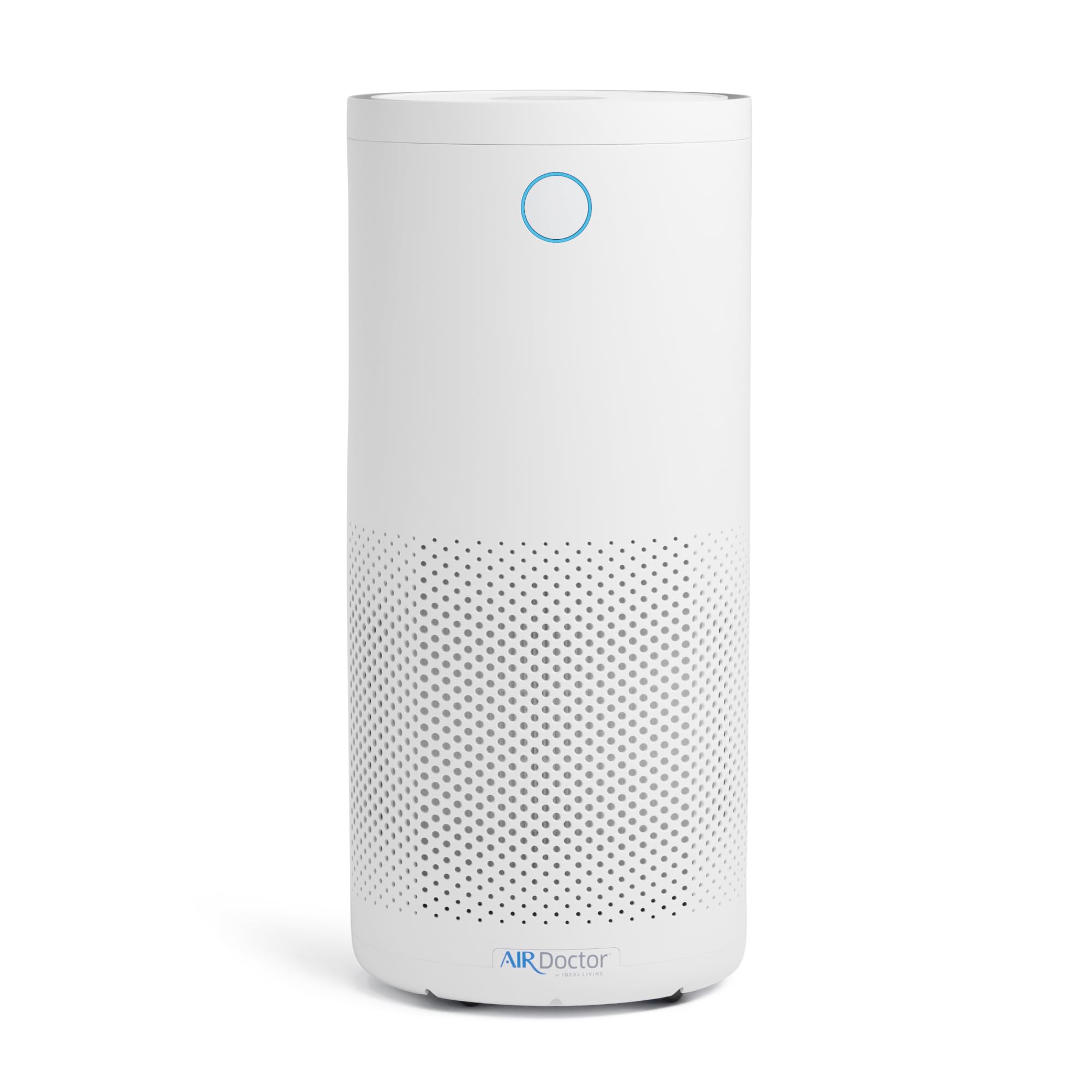
The AIRDOCTOR AD4000 uses UltraHEPA filtration that captures 99.99% of airborne particles at 0.003 microns—100 times smaller than the standard HEPA requirement. For a basement with mold concerns, this level of filtration traps mold spores and bacteria that cheaper filters might miss. The three-stage system includes a pre-filter, a premium activated carbon filter infused with potassium permanganate for gas absorption, and the UltraHEPA layer.
Covering 2,776 square feet in one hour, it handles large basements with ease. The Auto Mode uses PM2.5 sensors and the AirDoctor Halo color display to show real-time air quality. Six fan speeds give granular control, while the night mode dims all lights and runs whisper-quiet. The unit requires no Wi-Fi—plug and play—which some users prefer for simplicity.
Third-party testing backs its performance claims, and it is FSA/HSA eligible for those with health savings accounts. Customer feedback consistently praises the noticeable difference in air freshness after cooking or during allergy season. Replacement filters are a significant ongoing cost, but the filtration quality is among the best available for residential use.
Why it’s great
- UltraHEPA captures particles 100x smaller than HEPA standard.
- Activated carbon with potassium permanganate handles VOCs and gases.
- FSA/HSA eligible for tax-advantaged purchasing.
Good to know
- Premium purchase price with expensive replacement filters every 6 months.
- Unit is larger and heavier than most competitors.
4. SIESEAN AP-400
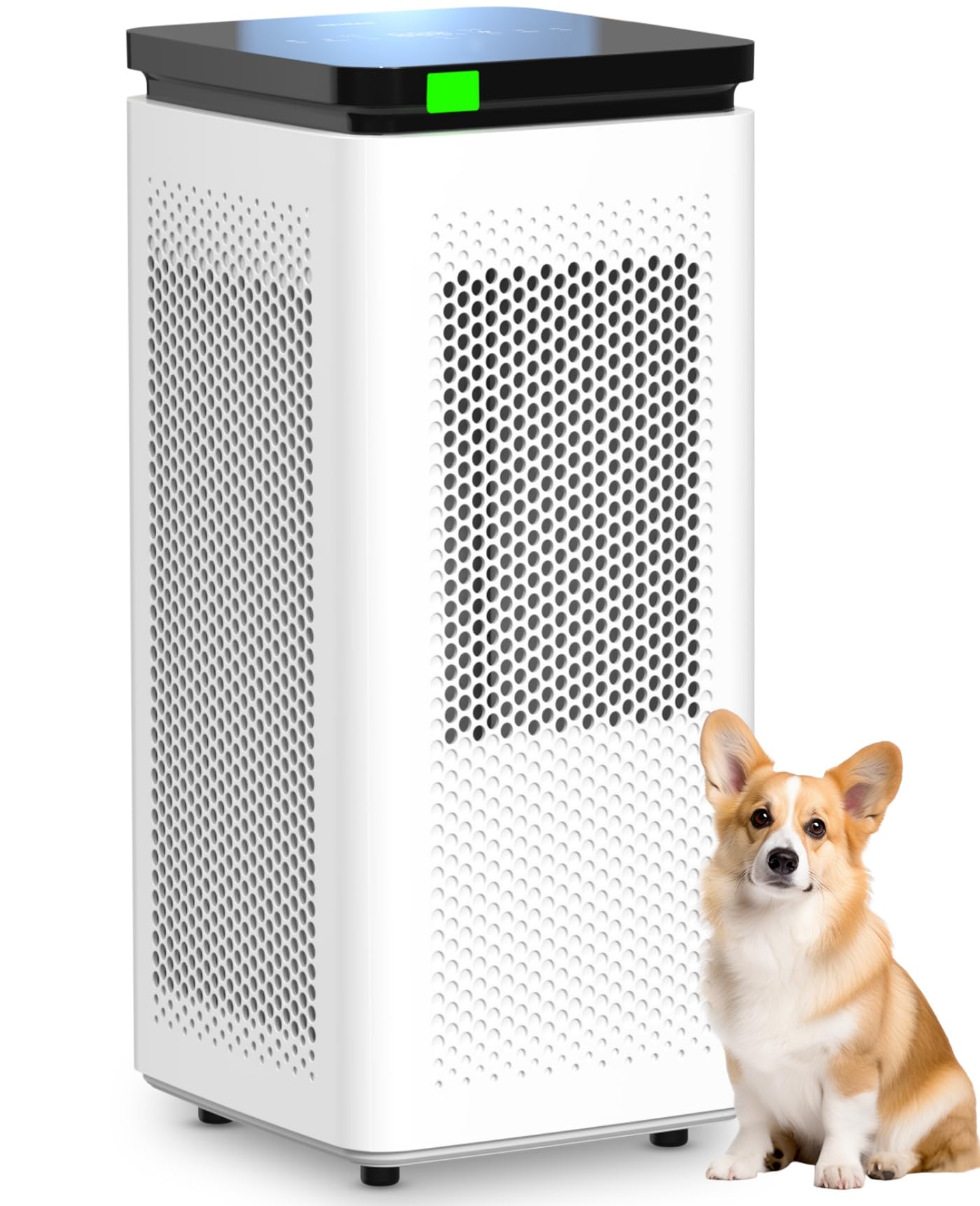
The SIESEAN AP-400 offers the best coverage-to-price ratio in this guide with a 235 CFM CADR and dual-inlet airflow design that cleans up to 3,500 square feet. For an unfinished basement or a large walkout space, this unit moves enough air to make a real difference. The H13 True HEPA filter captures 99.97% of particles down to 0.1 micron, while the activated carbon layer reduces pet odors, smoke, and VOCs.
Sleep Mode drops noise to 30 dB with a dimmer that turns off all panel lights, making it suitable for basement bedrooms or guest suites. The PM2.5 digital display and Auto Mode adjust fan speed based on real-time air quality. Customer reviews highlight its ability to clear kitchen odors from an open-concept basement kitchen in minutes.
The floor-standing design includes a child lock and timer functions. Filters are recommended every 3-4 months based on usage, and genuine replacements are easy to find on Amazon. Independent certification by CARB, DOE, EPA, and UL ensures safety and energy compliance.
Why it’s great
- 3,500 sq ft coverage suits the largest basements.
- Dual-inlet design doubles air intake for faster cleaning.
- Multiple safety certifications for peace of mind.
Good to know
- Filter changes every 3-4 months in high-usage basements.
- No Wi-Fi or smart home integration available.
5. WINIX 5510

The WINIX 5510 brings smart home compatibility to basement air purification, with Alexa, Google Assistant, and the Winix Smart App for remote control. Its four-stage filtration includes a washable pre-filter, an advanced odor control carbon filter, a True HEPA layer, and the optional PlasmaWave ionizer. The system is AHAM Verified at 392 square feet but cleans up to 1,881 square feet in one hour.
The auto mode uses a built-in air quality sensor with LED color indicator (blue, amber, red) and adjusts fan speed in real time. Sleep Mode activates automatically when the room darkens, dropping to 23.5 dB. Customer reviews highlight its effectiveness against wildfire smoke, with one user reporting a shift from red to blue light within minutes of operation.
The polished charcoal gray finish and compact footprint fit well in a basement corner. Filters last up to 12 months with normal use, and the washable pre-screen extends main filter life. Some users note that Alexa integration can be buggy, but the standalone performance earns strong marks for value and reliability.
Why it’s great
- Alexa and Google Assistant voice control for hands-free operation.
- Auto light sensor sleep mode transitions seamlessly.
- Long 12-month filter life reduces annual costs.
Good to know
- Alexa integration is not fully native and can be unreliable.
- PlasmaWave produces trace ozone, which some users prefer to disable.
6. Dhyala KJ03
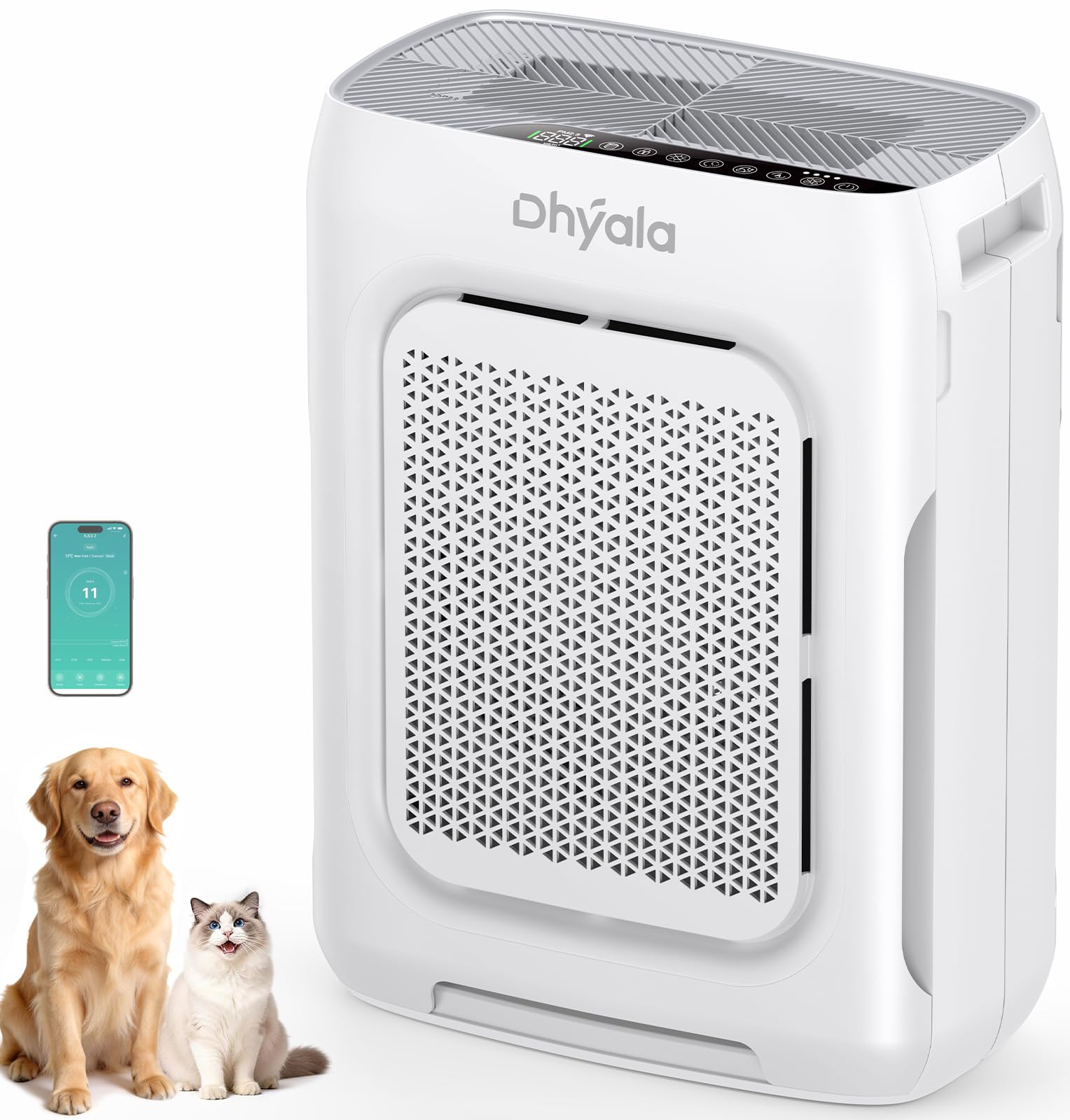
The Dhyala KJ03 uses a dual-sided, multi-intake design with two 3-stage filters (pre-filter, HEPA, activated carbon) to achieve a CADR of 265 CFM and coverage up to 3,000 square feet. This makes it a strong contender for basements that double as pet areas, where dander and odor control are top priorities. The washable pre-filters capture visible dust and hair, significantly extending the lifespan of the main HEPA filters.
Smart Wi-Fi connectivity lets you control the unit via app, Alexa, or Google Assistant. The built-in PM2.5 sensor displays air quality on an AQI screen and auto-adjusts fan speed. Sleep Mode at 15 dB is among the quietest in this guide—quieter than a page turn—making it ideal for basement bedrooms. An integrated aromatherapy box with three included pads allows scent diffusion without a separate machine.
Safety features include a child lock, anti-chew power cord, and automatic shutoff when tilted beyond 45 degrees. Customer reviews from bird owners, dog owners, and allergy sufferers all report measurable improvement in air quality within days. The 24-month warranty and lifetime technical support add long-term value.
Why it’s great
- 15 dB sleep mode is virtually silent for overnight use.
- Built-in aromatherapy box adds scent without a diffuser.
- Anti-chew power cord and child lock for safety.
Good to know
- Air only exhausts upward, which may not suit all room layouts.
- App interface can feel less polished than premium competitors.
7. DAYETTE AP308
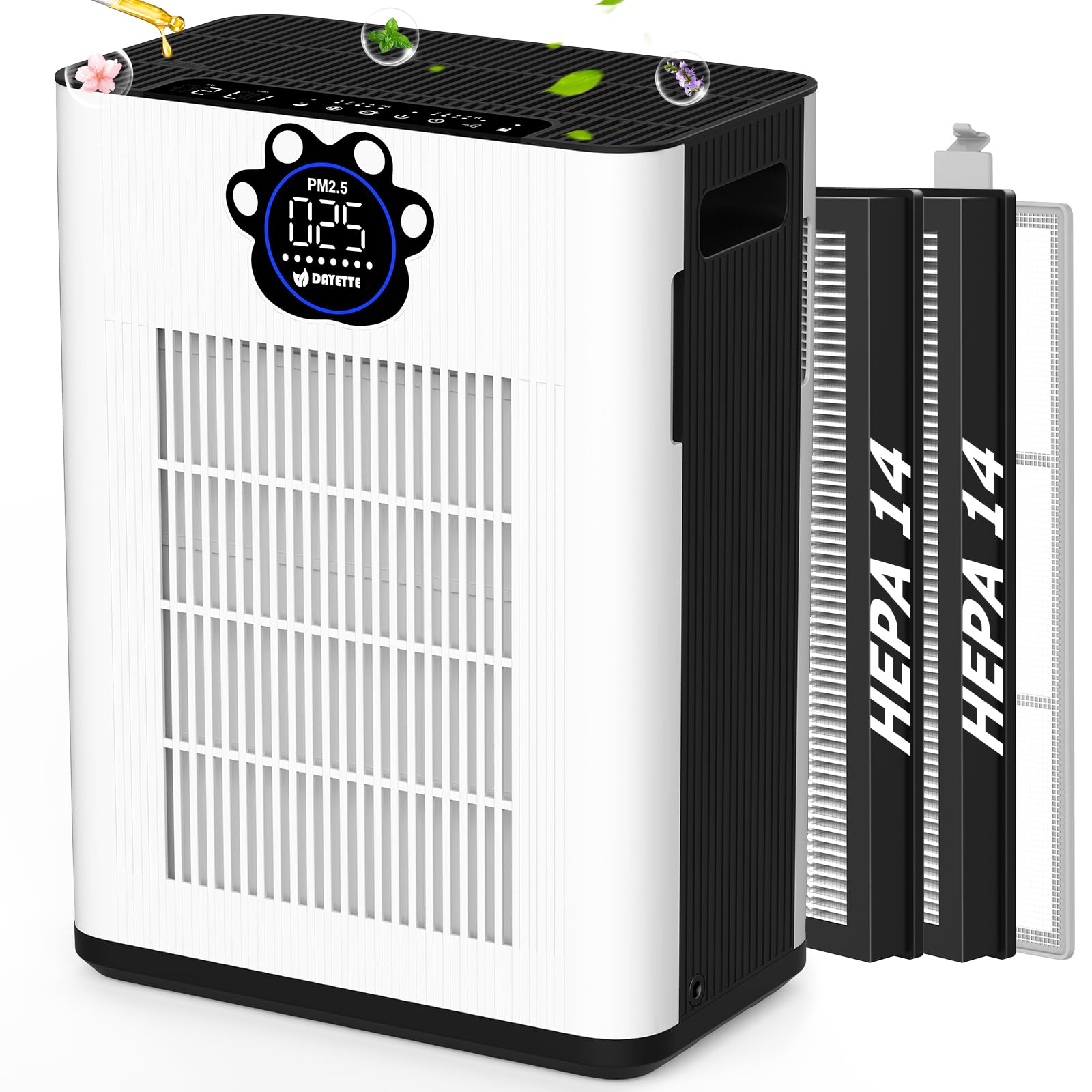
The DAYETTE AP308 stands out for its dual H14 HEPA filtration system—a step above the more common H13 grade. Two separate H14 filters and washable nylon pre-filters provide double the protection against fine particles, capturing 99.99% of airborne contaminants down to 0.1 micron. For a basement with mold or heavy dust, this higher filter grade offers extra peace of mind.
Coverage reaches 3,400 square feet in Pet Mode, which activates maximum fan speed to aggressively tackle pet odors and dander. The dual sensors (TVOC + PM2.5) provide hyper-accurate air quality readings, displayed via a four-color indicator. Sleep Mode drops to 22 dB with all lights dimmed, and the aromatherapy diffuser works with essential oils to refresh basement air naturally.
Customers praise its compact 5 x 12 x 15-inch footprint, noting it takes up less floor space than tower-style units while delivering faster purification. The pet mode button is a dedicated shortcut for quick odor response—useful after a litter box cleaning or wet dog coming inside.
Why it’s great
- Dual H14 HEPA filters outperform standard H13 systems.
- TVOC sensor detects chemicals and odors, not just particles.
- Dedicated Pet Mode button for instant odor control.
Good to know
- Sleep Mode dims all lights but fan speed cannot be independently set.
- Replacement dual filters are a higher ongoing expense.
8. LEVOIT Core 300-P

The LEVOIT Core 300-P is a compact workhorse for smaller finished basements up to 1,073 square feet. Its 56W high-torque motor delivers a CADR of 143 CFM for smoke, 153 for dust, and 167 for pollen, and it is AHAM Verifide certified. The 3-in-1 filter with HEPA-grade media captures 99.97% of particles from 0.1 to 0.3 microns, including pollen, dust, and pet dander.
QuietKEAP Technology reduces Sleep Mode noise to 24 dB, and the display can be completely darkened for undisturbed rest. Multiple filter options allow customization—the Toxin Absorber for VOCs, Smoke Remover for wildfire smoke, and Pet Allergy filter for dander and odors. The 8.7 x 8.7 x 14.2-inch footprint fits on a shelf or in a corner without dominating the space.
Customer feedback emphasizes its quiet operation and noticeable improvement in air freshness, particularly for allergy sufferers. The unit is FCC Certified, ETL Listed, and CARB Compliant. The Core 300-P is a solid starting point for budget-conscious buyers who need reliable, basic purification in a smaller basement area.
Why it’s great
- AHAM Verifide certification guarantees real-world performance claims.
- Multiple specialized filter options for different basement contaminants.
- Near-silent 24 dB sleep mode won’t disturb sleep.
Good to know
- Only covers up to 1,073 sq ft—not suitable for large basements.
- No smart app, Wi-Fi, or air quality display included.
9. AIRPLUS AP2103 Dehumidifier

The AIRPLUS AP2103 is a dehumidifier that includes an ionizer for basic air cleaning, making it a dual-purpose option for basements with persistent humidity issues. It removes up to 70 pints of moisture per day (2012 DOE standard) and covers 4,500 square feet. For a basement that feels damp year-round, tackling humidity first often improves air quality more than filtration alone.
The control panel includes dedicated buttons for Drying mode, humidity setpoint, timer, fan speed, and the Ionizer function. Continuous drainage via the included hose eliminates the need to empty the tank in most setups. The 360-degree universal wheels and portable handle make it easy to reposition across a large basement floor.
Noise is rated below 48 dB, which is moderate for a dehumidifier. Customer reviews confirm effective humidity reduction and quiet operation at standard fan speed. The ionizer function is a secondary feature—this unit prioritizes moisture removal over particle filtration. Use it as a companion to a dedicated HEPA purifier for comprehensive basement air management.
Why it’s great
- 70-pint capacity handles high-humidity basements effectively.
- Continuous drain hose eliminates manual tank emptying.
- Ionizer function adds basic air cleaning to moisture control.
Good to know
- Not a true HEPA air purifier—ionizer is a secondary feature.
- Some users report unresponsive touch buttons and a small water bucket.
FAQ
Can an air purifier alone fix a musty basement smell?
What size air purifier do I need for a 1,500-square-foot basement?
Is a washable pre-filter worth it in a dusty basement?
Should I choose a unit with an ionizer for my basement?
How often should I replace filters in a basement air purifier?
Final Thoughts: The Verdict
For most users, the basement air purifier winner is the COWAY Airmega Mighty2 because it combines superior sensor accuracy, whisper-quiet sleep mode, and proven filtration at a mid-range price point that outperforms many premium units. If you want the long-term savings of never buying replacement filters, grab the Nuwave Forever. And for massive unfinished basements where clinical-grade filtration is non-negotiable, nothing beats the AIRDOCTOR AD4000.