
Our readers keep the lights on and the weekend projects moving. As an Amazon Associate, I earn from qualifying purchases.
Every parent knows the scene: a loaded spoon flipped mid-air, puree on the wall, and a frustrated baby who just wants to do it themselves. Finding utensils that actually stay gripped in tiny fists without scraping tender gums is the difference between a peaceful meal and a battle zone. The wrong material, handle shape, or scoop depth can turn feeding into a daily struggle that stalls a child’s confidence.
I’m Rikta — the co-founder and writer behind FitlyFast. I’ve sorted through stacks of feeding research on ergonomic grip patterns, silicone curing standards, and stainless steel coatings to pinpoint which baby utensils actually deliver on their promises for early eaters.
Whether your baby is gumming first purees or tackling chunky finger foods, the right tools minimize mess and maximize independence. This guide breaks down the best materials, handle designs, and safety certifications worth your attention when shopping for baby utensils that grow with your child.
How To Choose The Best Baby Utensils
Baby utensils aren’t just mini versions of adult flatware. The wrong choice risks gum injury, choking hazards from detached parts, or a design so frustrating your child refuses to self-feed entirely. Focus on three core factors: material safety, handle ergonomics, and the stage-specific scoop or fork tip.
Material Matters: Silicone vs. Stainless Steel vs. Plastic
Silicone dominates the first-stage category because it’s gentle on gums, flexible enough to act as a teether, and non-toxic when properly cured. Look for “platinum-cured” or “LFGB” silicone — these standards guarantee no chemical by-products. Stainless steel forks and spoons work better for toddlers past 12 months who need more rigidity to spear soft solids. Plastic utensils may be lightweight and cheap, but many contain BPA or phthalates; always verify “BPA-free” certification from a third-party lab, not just the label.
Handle Shape and Grip Depth
Babies under 18 months typically lack wrist rotation, so a chunky, contoured handle that can be grasped from any angle gives them the best chance of success. Ribbed or textured surfaces provide tactile feedback and prevent slipping when hands are greasy from yogurt or avocado. Avoid overly long handles — anything over 4 inches creates a leverage problem for a baby still mastering elbow coordination.
Stage-Appropriate Scoop and Tine Design
Puree-stage babies need a shallow, almost flat spoon bowl that doesn’t require precise tipping. Open-channel designs grip soft solids without needing wrist rotation. For toddlers moving to chunky foods, a fork with short, rounded tines that can lift peas or pasta without stabbing is ideal. Many manufacturers now offer two-stage sets that include one shallow pre-spoon and one slightly deeper transitional spoon in the same package.
Quick Comparison
On smaller screens, swipe sideways to see the full table.
| Model | Category | Best For | Key Spec | Amazon |
|---|---|---|---|---|
| NumNum GOOtensils | Pre-Spoon | First self-feeding 6+ months | 3.9″ length, flat all-grip design | Amazon |
| Munchkin Raise Set | Toddler Flatware | Hygienic tip-off-table rest | Stainless steel with ergonomic plastic handle | Amazon |
| Avanchy Bamboo Spoons | Eco Silicone | Parent-led feeding & sustainability | 5.5″ bamboo handle, shallow silicone scoop | Amazon |
| mushie Silicone Spoons | Soft Silicone | Gentle gum-sensitive feeding | 6.3″ length, 0.98″ scoop width | Amazon |
| Bumkins Trainer Spoons | Double-Ended | Dipping and scooping practice | Platinum-cured LFGB silicone, dual ends | Amazon |
| Simka Rose Silicone Set | 6-Pack Value | Multi-meal convenience & teething | Ribbed handle, textured teether end | Amazon |
| NUK Ms Rachel Set | Full Dining Set | Character-themed complete mealtime | Stainless steel fork/spoon with anti-slip plate | Amazon |
In‑Depth Reviews
1. NumNum Baby Spoons GOOtensils

The NumNum GOOtensils break the traditional spoon mold with a flat, contoured design that eliminates the need for wrist rotation — a skill most babies don’t develop until age two. The thick handle fills a tiny palm completely, and the food-grade silicone grips purees and soft solids through surface tension rather than a deep bowl. This set includes two pieces: a solid pre-spoon for purees and an open-channel spoon that traps chunky foods without requiring precise tipping.
Pediatric occupational therapists frequently recommend these because the “no wrong way to hold it” philosophy removes the frustration barrier that stops many babies from attempting self-feeding. The silicone is firm enough to withstand chewing but soft enough to be completely safe on gums and emerging teeth. At just 20 grams each, they’re lightweight enough for a 6-month-old to lift and maneuver without shoulder strain.
Parents report that babies who previously refused spoon-feeding or batted utensils away started independently feeding within days of receiving these. The flat profile means they travel well in diaper bags without getting bent, and they rinse clean under running water in seconds — no scrubbing crevices where food hides.
Why it’s great
- Patented flat design works without wrist rotation
- Pediatric OT recommended for BLW success
- Dishwasher safe and odor-resistant silicone
Good to know
- Only two spoons per pack for daily rotation
- Not ideal for very runny liquids like thin soup
2. Munchkin Raise Toddler Fork and Spoon Set

The Munchkin Raise set solves a hygiene problem parents rarely think about until they see it: utensil tips resting directly on restaurant tables or dirty countertops. Each fork and spoon has a built-in raised base that lifts the eating end off any surface by roughly half an inch. The set includes three forks and three spoons, giving parents enough inventory to get through a full day of meals without washing between every serving.
The handles use a brushed plastic that’s wider than standard toddler flatware but not so chunky that it forces an unnatural grip. The stainless steel tips are short and rounded — safe for gums but rigid enough to pierce soft fruits, pasta, and scrambled eggs. Multiple reviewers note their 12-month-olds successfully speared food on the first try because the fork tines are spaced appropriately for small bites.
While the silicone-tip crowd may prefer all-soft utensils for younger infants, this set shines from roughly 12 months onward when babies begin demanding real “grown-up” tools. The purple color is bright enough to spot in a diaper bag, and the entire set survives daily dishwasher cycles with no fading or rust spots reported across hundreds of reviews.
Why it’s great
- Built-in rest keeps tips off dirty surfaces
- Stainless steel tips are durable and easy to clean
- Six pieces provide all-day rotation
Good to know
- Plastic handles may show wear after heavy chewing
- Not suitable for gum-stage babies under 10 months
3. Avanchy Bamboo & Silicone Infant Spoons

Avanchy pairs natural bamboo handles with food-grade silicone tips, creating a utensil that’s free from plastic entirely. The bamboo is sustainably sourced and sealed to resist moisture absorption, though the manufacturer explicitly advises hand-washing only — dishwasher cycles will degrade the wood over time. The spoon’s silicone scoop is very shallow, optimized for scooping purees and soft foods without requiring the baby to tilt the handle dramatically.
Parents who prefer to feed their baby during the first months appreciate the longer handle length, which keeps the adult’s hand comfortably away from the bowl while still allowing the child to grip the lower portion. The silicone tip is soft enough to gently scrape food off a baby’s cheek or chin without causing redness. It’s also firm enough that it won’t collapse under the weight of thicker purees like sweet potato or mashed banana.
Some reviewers found the scoop slightly large for a 5-month-old’s mouth, but by 7-8 months the size becomes perfectly proportional. The hand-wash requirement is the main trade-off — busy parents who rely on dishwasher sanitization may find this inconvenient compared to all-silicone alternatives. That said, the aesthetic appeal and plastic-free construction earn high marks from eco-conscious families.
Why it’s great
- Plastic-free natural bamboo and silicone build
- Long handle ideal for parent-assisted feeding
- Gentle on gums with effective food scraping
Good to know
- Hand-wash only — not dishwasher safe
- Higher price point than basic silicone sets
4. mushie Silicone Baby Feeding Spoons

The mushie spoon stands out for its spatula-like flexibility — the silicone tip bends easily, allowing parents to scrape the last bit of yogurt or applesauce from the bottom of a jar without wasting food. At 6.3 inches long, it’s one of the longer options in this category, which makes it ideal for reaching into deeper containers while keeping the child’s hands clean. The narrow scoop, measuring just under an inch wide, fits comfortably in small mouths without overloading the spoon.
Mushie uses a chemical-free, PVC-free silicone that has held up without discoloration or odor absorption across months of daily use according to multiple long-term reviewers. The spoons come in a two-pack with muted, modern colors that don’t scream “baby,” which some parents appreciate for aesthetic consistency at the table. The manufacturer advises against microwave or steam sterilization — simple dishwasher cycles or hand-washing with mild soap are sufficient.
Because the entire spoon is one continuous piece of silicone without seams or joints, there are no crevices for food to accumulate. This makes it particularly hygienic for babies prone to gumming utensils and then dropping them on the floor. Some parents note that the flexibility makes it slightly harder for a baby to self-load with thicker foods, but for adult-led feeding during the 4-8 month window, the design is nearly perfect.
Why it’s great
- Spatula-flexible tip scrapes jars clean
- Seamless one-piece silicone with no food traps
- Neutral colors that match modern tableware
Good to know
- Not microwave or steam sterilizer safe
- Only two spoons per pack, limited rotation
5. Bumkins Baby Utensil Set

Bumkins takes a two-for-one approach with double-ended spoons that feature a dipping end for thin purees and a scooping end for thicker foods — all on the same utensil. The platinum-cured LFGB silicone represents the highest standard of curing available, meaning zero chemical by-products leach into food. Each of the three spoons in the set measures an ideal size for babies starting solids around 4 months, with a textured grip surface that helps babies maintain hold even when their hands are coated in slippery food.
The spoons double as effective teethers; the silicone is dense enough to provide satisfying chewing resistance without being hard enough to damage emerging teeth. Parents in reviews consistently mention buying additional sets after the first weeks because the spoons become the most-used item in the feeding drawer. They boil-sterilize well and survive repeated dishwasher cycles without losing shape or developing rough edges.
One minor critique is that the spoon bowls are slightly deeper than a true pre-spoon, meaning some self-feeding babies struggle to get food out without tilting the handle significantly. This trade-off allows the spoons to hold more volume per scoop when an adult is feeding. For families who combine adult-fed meals with baby-led practice, this dual-purpose design works excellently.
Why it’s great
- Double-ended design serves puree and solid stages
- Highest-grade platinum-cured LFGB silicone
- Three spoons offer good daily rotation
Good to know
- Scoop depth may challenge early self-feeders
- Silicone can absorb strong food odors over time
6. Simka Rose Silicone Baby Spoons
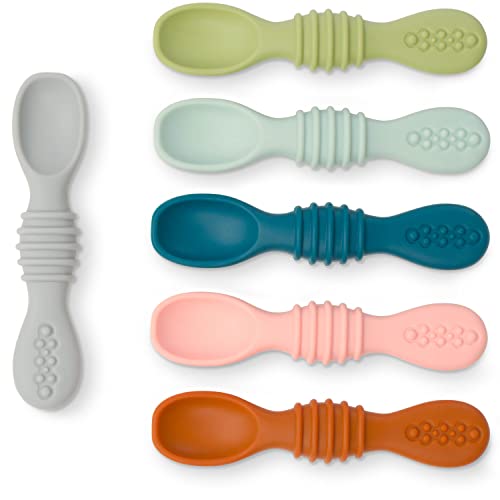
Simka Rose delivers the highest spoon count in this roundup with six pieces per pack, making it the go-to option for parents who want to pre-load multiple spoons before a meal and avoid frantic washing mid-feeding. Each spoon features a ribbed handle that provides extra tactile grip for small, uncoordinated hands, plus a textured paddle-style end that doubles as a gum soother during teething. The silicone is BPA-free and safe for both dishwasher and microwave use.
Parents who started with the Simka Rose spoons during the puree stage report they transitioned seamlessly into the teething phase because the textured end gives babies something safe to gnaw between bites. The ribbed texture also helps the spoon stay put when placed on a high-chair tray — it doesn’t slide around as easily as smooth-handled options. Multiple reviews note that after two years of intermittent use across two children, the spoons show no cracking, peeling, or significant wear.
The trade-off for the generous pack size is that each spoon feels slightly less substantial than single-piece molded competitors. The handle is a bit thinner than the NumNum or mushie designs, which some 6-month-olds grip easily but others may find slightly slippery when wet. Still, for the price-to-quantity ratio, this is the most practical option for daycare bags or grandparents’ houses where spoons tend to disappear.
Why it’s great
- Six spoons cover all meals with extras for travel
- Textured end serves as teether between bites
- Dishwasher and microwave safe for easy sanitizing
Good to know
- Handle may feel slightly thin for some tiny grips
- Not as flexible as higher-end silicone spoons
7. NUK Ms Rachel Tableware Set
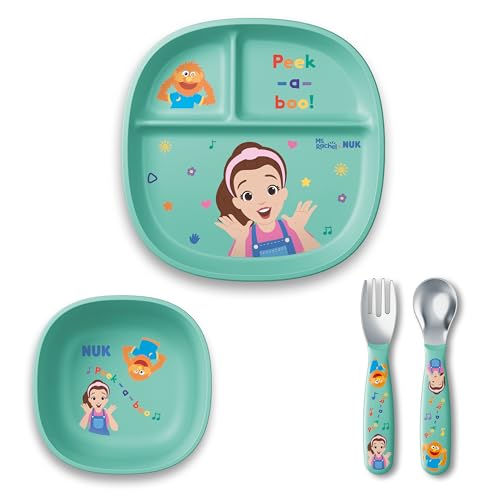
The NUK Ms Rachel set is the only complete dining solution in this guide, bundling a plate, bowl, fork, and spoon in one package. The fork and spoon feature stainless steel heads with easy-grip plastic handles that are shaped to keep the tips elevated off the table, similar to the Munchkin Raise design. The plate and bowl incorporate anti-slip silicone grips on the bottom, preventing the dreaded slide across the high-chair tray that sends food flying.
The character theme featuring Ms. Rachel and Herbie is a major selling point for toddlers who recognize the popular children’s show host — multiple parents report that the familiar faces motivated their picky eaters to actually sit at the table and engage with their food. All components are BPA-free and dishwasher-safe, so cleanup is consistent with the rest of the family’s dishes. The fork tines are blunt enough for safety but functional for spearing soft fruit chunks.
Some reviewers wished the plate had stronger suction to prevent throws from determined toddlers — the anti-slip bottom works well for sliding but won’t hold the plate in place if a child tries to flip it. The fork and spoon size is appropriate for the 12-month-and-up age range, but younger babies may find the handles slightly wide. For parents seeking a complete, themed starter set that includes everything from one brand, this is the most cohesive option available.
Why it’s great
- Complete plate, bowl, fork, and spoon set
- Anti-slip grips on plate and bowl bottoms
- Familiar Ms. Rachel characters engage picky eaters
Good to know
- Plate suction could be stronger for throwers
- Fork and spoon best for toddlers 12 months and up
FAQ
At what age should I switch from silicone to stainless steel baby utensils?
Can baby utensils go in the microwave or dishwasher?
How many baby utensils do I actually need for starting solids?
What does “pre-spoon” mean and does my baby need one?
Final Thoughts: The Verdict
For most users, the baby utensils winner is the NumNum GOOtensils because the flat pre-spoon design eliminates the wrist-rotation barrier that frustrates most early self-feeders. If you want a complete meal solution with a built-in hygiene rest, grab the Munchkin Raise Set. And for eco-conscious families seeking plastic-free materials, nothing beats the Avanchy Bamboo Spoons.