
Our readers keep the lights on and the weekend projects moving. As an Amazon Associate, I earn from qualifying purchases.
A flickering light, the hum of electronics going silent, and the sudden realization that your refrigerator’s contents are on a timer. For homeowners facing outages, the anxiety isn’t just about darkness—it’s about lost food, disrupted sleep, and the inability to power medical devices or home offices. A battery generator for home use solves this by converting stored electrical energy into a clean, silent, and instant backup supply, freeing you from the fumes, fuel runs, and noise of traditional gas generators.
I’m Rikta — the co-founder and writer behind FitlyFast. I’ve spent hundreds of hours dissecting the technical specifications of portable power stations, from their LiFePO4 cycle life ratings to their inverter topologies, to bring you a guide that cuts through the marketing noise and focuses on the metrics that actually matter for home backup.
To find the quietest, most reliable battery generator for home, I analyzed over a dozen leading models, comparing their usable watt-hours, inverter efficiency, recharge speeds, and safety certifications, ensuring this guide covers the best options for keeping your home essentials running during an outage.
How To Choose The Best Battery Generator For Home
A battery generator is a static appliance. Unlike portable power stations for camping, a home backup unit needs to sit quietly for months, then deliver steady power on demand. The main selection criteria revolve around capacity, inverter power, battery chemistry, and recharge flexibility. Below are the four decisive factors.
1. Battery Chemistry: LiFePO4 Is the Gold Standard
Lithium Iron Phosphate (LiFePO4) cells offer 3,000 to 6,000 charge cycles before dropping to 80% capacity, translating to a 10-17 year service life for daily use. Unlike traditional NMC (Nickel Manganese Cobalt) batteries, LiFePO4 is thermally stable and does not enter thermal runaway, making it safe for indoor operation. Avoid any budget-tier unit that still uses lead-acid or generic lithium-ion chemistries for home backup.
2. Inverter Type and Power Lifting
Home appliances like refrigerators and well pumps have inductive motors that draw 3-7x their running wattage for a split second during startup. A clean pure sine wave inverter is non-negotiable for sensitive electronics. Look for a “power lifting” or surge rating that exceeds the continuous output by at least 50%. Units with a 10ms UPS transfer time also protect computers and medical equipment from power glitches.
3. Capacity vs. Run Time: Wh Is Not the Full Story
Manufacturers advertise raw watt-hours (Wh), but the usable capacity is lower because inverters and BMS have idle draw. A premium unit may have a standby draw as low as 9-10W, whereas a budget competitor might draw 30W, draining the battery in days without any load. Divide the usable Wh by your essential load to get realistic run times. For most homes, 2,000 Wh to 3,000 Wh covers a fridge, lights, and a router for 12-30 hours.
4. Recharge Speed and Solar Compatibility
After a multi-hour outage, you want the battery generator to recharge as fast as possible. Models with 1,800W AC input can reach 80% in under an hour. MPPT solar input (1,200W-2,000W) lets you extend run times indefinitely during sunny days. Alternator charging, via a vehicle, is a bonus if you plan to evacuate with the unit.
Quick Comparison
On smaller screens, swipe sideways to see the full table.
| Model | Category | Best For | Key Spec | Amazon |
|---|---|---|---|---|
| EcoFlow DELTA 3 Max | Mid-Premium | Ultra-Fast Charging | 3,400W X-Boost | Amazon |
| BLUETTI Elite 200 V2 | Premium | Longest Lifespan | 6,000 cycles LFP | Amazon |
| Anker SOLIX C2000 Gen 2 | Premium | Lightweight & Fast Recharge | Full charge in 58 min | Amazon |
| PECRON F3000LFP | Mid-Range | Large Capacity Value | 3,072Wh / 3,600W | Amazon |
| BLUETTI AC200L | Mid-Range | Expandable to 8,192Wh | 30A RV output | Amazon |
| AFERIY P210 | Mid-Range | Best Value LFP | 2,048Wh / 48.5 lbs | Amazon |
| DJI Power 2000 | Premium | Fastest AC Recharge | 0-80% in 55 min | Amazon |
| Jackery Explorer 2000 v2 | Mid-Range | Compact 2kWh Class | 39.5 lbs / CTB tech | Amazon |
| Anker SOLIX S2000 | Mid-Range | 35-Hour Fridge Backup | 2010Wh LFP / 35.7 lbs | Amazon |
| Jackery HomePower 3000 | Premium | 3kWh Home Essential | 3,072Wh / 30A RV | Amazon |
| ABOK Ark3600 | Budget-Friendly | Maximum Capacity Value | 3,840Wh / 92 lbs | Amazon |
In‑Depth Reviews
1. EF ECOFLOW DELTA 3 Max
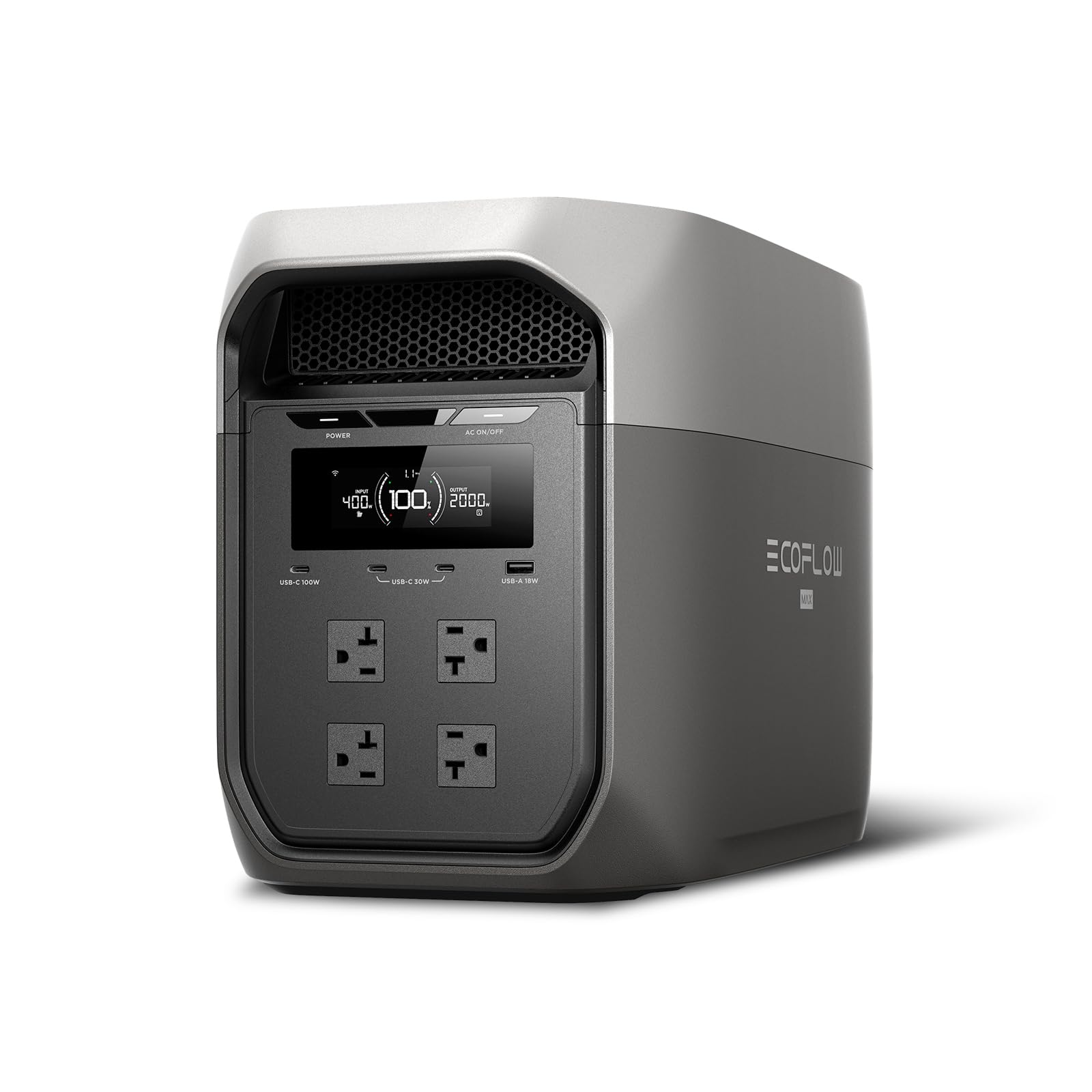
The EcoFlow DELTA 3 Max achieves an 80% charge in just 1.13 hours via X-Stream technology, making it the fastest-recharging unit in the 2kWh class. Its 3,400W X-Boost mode handles startup surges from full-size refrigerators and power tools without tripping the inverter. The unit weighs 63 pounds but features a dual-handle design for manageable lifting.
The LiFePO4 battery is rated for 4,000 cycles, delivering a 10-year service life under daily cycling. The built-in 10ms UPS guarantees seamless transfer during outages, protecting sensitive electronics. The EcoFlow app enables real-time monitoring and load scheduling, which is especially useful for managing priority circuits during long outages.
While the AC output is rated at 2,400W continuous, the X-Boost function extends usable power to 3,400W for resistive loads, though legacy reviews note that sustained inductive loads near the peak may trigger thermal limits. The included AC charging cable is standard, but the XT60i solar adapter is sold separately for full solar input capability.
Why it’s great
- Ultra-fast 0-80% AC charging in 68 min
- 3,400W X-Boost for surge handling
- Reliable 10ms UPS for sensitive gear
- Smart app with scheduling features
Good to know
- Heavy at 63 pounds for a 2kWh unit
- Solar cable adapter not included
2. BLUETTI Elite 200 V2

The BLUETTI Elite 200 V2 is the first portable power station with a CNAS-certified automotive-grade LiFePO4 battery, rated for 6,000 cycles while retaining 80% capacity. That translates to a 17-year lifespan for daily use, far exceeding the industry average. The 2,600W continuous inverter can push to 3,900W in power lifting mode via HyperWatt tech, running hair dryers and coffee makers without breaking a sweat.
Its standby power consumption is just 10W—three times lower than similar units—meaning less wasted energy when the unit is idle between outages. The Turbo mode recharges from 0-80% in 50 minutes using both AC and DC inputs simultaneously, while the silent mode keeps fan noise at 16-30 dB for overnight camping. The unit is 40% more compact than its predecessor, fitting easier under a desk or in an RV compartment.
The Elite 200 V2 lacks a dedicated 30A RV port, which may require a separate adapter for hardwired RV connections. The dual-handle design is robust, but at 53 pounds, it’s still a two-person lift for some users. The app supports three charging modes but lacks the granular scheduling found in EcoFlow’s interface.
Why it’s great
- Industry-leading 6,000 cycle LFP lifespan
- 3,900W power lifting for high-demand appliances
- Only 10W standby consumption
- Turbo charge to 80% in 50 min
Good to know
- No 30A RV outlet
- Heavier than some 2kWh competitors at 53 lbs
3. Anker SOLIX C2000 Gen 2
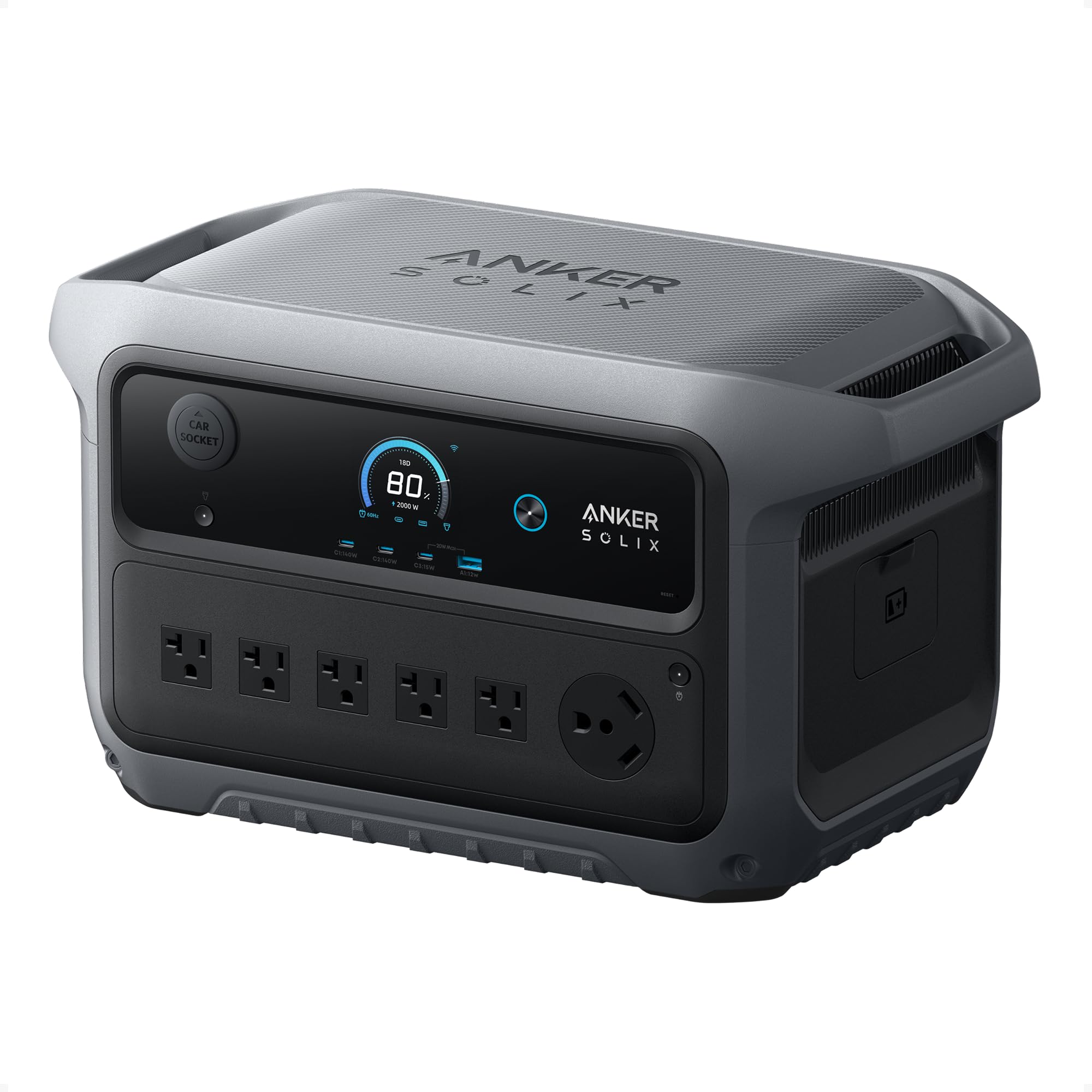
The Anker SOLIX C2000 Gen 2 recharges to 100% in just 58 minutes using high-speed AC input, the fastest full recharge time in its class. It delivers a 2,400W continuous output with a 4,000W peak, capable of starting most window AC units and RV air conditioners. The standby power draw is a minimal 9W, maximizing the usable energy for essential appliances like a fridge for up to 32 hours.
At 41.7 pounds, it is 25% lighter than the industry average for a 2kWh unit, making it one of the most portable high-capacity options. The build uses a slim vertical orientation (18.1 x 9.8 x 10.1 inches) that slides into tight spaces. The 800W alternator charging option is a standout feature, allowing for a full recharge from a vehicle in about three hours—eight times faster than a standard 12V socket.
The unit does not include an expansion battery out of the box; the optional add-on battery brings total capacity to 4kWh. The display is clear but lacks the real-time wattage graph found on more expensive units. User feedback indicates the cooling fan is audible under heavy loads but remains quiet during low-power use.
Why it’s great
- Full recharge in 58 minutes flat
- Extremely compact and lightweight
- 9W standby for minimal energy waste
- 800W alternator charging for road trips
Good to know
- Expansion battery sold separately
- Fan audible under high load
4. PECRON F3000LFP
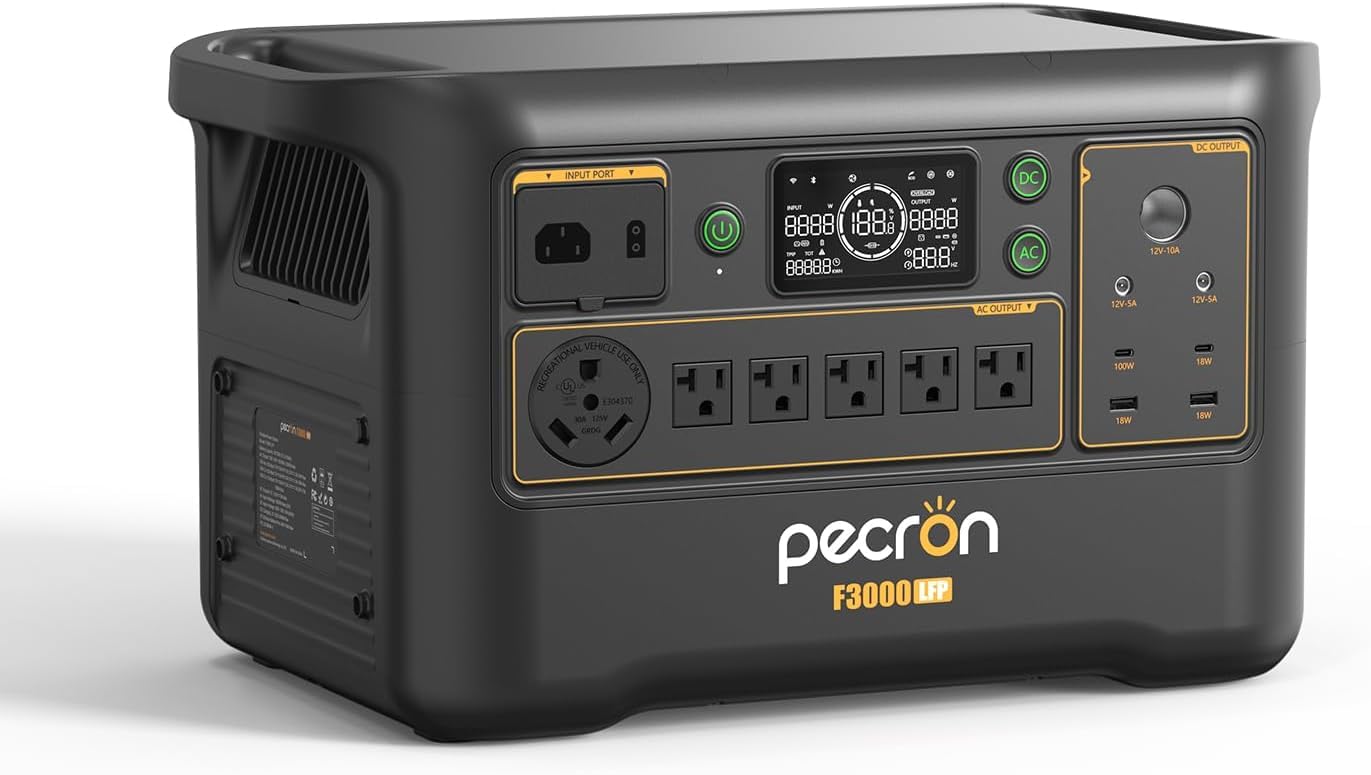
The PECRON F3000LFP delivers 3,072Wh of capacity and a 3,600W pure sine wave output at a price point typically reserved for 2kWh units. This makes it the strongest value proposition for homeowners who need a full day of run time for a refrigerator, lights, and a home office. The 1,800W AC input charges the unit from empty to full in just two hours.
It features 13 output ports, including six AC outlets and two USB-C ports with 100W PD for laptops. The 8-20ms UPS transfer time provides adequate backup for computers and networking gear. The app supports Bluetooth monitoring (Wi-Fi not available) and shows real-time power consumption and remaining charge estimates.
The unit weighs 63 pounds and lacks integrated wheels or a telescoping handle, so it’s best placed on a cart or in a permanent location. The cooling fan is noticeable above idle, especially during fast charging. The expansion battery cable (XT120-M) is sold separately, limiting scalability out of the box.
Why it’s great
- 3,072Wh capacity at a mid-range price
- 3,600W continuous pure sine wave output
- Full AC recharge in just 2 hours
- 13 ports including 100W USB-C PD
Good to know
- No integrated wheels or handle
- Fan is audible under load
5. BLUETTI AC200L

The BLUETTI AC200L is the upgraded successor to the AC200MAX, featuring a 2400W continuous output (200W more than its predecessor) and a 3,600W power lifting mode. Its defining feature is expandability: you can connect up to two B300K (5,528Wh total) or B230 batteries to reach a maximum of 8,192Wh, enough to power a whole-house load for extended outages.
A dedicated 30A RV port enables direct plug-and-play connection to travel trailers and fifth wheels, making it a favorite among RV owners. The 45-minute 0-80% charge via 2,400W AC input is one of the fastest in its class. The 1,200W solar input allows for a full charge in 1.7-2.2 hours under optimal sunlight. The app provides comprehensive monitoring for both grid and solar power.
Weighing 61.4 pounds, the AC200L is heavy for its capacity. The proprietary power cord is a common complaint: if lost, downtime is likely while waiting for a replacement. The unit also lacks a built-in handle recess on the sides, making two-person carries more awkward than other models.
Why it’s great
- Expandable to 8,192Wh for whole-home backup
- Integrated 30A RV outlet
- 45-minute 0-80% fast recharge
- 1,200W MPPT solar input
Good to know
- Heavy at 61 lbs
- Proprietary AC power cord
6. AFERIY P210

The AFERIY P210 offers a 2,048Wh LiFePO4 battery and a 2,400W pure sine wave inverter (4,800W peak) at a highly competitive price point. It is the lightest 2kWh unit in this group at just 48.5 pounds, making it easier to move than heavier competitors. The <10ms UPS response time protects computers, and the 16 output ports—including four USB-C (one at 100W)—provide exceptional device compatibility.
The included app supports energy management and automation scheduling, though some early buyers reported initial pairing glitches. The unit is rated for 3,500 cycles and comes with a 7-year extended warranty (2 years beyond standard). The silent operation at 16 dB under normal load ensures it won’t disturb sleep when running essential bedroom appliances overnight.
Some users noted that the display screen can black out after extended solar charging, requiring a reset via button presses. The scheduled charging feature is also absent from the current firmware, which is a limitation for those who want to charge only during off-peak grid hours. Customer service response time varies, though most issues are resolved within a few interactions.
Why it’s great
- Great value for a 2kWh LFP unit
- Lightweight at 48.5 lbs for the capacity
- 16 ports including 100W USB-C
- 7-year extended warranty
Good to know
- Display screen glitch reported by some users
- No scheduled charging mode
7. DJI Power 2000
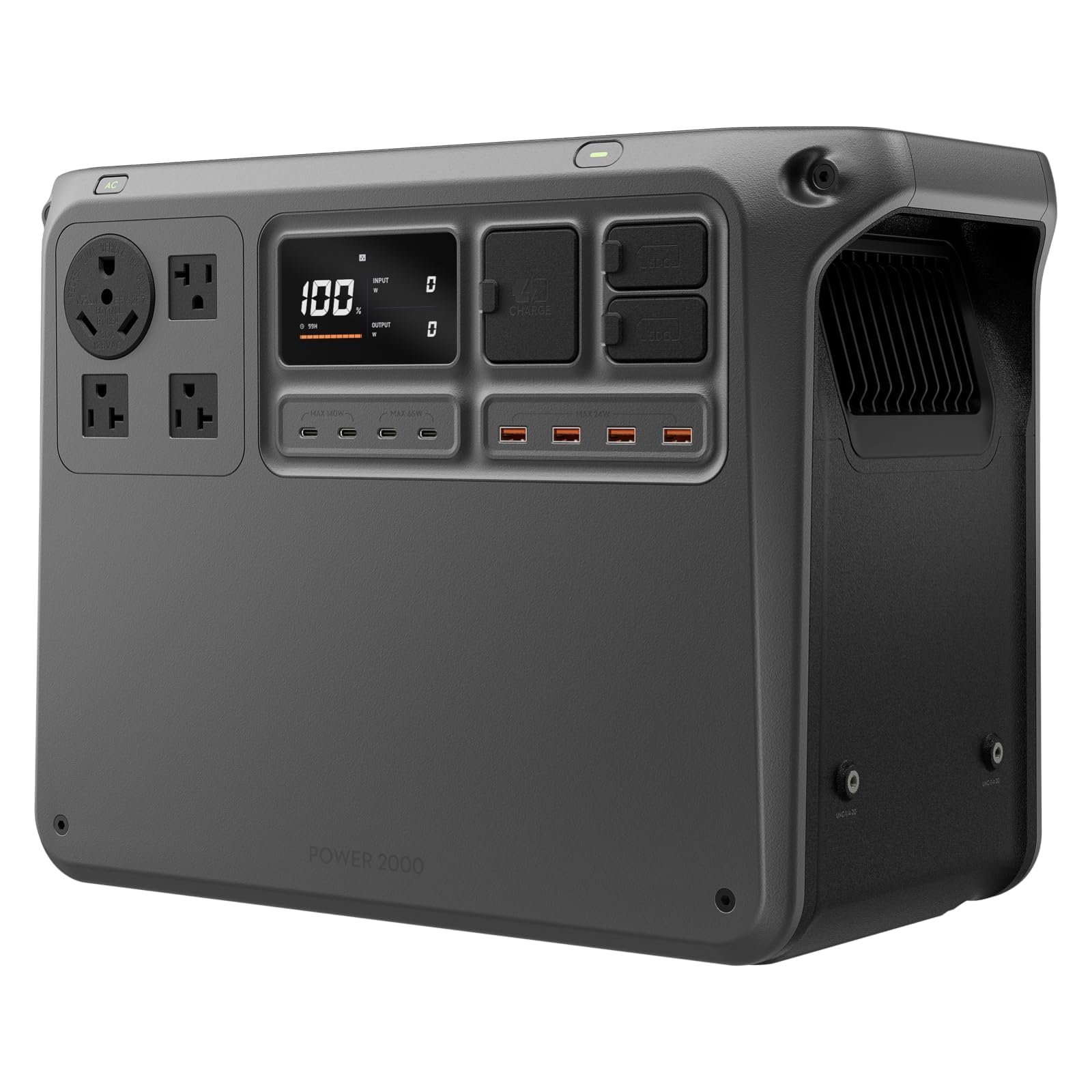
The DJI Power 2000 leverages the brand’s drone battery expertise to deliver a 2,048Wh LiFePO4 unit that recharges to 80% in just 55 minutes—the fastest AC recharge in this lineup. The 3,000W continuous output (4,000W peak) can handle 99% of household appliances, including kettles and power tools. The unit supports expansion up to 22.5kWh with proprietary batteries, providing multi-day backup for essential circuits.
Safety is a core focus: the battery pack uses a sub-nano coating and flame-retardant housing with 26 temperature sensors. The 10ms UPS is twice as fast as the earlier DJI Power 1000, ensuring uninterrupted power for computers. Operation noise is under 30 dB, making it suitable for sleeping areas. The DJI Home app allows wireless remote control without an additional dongle.
The biggest drawback is the proprietary SDC connectors used for expansion, limiting compatibility to DJI’s own ecosystem. Some early units shipped as “gray market” Hong Kong versions set to 50 Hz, causing compatibility issues in North America; buyers should verify the regional model. A small number of users reported heating and odor issues under sustained heavy load, though this appears to be limited to early production batches.
Why it’s great
- Fastest AC recharge: 0-80% in 55 min
- Expandable to 22.5kWh total capacity
- 3,000W continuous / 4,000W peak
- Very quiet operation under 30 dB
Good to know
- Proprietary SDC connectors limit expansion
- Verify correct 60 Hz model for North America
8. Jackery Explorer 2000 v2

The Jackery Explorer 2000 v2 uses the company’s Cell-to-Body (CTB) technology to reduce weight to just 39.5 pounds—41% lighter than typical 2kWh units—while maintaining a 2,042Wh capacity. It is the lightest large-capacity battery generator in this comparison, making it the best choice for users who need to move the unit between floors or into a vehicle regularly.
The 2,200W inverter handles most household essentials, and the AC fast charging fills to 80% in 66 minutes (102 minutes for full charge via Emergency Super Charge mode in the app). The silent charging mode operates at 30 dB, preserving quiet nighttime operation. The 20ms UPS transfer is UL1778 certified, providing protection for sensitive electronics during grid flickers.
The solar barrel ports are reported to flex inward under pressure, which could compromise long-term connection reliability. Bluetooth connectivity is inconsistent for some users, requiring occasional re-pairing. The unit lacks a 30A RV port, limiting its use for direct connection to travel trailers without an adapter.
Why it’s great
- Industry-leading light weight: 39.5 lbs
- CTB technology for compact design
- Silent charging mode at 30 dB
- UL1778 certified UPS
Good to know
- Fragile solar barrel connectors
- Bluetooth connectivity inconsistent
9. Anker SOLIX S2000
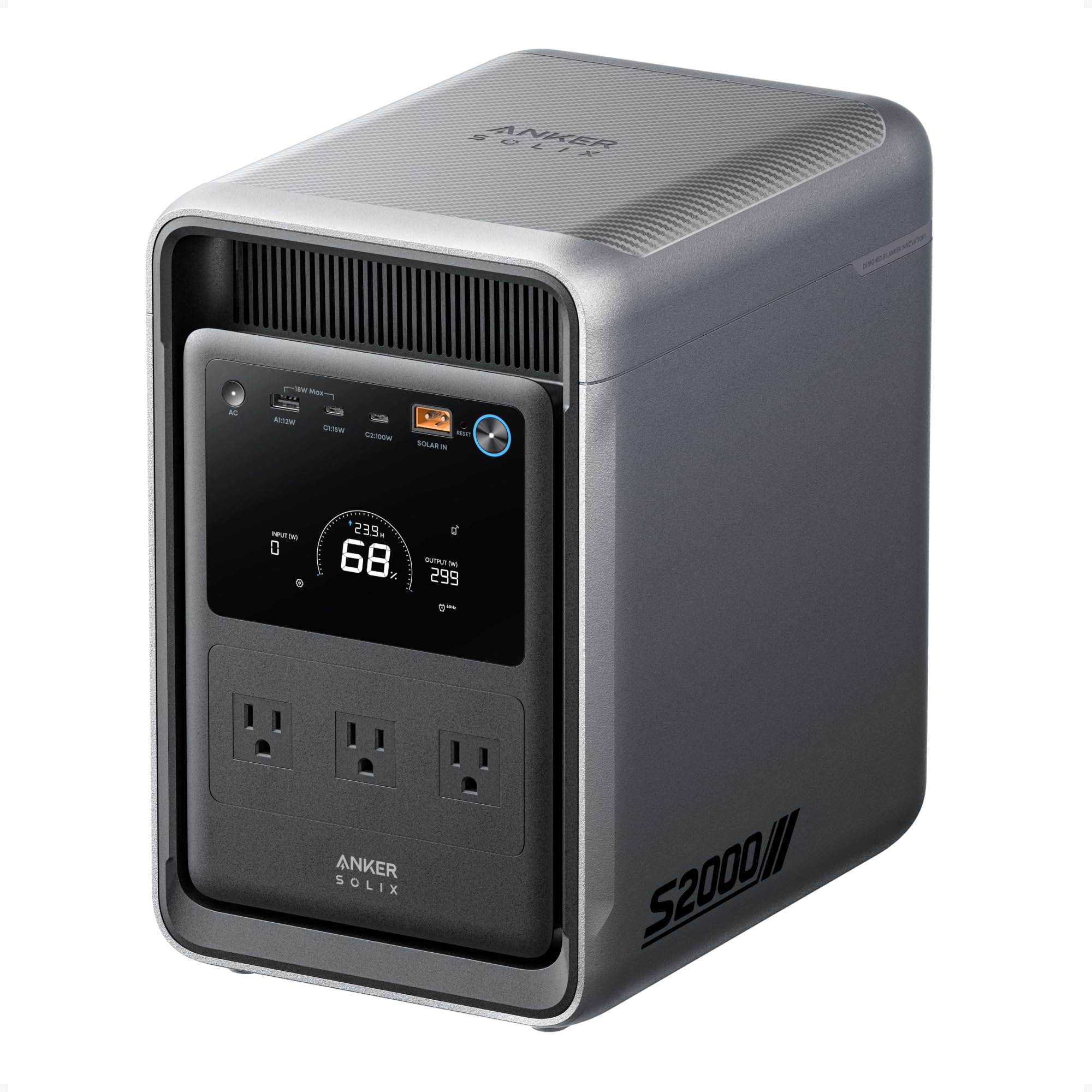
The Anker SOLIX S2000 is the smallest and lightest 2kWh power station on this list, measuring just 8.2 x 11.1 x 12.7 inches and weighing 35.7 pounds—30% smaller and 25% lighter than the industry average. Its 1,500W continuous output (3,000W peak) powers 99% of home essentials, including a refrigerator for up to 35 hours thanks to a 6W idle power draw and 10% higher inverter efficiency.
The battery uses 314Ah LFP prismatic cells rated for 10,000 charge cycles, translating to a 15-year lifespan under daily cycling—the highest cycle rating in this comparison. The unit recharges via six methods, including 400W solar input, AC+ solar combination, and alternator charging. The front and rear outlet layout keeps wires tidy for permanent desk or closet installation.
The 1,500W output is lower than most competitors, limiting its ability to start larger appliances like window AC units or well pumps. It also lacks a 12V DC port, which is a significant omission for users who rely on car accessories or 12V refrigerators. The front/back handhold ledges are shallow and non-grippy, making lifting awkward despite the low weight.
Why it’s great
- Smallest and lightest 2kWh unit available
- 10,000-cycle LFP battery for 15-year life
- 35-hour fridge backup with ultra-low idle draw
- Six recharge methods for flexible use
Good to know
- Only 1,500W continuous output—low for 2kWh class
- No 12V DC port
10. Jackery HomePower 3000
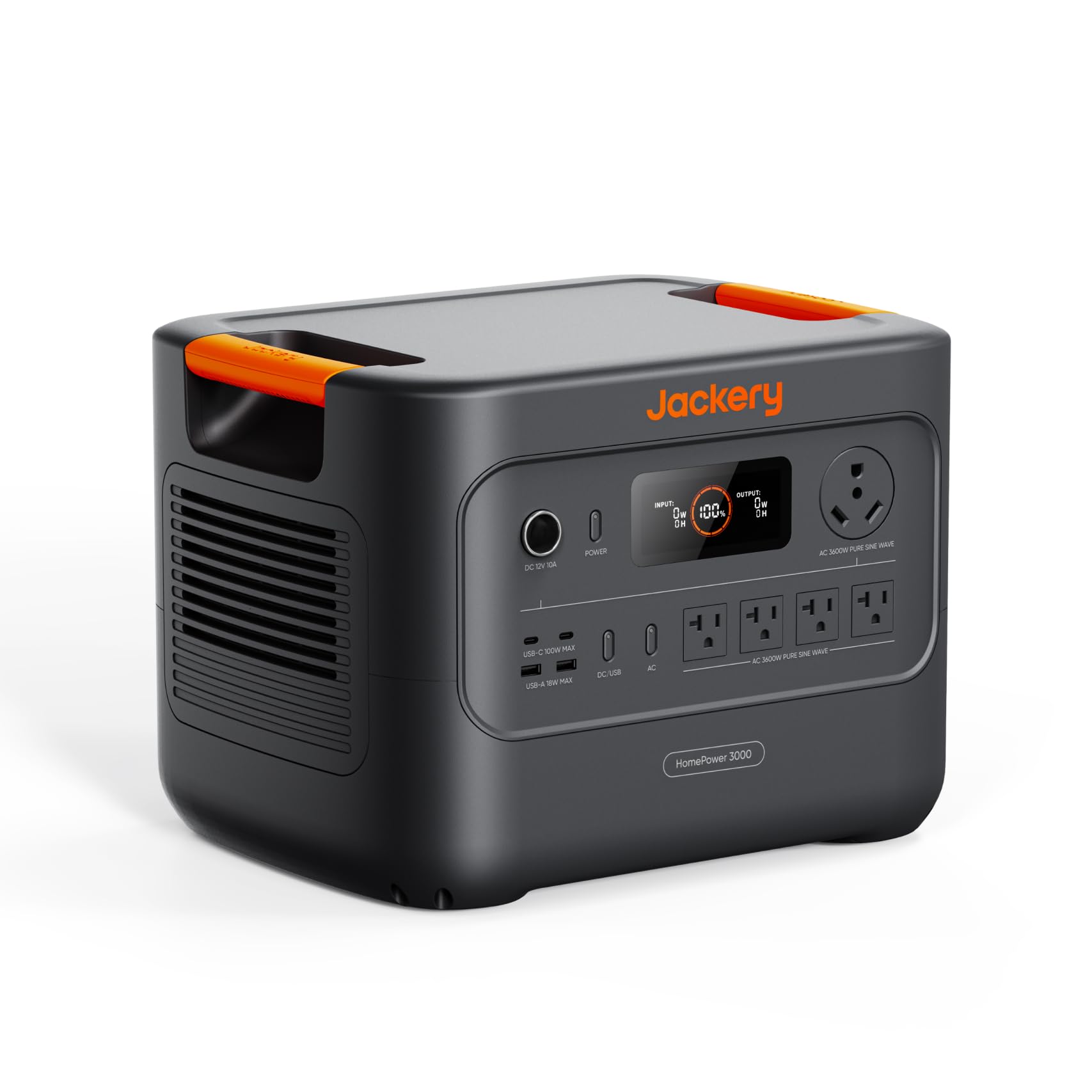
The Jackery HomePower 3000 delivers 3,072Wh of LFP battery capacity with a 3,600W inverter (7,200W surge), making it one of the most powerful units in this guide. Its built-in TT-30 RV port enables direct plug-and-play connection to travel trailers, eliminating the need for a bulky adapter. The CTB technology makes it 47% smaller and 43% lighter than similar 3kWh models at 59.5 pounds.
The hybrid AC+DC recharge fills the unit in just 1.7 hours, while the exclusive ChargeShield 2.0 algorithm optimizes charging speed while extending battery life to 4,000 cycles at 70% capacity retention. The ≤20ms UPS is UL certified, safeguarding computers and medical equipment. Solar input supports up to 800W, providing renewable top-off during long outages.
The cooling fan runs at a noticeable noise level around 60 dB whenever any load is applied, making it unsuitable as a silent UPS for a bedroom. Some customers report that Jackery’s warranty policy excludes units purchased from third-party sellers like Amazon (only direct purchases are covered), which is a significant consideration for prospective buyers.
Why it’s great
- 3,072Wh with 7,200W surge capability
- Built-in TT-30 RV port for direct RV hookup
- CTB tech makes it 43% lighter than peers
- 1.7-hour hybrid recharge time
Good to know
- Fan is loud (~60 dB) under any load
- Warranty may not cover Amazon purchases
11. ABOK Ark3600
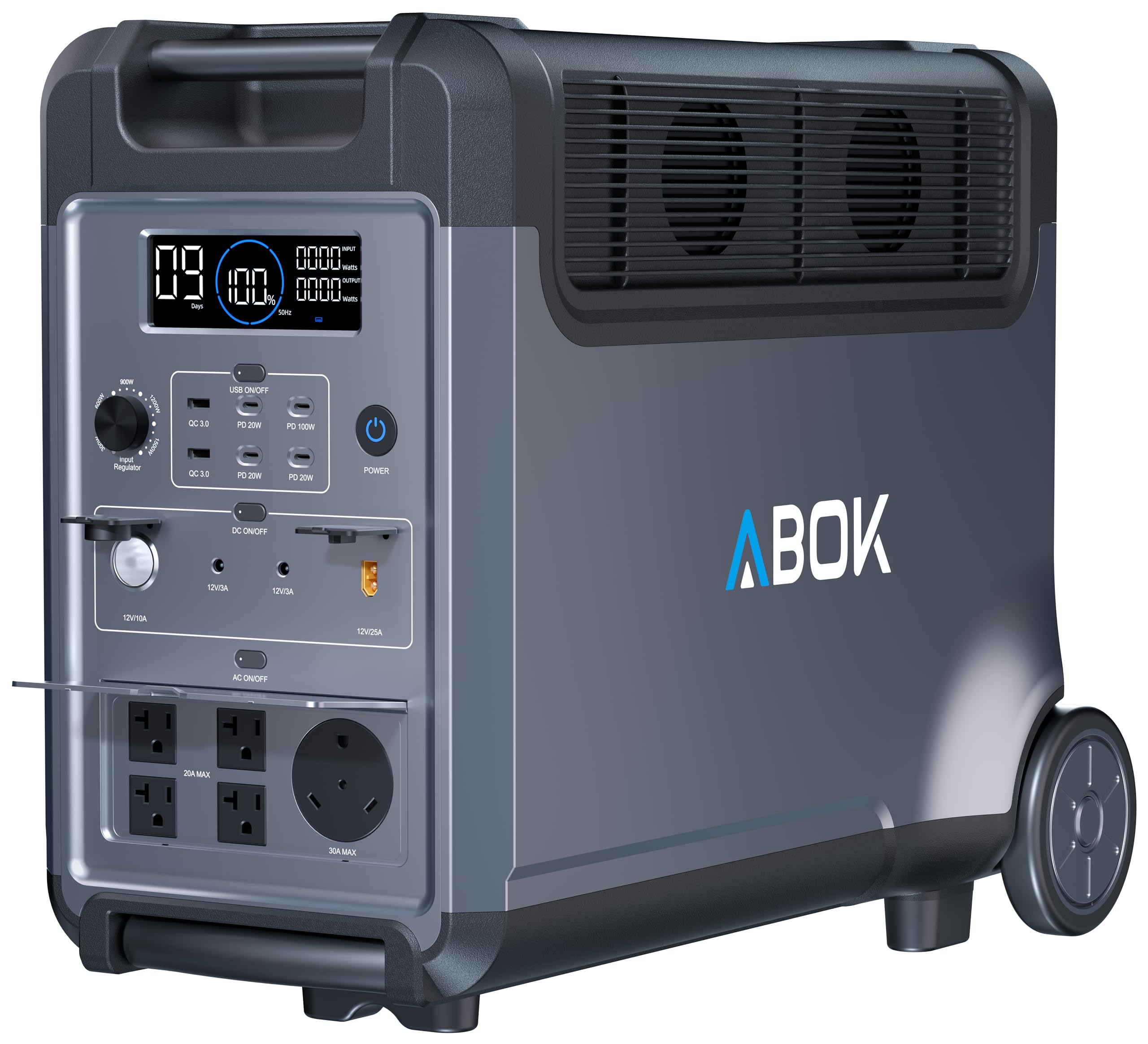
The ABOK Ark3600 provides the largest capacity in this comparison at 3,840Wh, expandable to 11,520Wh, with a 3,600W rated output (4,500W peak)—all at a price point that undercuts most 2kWh units from premium brands. This makes it the clear winner for budget-conscious homeowners who prioritize raw capacity over brand reputation. The unit includes 15 output ports, including one 30A AC outlet and a 100W USB-C PD port.
The built-in telescoping handle and durable wheels solve the weight issue (92 pounds), allowing easy garage-to-house transport. The 1,500W AC input plus 2,000W solar input gives a combined charge time of just 1.29 hours. The LiFePO4 battery is rated for 4,000 cycles with a 10-year service life. The Bluetooth app provides remote monitoring and basic controls.
Build quality and customer support are less established than major brands; some users report difficulty reaching the service team. The app interface is functional but lacks the polish of EcoFlow or Anker software. The unit does not support 240V output, limiting its use for electric dryers or EV chargers. The documentation can be sparse, particularly for configuring the charge limits.
Why it’s great
- Highest base capacity: 3,840Wh
- Expandable to 11,520Wh for whole-home backup
- Wheeled design for easy mobility
- Very competitive pricing for capacity
Good to know
- Heavier than any other unit at 92 lbs
- Customer support less responsive than top brands
- No 240V output
FAQ
How do I calculate the runtime for my refrigerator during a power outage?
Can I run a portable air conditioner directly from a battery generator?
What is the difference between LFP and NMC batteries for home backup?
Final Thoughts: The Verdict
For most users, the battery generator for home winner is the EcoFlow DELTA 3 Max because it combines the fastest AC recharge, robust 3,400W surge handling, comprehensive app control, and a proven LFP battery at a competitive price point. If you want the longest battery lifespan with automotive-grade cells, grab the BLUETTI Elite 200 V2. And for maximum raw capacity without breaking the bank, nothing beats the ABOK Ark3600 with its 3,840Wh base and wheeled chassis.