
Our readers keep the lights on and the weekend projects moving. As an Amazon Associate, I earn from qualifying purchases.
Carbon monoxide is a colorless, odorless gas that can accumulate in your home from furnaces, water heaters, and vehicles even in a garage. A battery-operated detector is the only line of defense that keeps working when a power outage strikes — making it a non-negotiable layer of household safety.
I’m Rikta — the co-founder and writer behind FitlyFast. I’ve spent hundreds of hours analyzing UL and ETL certification requirements, electrochemical sensor sensitivity curves, and real-world battery longevity data to build a reliable comparison of these units.
Whether you need a unit for a cabin, an RV, or a bedroom with no hardwired wiring, you need a detector you can trust. This guide breaks down the seven top contenders to help you find the best battery operated carbon monoxide detector for your specific situation.
How To Choose The Best Battery Operated Carbon Monoxide Detector
Choosing a battery-operated CO detector requires looking beyond just the price tag. The sensor type, battery design, and certification standards directly affect how reliably the unit will protect your household over its lifespan. Here are the three most critical factors to evaluate.
Sensor Type: Electrochemical vs. Photoelectric
All reputable carbon monoxide detectors use an electrochemical sensor. This sensor contains a chemical solution that reacts with CO gas, generating an electrical current that triggers the alarm. Photoelectric sensors, by contrast, are designed for smoke detection and will not detect CO gas at all. Always confirm that a combination unit includes a dedicated electrochemical sensor for carbon monoxide.
Battery Design: Sealed 10-Year vs. Replaceable AA/9V
Sealed lithium battery models offer a full decade of maintenance-free operation with no battery changes required — ideal for hard-to-reach ceiling locations or vacation properties. Replaceable battery models (AA or 9V) give you the flexibility to refresh power quickly, but require annual battery swaps to maintain protection. Consider your access and willingness to perform routine maintenance when deciding between the two.
Certification Standards: UL 2034 vs. ETL
UL 2034 is the dominant safety standard for CO alarms in North America, testing for sensor accuracy, alarm sound output, and resistance to nuisance triggers. ETL certification indicates the product meets equivalent ANSI/UL standards, but is verified by Intertek rather than Underwriters Laboratories. Either certification is valid, but UL 2034 is the most commonly referenced benchmark in the industry.
Quick Comparison
On smaller screens, swipe sideways to see the full table.
| Model | Category | Best For | Key Spec | Amazon |
|---|---|---|---|---|
| X-Sense SC06 | Combo Unit | Sealed 10-year protection | 10-Year Sealed Lithium Battery | Amazon |
| X-Sense XP0H-SN | Combo + LCD | Real-time CO level display | Built-in LCD Screen | Amazon |
| Kidde 900-CUDR-V | Voice Combo | Voice hazard alerts | Voice Alarm (Fire/CO/Battery) | Amazon |
| First Alert SMCO100 | Precision Combo | Reduced nuisance alarms | Precision Detection Sensor | Amazon |
| Siterwell GS828A | Portable CO | Travel and multi-room use | LCD + 3-Color LED | Amazon |
| First Alert SMICO100 | Value Combo | Budget-friendly 2-in-1 | 9V Battery Powered | Amazon |
| Kidde KN-COB-B-LP | CO Only | Simple dedicated CO alarm | 3x AA Batteries Included | Amazon |
In‑Depth Reviews
1. X-Sense SC06 Smoke & Carbon Monoxide Alarm
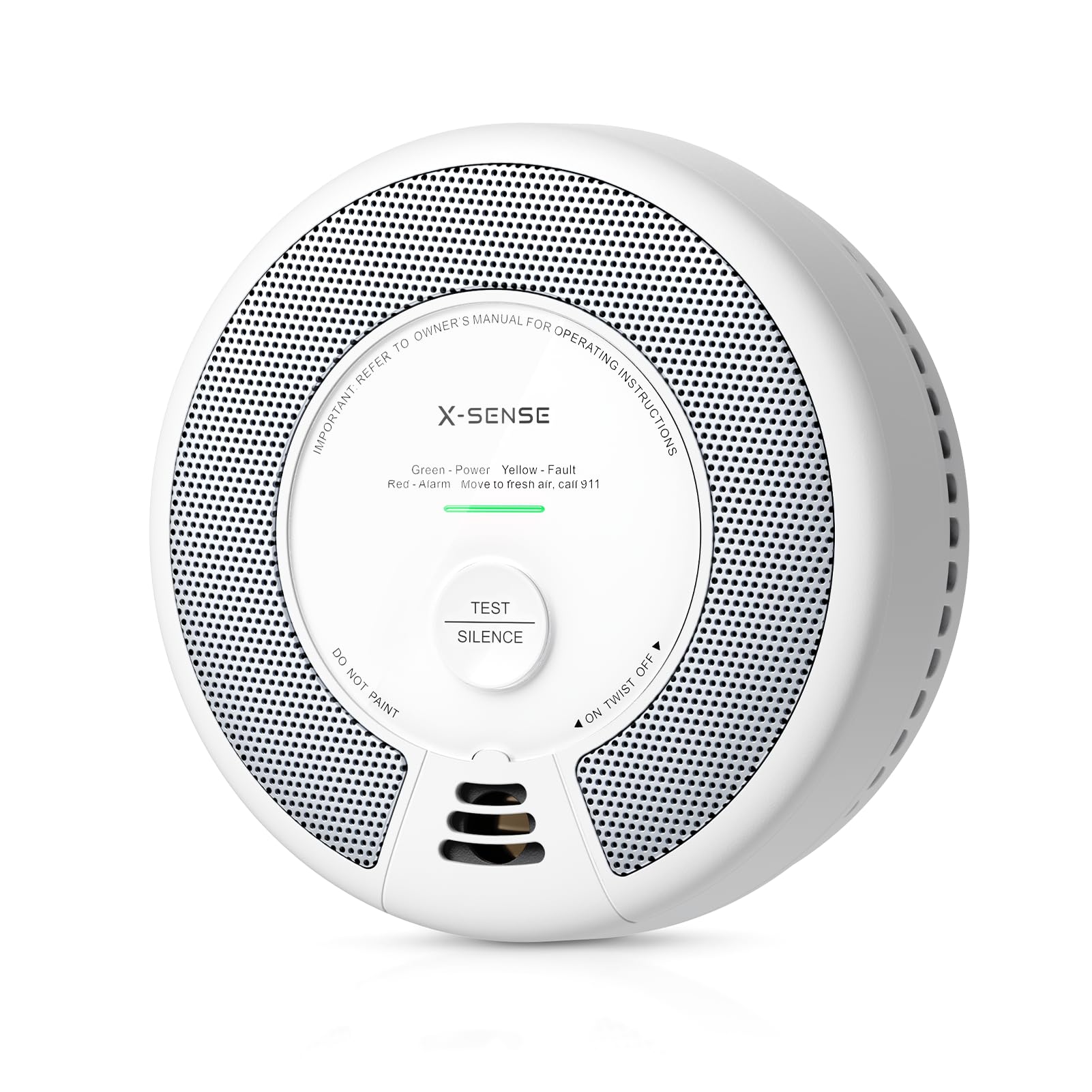
The X-Sense SC06 combines a sealed 10-year lithium battery with both photoelectric smoke and electrochemical CO sensors, making it a complete safety solution that requires zero battery maintenance for a decade. The 85 dB alarm provides a loud, clear warning, and the unit is certified to both UL 217 and UL 2034 standards, ensuring reliable performance against both fire and carbon monoxide threats.
Installation is straightforward with the included mounting bracket and screws, and the one-button test/silence operation simplifies routine checks. The unit’s premium PC plastic build feels solid and well-constructed, not flimsy like some budget alternatives. Customers consistently praise the easy setup and loud alarm volume.
The primary drawback is that a small percentage of units have reported nuisance CO alarms after about 14 months of use. Additionally, the sealed battery design means the entire unit must be replaced after 10 years, though that’s standard for this category. For the peace of mind of a decade-long, hassle-free detector, this is a top-tier choice.
Why it’s great
- Sealed 10-year lithium battery eliminates annual battery swaps
- Combines smoke and CO detection in one UL-certified unit
- Loud 85 dB alarm with fast-response sensors
Good to know
- Some units may experience nuisance CO alarms within the first 14 months
- No wireless interconnectivity with other alarms
2. X-Sense XP0H-SN Smoke & CO Alarm with LCD
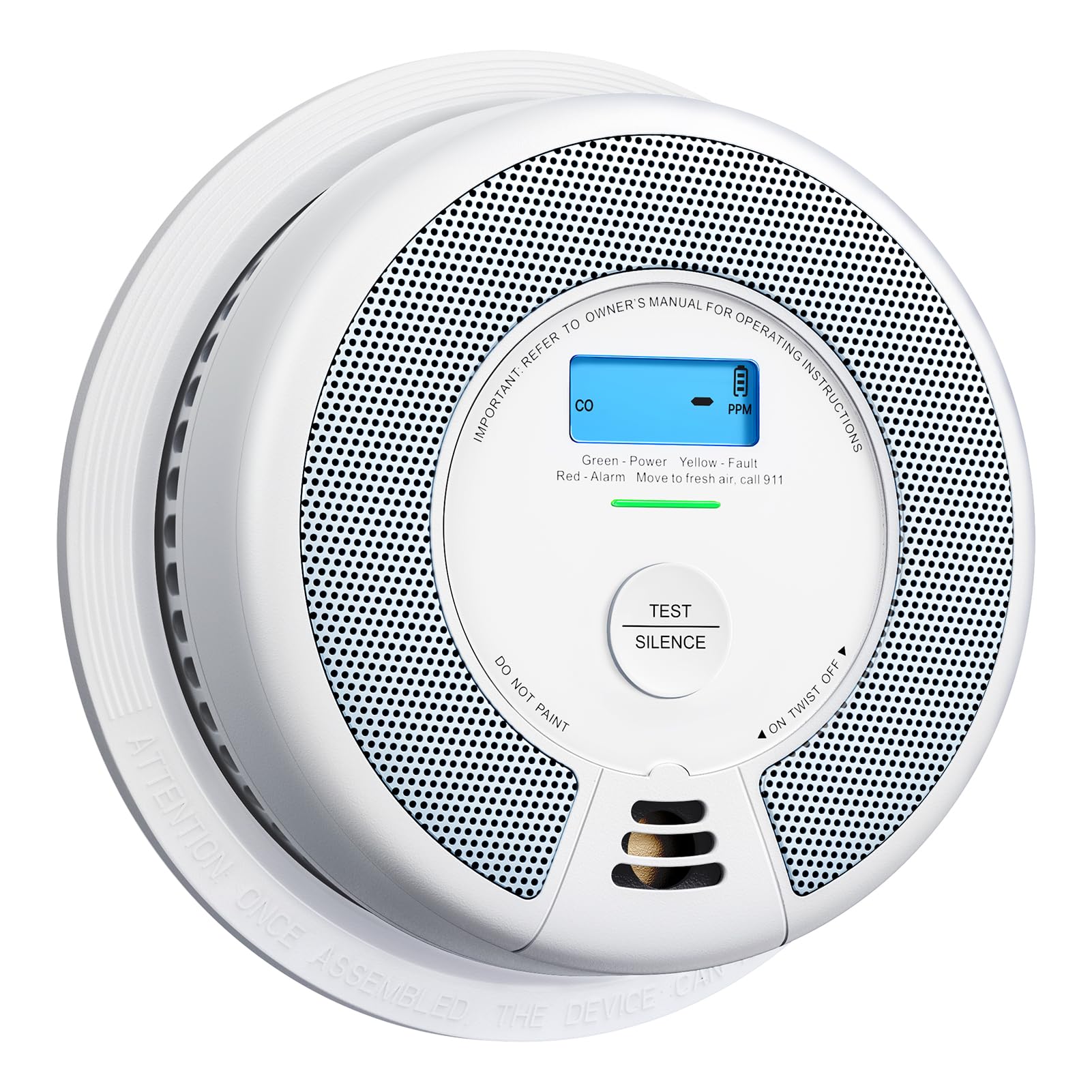
The X-Sense XP0H-SN builds on the same 2-in-1 platform as the SC06 but adds a valuable LCD screen that displays real-time CO levels and remaining battery life. This feature allows you to see exactly what’s happening in your environment without waiting for an alarm, giving you early awareness of rising CO concentrations before they reach dangerous thresholds.
The extra-large 5.7-inch mounting bracket is a thoughtful design detail that covers old screw holes and ceiling stains from previous detectors, resulting in a clean, finished look even when replacing older units. The built-in self-test runs automatically every 60 seconds, checking sensors, electronics, and battery status continuously. Customers report that installation is simple and the LCD is easy to read at a glance.
Like the SC06, this unit uses a sealed lithium battery for 10 years of maintenance-free operation. The LCD screen stays off in standby mode to avoid light disturbance during sleep. Some users note that the unit does not support wireless interconnection, so it operates as a standalone detector. For anyone who wants to monitor CO levels visually, this is the model to choose.
Why it’s great
- LCD displays real-time CO concentration and battery status
- Large mounting bracket covers holes from old detectors
- Automated self-test every 60 seconds
Good to know
- No wireless interconnection with other units
- LCD only lights during alarm or test mode
3. Kidde 900-CUDR-V Smoke & CO Detector with Voice Alerts

The Kidde 900-CUDR-V stands out by using a voice alarm that announces the specific hazard — “Fire!” for smoke or fire events and “Warning Carbon Monoxide” for CO gas — so you know exactly what threat is present without having to interpret beep patterns. The 85-decibel siren still blares, but the voice component adds critical clarity during an emergency.
Powered by two AA batteries, this unit features 24/7 self-testing of its internal components, and LED indicators provide visual status: green for normal operation, amber for a fault, and red for an active alarm. The photoelectric smoke sensor is optimized for smoldering fires, while the electrochemical sensor handles CO detection. The included mounting bracket allows for installation in four different orientations, making placement flexible in tight spaces.
Some users have reported premature failure with previous Kidde models, with a small number of units experiencing false alarms or chirping after a few months. The UL listing and 10-year limited warranty provide some reassurance, but it’s worth noting that the warranty covers the alarm only, not the batteries. For those who value knowing exactly what’s triggering the alarm, the voice guidance is a compelling feature.
Why it’s great
- Voice alerts distinguish between fire and CO hazards
- 24/7 self-testing for continuous readiness
- Four mounting orientations for flexible installation
Good to know
- Some reports of premature failure within months of use
- 10-year warranty applies to alarm only, not batteries
4. First Alert SMCO100 Combination Smoke & CO Alarm

The First Alert SMCO100 utilizes the brand’s Precision Detection technology, which complies with newer industry standards designed to reduce nuisance alarms from cooking activities while still providing early warning for genuine fire emergencies. This is a significant improvement over older models that could be set off by toast or searing meat.
As a 2-in-1 unit, it covers both smoke and carbon monoxide threats in a single device. The test/silence button makes it easy to verify functionality, and the end-of-life warning ensures you know when it’s time for replacement after a decade of use. Powered by two AA batteries, the unit is easy to install and maintain without an electrician.
Some users have noted that the mounting hole pattern may differ from older detectors, requiring minor adaptation if replacing an existing unit. The SMCO100 is a solid mid-range choice that benefits from First Alert’s trusted brand reputation without the higher price of premium models. It’s a reliable, straightforward upgrade for anyone replacing outdated detectors.
Why it’s great
- Precision Detection reduces nuisance alarms from cooking
- AA battery powered for easy maintenance
- End-of-life warning for timely replacement
Good to know
- Mounting holes may not match old detector bases
- No voice alerts or LCD display
5. Siterwell GS828A Portable CO Detector with LCD
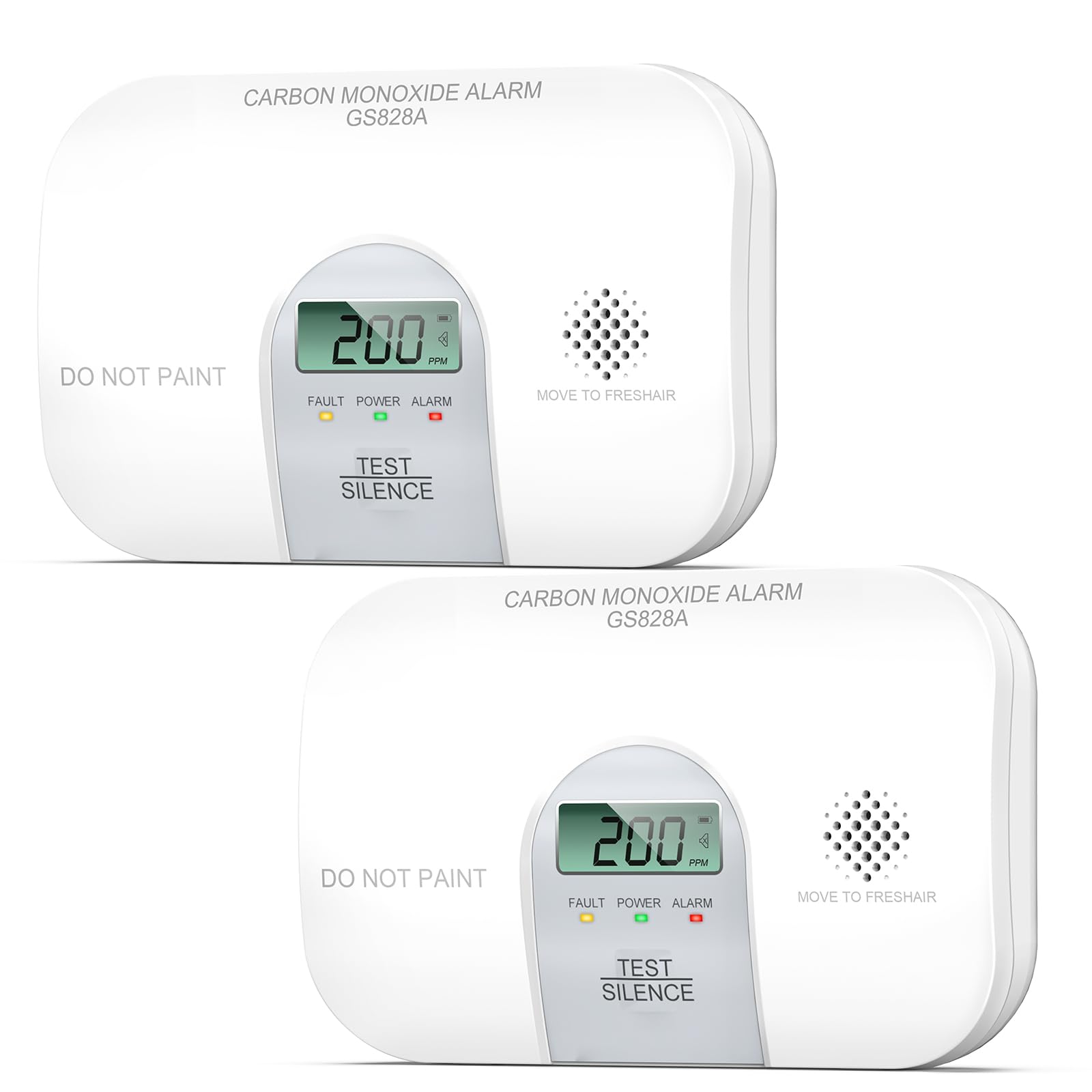
The Siterwell GS828A is designed for flexibility — it can be wall-mounted like a traditional detector or placed on a tabletop as a portable unit, making it a strong choice for RVs, hotel rooms, garages, or seasonal cabins. The built-in LCD screen shows real-time CO levels, and a three-color LED indicator flashes red, green, or yellow to communicate alarm, power, or fault status at a glance.
Powered by two AA alkaline batteries, the unit offers a 10-year product life with battery replacements needed along the way, not a sealed 10-year battery. The ETL listing confirms it meets safety standards equivalent to UL 2034. The 85 dB alarm is loud enough to wake you from sleep, and the compact design means it won’t protrude awkwardly from a wall or shelf.
A few users have reported receiving units with manufacturing defects, though this seems uncommon. The flashing green LED that pulses every 40 seconds may be distracting in a dark bedroom. For travelers or multi-room coverage, the portability and LCD monitoring make this a versatile option at a reasonable investment.
Why it’s great
- Can be wall-mounted or used as a portable tabletop unit
- LCD display shows real-time CO concentration
- ETL listed for safety compliance
Good to know
- Occasional reports of manufacturing defects
- Flashing LED every 40 seconds may be distracting in bedrooms
6. First Alert SMICO100 Combination Smoke & CO Alarm

The First Alert SMICO100 brings the same Precision Detection technology found in the SMCO100 but uses a standard 9V battery instead of AA batteries. This makes it an easy drop-in replacement for older detectors that use the 9V format, especially in RVs and older homes where the battery compartment is designed for that shape.
The unit provides reliable 2-in-1 protection against smoke and carbon monoxide, with a test/silence button and an end-of-life warning. The Precision Detection sensor is designed to comply with new industry standards that reduce nuisance alarms from cooking, which is a common complaint with older detectors. Installation is straightforward, and the unit comes with a 10-year warranty.
Some users have noted that the packaging may not be a standard First Alert box and that included batteries may be generic brands. The 9V battery format means you’ll need to replace batteries more frequently than with AA-powered units, as 9V batteries have lower total capacity. For a budget-friendly entry into dual detection, however, this model delivers reliable performance.
Why it’s great
- Precision Detection reduces false alarms from cooking
- Standard 9V battery fits older mounting bases
- 10-year warranty for long-term peace of mind
Good to know
- 9V battery has shorter life than AA options
- Packaging and included battery may be generic
7. Kidde KN-COB-B-LP Nighthawk Carbon Monoxide Alarm

The Kidde KN-COB-B-LP is a dedicated carbon monoxide alarm that uses three AA batteries (included) for operation, with no smoke detection component. This is a pure CO-only device, making it ideal for scenarios where you already have smoke alarms but need added CO protection — such as near a furnace, water heater, or connected garage.
The unit features a test/reset button, a seven-year end-of-life warning, and UL certification. Kidde claims a 40 percent longer life than competing CO alarms, though this likely refers to sensor longevity rather than battery life. The compact, thermostat-like design blends in well on a wall, and the two-screw installation is simple even for beginners. A real-world review from an off-grid cabin owner confirms it saved them from low-oxygen conditions on multiple sub-freezing nights.
The main limitation is that batteries are reported to be somewhat difficult to install, and the unit cannot use rechargeable batteries. There are also no extra bells or whistles — no LCD, no voice alerts, no combination detection. For a no-frills, reliable CO-only detector that works during power outages, this remains a proven workhorse at an entry-level investment.
Why it’s great
- Dedicated CO-only sensor for focused protection
- Proven reliability in off-grid and cabin environments
- Compact design blends into any room
Good to know
- Battery compartment design makes installation tricky
- No smoke detection or LCD display
FAQ
How many battery-operated CO detectors do I need in my home?
Will a battery-operated CO detector work during a power outage?
What does the end-of-life warning on a CO detector mean?
Final Thoughts: The Verdict
For most users, the best battery operated carbon monoxide detector winner is the X-Sense SC06 because it combines a sealed 10-year battery with certified dual smoke and CO detection at a reasonable investment. If you want real-time CO level visibility, grab the X-Sense XP0H-SN with its built-in LCD screen. And for portable use in RVs, cabins, or hotel rooms, nothing beats the flexible Siterwell GS828A.