
Our readers keep the lights on and the weekend projects moving. As an Amazon Associate, I earn from qualifying purchases.
A vocal microphone that sounds natural, rejects stage noise, and survives the road is the backbone of any serious setup, but the search often ends in buyer’s remorse over thin sound or fragile build. The gap between a muddy recording and a polished performance is almost always the mic in your hand—not the mixer, the room, or the software. Choosing right the first time saves you hours of re-recording and the cost of an upgrade you didn’t plan for.
I’m Rikta — the co-founder and writer behind FitlyFast. This guide is built on hundreds of hours spent comparing frequency response curves, polar pattern rejection specs, self-noise ratings, and real-world durability feedback to separate the mics that deliver professional-grade results from those that just look the part.
Whether you are equipping a home studio, a podcast corner, or a live stage, finding the right tool involves weighing sensitivity against background rejection and connector type against your existing gear. This guide cuts through the noise to present the best affordable vocal microphone for every scenario.
How To Choose The Best Affordable Vocal Microphone
Your choice between a dynamic or a condenser microphone dictates everything from your required audio interface to the environment you can record in. Each type has a distinct advantage for specific use cases, and knowing the difference prevents costly mistakes.
Dynamic vs. Condenser: The First Fork in the Road
Dynamic microphones are rugged workhorses built for high sound pressure levels and live environments. They require no external power, resist feedback on stage, and naturally reject ambient room noise. Condenser microphones, by contrast, are far more sensitive and capture a wider frequency range, making them ideal for studio vocals, voiceovers, and acoustic instruments—but they demand 48V phantom power and a quiet recording space. For an affordable vocal microphone, the right path depends entirely on where and how you plan to use it.
Polar Patterns and Vocal Isolation
A cardioid polar pattern is the standard for vocal work because it picks up sound from the front while rejecting noise from the sides and rear. This keeps your voice prominent and reduces bleed from nearby instruments or computer fans. Omni-directional mics pick up everything in a 360-degree radius and are rarely the right choice for a single vocalist. Bidirectional and stereo patterns add versatility but are typically unnecessary unless you are recording a duet or a room ambience.
Connectivity: XLR vs. USB
XLR microphones offer the highest audio quality and compatibility with professional gear—mixers, audio interfaces, and PA systems—but require an external device to deliver the signal to your computer. USB microphones contain a built-in preamp and analog-to-digital converter, allowing you to plug directly into a laptop or PC with zero extra gear. For live performance, XLR is non-negotiable. For home recording and streaming on a budget, USB simplifies the setup dramatically.
Frequency Response and Sensitivity
A microphone’s frequency response tells you how it handles different pitches. A flat, natural response is ideal for versatile recording, while a presence boost in the upper-mid range (around 2–8 kHz) helps vocals cut through a dense mix. Sensitivity, measured in decibels, indicates how efficiently the mic converts sound into an electrical signal—higher sensitivity means cleaner gain from your preamp but also more vulnerability to background noise. Self-noise, also in decibels, should be as low as possible (below 20 dB is excellent for a condenser) to avoid a hiss floor in quiet passages.
Quick Comparison
On smaller screens, swipe sideways to see the full table.
| Model | Category | Best For | Key Spec | Amazon |
|---|---|---|---|---|
| Audio-Technica AT2020 | Condenser XLR | Home studio & voiceover | Self-noise: 20 dB(A) | Amazon |
| Shure PGA58 | Dynamic XLR | Live vocals & rehearsals | Cardioid pickup pattern | Amazon |
| Sennheiser e 935 | Dynamic XLR | Pro live stage & band | Neodymium magnet with boron | Amazon |
| AKG P220 | Condenser XLR | Detailed instrument & vocal capture | Bass-cut filter switch | Amazon |
| Behringer B-1 | Condenser XLR | Budget studio recording | Gold-sputtered diaphragm | Amazon |
| Audio-Technica AT2020USB-X | Condenser USB | Plug-and-play streaming & podcast | 24-bit / 96 kHz AD converter | Amazon |
| Blue Yeti Blackout | Condenser USB | Versatile multipattern recording | Four pickup patterns | Amazon |
In‑Depth Reviews
1. Audio-Technica AT2020 Cardioid Condenser (XLR)

Its custom-engineered low-mass diaphragm delivers a silky extended frequency response that captures vocal nuance without exaggerated sibilance, and the cardioid pattern provides enough side rejection to control room reflections when paired with basic acoustic treatment.
With a self-noise rating of 20 dB(A), the AT2020 sits near the threshold of audible hiss in quiet passages, but for the price point that trade-off is expected and easily managed with proper mic placement. It handles high SPL without distortion, making it equally capable on a loud guitar cabinet or a powerful vocalist.
The robust metal construction feels solid in the hand, though the included stand mount is basic — upgrading to a shock mount is a worthwhile investment. Requires 48V phantom power via an audio interface, so factor that into your total setup cost. For the buyer seeking an affordable vocal microphone that has defined the benchmark for entry-level studio quality, this is still the one to beat.
Why it’s great
- Warm, detailed sound competes with mics costing two to three times more
- Durable metal build that holds up to years of daily use
- Wide dynamic range handles everything from whispers to loud vocals
Good to know
- Requires an audio interface with phantom power — not plug-and-play
- Self-noise at 20 dB(A) is noticeable in very quiet recordings
- No included shock mount or pop filter
2. Shure PGA58 Dynamic Microphone
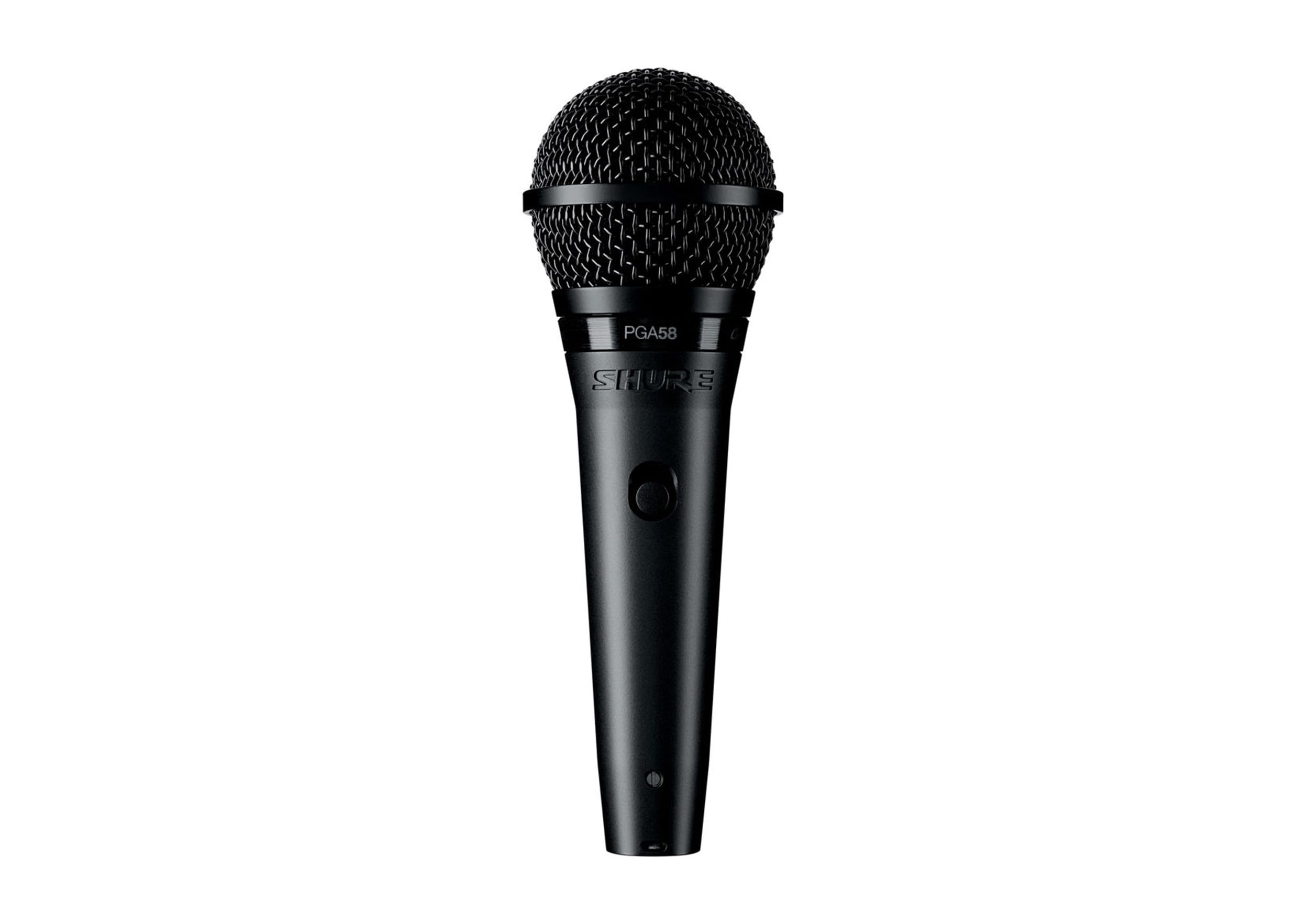
The Shure PGA58 brings the trusted brand DNA of the SM58 family to a more accessible price bracket without sacrificing the fundamental dynamic performance that live sound engineers rely on. Its tailored cartridge design emphasizes vocal clarity in the critical midrange, helping the voice sit naturally above a band mix without excessive EQ.
The cardioid polar pattern does a commendable job of rejecting monitor bleed and ambient stage noise, and the built-in on/off switch gives the performer discrete control — a feature often missing on pricier stage mics. The included 15-foot XLR-to-QTR cable, stand adapter, and zipper pouch make this a complete out-of-box solution for first-time buyers.
Build quality is solidly Shure: the metallic black finish and grille feel roadworthy, and the response remains consistent even after repeated drops. It lacks the high-end sparkle of a condenser, but for live vocals, karaoke, or spoken-word events, this is hard to beat as an affordable vocal microphone that works every time.
Why it’s great
- Complete kit with cable, stand adapter, and carry pouch
- Durable metal construction built for the road
- On/off switch adds live performance control
Good to know
- Dynamic capsule means lower sensitivity than condenser mics
- Frequency response lacks the airy top-end of studio condensers
- Not ideal for quiet or acoustic recording
3. Sennheiser e 935 Dynamic Microphone
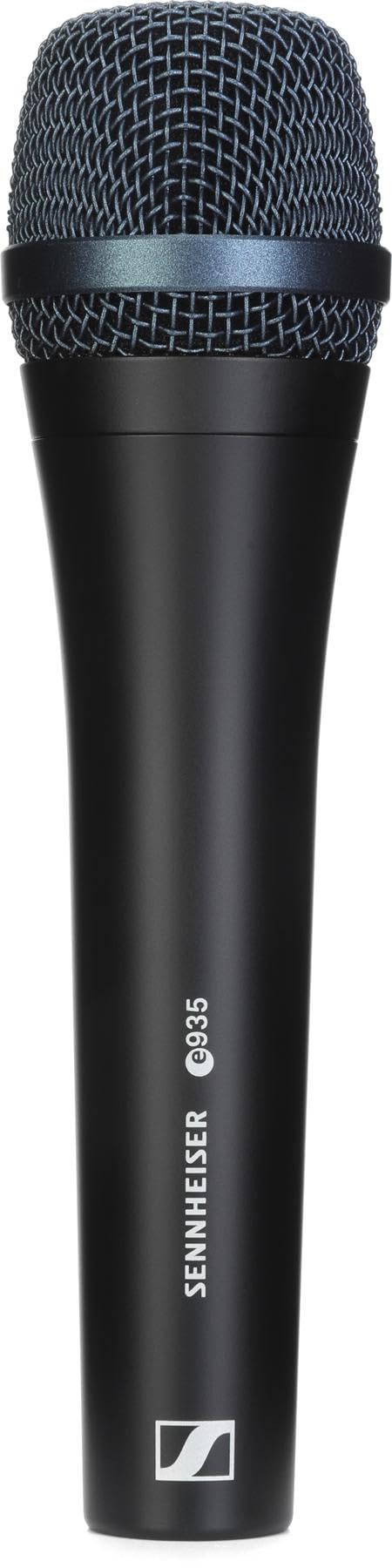
The Sennheiser e 935 is a reference-grade dynamic microphone that competes directly with industry icons while offering a warmer, more articulate top end. The neodymium ferrous magnet with boron construction keeps the output stable in any climate, which is a real advantage for outdoor stages and humid environments.
Its cardioid pattern is tightly controlled, providing excellent separation between the vocalist and surrounding instruments — feedback rejection is genuinely impressive even with loud stage wedges. The frequency response is tailored with a gentle presence lift around 5 kHz that adds intelligibility without harshness.
Constructed in Germany from a single piece of metal, the e 935 feels almost indestructible and comes with a 10-year warranty. It lacks an on/off switch, which is standard for professional-grade stage mics, and the price sits at the top of this list. But for live performers who need an affordable vocal microphone that delivers elite durability and vocal clarity night after night, this investment pays for itself.
Why it’s great
- Warm, detailed sound with excellent vocal isolation
- Climate-stable neodymium magnet design
- Unbreakable metal build with 10-year warranty
Good to know
- No on/off switch — always live when plugged in
- Premium price compared to other dynamic mics on this list
- Heavy weight may require a sturdy mic stand
4. AKG P220 Perception Studio Microphone
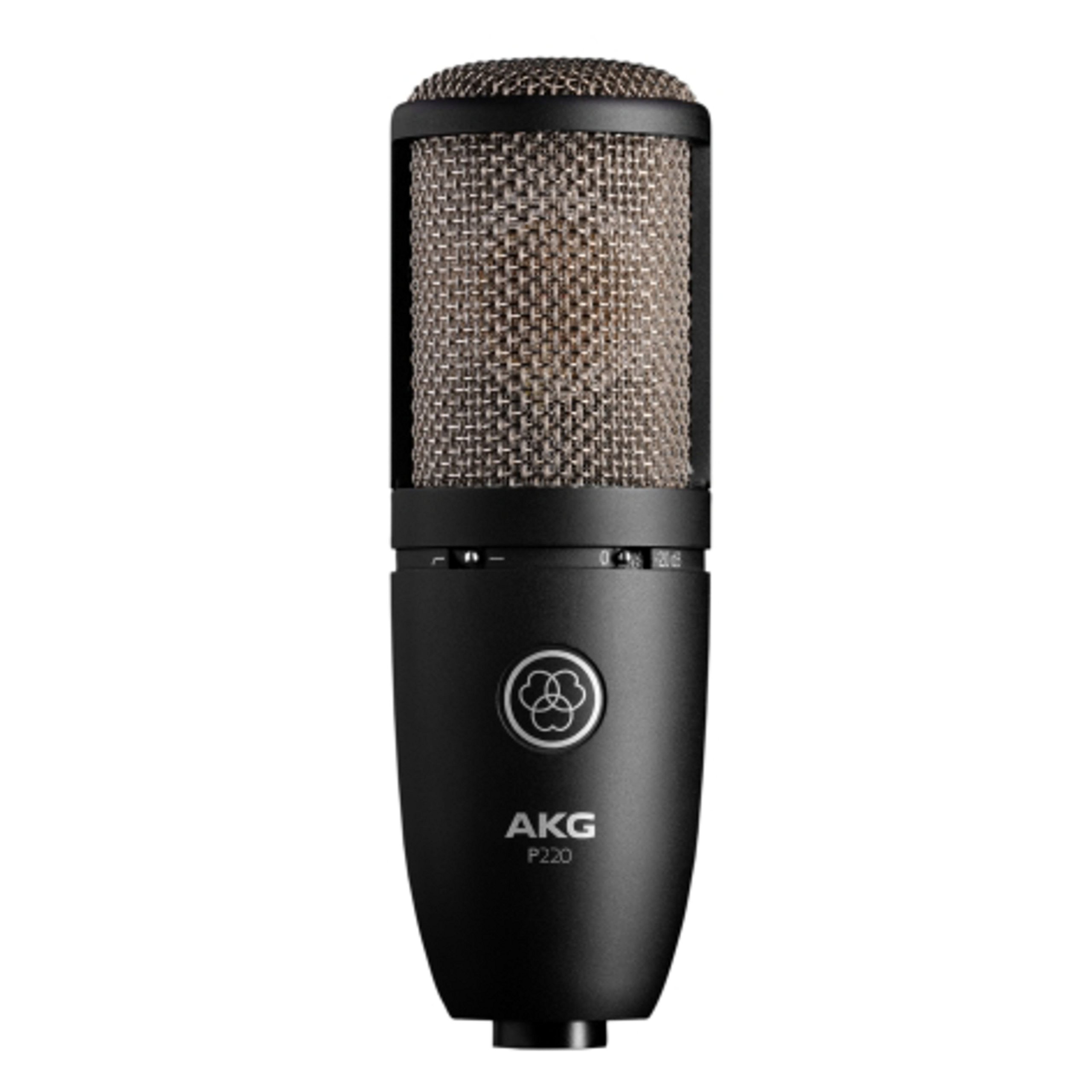
The AKG P220, designed and engineered in Vienna, brings true studio heritage to the affordable bracket. Its large-diaphragm condenser capsule captures a creamy, detailed sound that works especially well on vocals and acoustic instruments, with a warmth that many users compare to mics several tiers higher.
A switchable bass-cut filter is a standout feature at this price, allowing you to roll off low-frequency rumble from HVAC systems or footfall noise without needing external EQ. The all-metal body feels substantial and roadworthy, and the included shock mount adds immediate value over competitors that sell the mount separately.
Reports of inconsistent finish quality on the blue paint and a fragile shock mount design are worth noting — the sonic performance is excellent, but physical durability has room for improvement. This is an affordable vocal microphone that rewards careful handling with professional-grade recordings.
Why it’s great
- Warm, detailed sound signature ideal for vocals
- Built-in bass-cut filter eliminates low rumble
- Includes shock mount — saves extra cost
Good to know
- Paint finish may scratch easily
- Shock mount reported as fragile by some users
- Requires 48V phantom power and quiet room
5. Behringer B-1 Studio Condenser Microphone

The Behringer B-1 packs a gold-sputtered large-diaphragm capsule into a compact silver body, delivering a flat, accurate frequency response that is rare at its price point. It is extremely sensitive — users consistently report hearing sounds from across the room — which is a double-edged sword that demands a treated recording space.
Despite the budget-friendly positioning, the B-1 produces recordings that many compare favorably to mics costing several times more. The included foam windscreen and hard case add practical value, and the shock-mounted capsule helps minimize handling noise. It is also small enough to fit into tight overhead or instrument setups.
The aluminum enclosure feels lighter than all-metal competitors, and the high sensitivity means background noise (computer fans, traffic) will be captured unless controlled. For the home studio builder on a tight budget who needs an affordable vocal microphone that delivers studio-grade detail, the B-1 is a compelling entry point.
Why it’s great
- Flat, accurate sound rivals much pricier mics
- Excellent sensitivity captures fine vocal detail
- Includes foam windscreen and hard case
Good to know
- Very sensitive — picks up room noise easily
- Aluminum build feels less rugged than steel options
- Requires 48V phantom power and quiet environment
6. Audio-Technica AT2020USB-X Cardioid Condenser USB Microphone

The Audio-Technica AT2020USB-X transfers the legendary AT2020 capsule into a USB format with upgraded internals. Its high-resolution AD converter operates at 24-bit / 96 kHz, delivering exceptional clarity that surpasses typical plug-and-play mics, and the USB-C connectivity ensures broad compatibility with modern laptops and tablets.
A soft-touch capacitive mute button and a two-state LED ring (blue when live, red when muted) streamline your workflow during streams or calls, and the built-in headphone jack provides zero-latency monitoring — a critical feature for natural vocal delivery. The cardioid pattern keeps background noise manageable in untreated rooms.
The included custom desk stand is stable and attractive, though the microphone’s sensitivity means it will pick up keyboard clicks and room echoes if not positioned carefully. It also still draws power when the computer is off, leaving the LED lit. For content creators who want an affordable vocal microphone that sounds professional without an audio interface, this is the cleanest path.
Why it’s great
- Professional sound without needing an audio interface
- 24-bit / 96 kHz converter for studio-level resolution
- Zero-latency headphone monitoring
Good to know
- Sensitive to background noise — pop filter recommended
- LED stays on when computer is off
- No mute or gain control on the body
7. Logitech Creators Blue Yeti Blackout USB Microphone

The Blue Yeti Blackout is perhaps the most recognizable USB microphone for good reason: its three-capsule array and four selectable polar patterns (cardioid, omni, bidirectional, stereo) let you switch from solo podcast to dual-interview to room recording without swapping hardware. It is a genuine multi-tool for the content creator.
Onboard controls for headphone volume, pattern selection, instant mute, and mic gain put every parameter at your fingertips, and the Blue VO!CE software adds broadcast-grade effects and modulation for streaming. The heavy, all-metal construction gives it a premium desk presence that rivals much pricier gear.
The Yeti’s size and weight — over two pounds — require a sturdy desk or a dedicated boom arm, and its sensitivity to plosives means a foam windscreen is almost mandatory. It also uses micro-USB rather than USB-C, which feels dated. Still, as an affordable vocal microphone for the creator who needs one mic to do everything, it remains a category benchmark.
Why it’s great
- Four polar patterns for unmatched recording versatility
- Full onboard controls — gain, mute, pattern, volume
- Heavy metal build with professional desk aesthetic
Good to know
- Very heavy — requires a stable stand or arm
- USB 2.0 and micro-USB connector
- Sensitive to plosives — foam shield recommended
FAQ
Do I need an audio interface to use an XLR microphone?
Why is phantom power required for condenser mics but not dynamic mics?
Can I use a vocal microphone for recording acoustic guitar or drums?
What does cardioid polar pattern mean and why does it matter?
Final Thoughts: The Verdict
For most users, the best affordable vocal microphone winner is the Audio-Technica AT2020 because it delivers studio-grade clarity and durability at a price that leaves room for essential accessories like a pop filter and shock mount. If you need a mic for live stage work, grab the Sennheiser e 935 for its indestructible build and superior feedback rejection. And for the creator who wants plug-and-play versatility, nothing beats the Blue Yeti Blackout for its four polar patterns and onboard control in a single USB cable setup.