
Our readers keep the lights on and the weekend projects moving. As an Amazon Associate, I earn from qualifying purchases.
That patchy, brown lawn that turns spongy underfoot isn’t thirsty—it’s suffocating. Compacted soil locks out the oxygen, water, and nutrients your grass roots need to breathe, and without mechanical intervention, that turf will continue to decline. A manual aeration tool is the most direct, cost-effective way to break up that hardpan and restore your lawn’s vitality without renting a gas-powered behemoth.
I’m Rikta — the co-founder and writer behind FitlyFast. I’ve spent hours dissecting the material science, tine geometry, and real-world durability data behind the leading manual aeration tools to help you cut through the marketing noise and pick the right tool for your soil type.
After comparing spike depths, hollow-tine clog resistance, handle ergonomics, and overall build quality across seven top models, I’ve assembled this practical guide to the best aeration tools on the market today.
How To Choose The Best Aeration Tools
Not all manual aeration tools work the same way. The fundamental decision comes down to whether you need a spike aerator, which simply pokes holes, or a core/plug aerator, which physically removes a plug of soil. Your soil composition, lawn size, and physical stamina should guide that choice.
Spike Aerators vs. Core Aerators
A spike aerator uses solid tines to slice into the ground, creating channels for air and water. It is best for light to moderate compaction in loamy or sandy soils and is generally lighter and faster to use. A core aerator uses hollow tines to extract a soil plug, which is better for heavy clay soils and severe compaction because it physically removes material, giving roots room to spread. Core aerators are more effective but require more downward force and effort per step.
Tine Length, Thickness, and Material
The tines are the only part of the tool that touches your soil. Longer spikes (at least 2.75 inches) reach deeper to break up sub-surface compaction. Thicker spikes (at least 2/5 inch diameter) create larger holes that stay open longer. For core aerators, stainless steel tines resist rust and maintain their cutting edge far longer than painted or powder-coated steel. Heat-treated steel is a sign of quality, as it resists bending when you encounter rocks or roots.
Handle Height and Foot-Plate Design
A handle that reaches your waist or higher prevents you from hunching over, which directly reduces back strain. For spike aerators, a wide, textured foot plate allows you to transfer your full body weight into the tool without your foot slipping off. For core aerators, an elevated crossbar or pedal that keeps your shoe clear of the ejecting soil plugs is essential to avoid jamming the mechanism. Ergonomic rubber grips at the top reduce blisters during longer sessions.
Build Construction and Weight
Powder-coated steel frames resist rust and handle the torque of twisting in hard ground. Welded joints should be inspected for weak points, as cheaper tools often fail at the connection between the tines and the foot plate. A tool that weighs between 4 and 5.5 pounds offers a good balance between durability and portability. Lighter tools under 3 pounds may flex or bend under heavy use, while tools over 6 pounds can become exhausting to carry around the yard.
Quick Comparison
On smaller screens, swipe sideways to see the full table.
| Model | Category | Best For | Key Spec | Amazon |
|---|---|---|---|---|
| Landzie Hollow Tine Aerator | Core / Plug | Heavy clay & large lawns | 42″ height; 3 self-cleaning hollow tines | Amazon |
| Dolibest 4-Plug Coring Aerator | Core / Plug | Medium lawns & wet soil | SUS 304 stainless steel tines & tray | Amazon |
| EEIEER Lawn Aerator | Core / Plug | DIY lawn perfectionists | 38″ height; 3 tines with soil storage basket | Amazon |
| Colwelt Spike Aerator | Spike | Small to medium lawns | 3.5″ spike length; 2/5″ spike diameter | Amazon |
| Jardineer Spike Aerator | Spike | Clay soil & budgets | 12 heat-treated steel spikes; 36″ handle | Amazon |
| Truper Rapid Tiller | Cultivator / Spike | Garden beds & weeding | Dual-head forged steel; 14″ fiberglass handle | Amazon |
| Altdorff Twist Tiller | Cultivator / Spike | Raised beds & loose soil | 17.7″ arc handle; 4 arrow-tipped steel tines | Amazon |
In‑Depth Reviews
1. Landzie Hollow Tine Lawn Aerator
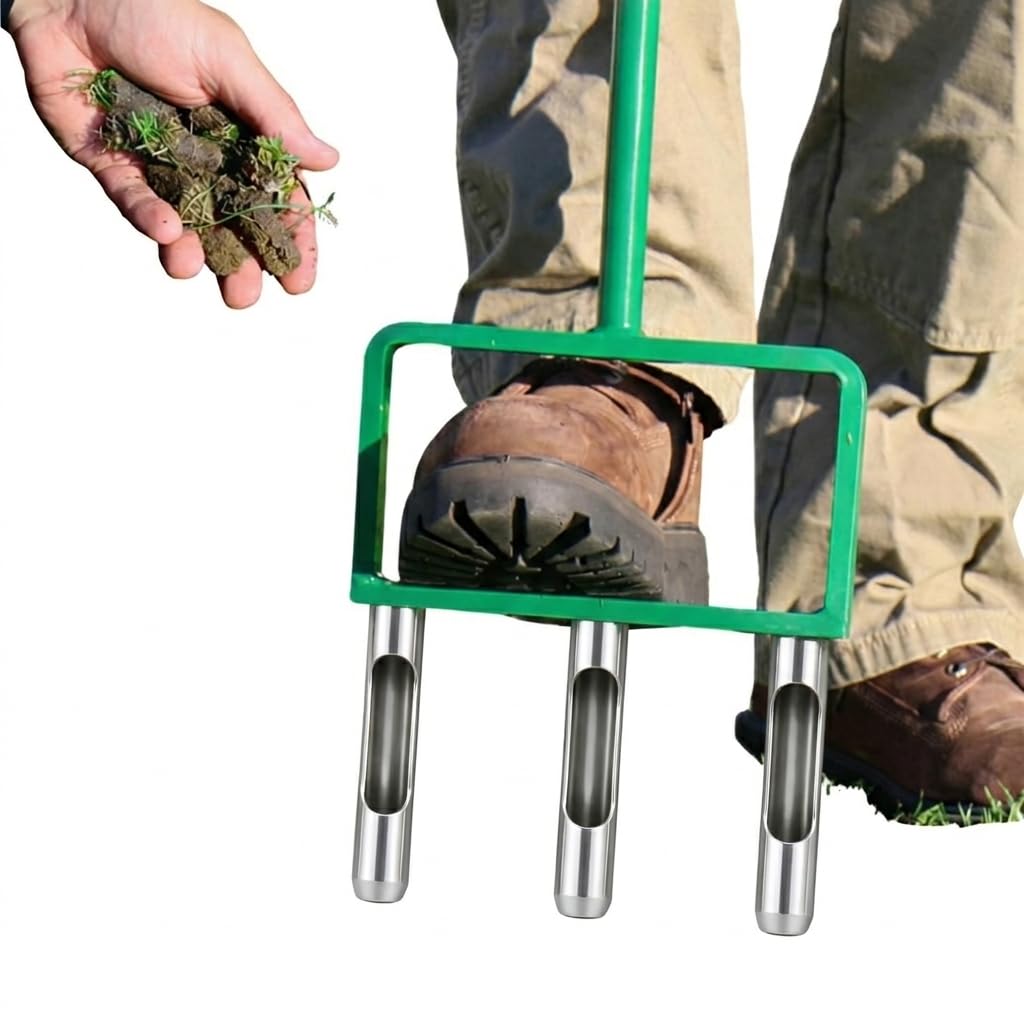
The Landzie stands alone at the top of the manual core aerator category. Its three solid stainless steel hollow tines are beveled to self-clear soil cores, meaning you will spend zero time unclogging during a session. The 42-inch total height is the tallest on this list, making it comfortable for users over six feet without any back bending. Landzie skips assembly entirely—the tool arrives fully built with tines already fitted to the frame.
Real-world testing and user feedback confirm the tines stay sharp through hundreds of uses, and the powder-coated steel frame resists rust even when left in damp conditions. Owners report aerating a 2,200-square-foot lawn in roughly four hours with consistent, clean plugs. The foot bar could be slightly wider for larger shoes, and the tool is notably heavy at 5.6 pounds, but that weight translates directly into superior penetration in hard clay.
If you are committed to one manual purchase that will last for years and you deal with serious soil compaction, the Landzie is the definitive premium choice. The replaceable tines and lifetime-grade construction justify its position as the top performer for lawn care enthusiasts and professionals alike.
Why it’s great
- Self-cleaning hollow tines eliminate clogging
- No assembly required; ready out of the box
- Stainless steel tines resist rust and stay sharp
Good to know
- Heavy at 5.6 lbs — tiring for smaller users
- Requires very moist soil for best penetration
- Foot bar could be less slippery
2. Dolibest 4-Plug Coring Aerator
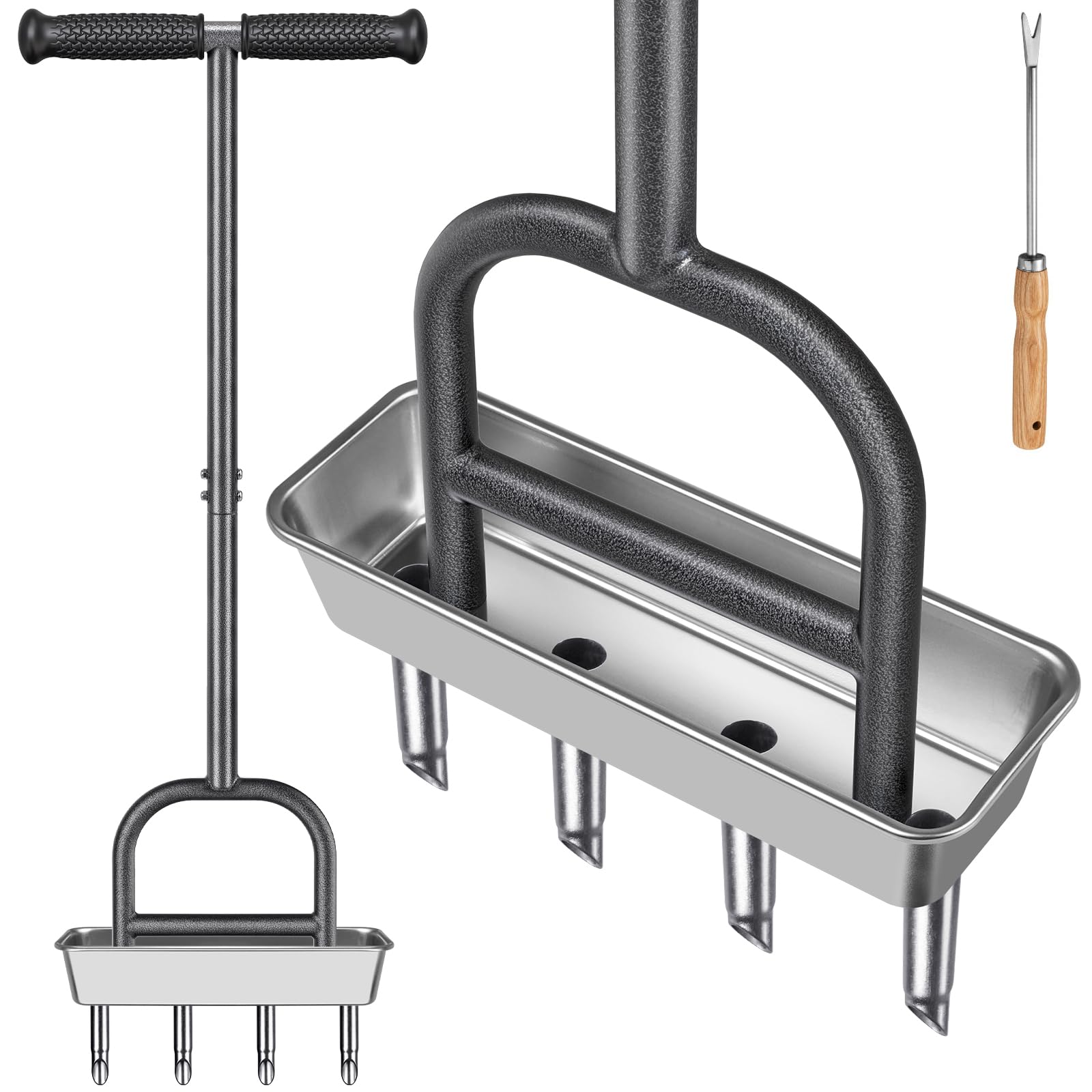
The Dolibest distinguishes itself with four SUS 304 stainless steel coring plugs—one more tine than the Landzie or EEIEER—which allows you to cover more ground per step. Its soil core storage tray is also built from stainless steel, ensuring it won’t rust or deform after repeated exposure to wet soil and moisture. The 12-inch included weeding tool doubles as a cleaning stick for the hollow tines.
Users consistently note that the stainless steel rods do not bend, even when encountering roots or rocky patches in medium-density soil. The elevated crossbar keeps your shoe clear of the ejecting plugs, preventing jams. Some find the tines could be sharper for initial cuts into dense clay, but for moist lawns, the four plugs create clean, consistent cores without overexertion.
This model is ideal for the homeowner with a medium-sized yard who wants the long-term rust protection of stainless steel and the convenience of an integrated collection tray. The slightly higher weight and wobbly handle joint after repeated use are minor concerns, but for the price point, the build quality is excellent.
Why it’s great
- Four stainless steel tines for faster coverage
- Stainless steel storage tray prevents rust
- Included weeding/cleaning tool adds utility
Good to know
- Handle may develop wobble after extended use
- Tines could be sharper for dense clay
- Heavier than some spike alternatives
3. EEIEER Manual Lawn Aerator

The EEIEER takes a thoughtful approach to one of the biggest frustrations with manual core aerators: soil cleanup. Its integrated soil storage basket catches the ejected cores as you work, preventing them from scattering across your lawn and saving you a raking step. The 38-inch ergonomic handle reduces back strain, and the thickened inner wall (2mm upgrade from 1.2mm) makes the frame significantly more resistant to breakage at the weld points.
Users report the 2025 upgraded three-tine design penetrates moist soil with moderate effort, and the included cleaning stick is genuinely useful for clearing any clogs without bending over. The tool works best in soil that has been pre-soaked for 15 minutes; dry, hard-packed dirt will cause the hollow tines to clog rapidly. Some shorter users (under five foot six) find the handle height slightly too tall for optimal leverage.
This is an excellent mid-range option for the DIY lawn enthusiast who values tidiness and ease of cleaning. The basket system is a genuine innovation that saves time, and the reinforced frame addresses common failure points found on cheaper core aerators.
Why it’s great
- Soil storage basket keeps lawn clean
- Reinforced 2mm thick inner wall resists breakage
- Cleaning stick included for clog maintenance
Good to know
- Clogs easily in dry or sandy soil
- Handle may be too tall for shorter users
- Foam grips may wear over time
4. Colwelt Heavy Duty Spike Aerator

The Colwelt is a classic spike aerator that delivers serious penetration for its price point. Most spike aerators on the market use 2.3-inch spikes; the Colwelt uses four spikes that are 3.5 inches long and 2/5 of an inch in diameter, meaning each plunge creates a significantly larger air channel that stays open longer. The 38-inch total height keeps your spine straight during operation.
The foot plate measures 6 inches wide and 5.5 inches high, providing enough surface area for larger work boots and an anti-slip texture that prevents your foot from sliding off during hard pushes. The powder-coated steel construction has held up well for users aerating around oak trees and in medium-density clay. As with any spike aerator, this tool works best when the soil is moist—watering 15 minutes before use makes a dramatic difference in penetration depth.
For homeowners with small to medium lawns who want a durable, effective spike aerator without spending on a core model, the Colwelt offers the best spike-to-dollar ratio on this list. The simple, robust design will handle seasonal aeration without drama.
Why it’s great
- 3.5-inch spikes are longest in the spike category
- Wide anti-slip foot plate accommodates large boots
- Powder-coated steel resists rust well
Good to know
- Only four spikes means slower coverage
- Spike aerator only—won’t remove soil plugs
- Not ideal for heavy clay compaction
5. Jardineer Lawn Aerator Tool
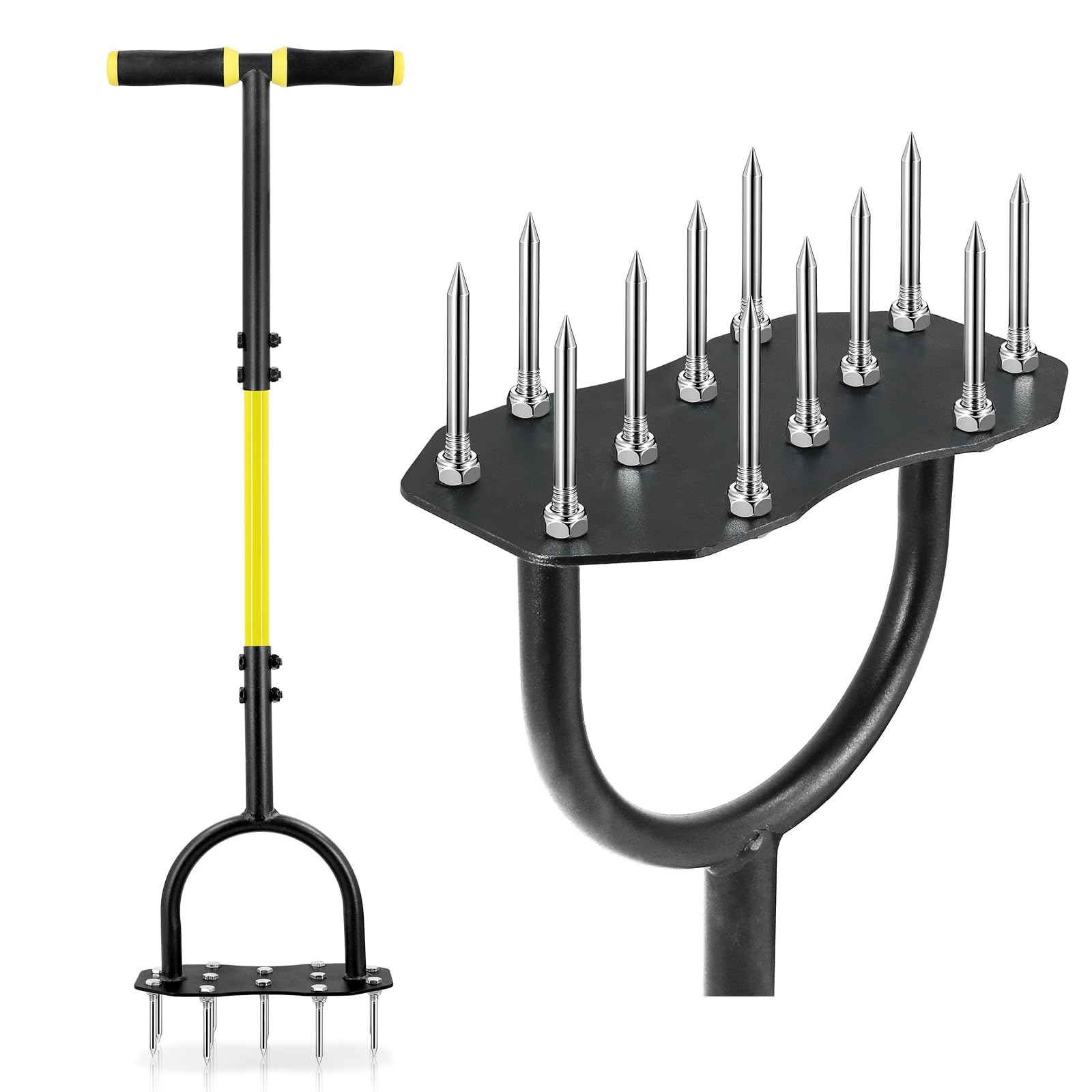
The Jardineer packs 12 heat-treated steel spikes into a single tool, offering the highest spike count in the lineup for maximum hole density per square foot. Each spike measures 2.75 inches in length, which is sufficient for moderate compaction in residential lawns. The 36-inch handle is paired with a comfortable rubber grip that reduces hand fatigue during longer sessions, and the thick steel foot plate lets you transfer your full weight without risking a bend.
Users report this tool performs particularly well in clay soil, where the wiggling motion required to insert the spikes doesn’t cause the frame to flex. The pre-assembled design means you can unbox it and start aerating immediately. Some users noted two spikes bent on the first use in rocky soil, but the included replacement spikes solved the issue immediately. This tool is best suited for small to medium lawns under 3,000 square feet.
If you prioritize spike density and immediate usability over raw spike length, the Jardineer offers a solid, affordable entry into manual aeration. The heat-treated steel adds genuine durability, and the included wrench and manual make maintenance straightforward.
Why it’s great
- 12 spikes create maximum hole density per step
- Heat-treated steel resists bending in normal soil
- Comes pre-assembled with rubber grip
Good to know
- Spikes can bend in rocky soil
- Only 2.75-inch spike length
- Not for large lawns or heavy compaction
6. Truper Rapid Tiller
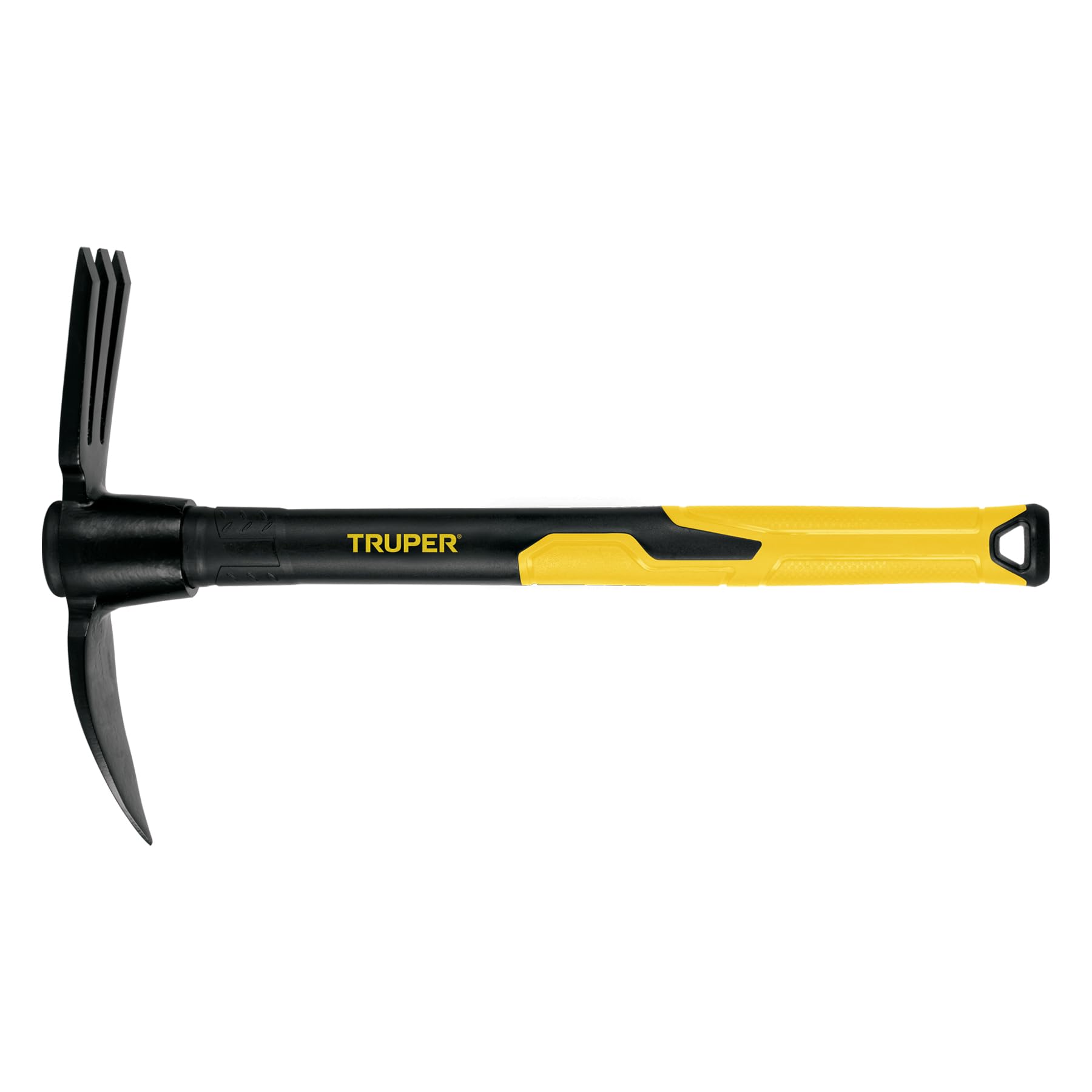
The Truper Rapid Tiller breaks the mold of dedicated aerators by offering a dual-purpose head: a sharp digging blade on one side and three cultivator tines on the other. This is not a full-lawn aerator—it is a handheld garden tool optimized for breaking up soil in flower beds, removing dandelions, and aerating around established shrubs. The 14-inch fiberglass handle provides excellent vibration absorption and weather resistance.
At only 16 ounces, the Truper is remarkably lightweight, and users report it cuts through heavy red clay with surprising ease. The curved point on the digging blade penetrates quickly, while the three-prong tiller end chops roots and clears weeds effectively. The forged steel head has held up for years without rusting, even when left out in the rain. The balanced weight distribution allows for accurate swinging without straining your wrist.
This is the perfect tool for gardeners who need precision aeration and weeding in tight spaces rather than broad lawn coverage. It excels in raised beds, around bulbs, and for removing deep taproots—a complement to, not replacement for, a full-size lawn aerator.
Why it’s great
- Dual-purpose head suits aeration and weeding
- Lightweight 16 oz design reduces fatigue
- Forged steel holds edge without rust
Good to know
- Fiberglass handle may feel short for tall users
- Not suitable for large lawn aeration
- Extra weight from head can tire arms over hours
7. Altdorff Manual Twist Tiller

The Altdorff uses a twisting motion rather than a stomping motion to aerate the soil. Its 17.7-inch arc handle allows you to rotate your body weight into the four arrow-tipped steel tines, which then penetrate and loosen the soil with less vertical strain than a standard spike aerator. The total tool length of 37 inches keeps you standing upright during operation.
This tool thrives in loose, sandy soil and is specifically designed for raised beds, flower boxes, and compost turning. The four tines are sharpened to points that slice through mulch and soft dirt effectively. Assembly is simple with four bolts and butterfly nuts, and the tool can be broken down for easy storage. Users consistently praise how much faster it is than using a hand trowel, though the twisting action feels flimsy when used in heavy clay or rocky ground.
For gardeners with raised beds or loose soil who want a fast, low-effort aeration method, the Altdorff is a smart budget-friendly choice. It is not a heavy-duty lawn aerator, but for breaking up topsoil and mixing in compost, it outperforms many pricier cultivators.
Why it’s great
- Arc handle reduces effort for loose soil aeration
- Arrow-tipped tines penetrate quickly in raised beds
- Easy assembly and detachable storage
Good to know
- Not suitable for compacted clay or rocky soil
- Twisting mechanism feels less sturdy than stomp designs
- Limited to small areas like flower boxes
FAQ
Should I water my lawn before using a manual aerator?
What is the difference between a spike aerator and a core aerator?
How many square feet can a manual aerator cover in one hour?
Can I use a manual aerator in heavy clay soil?
How often should I aerate my lawn with a hand tool?
Final Thoughts: The Verdict
For most users, the best aeration tools winner is the Landzie Hollow Tine Aerator because it combines self-cleaning stainless steel tines, no assembly, and the tallest handle for comfortable upright use, making it the most effective manual tool for serious compaction relief. If you prefer the rust protection and faster coverage of four tines, grab the Dolibest 4-Plug Coring Aerator. And for a budget-friendly spike option that punches above its weight, nothing beats the Colwelt Heavy Duty Spike Aerator.