
Our readers keep the lights on and the weekend projects moving. As an Amazon Associate, I earn from qualifying purchases.
Waking up gasping for air, with a dry throat and a stiff neck, is not just a bad night’s sleep — it’s your body signaling that your head and neck are positioned in a way that collapses your airway. A standard flat pillow can’t fix this because it doesn’t provide the elevation your upper body needs. A dedicated sleep apnea pillow uses specific height, contour, and material density to keep your airway open, reduce snoring, and support proper spinal alignment through the night.
I’m Rikta — the co-founder and writer behind FitlyFast. I’ve spent hundreds of hours analyzing the specifications, materials, and real user feedback for this narrow category, understanding exactly what separates a pillow that just feels soft from one that actually keeps your breathing stable.
Whether you need a gentle incline for mild positional apnea, a contoured cervical shape for side sleeping with a CPAP mask, or a full wedge set for post-surgery recovery, the right choice depends on your sleeping position, body type, and the type of support you need. This guide breaks down the top options to help you find the best sleep apnea pillow for your specific needs.
How To Choose The Best Sleep Apnea Pillow
Not every elevated pillow qualifies as a sleep apnea pillow. The difference lies in the specific angle, contour, and firmness required to prevent your airway from collapsing during sleep. Here’s what to evaluate before making a purchase.
Incline Height & Angle
The primary mechanism of a sleep apnea pillow is elevation. A gentle incline — typically between 8 and 12 inches of height at the thickest point — helps keep your airway open by reducing the gravitational collapse of soft tissue at the back of the throat. A steeper angle (45 degrees) works better for severe positional apnea, while a lower angle (around 8 inches) suits side sleepers and those with milder symptoms. If you’re shorter or have a shorter torso, a lower wedge avoids discomfort at the lower back and hips.
Material Density & Firmness
Memory foam is the standard fill for sleep apnea pillows because it provides consistent support without flattening overnight. Look for CertiPUR-US certified foam — this ensures low VOC emissions and no harmful flame retardants. High-density slow-rebound foam (40D or higher) holds your head and neck in place, preventing the sinking that causes your head to roll forward and close your airway. Gel-infused or open-cell memory foam reduces heat buildup, which is critical for overnight comfort.
Design: Wedge vs. Contour
Two main designs dominate this category. Wedge pillows provide a uniform slope from your upper back to your head, ideal for elevating your entire torso. Contoured cervical pillows feature a butterfly or crescent shape with a hollow center to cradle your head and support the natural curve of your neck. Some buyers combine both: a wedge for overall elevation and a contoured cervical pillow on top for neck-specific alignment. Your choice depends on whether you need full-body elevation (wedge) or targeted cervical support (contour).
Quick Comparison
On smaller screens, swipe sideways to see the full table.
| Model | Category | Best For | Key Spec | Amazon |
|---|---|---|---|---|
| Avana Contoured Bed Wedge 30″ | Wedge | Side sleepers with CPAP | 8″ rise, gel-infused foam | Amazon |
| SOFTGAS 10″ Wedge Pillow | Wedge | Positional apnea & acid reflux | 10″ height, 45° incline | Amazon |
| Latree Cervical Pillow (5X) | Contour | Cervical pain & side sleeping | Butterfly contour, 6 zones | Amazon |
| Emircey Butterfly Pillow | Contour | Back & side sleepers | Hollow center, armrests | Amazon |
| Hansleep 6-Piece Wedge Set | Wedge Set | Post-surgery recovery | 6 pieces, memory foam | Amazon |
| Ruqmuis 3-Piece Wedge Set | Wedge Set | Adjustable incline | 9″ & 12″ adjustable | Amazon |
| btasleeep Crescent Side Sleeper | Contour | Adjustable loft side sleepers | Shredded memory foam | Amazon |
In‑Depth Reviews
1. Avana Contoured Bed Wedge 30″
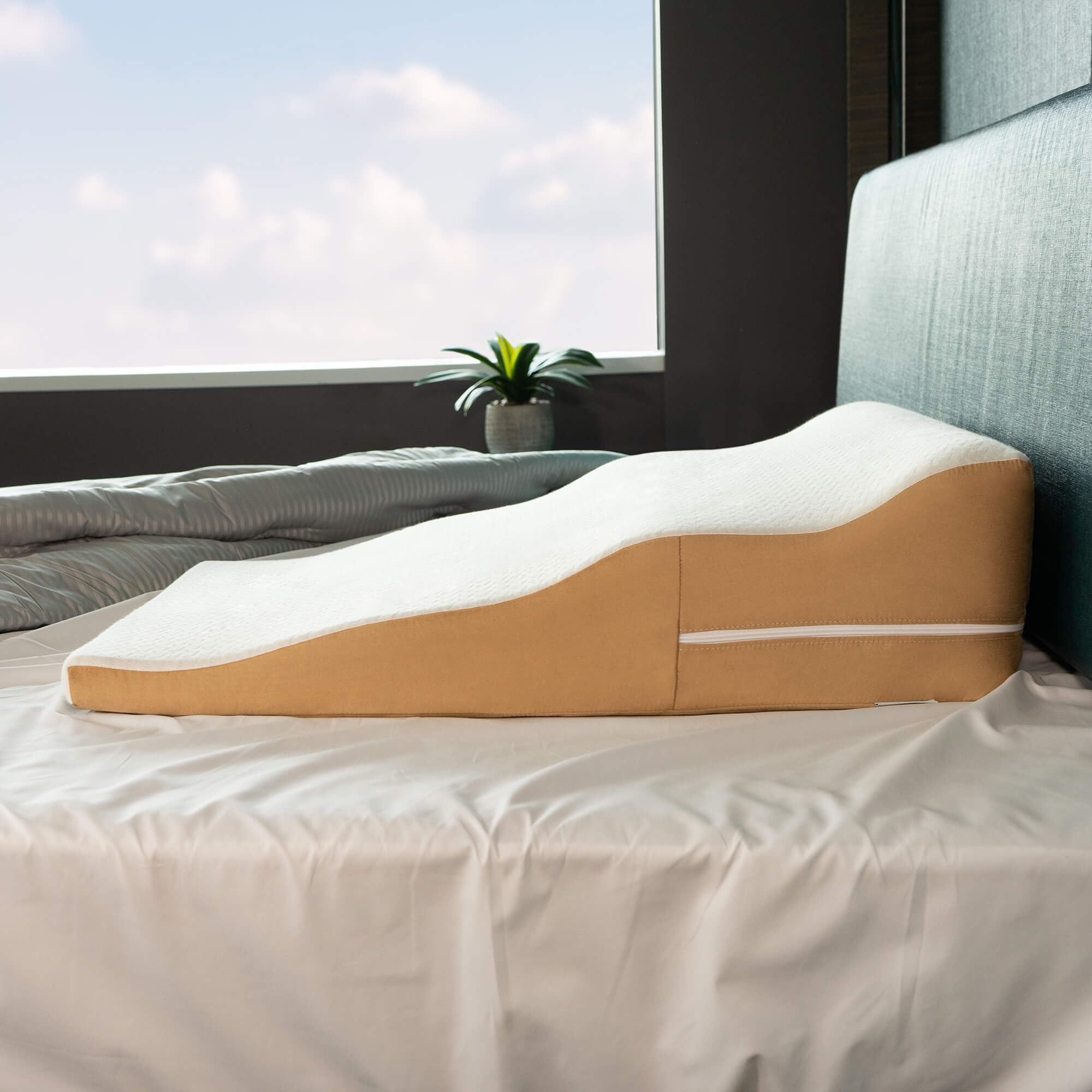
The Avana wedge stands out because it solves two problems at once: it elevates your upper body and cradles your neck via its contoured wave shape. The 8-inch rise is enough to reduce airway collapse for most side and back sleepers, while the 30-inch width accommodates larger body types without forcing you into a cramped position. The two-layer construction — a gel-infused memory foam top over a polyurethane base — provides both initial softness and structural support that doesn’t flatten overnight.
The Tencel Lyocell cover is a meaningful upgrade over polyester blends. It wicks moisture, feels noticeably cooler than cotton on contact, and is machine washable without pilling. Multiple user reviews confirm that the memory foam layer allows you to use your own pillow on top of the wedge if needed, which is rare among wedge designs. Reviewers consistently highlight the zero-slip performance, thanks to the contoured shape that grips the mattress.
The one caveat is that the 8-inch rise may feel insufficient for users with a longer torso who require a steeper incline for severe positional apnea. Some shorter users reported that the wedge extended past their hips, causing lower back strain when lying on their side. If you fall into the average height range (5’6″ to 6’0″), this is a premium, reliable choice that balances comfort and respiratory support.
Why it’s great
- Gel-infused memory foam provides cooling and even pressure distribution
- Contoured wave shape prevents the wedge from sliding during sleep
- Wide 30-inch platform suits bigger body frames and restless sleepers
Good to know
- 8-inch rise may be too low for those needing a steeper angle for severe apnea
- Cover shows minor loose threads after several washes, per some reports
2. SOFTGAS 10″ Wedge Pillow
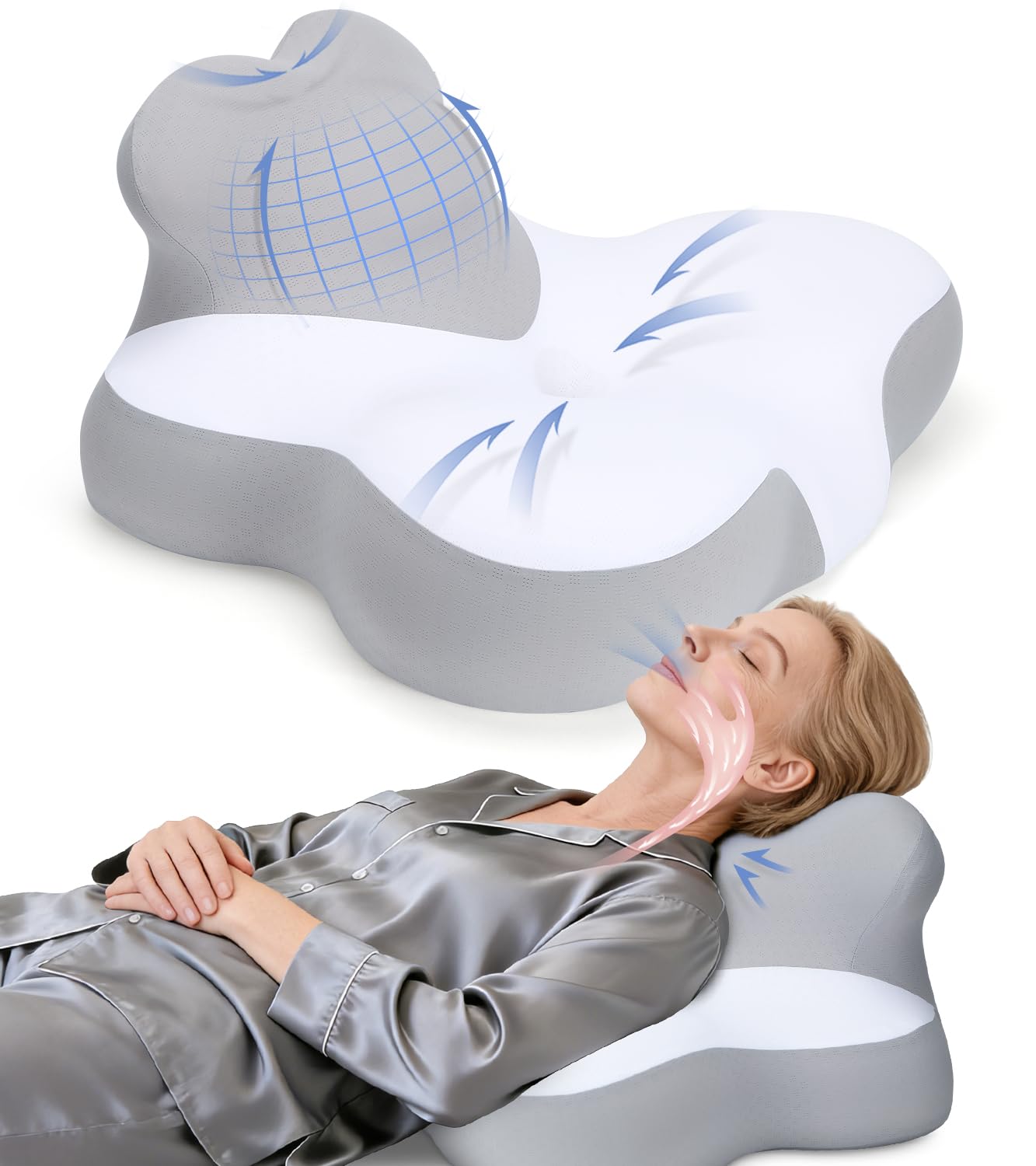
The SOFTGAS wedge targets a specific need: a higher, steeper incline for positional apnea relief and acid reflux prevention. The 10-inch height at the thickest end creates a 45-degree angle that elevates your head and upper chest significantly more than standard wedge pillows. This is ideal if you’ve tried an 8-inch wedge and found that you still experience snoring or choking sensations during sleep.
The second-generation design adds a groove and semi-circular arch at the top edge — a feature that mimics a cervical contour pillow on top of the wedge. This two-in-one approach means you don’t need to stack a separate neck pillow, which can create instability. The CertiPUR-US certified memory foam maintains its density without developing permanent indentations, and the cooling silk cover provides a smooth, non-scratchy surface that breathes well. At roughly 6 pounds, the pillow is lightweight enough to move between a bed, couch, or floor.
The downsides are predictable for a tall wedge: some users with short torsos (under 5’4″) found the 10-inch angle too aggressive, causing a sensation of sliding or hyperextension of the lower back. Additionally, the brand explicitly notes this model is not suited for severe sleep apnea — it’s designed for mild to moderate positional apnea and snoring reduction. For those who need extreme elevation, a medical-grade adjustable bed base remains the appropriate solution.
Why it’s great
- Steep 45-degree incline effectively reduces airway obstruction for positional apnea
- Integrated cervical groove cradles the neck and prevents head rolling
- Lightweight and portable enough to use on couch, floor, or bed
Good to know
- Too steep for shorter torsos — may cause hip and lower back strain
- Not designed for severe sleep apnea; consult a sleep specialist for advanced cases
3. Latree Cervical Pillow (5X)
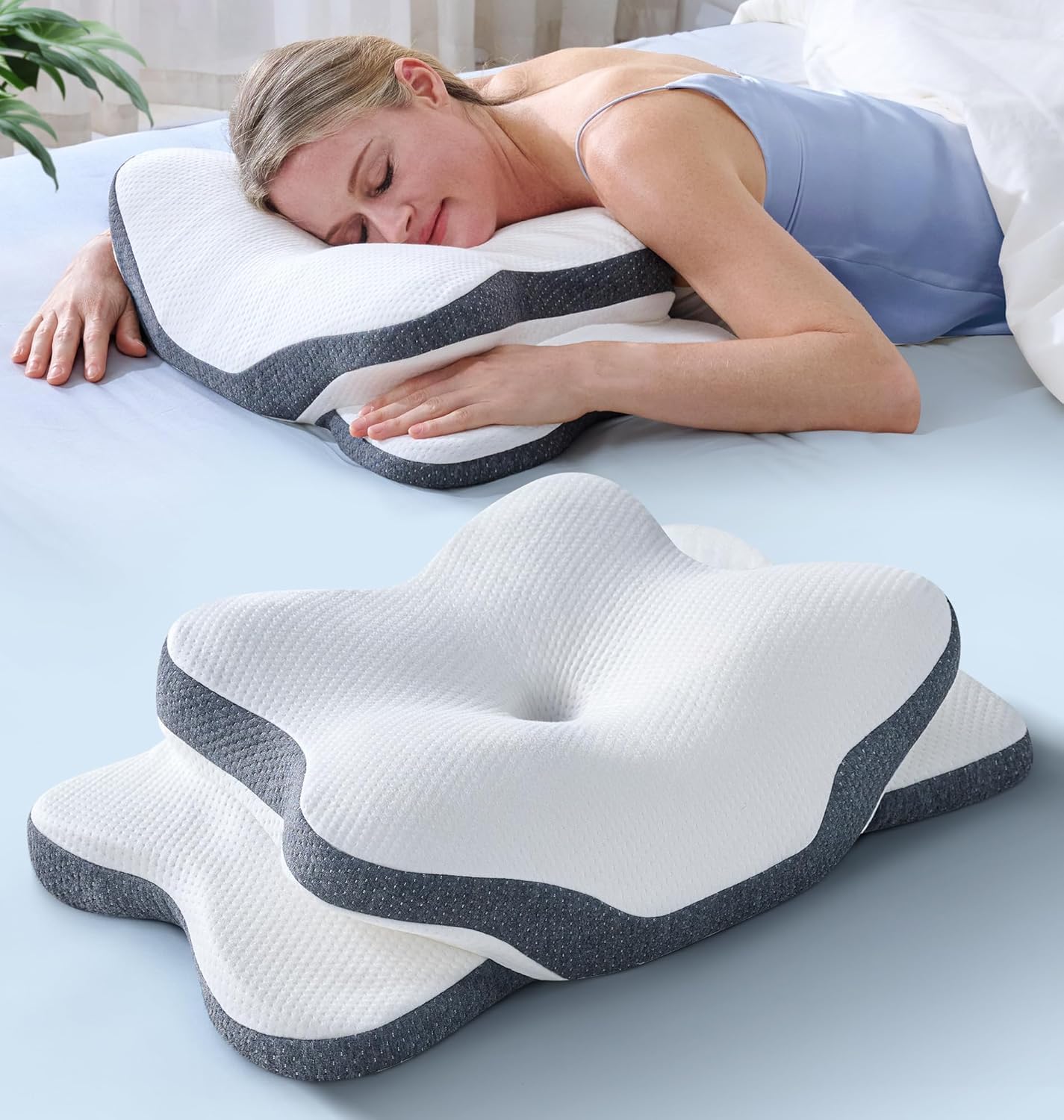
The Latree is not a wedge — it’s a contoured cervical pillow designed to keep your head, neck, and shoulders aligned while you sleep on your side or back. Its butterfly shape includes a hollow concave center that cradles your head and six distinct support zones that follow your body’s natural curves. For sleep apnea sufferers who are also side sleepers, this design prevents your head from tilting forward, which is a primary cause of airway narrowing.
The open-cell memory foam core is 95% breathable, and the 3D mesh pillowcase is three times more ventilated than standard contour pillow covers. This combination addresses the common complaint of overheating with memory foam — reviewers consistently note that this pillow stays cool throughout the night. The 100-night free trial and CertiPUR-US and OEKO-TEX certifications provide peace of mind about both material safety and long-term comfort. Users recovering from cervical fusion surgery specifically praised its ability to maintain firmness over months without sagging.
The biggest limitation is that this pillow does not elevate your upper body. It only supports the head and neck region. If your sleep apnea requires torso elevation — for example, if you have both apnea and acid reflux — you would need to combine this pillow with a separate wedge. Some stomach sleepers also found the contour shape uncomfortable, as the raised neck area presses against the throat when lying face-down.
Why it’s great
- Six-zone butterfly contour prevents head-forward posture and opens the airway
- Open-cell foam and 3D mesh cover provide exceptional cooling for hot sleepers
- Holds shape and firmness for months without developing soft spots
Good to know
- Does not provide torso elevation — not a standalone solution for severe apnea
- Uncomfortable for stomach sleepers due to raised neck support
4. Emircey Butterfly Pillow

The Emircey butterfly-inspired contour pillow takes a slightly different approach than the Latree: it includes dedicated armrest cutouts that allow your hands to rest freely without raising your shoulders toward your ears. This reduces tension in the trapezius muscles, which is a common source of morning stiffness for sleep apnea patients who sleep in a curled or side position. The hollow center is shallower than some competitors, making this a better option for back sleepers who need only mild cervical cupping.
The memory foam is CertiPUR-US certified and arrives with minimal off-gassing — most users reported the odor dissipated within 24 hours. The cover features a checkered pattern and is machine washable, though some reviewers noted that the grey foam core can show through lighter pillowcases. For side sleepers with broader shoulders, the armrests provide genuine relief, and the 21-inch length is sufficient for standard pillowcases.
The pillow is smaller than a standard queen pillow (21.26 x 14.17 inches), which some users found restrictive if they toss and turn throughout the night. If you frequently switch from one side to the other, you may need to reposition your head within the contour zone. Additionally, the lower side of the pillow is softer than the higher side, which means you lose support if you accidentally shift to the incorrect orientation during sleep.
Why it’s great
- Armrest cutouts reduce shoulder and trapezius tension during side sleeping
- Cervical contour maintains natural neck curvature without feeling restrictive
- Minimal odor out of the package and quick expansion time
Good to know
- Smaller surface area (standard size) may feel cramped for restless sleepers
- Grey foam core visible through light or white pillowcases
5. Hansleep 6-Piece Wedge Set

The Hansleep set is the most versatile option in this lineup because it includes six separate foam pieces: a large back wedge, a head pillow, a lumbar support, a base wedge, a leg pillow, and a knee pillow. This modular approach allows you to customize your sleeping position for different needs — a head wedge for sleep apnea, a lumbar pillow for lower back support, and a leg pillow for knee elevation after surgery. The memory foam used in the head and back pillows contains gel particles for added softness, while the base wedges use high-density foam for structural stability.
For sleep apnea specifically, the main wedge and head pillow combo creates a gentle incline that can be adjusted by adding or removing the lumbar support piece. The Velcro straps between components prevent them from shifting apart during the night, and the non-slip rubber dots on the base wedge grip the mattress surface. The polyester covers are removable and machine washable, and both the foam and covers are OEKO-TEX and CertiPUR-US certified. Post-surgery users, including those recovering from rotator cuff or tummy tuck procedures, praised the set’s ability to keep them comfortable and immobile without pain.
The trade-off for this versatility is size and setup complexity. The full set occupies a significant portion of the bed, which can be an issue for partners sharing a queen or smaller mattress. Some users noted that the head pillow, while soft, was too firm for those who prefer a plush feel against the neck. Additionally, the white polyester covers can show the bluish foam underneath, which some found visually unappealing.
Why it’s great
- Six-piece modular system allows full-body positioning for sleep apnea, surgery recovery, and reading
- Non-slip rubber dots and Velcro straps keep components securely in place
- OEKO-TEX and CertiPUR-US certified foam and covers for material safety
Good to know
- Takes up significant bed space — not ideal for co-sleepers on smaller mattresses
- Head pillow may feel too firm for those who prefer a soft neck feel
6. Ruqmuis 3-Piece Wedge Set

The Ruqmuis three-piece set offers an adjustable wedge solution at a lower price point than full six-piece systems. The set includes a large wedge, a smaller wedge, and a semi-cylindrical head pillow. The key feature is the ability to stack the wedges to achieve either a 9-inch or 12-inch incline, giving you flexibility as your recovery or comfort needs change. The 40D memory foam in the head pillow provides firm cervical support without excessive sinkage.
Post-surgery users — particularly those recovering from C-sections, hernia repairs, and tonsillectomies — found that the semi-cylindrical head pillow prevented neck strain during extended upright sleeping. The base wedges are made from 25D high-density foam, which supplies a stable foundation that doesn’t compress under body weight. The polyester cover includes convenient side pockets that can hold a phone or remote, and the entire cover is machine washable.
The biggest shortcoming is that the modular wedges do not lock together as securely as the Hansleep set. Some users reported that the pieces separated during the night, requiring readjustment. The foam also arrives vacuum-packed and may take up to 48 hours to fully expand — and some users noted a lingering chemical smell that took several days to dissipate. For those who need a budget-friendly wedge system with adjustable height, this is a solid choice, but it lacks the refined integration of more expensive sets.
Why it’s great
- Adjustable 9-12 inch height range accommodates different incline preferences
- 40D memory foam head pillow provides firm, supportive cervical neck positioning
- Side pockets add convenience for holding phone, remote, or glasses
Good to know
- Modular wedges can separate during sleep due to lack of locking mechanism
- Initial chemical odor may require a few days of airing out before use
7. btasleeep Crescent Side Sleeper Pillow
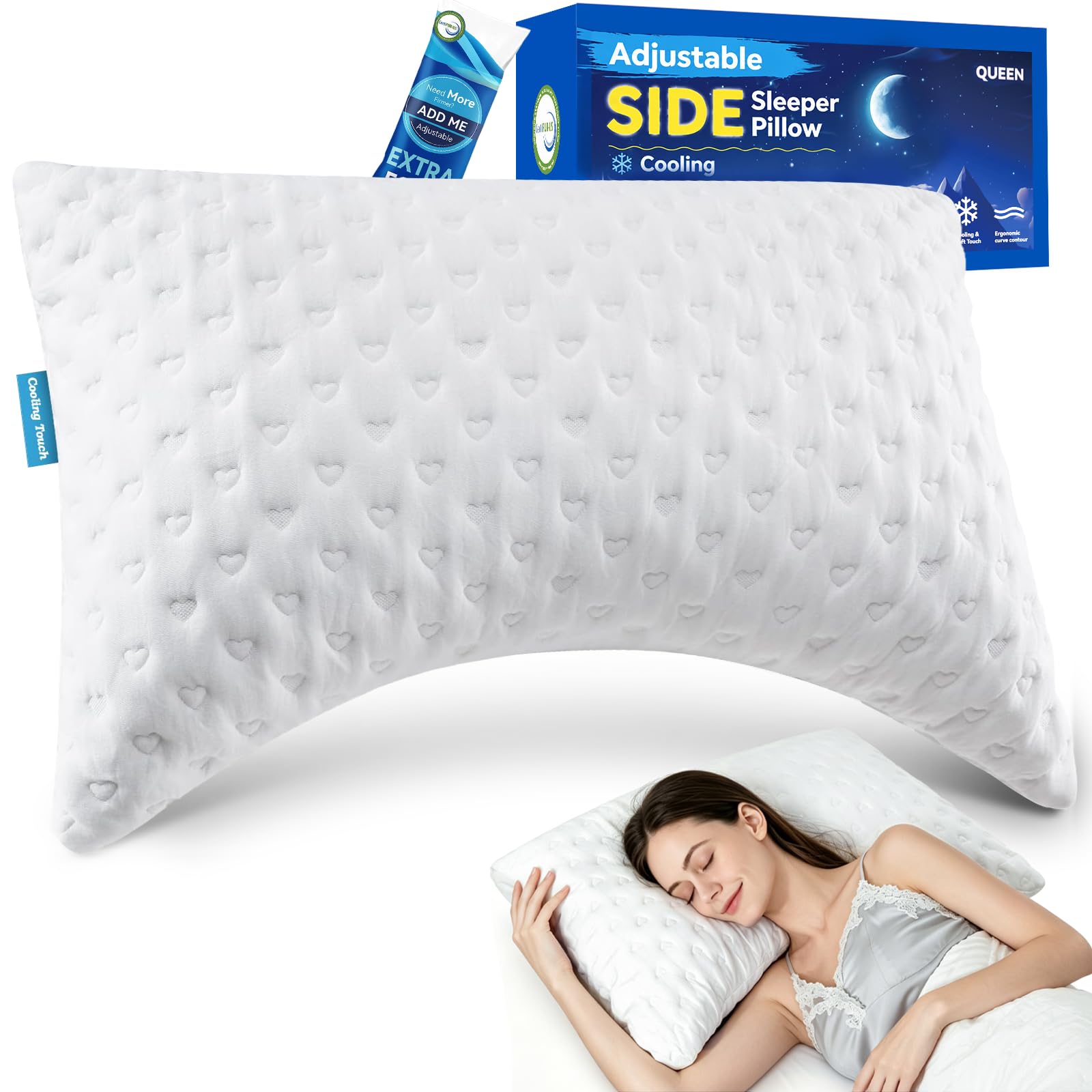
For those who need a non-wedge option that still supports side-sleeping posture, the btasleeep crescent pillow offers an adjustable shredded memory foam design. The curved shape creates a shoulder cutout that accommodates broader shoulders without pushing the head upward, which helps maintain an aligned airway. The key differentiator here is the customizability: you can add or remove the shredded memory foam to fine-tune the loft anywhere from flat to medium-high.
The dual-sided cover provides a cooling touch on one side and a softer, brushed finish on the reverse. While the cooling effect is contact-based rather than active gel cooling, users with mild night sweats reported it helped reduce heat buildup compared to standard polyester covers. The queen size (30 x 20 inches) provides enough surface area for rolling without leaving the pillow, and the removable cover is machine washable. Users who pair this with a CPAP or BiPAP mask noted that the adjustable loft allowed them to position the mask tubing without pressing it against the pillow.
The shredded foam fill does develop clumps over time — several reviewers mentioned needing to fluff and redistribute the fill every few weeks to maintain even support. The pillow’s cooling effect is limited to the cover fabric, not the foam core, so hot sleepers may still experience warmth after prolonged use. If you require torso elevation for your sleep apnea, this pillow alone will not provide that — it is strictly a head and neck support solution for side sleepers.
Why it’s great
- Adjustable shredded memory foam lets you choose the exact loft for your shoulder width and sleep position
- Crescent shape creates shoulder relief space, reducing neck and airway strain
- Works well with CPAP and BiPAP masks without crushing tubing
Good to know
- Shredded foam clumps over time and requires periodic manual fluffing
- Cooling effect is surface-level only — the foam core can still trap heat
FAQ
Can a sleep apnea pillow replace my CPAP machine?
What incline height should I choose for sleep apnea?
How do I clean a sleep apnea pillow?
Final Thoughts: The Verdict
For most users, the best sleep apnea pillow winner is the Avana Contoured Bed Wedge 30″ because it combines a gentle 8-inch incline, gel-infused cooling memory foam, and a wide 30-inch platform that suits side and back sleepers without sliding. If you need a steeper 10-inch incline for more aggressive airway elevation, grab the SOFTGAS 10″ Wedge Pillow. And for targeted cervical support without torso elevation — ideal for side sleepers who already use a wedge or adjustable bed — nothing beats the Latree Cervical Pillow.