
Our readers keep the lights on and the weekend projects moving. As an Amazon Associate, I earn from qualifying purchases.
Nothing ruins a sunrise hike or a trout breakfast like a night spent flopping on a deflated wafer of plastic while the ground radiates cold straight through your spine. A proper camping mattress is the single piece of gear that determines whether you wake up ready to explore or hunched over a mug of coffee regretting your gear choices.
I’m Rikta — the co-founder and writer behind FitlyFast. I’ve spent hundreds of hours combing through foam densities, valve engineering, fabric denier ratings, and real customer durability reports to separate the mats that actually insulate and support from the ones that leave you sleeping on dirt by 3 a.m.
Whether you prioritize pack weight, year-round insulation, or a bed-like height that gets you off the cold ground, this guide breaks down the seven best performers in the air mattress for camping category to help you match the right platform to how you actually sleep outdoors.
How To Choose The Best Air Mattress For Camping
Camping air mattresses fall into two distinct camps: pure blown-up air chambers and foam-air hybrids that self-inflate. The right choice depends on whether you drive to your site or hike miles with your sleep system on your back, but a handful of specs separate the warm, supportive sleep platforms from the ones that leave you cold and sore.
R-Value and Season Rating
R-value measures how well the pad resists conductive heat loss to the ground. A value of 4 or higher generally covers three-season camping down to freezing, while values above 6 handle sub-freezing trips. Thin, low-R mats below 2 are fine for summer car camping but will suck warmth out of you the moment the temperature dips into the 40s. Look for pads that cite ASTM-tested R-values rather than vague “four-season” marketing claims.
Thickness and Ground Isolation
Three inches is the sweet spot for side sleepers who need hip and shoulder pressure relief. Pads under 2 inches force most adults to feel rocks and roots through the foam, while pads above 4 inches deliver a bed-like experience that isolates you completely from the ground. Thicker pads also trap more dead air, which bolsters insulation — but they pack bigger and weigh more, so car campers can happily run thick while backpackers must compromise.
Valve Engineering
Single valves that handle both inflation and deflation are common on budget pads but often let air leak back during setup. Dual one-way valves — one for blowing air in, one for letting it out — let you top off firmness without losing progress. Self-inflating pads need wide-diameter valves so foam can expand freely, and reversible or multi-function valves that seal during storage prevent slow leaks that flatten your pad overnight.
Foam Density and Construction Type
Pure air mattresses rely entirely on air pressure and risk cold spots from convection inside the chamber. Foam-air hybrids layer open-cell foam that self-inflates and blocks convective heat transfer. Higher-density foam (measured in D or kg/m³) maintains support over years without breaking down. Memory foam variants contour to your shape but add weight, while lower-density polyurethane foam keeps packs light but may sag after regular seasonal use.
Quick Comparison
On smaller screens, swipe sideways to see the full table.
| Model | Category | Best For | Key Spec | Amazon |
|---|---|---|---|---|
| SoundAsleep Dream Series | Pure Air | Indoor/outdoor guest comfort | 40 internal air coils, 19″ height | Amazon |
| Therm-a-Rest LuxuryMap | Self-Inflating | Pressure-point relief for side sleepers | R-value 6, pressure-mapped foam | Amazon |
| Therm-a-Rest MondoKing 3D | Self-Inflating | Extreme cold and maximum plushness | R-value 7, 4.25″ thick, 80×30″ | Amazon |
| Hikenture Comfort Plus | Self-Inflating | Warmth and width for car campers | R-value 9.5, 4″ thick, 80×28″ | Amazon |
| Sea to Summit Camp Plus | Self-Inflating | Weight-conscious car camping | R-value 4.3, 2.6″ thick, 2.3 lbs | Amazon |
| DIVON Twin with Pump | Pure Air | Easy guest bed with built-in pump | 18″ raised height, 330 lbs capacity | Amazon |
| Wevelel Memory Sleeping Pad | Self-Inflating | Budget warmth with 50D memory foam | R-value 9.5, 3.1″ thick, 800 lbs cap | Amazon |
In‑Depth Reviews
1. SoundAsleep Dream Series Luxury Air Mattress
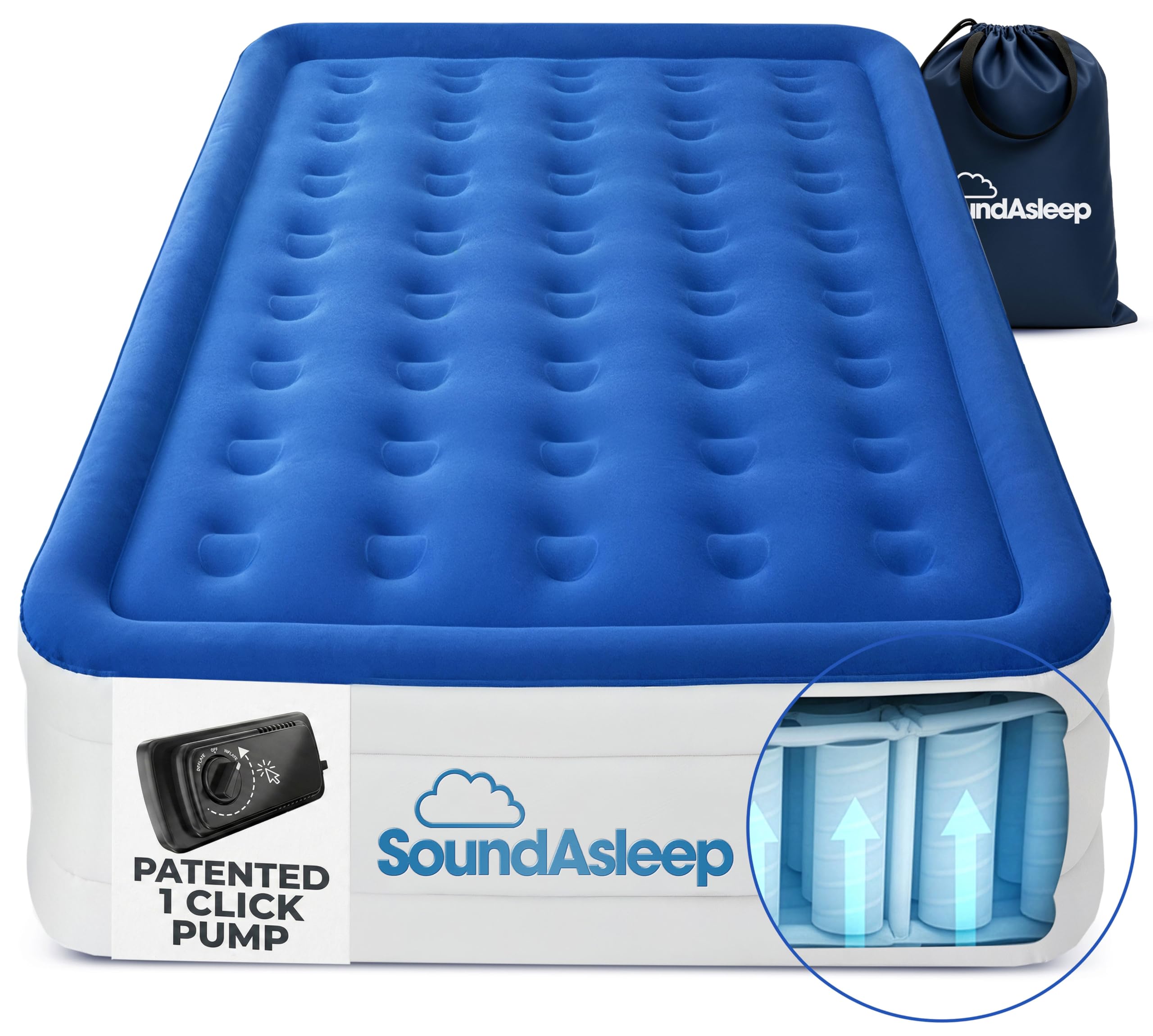
This queen-sized air bed uses forty internal air coils — ComfortCoil Technology — to keep the sleeping surface flat and stable rather than letting two sleepers roll into the center dip that plagues cheaper air chambers. The 19-inch raised double-height design makes entry feel like a real box spring, and the flocked top grips fitted sheets firmly without sliding, while resisting moisture from accidental spills or condensation inside the tent.
The built-in high-capacity pump inflates the 80×60-inch queen mattress in under four minutes and deflates quickly for storage in the included carry bag. Puncture-resistant multilayer PVC adds durability for repeated guest use, and the SureGrip bottom textured base prevents sliding on vinyl tent floors or hardwood at home. A soft waffle pattern on the sleeping surface allows shoulders and hips to sink slightly for pressure relief while maintaining back support.
A 4-foot person can sleep on it for several consecutive nights without sagging, and the automatic shut-off pump prevents over-inflation. Some owners note needing a 20-30 second air top-up every few days to maintain peak firmness, a minor trade-off for a mattress that consistently outperforms cheaper guest beds in both comfort and customer service backing.
Why it’s great
- Internal air coils prevent sagging and center dip for two sleepers
- Flocked top is quiet, non-slip, and resists moisture
- Raised 19-inch height mimics a real bed frame
Good to know
- Motor is briefly loud during inflation
- May need a short air top-up every few nights for maximum firmness
2. Therm-a-Rest LuxuryMap Self-Inflating Foam Camping Pad

Therm-a-Rest engineered this pad using pressure mapping data to vary foam density across the sleeping surface — softer support under the shoulders and hips, firmer support under the lumbar region. The result is a self-inflating pad that conforms to your shape without the hammock feel of a pure air mattress. The 3-inch thickness isolates you from roots and rocks while the 6 R-value provides year-round insulation down to sub-freezing temps.
The TwinLock valve system uses two dedicated one-way valves — one for inflation, one for deflation — that prevent air from escaping during setup and make fine-tuning firmness effortless. The 77×25-inch large size fits most sleepers, though the actual foam sleeping area runs slightly narrower than the outer fabric shell, a common Therm-a-Rest design quirk. The pad self-inflates in about 30 minutes and needs only a few breaths to top off.
Returning Therm-a-Rest users consistently report that these pads hold firmness without air loss for years, unlike cheaper self-inflating alternatives that develop slow foam compression. The included stuff sack uses a PFAS-free DWR coating for environmental safety without sacrificing water resistance. At 4 pounds 3 ounces, it targets car camping and basecamp use but remains manageable for short carry distances.
Why it’s great
- Differential-density foam eliminates pressure points without sagging
- Dual one-way valves simplify inflation and prevent air loss
- Year-round R-value 6 insulation handles cold ground
Good to know
- Actual foam area is about 3 inches narrower than pad dimensions
- Static charge attracts fine dust that requires damp cleaning
3. Therm-a-Rest MondoKing 3D Self-Inflating Pad

The MondoKing 3D is the thickest, warmest self-inflating pad Therm-a-Rest makes, with a 4.25-inch profile that lifts even broad-shouldered side sleepers completely off the ground. The StrataCore construction sandwiches a continuous layer of thermal foam between alternating ridges of air and foam, delivering an R-value of 7 that handles extreme winter conditions without any cold transfer from the tent floor.
Three-dimensional construction creates vertical sidewalls rather than tapered edges, maximizing usable sleep surface so you don’t roll off in the night. The XX-Large size measures 80×30 inches — genuinely roomy for restless sleepers and those over 6 feet. The stretch knit fabric top layer feels soft against the skin without the crinkle noise typical of nylon-shell pads, and the TwinLock valve system mirrors the LuxuryMap’s dual one-way design for fast setup.
Rolled dimensions of 26×10.3 inches are bulky compared to backpacking pads, but the weight-to-comfort ratio is unmatched for car camping and basecamp use. The included pump sack doubles as a storage bag and can inflate the pad in under ten minutes. Owners over 300 pounds report sleeping better on this pad than on their home mattress, thanks to the combination of foam density and adjustable air firmness.
Why it’s great
- 4.25 inches of foam support eliminates all ground feel
- R-value 7 is sufficient for true winter camping
- Vertical sidewalls prevent roll-off during sleep
Good to know
- Too large and heavy for backpacking
- Valve malfunction reports exist on used units
4. Hikenture 4 Inch Self Inflating Sleeping Pad

With an ASTM-tested R-value of 9.5, this 4-inch thick pad offers more ground insulation than any other pad in this comparison — enough to sleep directly on snow without conductive heat loss. The memory foam core combines with air chambers to create a plush yet supportive platform that works for side, back, and stomach sleepers alike. The 80×28-inch size is notably wide and long, accommodating sleepers over 6 feet without forcing arms off the edges.
Setup is genuinely simple: open the patented 2-way valve and let the pad self-inflate for several minutes, then use the included pump sack to add a few bags of air for final firmness. The deflation valve prevents air from rushing back in, making pack-down much less frustrating than pads with uncontrolled single valves. The polyester top fabric is quiet during movement and feels soft against bare skin.
At 6.5 pounds, this pad is strictly for car camping, truck bed camping, or use as a guest bed at home. Owners report that it rolls up smaller than expected for its thickness, and the carry bag’s wide opening makes stuffing easier than traditional narrow sacks. Customer service responsiveness is a highlight — one owner received a replacement without needing to return a defective unit.
Why it’s great
- R-value 9.5 provides exceptional cold-ground insulation
- 4-inch thickness fully isolates you from uneven terrain
- Patented two-way valve prevents air suck-back during deflation
Good to know
- Heavy for backpacking at over 6 pounds
- Initial defects possible but promptly replaced
5. Sea to Summit Camp Plus Self-Inflating Mat
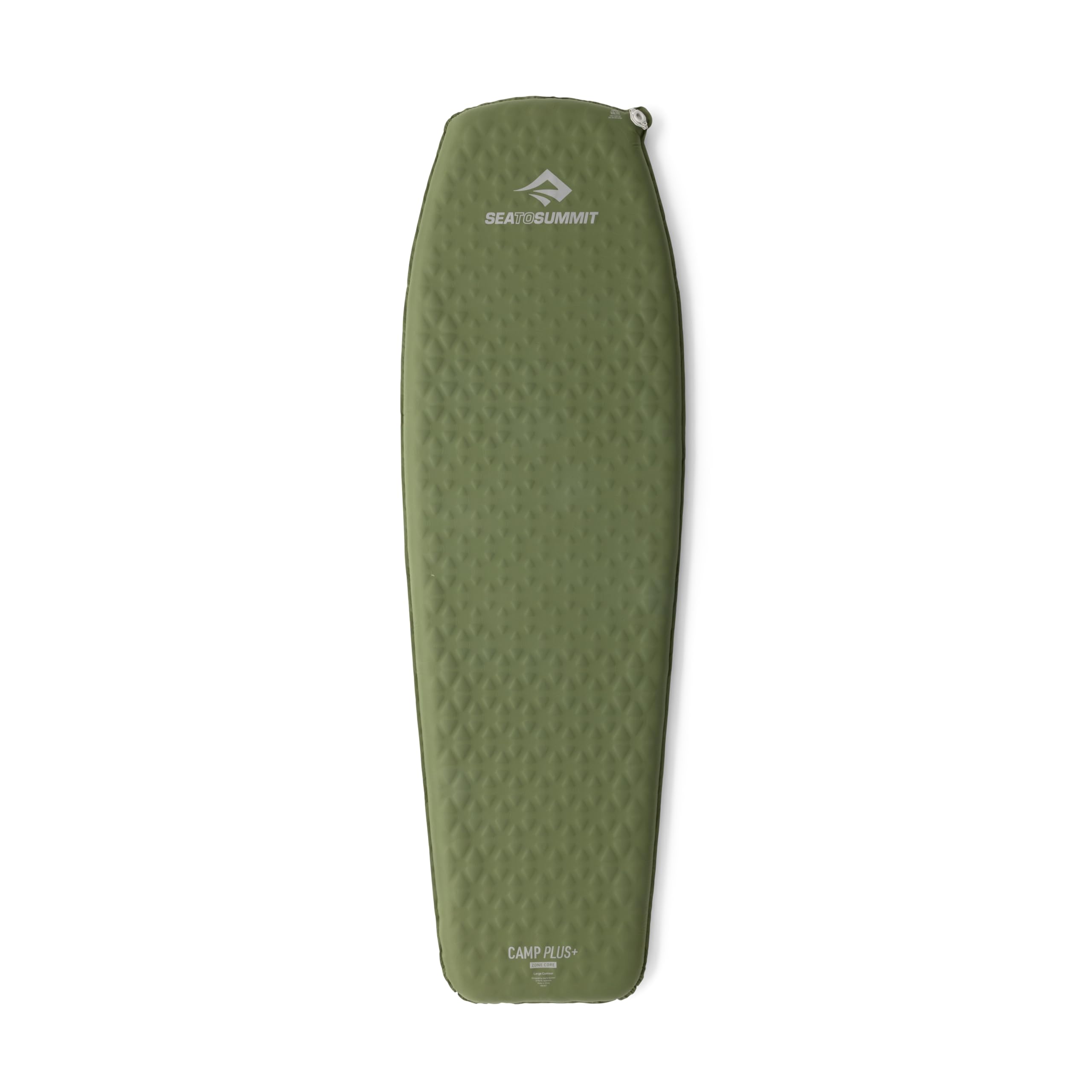
This Australian brand packs a genuine four-season foam pad into a portable 2.3-pound package that rolls to 11×6.3 inches — a compromise that sacrifices some thickness for real weight and space savings. The 2.6-inch height and 4.3 R-value handle typical three-season camping down to freezing, while the innovative coring technique removes foam from non-critical areas to reduce bulk without sacrificing core support.
The body-mapped air zone construction insulates where your body contacts the ground and reduces material where it doesn’t, keeping the tapered shape light. The Regular size measures 72×22 inches, a narrower profile that saves weight but may feel restrictive for broad-shouldered sleepers. The multi-function reversible valve handles fast inflation, one-way deflation, and fine-tuning, upgraded with the xpel valve design for tighter rolls during storage.
Durable 75D polyester face fabric has survived direct Death Valley sun, sand, and rock without puncturing, according to long-term owners. The self-inflation process is slow initially because the foam ships compressed — expect to leave it open for hours or days before it reaches full loft. Pack-down requires rolling the foam tight, and the pad tends to expand slightly more than its original compressed volume over time, adding about a liter to packed size.
Why it’s great
- Lightweight enough for carry-to-site camping at 2.3 pounds
- Corning technique saves packed space without sacrificing warmth
- Durable outer fabric withstands harsh terrain
Good to know
- Initial self-inflation is very slow after shipping compression
- Narrow 22-inch width limits movement for larger sleepers
6. DIVON Twin Air Mattress with Built-in Pump
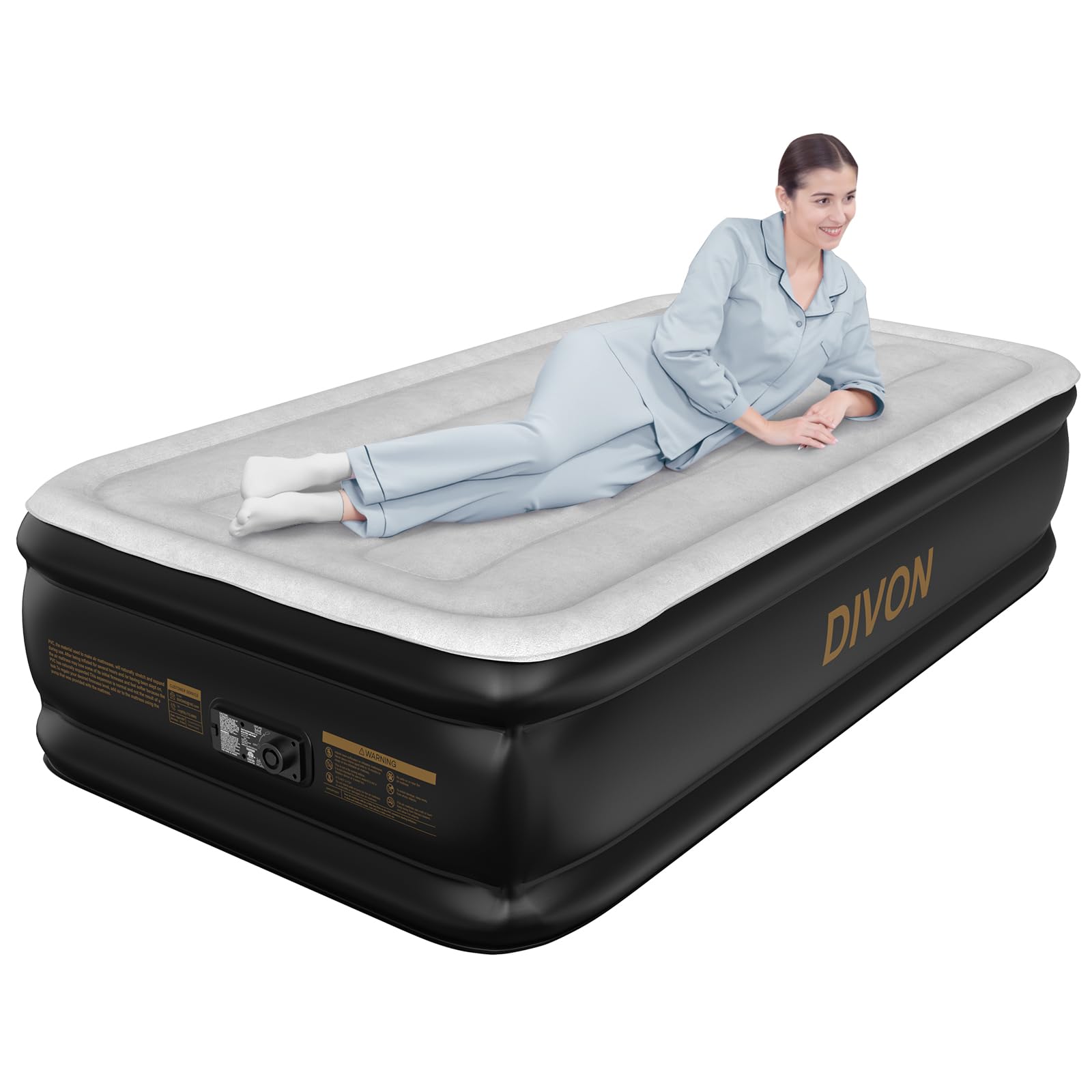
This twin-size air mattress brings a home-bed feel to the campsite with an 18-inch raised profile that makes getting in and out far easier than low-profile camping pads. The patented vertical beam design uses advanced weight distribution to minimize pressure points, supporting up to 330 pounds with ergonomic alignment. The elegant wave surface and soft suede topper resist sinking while providing a non-slip base for sheets.
The integrated 120V pump inflates the 75×39-inch mattress in about two to three minutes and deflates just as quickly. The 30% thicker PVC construction compared to standard air beds prevents overnight deflation in real-world use — owners have reported holding firm air for 12 consecutive nights without topping up. The included carry bag makes storage compact, and the repair patch handles the rare puncture.
At this price point, the DIVON competes directly with SoundAsleep for guest-bed duty but offers a smaller twin footprint better suited for solo camping or fitting inside smaller dome tents. The suede top is notably warmer to the touch than cheaper vinyl, and the quiet pump operation doesn’t wake tent mates. Some owners note a slight crinkle noise when shifting weight, typical of raised air bed construction at this level.
Why it’s great
- 18-inch height mimics a real bed for easy entry
- Thicker PVC holds air reliably through multi-night trips
- Built-in pump inflates in under 3 minutes
Good to know
- Slight crinkle noise when shifting weight
- Requires AC power for the pump, limiting remote use
7. Wevelel Memory Sleeping Pad

The Wevelel pad undercuts most competitors on cost while delivering an extraordinary R-value of 9.5 and a generous 3.1-inch thickness. The 50D memory foam core is significantly denser than the 19D foam found in many budget camping pads, providing better resilience and weight distribution at the contact points. The 77×26.98-inch size supports up to 800 pounds in static load testing, making it one of the most durable options in the budget tier.
Setup takes about 30 seconds with the self-inflation method: open all three valves, let the foam expand for 10 seconds, close the back two valves, then step on the front inlet valve for 20 seconds. The dual-use valve is clever — during deflation, opening only the first layer lets air out without sucking back in, simplifying roll-up. The 50D stretch knit fabric top is breathable, quiet, and tear-resistant.
At 6.59 pounds, this is a car camping pad rather than a backpacking piece. The built-in pillow is too low for most adult sleepers, but the pad’s overall comfort compensates. Owners report using it for field work with the Army, hotel mattress toppers, and guest beds — a versatility that speaks to its surprising quality. The included shoulder storage bag makes transport manageable despite the weight.
Why it’s great
- 50D memory foam provides exceptional support for the price
- R-value 9.5 rivals premium pads at half the cost
- Dual-use valve prevents air re-entry during deflation
Good to know
- Built-in pillow is too low for most sleepers
- Bulky deflated size is not suitable for backpacking
FAQ
What R-value do I need for camping in 40-degree weather?
Can I use a self-inflating pad for backpacking?
Why does my self-inflating pad not fully inflate automatically?
Does a wider pad always mean more comfort for side sleepers?
How do I repair a slow leak in my camping air mattress?
Final Thoughts: The Verdict
For most campers, the air mattress for camping winner is the Therm-a-Rest MondoKing 3D because it combines 4.25 inches of vertical wall support, a 7.0 R-value for true winter use, and the most comfortable foam-air hybrid platform available. If you want a lighter, packable three-season pad that packs smaller, grab the Sea to Summit Camp Plus. And for budget-conscious car campers who need maximum insulation without spending premium money, nothing beats the Hikenture Comfort Plus with its 9.5 R-value and 4-inch thickness at a mid-range price.