
Our readers keep the lights on and the weekend projects moving. As an Amazon Associate, I earn from qualifying purchases.
Carpenter bees drill into untreated wood, creating damage that worsens each season. You need a solution that stops them at the source, whether you’re protecting a cedar deck, a wooden fence, or your home’s eaves. These solitary bees tunnel into softwoods to lay eggs, and left unchecked, they attract woodpeckers that cause even more destruction.
I’m Rikta — the co-founder and writer behind FitlyFast. I’ve spent hundreds of hours analyzing trap designs, comparing baiting methods, reading through verified buyer experiences, and examining the key specs that separate effective carpenter bee traps from those that simply look the part.
This guide delivers a thorough breakdown of the most reliable options available so you can choose the best carpenter bee trap for your specific outdoor setup and infestation level without wasting money on gimmicks.
How To Choose The Best Carpenter Bee Trap
Carpenter bees are drawn to exposed wood, but not all traps lure them equally. The material of the trap, its entry design, and the type of bait used all influence how quickly you’ll see results. Understanding these factors helps you pick a trap that matches your property’s specific situation without overpaying.
Trap Construction Material
Wood traps, especially those made from cedar, naturally mimic the surfaces carpenter bees target, making them more attractive without added bait. Plastic traps rely on color or internal chambers to lure bees and often require a dead bee or commercial lure to become effective. Wood traps also blend into outdoor aesthetics better than bright plastic alternatives.
Reusable vs Disposable Designs
Reusable traps with a catch chamber allow you to release or dispose of captured bees and reuse the trap season after season. Disposable sticky traps are simpler to set up but need replacement every few months and can catch non-target insects. If you want a long-term solution that doesn’t produce ongoing waste, invest in a durable reusable model.
Effective Range and Placement
Most quality carpenter bee traps cover a radius of 5 to 15 feet. Positioning the trap within this range of known nesting holes is critical for success. Hanging the trap near eaves, under decks, or along fence lines where you’ve seen drilling activity maximizes capture rates. Placing traps in sun-exposed areas also helps because bees prefer warmer spots.
Quick Comparison
On smaller screens, swipe sideways to see the full table.
| Model | Category | Best For | Key Spec | Amazon |
|---|---|---|---|---|
| Best Bee Brothers Ultimate Pro (2 Pack) | Premium Reusable | Maximum capture with external viewport | 15 ft effective radius | Amazon |
| Best Bee Brothers Turbo Trap 2.0 (2 Pack) | Premium Reusable | Two-pack value with 20% more capacity | 4-chamber Turbo funnel | Amazon |
| Wood Carpenter Bee Trap Amish-Made Cedar | Wood Reusable | Natural cedar aesthetic | 4.5″ x 3.25″ x 10″ dimensions | Amazon |
| GRTRE Brain’s Bee Butter (2 Pack) | Paste Treatment | Direct hole application | Non-staining, non-scented | Amazon |
| Bee Warehouse Catch & Release | Reusable Wood/Plastic | Safe relocation of carpenter bees | Extra large catch chamber | Amazon |
| RESCUE! TrapStik (4 Pack) | Disposable Sticky | Sticky surface with VisiLure colors | VisiLure color technology | Amazon |
| Stingmon Wasp Traps (4 Pack) | Multi-Species | Budget-friendly multi-pack | 5.12″ x 5.12″ x 4.72″ size | Amazon |
In‑Depth Reviews
1. Best Bee Brothers Ultimate Pro (2 Pack)

The Ultimate Pro from Best Bee Brothers stands out because of its extra-large external receptacle, which lets you monitor capture levels without opening the trap or disturbing the bees inside. The aerated design allows pheromones and sounds from captured bees to escape, actively attracting more carpenter bees to the trap. This behavior-based approach covers a 15-foot radius, making it one of the most effective units for protecting larger wooden structures.
The spring-loaded release door connects to a 9-foot pull string, enabling touch-free disposal from the ground. You can empty the trap without climbing ladders or handling dead bees. The internal Bee Vault is lined with plastic to prevent bees from chewing through, addressing a common failure point in all-wood designs. Customers report catching 5-6 bees within days and seeing activity drop significantly over the following weeks.
Some users noted that bees can escape if the receptacle isn’t fully sealed, and the unit costs more than simpler traps. However, the combination of an XL viewport, chemical-free operation, and durable construction that can last three seasons outdoors makes this a smart long-term investment for serious infestations.
Why it’s great
- Extra-large external receptacle for easy monitoring
- Touch-free disposal with 9-foot pull string
- 15-foot effective coverage radius
- Durable build lasting multiple seasons
Good to know
- Premium price point for a single trap
- Requires baiting to start
- Some bees may escape if door is not fully closed
2. Best Bee Brothers Turbo Trap 2.0 (2 Pack)

Best Bee Brothers refined their original Turbo Trap by adding 20% more internal capacity and a four-chamber Turbo funnel that prevents bees from finding their way back out. The funnel design uses gravity and confusion, so once bees enter through the top, they drop into one of the chambers and can’t navigate back to the entrance. This makes the trap especially effective against the most persistent carpenter bees that try to escape larger chambers.
The large viewport lets you check the trap’s status from a distance, which is useful if you’ve hung it high under eaves or on a second-story deck. The two-pack provides excellent coverage for opposite sides of a house or for structures with multiple active holes. Customers appreciate the sturdy protective roof that prevents warping, a common issue with cheaper plastic traps left in direct sun.
A few buyers mentioned the price is higher than basic traps, but the quality of materials and the reusable nature of the design balance the cost over several seasons. The trap only catches carpenter bees, leaving honeybees and bumblebees alone, which is important for maintaining a healthy local pollinator population.
Why it’s great
- Four-chamber funnel prevents escape
- Two-pack for broader coverage
- Weather-resistant build with protective roof
- Non-toxic, chemical-free operation
Good to know
- Requires baiting with dead bee or lure
- May need seasonal repositioning
- Plastic construction not as aesthetic as wood
3. Wood Carpenter Bee Trap Amish-Made Cedar
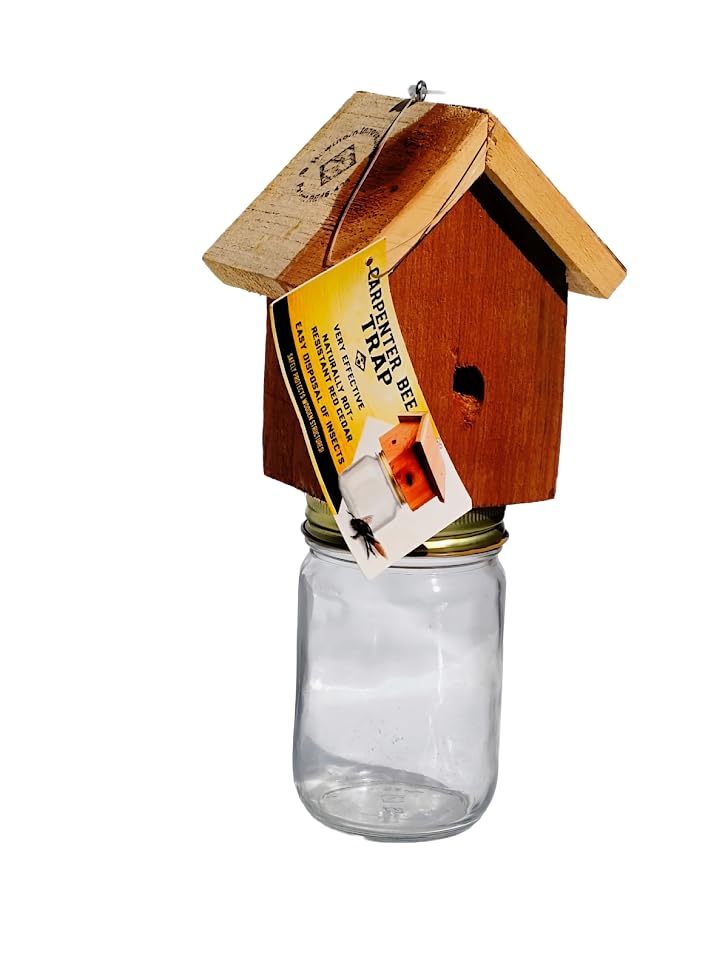
This hand-crafted trap from Amish makers uses natural cedar, which inherently attracts carpenter bees because it mimics the softwood they target for nesting. The wood construction also absorbs and releases pheromones from captured bees, acting as a natural lure that draws more bees to the trap over time. Patent RE46,421 covers the design that mimics the bee’s natural nest while preventing honeybees from being attracted.
The trap measures 4.5 inches by 3.25 inches by 10 inches, providing a compact profile that looks like a decorative birdhouse rather than an insect trap. Hanging it under eaves or on fence posts blends into the environment while doing its job. Users report catching 6 carpenter bees in 3 days with a single trap, and two traps can capture roughly 24 bees over a season.
Some customers noted the wood feels a bit rough and the trap is top-heavy, which means it can tip if placed on a flat surface without securing it. A dead bee inside the trap is the most effective bait to kickstart captures. While the upfront cost is higher than plastic alternatives, the natural wood construction lasts for years and doesn’t require replacement sticky surfaces.
Why it’s great
- Natural cedar attracts bees without chemical bait
- Amish craftsmanship with durable wood
- 100% chemical-free and pet-safe
- Blends into outdoor decor
Good to know
- Requires dead bee as initial lure
- Top-heavy design needs secure hanging
- Rough wood finish may not suit all aesthetics
4. GRTRE Brain’s Bee Butter (2 Pack)
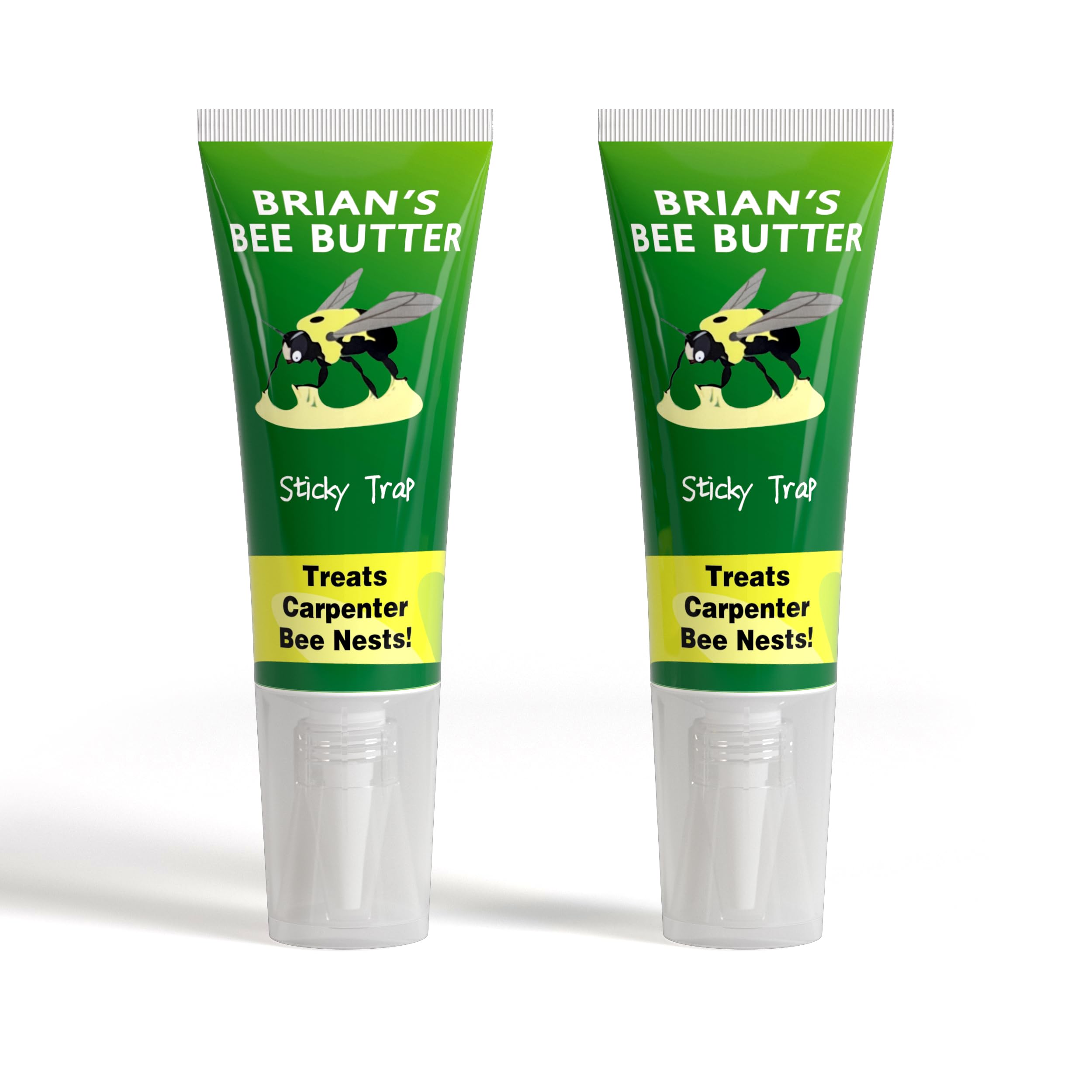
Brain’s Bee Butter takes a completely different approach by going directly into the nesting holes rather than trapping bees after they’ve flown out. You squeeze the paste into active holes in the wood, and carpenter bees that come into contact with it die within minutes.
The formula is non-staining and non-scented, leaving no visible residue or odor on the wood. This makes it ideal for decks, pergolas, and wooden siding where you don’t want discoloration. One user reported killing over 30 carpenter bees in 2-3 days after applying it to holes in a cedar pergola, with no activity for the rest of the season. A spring reapplication handled a lone bee within 3 minutes.
This product is not a trap but a treatment, so it won’t work for prevention or for bees that haven’t drilled holes yet. The two-pack provides enough paste for several active nests, but heavy infestations may require multiple tubes. It’s a targeted solution that works well alongside traps for comprehensive protection.
Why it’s great
- Works within minutes on contact
- Non-staining and odorless formula
- Lasts over a year per application
- Targets bees directly in nesting holes
Good to know
- Requires existing holes for application
- Not a trap – does not prevent new drilling
- Expensive for small quantities
5. Bee Warehouse Catch & Release
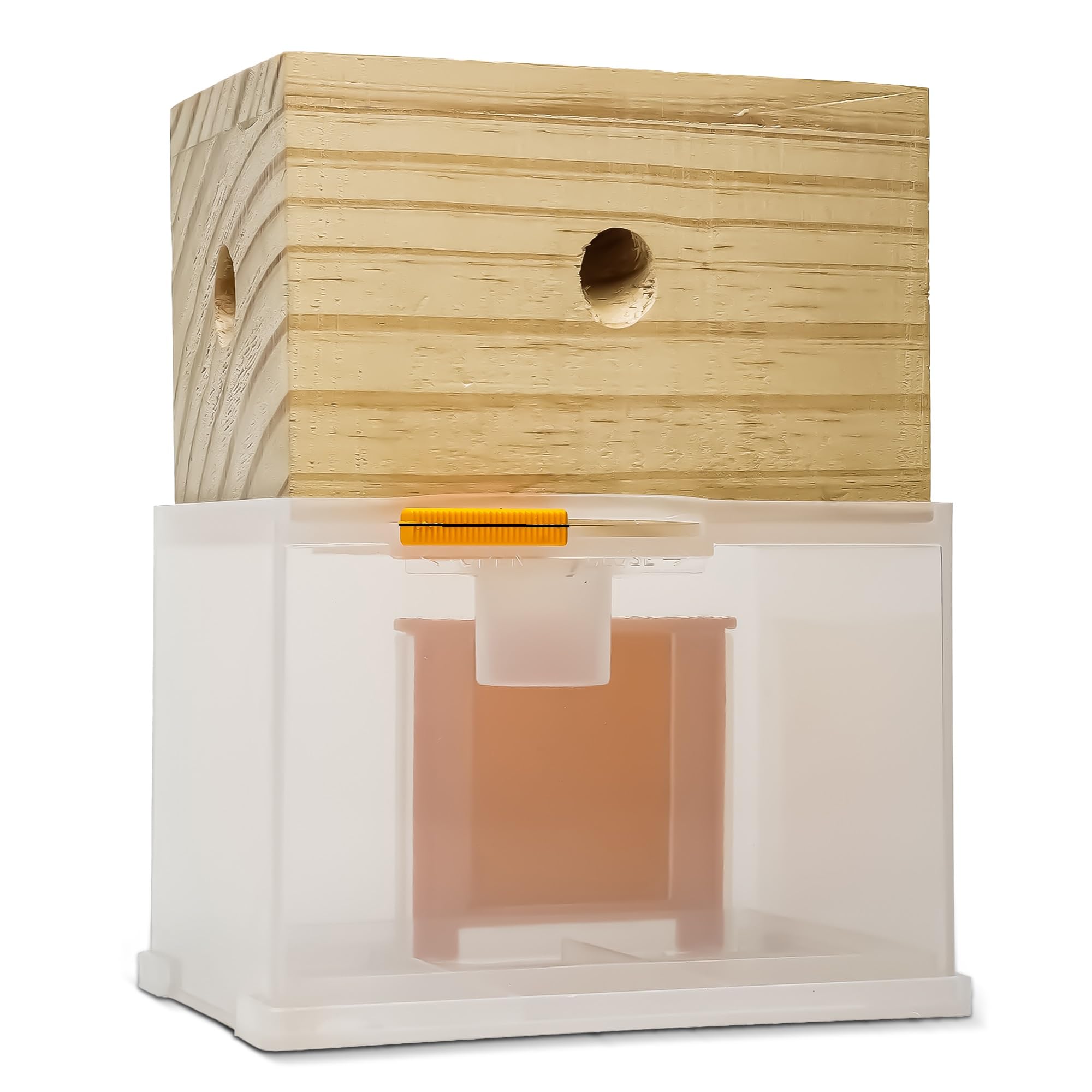
The Bee Warehouse trap prioritizes ethical pest control by including a latch that lets you close the catch chamber and transport captured bees to a remote location for release. The extra-large chamber usually only needs emptying once a year, which saves you from climbing ladders frequently. This design is ideal for homeowners who want to reduce bee damage without killing pollinators.
The trap combines wood with plastic components, offering the attractiveness of natural materials with the durability of plastic. It includes hanging hardware and 5 bee dams, which plug existing holes to force roaming bees into the trap. The effective range spans 5-15 feet, and the pre-drilled holes specifically attract carpenter bees while leaving honeybees, bumblebees, and leafcutters alone.
Some customers reported quality control issues with missing hanger screws, and the instructions suggest capturing a live bee as bait, which can be difficult without getting stung. Using a dead bee or commercial lure works better. The trap’s sturdy rectangular shape sits well on flat surfaces without tipping, unlike jar-based designs that often fall and break.
Why it’s great
- Catch & release design for ethical relocation
- Large chamber requires emptying only once a year
- Includes 5 bee dams for hole plugging
- Does not attract honeybees or bumblebees
Good to know
- Quality control issues with missing hardware
- Instructions recommend hard-to-capture live bait
- Sturdy but may need weight to stabilize on flat surfaces
6. RESCUE! TrapStik (4 Pack)

The RESCUE! TrapStik uses VisiLure technology, a multi-dimensional color pattern that visually attracts carpenter bees, wasps, red wasps, and mud daubers. Once they land on the sticky surface, they become trapped and expire. The unique Glue Guards create a barrier around the sticky area to reduce accidental captures of birds or other non-target animals.
This trap catches both queens and workers from spring through fall, which is crucial for breaking the reproductive cycle. Users report catching hundreds of yellow jackets and paper wasps within the first day, and the trap remains effective in rain, sun, and wind for about 3 months before needing replacement. The four-pack provides season-long coverage for multiple locations around the property.
Some reviewers noted that the TrapStik catches more wasps than carpenter bees, making it less ideal if you only want to target wood-boring bees. The sticky surface can also catch leaves and debris in windy areas, reducing effectiveness. Unlike reusable traps, these are disposable and create ongoing waste, but the low-maintenance setup appeals to those who want a set-and-forget solution.
Why it’s great
- VisiLure colors attract multiple species
- Glue Guards protect non-target animals
- Lasts 3 months outdoors
- Catches queens and workers year-round
Good to know
- Catches more wasps than carpenter bees
- Disposable design creates waste
- Sticky surface can catch debris
7. Stingmon Wasp Traps (4 Pack)
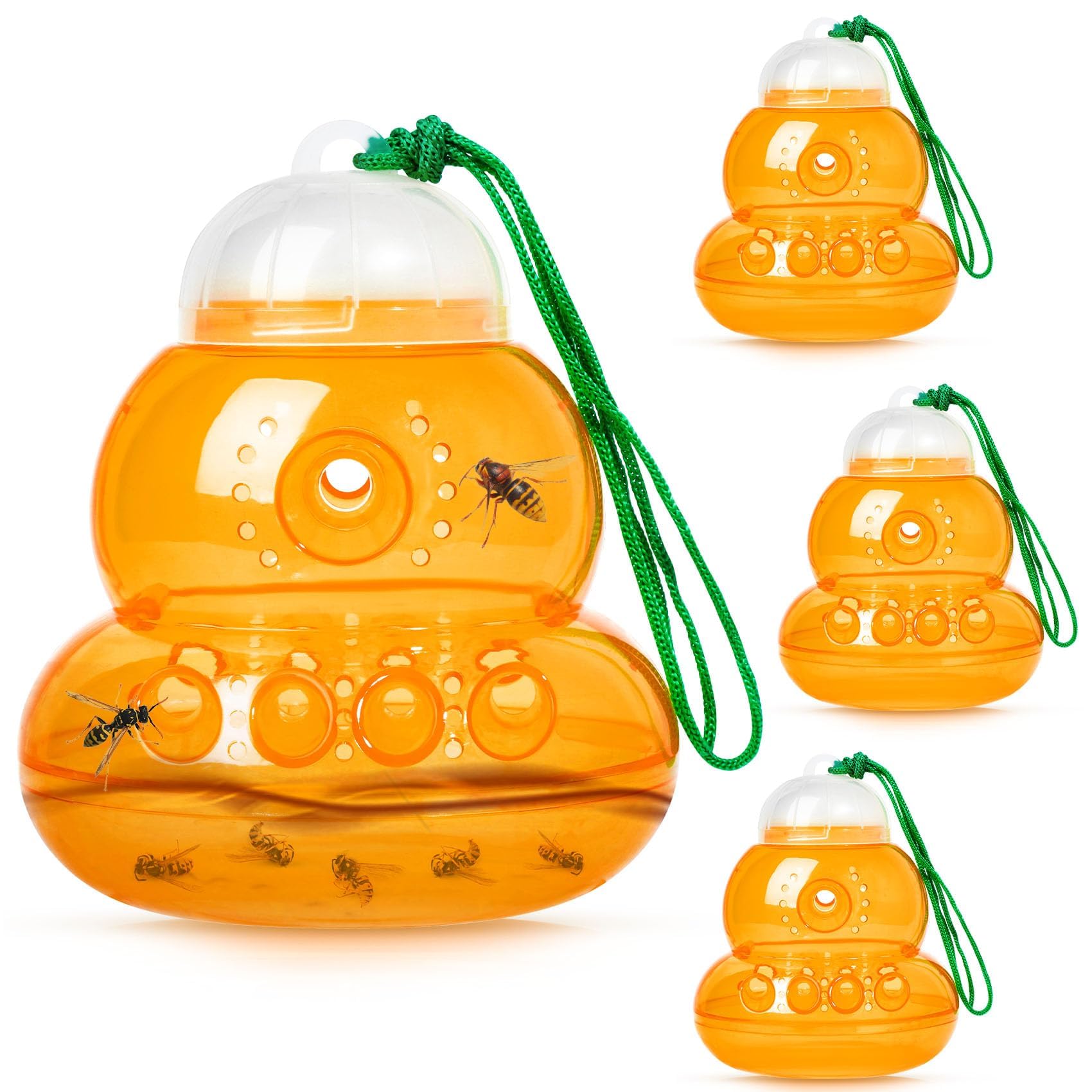
The Stingmon traps are a budget-friendly entry point for controlling carpenter bees, wasps, yellow jackets, and other flying insects. The multi-tunnel design allows pests to enter from all directions, and the integrated bottom prevents leaking while allowing easy disassembly for cleaning. You fill the reservoir with natural bait like beer, wine, or fruit vinegar, avoiding chemical attractants.
These traps come in orange or yellow, letting you choose the color that matches your outdoor setting or local insect preferences. The 4-pack gives you plenty of coverage for a garden, orchard, or farm, and the included lanyards make hanging simple. Users report noticeable reductions in bee and wasp activity within days of setup.
Because these traps use food-based bait, they attract a wide range of insects, not just carpenter bees. You may catch more yellow jackets and flies than target species. The plastic construction is lightweight and can warp if left in direct sunlight for extended periods. For the price, this multi-pack works well as a general flying insect trap, but serious carpenter bee infestations warrant a more targeted design.
Why it’s great
- Budget-friendly 4-pack for broad coverage
- Uses natural food-based bait
- Multi-tunnel entry catches from all directions
- Easy to clean and reusable
Good to know
- Attracts many species, not just carpenter bees
- Lightweight plastic can warp in sun
- Requires baiting with beer or vinegar
FAQ
Do I need to bait a carpenter bee trap to make it work?
Will a carpenter bee trap catch honeybees or bumblebees?
Where should I hang a carpenter bee trap for best results?
How often do I need to empty a reusable carpenter bee trap?
Can carpenter bee traps prevent future damage to my wood structures?
Final Thoughts: The Verdict
For most users, the best carpenter bee trap winner is the Best Bee Brothers Ultimate Pro (2 Pack) because its external viewport, touch-free disposal, and 15-foot effective radius deliver professional-grade performance without chemicals. If you want a natural wood aesthetic that doubles as yard decor, grab the Wood Carpenter Bee Trap Amish-Made Cedar. And for budget-friendly coverage across multiple locations, the Stingmon Wasp Traps (4 Pack) provide solid results for the price.