
Our readers keep the lights on and the weekend projects moving. As an Amazon Associate, I earn from qualifying purchases.
The frustration is universal: you’re deep into a sprint, a climb, or a backhand swing, and your glasses start sliding down your nose. You push them up, they slide again. You adjust the grip, they fog up. Your focus breaks, your rhythm shatters. Athletic glasses are supposed to solve this problem, not become the problem. The right pair stays locked on your face, cuts glare without distorting the ball or the trail, and feels like a natural extension of your head rather than a plastic nuisance.
I’m Rikta — the co-founder and writer behind FitlyFast. I’ve spent hundreds of hours analyzing sports eyewear construction, lens chemistry, and frame geometries across dozens of brands to understand exactly which specs separate a durable performer from a disappointing purchase. This guide cuts through the marketing noise to deliver actionable, category-specific data.
After evaluating grip technologies, lens materials, and weight distribution, these are the criteria you need to know before choosing the best athletic glasses for your sport and face shape.
How To Choose The Best Athletic Glasses
Not every athletic pair is built for your specific activity. A wrap-around cycling shield has a different fit profile than a low-profile running frame, and the wrong lens can ruin depth perception on the golf course. Focus on these three factors to narrow your list.
Frame Weight and Material
Every gram matters when you’re moving. Frames made from Grilamid TR-90 nylon strike the best balance between extreme lightness (often under 30 grams) and impact-resistant durability. Heavier plastic frames cause bounce and fatigue, especially during running or high-cadence cycling. Check the product weight — a difference of 10 grams is noticeable after an hour of activity.
Grip Technology: Hydrophilic vs. Rubber
The biggest pain point is slippage. Look for hydrophilic rubber on the nose bridge and temple tips — this material actually increases its grip as you sweat, rather than getting slippery. Standard rubber grips can lose hold when wet. Adjustable nose pieces add another layer of custom security for different nose bridge heights.
Lens Type: Polarized vs. Photochromic
Polarized lenses excel at cutting glare from water, pavement, and snow, making them ideal for cycling and running in bright conditions. Photochromic lenses automatically adjust tint from clear to dark based on UV exposure, which is perfect for activities that transition between shade and sunlight, like trail running or mountain biking. Note that budget photochromic options may not get dark enough for full midday sun — check user feedback on transition range.
Quick Comparison
On smaller screens, swipe sideways to see the full table.
| Model | Category | Best For | Key Spec | Amazon |
|---|---|---|---|---|
| TriEye Cycling Glasses | Premium | Road Cycling Safety | Built-in rear-view mirror | Amazon |
| Blenders Eclipse | Premium | Style + Active Lifestyle | TR-90 frame / Polarized lens | Amazon |
| Tifosi Seek FC 2.0 | Mid-Range | Cycling / Pickleball | Adjustable nose pieces | Amazon |
| 100% Speedcraft | Mid-Range | High-Speed Cycling / Baseball | 5.5-base cylindrical shield | Amazon |
| goodr BFG | Mid-Range | Running / Daily Wear | Large fit / Polarized lens | Amazon |
| Tifosi Vogel SL | Mid-Range | Multi-Sport (Baseball/Golf) | 26g / Hydrophilic grip | Amazon |
| KAPVOE K76 | Budget | Day-Night Cycling | Photochromic lens | Amazon |
In‑Depth Reviews
1. TriEye Cycling Glasses with Rear-view Mirror
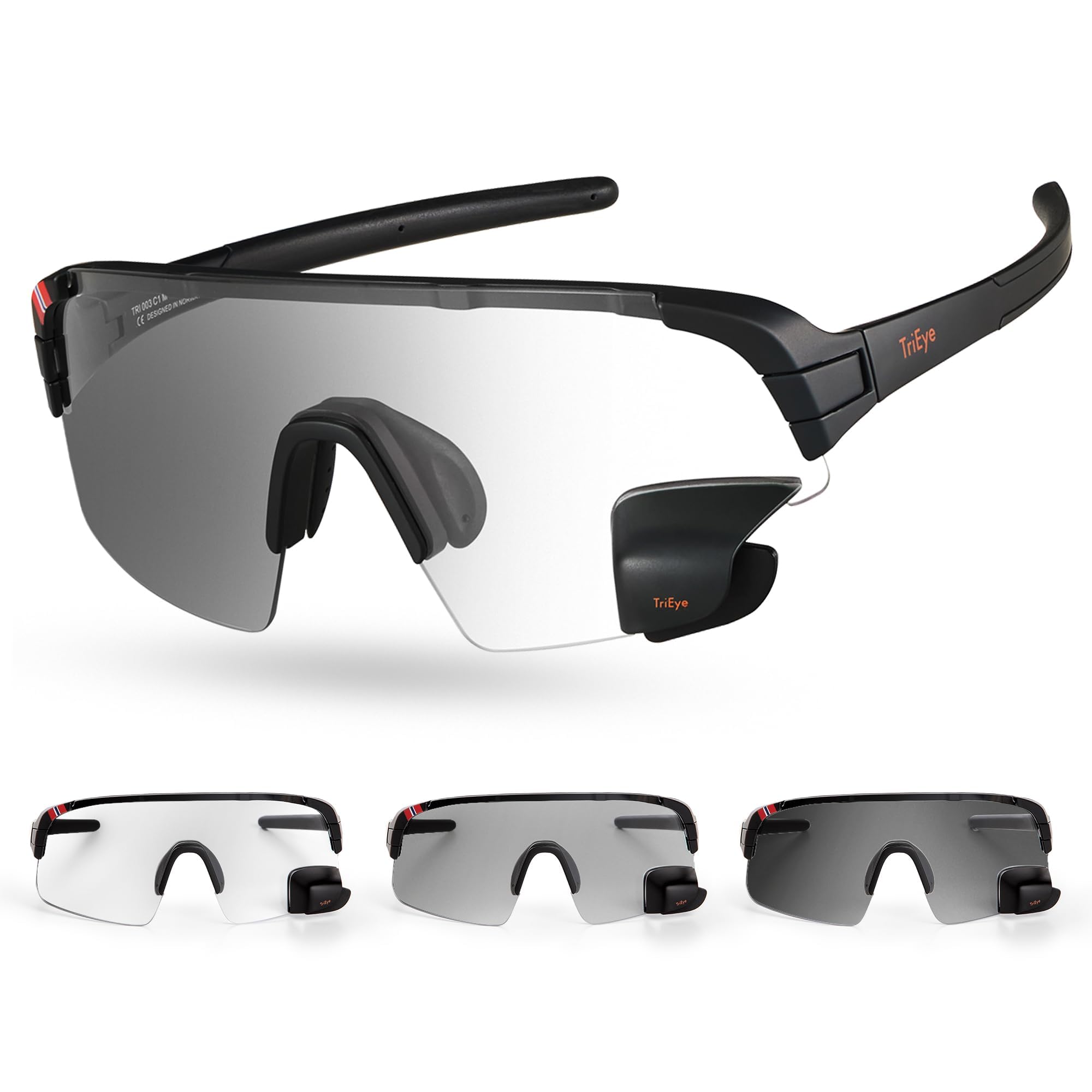
This is not a traditional pair of athletic glasses — it is a specialized tool for road cyclists who want to eliminate the blind spot without attaching a clunky mirror to their helmet. The integrated rear-view mirror sits inside the frame on the left temple, providing a clear, shake-free view of traffic behind you. Riders who have logged over 150 miles with these report that the mirror requires only a 3 to 5 degree head turn, a massive improvement over the constant readjustment of wire-attached mirrors.
The photochromic lens option is strongly recommended here, since the mirror is tiny and best suited for scanning — you will not want to swap lenses mid-ride. Early adopters note that the initial adjustment of the mirror angle can be slightly tedious, but once set, it stays locked. Build quality feels premium, and the frame is comfortable enough to wear with aerodynamic helmets and bone-conduction headphones simultaneously.
This is the only entry on this list that actively improves your situational safety. For solo riders who train on roads shared with cars, the TriEye is a genuine safety investment rather than just a glare-reduction tool. The mirror is smaller than a traditional helmet-mounted mirror, so in very dense group rides, its field of view can be blocked by other riders — but as a daily driver for solo training, it is transformative.
Why it’s great
- Integrated rear-view mirror eliminates helmet clutter
- Photochromic lens adapts from dawn to dusk riding
- Frame is comfortable with aero helmets and headphones
Good to know
- Mirror adjustment is fiddly on first setup
- Small mirror volume limits peripheral view in tight group rides
2. Blenders Eyewear Eclipse
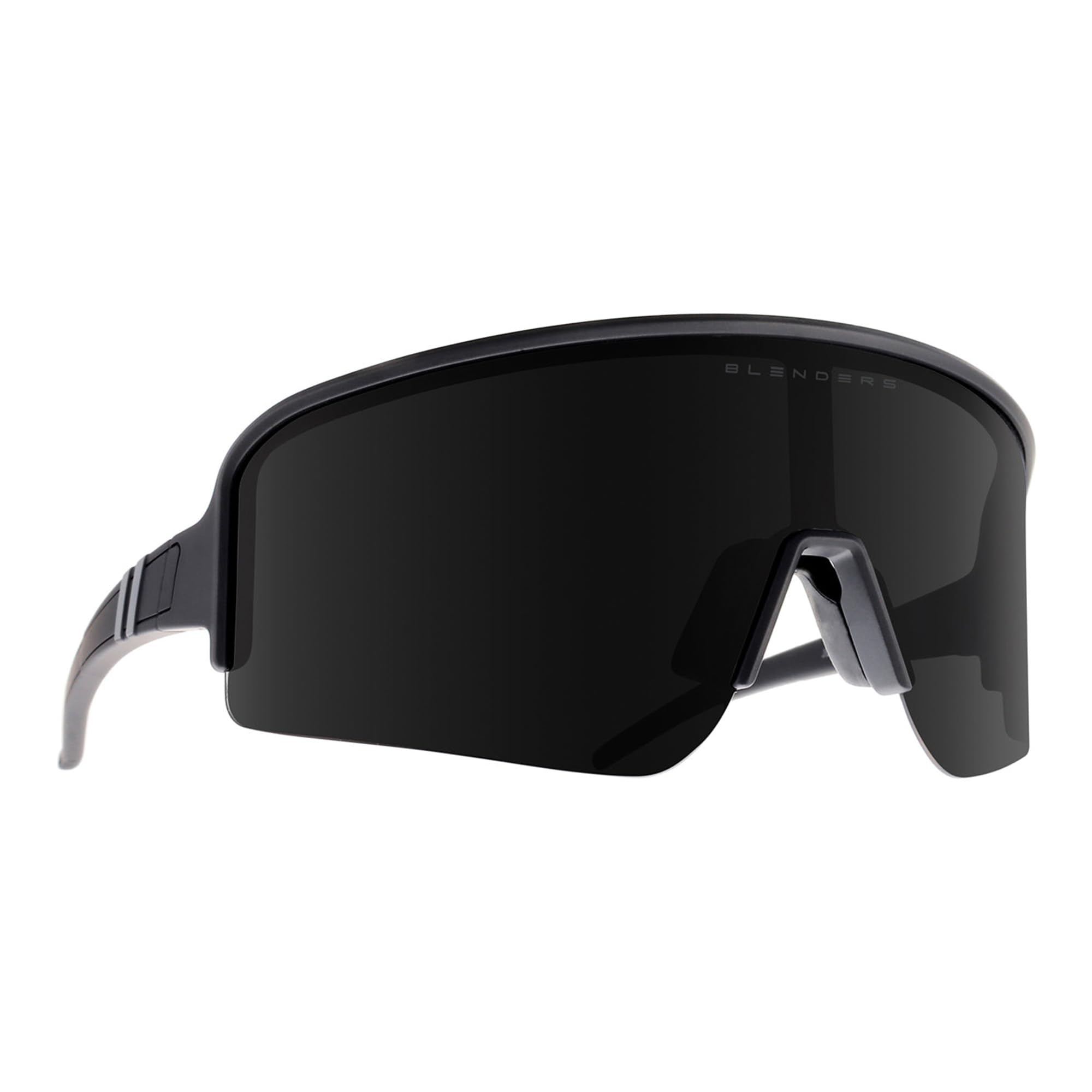
The Eclipse wraps serious performance features in a stealthy aesthetic that looks just as good off the bike as on it. The single-lens wraparound design in the “Jet Line” colorway uses a smoke polarized lens that cuts glare from pavement and water effectively. Users consistently praise its durability and the fact that it comes with both a hard case and a soft case — a small but meaningful detail for athletes who toss their gear in a bag.
At this price point, the TR-90 frame material is exactly what you want: lightweight, flexible, and resistant to UV damage and chemical degradation from sweat. The fit is listed as medium-large, and feedback indicates it works well for wider faces. A few runners report some fogging during intense sessions, but for most cycling and daily-wear scenarios, the ventilation is adequate.
This pair does not have interchangeable lenses or photochromic technology, so it is best suited for those who need a consistent, polarized shield for bright conditions. If you want one athletic frame that transitions seamlessly from a group ride to brunch without looking like a neon cycling stereotype, this is it. The finish quality and packaging feel distinctly premium.
Why it’s great
- Premium aesthetic suitable for both sport and casual wear
- Sturdy TR-90 frame with secure medium-large fit
- Includes hard and soft cases for protection
Good to know
- Single lens option — no interchangeable or photochromic choice
- May fog slightly during high-intensity running
3. Tifosi Seek FC 2.0
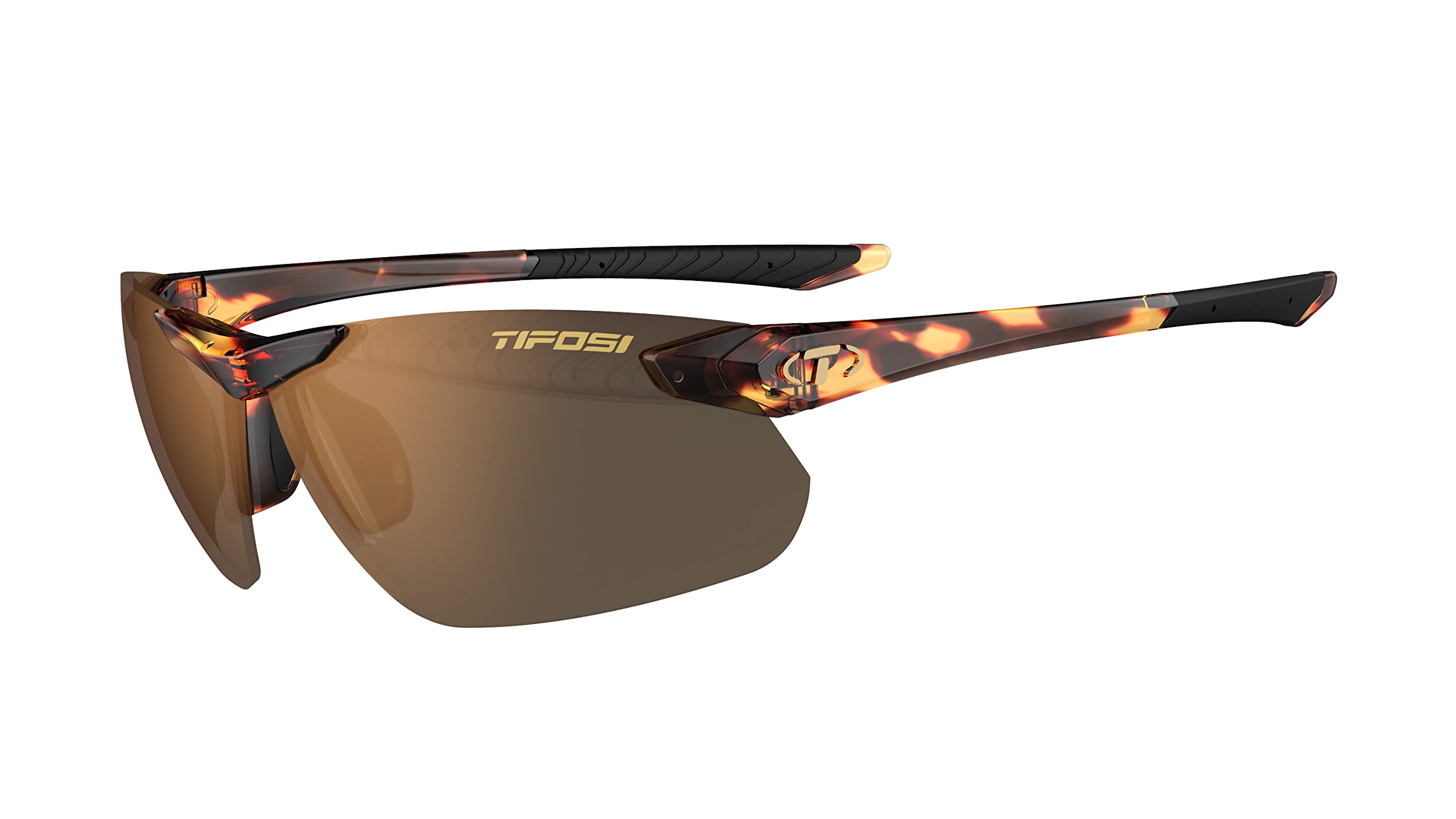
Tifosi has built a strong reputation for delivering race-ready features at approachable price points, and the Seek FC 2.0 is a textbook example. The frame is constructed from Grilamid TR-90 nylon, keeping the weight low while maintaining high impact resistance. The standout feature here is the adjustable hydrophilic rubber nose piece — you can dial in the exact fit, and as you sweat, the grip actually tightens rather than loosens.
Users who road cycle with these report they stay secure under helmets and do not bounce during climbs or descents. The lens is polarized with UVA/UVB 400 protection, making it suitable for bright desert conditions, though one Arizona golfer found the tint too dark for reading greens. A handful of users noted that the lens coating can scratch more easily than premium counterparts, though Tifosi’s customer service was responsive in replacing scratched units.
If you want a dedicated pair of sport glasses that offer a customizable fit and proven grip technology without jumping to flagship prices, this is your window. The style is sporty but understated, and the tortoise shell option adds a touch of character for cyclists who also care about aesthetics.
Why it’s great
- Adjustable nose pieces accommodate varied face shapes
- Hydrophilic rubber increases grip as you sweat
- Lightweight TR-90 frame resists UV and sweat damage
Good to know
- Lens coating may scratch more easily than premium options
- Tint may be too dark for golf in extremely bright conditions
4. 100% Speedcraft

The 100% brand has earned die-hard loyalty among cyclists and baseball players for good reason — their lens clarity is exceptional. The Speedcraft features a 5.5-base cylindrical shield that provides a panoramic field of vision, meaning you can track peripheral movement without turning your head. The photochromic variant tested here transitions smoothly for variable light, and users report that the optical clarity “cuts through fog and haze” in a way that cheaper lenses cannot match.
Another critical design detail is the lower air scoops, which actively channel airflow across the interior of the lens. This dramatically reduces moisture buildup and fogging during high-output efforts. The frame fits larger heads particularly well, and the wrap-around design offers full coverage without obstructing downward vision — ideal for baseball outfielders tracking fly balls or cyclists in an aero tuck.
This is a mid-range-priced pair that competes directly with frames costing significantly more. The scratch-resistant coating and interchangeable lens system add long-term value. If your priority is raw optical performance and a wide field of view during high-speed activities, the Speedcraft is the clear contender in this range.
Why it’s great
- 5.5-base cylindrical shield offers best-in-class peripheral vision
- Lower air scoops actively reduce fogging during intense effort
- Interchangeable lenses with UV400 protection
Good to know
- Best suited for medium to large faces
- Photochromic version may not be dark enough for direct midday glare
5. goodr BFG Polarized Sunglasses

Goodr has cracked the code on making no-nonsense sport sunglasses that actually stay put. The BFG (Big Freaking Glasses) variant is specifically designed for larger faces, offering extra lens coverage without the bulk or bounce of oversized frames. The polarized lenses deliver crisp glare reduction for running, driving, and everyday outdoor use, and the plastic lenses hold up surprisingly well against scratches.
The magic is in the nose piece design. Goodr uses a proprietary grip that puts just the right amount of tension against the sides of your head without causing pinching. Multiple reviewers mention that these are the first athletic glasses they have owned that genuinely do not slip during a sweat-soaked run. They are incredibly lightweight, which means no bounce.
These are not photochromic, they do not have interchangeable lenses, and they are not aimed at single-sport purists. Instead, they are the perfect entry-level pair that works for 90% of recreational athletes. For the price, you are getting a polarized, UV400-rated frame that is stylish enough for daily wear and functional enough for a 10k run. An easy recommendation for the athlete who wants one pair to do it all.
Why it’s great
- Excellent no-slip grip during sweaty, high-movement activity
- Polarized lens with UV400 protection at a competitive price
- Large BFG size offers extra coverage without feeling bulky
Good to know
- Not photochromic — single tint lens only
- No interchangeable lens system for varying light conditions
6. Tifosi Vogel SL
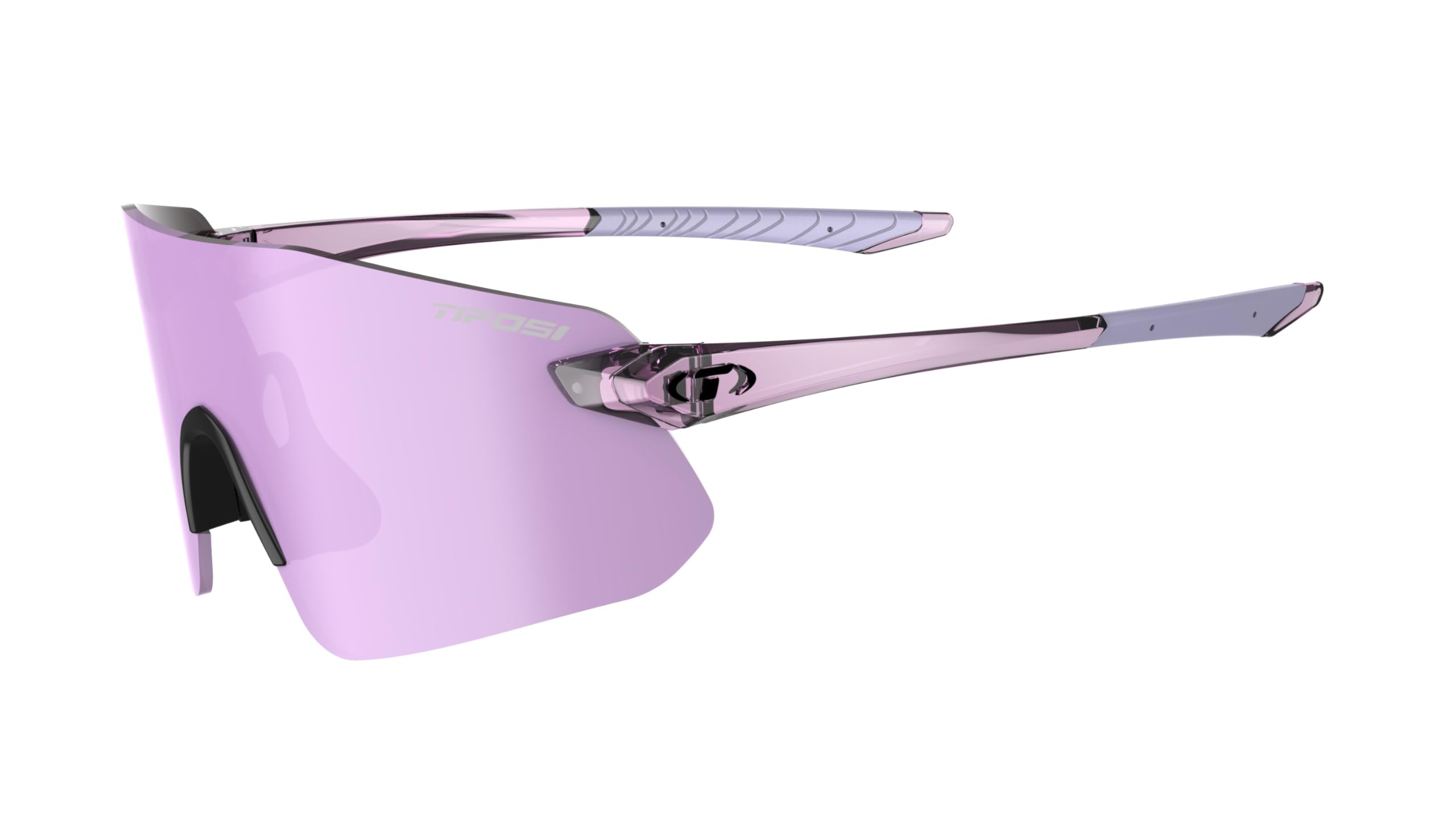
At just 26 grams, the Vogel SL is one of the lightest full-coverage sport shields on the market. This matters enormously for sports like baseball and golf where you need to maintain a still head through a swing. The weight is achieved through a rimless shield design paired with a Grilamid TR-90 frame, without sacrificing durability — reviewers confirm these do not feel flimsy despite the low gram count.
The hydrophilic rubber ear and nose pieces are the same technology found in Tifosi’s higher-priced models. They get tackier as you sweat, locking the frame onto your face with zero bounce. Several users who play volleyball and run intervals report that the Vogel SL stays rock-solid through jumps, sprints, and quick lateral movements. The shatterproof polycarbonate lens also provides consistent color rendering, which is critical for tracking a baseball or reading a green.
One caveat: the fit is rated for large to extra-large faces. A reviewer with a low nose bridge noted that the lens touched their cheekbones, causing sunscreen smudging. If you have a smaller facial profile, this rimless shield may be too wide. For those it fits, however, the combination of barely-there weight, sweat-activated grip, and unobstructed vision is tough to beat at this price tier.
Why it’s great
- Extremely lightweight (26g) minimizes fatigue during long sessions
- Hydrophilic rubber grips harder as you sweat, eliminating bounce
- Rimless design offers wide, unobstructed field of view
Good to know
- Runs large — not ideal for narrow or small faces
- Single lens option; no photochromic or interchangeable lens variants
7. KAPVOE Photochromic Cycling Glasses
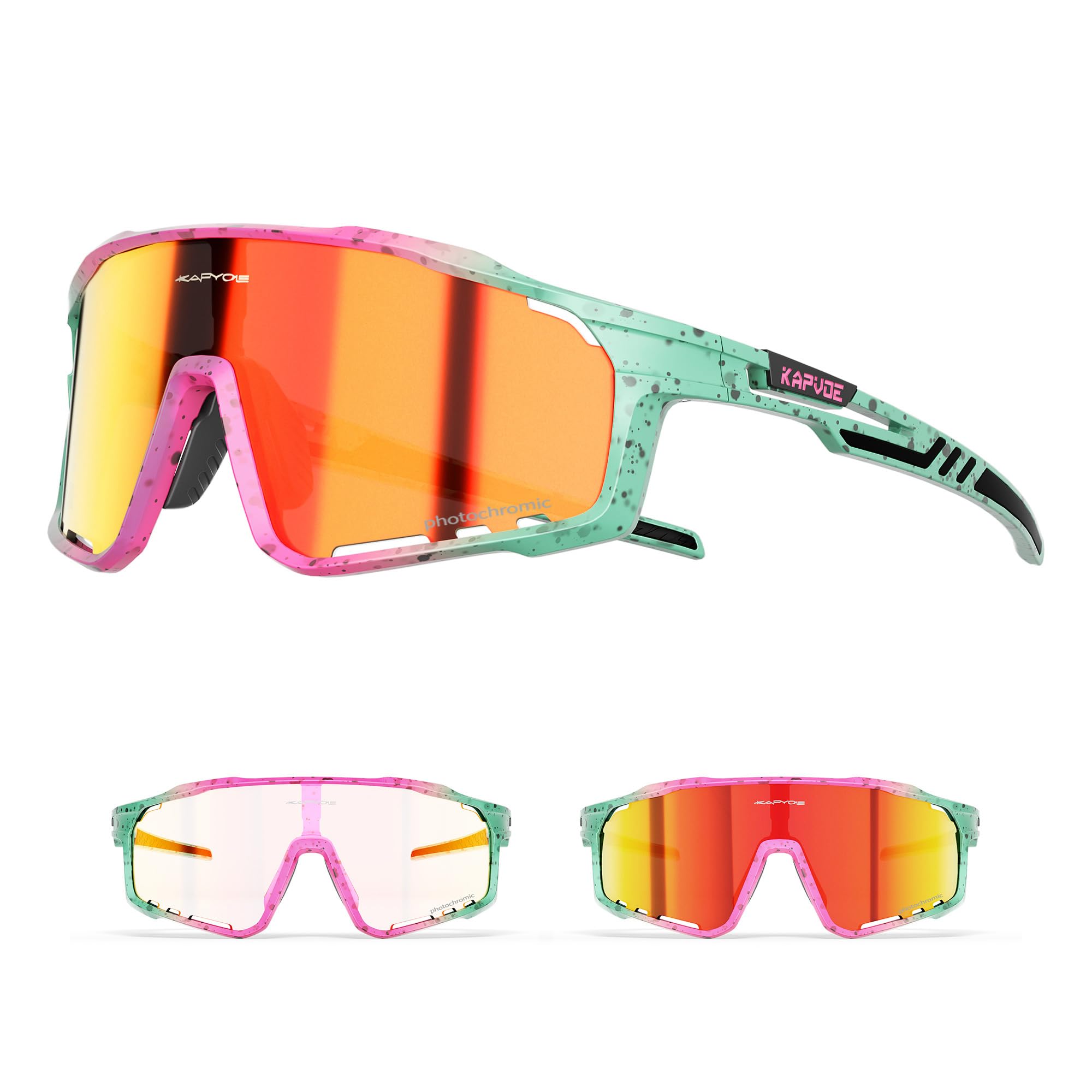
KAPVOE offers a photochromic lens at an entry-level price point, making it a compelling option for casual cyclists or multi-sport athletes who want adaptive tint without a major investment. The frame is lightweight and the lens transitions from a lighter tint indoors to a darker shade in sunlight. Several users confirm the photochromic functionality works well for night riding and overcast days, providing clear vision when you need it most.
That said, this pair has a clear ceiling. Multiple reviews note that the lens does not get dark enough for full, intense midday sun — you will still squint during a noon ride. The fit is also polarizing. Some users find it comfortable and comparable to premium brands like Oakley, while others with large heads report tightness and minor glare along the edges. This is not a safety-rated lens (no Z87 or side shields), so it should not be used for impact-heavy sports.
If you are a fair-weather cyclist or need a spare pair for variable dawn-to-dusk conditions, the KAPVOE delivers surprising value. But serious athletes who train in direct sunlight or demand rigorous impact protection will want to invest in a higher-tier option with dedicated dark tinting and ANSI-rated lenses.
Why it’s great
- Photochromic lens adapts for day/night riding flexibility
- Price point is accessible for budget-conscious athletes
- Lightweight frame with solid build for the cost
Good to know
- Darkest tint not sufficient for full midday sun
- No Z87 or side shield impact safety rating
FAQ
Can I replace the lenses in athletic glasses if I scratch them?
Will photochromic lenses work through a car windshield?
Final Thoughts: The Verdict
For most users, the best athletic glasses winner is the Tifosi Seek FC 2.0 because it combines adjustable nose pieces, hydrophilic sweat-activated grip, and a lightweight TR-90 frame at a price that undercuts premium labels while delivering race-ready performance. If you want the absolute best lens clarity and a panoramic field of view, grab the 100% Speedcraft. And for the cyclist who trains solo on open roads, nothing beats the safety-enhancing TriEye Cycling Glasses.