
Our readers keep the lights on and the weekend projects moving. As an Amazon Associate, I earn from qualifying purchases.
You are hunting for a cheap vlogging camera that does not punish your footage with jittery handheld shake or muddy low-light performance. The temptation is to grab any sub-USD 500 box that says “4K” on the side, but the real difference lives inside the sensor size, the stabilizer type, and the audio path — specs that separate watchable content from forgotten files.
I’m Rikta — the co-founder and writer behind FitlyFast. I have spent hundreds of hours parsing sensor architectures, gimbal designs, and real-world user footage from every compact video camera in this bracket to pinpoint which budget-friendly models actually deliver usable results.
This guide walks you through the seven strongest contenders for the best cheap vlogging camera and explains exactly why one of them remains the undisputed benchmark for first-time creators who need dependable stabilization and true 4K detail.
How To Choose The Best Cheap Vlogging Camera
Vlogging cameras in this price band share a 4K video label, but their real-world output diverges sharply based on three internal design choices. Ignoring these leads to footage that looks worse than a modern smartphone.
Sensor Size Dictates Low-Light Reach
Every cheap vlogging camera relies on either a 1/2.3-inch, a 1/1.3-inch, or a 1-inch CMOS sensor. The 1-inch class captures roughly four times more light than the smallest sensors, which means cleaner shadows and less digital noise when you film indoors or at dusk. A camera that can keep the ISO low preserves detail that entry-level sensors simply crush.
Mechanical Stabilisation vs. Electronic Crop
A true 3-axis gimbal physically counter-rotates the camera module, keeping the horizon level even while you walk. Electronic image stabilization (EIS) crops into the frame and applies software smoothing, which reduces field of view and can introduce a warpy jello effect during fast pans. If your vlogging involves movement — walking, dancing, hiking — a mechanical gimbal is non-negotiable.
Audio Quality and Mic Connectivity
Built-in microphones on compact bodies pick up camera handling noise and wind rumble. The best cheap vlogging cameras either include a directional 3-capsule mic with a wind screen or allow direct connection to a wireless lavalier system. A camera that forces you to sync external audio in post adds friction that kills your upload frequency.
Quick Comparison
On smaller screens, swipe sideways to see the full table.
| Model | Category | Best For | Key Spec | Amazon |
|---|---|---|---|---|
| DJI Osmo Pocket 3 | Premium | Walk-and-talk vlogging | 1″ CMOS, 3‑axis mech. gimbal | Amazon |
| Xtra Muse | Mid-Range | 4K/120fps cinematic b-roll | 1″ CMOS, 3‑axis gimbal | Amazon |
| Canon PowerShot V10 | Mid-Range | Pocket-ready point-and-shoot | 1″ BS‑CMOS, EIS | Amazon |
| DJI Osmo Nano | Mid-Range | Hands-free POV clips | 1/1.3″ sensor, 128GB built‑in | Amazon |
| Sony ZV‑1F | Premium | Vloggers wanting Eye AF | 1″ sensor, 20mm f/2.0 | Amazon |
| Insta360 X4 Air | Premium | 360 reframing later | 8K 360 vid, 165g | Amazon |
| SJCAM C400 | Budget | All-day adventure vlogging | 7‑hour battery, 256GB card | Amazon |
In‑Depth Reviews
5. DJI Osmo Pocket 3
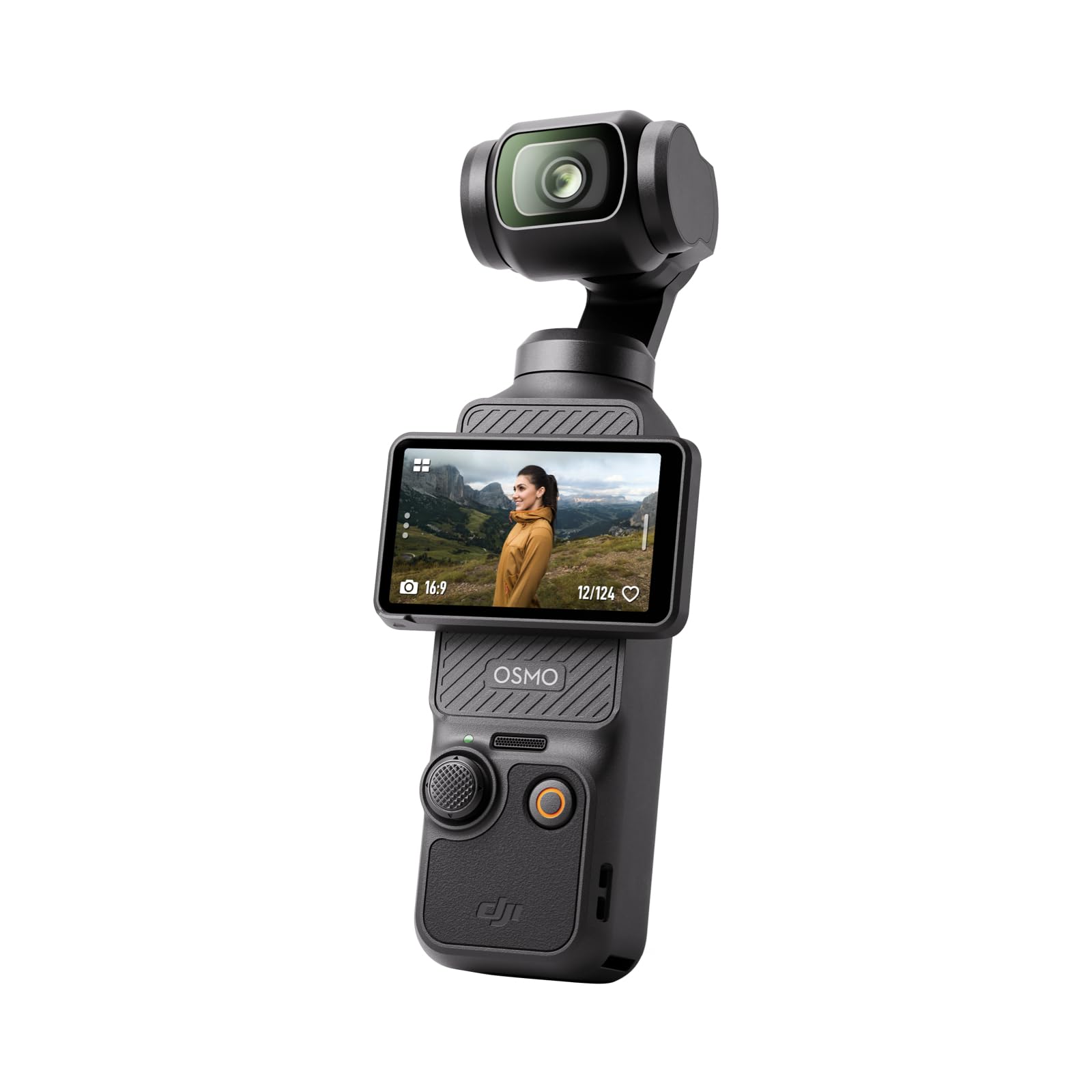
The Osmo Pocket 3 is the gold standard in the cheap vlogging camera segment because it marries a 1‑inch CMOS sensor with a true 3‑axis mechanical gimbal in a package that fits inside a jacket pocket. The 4K/120fps capture delivers buttery slow‑motion, and the rotating 2‑inch touchscreen instantly switches between horizontal and vertical framing — a workflow shortcut that saves you from cropping in post.
ActiveTrack 6.0 keeps the subject locked dead‑center even during erratic movement, and the D‑Log M 10‑bit color profile records over a billion hues for grading flexibility. Battery life sits at roughly 166 minutes, and the fast USB‑C charging recovers significant runtime during a short break. The built‑in stereo mic is serviceable, but the real advantage is the direct OsmoAudio link to two DJI Mic 2 transmitters for interference‑free voice capture.
No other camera at this price point combines gimbal stabilization, a 1‑inch sensor, and vertical rotation. If you can stretch your budget to the Osmo Pocket 3, you effectively remove the two biggest vlogging pain points — shaky footage and poor low‑light texture — in one purchase.
Why it’s great
- Best‑in‑class 3‑axis mechanical stabilization
- 1‑inch sensor handles low‑light better than any competitor at this price
- Rotating touchscreen for instant H/V switching
Good to know
- 1300 mAh battery drains faster at 4K/120fps
- No built‑in storage; relies on microSD
2. Xtra Muse

The Xtra Muse packs the same 1‑inch CMOS sensor and 4K/120fps recording found in the Osmo Pocket 3, along with a true 3‑axis gimbal that eliminates handheld shake. Its 2‑inch touchscreen tilts for both horizontal and vertical framing, and the X‑Log 10‑bit color mode gives you the same grading latitude as more expensive cameras. The bundle includes a compact carrying bag, a 1/4‑inch threaded handle, and a wrist strap — everything you need to shoot immediately.
Face and object tracking is reliable enough for run‑and‑gun vlogging, and the autofocus locks quickly even when you move around the frame. The battery lasts roughly 161 minutes, but you can extend recording time through the USB‑C port with an external power bank. Users report that certain DJI Pocket 3 accessories — including third‑party cages and mic mounts — fit the Xtra Muse body, which expands your rigging options without extra cost.
For creators who want the gimbal‑stabilized 1‑inch experience but need to keep cash in reserve for a good wireless microphone, the Xtra Muse delivers nearly identical stabilization hardware at a lower entry point.
Why it’s great
- 1‑inch sensor with 3‑axis gimbal at a budget‑friendly price
- X‑Log 10‑bit color for pro post‑production
- Compatible with many Pocket 3 accessories
Good to know
- Battery life around 2.5 hours at 4K
- No built‑in storage; microSD required
3. Canon PowerShot V10

The Canon PowerShot V10 is the most pocket‑friendly option in this lineup, weighing nearly nothing and sliding into a fanny pack. Its 15.2‑megapixel 1‑inch back‑illuminated CMOS sensor captures clean 4K/30fps video with decent dynamic range, and the fixed 19mm wide‑angle lens (35mm equivalent) ensures you never cut your head off at arm’s length. The retractable front‑facing screen makes self‑framing intuitive, and the built‑in stand folds forward or backward for hands‑free desk recording.
Canon added three electronic stabilization modes via a firmware update (version 1.2.0 or later), and the triple‑microphone array with a center noise‑cancelling element delivers surprisingly clear audio for its size. The lack of optical zoom is a real limitation — you cannot reframe without physically moving — and the battery life is modest, but the USB‑C charging allows topping up from any power bank between clips.
If your vlogging style is entirely stationary — sit‑down videos, unboxings, or beauty tutorials — this camera eliminates the bulk of interchangeable‑lens rigs while keeping a 1‑inch sensor that outperforms any smartphone.
Why it’s great
- Truly pocket‑sized with a built‑in folding stand
- 1‑inch back‑illuminated sensor for clean low‑light footage
- Direcional stereo mic with wind reduction
Good to know
- No zoom capability — fixed wide lens only
- Battery life is shorter than competitors
4. DJI Osmo Nano
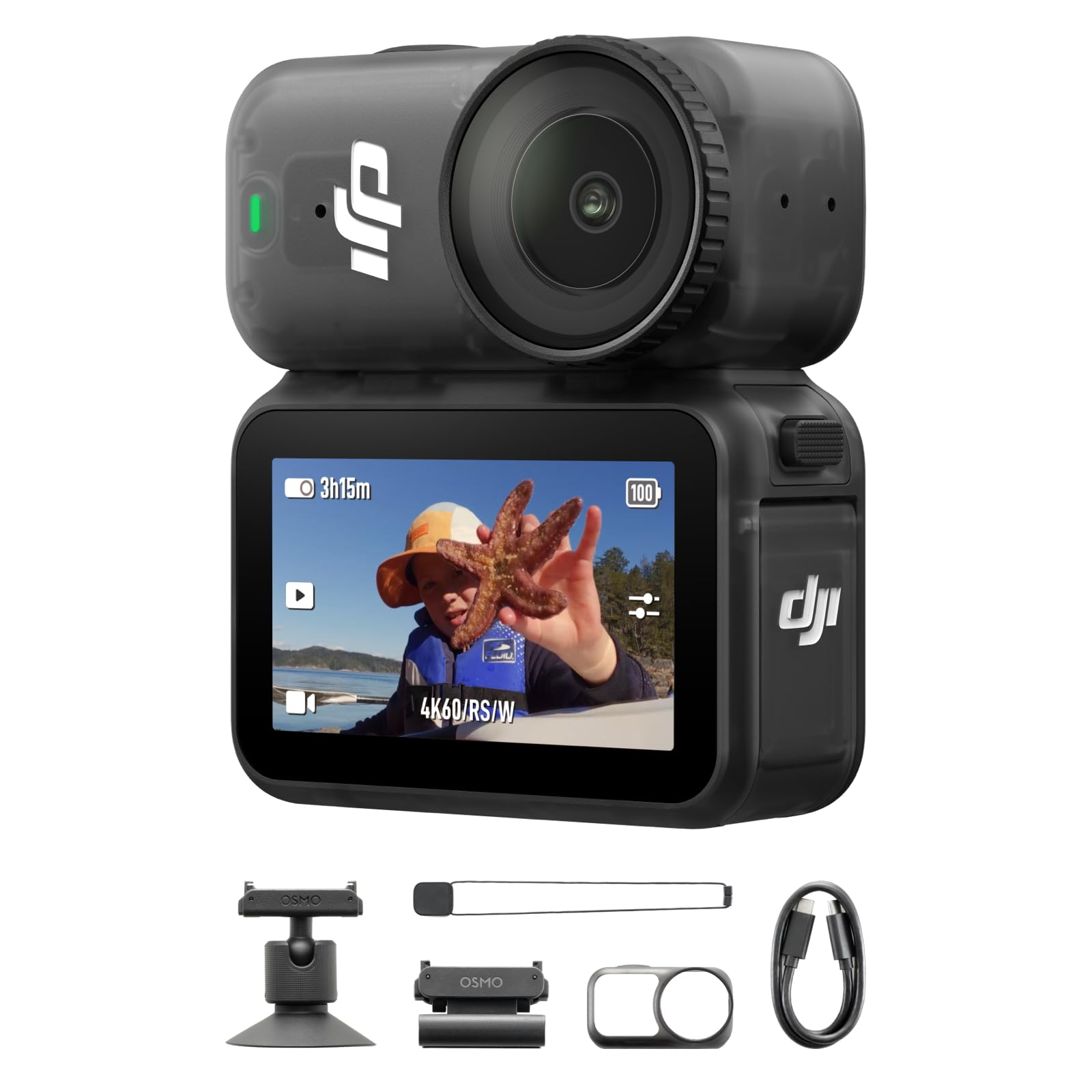
The Osmo Nano takes a different approach: it is a magnetic POV camera with a 1/1.3‑inch sensor and a 143‑degree ultra‑wide field of view, designed to be clipped onto a hat strap, lanyard, or magnetic mount for hands‑free first‑person footage. The waterproof body (10m without a housing) and 4K/60fps capture make it suitable for outdoor adventure vlogging, and the built‑in 128GB storage means you can start recording immediately without buying a memory card.
The Vision Dock extends battery life to roughly 200 minutes and acts as a wireless viewfinder, though users note the dock itself drains power when idle. The magnetic attachments are robust — the lanyard held securely during runs — and the OsmoAudio feature pairs directly with DJI Mic transmitters for clean voice tracks. The downside is the lack of mechanical stabilization; the Nano relies on EIS, which crops the already‑wide field of view and can feel restrictive in tight spaces.
For creators who shoot mostly POV b‑roll — cooking, walking tours, pet content — the Nano’s clip‑and‑forget design removes the distraction of holding a camera, letting you stay present while capturing immersive angles.
Why it’s great
- Magnetic clip‑on mounting for hands‑free POV
- 128GB internal storage — no card needed out of the box
- Waterproof to 10m for outdoor adventures
Good to know
- Electronic stabilization only — no mechanical gimbal
- Vision Dock drains battery when not in use
7. Sony ZV‑1F

Sony’s ZV‑1F leverages a 1‑inch sensor paired with a fast f/2.0 20mm ultrawide lens to give you strong low‑light performance plus a natural background defocus effect that separates you from cluttered backgrounds. The 425‑point contrast‑detection autofocus with Eye AF keeps your face sharp even when you turn your head, and the directional 3‑capsule microphone with the supplied windscreen minimizes wind rumble during outdoor shoots.
The side‑articulating touchscreen LCD makes selfie composition easy, and the Product Showcase mode transitions focus smoothly from your face to an object held near the lens — a killer feature for review and unboxing content. The ZV‑1F also records 4K/30fps and Full HD at 60fps, though the lack of a mechanical gimbal means you will feel every footstep in walking shots. Battery life is noticeably short at roughly 45 minutes of continuous recording, which forces you to carry spare batteries or a USB‑C power bank.
If your priority is accurate skin tones, reliable face tracking, and a lens that stays sharp in dim rooms, the ZV‑1F delivers the most polished autofocus system in this group — just budget for extra batteries.
Why it’s great
- Fast f/2.0 lens and 1‑inch sensor excel in low‑light
- Eye AF and Product Showcase modes simplify content creation
- Directional 3‑capsule mic with windscreen
Good to know
- Battery life is very short for continuous recording
- No mechanical stabilization — only EIS
6. Insta360 X4 Air
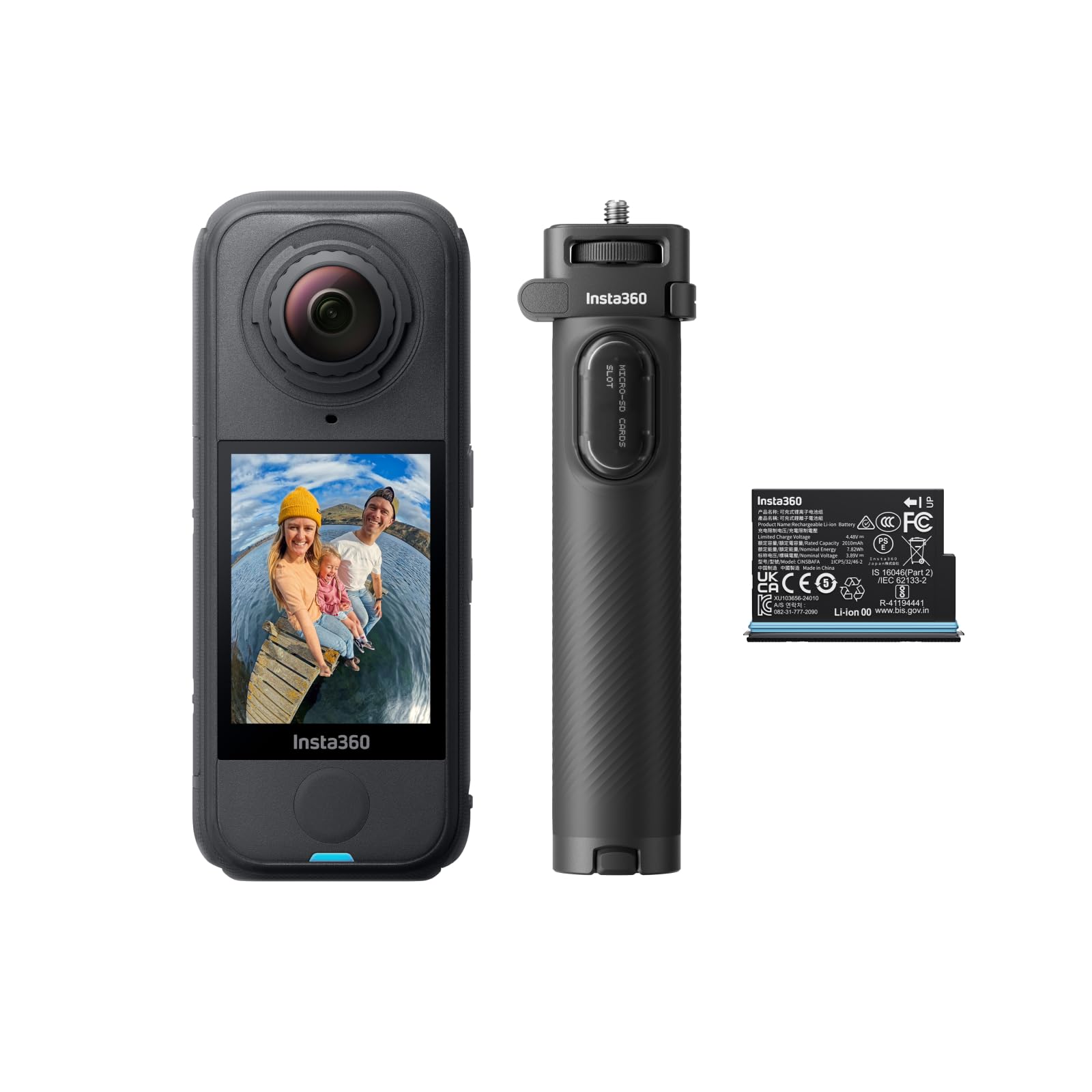
The Insta360 X4 Air breaks the traditional vlogging camera mold by capturing 8K 360‑degree video through dual lenses, letting you “shoot first, frame later” in the Insta360 app. Its 165‑gram body makes it the lightest camera on this list, and the invisible selfie stick effect creates third‑person perspectives that look like a drone shot without the drone. The replaceable lens design is a practical safety net — if a lens gets scratched, you swap it out without replacing the whole unit.
FlowState stabilization is baked into the software, delivering gimbal‑like smoothness from the 360 data, and the built‑in wind guard reduces audio distortion during outdoor use. The AI‑powered editing tools in the app automate the reframing process, which is a huge timesaver if you want quick social‑media clips. The trade‑off is that 360 video requires more planning in post — you cannot just publish raw footage — and the bundled Air Travel package includes a selfie stick that is shorter than the full‑size invisible stick sold separately.
This is the camera to pick if your content strategy leans on creative perspectives — travel montages, sport highlights, or immersive vlogs where standard framing feels too rigid.
Why it’s great
- 8K 360 capture lets you reframe any angle in post
- Invisible selfie stick effect creates unique perspectives
- Replaceable lenses reduce long‑term repair costs
Good to know
- Batteries not included — must purchase separately
- 360 workflow requires app‑based editing
1. SJCAM C400
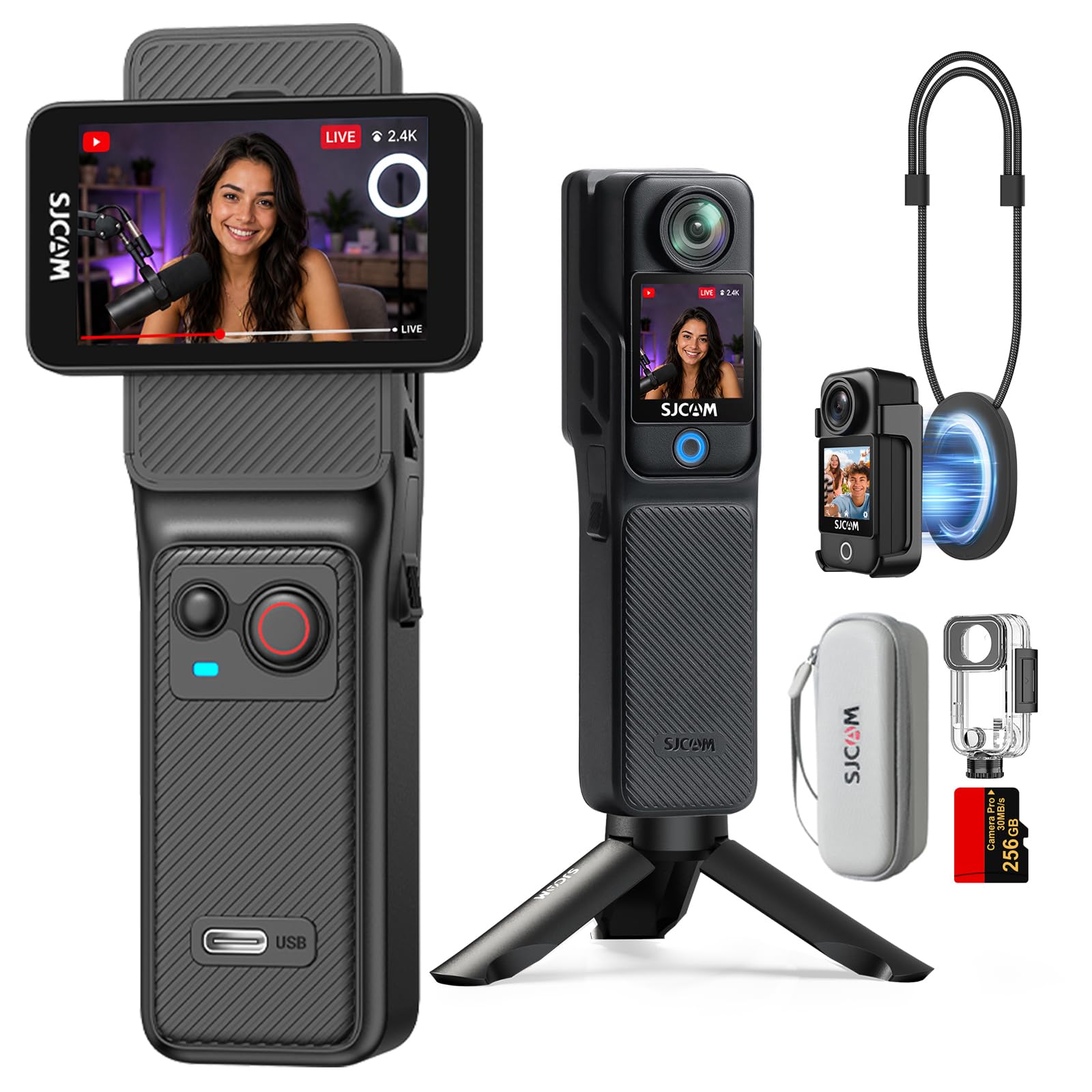
The SJCAM C400 is the entry‑level champion for creators who need maximum recording time without swapping batteries. Its 7‑hour runtime covers a full day of vlogging at the beach or a hiking trail, and the included 256GB memory card means you have storage ready from the first unboxing. The 6‑axis electronic image stabilization keeps footage watchable during moderate movement, and the 154‑degree distortion‑free wide lens captures a broad POV similar to an action camera.
The 2.29‑inch touchscreen is responsive for menu navigation, and the 5G WiFi module transfers clips quickly to your phone for editing on the go. The 4K/30fps video falls short of the image quality produced by 1‑inch sensor cameras, and some users note that the 4K footage appears softer than branded competitors — especially in complex textures like foliage or fine fabric. Audio quality is acceptable after adjusting input levels in the menu, but an external mic would improve clarity significantly.
If your budget is tight and battery endurance is your top constraint, the C400 keeps you recording from sunrise to sunset without needing a power bank, and the full accessory bundle — tripod, case, card, and mount — eliminates the hidden costs that often blow the budget.
Why it’s great
- 7‑hour battery life is the longest in this lineup
- Includes 256GB memory card and tripod out of the box
- 5G WiFi for fast wireless file transfers
Good to know
- 4K video quality is softer than 1‑inch sensor cameras
- Electronic stabilization cannot match mechanical gimbal smoothness
FAQ
Is a cheap vlogging camera better than using my smartphone?
What does 4K/120fps actually mean for vlogging?
Can I use an external microphone with these cameras?
Final Thoughts: The Verdict
For most users, the best cheap vlogging camera winner is the DJI Osmo Pocket 3 because it bundles a 1‑inch sensor, 4K/120fps capture, and a true 3‑axis mechanical gimbal in a package that slides into any pocket — eliminating the two biggest pain points of budget vlogging: shaky footage and poor low‑light texture. If you want the same gimbal + 1‑inch formula at a lower entry point, grab the Xtra Muse. And for creators who need zero‑learning‑curve point‑and‑shoot convenience with a built‑in stand, nothing beats the Canon PowerShot V10.