
Our readers keep the lights on and the weekend projects moving. As an Amazon Associate, I earn from qualifying purchases.
Separating meat from bone cleanly without wasting ounces of expensive protein is the mark of a skilled butcher, and the knife in your hand determines whether that job takes minutes or devolves into a frustrating, ragged mess. A dedicated boning knife is a single-purpose tool built to navigate tight joints, scrape cartilage, and follow curved bones with precision that a chef’s knife simply cannot match.
I’m Rikta — the co-founder and writer behind FitlyFast. I’ve spent countless hours correlating customer field reports with metallurgical datasheets to understand which blade geometries, steel compositions, and handle ergonomics actually hold up under the real-world demands of processing hundreds of pounds of meat.
This buying guide breaks down the essential specs, blade shapes, and handle materials that matter most when selecting a boning knife for butchers.
How To Choose The Best Boning Knife For Butchers
Choosing the right boning knife means matching the blade’s flexibility, curve, and steel to the specific meat you break down most often. A stiff blade excels on beef and pork where you apply more force, while a flexible blade is better for poultry and fish where you need to follow delicate bone contours. The Rockwell hardness of the steel directly predicts how long the edge stays sharp between honing sessions, but very hard steel can be brittle and harder to touch up in the field.
Blade Curve: Curved vs. Straight
Curved boning knives (often called “calming” blades) are designed for deep cuts around bone because the belly of the blade does most of the work with a rocking motion. Straight blades are better for scraping and cleaning meat off flat bone surfaces, and they offer more control for detail work like removing silverskin. Most professional butchers own one of each, but if you process a mix of everything, a curved semi-flexible blade is the most versatile starting point.
Handle Material and Ergonomics
Wet hands are inevitable during butchery, so handle texture and shape matter. Thermoplastic rubber (TPR) and Santoprene offer excellent non-slip grip even when slick with fat, making them popular in commercial kitchens. Wood handles like maple or Pakkawood look premium and feel warm in the hand, but they require more care to prevent cracking. Polyoxymethylene (POM) composite handles found on premium German knives are dense, stable, and resist moisture without any maintenance.
Forged vs. Stamped Construction
A forged knife is shaped from a single piece of heated steel that is pounded or pressed into shape, resulting in a denser grain structure and a heavier, better-balanced tool. Stamped knives are cut from a sheet of steel and then heat-treated; they are lighter and thinner, which works well for flexible boning tasks but may not feel as substantial in the hand. For everyday butchery at a mid-range price, a good stamped blade from a reputable manufacturer often outperforms a poorly forged budget option.
Quick Comparison
On smaller screens, swipe sideways to see the full table.
| Model | Category | Best For | Key Spec | Amazon |
|---|---|---|---|---|
| WÜSTHOF Classic 5″ | Premium | Precision beef & pork trimming | 5″ blade, 57 HRC, full tang forged | Amazon |
| Victorinox Fibrox 6″ Straight | Mid-Range | Versatile daily butchery | 6″ straight blade, 3.04 oz, TPR handle | Amazon |
| Mercer Culinary Genesis 6″ | Mid-Range | Deer & poultry processing | 6″ flexible, forged German steel | Amazon |
| HENCKELS Forged Premio 5.5″ | Mid-Range | Home butcher & general trimming | 5.5″ forged blade, 0.4 lb weight | Amazon |
| Victorinox 6″ Curved Maple | Mid-Range | Pork & hog breaking | 6″ curved, high-carbon stainless | Amazon |
| Shun Classic 6″ Boning | Premium | Fish fillet & delicate trimming | 6″ flexible, VG-MAX core, 16° edge | Amazon |
| ZWILLING Professional S 5.5″ | Premium | Brisket trimming & heavy use | 5.5″ forged, 57 HRC, SIGMAFORGE | Amazon |
In‑Depth Reviews
1. Victorinox Fibrox 6 Inch Flexible Boning Knife
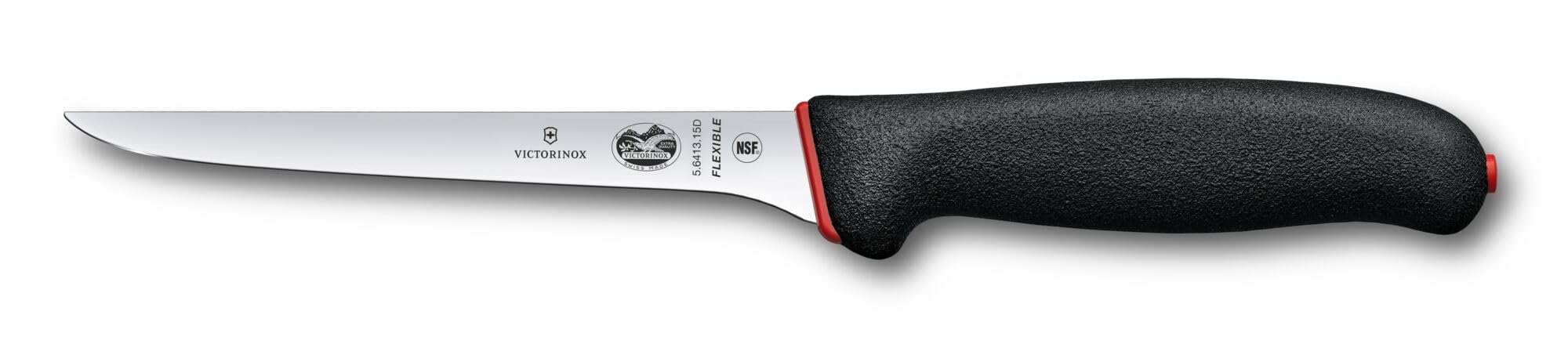
The Victorinox Fibrox is the gold standard for value in the boning knife world, favored by professional butchers and culinary students alike. Its straight, flexible 6-inch blade is stamped from high-carbon stainless steel and is thin enough to follow tight curves around chicken ribs while maintaining enough rigidity for pork shoulder deboning. The non-slip thermoplastic rubber handle is ergonomically contoured and provides a secure grip even when your hands are slick with fat, a critical safety feature during long processing sessions.
Out of the box, users consistently report a razor-sharp edge that holds surprisingly well for a stamped blade, with many noting it outperforms more expensive forged knives in edge retention. At just over 3 ounces, the knife feels nimble and reduces hand fatigue during repetitive cuts. Customer reviews frequently mention it as the go-to knife for processing deer, older chickens, and general kitchen butchery, with one professional chef calling it his only needed boning knife.
The Fibrox is dishwasher safe according to the manufacturer, but hand washing is recommended to preserve the edge and handle integrity over time. The straight blade design makes it slightly less suited for deep scooping cuts around curved bones compared to a curved alternative, but its combination of price, ergonomics, and edge performance makes it the single most balanced choice for any butcher.
Why it’s great
- Ergonomic TPR handle offers excellent wet grip
- Razor sharp out of box with superior edge retention for a stamped blade
- Versatile straight blade works for poultry, pork, and beef
Good to know
- Straight blade less effective for deep curved bone cuts
- No included sheath for storage
2. WÜSTHOF Classic 5″ Boning Knife
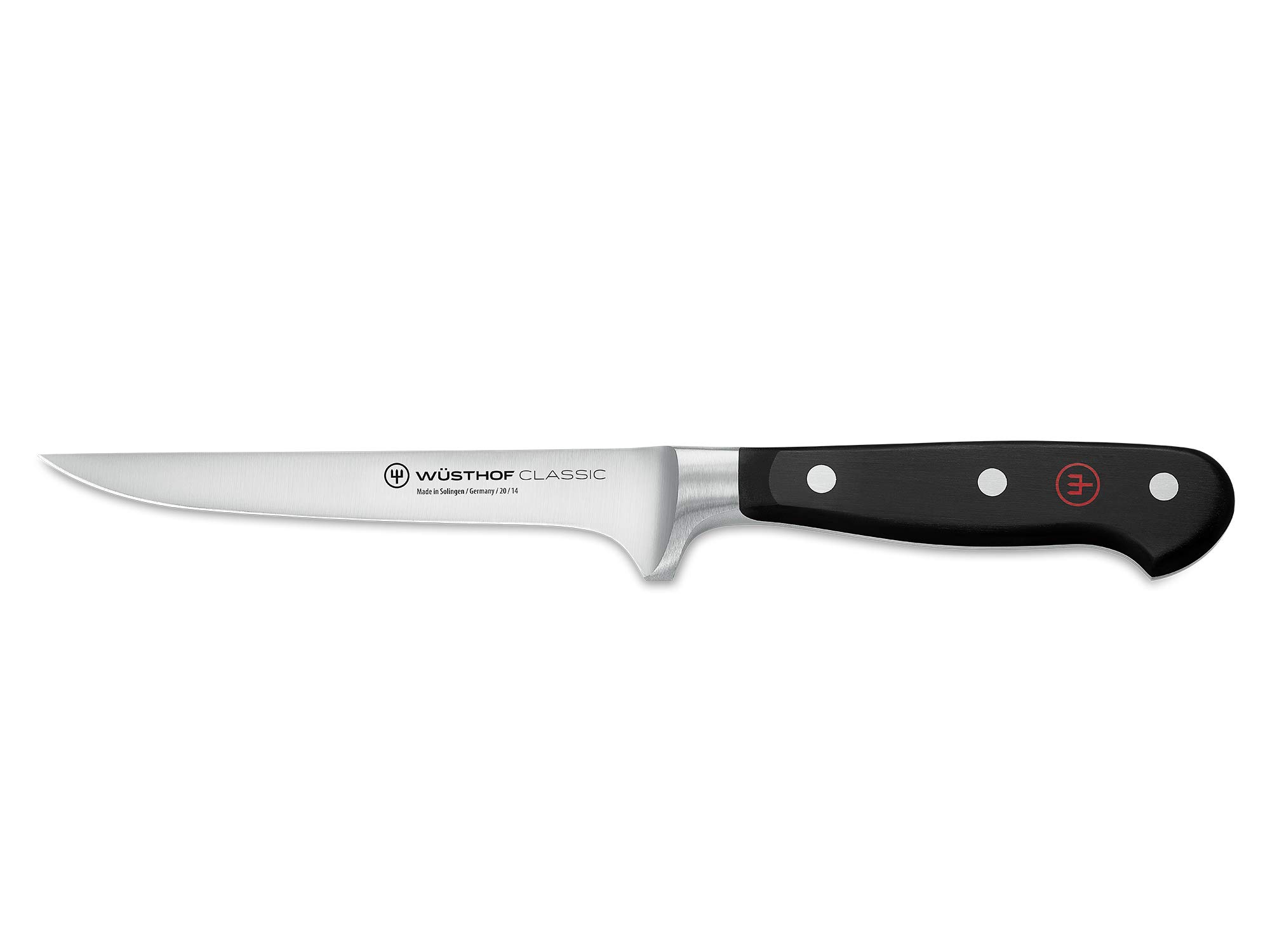
The WÜSTHOF Classic 5-inch boning knife represents the pinnacle of German engineering for precision butchery. Precision forged from a single piece of high-carbon stainless steel in Solingen, Germany, this knife features a full tang and triple-riveted polyoxymethylene (POM) handle that is dense, moisture-resistant, and perfectly balanced. The 5-inch blade is stiffer than many boning knives, making it ideal for breaking down beef and pork where you need to apply controlled force without the blade flexing unpredictably.
Users consistently describe the edge as extremely sharp out of the box — sharp enough to shave arm hair — and the 57 Rockwell hardness ensures the edge stays sharp through multiple processing sessions before needing a hone. The shorter blade length gives exceptional maneuverability in tight spaces, particularly around the aitch bone on hindquarters and the knee joints on lamb. Customer reviews highlight its effectiveness for trimming filet mignon and detailed work on rotisserie chickens.
The handle is slightly thicker than most, which larger-handed users find comfortable, though those with smaller hands may prefer a slimmer profile. WÜSTHOF recommends hand washing only, and the premium price reflects the build quality and brand heritage. For butchers who want a single knife that feels like an extension of their hand and will outlast cheaper alternatives by decades, this is the definitive choice.
Why it’s great
- Precision forged full tang provides perfect balance and durability
- 57 HRC steel holds edge exceptionally well between sharpenings
- Ergonomic POM handle is dense and moisture-resistant
Good to know
- Stiffer blade less suitable for flexible fish work
- Premium price reflects German manufacturing
3. Mercer Culinary Genesis 6-Inch Flexible Boning Knife

The Mercer Culinary Genesis 6-inch boning knife punches well above its mid-range price point with a forged high-carbon German X50 Cr Mo V15 steel blade that delivers genuine professional performance. The 6-inch blade has a degree of flexibility that is ideal for processing deer hindquarters and poultry, where you need the blade to bend slightly to follow the natural curve of the bone. The taper-ground edge arrives shaving sharp and the edge geometry is optimized for efficient cutting through cartilage and sinew.
What sets this knife apart is the ergonomic Santoprene handle, which users with arthritis or hand fatigue specifically praise for its cushioned feel and non-slip texture. The handle is bonded to a full tang and provides excellent balance — one reviewer noted it felt so good they kept it instead of returning it for a more expensive model. The blade steel is composed of X50 Cr Mo V15, a chromium-molybdenum-vanadium alloy known for its balance of toughness and edge retention.
Mercer explicitly recommends hand washing, and the knife comes without a sheath, so storage requires a knife block or magnetic strip. Some users note the blade is slightly thinner than the Victorinox Fibrox, which makes it more flexible but slightly less rigid for heavy pork work. For butchers processing a mix of deer, chicken, and fish, the Genesis series offers a forged-feel experience at a price that undercuts most German competition.
Why it’s great
- Forged X50 Cr Mo V15 steel offers professional edge retention
- Ergonomic Santoprene handle reduces fatigue for arthritic hands
- Excellent balance and blade flexibility for game processing
Good to know
- Thinner blade may feel less sturdy for heavy pork breaking
- No included sheath for transport or storage
4. HENCKELS Forged Premio 5.5-inch Boning Knife

The HENCKELS Forged Premio 5.5-inch boning knife brings a forged-bolster design to the mid-range category, offering a seamless transition from blade to handle that improves balance and adds durability. The blade is made from high-quality German stainless steel with a satin finish, and it arrives reasonably sharp — though several users noted small burrs on the edge that were easily removed with a steel. The 5.5-inch length is a sweet spot for many butchers, long enough for deep cuts but short enough for precise control.
The triple-rivet design and curved handle contour fit naturally in larger hands, and the full-tang construction gives the knife a solid, confidence-inspiring heft. Customer reviews highlight its effectiveness for trimming filet mignon and separating chicken quarters, with one reviewer noting it outperformed a pricier Japanese knife in edge retention and durability. The blade is satin-finished, which reduces friction during cuts and helps prevent food from sticking.
Made in China with unspecified German steel, the Premio series does not carry the same pedigree as HENCKELS’ higher-end German-made lines, but the build quality is solid for daily home use. The knife is dishwasher safe, though a honing rod is recommended for regular maintenance. For a home butcher who wants a forged knife without paying premium German prices, this is a capable and reliable option.
Why it’s great
- Forged bolster construction ensures balance and durability
- Ergonomic curved handle fits large hands well
- Razor sharp out of box with easy edge maintenance
Good to know
- May have minor burrs requiring initial honing
- Blade steel is unspecified German rather than proprietary
5. Victorinox 6″ Boning Knife, Curved Blade, Maple Wood Handle

The Victorinox 6-inch curved boning knife with a maple wood handle offers the same high-carbon stainless steel blade found in the Fibrox line but with a traditional aesthetic that many butchers prefer. The curved blade is specifically designed for the rocking motion used to separate meat from curved bones, making it particularly effective for processing hogs, breaking down pork shoulders, and following the contours of a deer carcass. The maple handle is ergonomically shaped and polished to a smooth finish that becomes more comfortable with use.
Users consistently report the knife holds its edge well and stays sharp even after repeated use, with one reviewer noting it is the only knife they buy for processing their own pigs. The lightweight construction — only 0.08 kilograms — reduces fatigue during long butchery sessions, and the blade’s flexibility is well-suited for trimming fat and sinew. The curved profile allows the knife to work as both a boning knife and a small fillet knife for fish.
The maple wood handle requires more care than synthetic alternatives; it should be hand washed and oiled periodically to prevent cracking. The knife does not include a sheath, which is a common complaint among users who process game in the field and need safe transport. For butchers who value the feel of natural wood and need a curved blade for deep bone work, this Victorinox offers the same reliable steel as the brand’s professional line.
Why it’s great
- Curved blade excels at deep cuts around bone
- Lightweight design reduces hand fatigue
- Maple handle offers traditional aesthetic and comfortable feel
Good to know
- Wood handle requires regular oiling and hand washing
- No sheath included for safe transport in the field
6. Shun Classic 6″ Boning & Fillet Knife

The Shun Classic 6-inch boning and fillet knife brings Japanese blade craftsmanship to butchery, featuring a VG-MAX steel core clad in 68 layers of Damascus stainless steel. The 16-degree edge angle is significantly sharper than the typical 20-degree European edge, allowing the knife to glide through meat and fish with minimal effort. The blade is thin and flexible, designed for precise work around delicate bones and for filleting fish, where you need the blade to bend and conform to the fish’s skeletal structure.
The D-shaped Pakkawood handle is comfortable in both left and right hands and offers a secure grip, though it is less slip-resistant than synthetic handles when wet. Handcrafted in Japan, the knife is a piece of functional art, and users praise its edge retention — one reviewer noted the boning knife was the only one that needed sharpening after two years of regular use. The Damascus pattern is not just aesthetic; the layered construction provides a combination of a hard core for edge retention and softer outer layers for toughness.
The premium price reflects the labor-intensive manufacturing and high-performance materials, and the thin edge requires careful use — it is not suitable for cutting through bones or frozen meat. Hand washing is mandatory, and the knife should be stored in a block or on a magnetic strip to protect the edge. For butchers who prioritize razor-sharp precision and are willing to maintain a delicate edge, the Shun delivers a cutting experience unmatched by German steel.
Why it’s great
- VG-MAX core with 16° edge delivers exceptional sharpness
- Damascus cladding adds durability and corrosion resistance
- Flexible blade excels at fish filleting and delicate trimming
Good to know
- Thin edge is fragile and requires careful maintenance
- Pakkawood handle is less grippy when wet than synthetic options
7. ZWILLING Professional S 5.5-inch Flexible Boning Knife

The ZWILLING Professional S 5.5-inch boning knife is a favorite of America’s Test Kitchen and professional butchers for its combination of German forging tradition and modern materials. The SIGMAFORGE process forges the knife from a single piece of special-formula high-carbon stainless steel, resulting in a seamless transition from blade to bolster to handle. The FRIODUR ice-hardening treatment creates a blade that starts sharper, stays sharper, and has superior resilience compared to conventionally hardened knives.
At 57 Rockwell hardness and a 15-degree edge angle per side, the blade strikes an excellent balance between edge retention and ease of sharpening. The 5.5-inch blade is described by users as being perfectly sized for trimming brisket and navigating chicken rib cages, with a flexibility that allows it to bend slightly without losing control. Multiple reviews note it stays sharp for extended periods with only regular steeling, and that it replaced older knives that had been in service for decades.
The ergonomic polymer three-rivet handle is bonded to the full tang and offers a secure grip even when wet. The knife is dishwasher safe, though hand washing is recommended for preserving the edge. Made in Germany at a company-owned factory, the build quality is exceptional, and the price reflects that. For a butcher who wants a battle-ready knife that will perform daily for years without compromise, the ZWILLING Professional S is the clear choice.
Why it’s great
- SIGMAFORGE construction from single steel piece ensures durability
- FRIODUR ice-hardened edge offers superior retention
- Ergonomic handle with secure wet grip
Good to know
- Premium price reflects German engineering
- Edge angle is optimized for sharpness, not bone contact
FAQ
What is the difference between a curved and straight boning knife?
How often should I sharpen my boning knife?
Is a forged boning knife always better than a stamped one?
What blade length is best for butchery?
Final Thoughts: The Verdict
For most users, the boning knife for butchers winner is the Victorinox Fibrox 6 Inch Flexible Boning Knife because it combines professional-grade sharpness, a non-slip ergonomic handle, and exceptional edge retention at a price that undercuts forged alternatives. If you want the superior balance and durability of a precision-forged German blade for heavy beef and pork work, grab the WÜSTHOF Classic 5″ Boning Knife. And for premium Japanese precision with a Damascus-clad VG-MAX core that excels on fish and delicate trimming, nothing beats the Shun Classic 6″ Boning & Fillet Knife.