
Our readers keep the lights on and the weekend projects moving. As an Amazon Associate, I earn from qualifying purchases.
Living with spinal stenosis means your lower spinal canal narrows, compressing nerves and sending sharp pain, numbness, or weakness through your back and legs. The right back brace can stabilize your lumbar spine, limit painful extension, and let you stay upright and active without the constant fear of a flare-up.
I’m Rikta — the co-founder and writer behind FitlyFast. In building this guide, I spent countless hours dissecting the construction, support mechanisms, and user feedback for each brace here to identify which designs actually deliver measurable relief for spinal stenosis.
This guide walks you through the top braces that provide targeted lumbar compression and spinal stabilization, helping you find the best back brace for spinal stenosis for your specific needs and daily routine.
How To Choose The Best Back Brace For Spinal Stenosis
Spinal stenosis braces are not one-size-fits-all. The right choice depends on the severity of your condition, whether you need support for activity or recovery, and how much immobilization your spine actually requires. Focus on these three factors before buying.
Support Level: Rigid vs. Flexible
A rigid LSO (Lumbar Sacral Orthosis) brace with integrated plastic panels provides the highest level of immobilization for moderate to severe stenosis. These braces limit forward bending and twisting, which reduces nerve impingement. Flexible pulley-style belts offer moderate support for daily wear during walking or light activity without the bulk of a full orthosis.
Compression Mechanism: Pulley vs. Velcro
A pulley system lets you dial in even, repeatable compression using a single cord, which is especially helpful for anyone with limited hand strength or arthritis. Standard Velcro straps provide quick on-and-off but can loosen over time and may not distribute pressure as evenly across the lumbar region.
Breathability and Profile
Spinal stenosis braces are often worn for hours at a time. Look for a breathable mesh or neoprene blend that won’t trap heat. A low-profile design can be worn discreetly under clothing, which matters if you need support at work or in social settings without drawing attention to the brace.
Quick Comparison
On smaller screens, swipe sideways to see the full table.
| Model | Category | Best For | Key Spec | Amazon |
|---|---|---|---|---|
| VertebrAlign LSO Lumbar Back Brace | Medical LSO | All-day medical-grade stabilization | PDAC L0631, L0637, L0648, L0650 | Amazon |
| BraceAbility Lumbar Decompression Belt | Post-Op Corset | Pre and post-surgery recovery | Dual-pulley, fits 45–50 in | Amazon |
| LSO Back Brace with Decompression Plate | Adjustable Arch | Customizable lumbar arch support | 26-degree bionic lumbar stretcher | Amazon |
| BaxMAX Adjustable Back Brace | Chiropractic Grade | Active users needing focused compression | 5-to-1 pulley system, 5 oz | Amazon |
| Ottobock The S.P.I.N.E. Brace | Pulley System | Workday support and lifting | 1-step pulley, breathable nylon | Amazon |
| Adjustable LSO Lumbar Back Brace | Universal Fit | Budget-friendly LSO option | PDAC L0642 certified, waist 23–50 in | Amazon |
| Brace Direct Low Profile Lumbar Brace | Low Profile | Discreet wear for big & tall | 3XL fits waist 50–55 in, neoprene blend | Amazon |
In‑Depth Reviews
1. VertebrAlign LSO Lumbar Back Brace
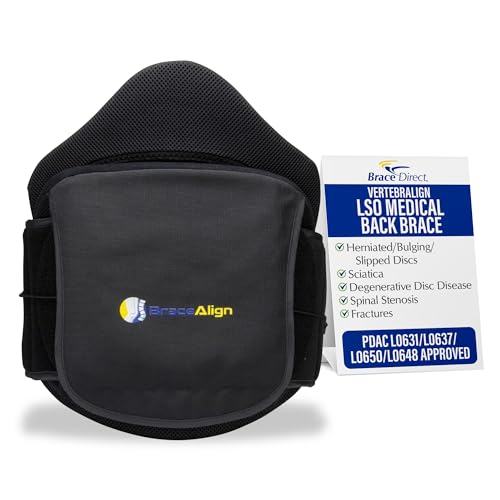
This medical-grade LSO brace carries PDAC approval for multiple codes (L0631, L0637, L0648, L0650), meaning it meets the highest standard for lumbar and sacral stabilization used by physicians and insurance plans. The universal fit accommodates waists from 23 to 50 inches, and the included plus extension can push that to 66 inches if needed.
The one-handed pulley compression system allows you to fine-tune tension while seated or standing, which is critical for stenosis patients who need consistent support throughout positional changes. The removable rigid panels let you dial between firm immobilization and flexible control depending on your activity level for the day.
User feedback highlights the breathable mesh construction as a key benefit for all-day wear, and the included hygiene bag adds practical value. The brace is not discreet under fitted clothing, but its core support outperforms cheaper alternatives that lack proper spinal stabilization.
Why it’s great
- PDAC-certified for medical-grade stabilization
- Removable rigid panels for variable support
- One-handed pulley system for easy adjustment
- Breathable lightweight mesh keeps you cool
Good to know
- Bulky profile under tight clothing
- Can be difficult to sit in a vehicle for long rides
2. BraceAbility Lumbar Decompression Support Belt
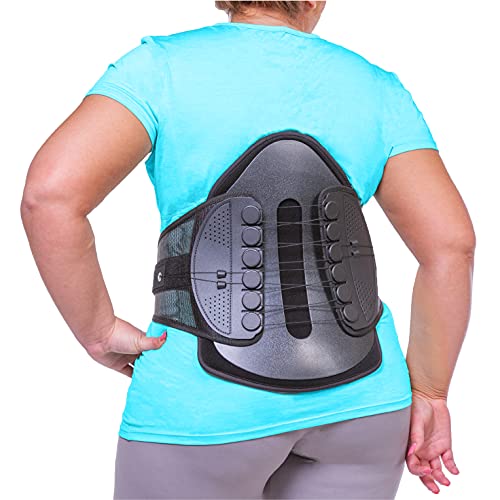
Engineered for both pre-operative and post-operative use, this dual-pulley brace triples the compression you can apply compared to standard single-strap belts. The XL size fits body circumferences of 45 to 50 inches, making it a strong option for larger individuals who need substantial spinal support during recovery from discectomy, laminectomy, or fusion surgery.
The wraparound application process eliminates the need to twist or bend, a crucial design detail for anyone in the early stages of post-surgical recovery. The brace targets pain caused by spinal stenosis, herniated discs, spondylolisthesis, and facet syndrome, providing the kind of rigid stabilization that limits painful movement.
Some users report that the back panel can feel flimsy and may shift when bending, and sizing down is recommended for a more secure fit. However, for those recovering from lumbar surgery, the support provided by the brace is often described as on par with what a physical therapist would provide, at a fraction of the cost.
Why it’s great
- Triple the compression via dual-pulley system
- No twisting or bending required to put on
- Effective for pre and post-surgery recovery
- Large sizing fits bigger body types
Good to know
- Back panel can shift and feel unsupportive
- Plastic components may crack on hard surfaces
3. LSO Back Brace with Maximum Decompression Plate

What sets this brace apart is the adjustable bionic decompression plate, which you can set to three different arch angles including a 26-degree lumbar stretcher position for correction and extension. This feature allows you to actively decompress the L1 to S1 vertebrae, which directly counteracts the narrowing that defines spinal stenosis.
The dual-pulley system is designed for seniors or anyone with limited grip strength — the finger tabs let you pull and lock compression without needing to crank down on Velcro straps. The L/XL size fits belly circumferences from 33.75 to 47 inches, and the brace includes additional extension pieces for abdominal support.
User reviews confirm that this brace immobilizes roughly 80 percent of lower back movement, allowing users to function during flare-ups when they would otherwise be bedridden. Sizing can be tight for some, and the multiple adjustment points add setup time, but the level of customized lumbar support is unmatched in this range.
Why it’s great
- Three-position adjustable arch for targeted decompression
- Dual-pulley system works for limited hand strength
- Immobilizes lower back during acute pain episodes
- Includes abdominal support extension pieces
Good to know
- Sizing can run tight; measure carefully
- Complex setup with multiple adjustment points
4. BaxMAX Adjustable Back Brace
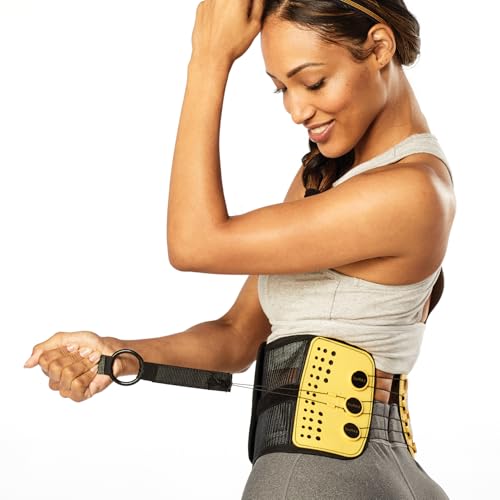
Used in over 3,000 chiropractic clinics for 15 years, the BaxMAX features a patented 5-to-1 pulley system that delivers five times the compression with a single pull. Despite this power, the brace weighs only 5 ounces, thanks to a nylon/Kevlar blend mesh that makes it one of the lightest options for spinal stenosis support.
The three-way wear design lets you reposition the brace throughout the day, adjusting compression for different activities — sitting at a desk, walking, or lifting. The Kevlar-reinforced pulley cable is durable and smooth, and the brace can be worn over or under clothing without bulk.
Users report immediate relief for acute muscle spasms and inflamed facets, with the focused lumbar compression hitting the spine directly. The material can roll up when sitting for extended periods, so this brace is best for standing and moving rather than long car rides or desk work.
Why it’s great
- 5-to-1 pulley provides maximum compression
- Ultra-lightweight at 5 ounces
- Three wearing positions for activity flexibility
- Chiropractor recommended with 15-year track record
Good to know
- Material rolls up when sitting for long periods
- Can restrict breathing if overtightened
5. Ottobock The S.P.I.N.E. Adjustable Lower Back Brace
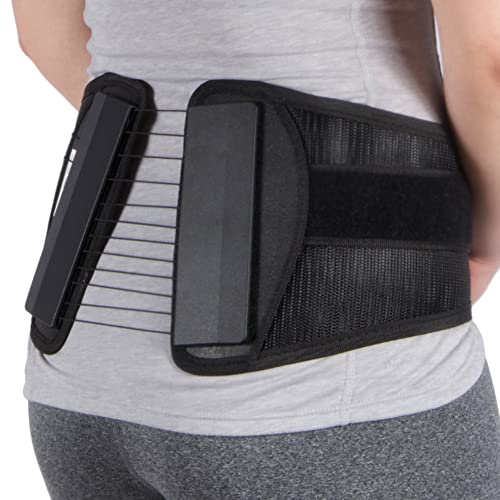
This brace has been a consistent performer since the 1980s, with a design that relies on a simple 1-step pulley system to create hydrostatic lift in the lower spine. The compression in the abdominal cavity relieves pressure on the vertebrae, making it suitable for spinal stenosis, herniated discs, and post-operative fusion recovery.
The breathable nylon with mesh side panels keeps you cool during 10-hour workdays, and the adjustable pulley lets you set light to high-level compression without needing to remove the brace. Users in warehouse and active jobs report that this brace stays in place and eliminates back pain during lifting and bending.
The medium size fits a specific body type, and the brace may feel stiff initially before breaking in. Some users note brand confusion between Ottobock and Cybertech Medical labeling, but the core construction and pulley mechanism remain identical to the trusted original design.
Why it’s great
- Proven pulley design since the 1980s
- Breathable nylon with mesh stays cool
- Adjustable from light to high compression
- Stays in place during active work
Good to know
- Initial stiffness requires break-in period
- Brand labeling confusion between Ottobock and Cybertech
6. Adjustable LSO Lumbar Back Brace
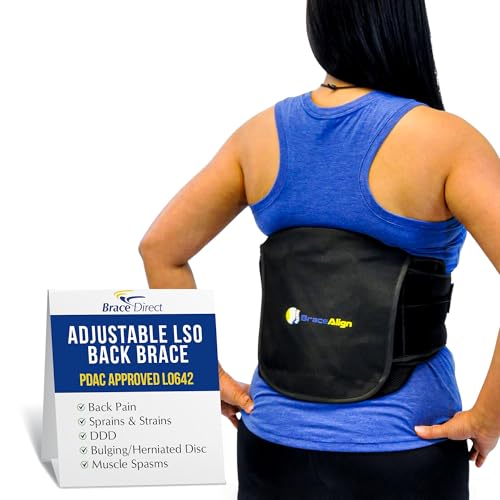
PDAC L0642 certification means this brace meets the coding requirements for insurance coverage, which is a major advantage if you plan to file a claim. The universal fit covers waists from 23 to 50 inches, making it one of the most size-inclusive options in the mid-range tier.
The customizable pulley compression tabs let you set tension evenly across the lumbar region, and the airflow fabric keeps the back cool. Breathable materials are essential for stenosis patients who need to wear a brace for hours at a time without overheating or skin irritation.
Users describe this brace as a game-changer for severe back pain, with one reviewer noting it enabled 9 hours of travel including planes and cars. The construction is lighter than some competitors, so it provides moderate stabilization rather than the rigid immobilization of a full orthosis.
Why it’s great
- PDAC L0642 certified for insurance claims
- Universal fit covers 23–50 inch waists
- Breathable airflow fabric for long wear
- Customizable pulley compression
Good to know
- Lighter construction, moderate stabilization
- Not as rigid as full LSO orthosis options
7. Brace Direct Low Profile Lumbar Back Brace

This brace is specifically sized for larger individuals, with the 3XL fitting waist sizes from 50 to 55 inches. The low-profile neoprene blend construction allows discreet wear under clothing, which is a practical advantage for anyone who needs continuous support at work or in public without the bulk of a traditional medical brace.
The easy pulley lacing system provides smooth, tangle-free adjustment, and the open-back design targets the lumbar region without compressing the entire midsection. Users in physically demanding jobs like firefighting report that the brace holds up under gear and allows full range of motion while stabilizing the lower back.
The thin cord used in the pulley system is a noted weak point, and the front panel can feel uncomfortable against the stomach when bending. For short lifting tasks and active recovery, this brace performs well, but for extended bending tasks, a softer brace may be preferable.
Why it’s great
- 3XL fits waist 50–55 inches
- Low-profile neoprene for discreet wear
- Smooth pulley lacing system
- Stays in place under work gear
Good to know
- Thin pulley cord is a potential weak point
- Front panel can press uncomfortably when bending
FAQ
Should I wear a back brace for spinal stenosis all day?
What is the difference between an LSO brace and a regular back belt?
How do I measure my waist for a spinal stenosis brace?
Can a back brace make spinal stenosis worse?
Final Thoughts: The Verdict
For most users, the back brace for spinal stenosis winner is the VertebrAlign LSO Lumbar Back Brace because it combines PDAC medical certification with removable rigid panels and a one-handed pulley system for versatile all-day stabilization. If you need a brace specifically for post-surgery recovery, grab the BraceAbility Lumbar Decompression Belt. And for active users who want ultra-lightweight focused compression, nothing beats the BaxMAX Adjustable Back Brace.