
Our readers keep the lights on and the weekend projects moving. As an Amazon Associate, I earn from qualifying purchases.
Finding a board game that holds the attention of a 10- to 12-year-old is a specific challenge. At this age, kids are too old for simple roll-and-move luck-fests but not quite ready for the complex rulebooks that dominate adult hobby gaming. The sweet spot is a game that rewards tactical thinking, offers satisfying player interaction, and can be learned in under fifteen minutes without sacrificing strategic depth. This guide cuts through the noise to find the games that hit that mark consistently.
I’m Rikta — the co-founder and writer behind FitlyFast. I’ve spent countless hours analyzing game mechanics, age-appropriateness ratings, and player engagement curves to build this focused guide on the best options for this exact age bracket.
Whether you are planning a family game night, a birthday party activity, or a rainy-day project for a pair of siblings, this guide covers the board games for 10-12 year olds that deliver genuine replay value and real tactical thinking.
How To Choose The Best Board Games For 10-12 Year Olds
The board game market is flooded with titles that claim to be for ages 8 and up, but many are either too simplistic or too rule-heavy for the 10-12 age sweet spot. The key is to look for games that introduce one core strategic mechanic — deck-building, resource management, or tile placement — without layering on too many subsystems. Games with a playtime of 30-60 minutes are ideal, as they allow for deep enough engagement without losing focus. Always check for a modular board or variable setup, as this is the single biggest factor in whether a game gets played once or becomes a family favorite.
Prioritize Strategy Over Luck
At ages 10-12, kids are developmentally ready to plan several moves ahead and manage competing objectives. Games that rely almost entirely on dice rolls or card draws are a poor fit. Instead, look for games where the outcome is determined by player decisions — like which route to claim, which cards to buy for a deck, or where to place a tile. This builds critical thinking and keeps the game fair even when a younger player is involved.
Check Player Count and Play Time
A game that needs exactly 4 players but only works with 2-3 at home will gather dust. For this age group, flexibility is crucial. Games that support 2-5 players are the most versatile. Also pay attention to play time: 20-40 minutes is the optimal range for focused sessions, while 60-minute games like CATAN are better for dedicated family game nights where everyone has the patience for a longer arc.
Component Quality and Tactile Appeal
Pre-teens respond strongly to physical components. Wooden tokens, thick card stock, and miniature trains or gems elevate the experience from a piece of cardboard to an event. Games with poor component quality or flimsy cards often fail to hold interest. Read reviews specifically for mentions of component durability, as that directly correlates with how often the game will hit the table.
Quick Comparison
On smaller screens, swipe sideways to see the full table.
| Model | Category | Best For | Key Spec | Amazon |
|---|---|---|---|---|
| CATAN | Strategy | Group game nights, negotiation skills | 3-4 players, 60-90 min | Amazon |
| Ticket to Ride | Route Building | Large groups, geography learning | 2-5 players, 30-60 min | Amazon |
| Splendor Duel | Two-Player Strategy | Head-to-head play, quick sessions | 2 players, 30 min | Amazon |
| Harmonies | Tile Placement | Solo or quiet family play | 1-4 players, 30 min | Amazon |
| Planted | Resource Management | Nature lovers, light strategy | 2-5 players, 20-30 min | Amazon |
| Quest for El Dorado | Deck-Building Race | Beginning deck-builders, racing fans | 2-4 players, 30-60 min | Amazon |
| Tetris Board Game | Puzzle/Tetrimino | Budget pick, quick puzzles | 2-4 players, 20 min | Amazon |
In‑Depth Reviews
1. CATAN Board Game (6th Edition)

CATAN is the gold standard for introducing pre-teens to modern strategy gaming. The core loop of rolling for resources, trading with opponents, and building roads and settlements teaches negotiation and resource management in a way that feels like a game, not a lesson. The 6th Edition includes built-in card trays, chunkier wooden pieces, and a refreshed rulebook that renames resources to more intuitive terms, significantly lowering the barrier for first-time players.
The modular hexagonal board ensures that no two games play out the same, which is critical for this age group. A 10-year-old can learn the rules in about 15 minutes and then spend the next hour making meaningful strategic choices. The trading mechanic forces players to talk to each other, which makes it ideal for groups that need a social catalyst, whether at a birthday party or a family gathering.
One caveat: the game is strictly for 3-4 players, so it requires a minimum group size. Playtime of 60-90 minutes also means it works best when the whole family is committed to a dedicated game night, rather than a quick after-school activity. Despite that, it remains the benchmark for strategic depth at this age range.
Why it’s great
- Modular board creates high replayability
- Trading mechanic builds social and negotiation skills
- 6th Edition component upgrades are meaningful
Good to know
- Requires 3-4 players, not flexible for duos
- Playtime of 60-90 minutes may be too long for some
2. Ticket to Ride (2025 Refresh)
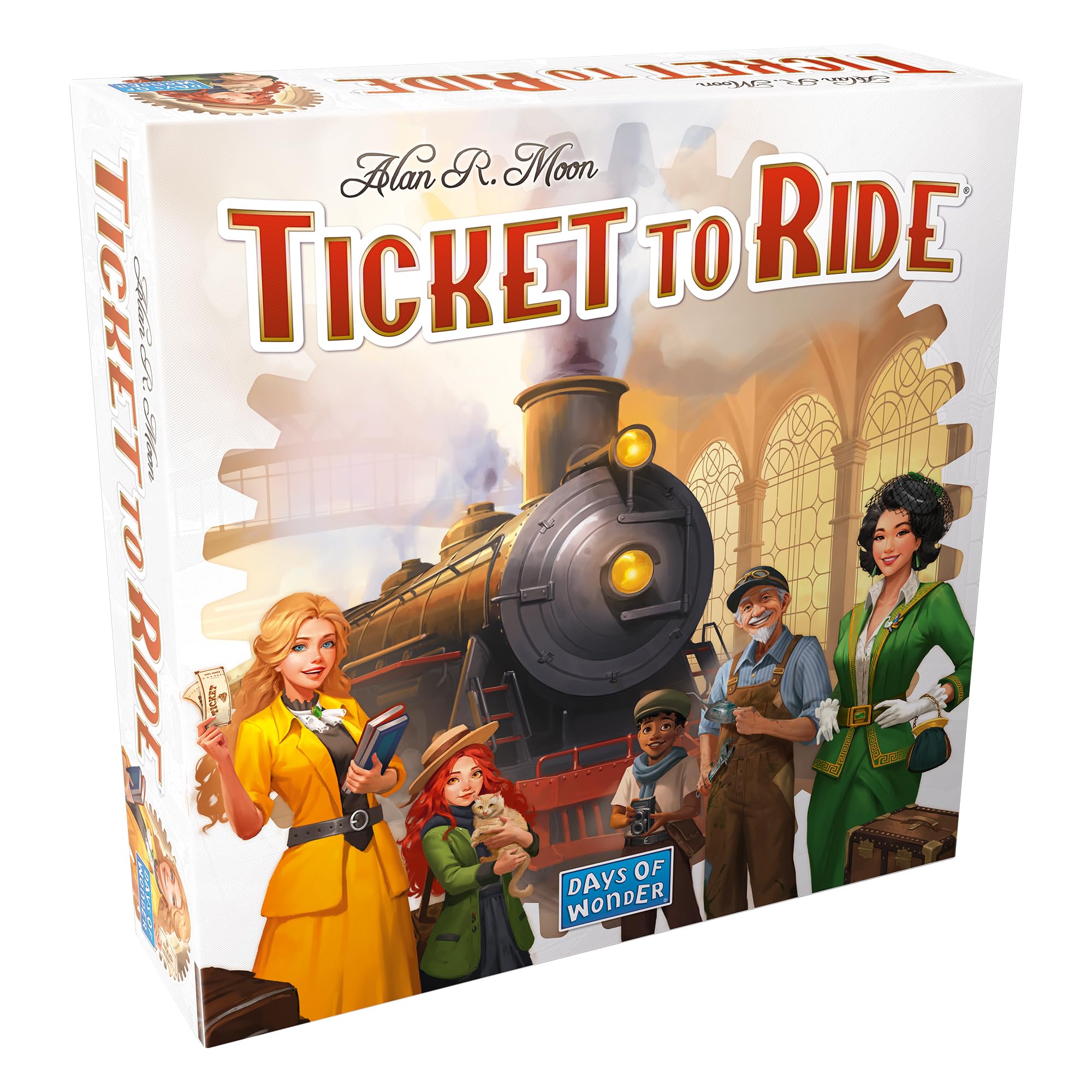
Ticket to Ride is the ultimate gateway game for groups of 3-5 players. Players collect colored train cards and claim routes across a map of North America, trying to complete destination tickets for points. The rules are deceptively simple — draw cards, claim a route, repeat — but the strategic layer of blocking opponents and planning long connections reveals itself after just one or two plays.
The 2025 Refresh edition introduces updated card backs and a slightly modernized board, but the core experience remains the same proven formula. For 10-12 year olds, the game offers a gentle introduction to set collection and route planning without the stress of direct conflict. The geography theme also sneaks in a bit of learning, as kids naturally start to recognize city locations and connections.
With a player count of 2-5 and a flexible playtime of 30-60 minutes, this is one of the most adaptable games on this list. It works equally well for two siblings or a full family of five. The only potential drawback is that the base game map is exclusively North America, which can feel repetitive after many plays, but the variety in destination tickets keeps each session feeling fresh.
Why it’s great
- Exceptionally easy to learn for all ages
- Supports 2-5 players with consistent engagement
- Builds visual planning and spatial reasoning
Good to know
- Base game uses only North America map
- Minimal player interaction beyond blocking routes
3. Splendor Duel
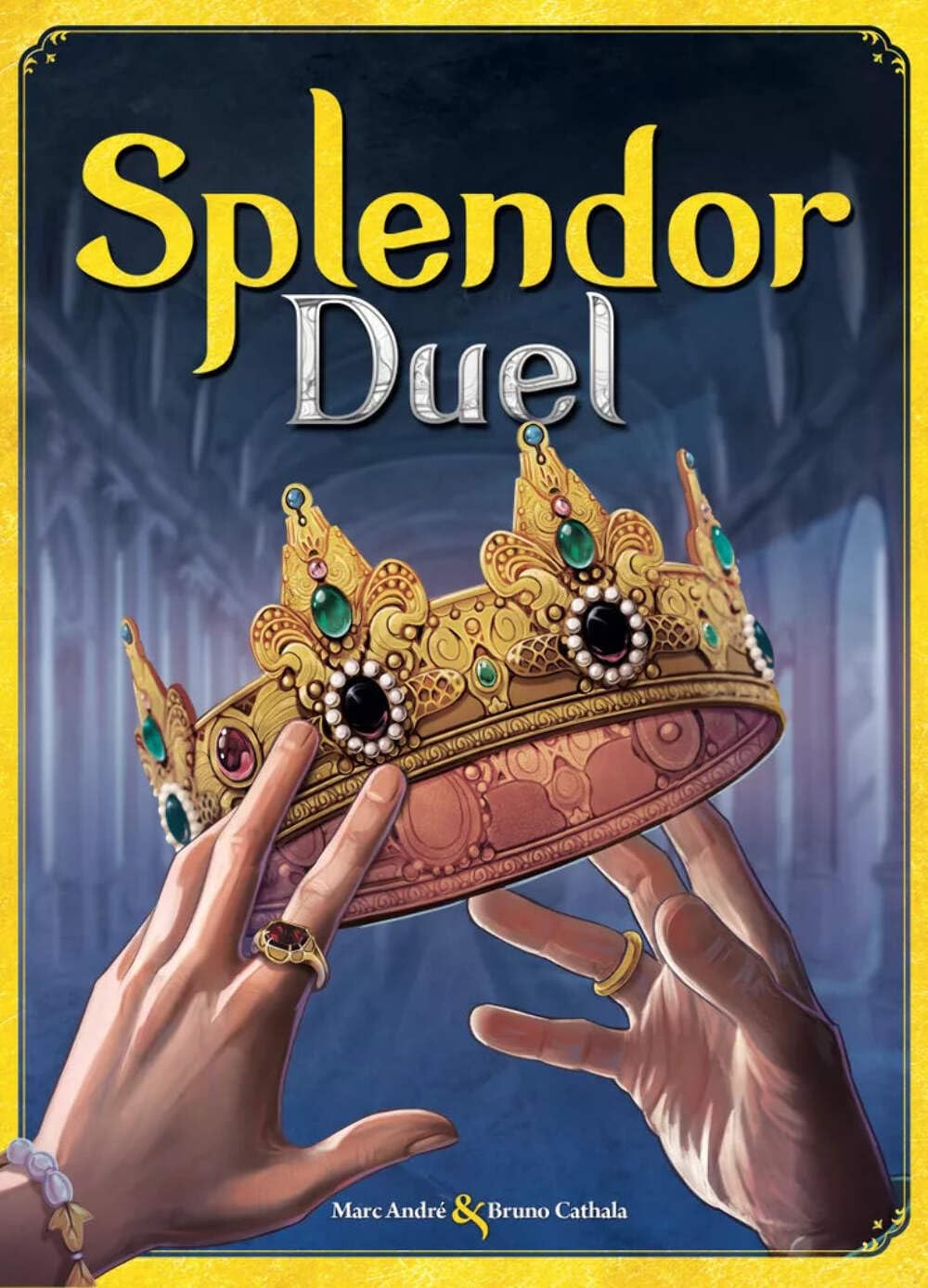
Splendor Duel is the perfect answer for households with only two players. It takes the core gem-collecting engine of the original Splendor and redesigns it exclusively for head-to-head play, adding a shared board and three alternate win conditions. Players draft gem tokens and purchase development cards to gain prestige points, but the duel format introduces special powers and a pearl resource that creates more tactical depth than the original.
The game packs surprising depth into a 30-minute session. A 10-12 year old can grasp the basic cycle of drafting and purchasing in one round, but the strategic layers — choosing which cards to reserve, when to trigger a privilege, and how to pursue a victory condition — unfold over multiple plays. The components are top-tier: thick card stock and heavy plastic gem tokens that feel satisfying to handle.
Because it is strictly a two-player game, it won’t work for family gatherings of three or more. But for siblings or parent-child play, it offers the most concentrated strategic experience at this price point. The compact box also makes it a strong choice for travel or bringing to a friend’s house.
Why it’s great
- Fast 30-minute sessions with deep strategy
- Multiple win conditions keep each game tense
- Premium component quality
Good to know
- Strictly two players only
- Rules have a few differences from original Splendor
4. Harmonies

Harmonies is a tile-placement game where players build a 3D landscape of mountains, forests, and rivers, then place animal cubes according to illustrated card patterns. The goal is to create ecosystems that match the animal cards while maximizing your own board’s layout. It is visually stunning, with thick wooden tiles and textured animal cubes that feel premium to the touch.
The game supports 1-4 players, which is unusually flexible, and the solo mode is just as engaging as multiplayer. For a 10-12 year old who might be an only child or needs quiet time, the solo mode offers a satisfying puzzle that requires 20-30 minutes of focused planning. In multiplayer, the player interaction is minimal — everyone builds on their own board — which makes it ideal for kids who prefer a calm, thinky experience over competitive negotiation.
The rulebook is straightforward, and a first game can be set up and taught in under five minutes. However, the three difficulty levels in the animal cards mean the game grows with the player. Kids who love Cascadia or Azul will find Harmonies a natural next step, with the added tactile satisfaction of the 3D wooden pieces.
Why it’s great
- Beautiful 3D wooden components are highly tactile
- Solo mode is just as fun as multiplayer
- Easy to learn with scalable difficulty
Good to know
- Minimal player interaction — feels like multiplayer solitaire
- Finish line can feel abrupt in early games
5. Planted

Planted tasks players with collecting water, light, and plant food tokens to nurture 42 unique houseplant varieties, each with different resource requirements. Designed by Phil Walker-Harding (of Sushi Go fame), the game is a resource-management puzzle that plays in 20-30 minutes and supports up to 5 players. The artwork is inclusive and vibrant, featuring detailed illustrations of fiddle leaf figs, monsteras, and succulents.
The game hits a sweet spot for 10-12 year olds who are not ready for the negotiation demands of CATAN but want more than pure luck. Each round requires a decision: which resource tokens to claim, which plants to start growing, and how to balance immediate points against future growth. The wooden and plastic components are durable and include small bags for token storage, making setup and cleanup quick.
One limitation is that with 4-5 players, the game can feel slightly short on tokens, as the rules sometimes require a single token to represent four units of a resource. This is a minor friction point but does not break the game. For families who enjoy gardening or nature themes, Planted is a refreshingly quick and aesthetically pleasing option.
Why it’s great
- Fast 20-30 minute sessions
- Beautiful, inclusive plant artwork
- Teaches resource management without complexity
Good to know
- Token shortages can occur with larger groups
- Minimal long-term strategic depth for frequent players
6. The Quest for El Dorado

The Quest for El Dorado is a deck-building race designed by Reiner Knizia, one of the most respected names in board game design. Players start with a basic deck of cards and use them to move their expedition piece across a modular hex map, purchasing stronger cards from a market board to accelerate movement and overcome terrain blocks. The goal is to be the first to reach the legendary city of El Dorado.
For a 10-12 year old unfamiliar with deck-building, this is the best introduction. The unique rule that you keep all cards you purchase (rather than discarding them) simplifies the strategy and makes it easy to understand cause and effect. The map layout changes every game, creating over 100,000 possible board setups, which virtually eliminates the feeling of playing the same game twice.
Playtime is around 30-60 minutes, and the game supports 2-4 players. The packaging is the weakest point — the cardboard insert does little to organize the many tiles and pieces, and the box may arrive with minor damage. Despite this, the gameplay is consistently praised as a family favorite that bridges the gap between casual and hobby gaming.
Why it’s great
- Variable hex map provides near-infinite replayability
- Ideal first deck-building game for kids
- Renowned designer with proven mechanics
Good to know
- Poor box insert makes organization difficult
- Some minor component quality issues reported
7. Tetris: The Board Game
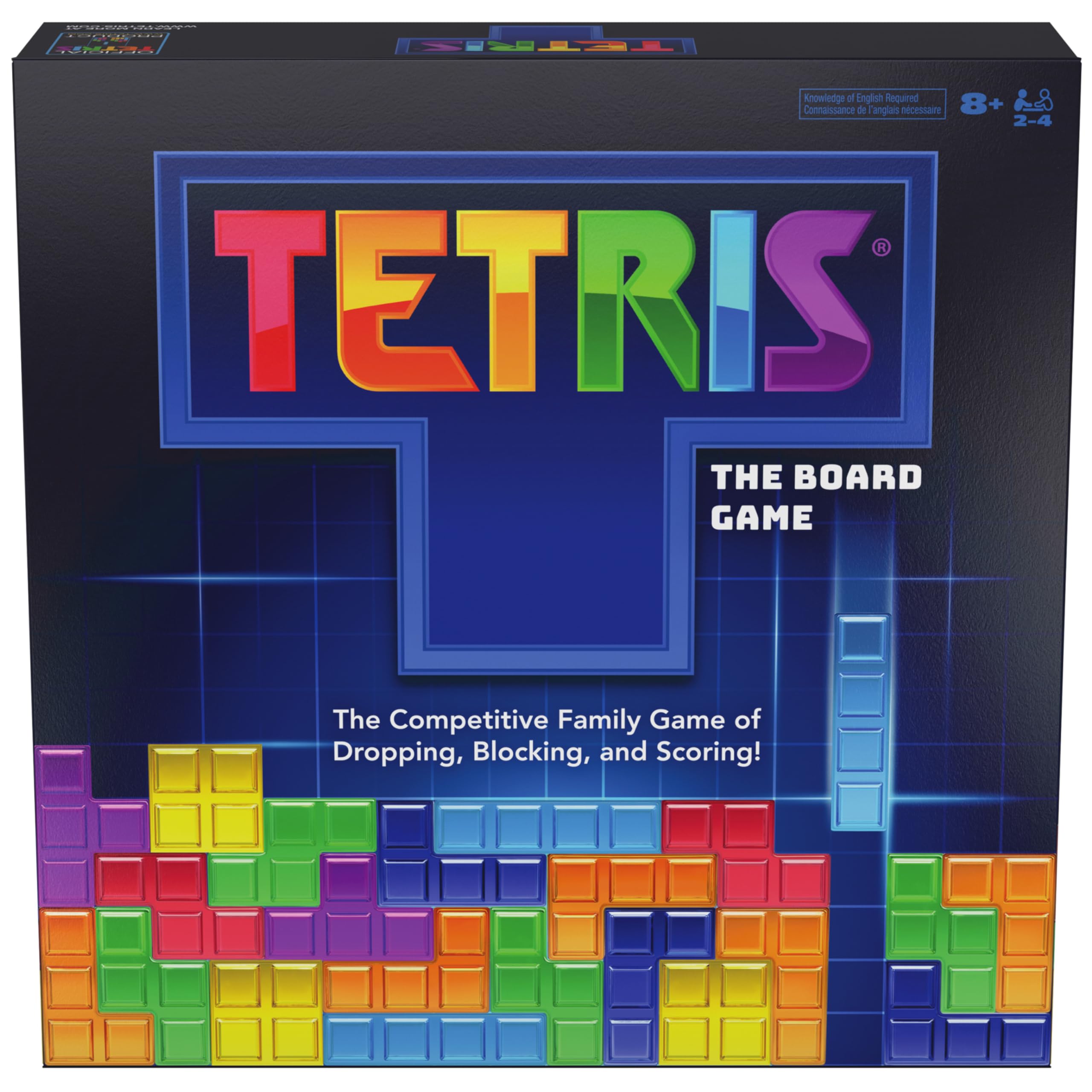
This board game translation of the iconic video game successfully captures the spatial puzzle challenge of Tetris in a physical format. Players draw semi-translucent Tetrimino cards and physically drop the corresponding pieces into their personal grid. The twist is that landing a piece on a black Garbage Drop Icon allows you to add a piece to an opponent’s grid, blocking their progress. It transforms a solo puzzle into a competitive, head-to-head experience.
The game is extremely quick to set up and play, with sessions lasting around 20 minutes. Components are colorful and durable, and the semi-translucent pieces do a good job of evoking the look of the classic game. For a 10-12 year old who grew up with video games but is new to board gaming, this is a natural bridge that leverages familiar mechanics in a tabletop format.
The game supports 2-4 players and is rated for ages 8 and up, but the competitive blocking element is best appreciated by kids on the older end of that range. Some customers report that the puzzle pieces can arrive slightly bent, but this is a minor quality control issue that does not affect gameplay. As an entry-level option at a budget-friendly price, it is a solid addition to any game shelf.
Why it’s great
- Familiar Tetris theme lowers the learning curve
- Competitive blocking mechanic adds player interaction
- Very fast setup and playtime
Good to know
- Some pieces may arrive slightly bent
- Strategic depth is lower than other options
FAQ
What is the ideal playtime for a 10-12 year old board game?
How many players should a game support for this age group?
Are deck-building games too complex for a 10-year-old?
What is the difference between cooperative and competitive games for pre-teens?
Final Thoughts: The Verdict
For most users, the board games for 10-12 year olds winner is the CATAN Board Game (6th Edition) because it offers the deepest strategic experience, the highest replay value, and the most engaging social interaction for groups. If you want a quick, flexible game that works for any player count, grab the Ticket to Ride (2025 Refresh). And for head-to-head play with intense tactical depth, nothing beats the Splendor Duel.