
Our readers keep the lights on and the weekend projects moving. As an Amazon Associate, I earn from qualifying purchases.
Finding a genuinely good 65-inch television for under four hundred dollars used to mean accepting washed-out colors, narrow viewing angles, and a sluggish interface that made you regret the purchase within a week. That is no longer the case. Advances in panel technology and fierce competition have pushed once-premium features like QLED color, Dolby Vision HDR, and responsive smart TV platforms into a price bracket that was previously the domain of basic, low-resolution screens.
I’m Rikta — the co-founder and writer behind FitlyFast. Over the past several weeks, I have been deep inside the spec sheets, customer review clusters, and real-world performance data for the most compelling 65-inch models currently available near this budget ceiling, separating marketing claims from actual picture quality and long-term reliability.
This guide breaks down the top contenders to help you find the absolute best 65 inch tv under $400 that balances vibrant picture quality, solid build, and a smooth streaming experience without requiring you to stretch your budget or settle for a compromise that leaves you underwhelmed.
How To Choose The Best 65 Inch TV Under $400
At this price ceiling, you are making deliberate trade-offs between panel technology, smart platform speed, and connectivity. Understanding where to flex your budget and where to hold firm separates a satisfying long-term purchase from a regretful one.
Panel Technology: QLED vs. Standard UHD
A standard 4K UHD panel in this range uses a basic LED backlight that often struggles with color volume and brightness uniformity. A QLED (Quantum Dot LED) panel, however, uses a layer of quantum dots to convert light into purer, more vibrant colors. The difference is immediately visible in high-saturation scenes like animated movies, nature documentaries, and sports broadcasts. A 65-inch QLED TV in this bracket will look significantly more punchy and lifelike than an equivalently priced standard LED set. Prioritize models explicitly labeled QLED over those that simply say 4K or UHD.
HDR Support: Dolby Vision and HDR10+ Matter
Basic HDR10 is a static format that applies the same brightness and color metadata to an entire movie. Dolby Vision and HDR10+ are dynamic formats that adjust scene-by-scene or even frame-by-frame, preserving details in shadows and highlights. At this budget, you likely won’t get the peak brightness needed for Dolby Vision to truly shine, but you still benefit from the improved tone mapping and color grading. A TV that supports both Dolby Vision and HDR10+ gives you the broadest compatibility with streaming services like Netflix, Disney+, and Prime Video.
Smart TV Platform: Your Gateway to Streaming
The operating system determines how fast, fluid, and frustration-free your daily TV experience will be. Roku OS is widely praised for its simplicity, speed, and evergreen app support. Fire TV is more content-forward with deep Alexa integration but can feel sluggish on lower-end hardware. Google TV offers a rich, personalized interface but demands more horsepower to avoid lag. Tizen (Samsung’s OS) is polished and reliable but has a smaller free-channel ecosystem than Roku or Fire TV. Choose the platform whose workflow matches your viewing habits—do not assume a more complex OS is better.
Quick Comparison
On smaller screens, swipe sideways to see the full table.
| Model | Category | Best For | Key Spec | Amazon |
|---|---|---|---|---|
| Roku Select Series 65Q | QLED | Ease of use & picture | QLED + HDR10 | Amazon |
| Hisense 65E6QF | Hi-QLED | Vibrant HDR & Fire TV | QLED + Dolby Vision/Atmos | Amazon |
| Hisense 65R6G | UHD LED | Roku simplicity | Dolby Vision HDR + Roku TV | Amazon |
| Samsung 65U8000H | Crystal UHD | Samsung ecosystem | Crystal Processor + Motion Xcelerator | Amazon |
| Panasonic 65W70BP | LED UHD | HDMI 2.1 connectivity | HDR10+ + MEMC Motion | Amazon |
| Roku Plus Series 65Q | Mini-LED QLED | Contrast & built-in sound | Mini-LED + Dolby Vision/Atmos | Amazon |
| Samsung 65M70H | Mini LED | Pure color & motion | Mini LED + Pure Spectrum Color | Amazon |
| iFFALCON 65U85 | MiniLED Gaming | 144Hz console gaming | 144Hz + 4x HDMI 2.1 | Amazon |
| TCL 65T7 | QLED 144Hz | High refresh rate gaming | QLED + 144Hz Native | Amazon |
| Toshiba 65Z670R | Mini-LED Pro | Cinematic picture & sound | Mini-LED + 144Hz + REGZA Engine | Amazon |
| Amazon Ember 65 QLED | QLED Fire TV | Deep Alexa integration | QLED + Dolby Vision + Wi-Fi 6 | Amazon |
In‑Depth Reviews
1. Roku Smart TV 2026 – 65-Inch Select Series
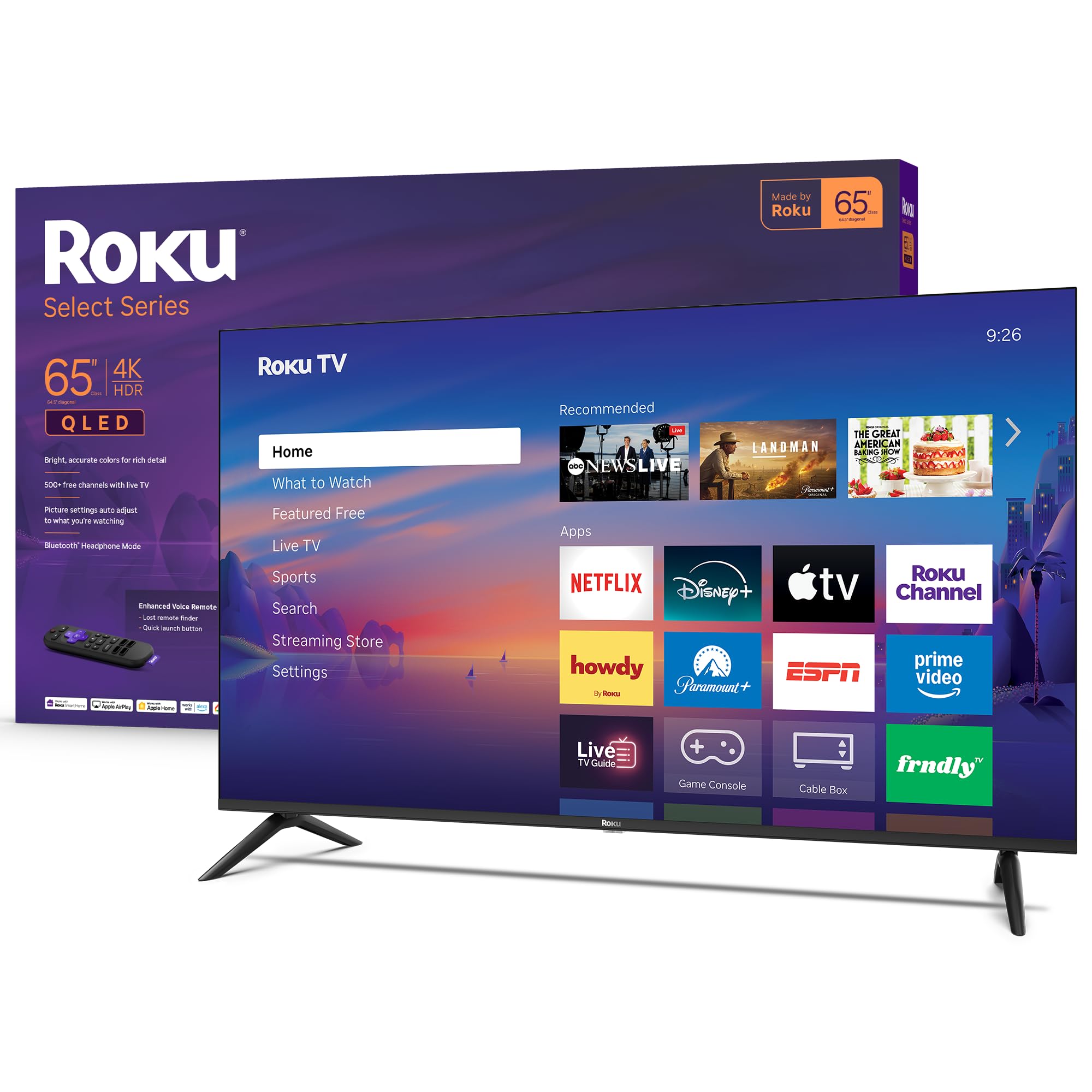
The Roku Select Series 65-inch QLED represents the most balanced package in this entire bracket: a genuine 4K QLED panel paired with Roku’s industry-leading smart TV OS, which remains fast, intuitive, and regularly updated years after purchase. The quantum dot layer produces noticeably richer reds and greens than standard LED panels at similar price points, making nature documentaries and animated films look distinctly more vibrant. HDR10 support, while not the dynamic Dolby Vision format, still produces competent contrast for streaming content when paired with the TV’s direct LED backlight.
Setup is genuinely plug-and-play—Roku’s onboarding process asks minimal questions and gets you to the home screen in under three minutes. The voice remote includes app shortcuts and a lost remote finder that actually works. Bluetooth headphone mode is a genuinely useful feature for late-night viewing, allowing private listening without any additional transmitter. The frameless design gives the TV a cleaner, more expensive look than its price suggests, with thin bezels that let the picture take center stage.
Customer reviews consistently praise the picture quality as “phenomenal for the price” and note the “surprisingly good” built-in sound that handles dialogue clearly without an immediate need for a soundbar. Several verified buyers describe it as outperforming TVs costing significantly more. The only recurring concessions are the lack of Dolby Vision HDR and a 60Hz panel that limits advanced gaming features—but for pure streaming, news, and casual sports viewing, this is the most coherent all-rounder available.
Why it’s great
- QLED panel delivers rich, accurate color that beats standard UHD rivals
- Roku OS is the fastest and least bloated smart TV platform available
- Bluetooth headphone mode and lost remote finder add real daily value
Good to know
- Limited to HDR10; does not support Dolby Vision dynamic HDR
- 60Hz refresh rate caps gaming at 4K 60fps without VRR support
2. Hisense 65″ E6 Cinema Series Hi-QLED
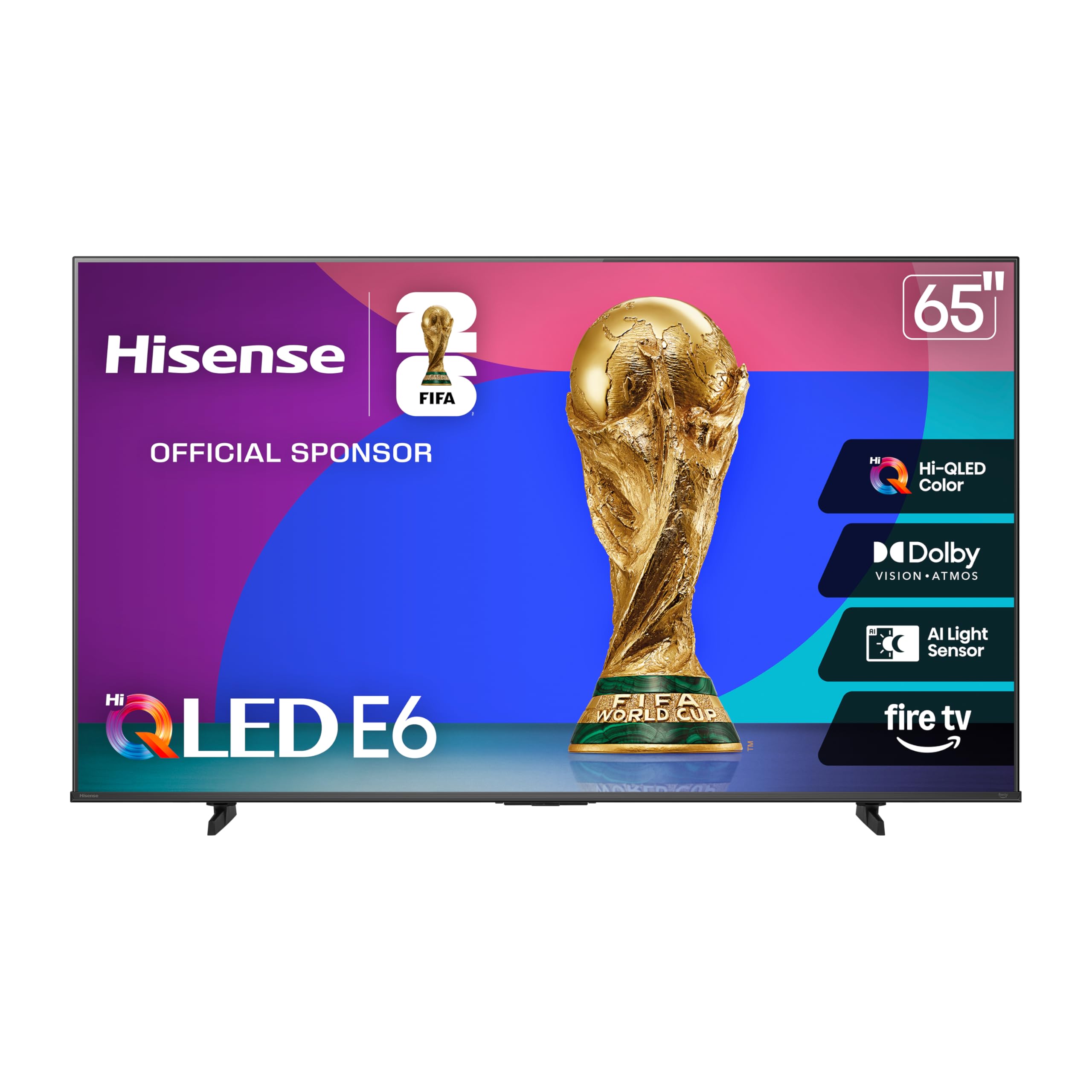
Hisense’s E6 Cinema Series brings a genuine Hi-QLED panel and a full Dolby Vision + Dolby Atmos suite to a price that undercuts most QLED competitors by a noticeable margin. The combination of quantum dot color and dynamic HDR metadata produces a picture that handles shadow detail and highlight clipping better than any static HDR10-only set in this class. The Fire TV platform, while not as snappy as Roku, integrates Alexa voice control deeply and offers a content-forward home screen that surfaces live channels and subscriptions.
The panel’s Motion Rate 120 technology uses frame interpolation to smooth fast-moving sports and action sequences, though purists may prefer to disable this for film content. The Game Mode Plus reduces input lag enough for casual console play. The built-in Dolby Atmos decoding, when paired with a compatible soundbar or receiver, passes spatial audio metadata that standard ARC cannot handle. The TV also supports HDR10+ Adaptive, making it one of the most format-competitive sets in its price tier.
Verified buyers consistently describe the picture as “crystal clear” and “vibrant,” with several noting that colors appear richer than their previous Samsung 4K sets. Occasional reports of remote lag and initial Fire OS sluggishness appear, with most resolving after the first software update. One reviewer noted a small gap between the screen and frame, but no dead pixels or backlight bleed were widely reported. For viewers who prioritize HDR format support and color vibrancy, this Hisense is a compelling value proposition.
Why it’s great
- Dolby Vision and HDR10+ Adaptive provide dynamic, scene-level HDR
- Full Dolby Atmos pass-through for spatial audio setups
- Hi-QLED panel delivers vibrant, true-to-life color saturation
Good to know
- Fire TV interface can feel sluggish during initial setup and app switching
- Motion Rate 120 uses interpolation; not a true 120Hz panel
3. Hisense 65-Inch Class R6 Series

The Hisense R6 Series is a standard 4K UHD LED panel, not a QLED, which means its color volume and brightness fall short of the quantum-dot models above it. What it lacks in peak color saturation, it partially compensates for with Dolby Vision HDR support and the excellent Roku TV operating system. At its price point, it offers the same fluid, uncluttered Roku interface found on more expensive sets, making it a solid option for viewers who prioritize a hassle-free streaming experience above ultimate picture fidelity.
The full-array LED backlight provides decent uniformity for a budget panel, though local dimming is basic and blooming is noticeable in high-contrast scenes. The Motion Rate 120 feature uses backlight scanning to reduce perceived blur during fast motion, which helps with sports and action films. DTS Studio Sound offers a wider soundstage than typical built-in speakers, though bass response remains thin. The TV is also relatively lightweight for its size, making wall mounting more manageable.
Customer feedback is overwhelmingly positive from cost-conscious buyers. One reviewer called it the “best TV bang for the buck,” noting that after adjusting the color settings, the picture looks “fantastic for the price.” Another buyer using it in a conference room said it “rivals TVs two to three times the price.” However, reports of remote quality complaints and a few cases of motherboard failure after several months suggest that long-term reliability is a slight question mark. Consider this pick if budget is your primary constraint and you value a premium smart TV OS over premium panel technology.
Why it’s great
- Roku OS provides the smoothest, most intuitive smart TV experience
- Dolby Vision HDR improves contrast despite standard LED backlight
- Very lightweight design simplifies wall mounting and setup
Good to know
- Standard UHD LED panel lacks the color vibrance of QLED
- Reports of remote quality issues and occasional long-term reliability concerns
4. Samsung 65-Inch Class Crystal UHD U8000H
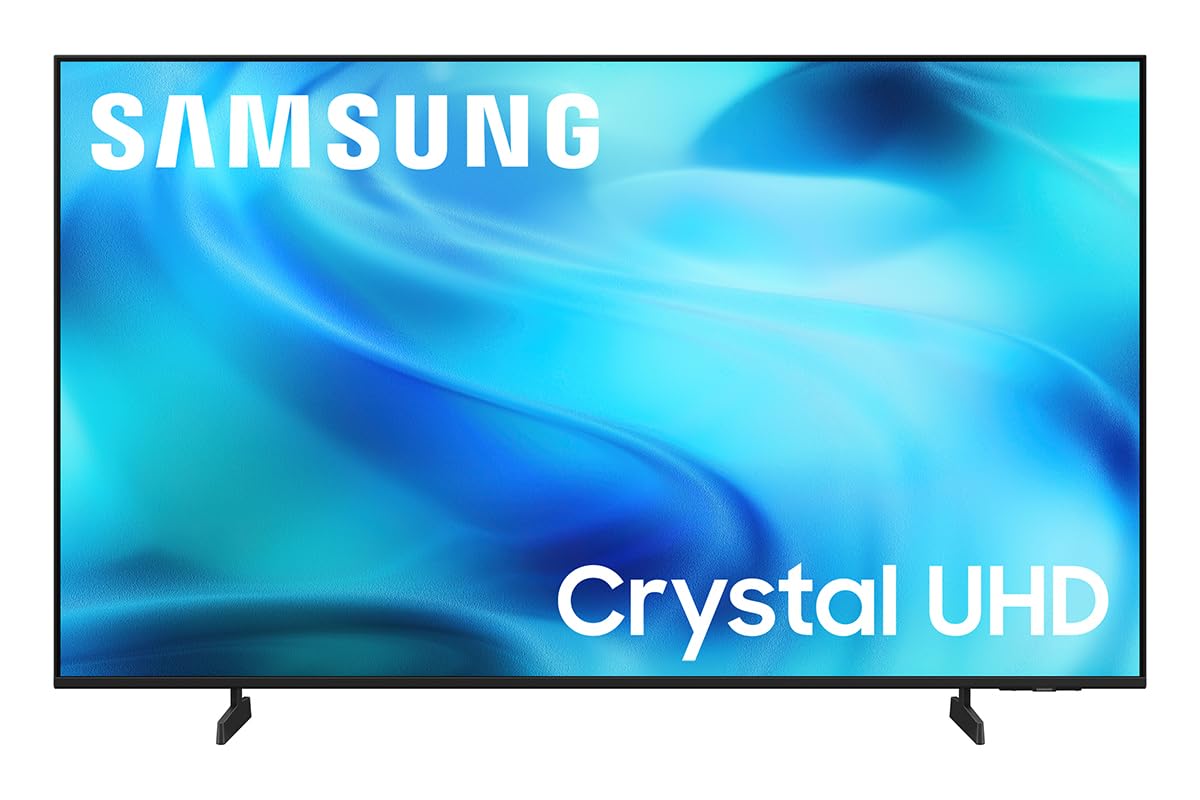
Samsung’s Crystal UHD U8000H Series is a 2026 model that brings Samsung Vision AI processing and a vast free content ecosystem to a price that undercuts competing premium-tier sets. The Crystal Processor 4K handles upscaling of 1080p and 720p content better than most rivals in this bracket, sharpening details and reducing noise in lower-resolution streams. The Color Booster feature enhances saturation to make content appear punchier, though it can push skin tones toward the unnatural side if left at default levels.
The Tizen operating system is polished, responsive, and deeply integrated with Samsung TV Plus, which offers over 2,700 free streaming channels including news, sports, and on-demand movies. Motion Xcelerator technology estimates and adjusts frame transitions in real time, providing smoother motion for sports and gaming content up to 4K 60Hz. However, the panel is a standard LED-backlit display, not QLED or Mini-LED, so peak brightness and black levels are adequate but not exceptional. The 60Hz refresh rate is standard for the class.
Buyers consistently rate the picture quality as “crystal clear” and praise the easy setup. One reviewer noted the remote is “too small and unclear” for older users, though compatibility with previous Samsung remotes is a workaround. The requirement to create a Samsung account during setup frustrated a few cord-cutters. Overall, this is a strong choice for viewers who want a recognizable brand, reliable upscaling for non-4K content, and a massive free channel library without monthly fees.
Why it’s great
- Crystal Processor 4K delivers excellent upscaling for HD and SD content
- Samsung TV Plus offers 2,700+ free channels without subscription
- Motion Xcelerator smooths fast-paced sports and action sequences
Good to know
- Standard LED panel lacks the color volume and contrast of QLED
- Setup requires a Samsung account and internet connection, frustrating some users
5. Panasonic W70 Series 65″ LED 4K Smart Fire TV

Panasonic’s W70 Series brings the brand’s reputation for reliable picture processing into the budget 65-inch space with a Fire TV platform and a notable connectivity perk: an HDMI 2.1 port. This enables support for higher bandwidth signals, making the set more future-proof for console gaming and PC use than most 60Hz HDMI 2.0 rivals at comparable prices. The HDR Bright Panel, powered by a 4K Studio Color Engine with MEMC motion processing, delivers smooth motion and decent brightness for SDR and HDR10+ content.
The Fire TV integration provides full Alexa voice control, Apple AirPlay support, and access to the Amazon ecosystem including Luna cloud gaming. The quad-core processor handles app launching adequately, though several reviewers note that the interface can feel slower than Roku-based competitors when switching between apps. The build quality feels solid, with metal stand feet that provide stable support. The 4 HDMI ports (including one eARC) give enough flexibility for a soundbar, game console, and streaming box simultaneously.
Customer reviews are mixed: many praise the “great picture and sound quality” and “very easy setup,” with one buyer calling it an “impressive smart TV at a great price point.” However, a significant minority report serious reliability issues, including units arriving with black screens or developing chronic freezing, random on/off behavior, and remote failures after months of use. A few reviewers describe Fire TV as “locked in” and “slow for a smart TV.” If you need the HDMI 2.1 port and trust Panasonic’s build quality, this is a capable set; otherwise, the reliability variance is worth noting.
Why it’s great
- HDMI 2.1 port provides higher bandwidth for future-proofed connectivity
- 4K Studio Color Engine with MEMC delivers smooth, clear motion
- Solid build with metal stands and 4 HDMI inputs including eARC
Good to know
- Fire TV interface can feel slower and more sluggish than Roku OS
- Multiple verified reports of units failing or developing chronic software issues
6. Roku Smart TV – 65-Inch Plus Series Mini-LED
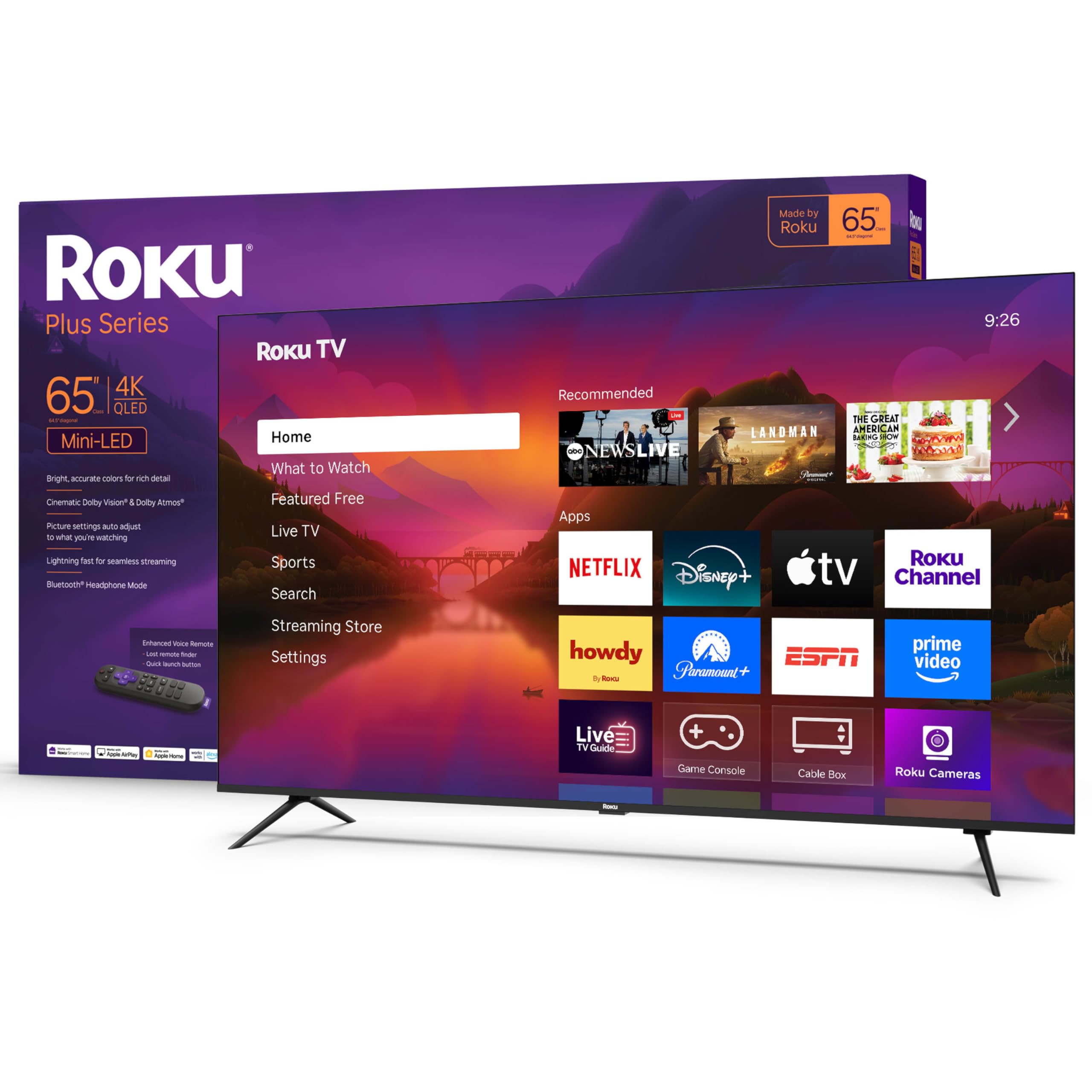
The Roku Plus Series is the first Mini-LED QLED TV in Roku’s lineup, and it brings a significant contrast and brightness upgrade over standard LED sets at a price that still qualifies for budget-conscious buyers who are willing to stretch slightly. Mini-LED backlighting uses far smaller LEDs than conventional backlights, enabling more precise local dimming zones. The result is deeper black levels with less blooming and brighter, more controlled highlights—particularly noticeable during HDR movies with letterbox bars and starfield scenes. The panel also supports Dolby Vision and Dolby Atmos, rounding out the premium HDR feature set.
Roku Smart Picture Max uses AI to analyze incoming signals and automatically adjust color, sharpness, and contrast in real time. The feature works well for cleaning up compressed streaming feeds, though purists may prefer to disable it for critical viewing. The built-in subwoofer provides genuinely deeper bass than typical TV speakers, making action sequences and music feel more substantial without a soundbar. The Enhanced Voice Remote includes programmable shortcuts and the lost remote finder, a small but genuinely appreciated convenience.
Verified owners are enthusiastic, with one describing it as “lots of bang for your buck” and praising the “deep blacks and vibrant colors.” Another noted the sound is “exceptional throughout the range with strong bass.” A few reviewers mention the settings menu is basic and lacks fine-tuning controls compared to premium brands. The Roku OS remains the gold standard for simplicity and long-term support. For buyers who can flex their budget slightly, this is a transformative upgrade in picture quality without leaving the Roku ecosystem.
Why it’s great
- Mini-LED backlighting provides significantly deeper blacks and higher contrast
- Built-in subwoofer delivers richer bass than typical TV speakers
- Dolby Vision and Dolby Atmos support for cinematic HDR and audio
Good to know
- Settings menu is basic with limited fine-tuning compared to premium brands
- Mini-LED premium over standard LED may not be essential for casual viewers
7. Samsung 65-Inch Class Mini LED M70H Series
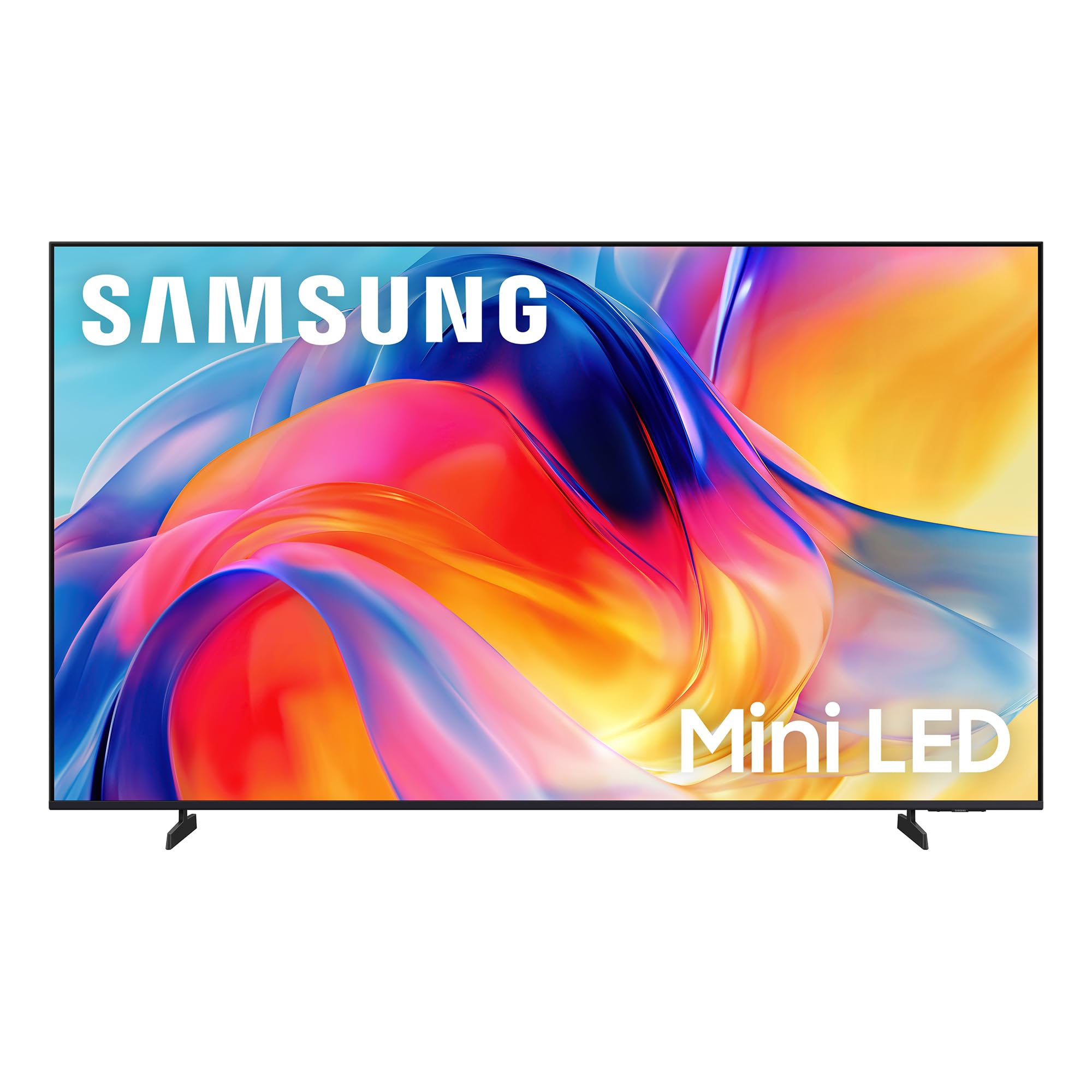
Samsung’s M70H Series represents the entry point into Mini LED backlighting from a top-tier brand, and it delivers a noticeable jump in contrast, brightness, and color uniformity compared to the Crystal UHD series. The Mini LED Processor 4K drives a panel with Supreme Mini LED Dimming, allowing for finer granularity in local dimming zones. The Pure Spectrum Color technology claims one billion true-to-life shades, and in practice, the color volume is visibly superior to standard LED panels, with reds, blues, and greens that feel more saturated without losing subtlety.
The Motion Xcelerator + DLG 120Hz feature uses Digital Learning to simulate a 120Hz-like motion experience on the native 60Hz panel, which helps reduce blur in fast-paced sports and gaming. The Gaming Hub aggregates console, cloud, and app-based gaming into one interface with personalized recommendations. The Samsung TV Plus free channel library, with over 2,700 channels, remains one of the strongest free-TV offerings in the industry. The Titan Black finish and thin bezels give the set a premium aesthetic that matches more expensive Samsung models.
Customer reviews broadly praise the “great picture quality with bright colors and sharp details,” with one buyer calling it the “best TV for the price.” However, several reviewers criticize the remote as the “worst ever,” noting the lack of a dedicated volume button and difficulty switching HDMI inputs. The interface can be frustrating, with reports that it always opens Pluto TV and fails to remember the last input. Sound quality is decent but not exceptional. For buyers who prioritize picture performance above all else, this Samsung is a top contender; for those who value a seamless daily interface, the Roku-based options are more user-friendly.
Why it’s great
- Mini LED backlighting with Supreme Dimming delivers class-leading contrast
- Pure Spectrum Color provides exceptional color volume and accuracy
- Gaming Hub and Samsung TV Plus offer extensive free content and game integration
Good to know
- Remote lacks dedicated volume button and makes input switching tedious
- Interface does not remember last HDMI input, causing daily frustration
8. iFFALCON 65″ 4K MiniLED Smart TV 65U85
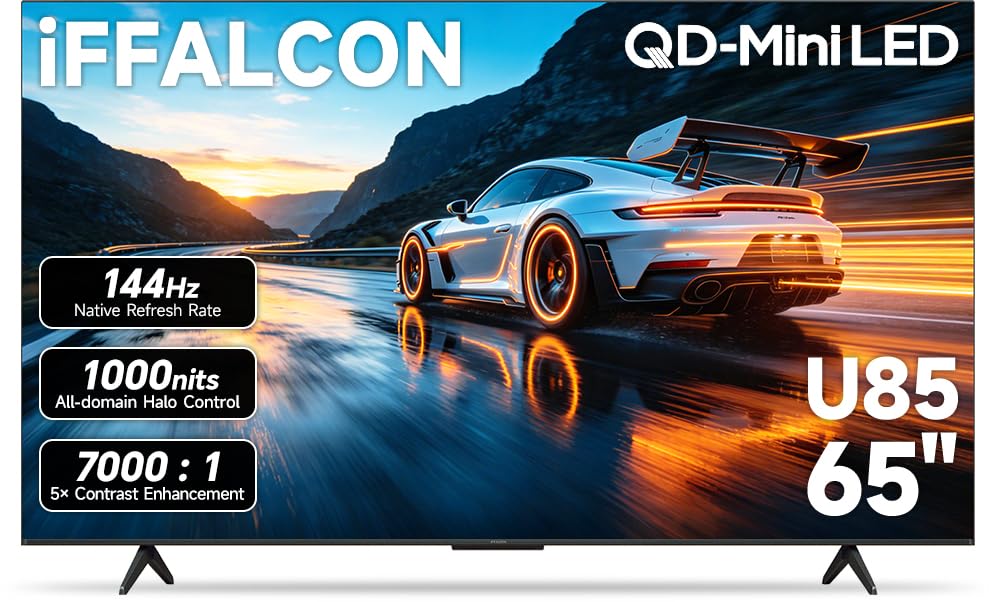
The iFFALCON 65U85 is a MiniLED gaming-focused television that punches far above its price bracket in key performance metrics. The native 144Hz panel with VRR support up to 288Hz delivers buttery-smooth motion for fast-paced console and PC gaming, with FreeSync Premium Pro certification to eliminate screen tearing and minimize input lag. The 1000-nit peak brightness and 7000:1 contrast ratio, enabled by MiniLED local dimming, produce HDR gaming visuals that rival sets costing significantly more.
Connectivity is a standout feature: four HDMI 2.1 ports allow simultaneous connection of a PS5, Xbox Series X, gaming PC, and soundbar without sacrificing performance on any port. Two ports run at full 4K 144Hz, while the remaining two handle 4K 60Hz. The built-in 50W 2.1-channel audio system with Dolby Atmos and DTS Virtual:X provides immersive sound without an external soundbar, though adding one for true cinematic bass is still recommended. Google TV with hands-free voice control via far-field microphones rounds out the smart feature set.
Customer reviews are overwhelmingly positive, with gamers praising the “smooth, responsive UI” and “vibrant colors” that “outperform previous Vizio/Samsung at similar price.” One buyer noted that movies and games look “stunning, crystal clear, and ultra smooth.” A small number of reports mention flickering issues that required returns. The set also includes hotel mode and IP control features rarely seen at this price, making it suitable for commercial or hospitality installations. For serious gamers on a budget, this iFFALCON is an exceptional value proposition.
Why it’s great
- Native 144Hz with VRR up to 288Hz delivers elite gaming performance
- Four HDMI 2.1 ports allow full-bandwidth connections to multiple consoles
- 50W 2.1-channel audio with Dolby Atmos is surprisingly immersive
Good to know
- Slightly thicker chassis than ultra-thin premium models
- Minor reports of flickering in isolated units
9. TCL 65 Inch Class T7 Series 4K QLED

The TCL T7 Series combines a 4K QLED panel with a native 144Hz refresh rate, making it one of the most motion-capable TVs in this class. The quantum dot layer produces rich, vibrant colors covering nearly the entire DCI-P3 color space, while the AIPQ Pro Processor intelligently optimizes color, contrast, and clarity in real time. Dolby Atmos audio support adds spatial sound depth, and the FullView 360 metal bezel-less design with height-adjustable feet gives the TV a sleek, modern look that fits seamlessly into any room.
For gamers, the 144Hz native panel combined with 288Hz Variable Gaming Refresh Rate and MEMC frame insertion delivers ultra-smooth motion with minimal blur. The four HDMI inputs, including one with eARC, provide flexible connectivity for consoles, soundbars, and streaming devices. Google TV provides a clean, personalized interface with Chromecast built-in and Apple AirPlay 2 support. The TCL AIPQ Pro processor handles 4K upscaling effectively, improving the look of lower-resolution content without introducing artifacts.
Customers are impressed, with one 75-inch buyer calling the gaming experience “amazing” with “no lag or blur” on a PS5, and describing 4K discs as “stunning, crystal clear, and ultra smooth.” Another reviewer was blown away by the “Mini-LED brightness and QLED color” and the “phenomenal” performance with dimmed lights. The main caveat is that PC users report the TV does not wake properly from power save when connected via HDMI, requiring a cable unplug/replug. The built-in speakers are adequate but not remarkable. This is a top-tier pick for gamers who want high refresh rate performance and rich color.
Why it’s great
- Native 144Hz panel with 288Hz variable refresh rate for fluid gaming
- QLED quantum dot color covers nearly full DCI-P3 gamut
- Bezel-less design with height-adjustable feet for flexible placement
Good to know
- PC HDMI wake-from-sleep issue requires unplugging/replugging cable
- Built-in speakers are adequate but benefit from an external soundbar
10. Toshiba 65″ Z670R Mini-LED 4K Smart Fire TV
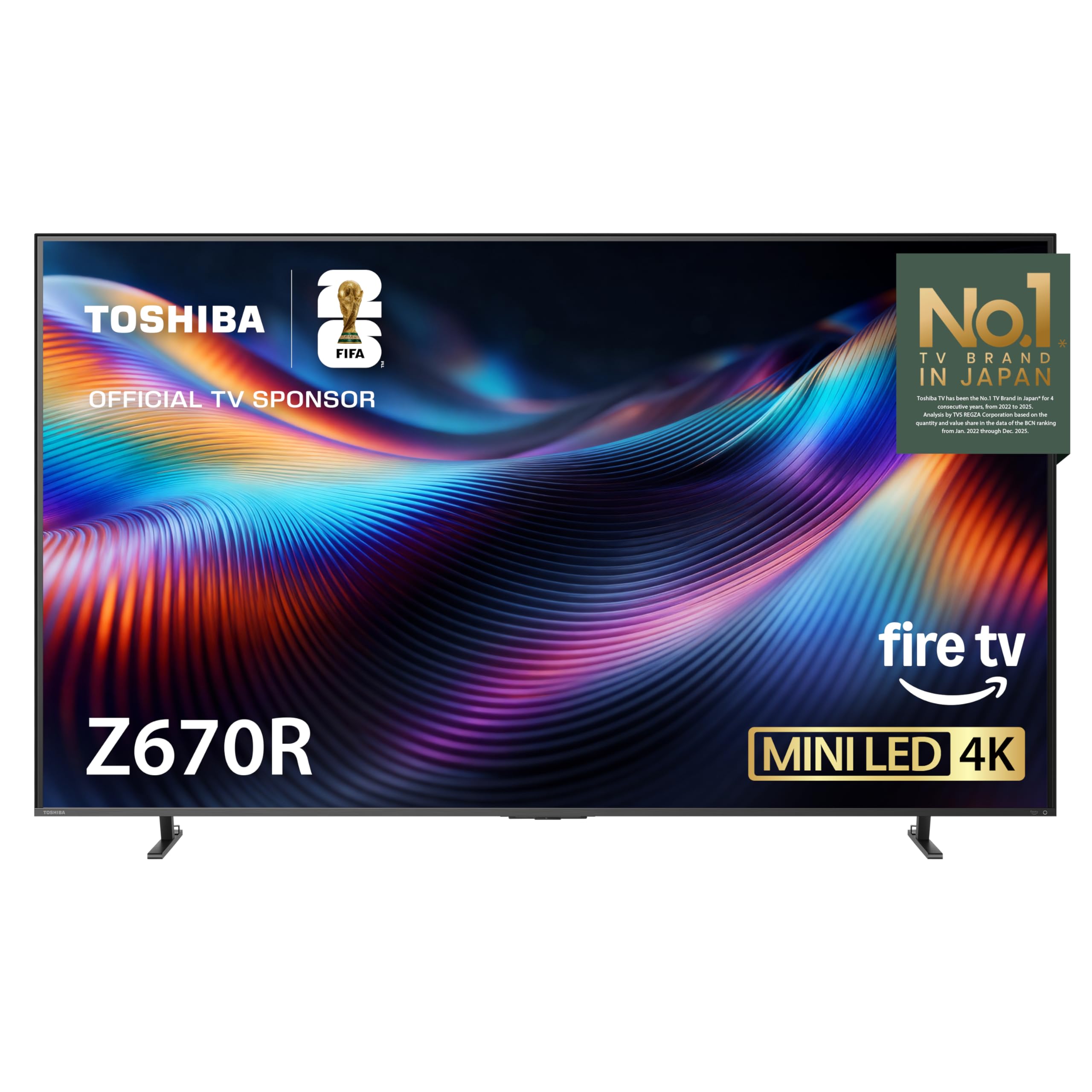
Toshiba’s Z670R is a Mini-LED 4K TV that brings the brand’s REGZA Engine ZRi Gen3 processing platform, developed by engineers in Japan for natural, lifelike picture quality. The Mini-LED panel with Full Array Local Dimming delivers deep blacks and bright, controlled highlights that compete with much more expensive sets. The Total HDR Solution Pro supports every major HDR format including Dolby Vision IQ, HDR10+, HDR10+ Adaptive, and HLG, ensuring compatibility with all streaming services and external sources.
The native 144Hz refresh rate with Game Mode Pro, AMD FreeSync Premium, VRR, and ALLM makes this a serious contender for high-frame-rate gaming. The REGZA Power Audio Pro system includes a dedicated bass woofer and dual clear direct speakers, providing genuinely room-filling sound with deep, resonant bass. The AI Light Sensor Pro automatically adjusts brightness and color balance to match room lighting, reducing eye strain during extended viewing sessions. The Fire TV platform with built-in Alexa provides voice control and access to thousands of apps.
Customer reviews are exceptionally positive, with one 100-inch variant buyer calling it the “best TV experience I’ve ever had” and praising the contrast, colors, and motion handling. Another reviewer describes the picture as “stunning” and the Dolby Atmos sound as “clear and immersive.” Several buyers note that Toshiba is making a “strong comeback” with this series and that the Z670R “exceeded my expectations.” The only minor complaints are that the Fire TV interface can occasionally feel slower than Roku, and the set requires careful initial setup to get the most out of picture settings. For buyers seeking a cinema-like experience with premium HDR support and excellent built-in sound, this Toshiba is a standout.
Why it’s great
- REGZA Engine ZRi Gen3 delivers natural, lifelike picture processing
- 144Hz native with FreeSync Premium Pro and ALLM for elite gaming
- REGZA Power Audio Pro with bass woofer provides room-filling sound
Good to know
- Initial picture setup requires adjustment for optimal out-of-box performance
- Fire TV interface can be slower than Roku in daily use
11. Amazon Ember 65″ QLED Series with Fire TV
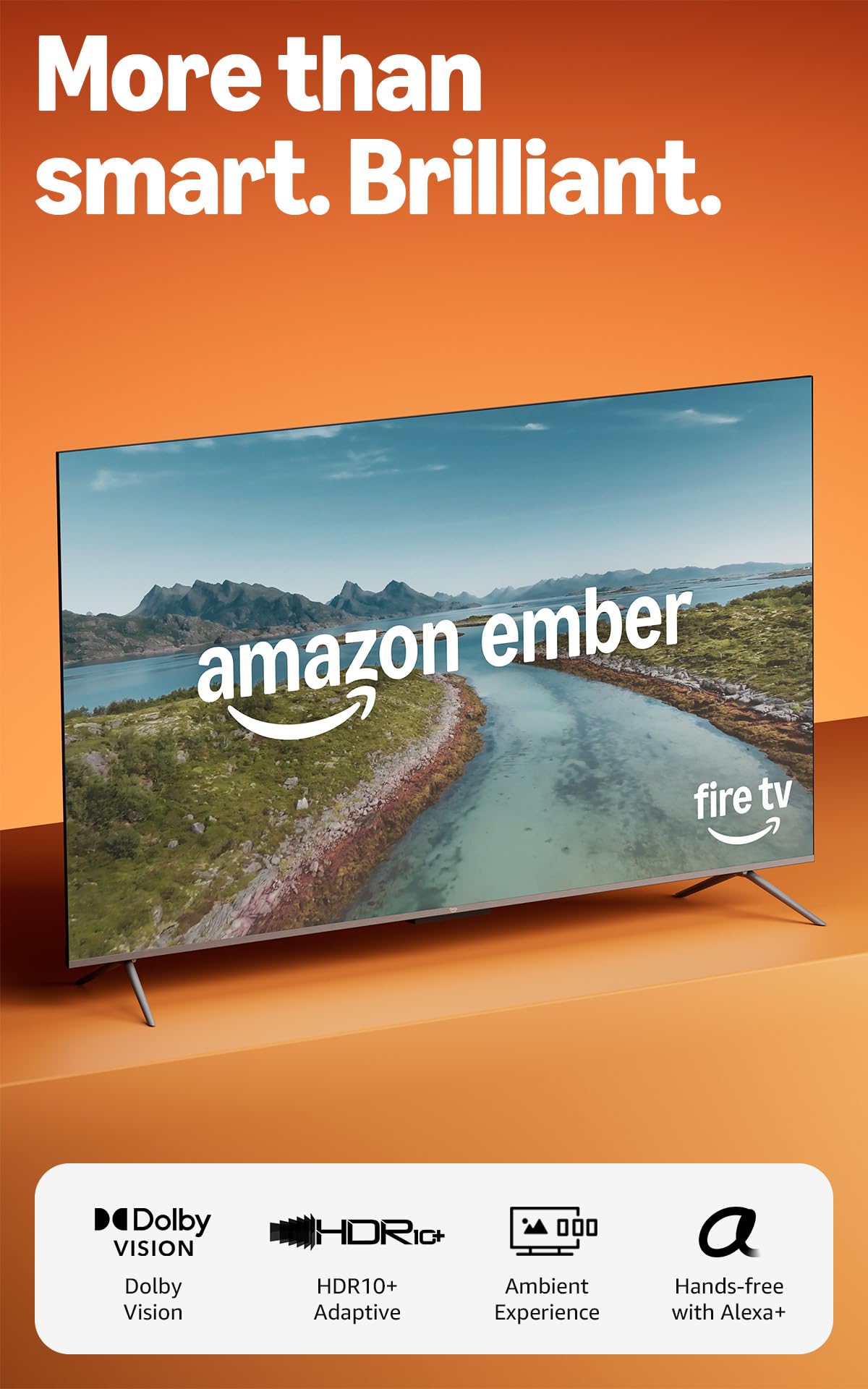
The Amazon Ember 65″ QLED is the newest addition to Amazon’s own TV lineup, designed to deeply integrate with the Alexa ecosystem and offer a no-compromise picture at an aggressive price. The 4K QLED display with Dolby Vision and HDR10+ Adaptive provides vibrant, accurate colors and excellent HDR performance. Full-array local dimming creates deeper blacks and brighter whites for improved contrast that enhances movies and games. The new quad-core processor combined with Wi-Fi 6 ensures fast app launches and smooth streaming even on congested home networks.
The standout feature is the integrated Alexa+ with far-field microphones and the custom Omnisense technology that wakes the TV when you enter the room, displaying artwork or readying the interface. This hands-free capability extends to controlling smart home devices, setting timers, and searching content without touching a remote. The IP/IR control and hotel mode features make it adaptable for commercial use. Amazon Luna and Xbox Game Pass cloud gaming support provide instant game streaming without a console.
Early customer reviews are mixed. Several buyers are impressed with the “vibrant colors, deep blacks, and good brightness,” describing it as a “solid TV purchase.” One reviewer praised the “great picture quality and Easy Setup” while noting occasional Netflix bugginess that resolved by pressing Home. However, a significant minority report serious software bugs including frequent black screens with sound after power-off and apps disappearing from the home screen, requiring unplugging the TV to fix. One buyer returned the unit after one day and replaced it with a Hisense that worked flawlessly and cost less. The audio lacks bass without a soundbar. For loyal Amazon ecosystem users, the hands-free Alexa integration may justify the premium; for most, the reliability concerns suggest waiting for firmware maturity.
Why it’s great
- Far-field Alexa+ with Omnisense wake technology for hands-free control
- QLED panel with Dolby Vision and HDR10+ Adaptive for rich HDR picture
- Wi-Fi 6 and quad-core processor enable fast, responsive streaming
Good to know
- Multiple verified reports of software bugs including black screens and app drops
- Built-in audio lacks bass depth; a soundbar is recommended for fuller sound
FAQ
Is QLED noticeably better than standard 4K UHD at this price?
Do I need a soundbar for a 65-inch TV at this budget?
Can I use this TV for PS5 or Xbox Series X gaming?
How important is the smart TV platform on a budget 65-inch TV?
What refresh rate should I look for in this price range?
Final Thoughts: The Verdict
For most users, the 65 inch tv under $400 winner is the Roku Select Series 65Q because it delivers a true QLED picture with the fastest, most intuitive smart TV platform at a price that leaves room for accessories like a soundbar. If you want Dolby Vision HDR and richer cinematic contrast without leaving this budget bracket, the Hisense 65E6QF is the best alternative. And for console gaming performance with native 144Hz and four HDMI 2.1 ports, nothing beats the iFFALCON 65U85.