
Our readers keep the lights on and the weekend projects moving. As an Amazon Associate, I earn from qualifying purchases.
That foggy, exhausted feeling you wake up with every morning — the one that no amount of coffee can fix — might not be about how many hours you spend in bed. It could be about how many times you actually stop breathing during the night. Sleep apnea is notoriously underdiagnosed, and the traditional route of booking a sleep lab study often means months of waiting, hundreds of dollars in specialist copays, and an uncomfortable night sleeping wired to machines in a strange room. An at-home sleep apnea test gives you the clinical data your doctor needs — your AHI (Apnea-Hypopnea Index), oxygen desaturation events, heart rate patterns, and breathing interruptions — without leaving your own pillow.
I’m Rikta — the co-founder and writer behind FitlyFast. I’ve spent hundreds of hours analyzing sleep-test hardware, from airflow sensors and wearable oximeters to contactless radar pads, to understand exactly which specs translate into a report your pulmonologist will actually accept.
Whether you’re looking for a diagnostic screening tool to take to your next appointment or a long-term tracker to validate your CPAP therapy, this guide breaks down the real metrics. My goal is to help you find the very best at home sleep apnea test for your specific sleep profile and budget.
How To Choose The Best At Home Sleep Apnea Test
Not every sleep monitor qualifies as an apnea test. A true at-home sleep apnea test must capture one or more of the following: breathing airflow, oxygen desaturation, heart rate, snoring patterns, and body position. Before you buy, understand exactly what each device tracks and how your doctor will interpret the data.
AHI Scoring and Diagnostic Validity
The Apnea-Hypopnea Index is the gold standard metric your physician uses to diagnose sleep apnea. It counts how many times per hour your breathing stops (apnea) or becomes shallow (hypopnea). Devices that deliver a clear AHI number — like the EMAY Sleep Breathing Monitor or the O2Ring — generate reports that a pulmonologist can review. Wellness-grade trackers that skip AHI in favor of a generic “sleep score” are useful for trend spotting but won’t secure a prescription.
Sensor Type: Nasal Airflow vs. Oximetry vs. Radar
Nasal-cannula monitors like the EMAY measure actual breathing airflow directly, making them the closest home equivalent to a lab-based Type III sleep study. Oximetry rings such as the Wellue O2Ring detect apnea events indirectly through oxygen desaturation and heart rate variability. Contactless radar pads like the SOMNDEEP offer zero-wearable convenience but rely on movement and respiration pattern analysis. Each method has strengths — direct airflow is most accurate, oximetry is most comfortable, and radar works for children and elderly patients who cannot tolerate wearables.
Comfort and Usability Across Sleep Positions
Your natural sleep position heavily determines which device works. Mouth-breathers will struggle with nasal-only airflow monitors like the EMAY, because the sensor assumes a closed mouth. Side and stomach sleepers may find ring oximeters uncomfortable against the pillow. Under-mattress pads like the Withings Sleep solve this entirely by eliminating contact, but they lose accuracy if your partner shares the bed. Match the form factor to your most common sleeping habit, not the one you wish you had.
Data Portability and Doctor Compatibility
Your test results are only useful if they can be shared. Look for devices that export PDF or CSV reports with timestamps, SpO2 waveforms, and AHI breakdowns. The Wellue O2Ring and EMAY monitor generate professional-grade PDFs that most clinics accept. Devices that keep data locked inside a proprietary app — especially those without shareable reports — limit your ability to get a formal diagnosis or insurance reimbursement.
Quick Comparison
On smaller screens, swipe sideways to see the full table.
| Model | Category | Best For | Key Spec | Amazon |
|---|---|---|---|---|
| Emay Sleep Breathing Monitor | Airflow | Nasal breathing & AHI tracking | 3-in-1 airflow sensor (10g) | Amazon |
| Wellue O2Ring | Oximetry | Overnight SpO2 & desaturation events | 16-hour battery, 15g ring | Amazon |
| Withings Sleep | Contactless | Contactless snore & heart rate tracking | Pneumatic under-mattress pad | Amazon |
| LOOKEE O2-Tracker Ring | Oximetry | All-day SpO2 with event marking | 16-hour memory (4 groups) | Amazon |
| Concord Handheld Oximeter | Spot-Check | Continuous monitoring with loud alarms | 22-hour battery, 1.5 lbs | Amazon |
| SkyPad Onsky | FDA-Cleared | Remote senior care & seizure monitoring | FDA-cleared, SOS button | Amazon |
| SOMNDEEP Radar Monitor | Contactless | Bedside radar sleep & breathing analysis | Millimeter-wave radar sensor | Amazon |
| Pepultech Osasleep | Wrist Oximeter | Wrist-worn SpO2 & sleep report | 20g watch, 2 finger probes | Amazon |
| Choose Health 4-in-1 Test | Lab Test | Adrenal & stress hormone screening | Finger-stick blood, CLIA lab | Amazon |
In‑Depth Reviews
1. EMAY Sleep Breathing Monitor
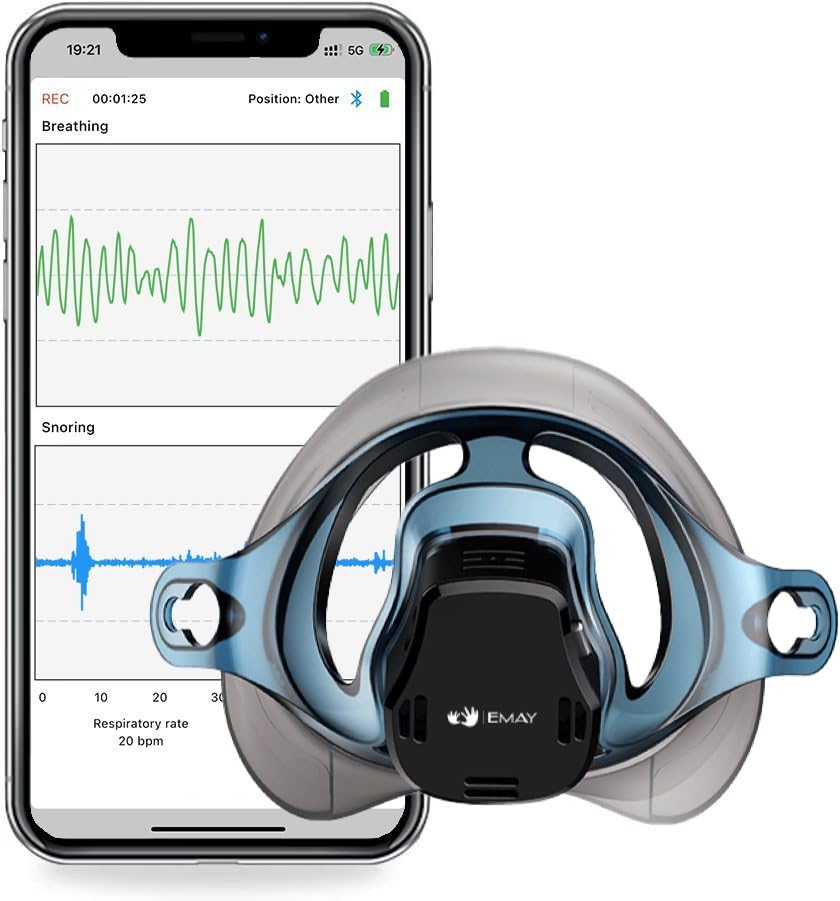
The EMAY Sleep Breathing Monitor is the closest home equivalent to a Type III sleep study you can buy without a prescription. Its three-sensor nasal probe directly measures breathing airflow, detecting apneas and hypopneas in real time, and the AI algorithm generates a professional-grade report complete with AHI score, snoring events, and respiratory waveforms. At only 10 grams, the food-grade silicone mask is remarkably unobtrusive — most users report forgetting they’re wearing it within minutes.
What sets the EMAY apart from oximetry-only devices is its ability to capture the actual absence of airflow, not just the resulting oxygen drop. This gives physicians a more direct diagnostic picture. The companion app syncs instantly via Bluetooth, and the detailed analysis — including event timing and sleeping position correlation — makes it easy to spot whether your apnea worsens on your back. Multiple users noted that the device produced consistent AHI readings across several nights, which adds confidence when presenting data to a specialist.
The main limitation is that the EMAY is designed exclusively for nasal breathing. Mouth-breathers will get unreliable results, and the device cannot be used alongside a CPAP mask. It also does not measure SpO2 or pulse rate, so those seeking a full cardiopulmonary picture may need to pair it with a ring oximeter. For pure airflow-based sleep apnea screening, however, this is the most data-rich and clinically translatable option on the list.
Why it’s great
- Direct nasal airflow measurement with real-time AHI scoring
- Professional PDF report suitable for doctor review
- Ultra-light (10g), comfortable silicone mask
Good to know
- Not for mouth-breathers or CPAP users
- No SpO2 or heart rate tracking
- Requires correct mask positioning for accurate data
2. Wellue O2Ring
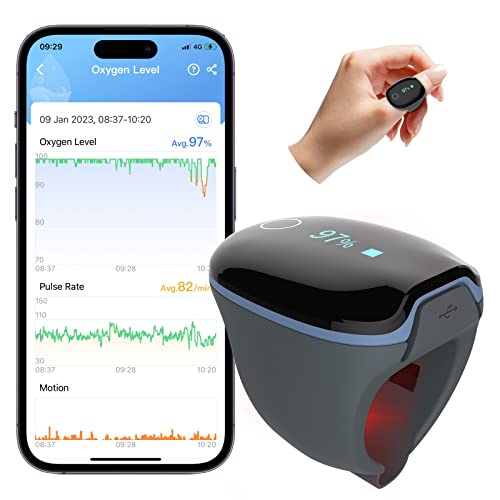
The Wellue O2Ring is the most popular continuous oximetry ring in the sleep apnea community for good reason. It wraps snugly around your finger — roughly the size of an adult thumb — and records SpO2, heart rate, and motion all night. The standout feature is its detailed PC and app software: you get full waveform graphs, desaturation event marking, and unlimited PDF/CSV export. Many users report that doctors accept these reports for CPAP compliance and therapy verification.
The ring form factor is far less intrusive than a wristwatch or finger clip, and at 15 grams, it barely adds any weight to your hand. The vibration reminder buzzes gently when your SpO2 drops below a preset threshold, which helps restless sleepers understand when their apnea is most severe. Built-in memory stores up to four 10-hour sessions, so you can capture multiple nights before syncing. Reviewers consistently praise its ability to match hospital-grade oximeters within a 1-2% margin.
The biggest drawback is that the O2Ring detects apnea indirectly via oxygen desaturation, not by measuring airflow. This means it cannot distinguish between obstructive and central sleep apnea. Additionally, the battery requires daily charging — if you forget, the ring may stop recording in the early morning hours. Some users with very small or very large fingers also report an imperfect fit that causes motion artifacts. For a well-established, data-rich oximetry solution, though, this remains the benchmark.
Why it’s great
- Professional-grade SpO2 waveforms and PDF reports
- Comfortable, lightweight ring design
- Event marking for low SpO2 and abnormal heart rate
Good to know
- Requires daily charging; may miss early-morning data
- Detects apnea via desaturation, not direct airflow
- Fit may be inconsistent for very small/large fingers
3. Withings Sleep

The Withings Sleep pad slides under your mattress and uses a pneumatic sensor to detect heart rate, breathing rate, snoring, and sleep cycles without any wearable device. For those who find rings, masks, or watches too uncomfortable, this contactless approach is a game-changer. The pad is particularly adept at tracking snoring duration and intensity — a key indicator of sleep-disordered breathing — and it provides a detailed sleep-stage breakdown (light, deep, REM) in the Health Mate app.
Where the Withings Sleep truly shines is long-term trend analysis. Users who track for weeks or months can clearly see how changes in bedtime, caffeine intake, or alcohol consumption affect their sleep quality and breathing disturbance index. The device automatically syncs via Wi-Fi, so you don’t need to keep your phone nearby. Several long-term reviewers noted that the software updates over the years have meaningfully improved accuracy, adding heart rate variability and motion tracking that were missing at launch.
The primary limitation is that this is not a diagnostic sleep apnea test in the United States — the apnea detection feature is still pending FDA clearance. The device reports a generic “breathing disturbance” metric rather than a true AHI score. Furthermore, if you share a bed, the pad struggles to distinguish between two sleepers unless you buy a second unit. For anyone seeking a zero-wearable, trend-focused sleep tracker that can alert you to potential breathing issues, this is the best contactless option available.
Why it’s great
- Completely contactless; nothing to wear or charge daily
- Excellent snoring detection and long-term trend tracking
- Wi-Fi sync, no phone required for overnight recording
Good to know
- No FDA-cleared apnea detection in the US
- Struggles with dual-occupancy beds
- Requires precise pad placement under the mattress
4. LOOKEE O2-Tracker Ring
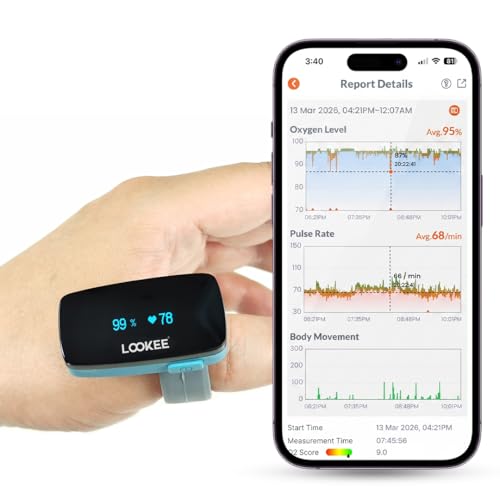
The LOOKEE O2-Tracker Ring offers a compelling alternative to the Wellue O2Ring with a slightly different design philosophy. Its patented soft silicone sensor ring is designed for all-day wear, not just overnight, making it a good choice for anyone who wants to track SpO2 during the day as well. The ring automatically stores up to four 10-hour data groups in its internal memory, uploading them to the app when you sync. This means you can wear it for multiple nights without worrying about daily charging.
Accuracy-wise, the LOOKEE holds its own. Several reviewers compared it directly against hospital pulse oximeters and found the readings matched within 1-2%. One user even reported that their doctor said the LOOKEE report was more accurate than his own clinic monitor. The vibration reminder for low O2 is responsive, and the app generates clear trend graphs that make it easy to spot repeated desaturation events. The ring is also lightweight enough that side sleepers often forget they’re wearing it.
The main trade-off with the LOOKEE is its on-device memory limitation. The ring itself cannot show you data — you must connect to the app to see your numbers. Some users also reported that the ring shuts off after exactly 10 hours of continuous recording, which can cut short a long sleep session. And while the company provides solid customer support, a few long-term users experienced ring failures after a few years, requiring replacements. For an accurate, comfortable, and versatile oximetry ring, the LOOKEE is a strong mid-range contender.
Why it’s great
- Accurate SpO2 readings matching hospital devices
- All-day wear capability with comfortable silicone ring
- Built-in memory for multiple nights without daily sync
Good to know
- Shuts off after 10 hours; may miss long sleep sessions
- No on-device display; data only through app
- Some long-term durability concerns reported
5. Concord Handheld Pulse Oximeter

The Concord Handheld Pulse Oximeter is built for a specific use case: continuous overnight monitoring with loud, adjustable alarms that can wake you or a caregiver if your SpO2 or heart rate falls outside safe parameters. Its 2.4-inch OLED color display shows real-time readings at a glance, and the device is rugged enough to handle drops or daily handling in a home healthcare environment. The package includes a soft adult finger sensor, three AA batteries, and a protective silicone boot with a stand.
Where the Concord excels is its alarm system. The audible and visual alerts are genuinely loud and adjustable, making it a reliable safety net for people with nocturnal asthma, COPD, or severe sleep apnea who need to know immediately when desaturation occurs. The device also performs well during motion and low-perfusion states — situations where many consumer oximeters fail. Users with respiratory conditions consistently praise its ability to provide peace of mind and help them sleep without constant anxiety.
The biggest downside is the battery life. With continuous overnight use, the three AA batteries drain relatively quickly — many users report needing fresh batteries every one or two nights. The lack of a wall-plug option is a significant oversight for a device intended for continuous monitoring. Additionally, the finger sensor is wired, which can tangle during sleep for restless individuals. For those who prioritize loud, reliable alarms over comfort and battery efficiency, the Concord is a specialized but effective tool.
Why it’s great
- Exceptionally loud and adjustable audible/visual alarms
- Accurate readings even during motion or low perfusion
- Rugged build with protective boot and stand
Good to know
- AA batteries drain quickly; no wall plug option
- Wired finger sensor can tangle during sleep
- Heavier and bulkier than ring or wrist devices
6. SkyPad FDA-Cleared Monitor
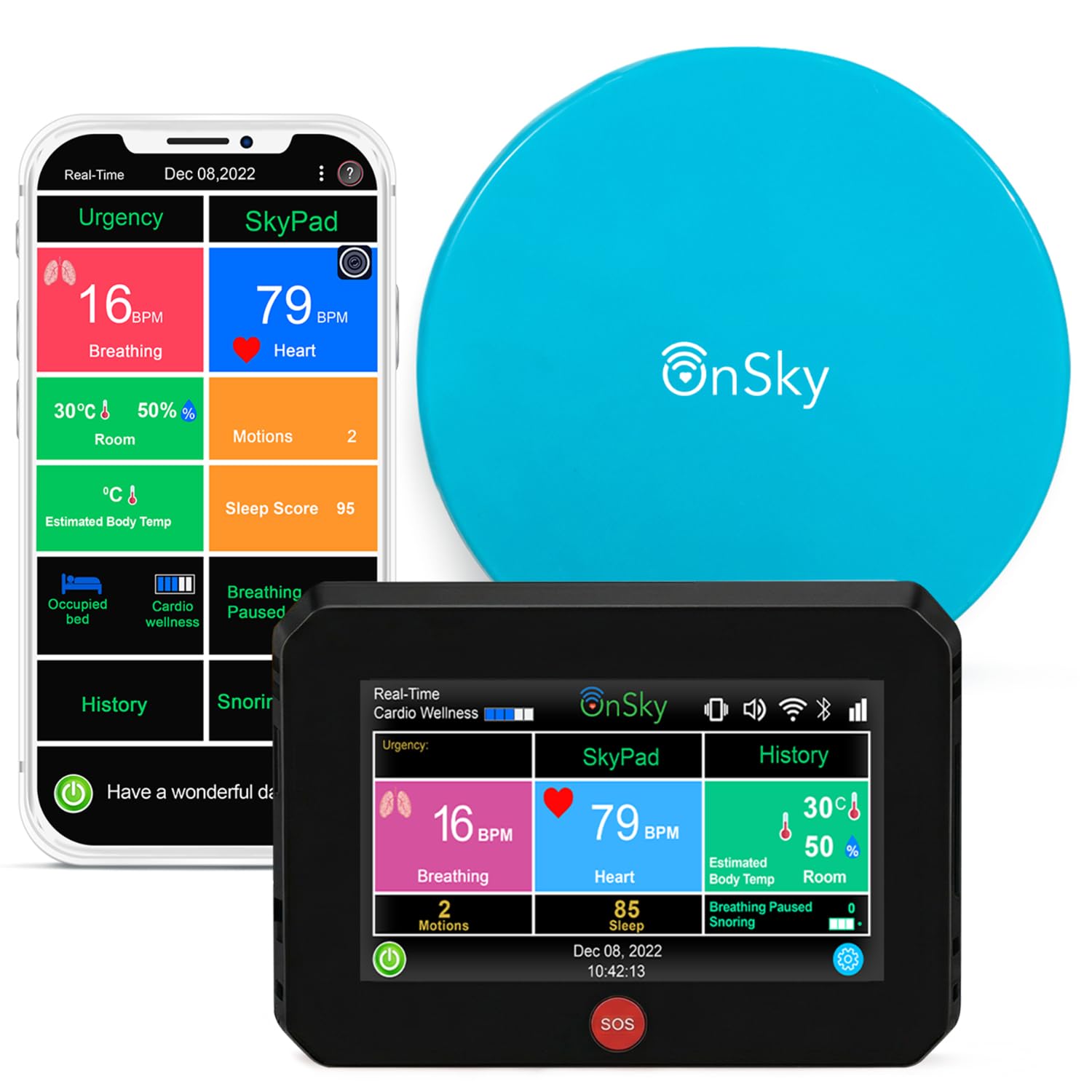
The SkyPad is the only device on this list that carries FDA clearance as a health sensor system for heart rate, breathing, sleep apnea, and seizure monitoring. It consists of a sensor pad that slides under your pillow and a touchscreen hub with an SOS emergency button. This is not just a sleep tracker — it is designed for remote caregiving, allowing family members to monitor a loved one’s well-being from anywhere via the OnSky Health app. The system alerts you to unusual activity, such as a potential seizure or a prolonged breathing pause.
The contactless nature of the SkyPad is its greatest strength for elderly or pediatric users who cannot tolerate wearables. Setup is genuinely quick — several reviewers had it calibrated and running in under 15 minutes. The hub’s emergency button can be programmed to call up to three contacts, providing an extra layer of safety for seniors living alone. Heart rate readings reportedly match smartwatch data after a brief warm-up period, and the breathing disturbance tracking offers a useful proxy for sleep apnea screening.
On the downside, the SkyPad system requires a subscription for advanced features, and some users found the setup process overly fussy for continuous real-time data streaming. The touchscreen hub is relatively small (5 inches), and the app’s data visualization could be more intuitive. While the FDA clearance is a major trust signal, the device is not intended as a replacement for a full polysomnography. For remote caregiver monitoring with seizure detection as a bonus feature, the SkyPad fills a unique and critical niche.
Why it’s great
- FDA-cleared for heart rate, breathing, sleep apnea, and seizure detection
- Contactless under-pillow sensor with emergency SOS button
- Ideal for remote caregiving and senior independence
Good to know
- Requires subscription for some advanced features
- Setup can be fussy for real-time data streaming
- Not a substitute for a full clinical sleep study
7. SOMNDEEP Contactless Smart Sleep Monitor
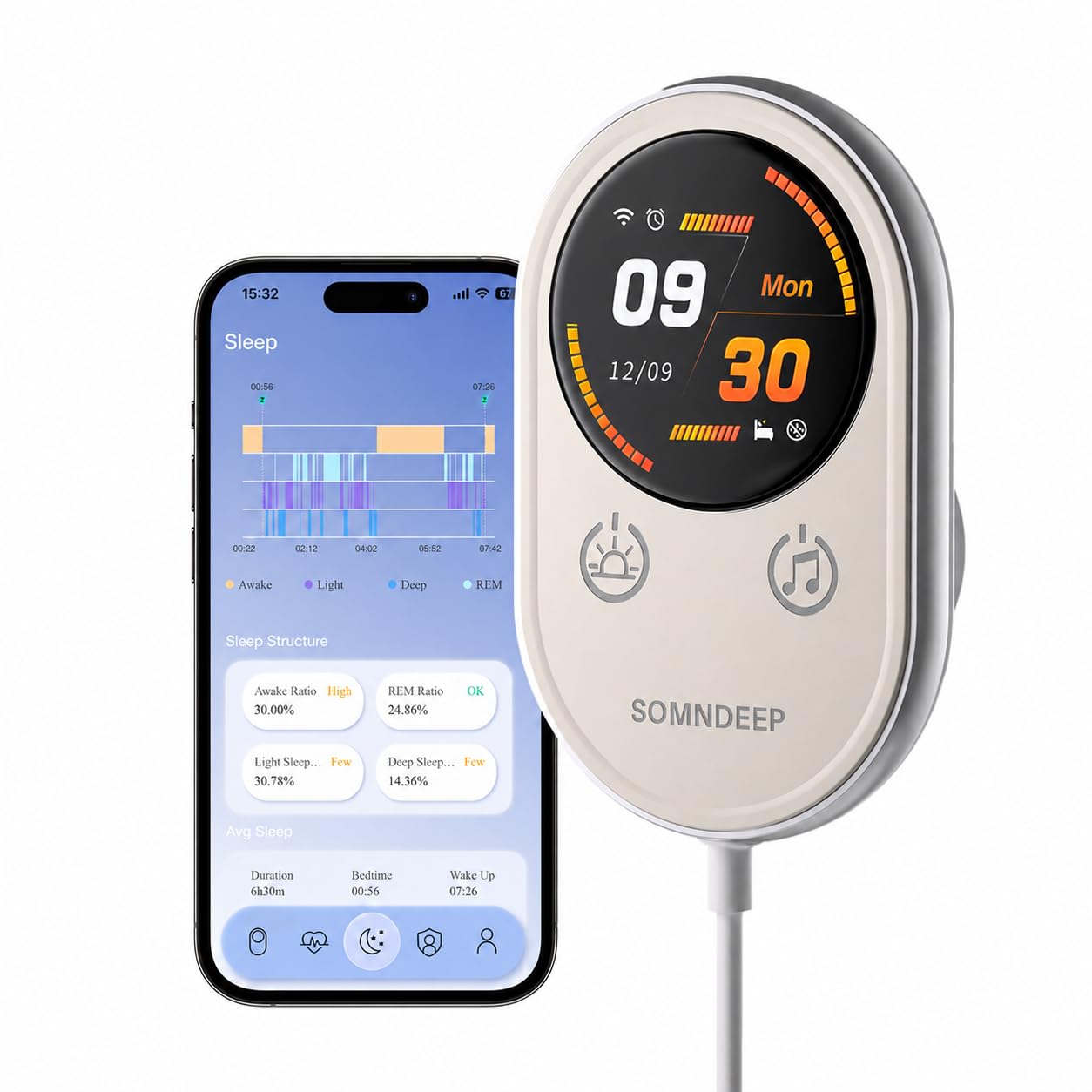
The SOMNDEEP uses millimeter-wave radar technology — the same kind found in advanced motion sensors — to track your breathing patterns, heart rate, body movements, and sleep stages without any physical contact. You place the small plastic unit on your nightstand or mount it on the headboard, and it silently monitors your entire sleep session. This is the most futuristic form factor on the list, designed for people who want sleep apnea screening data without wearing a single device.
The radar sensor is surprisingly sensitive. It can differentiate between light, deep, and REM sleep based on respiration rate and movement patterns, and it provides a clear breakdown of your sleep quality over time. The ability to set gentle voice reminders for routines or supplements is a thoughtful touch for caregivers. Several users were impressed by how well the device could detect breathing irregularities, even when the user was fully covered by blankets. The data reports are easy to read, though they explicitly state they are for wellness reference only.
The biggest issue with the SOMNDEEP is its software ecosystem. The app currently requires excessive permissions (location, contacts, call logs), and the Android version is not yet available on Google Play — users must download an APK file, which raises privacy concerns. Accuracy also varies significantly with placement, and the device works best for solo sleepers in a quiet room. For early adopters who value contactless convenience and are willing to navigate imperfect software, the SOMNDEEP represents an exciting step into radar-based sleep monitoring.
Why it’s great
- Completely contactless millimeter-wave radar tracking
- Tracks breathing, heart rate, and sleep stages without wearables
- Useful for remote family monitoring with gentle alerts
Good to know
- App requires excessive permissions and not on Google Play
- Accuracy varies with device placement
- Best for solo sleepers only
8. Pepultech Osasleep Wrist Pulse Oximeter
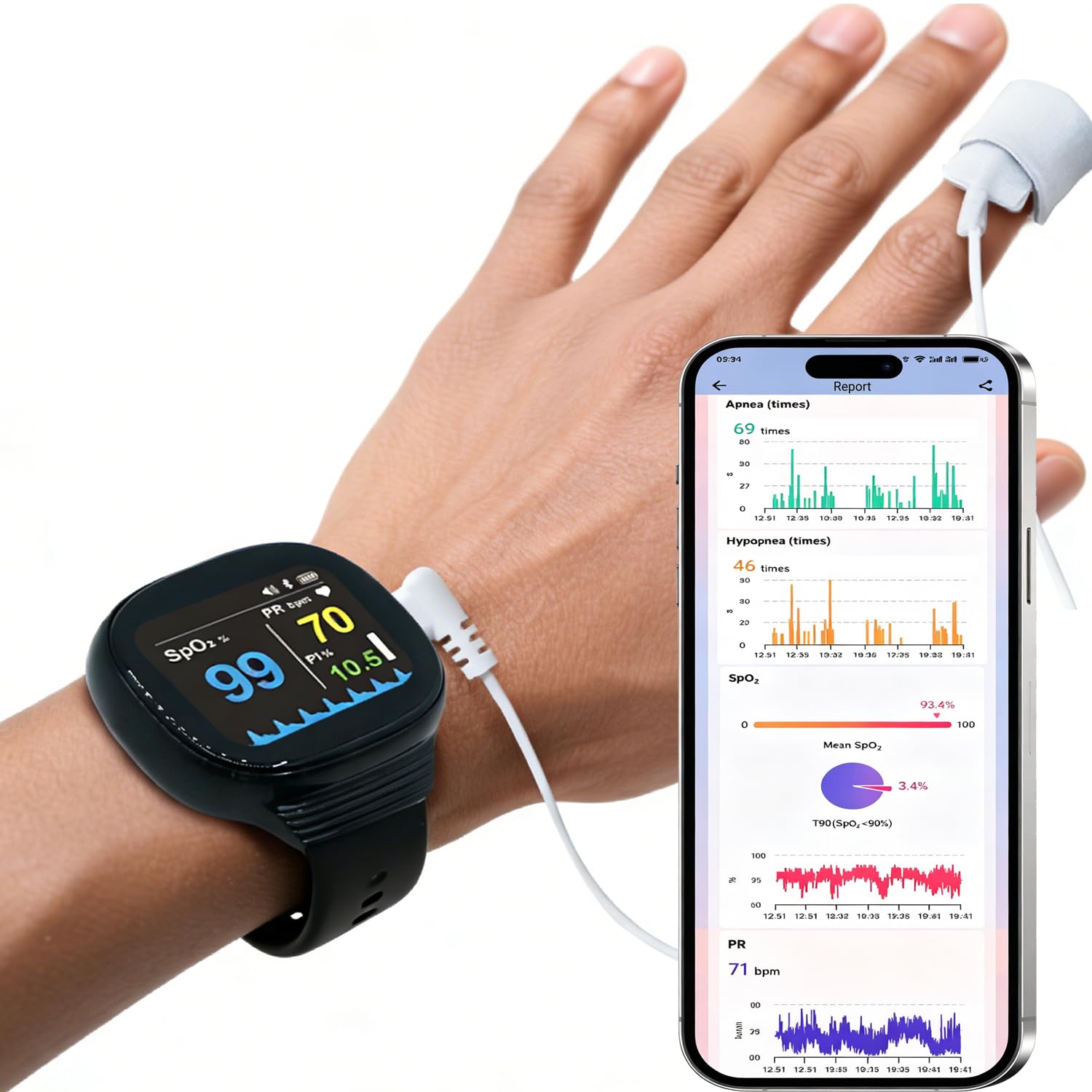
The Pepultech Osasleep takes a watch-like approach to overnight oximetry, pairing a lightweight wrist unit (20 grams) with two soft finger probes that measure SpO2 and heart rate continuously throughout the night. The watch form factor is familiar and unobtrusive, making it a good entry point for people who are new to sleep monitoring. The included probes are replaceable, which extends the device’s lifespan significantly compared to fixed-sensor designs.
Data quality is surprisingly strong for a device at this tier. The Osasleep syncs via Bluetooth 5.0 to the Berry Smart Health app, generating reports that include sleep score, AHI approximation, apnea event timing, and oxygen desaturation graphs. Several users found the readings to be within 1% of their standard clip-on oximeter, giving them confidence in the data. The buzzer alarm for low SpO2 is a welcome safety feature, and the Type-C charging means you can top up the battery with any modern cable.
The main limitation is that the Osasleep is explicitly labeled as a sports and aviation device, not a medical instrument. Its AHI estimate is derived from SpO2 data alone, not direct airflow measurement, which means it cannot distinguish between obstructive and central apnea events. Some users also reported Bluetooth pairing difficulties and a less intuitive app interface compared to the Wellue or LOOKEE. For an affordable, low-commitment way to start tracking overnight oxygen levels, the Osasleep is a solid budget-friendly pick.
Why it’s great
- Comfortable watch form factor with two replaceable finger probes
- Generates sleep reports with AHI approximation and SpO2 graphs
- Low SpO2 buzzer alarm for safety
Good to know
- Not a medical device; AHI is estimated via oximetry alone
- Bluetooth pairing and app interface can be finicky
- Does not measure direct breathing airflow
9. Choose Health 4-in-1 Cortisol & DHEA-S Test

The Choose Health 4-in-1 Test takes a completely different approach from the other devices on this list. Instead of monitoring your sleep in real time, this is a mail-in blood test that measures cortisol, DHEA-S, the DHEA-to-cortisol ratio, and visceral fat levels. These biomarkers are directly linked to adrenal function and stress response, which can contribute to or mimic sleep apnea symptoms. If your fatigue is driven by adrenal dysregulation rather than upper airway obstruction, this test can reveal it.
The process is straightforward: you perform a simple finger-stick blood collection, mail the sample in the prepaid envelope to a CAP- and CLIA-accredited laboratory, and receive your results within about five days. The results are delivered through a personalized Choose Health Dashboard that explains each biomarker and offers practical, natural suggestions for improvement. Users consistently praise the clarity of the instructions and the timeliness of the lab results. The test is physician-reviewed, adding a layer of clinical credibility.
The major caveat is that this test does not screen for sleep apnea itself — it checks for adrenal and stress hormone imbalances that can exacerbate fatigue, weight gain, and sleep disruption. It is a complementary tool, not a primary sleep apnea diagnostic. The test is also not available in New York or Rhode Island due to state regulations. For anyone whose unexplained exhaustion persists despite normal sleep habits, this adrenal panel can provide valuable context that a pulse oximeter cannot.
Why it’s great
- Measures cortisol, DHEA-S, and visceral fat — key stress markers
- Lab results are CAP/CLIA accredited and physician-reviewed
- Clear, actionable dashboard with practical improvement tips
Good to know
- Does not test for sleep apnea; supplements other sleep studies
- Not available in New York and Rhode Island
- Results take about five business days from lab receipt
FAQ
Can an at-home sleep apnea test replace a lab sleep study?
What is the difference between SpO2 monitoring and airflow monitoring for sleep apnea?
Does a finger ring oximeter work for mouth-breathers?
Final Thoughts: The Verdict
For most users, the at home sleep apnea test winner is the EMAY Sleep Breathing Monitor because it provides direct nasal airflow measurement, generates a professional AHI report that doctors trust, and weighs only 10 grams for all-night comfort. If you want a contactless solution that tracks snoring, heart rate, and long-term trends without wearing anything, grab the Withings Sleep. And for the most accurate continuous SpO2 monitoring with detailed waveform reports that pulmonologists accept, nothing beats the Wellue O2Ring.