
Our readers keep the lights on and the weekend projects moving. As an Amazon Associate, I earn from qualifying purchases.
That burning sensation in your chest on the final sprint isn’t just fatigue — it’s your respiratory muscles hitting a wall your quads haven’t touched yet. Most athletes train their legs, core, and cardio engine but leave the diaphragm as the weakest link in the power chain. A specialized breathing trainer for athletes changes that by adding direct resistance to your inhale and exhale, forcing your breathing muscles to grow stronger, work more efficiently, and delay that gasping point where performance falls apart.
I’m Rikta — the co-founder and writer behind FitlyFast. I’ve spent hundreds of hours analyzing the engineering, resistance mechanisms, and clinical application data behind every major breathing trainer on the market to separate the proven tools from the gimmicks.
Whether you’re a runner chasing a faster 5K, a cyclist grinding through climbs, or a combat athlete who needs every ounce of oxygen efficiency, finding the right breathing trainer for athletes comes down to matching resistance type, adjustability, and portability to your specific sport and training style.
How To Choose The Best Breathing Trainer For Athletes
The breathing trainer market splits into two completely different camps: altitude simulation masks that restrict total airflow to your mouth and nose versus handheld resistance devices that directly load your inspiratory and/or expiratory muscles. Each camp serves a different training goal, and picking the wrong type wastes your money and your training time.
Resistance Type: Altitude Mask vs. Handheld Trainer
Altitude masks create a sealed chamber over your mouth and nose with adjustable valves that restrict how much air you can pull in per breath. This forces you to take deeper, more forceful inhalations — mimicking the oxygen-thin conditions of high elevation. Handheld trainers like the POWERbreathe or Expand-A-Lung use a mouthpiece with a calibrated spring or dial that resists either your inhale (inspiratory), your exhale (expiratory), or both. If your goal is sport-specific breathing endurance for running or cycling, an altitude mask adds the cardiovascular load of restricted intake. If you want to isolate and strengthen the diaphragm itself with measurable, trackable resistance, a handheld trainer delivers more precise progressive overload.
Adjustability Range and Step Granularity
Coarse resistance steps limit how precisely you can progress. A trainer offering only 2-4 detectable levels makes it easy to stall between settings where the next jump is too hard or too easy. Look for at least 6 distinct levels on a handheld device, or at least 12 total airflow combinations on an altitude mask. The fine-grained adjustability of the TRAININGMASK 2.0 with 36 on-the-fly resistance settings allows you to micro-adjust mid-session as your respiratory muscles fatigue — a feature that matters during high-intensity interval work where breathing demand shifts every minute.
Dual-Way vs. Single-Way Resistance
Most breathing exercisers only resist your inhale. That works for building diaphragm strength, but athletic breathing — especially during exertion — is limited just as much by your ability to forcefully expel CO2 as by your ability to pull in oxygen. Dual-way trainers like the Expand-A-Lung and The Breather Pink load both the inspiratory and expiratory phases, which more closely matches the actual respiratory demand of running, rowing, or swimming. Athletes with asthma or lung conditions may also benefit more from dual-way resistance because it trains the full respiratory cycle.
Portability and Training Location
Altitude masks are bulky and require cleaning immediately after sweaty sessions; you will not carry one in your pocket for lunch-break reps at the office. Handheld trainers fit in a gym bag or even a jacket pocket and can be used while watching TV or sitting at a desk. If you travel frequently for competitions, the Sonmol’s carrying case and Bluetooth app let you maintain your respiratory training rhythm without skipping sessions. Consider where and when you will actually do the work — a device you cannot bring is a device you will not use.
Quick Comparison
On smaller screens, swipe sideways to see the full table.
| Model | Category | Best For | Key Spec | Amazon |
|---|---|---|---|---|
| The Breather Pink | Handheld Dual-Way | All-level respiratory conditioning with app guidance | 6 resistance levels (both inhale & exhale) | Amazon |
| TRAININGMASK 2.0 | Altitude Mask | Intense cardio and simulated elevation training | 36 on-the-fly resistance levels | Amazon |
| Expand-A-Lung (3 Pack) | Handheld Dual-Way | Progressive dual-way strength for serious athletes | Continuous knob adjustment | Amazon |
| Sonmol Digital Trainer | Digital Handheld | Data-driven training with progress tracking | MIP/MEP measurement & Bluetooth app | Amazon |
| Sparthos Altitude Mask | Altitude Mask | Budget-friendly simulated altitude training | 16 breathing levels | Amazon |
| YUMIOER Altitude Mask | Altitude Mask | Entry-level altitude simulation with wide adjustability | 24 resistance level combinations | Amazon |
| POWERbreathe Blue Medium Resistance | Handheld Inspiratory | Clinical-grade inspiratory muscle training | Single resistance level (medium) | Amazon |
In‑Depth Reviews
1. The Breather Pink

The Breather Pink lands at the top because it solves the two biggest problems athletes face with breathing trainers: compliance and adaptability. Its dual-way resistance loads both your inhale and exhale with independent adjustment — a design that mirrors real athletic breathing demand more closely than any single-direction device. The 6 resistance levels provide enough granularity for a newbie to start at level 1 and an endurance athlete to grind at level 6 without feeling bottlenecked by coarse steps.
The included guided coaching app turns a boring respiratory drill into a structured progression. You get visual cues for pacing and duration, which eliminates the guesswork that kills adherence after the first week. Users report noticeable improvements in stamina and breath control within two weeks of the recommended 5-minute, twice-daily protocol — real respiratory adaptation, not placebo.
Portability is a strong suit. The device is small enough to toss into a gym bag or desk drawer, meaning you can squeeze in sessions during recovery periods or while commuting. The trade-off is that it does not include a storage case (buy one separately), and the plastic body feels lighter than its premium price suggests, but the training effectiveness justifies the investment for any athlete serious about respiratory performance.
Why it’s great
- Independent inhale and exhale resistance settings for balanced respiratory muscle training
- Guided coaching app removes all guesswork from session structure and pacing
- Compact size fits in a pocket or bag for training anywhere
Good to know
- No carrying case included despite premium price tier
- Plastic construction feels less durable than the price suggests
2. TRAININGMASK 2.0 Turn Flow

The TRAININGMASK 2.0 is the most clinically studied altitude simulation mask available for athletes. Its patented Turn Flow valve technology gives you 36 on-the-fly resistance combinations — more than any competing mask — which means you can dial up the restriction mid-run as your breathing becomes more urgent, matching the intensity curve of interval training or hill repeats. The silicone construction and hook-and-loop closure deliver a snug seal that real users confirm maintains consistent oxygen deprivation even during high-output sessions.
Where this mask separates itself from cheaper alternatives is the ergonomic frame. The silicone body contours around the nose bridge without creating the pressure points that plague the YUMIOER and Sparthos designs. Medium size fits most adult faces, and the head strap stays put without slipping during dynamic movement — a consistent complaint on budget masks. Professional athletes and military training programs have used this design for years because the seal integrity and valve precision are reproducible session after session.
The downside is real: the head strap pulls on your ears, which conflicts with over-ear headphones or earbuds, and facial hair compromises the seal enough that bearded athletes may need to shave or accept reduced performance. Cleaning is mandatory after every use since sweat and bacteria accumulate inside the chamber. If you want the gold standard for simulated altitude resistance during cardio, this is the device.
Why it’s great
- 36 discrete resistance levels allow micro-adjustment mid-workout without removing the mask
- Clinical-grade silicone and flux valve design trusted by professional athletes for years
- Superior seal compared to budget masks reduces air leaks during intense movement
Good to know
- Head strap interferes with earbuds and over-ear headphones during training
- Facial hair significantly reduces the airtight seal effectiveness
3. Expand-A-Lung (3 Pack)
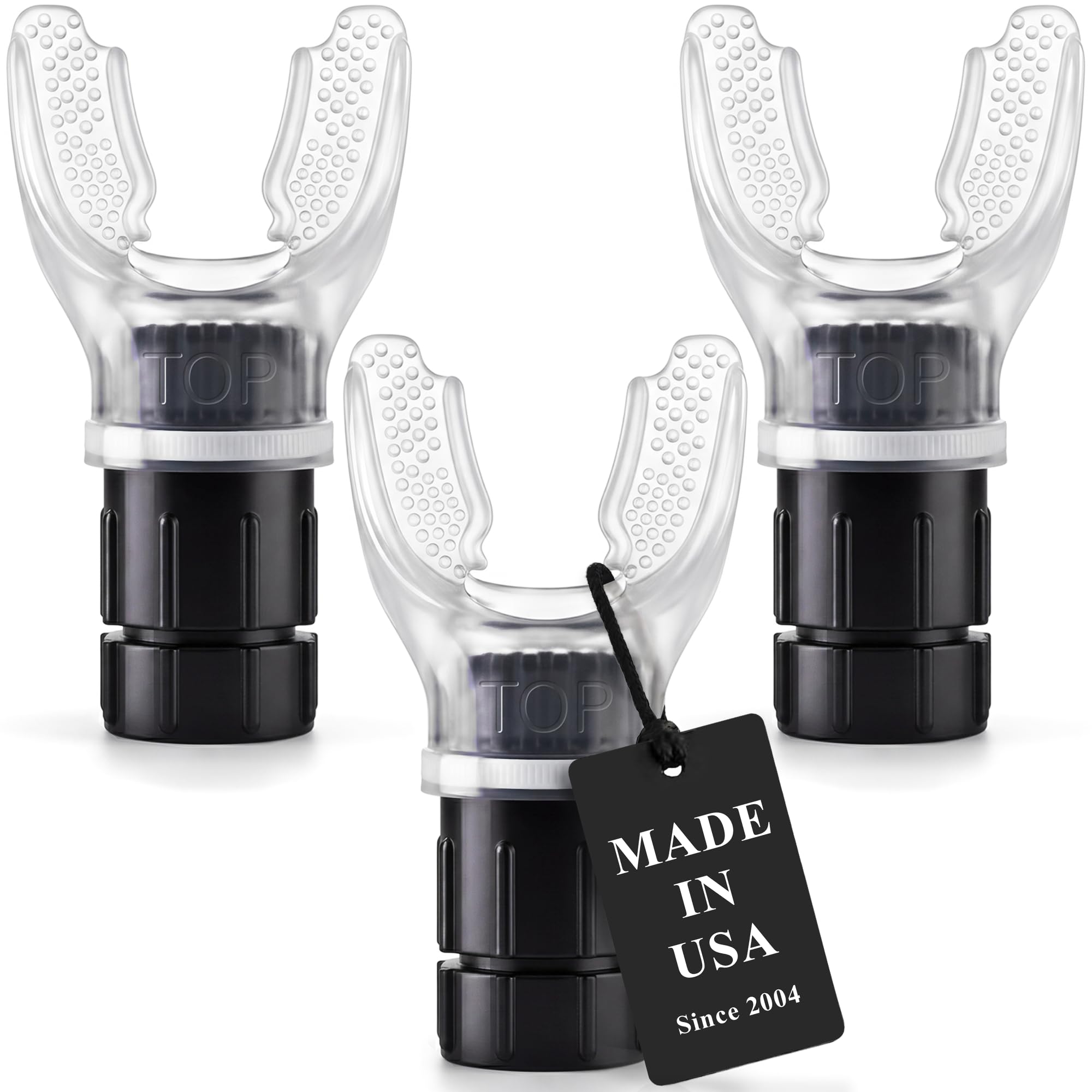
The Expand-A-Lung brings a unique value proposition to the table: a 3-pack of identical dual-way trainers at a single-unit price from most competitors. Each unit uses a continuous adjustment knob rather than discrete click-stops, which gives you theoretically infinite resistance gradation between minimum and maximum. In practice, users report that the fine control between the lowest and highest settings feels limited — but for the mid-range price, the performance per dollar is exceptional for athletes who want one unit to keep at home, one in the gym bag, and one at the office.
Dual-way resistance is the headline feature. Most handheld trainers on the market only resist inhalation; the Expand-A-Lung resists both inhale and exhale, training the full respiratory cycle. This matters for endurance athletes whose limiting factor is often the ability to expel CO2 forcefully during high-output efforts. Users with asthma and post-illness respiratory weakness reported measurable improvements in oxygen saturation and reduced reliance on rescue inhalers after consistent use over several weeks.
The build is straightforward — a food-grade silicone mouthpiece over a plastic body with no electronics, batteries, or app connectivity. That simplicity is a strength for durability and cleaning but a weakness for tracking progress. You are relying on subjective feel rather than data. The adjustment knob mechanism feels less precise than spring-based systems, and some units require careful nose-sealing to avoid air leaks that reduce the resistance load.
Why it’s great
- Three identical units in one purchase for distributed training locations
- Dual-way resistance trains both inspiratory and expiratory muscles for full-cycle conditioning
- Simple, durable, USA-made construction with no electronics to fail
Good to know
- Adjustment knob has limited effective range despite continuous turn design
- Requires conscious nose-sealing to prevent air leaks that reduce resistance efficacy
4. Sonmol Digital Breathing Exercise Device
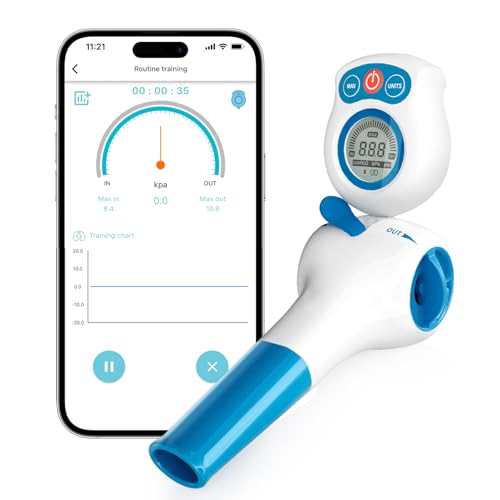
If you want objective data instead of subjective “feeling,” the Sonmol is the only device in this lineup with built-in MIP (Maximum Inspiratory Pressure) and MEP (Maximum Expiratory Pressure) digital manometer testing. You can measure your actual respiratory muscle strength before starting a training block, retest every 4 weeks, and watch the numbers increase — real proof of adaptation rather than guessing. The device connects to the eRMT app via Bluetooth, which auto-syncs session data and displays improvement charts without manual logging.
The 6-level independent resistance dials for inhale and exhale give you enough range for progressive overload from COPD recovery levels up to competitive athlete conditioning. The app includes interactive training games like “Inflate the Balloon” and “Little Beluga Whale” that gamify the breathing reps — a feature that sounds gimmicky but actually improves adherence for the daily 10-15 minute sessions where discipline usually fades. BPA-free materials and the included travel case make it easy to maintain your routine during travel.
The weakness is the iOS app experience. Several users report that the app buttons do not display correctly on iPhone unless you change the system display zoom setting from “Zoom” to “Default” — a friction point that catches first-time users off guard. Also, the Bluetooth sync can be slow, requiring patience between sessions. If you are comfortable with some tech setup friction in exchange for quantifiable respiratory data, the Sonmol delivers what no other trainer in this class offers.
Why it’s great
- Built-in MIP/MEP digital manometer provides objective, trackable respiratory strength measurements
- Bluetooth app syncs session data automatically and displays progress trends over time
- Gamified training exercises improve consistency and adherence to daily sessions
Good to know
- iOS app has display issues that require changing the phone’s system zoom setting to resolve
- Bluetooth sync can be slow, adding minor friction between training sessions
5. Sparthos High Altitude Mask

The Sparthos mask delivers 16 breathing levels from a neoprene and nylon construction that feels light on the face — a deliberate design choice for comfort during long cardio sessions. The one-size-fits-all approach works reasonably well for average adult faces, though smaller users report the mask runs slightly large. The 16 resistance levels are accessible via adjustable airflow valves on both sides of the mask, and the adjustment can be made without removing the unit mid-workout, which is essential for interval training where breathing demand changes every few minutes.
User feedback consistently confirms that this mask turns low-intensity cardio like walking into a genuine respiratory challenge. The neoprene body breathes better than silicone-only masks, reducing sweat buildup during extended wear. Multiple runners reported immediate improvements in perceived breathing ease during the first 5-mile run after a few weeks of training with the mask — the hallmark of respiratory muscle adaptation. The included carrying case and boxing add perceived value at a budget-friendly entry point.
The trade-off starts with the neoprene durability — it degrades faster than silicone with frequent washing and heavy sweat exposure. The biggest complaint from experienced users is that even the highest resistance setting feels insufficient for elite-level athletes. If you are an advanced endurance athlete already operating at a high aerobic capacity, the Sparthos may plateau too quickly, pushing you toward the greater resistance ceiling of the TRAININGMASK 2.0.
Why it’s great
- Lightweight neoprene construction stays comfortable during extended cardio sessions
- 16 adjustable resistance levels without removing the mask allow mid-workout tuning
- Included carrying case adds portability at a budget-friendly price tier
Good to know
- Neoprene body degrades faster than silicone with frequent washing and sweat exposure
- Highest resistance setting insufficient for advanced or elite-level endurance athletes
6. High Altitude Mask by YUMIOER
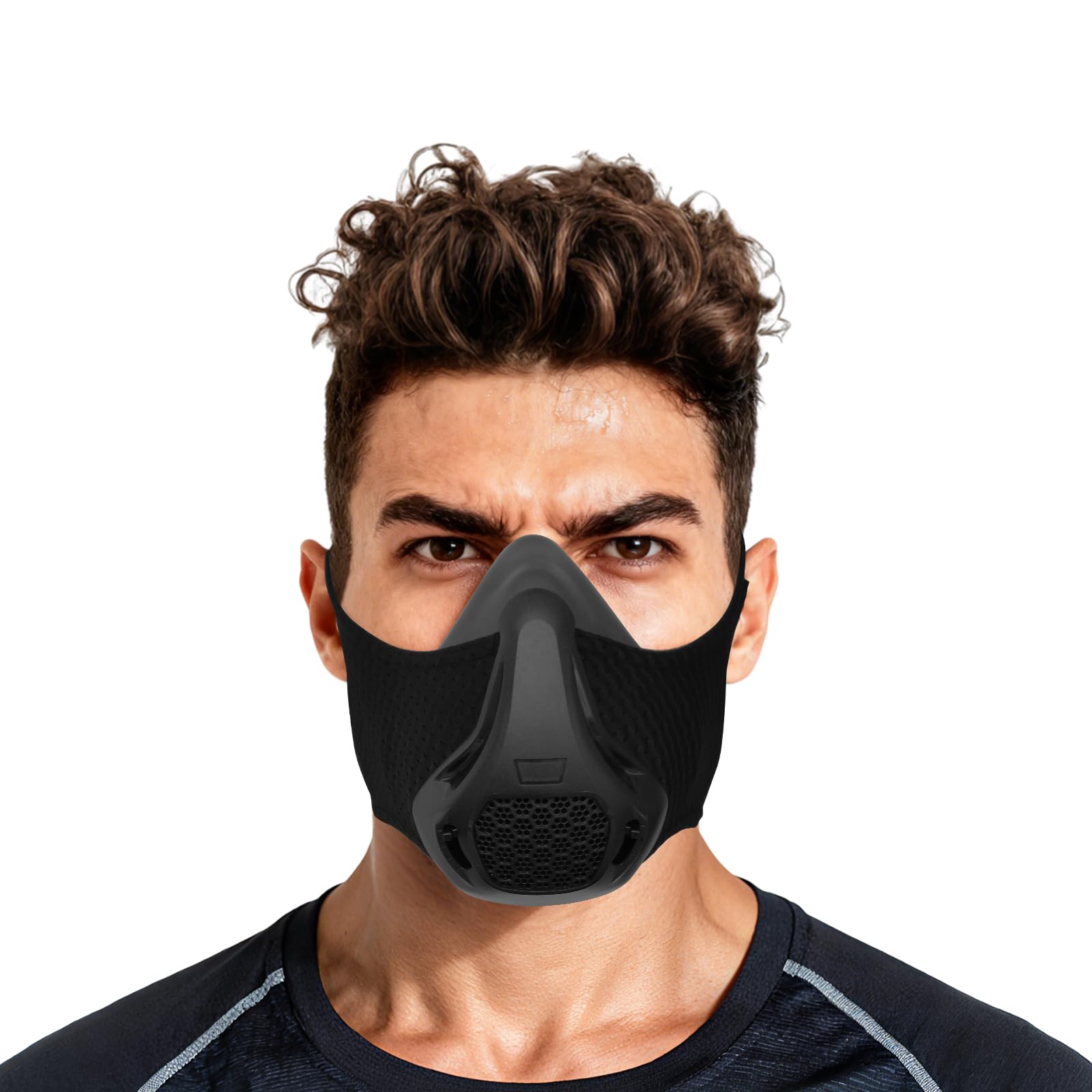
The YUMIOER mask claims 24 resistance level combinations via two air paths, each path adjustable to 4 levels, plus two additional soft valves. On paper, that is the highest number of combinations among all altitude masks in this list. The ergonomic rubber construction with an adjustable head strap aims for all-day comfort during long training sessions, and the price positions it as the most accessible altitude training option for athletes unsure whether simulated elevation training fits their routine.
Real-world user feedback reveals a consistent pattern: the mask works well when it stays in place, but it slips down the nose during running and high-impact movement. Multiple runners reported having to push the mask back up mid-run, which disrupts breathing rhythm and training focus. The ear pull from the head strap also competes with earbuds similarly to the TRAININGMASK 2.0, though the YUMIOER’s lower price makes that compromise feel more acceptable. Users who did not experience slippage reported noticeable improvements in lung capacity and workout efficiency within weeks.
Where this mask stands is pure value for the price. You get the highest adjustable combination count in the budget tier and luxury gift box packaging that feels more premium than the cost suggests. The trade-off is the rubber construction has a chemical smell out of the box that requires airing out, and the seal consistency varies depending on face shape. For the athlete who wants to test altitude mask training without a significant financial commitment, the YUMIOER is the logical starting point.
Why it’s great
- 24 resistance level combinations offer the highest adjustability in the entry-level price tier
- Luxury gift box packaging adds perceived value well above the low investment cost
- Ergonomic rubber head strap is comfortable for extended wear during steady-state cardio
Good to know
- Mask slips down the nose during running and high-impact movement, disrupting training rhythm
- Rubber construction has a strong chemical odor that requires airing out before first use
7. POWERbreathe Blue Medium Resistance

The POWERbreathe has been a clinical standard for inspiratory muscle training in pulmonary rehabilitation and sports medicine for decades — its narrow focus on pure inspiratory resistance is both its strength and its limitation. Unlike dual-way trainers, the POWERbreathe only resists your inhalation, which directly overloads the diaphragm without loading the expiratory muscles. This makes it a precision tool rather than a general conditioning device, ideal for athletes who have already identified inspiratory weakness as their bottleneck.
The Medium Resistance model targets the middle of the POWERbreathe lineup (Low, Medium, High available separately), and users must select the correct resistance range when purchasing — there is no in-unit adjustability. This is a single-purpose device that forces you to commit to a resistance level and progress by buying the next model up. Long-term users report that after 5 weeks of twice-daily training, they progressed from zero resistance to the first click setting with a 70% measured increase in inspiratory force, and maintained improvement over months of continued use.
The build quality is minimal — synthetic rubber with no electronics, no app, and no multi-user functionality. Cleaning requires boiling water twice weekly. The premium price for what is essentially a simple plastic valve mechanism raises legitimate questions about value, but the clinical validation and proven track record justify the cost for athletes who want a tool with published research backing instead of marketing claims. If you need a specific inspiratory resistance level prescribed by a coach or therapist, the POWERbreathe delivers exactly that with no ambiguity.
Why it’s great
- Clinically validated inspiratory resistance with decades of published research supporting efficacy
- Delivers a fixed, reproducible resistance level ideal for prescription-based training protocols
- Non-slip synthetic rubber body stays secure during use without complicated straps or fittings
Good to know
- No in-unit adjustability — you must buy a different model to change resistance levels
- Relatively high price for a simple plastic device with no digital features or data tracking
FAQ
Can a breathing trainer actually improve my VO2 max?
How many minutes per day should I use a breathing trainer as an athlete?
Are altitude training masks safe for athletes with asthma?
How long does it take to see results from a breathing trainer?
Should I breathe through my mouth or nose with a handheld breathing trainer?
Final Thoughts: The Verdict
For most users, the breathing trainer for athletes winner is the The Breather Pink because its dual-way resistance, app guidance, and portable size create the most complete respiratory conditioning package without forcing you to wear a mask during workouts. If you want simulated elevation resistance during cardio and need the maximum adjustability range, grab the TRAININGMASK 2.0. And for data-driven athletes who need objective MIP/MEP measurements to track progress with scientific precision, nothing beats the Sonmol Digital Trainer.