
Our readers keep the lights on and the weekend projects moving. As an Amazon Associate, I earn from qualifying purchases.
A 5-watt tube amp is the sweet spot for home practice and studio recording, delivering that sought-after power tube saturation without shaking the walls. The trade-off between low-volume playability and authentic tube breakup defines this entire category, making the choice of preamp and power tubes—whether a 12AX7 with a 6V6GT or an EL84—critical to the tone you get.
I’m Rikta — the co-founder and writer behind FitlyFast. I spend countless hours analyzing the circuit topology, tube complements, and output transformer designs that separate a great-sounding low-watt amp from a lifeless one.
This guide breaks down the best options for clean headroom, cranked crunch, and silent practice, so you can find the best 5 watt tube amp that matches your playing style and space.
How To Choose The Best 5 Watt Tube Amp
Five watts is enough to push a speaker into sweet natural distortion, but not so much that you’ll need a hearing aid after a practice session. The key is matching the design—Class-A or push-pull, single-ended or dual-tube—to your actual use case. Here’s what separates a great 5-watt amp from a one-trick pony.
Preamp & Power Tube Pairing
The 12AX7 is the standard preamp tube for high gain and midrange push, but swapping to a 12AU7 can dramatically expand clean headroom. For the power section, a 6V6GT gives you warm, round breakup, while an EL84 delivers a tighter, more aggressive growl. The combination you choose defines the amp’s voice—from Fender-like chime to British crunch.
Output Transformer & Speaker Quality
An output transformer is not just a component; it is the tone engine. Hand-wound paper-insulated transformers reduce stray capacitance and improve high-frequency transparency, while grain-oriented silicon steel cores boost low-end punch. A cheap transformer kills even the best tube pairing. Pair it with a high-efficiency speaker like a Celestion G12H to hear what the amp actually does.
Built-in Attenuation & Power Scaling
Even 5 watts can be loud at full breakup. An integrated power attenuator—like Bugera’s INFINIUM or Blackstar’s power reduction—lets you dial in cranked tones at 0.1W or 0.5W for bedroom-friendly volumes. Without one, you’ll need an external attenuator or a master volume that squashes the tone.
Quick Comparison
On smaller screens, swipe sideways to see the full table.
| Model | Category | Best For | Key Spec | Amazon |
|---|---|---|---|---|
| Fender ’68 Custom Vibro Champ Reverb | Combo | Classic clean & studio recording | 6V6GT power tube, 2x12AX7 preamp | Amazon |
| Blackstar HT-5R MK III | Combo | Versatile home & silent recording | 12″ Celestion, 0.5W/5W power reduction | Amazon |
| Randall RD5H Diavlo | Head | High-gain metal & rock | 3-channel, 3-way tone stack shift | Amazon |
| Bugera V5 INFINIUM | Combo | Bedroom practice with attenuator | 0.1W/1W/5W attenuator, Turbosound 8″ | Amazon |
| OriPure OA-H05 | Head | Budget-friendly all-tube head | EL84, handcrafted paper-insulated OT | Amazon |
| MOD 102 DIY Kit | Kit | Learning amp building & custom tone | 5W, point-to-point wiring | Amazon |
| Monoprice Stage Right 1×8 | Combo | Budget all-tube entry | Celestion Super 8, 1W/5W switch | Amazon |
| Hotone Eagle’s Heart | Head | Ultra-compact high-gain practice | Solid-state, cab sim phones/line out | Amazon |
In‑Depth Reviews
1. Fender 68 Custom Vibro Champ Reverb

The Fender ’68 Custom Vibro Champ Reverb is a premium 5-watt combo that delivers the classic Fender clean tone—sparkly, articulate, and full-bodied—through a single 6V6GT power tube. The two 12AX7 preamp tubes provide enough gain for edge-of-breakup blues, and the built-in reverb and tremolo add vintage texture without pedals. At 26.4 pounds, it’s heavier than some heads, but the wood cabinet and 5W output make it a studio legend.
Players report that the stock speaker can be a bit bright, so swapping to a Weber or replacing the 6V6GT with a JJ variant tightens the low end significantly. The tremolo circuit pairs beautifully with the reverb, offering a classic surf-rock character. The main drawback is the lack of a power attenuator—at 5 watts full crank, it’s still loud for an apartment.
Quality control has been an issue for some, with units arriving with microphonic tubes or a noisy reverb tank. If you get a good one, it’s the definitive 5-watt Fender experience. For players who want plug-and-play vintage tone and are willing to budget for a quality attenuator, this is the benchmark.
Why it’s great
- Iconic Fender clean tone with built-in reverb & tremolo
- 6V6GT power tube delivers warm, musical breakup
- Wood enclosure provides resonance that solid-state combos lack
Good to know
- No built-in attenuator—needs external or a volume pedal for home
- QC reports of microphonic tubes and noisy reverb tanks
- Premium price point compared to other 5W options
2. Blackstar HT-5R MK III

The Blackstar HT-5R MK III is the most feature-packed 5-watt combo on this list, pairing a 12-inch Celestion speaker with a full suite of modern tools: built-in power reduction down to 0.5W, a CabRig speaker simulator for direct recording, and a USB output for silent practice. The dual-channel design (clean and overdrive) is voiced through Blackstar’s patented ISF circuit, letting you dial from American to British tones.
At 0.5W, the amp achieves power tube saturation at TV-volume levels—a game-changer for apartment players who want cranked tone without noise complaints. The reverb is decent but not as lush as the Fender’s spring tank. The unit weighs over 28 pounds, which is heavy for a “small” combo, but the 12” driver gives it a low-end punch that 8” speakers can’t match.
Some users report reliability concerns, with a small number of units failing after a few months. The hidden rear input panel is a minor ergonomic annoyance. Overall, if you want one amp that covers quiet practice, recording, and small gigs, the HT-5R MK III is the most versatile choice in this wattage class.
Why it’s great
- 0.5W power reduction for real cranked tones in a bedroom
- 12″ Celestion speaker with enormous sound for 5W
- USB and CabRig for silent recording via computer
Good to know
- Heavy at 28+ pounds for a small combo
- Reverb is usable but not as deep as spring tanks
- Some reliability concerns reported over long-term
3. Randall RD5H Diavlo Series
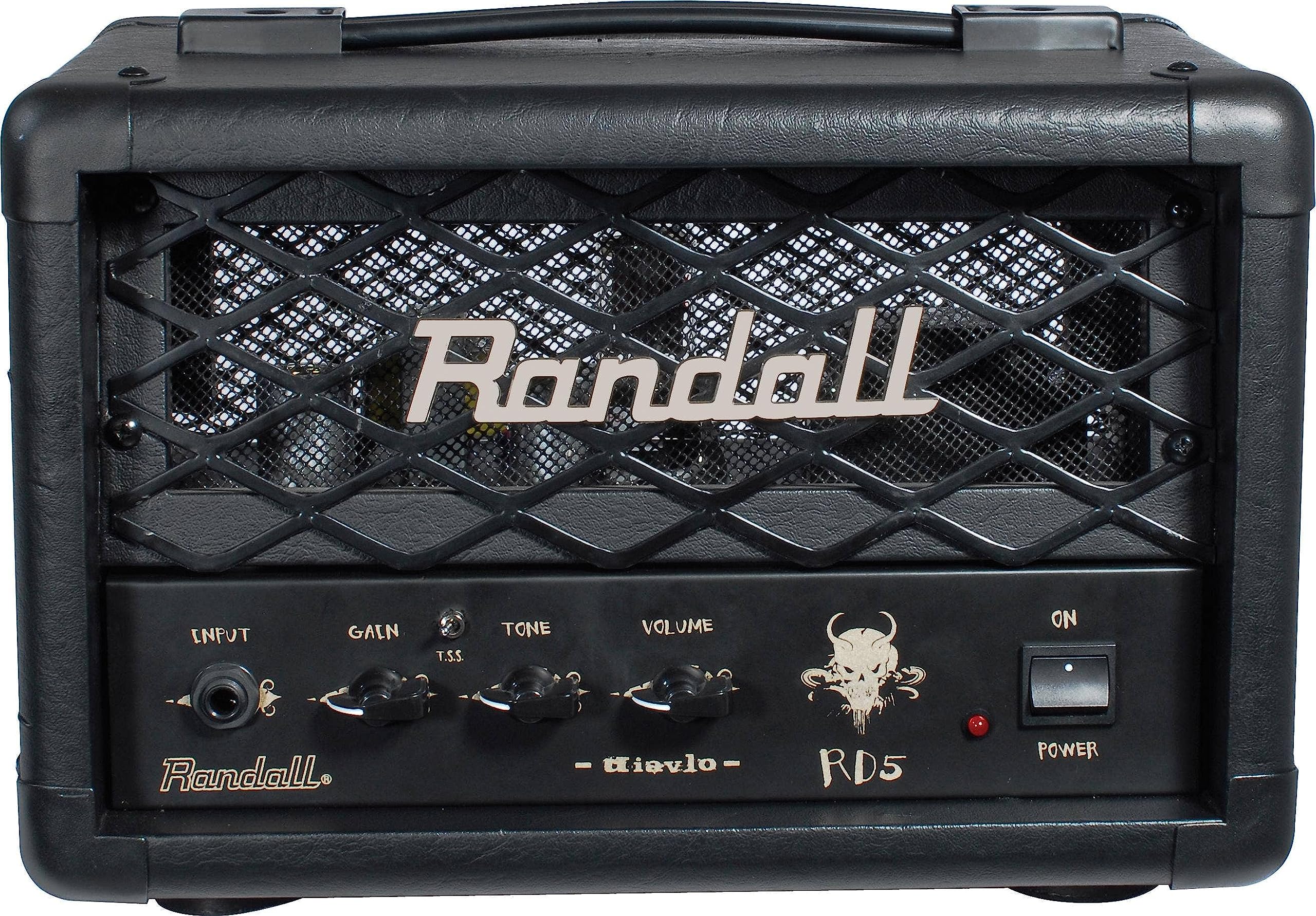
The Randall RD5H Diavlo is a 5-watt all-tube head built for high-gain players who need crushing distortion at manageable volumes. It features three channels—Clean, Rhythm, and Lead—with a built-in boost on Channel 3 that adds extra saturation and harmonics for solos. The 3-way Tone Stack Shift lets you contour the midrange, shifting from tight modern tones to a looser, more open voicing.
Running through a 12” Celestion Greenback, the RD5H delivers a surprisingly aggressive low-end that most 5-watt heads can’t touch. The clean channel is articulate and works well with pedals if you run a boost or compression. It’s extremely loud for 5 watts—easily keeping up with a drummer through an efficient cab, especially at its 6.5 kg weight.
The lack of a built-in attenuator means you’ll still crank it for the full gain character, which may be too loud for quiet home use. Some players note that the Channel 2 and 3 tones can sound a bit dry at high gain without a boost, but a quality overdrive pedal in front makes it sound massive. It’s the best pure high-gain option here.
Why it’s great
- Three-channel design with dedicated boost for high-gain solos
- 3-way Tone Stack Shift for versatile midrange contouring
- Extremely loud for 5W when paired with an efficient 12″ cab
Good to know
- No built-in attenuator – requires external or master volume
- Clean channel is workable but not Fender-level
- Dry/harsh at extreme gain without a boost pedal
4. Bugera V5 INFINIUM

The Bugera V5 INFINIUM is the most affordable premium 5-watt combo and the only one in this price range with a built-in power attenuator (0.1W, 1W, and 5W). This lets you dial in power tube saturation at whisper-quiet volumes, making it perfect for apartment dwellers who want real EL84 breakup. The Turbosound 8-inch speaker is voiced for the ’60s British crunch, and the reverb is surprisingly good for the price point.
The INFINIUM Tube Life Multiplier technology monitors and stabilizes the EL84 power tube, extending its lifespan and keeping tone consistent. The amp runs Class-A, meaning the tube is always working, producing that classic single-ended warmth. At 22 pounds, it’s a manageable combo, though the small cabinet can sound a bit boxy at higher volumes.
Replacing the stock 12AX7 preamp tube with a Tung Sol variant significantly improves clarity and tightens the low end. The headphone output is usable but needs a quality set of cans to avoid muddiness. For pure home practice with real tube tone, the V5 INFINIUM is unbeatable at this price.
Why it’s great
- Built-in 0.1W/1W/5W attenuator for cranked tone at any volume
- INFINIUM technology extends tube life and stabilizes performance
- Warm EL84 Class-A breakup with usable reverb
Good to know
- Small 8″ Turbosound speaker limits low-end headroom
- Stock preamp tube can be dark; easy upgrade improves brightness
- Headphone out sounds boxy with lower-quality headphones
5. OriPure OA-H05

The OriPure OA-H05 is a 5-watt all-tube head that competes directly with the Bugera V5 on price but offers a different architecture: a handcrafted, paper-insulated output transformer that reduces stray capacitance and boosts high-frequency clarity. Paired with an EL84 power tube and a 12AX7 preamp, it delivers a tight, slightly trebly voice that cleans up beautifully with the volume knob. The bright/warm switch and 3-band EQ give you a surprising amount of tweakability for a single-channel head.
Players who run it through a quality 12-inch cabinet — like a Celestion G12H — report tones that rival boutique amps at three times the price. The clean headroom is limited, but that’s expected from a single-ended EL84 design. Swapping the preamp to a JJ 12AU7 expands the clean range significantly, making it more versatile for pedal-platform use.
The cast aluminum casing is durable but lacks a head cabinet, so it slides around on surfaces. The lack of an attenuator or master volume means you’ll need an external solution for quiet breakup tones. For the price, the transformer quality alone makes it a strong alternative to the Bugera if you prefer a head + cab setup.
Why it’s great
- Hand-wound paper-insulated output transformer for improved clarity
- Bright/Warm switch offers voicing flexibility
- Compact cast-aluminum head shell is road-worthy
Good to know
- No built-in attenuator; needs external for low-volume breakup
- Limited clean headroom with stock 12AX7
- No head cabinet included; slides on surfaces
6. MOD 102 DIY Guitar Amplifier Kit

The MOD 102 is a 5-watt tube amp in kit form, requiring full assembly and soldering. It uses point-to-point wiring — not a PCB — which teaches a classic building technique and allows for easy future modifications like swapping capacitors for different voicings. The single-channel design has bass, treble, and volume controls, plus a vintage pilot lamp with a jewel cover for that old-school look.
Builders report that the amp sounds fantastic through a 12-inch speaker, with a vintage Marshall-like crunch when pushed. However, the kit is not for beginners — the instructions assume basic electronics knowledge, and several builders warn that poor soldering or inadequate grounding at screw mounts can cause a persistent 120Hz hum. Scraping paint from inside the input jack hole is almost mandatory to achieve a noise-free build.
Once assembled correctly, the tone is organic and responsive, rewarding the builder with a customized instrument. The price reflects the learning experience as much as the hardware. For someone who wants to understand how a 5-watt amp works and can spend a weekend with a soldering iron, the MOD 102 is a brilliant, rewarding project.
Why it’s great
- Authentic point-to-point wiring teaches classic amp building
- Excellent vintage tone reminiscent of Marshall-style crunch
- Modifiable base for capacitor swaps and custom voicings
Good to know
- Not for beginners; requires soldering and electronics knowledge
- Frequent need to scrape paint for proper grounding to avoid hum
- No clean headroom — designed for cranked breakup tones
7. Monoprice Stage Right 1×8

The Monoprice Stage Right 1×8 is the cheapest entry-level all-tube 5-watt combo, using a 12AX7 preamp tube and a 6V6GT power tube driving a Celestion Super 8-inch speaker. It features a 1W/5W switch, letting you choose between quiet practice and band-level volume. The dual inputs (high and low) adjust sensitivity — the high input breaks up faster, while the low provides more clean headroom for humbuckers.
The stock speaker is notoriously bright and thin; many owners immediately upgrade to a Celestion Eight 15 (8-ohm) for a huge tonal improvement, making the amp sound chimey and boutique-like. The 1W setting stays clean at moderate volumes, while 5W at full crank yields a rich, dynamic overdrive that cleans up with the guitar volume — classic low-watt tube behavior.
Build quality is solid for the price, though some units have minor cosmetic defects like untrimmed tolex or protruding screws. The hardwired power cable is short and annoying for some setups. If you are willing to spend a bit more on a speaker swap, the Stage Right becomes a genuinely great-sounding amp that punches well above its price tier.
Why it’s great
- Genuine tube preamp and power section at the lowest price
- 1W/5W switch offers home and band-friendly volume options
- Known for huge improvement with a simple speaker swap
Good to know
- Stock 8″ Celestion speaker is bright and lacks low-end body
- Short, hardwired power cable limits placement flexibility
- Minor cosmetic QC issues on some units
8. Hotone Eagle’s Heart

The Hotone Eagle’s Heart is distinct from every other product here — it is a solid-state analog amp head designed to emulate a tube amp’s response. At 5 watts, it uses a pure analog circuit, not digital modeling, to react like a tube amp with organic harmonic distortion. It’s voiced for modern German rock, inspired by the ENGL Savage 120, making it the best choice here for high-gain metal fans on a tight budget.
The included 18V power supply provides massive headroom, and the built-in cab simulator on the headphone/line out lets you plug directly into an interface or PA system. The FX loop adds flexibility for serial effects. At only 1.7 pounds and roughly the size of a pedal, it can fit in a gig bag pocket, solving the portability problem for practice and fly dates.
However, the solid-state nature means it lacks the dynamic feel and warmth of a real tube power section. The headphone out is fuzzy, not articulate, and the EQ knobs have a narrow frequency sweep. Some units ship with mismatched power supplies or are dead on arrival. For pure portability and high-gain emulation, it’s unique, but it’s not a substitute for a true tube amp.
Why it’s great
- Ultra-compact (pedal-sized) for unmatched portability
- Cab-simulated line out for direct recording or PA use
- Analogue solid-state circuit reacts like a high-gain tube amp
Good to know
- Solid-state, not tube – lacks dynamic tube feel
- Headphone out is fuzzy and not usable for critical listening
- QC issues with DOAs and mismatched power supplies reported
FAQ
Can a 5-watt tube amp keep up with a drummer?
Is it worth buying a 5W tube amp if I already have a 15W or 30W amp?
Should I buy a combo or a head for a 5-watt tube amp?
How long do tubes last in a 5-watt amp and how do I know when to replace them?
Final Thoughts: The Verdict
For most players, the best 5 watt tube amp winner is the Fender ’68 Custom Vibro Champ Reverb because it delivers the definitive vintage clean tone with built-in reverb and tremolo in a compact combo, ideal for studio and home use. If you need versatile silent recording features with a 12-inch speaker, grab the Blackstar HT-5R MK III. And for crushing high-gain metal at low volume, nothing beats the Randall RD5H Diavlo.