
Our readers keep the lights on and the weekend projects moving. As an Amazon Associate, I earn from qualifying purchases.
That sudden twist during a cut or landing is the signal your ankle ligaments are about to take damage. An effective brace stops that roll before it starts by applying targeted compression and mechanical resistance exactly where the ligaments are weakest. This guide analyzes seven stabilizers built for different foot shapes, activity levels, and severity of instability — from lace-up frames to medical-grade knit supports with embedded massage pads.
I’m Rikta — the co-founder and writer behind FitlyFast. I’ve spent hundreds of hours researching ankle support hardware, comparing strap systems, shell materials, and compression profiles to separate real stabilization from marketing hype.
Whether you are recovering from a sprain, managing chronic instability, or trying to prevent a first roll during sports, finding the right ankle brace for stability requires matching the brace design to your specific movement patterns and shoe fit.
How To Choose The Best Ankle Brace For Stability
Picking a brace for stability means looking past the marketing claims and understanding the physical mechanism that stops your ankle from rolling. The wrong choice either fails to prevent injury or restricts your natural movement so much that it compromises your sport or daily activity.
Lace-Up Systems with Figure-8 Straps
The most effective stabilizers for active people use a lace-up base that lets you tighten the brace evenly around your foot and ankle, plus additional figure-8 straps that cross over the ankle joint. This twin-layer system mimics professional athletic taping and gives you the best control over inversion and eversion — the two movements that cause most ankle sprains.
Compression Socks vs. Rigid Shells
Compression sock braces like the PowerStep Dynamic offer moderate support and proprioceptive feedback, making them suitable for daily wear and mild instability. If you have a history of repeated sprains or need to return to high-impact sports, a brace with a molded TPU shell or rigid side stays — like the DonJoy POD or McDavid Bio-Logix — provides the mechanical stopping power that a soft sock cannot deliver.
Shoe Compatibility and Bulk
A brace that does not fit into your everyday shoe is a brace that will end up in a drawer. Low-profile designs with slim breathable materials work inside sneakers, cleats, and boots. Bulky models with thick neoprene and hard side splints often require you to size up your footwear. Always check the brace thickness and the intended use case before committing to a design.
Quick Comparison
On smaller screens, swipe sideways to see the full table.
| Model | Category | Best For | Key Spec | Amazon |
|---|---|---|---|---|
| Med Spec ASO | Lace-Up | Versatile all-day stability | Figure-8 + CoolFlex padding | Amazon |
| Ultra 360 | Lace-Up | Sports with high cutting load | Figure-8 straps mimic taping | Amazon |
| DonJoy POD | Rigid Shell | Roll prevention in pivoting sports | Molded TPU shell + EVA liner | Amazon |
| MUELLER The One | Lace-Up | Easy on/off daily use | Speed lacing + figure-8 | Amazon |
| Bauerfeind MalleoTrain | Knit Compression | Medical-grade comfort | Viscoelastic massage pads | Amazon |
| PowerStep Dynamic | Compression Sock | Mild support + arch alignment | Silicone cage + stability strap | Amazon |
| McDavid Bio-Logix | Rigid Hinge | Heavy-duty recovery | Flex-link hinge + memory foam | Amazon |
In‑Depth Reviews
1. Med Spec ASO Ankle Stabilizer
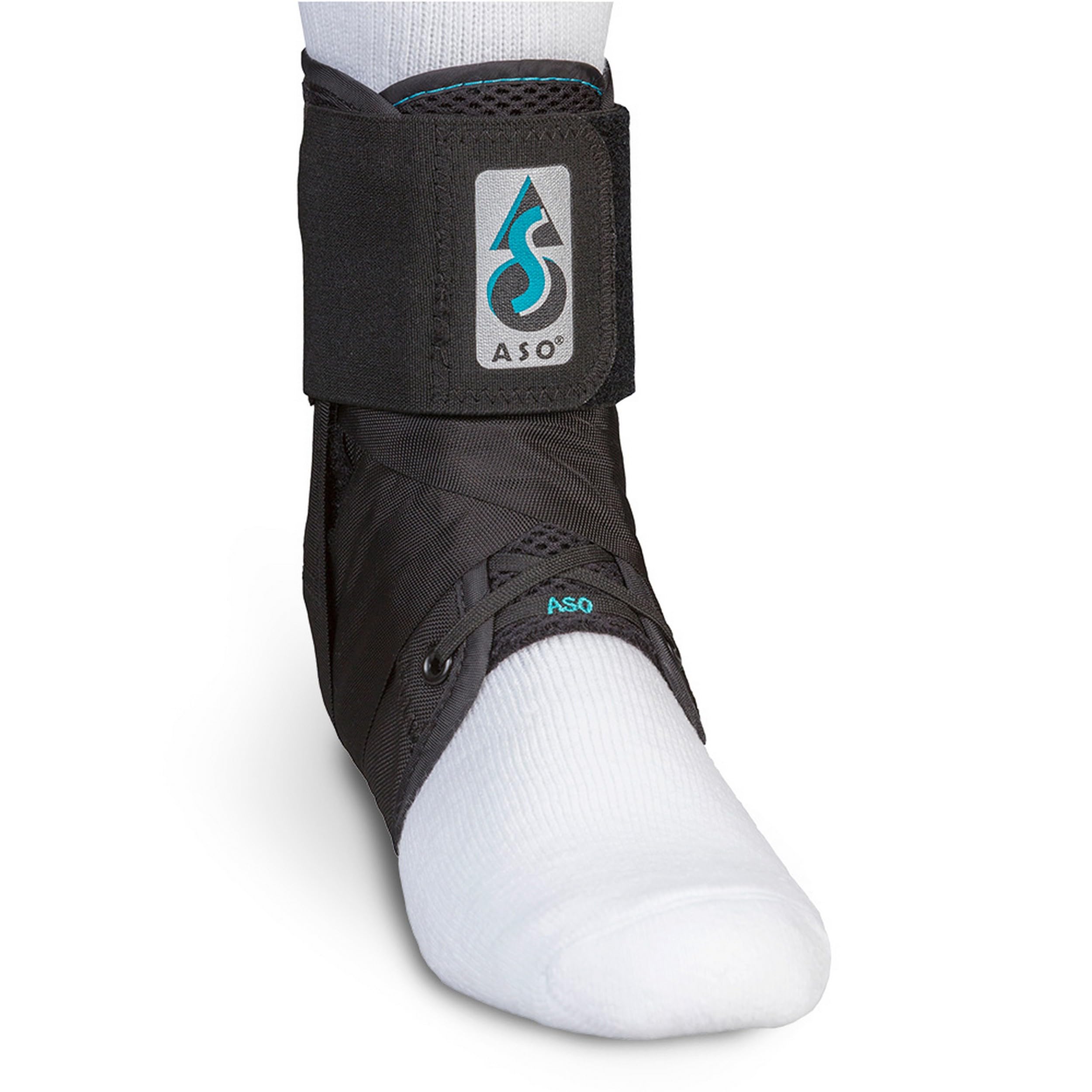
The ASO is the standard that other lace-up braces are measured against. Its nylon body resists stretching over months of daily use, and the combination of a full lace panel with two cross-over figure-8 straps gives you the most adjustable fit in this class. Active users report that the brace stays taut without cutting into the Achilles tendon, and the CoolFlex tongue keeps the instep comfortable even during sweaty sessions.
PTs and athletic trainers frequently recommend the ASO for peroneal tendonitis and chronic instability. The bilateral design means one brace can serve either foot, and the low-profile construction slides into most running shoes without forcing you to loosen the laces. Multiple reviewers with ankle measurements around 11.5 inches found the Small size delivered a snug, supportive fit.
The only notable friction point is the lace length — the laces are long enough to tuck, but first-time users may need a few tries to get the tension balanced. Once dialed in, this brace holds its setting through full practices and long hikes. If you want one brace for sports, recovery, and daily wear, this is the pick.
Why it’s great
- The most repeatable fit due to lace + figure-8 system
- Lightweight and breathable for all-day wear under shoes
- Trusted by PTs for peroneal tendonitis and recovery
Good to know
- Laces require a brief learning curve to get even tension
- Not designed for slip-on shoes or sandals
2. Ultra 360 Lace Up Ankle Brace
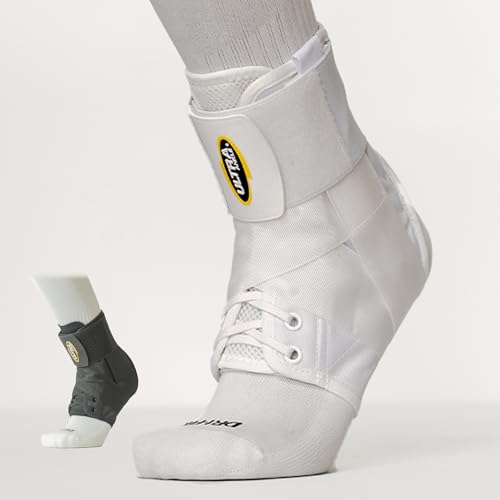
The Ultra 360 is built to mimic a trainer’s tape job with its dual figure-8 straps that wrap around the ankle in multiple directions. Volleyball players and basketball athletes report that the brace meaningfully reduces the severity of rolls — a hard-court advantage over basic compression sleeves. The lace-up front lets you dial in compression strength, while the nylon shell keeps the structure from sagging.
It fits inside cleats and high-top basketball shoes without creating pressure points, which is rare for a brace with this level of strap hardware. Users with weak ankles who play multiple times per week note that the brace extends their playing time before fatigue sets in. The velcro straps hold up well over multiple seasons according to several reviews.
The main consideration is that finding the right lace tension for your foot shape takes a few adjustments. If you pull the laces too tight, you may feel discomfort on the top of the foot. Once you find the sweet spot, the Ultra 360 offers the kind of lateral stability that gives you confidence to cut and jump without hesitation.
Why it’s great
- Dual figure-8 straps provide close-to-tape-level inversion control
- Low-profile enough for cleats and basketball shoes
- Durable velcro and lace construction for multi-season use
Good to know
- Lace tension requires a few tries to avoid foot pain
- Not suited for casual walking if you don’t need that level of support
3. DonJoy Performance POD Ankle Brace
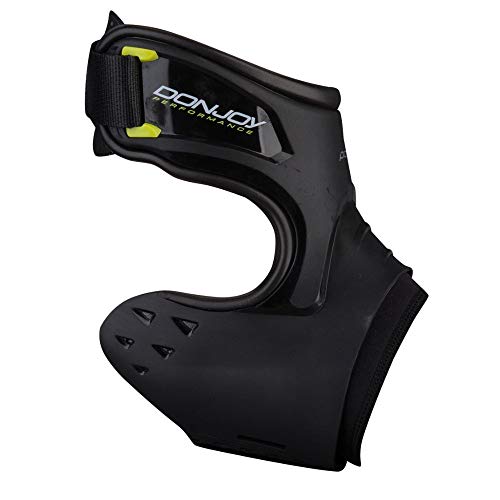
The DonJoy POD uses a molded TPU shell that adapts to your foot’s anatomy while providing a rigid barrier against inversion rolls. Unlike soft braces that absorb force, this shell physically blocks excessive movement — exactly what you need if you have torn ligaments and need to return to high-intensity sports. The EVA liner provides comfort against the skin, and the low profile fits inside athletic shoes without bulging awkwardly.
Users who play pickleball, soccer, and basketball report that the brace allows a natural range of motion for forward movement while shutting down the lateral roll that causes reinjury. The strap system is easy to adjust even during a game, and the hook-and-loop closure stays locked through sweaty sessions. Several reviewers with high insteps note that the brace fits snugly on and off but provides excellent support once in place.
The trade-off is that the shell can feel stiff at first, and it requires a short break-in period. Some users with extremely narrow feet found the fit slightly loose in the heel area despite tightening the straps. For athletes with moderate to severe instability who need a hard stop on lateral movement, the POD is the most effective option in this lineup.
Why it’s great
- Molded TPU shell provides aggressive roll prevention
- Allows natural forward motion while blocking lateral damage
- Low profile fits in cleats and court shoes
Good to know
- Rigid shell needs a break-in period for comfort
- May feel loose on very narrow heels
4. MUELLER Sports Medicine The One

MUELLER’s The One is designed for people who need firm ankle support but hate the time-consuming lace-up process. The integrated speed lacing system has fewer eyelets and flat laces that tighten and release quickly — ideal for slipping the brace on before a morning walk or gym session. The figure-8 strap system provides the same inversion/eversion protection as traditional lace braces but in a package that takes half the time to adjust.
The brace fits both right and left ankles, which simplifies purchasing and lets you rotate the brace between both sides as needed. Active users with arthritis and mild sprains report that the grip coating on the footbed helps keep the brace from shifting inside the shoe. The materials held up well through a full competitive season including washing cycles according to user feedback.
Some people with swollen ankles or larger calves found the fixed strap length too short to get a secure fit. The brace also runs slightly small relative to shoe size, so you should measure your ankle circumference rather than relying on shoe size alone. If fast on-and-off is your priority without sacrificing real stabilization, this is your best bet.
Why it’s great
- Speed lacing makes application fast and frustration-free
- Bilateral design fits either foot
- Grip coating prevents slipping inside the shoe
Good to know
- Straps may be too short for larger calves or swollen ankles
- Sizing runs small — measure circumference before ordering
5. Bauerfeind MalleoTrain

The MalleoTrain is a completely different animal from lace-up braces. It uses medical-grade compression knit with two anatomically contoured viscoelastic pads that sit directly over your inner and outer ankle bones. These pads massage the soft tissue during movement, promoting circulation and reducing swelling while providing proprioceptive feedback that helps your brain sense and correct ankle position.
Users recovering from fractures and ligament damage report that the brace significantly reduces pain and improves gait compared to wearing a boot or using rigid braces. The pull-on design eliminates strap pressure points, and the low-profile knit fits inside most shoes without altering your foot position. The moisture-wicking fabric allows all-day wear without irritation, and the materials are machine-washable.
The downside is that the MalleoTrain does not provide the same mechanical stop against severe inversion as a shell or lace brace. It is optimized for mild to moderate instability and proprioceptive training, not for preventing high-force rolls during cutting sports. The price is also considerably higher than other options. If your priority is daily comfort and rehabilitation support rather than aggressive roll prevention, this is the top choice.
Why it’s great
- Medical-grade compression knit with massage pad technology
- Improves proprioception and reduces swelling
- Extremely comfortable for all-day wear under regular shoes
Good to know
- Does not provide rigid mechanical stopping power for severe instability
- Premium price point compared to lace-up alternatives
6. PowerStep Dynamic Ankle Support Sock
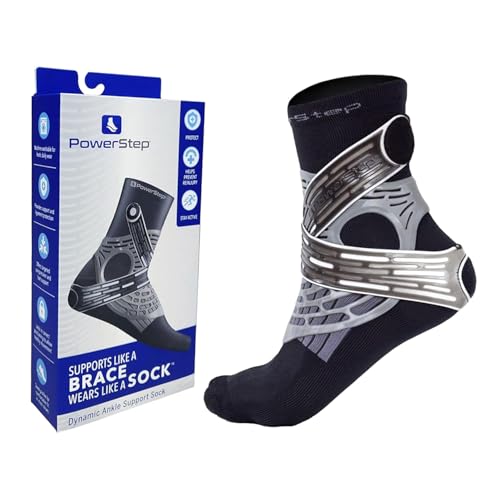
The PowerStep Dynamic is best categorized as an ankle support sock with extra stabilization features — it provides mild graduated compression, a silicone cage that hugs the heel and ankle, and a stability strap that crosses over the front of the joint. Physical therapists recommend this for people who need moderate support during daily activities or sports with minimal cutting, such as jogging, walking, or stationary work.
The integrated design means there is no bulky lace-up hardware, and the polyester knit is soft against the skin. Users recovering from fractured ankles after orthopedic boot wear found that the brace provided the right balance of compression and flexibility for transitioning to regular shoes. The arch support component also helps align the foot for better overall posture.
The main complaint across reviews is that the velcro strap quality degrades after 6 to 7 wears for some users, causing the strap to lose grip. The brace is also very tight to put on — several buyers with wide feet or larger calves found it impossible to wear. If you have a regular-width foot and need light to moderate support that feels more like a garment than a medical device, this is a great choice.
Why it’s great
- One-piece design combines compression, arch support, and stability
- Soft, low-profile construction fits easily into shoes
- Excellent for transitioning from orthopedic boot to regular footwear
Good to know
- Velcro strap durability is inconsistent across units
- Very tight fit — not suitable for wide feet or calves
7. McDavid Bio-Logix Ankle Brace
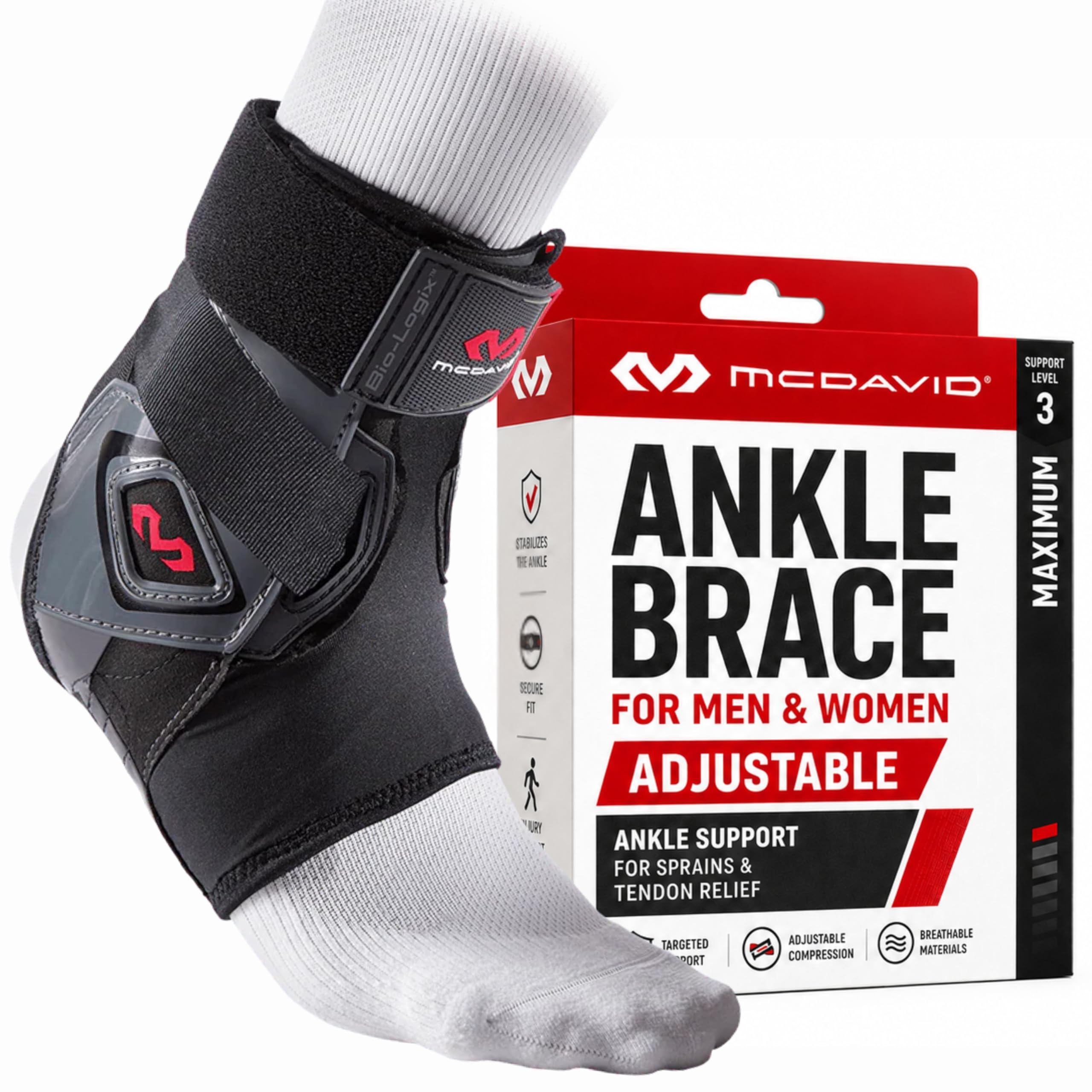
The McDavid Bio-Logix is the heaviest brace in this lineup, featuring a flex-link hinge design that mechanically supports the ankle joint through its full range of motion. The memory foam padding and multiple anchor straps create a custom fit that works for both men and women who need high-level support for heavy duty use — construction workers, trail runners, and multi-sport athletes are the target audience.
Users who work in construction and spend their days climbing ladders report that the brace significantly reduces end-of-day ankle ache and prevents painful rolls on uneven surfaces. The hinged design allows natural dorsiflexion and plantarflexion for walking and climbing while providing lateral stability. The contoured splints and neoprene padding distribute pressure evenly across the joint.
The trade-offs are real: the brace is thick and requires shoes with a wider fit. Several reviewers found the sizing inconsistent — the small fit the foot length but had straps that were too short, while the medium/large had a loose tube sock effect. It is also the most expensive non-German option here. If your activities demand durable construction-level support and you are willing to deal with bulk, this brace delivers.
Why it’s great
- Flex-link hinge provides mechanical support through full range of motion
- Memory foam padding and straps create a personalized fit
- Excellent for heavy construction work or intense trail use
Good to know
- Bulky design requires wide or roomy shoes
- Inconsistent sizing between foot length and strap length
FAQ
Can an ankle brace for stability prevent me from rolling my ankle during basketball?
Should I wear an ankle brace for stability during sleep?
Final Thoughts: The Verdict
For most users, the ankle brace for stability winner is the Med Spec ASO because its lace-up and figure-8 system delivers adjustable mechanical support that fits into athletic shoes and holds up for years of daily use. If you want the fastest on-and-off with good stability, grab the MUELLER The One. And for medical-grade compression and swelling reduction without bulk, nothing beats the Bauerfeind MalleoTrain.