
Our readers keep the lights on and the weekend projects moving. As an Amazon Associate, I earn from qualifying purchases.
Dark spots from past breakouts, sun exposure, or hormonal shifts can linger for months, making even the clearest skin look uneven. The right acid cuts through that discoloration at the cellular level, but choosing the wrong concentration or type can waste time or irritate your skin barrier.
I’m Rikta — the co-founder and writer behind FitlyFast. I’ve spent countless hours dissecting ingredient panels, clinical study data, and user-reported outcomes to separate true hyperpigmentation fighters from diluted formulas that only claim to work.
Whether you are dealing with post-acne marks, sun spots, or melasma, this guide breaks down the most effective active ingredients and product formulations so you can confidently choose the right acid for hyperpigmentation without wasting money on ineffective serums.
How To Choose The Best Acid For Hyperpigmentation
Not all acids tackle discoloration the same way. Some inhibit the tyrosinase enzyme that triggers melanin production, while others speed up cellular turnover to slough off pigmented surface cells. Your skin type, the depth of the dark spots, and your tolerance for tingling or peeling all determine which acid class fits your routine.
Match the Acid to the Pigmentation Type
Post-inflammatory hyperpigmentation from acne responds well to azelaic acid and mandelic acid because they reduce inflammation while fading marks. Melasma, which involves deeper dermal pigmentation, often requires a multi-pronged approach using a vitamin C alternative like viniferine combined with a gentle AHA. Sun spots and age-related discoloration typically yield fastest to lactic acid or a well-formulated glycolic serum.
Check the Concentration and pH
An AHA needs a pH between 3.0 and 4.0 to effectively exfoliate. Azelaic acid serums between 8% and 10% show the strongest clinical backing for hyperpigmentation, while mandelic acid at 5% to 10% offers a gentler option for darker skin tones prone to post-inflammatory hyperpigmentation. Higher percentages are not always better — over-exfoliation can worsen discoloration by triggering rebound melanin production.
Look for Supporting Ingredients
The best formulations pair the active acid with antioxidants, hydrators, or barrier-supporting compounds. Niacinamide, hyaluronic acid, olive squalane, and fermented plant extracts enhance the spot-fading effect while reducing the risk of irritation. Fragrance-free and paraben-free formulas are safer bets for repeated daily use on pigment-prone skin.
Quick Comparison
On smaller screens, swipe sideways to see the full table.
| Model | Category | Best For | Key Spec | Amazon |
|---|---|---|---|---|
| Innisfree Green Tea Enzyme Vitamin C Serum | Vitamin C + Enzyme | Sensitive skin & daily brightening | Green tea enzyme + Vitamin C blend | Amazon |
| NINELESS A-Control 10% Azelaic Acid Serum | Azelaic Acid | Acne-prone skin & PIH | 10% Azelaic Acid | Amazon |
| Kiehl’s Clearly Corrective Dark Spot Serum | Activated C + Salicylic | All skin tones & surface spots | Activated C + buffered Salicylic Acid | Amazon |
| Paula’s Choice 6% Mandelic + 2% Lactic Acid | AHA Blend | Sensitive skin & texture refinement | 6% Mandelic + 2% Lactic Acid | Amazon |
| Olay Regenerist Chemical Peel Overnight Mask | Lactic Acid + Peptide | Anti-aging & overnight renewal | Lactic Acid + Hexa-Repair Peptide | Amazon |
| La Roche-Posay Effaclar A.Z. Gel | Azelaic + Salicylic | Stubborn acne & post-acne marks | Azelaic Acid + 1.2% Salicylic Acid | Amazon |
| Caudalie Vinoperfect Brightening Dark Spot Serum | Viniferine (Vit C Alt) | Melasma & deep pigmentation | Patented Viniferine (62x more effective than Vit C) | Amazon |
In‑Depth Reviews
1. Innisfree Green Tea Enzyme Vitamin C Serum

The Innisfree serum stands out because it combines a patented green tea-derived enzyme with Vitamin C and niacinamide in one formula. That enzyme provides gentle enzymatic exfoliation alongside the brightening power of Vitamin C, making it a rare dual-action product that fades sun spots and post-breakout marks without the sting of a pure L-ascorbic acid serum. Clinical testing on 32 women showed visible spot reduction in just seven days, which tracks with real user reports of large brown spots disappearing after two months of consistent use.
What makes this a strong overall choice is its compatibility with sensitive skin. Multiple users with reactivity issues reported no redness or breakouts — the hyaluronic acid and tangerine peel extract provide hydration while the active ingredients do the work. The glass dropper bottle is travel-friendly and the serum absorbs quickly without leaving a sticky film.
At this tier, you get a well-researched brightener that pulls double duty as a mild exfoliant. It is not the strongest standalone vitamin C on the market, but the enzyme boost gives it an edge for those who want gradual, non-irritating results across the full face and neck.
Why it’s great
- Green tea enzyme provides gentle exfoliation alongside Vitamin C brightening
- Clinically shown to reduce dark spots in 7 days
- Sensitive skin friendly — no reported irritation from users
Good to know
- Results require consistent twice-daily application for full effect
- Not the highest concentration of pure Vitamin C available
2. NINELESS A-Control 10% Azelaic Acid Serum

The NINELESS serum delivers the clinically preferred 10% azelaic acid concentration that dermatologists often recommend for both active acne and post-inflammatory hyperpigmentation. Azelaic acid works by inhibiting tyrosinase activity while also calming the inflammatory response that causes dark marks in the first place — making this a targeted solution for anyone whose hyperpigmentation stems from breakouts. Users report clearer skin and more even tone after consistent use, with the lightweight texture layering well under moisturizer and sunscreen.
This formula also helps regulate sebum production, which is a bonus for oily and combination skin types prone to congestion. The serum is fragrance-free and non-irritating according to feedback from both a 60-year-old user with mature skin and a 24-year-old user with acne-prone skin. Some users noted that it feels milder than The Ordinary’s azelaic acid suspension, so it is a good entry point if you are new to azelaic acid.
It is worth noting that several users did not see dramatic acne-clearing results, which suggests this serum works best as a hyperpigmentation fader rather than a standalone acne treatment. Pair it with a salicylic acid cleanser if breakouts are your primary concern.
Why it’s great
- 10% azelaic acid is the clinically backed concentration for hyperpigmentation
- Fragrance-free and well-tolerated across different age groups
- Lightweight texture absorbs quickly without stickiness
Good to know
- Some users found it less effective for active acne than competing azelaic acid products
- Results for hyperpigmentation require several weeks of twice-daily use
3. Kiehl’s Clearly Corrective Dark Spot Serum

Kiehl’s uses Activated C, a stabilized form of Vitamin C, paired with buffered salicylic acid to address both surface discoloration and textural irregularities. The clinical results are impressive — 97% of participants showed reduced dark spot intensity after 12 weeks, and the formula is tested on 47 different skin tones, making it one of the most inclusive options for hyperpigmentation across ethnicities. Users report that post-acne scars fade noticeably within two weeks of nightly use, especially when paired with an overnight brightening mask.
The addition of buffered salicylic acid means this serum gently exfoliates the outermost layer of skin where pigmented cells accumulate, while the Activated C works deeper to inhibit melanin production. This dual mechanism is particularly effective for those whose dark spots sit at multiple depths on the skin. The texture is lightweight and absorbs without greasiness, and the formula is paraben-free and mineral oil-free.
Some users found that results plateaued after the initial brightening phase, and the bottle size is small relative to the price point. For those with very deep melasma or stubborn pigmentation, the Caudalie serum below may offer more dramatic long-term fading.
Why it’s great
- Tested on 47 skin tones — inclusive across all ethnicities
- 97% of users showed reduced dark spot intensity in clinical testing
- Buffered salicylic acid gently exfoliates while Vitamin C brightens
Good to know
- Small bottle size at 0.5 oz may not last as long as competing serums
- Results may plateau after initial brightening phase for some users
4. Paula’s Choice 6% Mandelic + 2% Lactic Acid Exfoliant
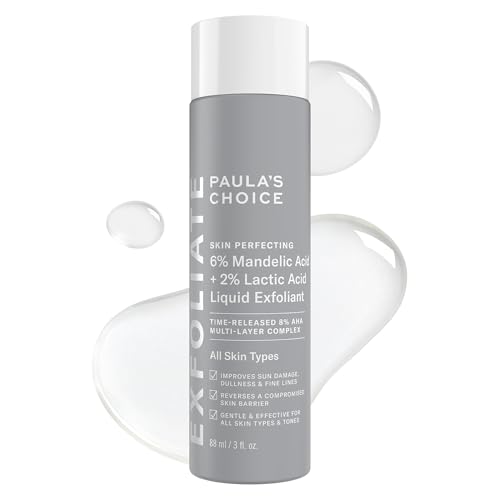
This Paula’s Choice formula leverages mandelic acid’s larger molecular size, which penetrates the skin more slowly and evenly than glycolic acid, reducing the risk of irritation while still effectively fading discoloration. The addition of time-released lactic acid means you get the potency of a 10% concentration without the harshness — the lactic acid is encapsulated to release gradually. The result is a daily-use AHA that visibly smooths texture, shrinks pore appearance, and brightens pigmentation without the sting that many acids cause on sensitive or melanin-rich skin.
User feedback highlights dramatic improvements in pore size and overall radiance after just one use, with continued use leading to significant evening of skin tone. The formula is fragrance-free and includes yarrow extract and a fermented antioxidant blend that supports the skin microbiome and barrier function. Multiple users over 55 reported noticeable improvement in age-related discoloration and bumpy texture.
The pump bottle is not the most travel-friendly design, and the price per ounce leans higher than drugstore AHAs. But for anyone whose skin reacts negatively to glycolic acid or who needs a gentler entry point into chemical exfoliation for hyperpigmentation, this is the most thoughtfully formulated option on the list.
Why it’s great
- Mandelic acid’s larger molecular size reduces irritation risk
- Time-released lactic acid delivers 10% potency without harshness
- Fragrance-free with microbiome-supporting antioxidants
Good to know
- Higher cost per ounce compared to basic glycolic acid alternatives
- Pump bottle design makes travel somewhat inconvenient
5. Olay Regenerist Chemical Peel Overnight Face Mask
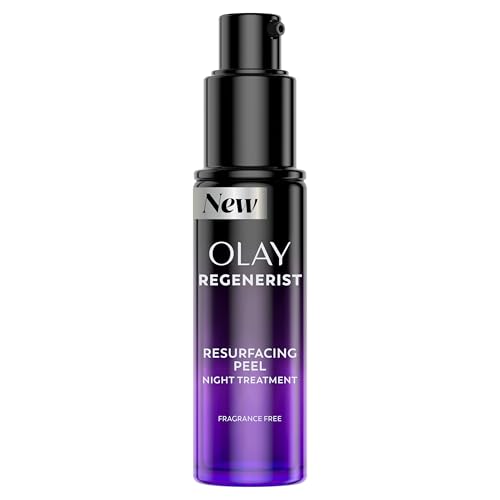
Olay positions this as an overnight chemical peel mask, but it functions more like a high-concentration leave-on serum with lactic acid as the primary exfoliant for discoloration. The inclusion of Hexa-Repair Peptide alongside niacinamide means you get both spot-fading and barrier-repair benefits in one step. Users report visible improvement in dark spots, hyperpigmentation, and uneven tone within one to two weeks, with deeper correction of fine lines showing by week four.
The formula is fragrance-free and lightweight, applying easily with the dropper and absorbing quickly. One user noted that it helped smooth surgery scar tissue on the neck after just one week, which speaks to the exfoliating potency of the lactic acid component. The overnight format is convenient — rinse off in the morning and follow with sunscreen — making it easy to incorporate into a routine without adding extra steps.
Some users with deep wrinkles felt that one month was not enough time to see significant change, and the 1.0 oz bottle is on the smaller side for a product intended for nightly use over several months. This is best suited for those who want a periodic intensive treatment rather than a daily serum.
Why it’s great
- Lactic acid combined with Hexa-Repair Peptide for barrier support
- Visible dark spot improvement in 1-2 weeks reported by users
- Convenient overnight format simplifies morning routine
Good to know
- 1.0 oz bottle runs small for extended nightly use
- Deep wrinkles may need more than 4 weeks for visible change
6. La Roche-Posay Effaclar A.Z. Gel
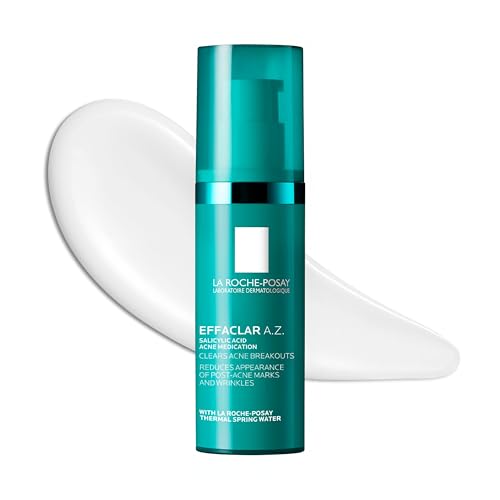
La Roche-Posay combines azelaic acid with 1.2% salicylic acid in a medicated gel format that penetrates deep into pores to address both active breakouts and the hyperpigmentation they leave behind. The 1.2% salicylic acid concentration is higher than what most over-the-counter acne treatments use, making this a serious option for persistent acne that resists lower-strength formulations. Users report that small red spots from sun exposure cleared within two weeks and that post-acne marks faded significantly after six weeks of consistent twice-daily use.
The gel-cream texture is hydrating without being greasy, and it absorbs quickly into the skin. It is dermatologist-tested as non-comedogenic and allergy-tested, so it is safe for sensitive skin despite the dual active ingredients. The formula also targets visible wrinkles and loss of elasticity, which adds an anti-aging component to the hyperpigmentation treatment.
The price point is higher than standalone azelaic acid serums, and some users noted that it takes at least two months of consistent use to see meaningful changes. The bottle lasted about two months with twice-daily application, which is reasonable for a dual-action treatment but less economical than single-ingredient alternatives.
Why it’s great
- 1.2% salicylic acid penetrates pores for deep acne treatment
- Azelaic acid fades post-acne marks and sun spots simultaneously
- Hydrating gel-cream texture absorbs quickly without greasiness
Good to know
- Requires at least 2 months of consistent use for visible results
- Higher price per ounce compared to single-acid serums
7. Caudalie Vinoperfect Brightening Dark Spot Serum
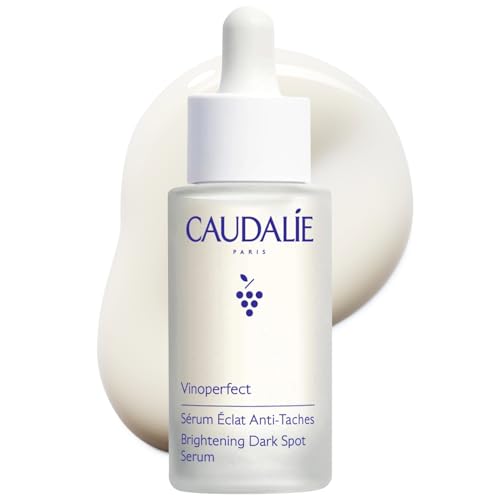
Caudalie’s Vinoperfect serum uses patented Viniferine, a compound derived from grapevine sap that in vitro testing shows is 62 times more effective at inhibiting tyrosinase than vitamin C. This makes it a powerful option for those whose hyperpigmentation has not responded to standard vitamin C serums. Clinical results confirm a 63% reduction in dark spots after one bottle, with even stronger results on deeper skin tones — 81% reduction after 56 days. It is also assessed as pregnancy-safe, which is rare for a brightening treatment this potent.
The serum includes olive squalane for non-greasy hydration, and users consistently report that it leaves skin feeling incredibly hydrated and glowing without any sticky residue. Long-term users who have repurchased for five years note that dark spots fade noticeably after three to six months of consistent daily use, with the bottle lasting about three months. The milky, lightweight consistency layers well under sunscreen and makeup.
Some users with melasma did not see the same dramatic results, which suggests Viniferine may work better on sun spots and post-acne marks than on hormonal pigmentation. The price is the highest on this list, and the floral lily scent, while pleasant to most, may be a consideration for those who prefer fragrance-free formulations.
Why it’s great
- Viniferine is 62x more effective at tyrosinase inhibition than vitamin C
- 81% reduction in dark spots on deeper skin tones in clinical study
- Pregnancy-safe formulation with non-greasy hydration
Good to know
- Results for melasma may be less dramatic than for sun spots or PIH
- Highest price point on this list with a light floral fragrance
FAQ
Can I use multiple acids together for hyperpigmentation?
How long does it take for an acid to fade dark spots?
Is azelaic acid or mandelic acid better for hyperpigmentation on dark skin?
Final Thoughts: The Verdict
For most users, the acid for hyperpigmentation winner is the Innisfree Green Tea Enzyme Vitamin C Serum because it combines gentle enzymatic exfoliation with Vitamin C brightening in a formula that works across sensitive and normal skin types without irritation. If you want a targeted treatment for acne-related dark spots, grab the NINELESS 10% Azelaic Acid Serum for its clinically backed concentration and oil-control benefits. And for deep, stubborn pigmentation that has resisted vitamin C, nothing beats the Caudalie Vinoperfect Serum and its patented Viniferine technology that is 62x more effective than standard L-ascorbic acid at blocking melanin production.