
The sharp, burning pain at the base of your toes can turn a simple walk into a miserable chore. Whether it’s a stiff metatarsal joint, a pinched nerve from Morton’s neuroma, or just the constant pressure of being on your feet, the wrong insert makes things worse by adding bulk without correcting the underlying load imbalance. The solution is a targeted pad that lifts the metatarsal heads, redistributes impact, and lets the forefoot move naturally within your shoe.
I’m Rikta — the co-founder and writer behind FitlyFast. I’ve spent countless hours cross-referencing real user feedback with material science data to isolate which specific pad shapes, thicknesses, and adhesive systems actually stay put and absorb shock without making your shoes feel tight.
This guide breaks down the top seven contenders by construction quality, durability, and real-world fit so you can confidently choose the best ball of foot inserts for your specific foot shape and activity level.
How To Choose The Best Ball Of Foot Inserts
A ball of foot insert is not one-size-fits-all. The right choice hinges on your specific foot condition, the depth of your shoe, and how long you need the pad to last between replacements. Here are the three specs that matter most.
Material & Moisture Management
Wool felt pads, like the ¼-inch thick options from Wellsfoot, absorb sweat and stay breathable, making them ideal for all-day wear in closed shoes. Gel pads (like PediFix Pedi-gel) offer superior shock absorption but can feel sweaty in warm weather. Vegetable-tanned leather from Pedag provides a premium, low-friction surface that slides inside a sock without bunching. Avoid any material that feels plasticky or non-porous if you plan to wear the insert for more than four hours at a stretch.
Adhesion & Retention
A pad that shifts even a quarter-inch can irritate the metatarsal nerve rather than protect it. Peel-and-stick adhesive pads work best when applied directly to clean, dry skin inside a snug sock. Insoles with integrated metatarsal pads (like the PowerStep Pulse Plus Met) eliminate the shifting issue entirely because the pad is sewn into the full-length orthotic shell. If you need daily removal, look for a washable gel that regains stickiness with body heat — the PediFix Pedi-gel is a standout here.
Thickness & Toe-Box Clearance
A ¼-inch thick pad is the sweet spot for most dress shoes and sneakers: it provides enough lift to offload the metatarsal heads without forcing your foot upward into the toe box. Pads thicker than 3/8 of an inch require a shoe with a removable insole or a deeper volume. Thin felt pads (around 1/8 inch) work well for tight-fitting heels or ballet flats but wear out faster. If you feel significant pressure on the top of your toes after inserting the pad, you need a thinner profile or a larger shoe size.
Quick Comparison
On smaller screens, swipe sideways to see the full table.
| Model | Category | Best For | Key Spec | Amazon |
|---|---|---|---|---|
| PowerStep Pulse Plus Met | Full-Length Insole | Runners & heavy heel-strikers | Built-in met pad + arch support | Amazon |
| 10 Seconds 3030 with Met Pad | Full-Length Insole | All-day cushioned relief | Plastazote foam molds to foot | Amazon |
| Pedag Drop Leather Pads | Adhesive Pad | Premium feel in dress shoes | Vegetable-tanned leather, hand-made | Amazon |
| PediFix Deluxe Nylon-Covered | Strap-On Pad | Home & casual walking relief | Hand-sewn nylon cover, adjustable strap | Amazon |
| Wellsfoot Felt Met Pads | Adhesive Felt Pad | Value pack for daily replacement | ¼-inch thick wool felt, 18-pack | Amazon |
| PediFix Pedi-gel Pad | Reusable Gel Pad | Dancers & sweaty feet | Washable gel, self-adhesive | Amazon |
| Jollidecor Felt Callus Cushions | Adhesive Felt Pad | Callus & blister protection | 72-pack, thick felt, U-shape | Amazon |
In‑Depth Reviews
1. PowerStep Pulse Plus Met
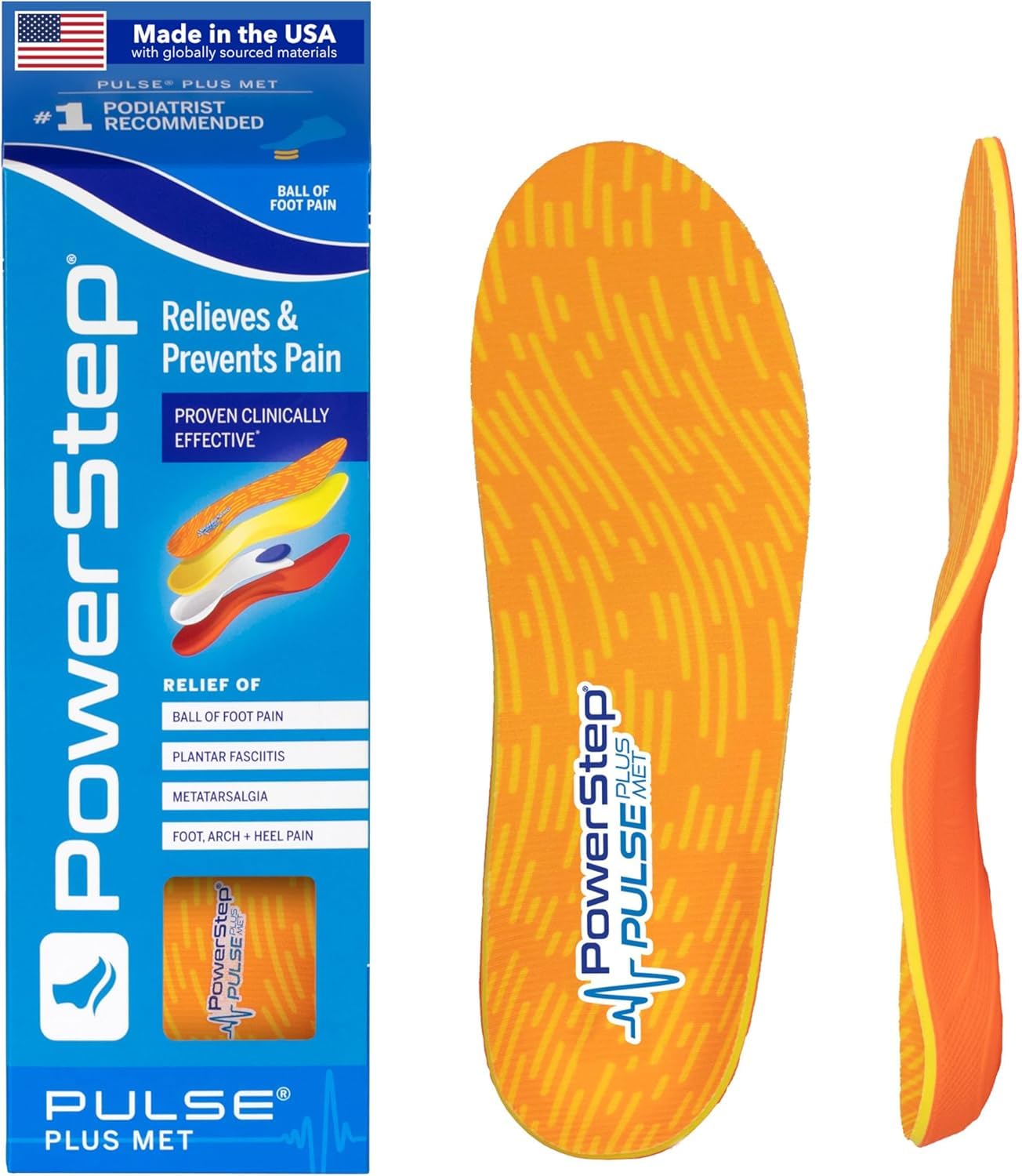
The PowerStep Pulse Plus Met is a full-length running insole with a built-in metatarsal pad that cradles the ball of the foot without adding a lump you can feel under the arch. The pad sits directly under the metatarsal heads, offering a gentle lift that offloads pressure from the nerves — which is exactly why podiatrists frequently recommend this design for Morton’s neuroma and metatarsalgia. The top fabric includes odor control to reduce heat and sweat during long runs.
Users report significant relief from burning ball-of-foot pain within the first 50 to 60 miles of running, and the insoles hold up well for six months before the pad begins to compress. The medium arch support helps align the foot, preventing the forefoot from rolling inward and aggravating the nerve. Unlike stick-on pads, there is nothing to shift or peel off — the met support is sewn into the shell.
One caveat: the full-length design requires a shoe with a removable insole or adequate volume. In very tight racing flats, the extra material might crowd the toe box slightly. But for daily trainers and casual sneakers, this is the most reliable all-in-one solution for active individuals who refuse to compromise on cushioning.
Why it’s great
- Seamless met lift with no separate pad to misalign
- Durable enough for 500+ miles of use
- Odor-control fabric stays fresh on long runs
Good to know
- Needs a shoe with a removable insole for proper fit
- Premium price point reflects the full-length construction
2. 10 Seconds Pressure Relief 3030 with Metatarsal Pad

The 10 Seconds 3030 is a full-length cushioned insole that uses a Plastazote memory foam topper to mold precisely to the unique contour of your foot, including the metatarsal rise. Unlike hard plastic orthotics, this insole provides a softer, more forgiving met pad that still delivers pressure redistribution for metatarsalgia and Morton’s neuroma. The Poron strike pads in the heel add an extra layer of shock absorption for high-impact activities.
Many users note that the 3030 feels almost like a custom orthotic without the sticker shock. The medium arch height supports the midfoot effectively, which naturally reduces the load on the ball of the foot. In slip-on sneakers and casual boots, the 3030 fits comfortably without crowding the toes, and the foam returns to shape after each wear. Several runners report completing five-mile runs with minimal discomfort after switching to these insoles.
The trim-to-fit design means you can shape the insole to match your shoe size, but the sizing marked on the box can occasionally differ from the order size. Over extended use (beyond three months), the met pad loses some of its initial bounce, though it still outperforms most budget alternatives. For those who want a plush, cloud-like feel under the forefoot, this is the top choice.
Why it’s great
- Memory foam molds to your foot over time for a custom fit
- Poron heel strike pads absorb shock well
- Trim-to-fit design adapts to most shoe sizes
Good to know
- Met pad effectiveness may decrease after three months of heavy use
- Insole sizing on the box can mismatch the order size
3. Pedag Drop Leather Pads

Pedag’s Drop pads are teardrop-shaped metatarsal cushions crafted from vegetable-tanned leather and assembled by hand in Germany. The leather surface provides a smooth, low-friction feel against the sock that reduces the risk of blisters — a common complaint with rougher felt pads. The pad is self-adhesive and sticks firmly to the insole of any shoe, transforming a flat orthotic into a metatarsal-supporting platform.
Users with metatarsalgia and Morton’s neuroma report that the Drop pad delivers immediate pain relief during walking and hiking without adding noticeable thickness to the shoe. The leather construction is more durable than felt and resists compression over time. Users who have tried both felt and the Pedag Drop universally rate the leather version higher for longevity and comfort. The pad is thin enough to fit inside dress shoes and even sandals with a removable footbed.
The main trade-off is that the pad is firm — some users with very sensitive or bony feet find the leather too hard compared to gel or thick felt. It also requires precise placement: if positioned too far back, it won’t lift the metatarsal heads properly. But for those who value a premium, long-lasting pad that doesn’t degrade after a few wears, the Pedag Drop is the clear winner in the adhesive category.
Why it’s great
- Handmade leather construction outlasts felt pads
- Thin profile fits easily in dress shoes and loafers
- Adhesive holds firmly to insoles without residue
Good to know
- Firm texture may be uncomfortable for very sensitive feet
- Requires careful positioning for effective metatarsal lift
4. PediFix Deluxe Nylon-Covered Metatarsal Cushion

The PediFix Deluxe is not an adhesive pad — it is a strap-on metatarsal cushion with a hand-sewn nylon cover filled with soft padding. The adjustable elastic strap wraps around the midfoot and holds the pad in place without relying on sticky glue. This design is ideal for home use, especially on hard or carpeted floors, because the cushion stays positioned even when worn with socks and no shoes.
Morton’s neuroma sufferers report nearly instant pain relief when walking barefoot indoors with this pad. The nylon cover reduces friction against the skin, and the cushion absorbs shock effectively. The pad fits well in most closed-toe shoes, though the strap can feel bulky inside very low-profile sneakers. Several users note that the pad provides excellent relief for sesamoiditis and metatarsal bone pain when walking on concrete floors at home.
The main downside is that the pad can slide slightly if worn with very loose socks or without socks, and the toe strap can feel awkward during the first few wears. It also compresses after about a month of daily treadmill use and needs replacement. But for a non-adhesive solution that works right out of the box for metatarsal and sesamoid pain, this is a reliable and effective option.
Why it’s great
- No adhesive needed — strap holds it in place securely
- Nylon cover is smooth and reduces friction
- Works well for barefoot walking at home or in socks
Good to know
- Pad compresses and loses cushioning after about a month of daily use
- Strap may feel bulky in very tight shoes
5. Wellsfoot Felt Met Pads

The Wellsfoot felt met pads are made from premium ¼-inch thick wool felt that provides a soft but supportive cushion for the ball of the foot. The strong adhesive keeps the pad in place throughout the day without leaving a sticky residue on the skin or shoe when removed. Each pack contains 18 pads — enough for daily replacement for over two weeks or much longer if you reuse each pad for several days.
Users with metatarsal pinched nerves and general forefoot tenderness report significant relief after using these pads. The felt material is breathable and comfortable against the skin, and the pad can be stuck to either the foot or the insole. Many podiatrists recommend this exact type of felt pad for initial relief before considering custom orthotics. The pads are easy to apply and trim if you need a slightly different shape.
One common frustration is removal: the adhesive is very strong, and peeling the pad off can leave residue on the skin if you don’t pull carefully. It is best to remove the pad at night to avoid difficult removal in the morning. Some users find the ¼-inch thickness slightly bulky for very narrow or low-volume dress shoes. But for the price per pad, this is an unbeatable value for anyone who needs consistent daily relief.
Why it’s great
- Excellent value with 18 pads per pack
- Strong adhesive stays in place all day
- Wool felt is soft, breathable, and comfortable
Good to know
- Adhesive can leave residue on skin if not removed carefully
- ¼-inch thickness may be too thick for tight dress shoes
6. PediFix Pedi-gel Ball-of-foot Pad

The PediFix Pedi-gel is a reusable gel pad that cushions the ball of the foot while redistributing weight away from sensitive metatarsal heads. The self-adhesive surface sticks to the skin and can be removed and reapplied multiple times — just rinse the pad with warm water and let it air dry to restore stickiness. This makes it highly cost-effective for users who switch between different pairs of shoes throughout the day.
Dancers, HIIT enthusiasts, and people who spend long shifts on concrete floors report that the Pedi-gel provides instant relief from sesamoiditis and forefoot pain. The gel is thick enough to absorb shock but thin enough to fit inside ballet flats and heels without making the shoe feel tight. Podiatrists have recommended this pad for patients who need a washable, reusable option that doesn’t lose its cushioning after a few days.
Some users note that the adhesive weakens over time, especially if the pad gets stuck to itself or collects lint from a purse. The gel also can feel sticky if not rinsed regularly. It is not designed for open-toed sandals, and the pad may slide slightly if worn with very loose socks. For those who want a durable, washable, and reusable met pad, however, this is a strong mid-range choice.
Why it’s great
- Washable and reusable — great long-term value
- Self-adhesive allows easy shoe changes
- Thin profile fits in heels and flats
Good to know
- Adhesive weakens over repeated uses
- Can feel sticky if not rinsed clean regularly
7. Jollidecor Felt Callus Cushions
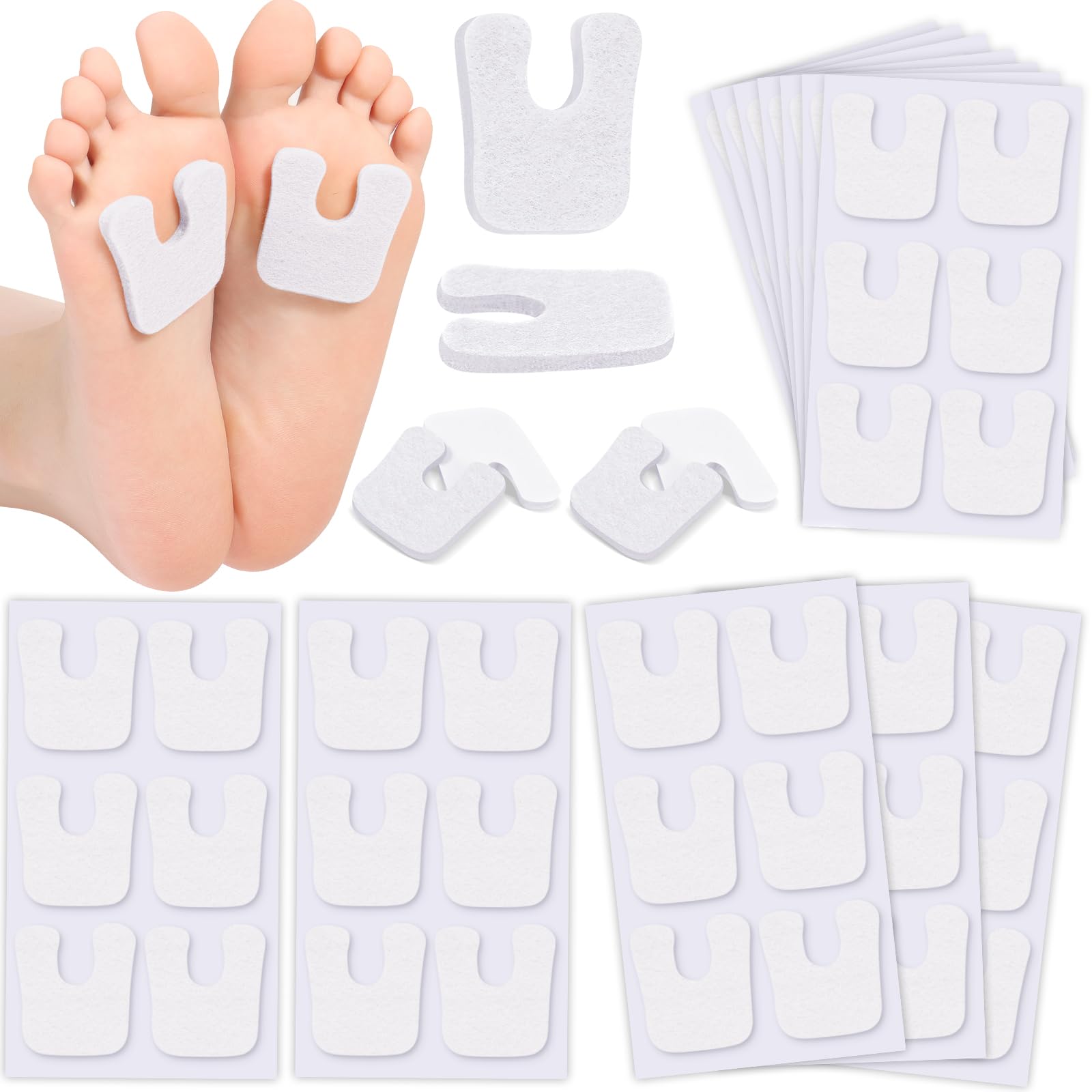
The Jollidecor callus cushions are U-shaped felt pads that wrap around corns, calluses, or blisters on the ball of the foot to shield them from shoe friction. The 72-count pack provides an enormous supply — most users will need only one pad per day for acute spots, making this a budget-friendly option for anyone who frequently develops calluses from walking or running. The felt is noticeably thick at about 0.24 inches, offering good cushioning.
Users with tough calluses report that the pads cushion the painful area effectively and enable walking without the constant jab of hard sock seams or shoe interiors. The adhesive sticks very firmly and stays in place even through repeated wrist or foot movements. The U-shape is specifically designed to offload pressure around a callus without covering the callus directly, which helps the skin heal.
The main drawback is that the pads are single-use — once removed, the adhesive loses its grip. The felt is also quite thick, which some users find noticeable inside tight shoes. And while they work wonderfully for callus protection, they lack the targeted metatarsal lift that users with Morton’s neuroma or metatarsalgia need. For callus-prone feet that just need a simple barrier, however, this pack is hard to beat.
Why it’s great
- Massive 72-count supply for long-term use
- Strong adhesive stays put through movement
- U-shape effectively offloads pressure from calluses
Good to know
- Single-use only — adhesive doesn’t survive removal
- Not designed for metatarsal lift or neuroma pain
FAQ
How do I know if I need a metatarsal pad vs. a full-length insole?
Can I wear ball of foot inserts in high heels?
How often should I replace my ball of foot inserts?
Final Thoughts: The Verdict
For most users, the best ball of foot inserts winner is the PowerStep Pulse Plus Met because it combines a seamlessly integrated metatarsal pad with reliable arch support in a single, durable insole that works for runners and walkers alike. If you want a premium adhesive pad that feels luxurious and lasts, grab the Pedag Drop Leather Pads. And for budget-conscious daily relief with an absurdly good cost per pad, nothing beats the Wellsfoot Felt Met Pads.